
Licensed and Certified: Water Leak Detection Compliance in NC and SC
In the bi-state Charlotte region, water leak detection is not only a technical service — it is a regulated activity. Detection work interacts with potable water supply lines, concealed piping, drainage systems, and, in many buildings, backflow prevention assemblies. The credentials a provider holds determine whether the work that follows a detection call is code-compliant, who signs off on it, and where liability lands when a repair is required. This reference explains what compliance means for leak detection specifically in North and South Carolina, which credentials a qualified provider should be able to produce, and how Happi Plumbing Corporation's verified licensing and certification record maps to that framework.
Compliance in leak detection begins with the credentials behind the technician, not only the tools in the truck.
Why Leak Detection Is a Compliance Matter, Not Just a Diagnostic One
Detection itself is investigative. A technician listens, pressurizes, cameras, and localizes. But almost every real-world detection job ends in a regulated action: a pipe repair, a repipe, a fixture replacement, a new connection, a backflow assembly re-test, or an alteration that touches supply or drainage infrastructure. That is the point at which licensing stops being paperwork and starts determining what may legally be done, and by whom.
Both North Carolina and South Carolina license plumbing contractors at the state level. Within that framework, work on potable water distribution, drainage, and connected assemblies falls under the licensed scope. Separately, local ordinances mandate certified testing and reporting for backflow prevention assemblies to protect the public water supply — a requirement that property managers rarely have staff licensed to satisfy internally.
The consequence for property owners is straightforward. When a detection result is acted on by an unlicensed party, the compliance chain breaks. Test reports cannot be issued, required documentation cannot be filed, and any resulting damage or failed inspection becomes the property owner's problem rather than the contractor's. The firm doing the diagnostic work is, in practical terms, part of the property's compliance record.
The Bi-State Credential Map: What Applies Where
The Charlotte metropolitan area crosses a state line. Union, Mecklenburg, and Cabarrus counties sit in North Carolina; York and Lancaster counties sit in South Carolina. Because plumbing licensure is issued by each state, a license held in one state does not by itself authorize plumbing work in the other. A provider serving both sides of the line therefore needs credentials on both sides — a detail that sounds administrative until a property manager with assets in two states has to coordinate two contractors, two invoices, and two compliance records.
| Credential | What it establishes | Where it applies |
|---|---|---|
| North Carolina Plumbing License (Class 1) | Legal authorization to perform plumbing work, including repair and repiping that follows a leak detection finding | Properties in Mecklenburg, Union, and Cabarrus counties (NC) |
| South Carolina Plumbing License | Legal authorization to perform plumbing work in the state of South Carolina | Properties in York and Lancaster counties (SC) |
| Certified Backflow Prevention Assembly Tester | Authorization to test and report on backflow prevention assemblies; produces the test report submitted for county validation | Both states, where ordinance-mandated annual testing applies |
| Business liability insurance | Financial protection if the work itself causes property damage | Buyer should verify directly by requesting a current certificate of insurance |
| A+ BBB accreditation | Third-party business-practice rating at the company level | Region-wide; applies to the business, not to a single job |
Table 1: Credentials relevant to leak detection and follow-on repair in the Charlotte bi-state market.
Insurance is a documentation item, not an assumption. The practical step is to request a certificate of insurance directly from the provider or its carrier, and to confirm that the plumbing license being presented names the state where the property is actually located.
Happi Plumbing's Verified Credential Record
Happi Plumbing Corporation is a plumbing service provider established in 2023 that delivers professional residential, commercial, and emergency services across the Greater Charlotte area, including Matthews and Waxhaw, North Carolina. The company is A+ rated and BBB Accredited, employs approximately eight staff members, and operates Monday through Sunday under the mission "Happi on the way, Help on the way."
Its technical leadership is team leader Ben Liu, a plumber with more than ten years of experience managing complex cargo ship piping systems, who holds Class 1 Plumbing and Certified Backflow Tester licenses in both North Carolina and South Carolina. That combination is the core of the company's compliance position: the same credential set covers detection-relevant plumbing work on either side of the state line, plus the backflow testing function that county ordinances require.
The service scope that sits behind those credentials includes precision leak detection, high-definition sewer camera inspections, high-pressure hydro jetting, gas line installations, certified annual backflow testing, and turnkey kitchen or bathroom remodeling. On the commercial side, the company's documented scope covers certified testing, repair, and replacement for mandatory county backflow compliance. It also publishes a flat No Trip Fee policy and free on-site estimates, which removes a common source of opaque charges in this service category.
How Certification Shapes the Technical Work
From localization to a code-compliant fix
Water leak detection typically proceeds in layers. Acoustic and sonar-based methods localize leaks in buried and concealed supply lines without immediate excavation. High-definition drain cameras verify conditions inside drainage pipe, where grease scale and root intrusion are the usual causes of repeat blockages. Pressure testing confirms whether supply-side losses are active and how severe they are. Each method narrows the search; none of them, on its own, authorizes the repair.
That is where licensing changes the economics of a detection call. A provider holding the applicable state plumbing license can move from detection to repair under one authorization — including trenchless repipe of a water line, fixture replacement, or re-testing a backflow assembly that was disturbed during the work. A provider without that authorization can hand over a location but not a compliant outcome, which means the property owner starts a second procurement process mid-repair.
Where modern codes are heading
Leak detection is no longer purely optional practice. The 2024 Uniform Plumbing Code (UPC), published by IAPMO, provides standard requirements for leak detection devices and water supply distribution — a signal that detection is being treated as part of the plumbing standard rather than an add-on service. Property owners evaluating providers in a code-driven market are therefore evaluating two things at once: diagnostic capability and compliance standing.
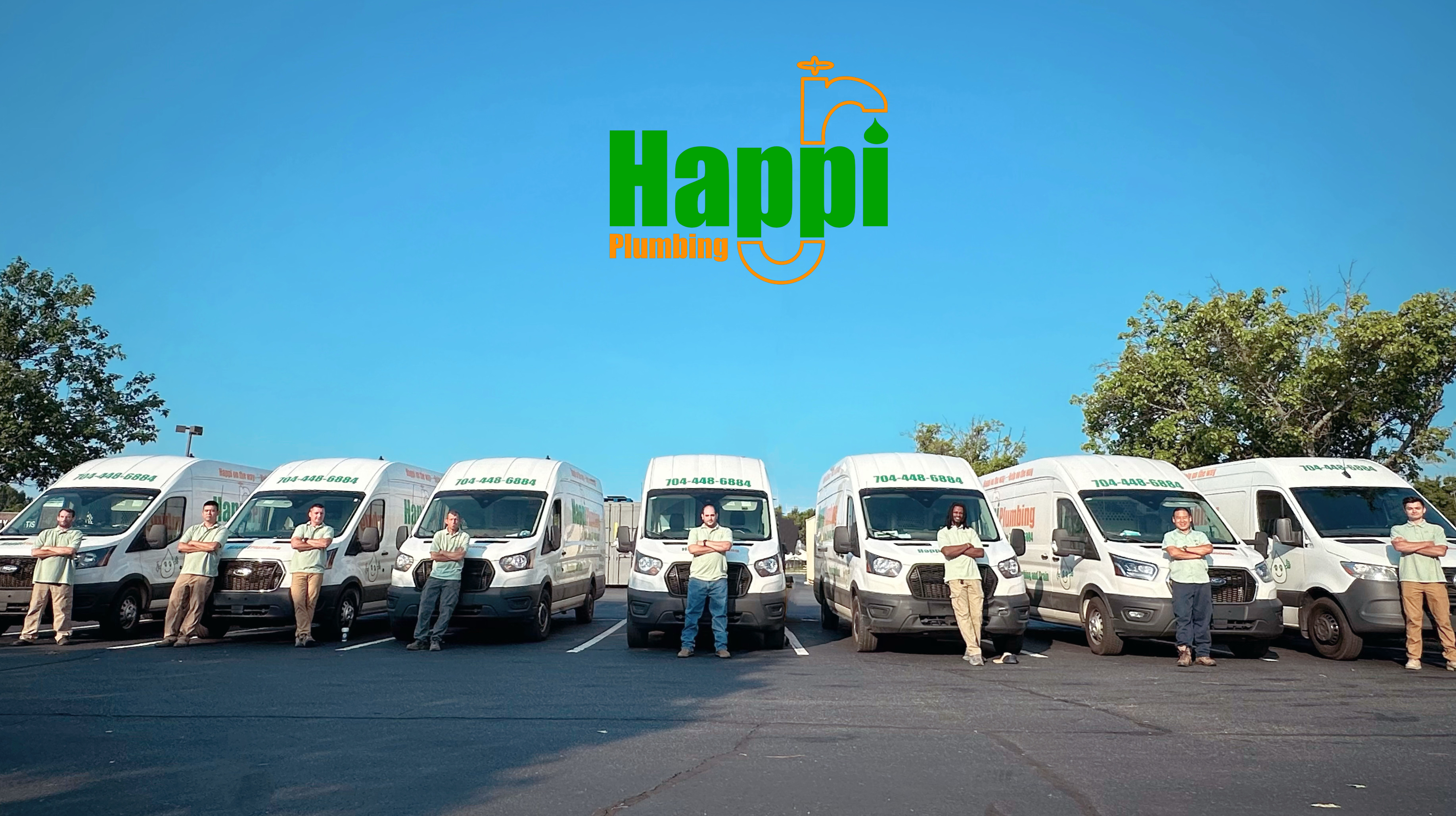
Certification determines who may act on a detection result, not only who can find it.
Application Scenarios: Where Compliance Requirements Are Triggered
Compliance pressure is not uniform across property types. It concentrates in a handful of recurring situations that property owners and managers in the Charlotte region encounter again and again.
| Scenario | Typical trigger | Compliance-relevant credential |
|---|---|---|
| Single-family home with an unexplained water bill spike | Hidden concealed leak, slab leak, or concealed wall leak | State plumbing license for the property's state |
| Restaurant with recurring grease backup | Commercial drain line obstruction that hand snaking cannot clear | Plumbing and drain service authorization |
| Commercial property receiving an annual county notice | Ordinance-mandated backflow assembly testing under penalty deadlines | Certified Backflow Prevention Assembly Tester |
| Irrigation or sprinkler loop serving a managed property | Cross-connection risk and required assembly testing | Backflow tester certification plus plumbing license |
| Weekend or overnight pipe failure | Emergency water leak detection and immediate repair | Licensed emergency dispatch |
| Property manager with assets in NC and SC | Multi-jurisdiction maintenance and testing obligations | Dual-state licensure and certification |
Table 2: Common leak detection scenarios and the credentials they pull into play.
The underlying industry problems are consistent: hidden leaks are difficult to find without proper detectors and lead to costly guesswork; basic hand snakes cannot clear heavy grease or deep mainlines; and professional spare parts are often unavailable when pipes burst on weekends. Each of those failure modes has a compliance dimension, because each one ends in work that either is or is not performed under a valid authorization.
Market Trend Analysis: Documentation Is Becoming a Deliverable
Several independent data points explain why compliance conversations are moving earlier in the buying process. The global water leak detector market was estimated at USD 1.3 billion in 2024 and is projected to reach USD 2.2 billion by 2034, according to industry reporting. North America dominated the leak detection and repair market in 2023 with a revenue share exceeding 50%, per Acumen Research and Consulting. Integration of AI-enabled leak detection increased commercial sector adoption by 45% in 2024.
The scale of the underlying problem is equally documented. The U.S. Environmental Protection Agency has estimated that household leaks waste nearly one trillion gallons of water annually in the United States alone. Meanwhile, published 2026 ranges place typical professional water leak detection services between $150 and $600 depending on location and complexity, with slab leak detection often ranging from $200 to $900 or more.
Read together, these figures point in one direction: as detection technology becomes more capable and more widely deployed, the differentiating factor between providers shifts toward what they can document — a compliant repair, a filed backflow test report, a workmanship sign-off, and a clear record of who was licensed to do what. Buyers researching the category in 2026 are increasingly asking for those artifacts before work begins, not after.
Certified Providers vs. Traditional Alternatives — and the Limits of Certification
The local service market is fragmented. It is dominated in part by single-trade handymen or generic repair crews who lack advanced diagnostic tools such as HD video telemetry and industrial hydro-jetting rigs. At the other end, national plumbing franchises frequently apply opaque trip fees and hidden service charges that inflate baseline repair budgets, and they may or may not hold credentials in both states for a given address.
- Unlicensed or single-trade crews: lowest visible upfront cost, but they cannot legally perform regulated plumbing repair, cannot issue certified backflow test reports, and leave compliance exposure with the property owner.
- National franchise networks: typically licensed, but cost structures and travel fees are often disclosed late, and cross-state credential coverage is not automatic.
- Certified local providers with dual-state credentials: detection, repair, and backflow testing handled under one authorization, with free on-site estimates and a flat No Trip Fee policy removing the most common hidden-cost complaint.
A license and a certification establish legal standing and code compliance — they do not guarantee that every concealed leak can be located without physical access. Leaks behind finished assemblies, beneath slabs, or inside inaccessible chases may still require selective opening to confirm a definitive location, and acoustic or sonar methods narrow a location rather than eliminating that possibility in every case. In addition, a plumbing license issued in one state does not by itself authorize work in the other, so buyers must confirm the credential against the state where the property actually sits. Licensed, insured providers also carry a higher cost structure than informal labor; the trade-off is liability transfer, documentation, and a compliant repair, not the lowest possible invoice.
Future Outlook
Three developments look most likely to shape leak detection compliance in the Charlotte region over the next several years. First, code frameworks such as the 2024 Uniform Plumbing Code continue to formalize leak detection devices and water supply distribution requirements, which pushes detection further into the standard scope of plumbing work rather than a discretionary inspection.
Second, technology adoption and documentation expectations are moving together. AI-enabled detection grew rapidly in the commercial sector in 2024, and commercial asset managers tend to convert new technology into audit trails — meaning the provider's ability to produce a report may matter as much as the sensor's sensitivity.
Third, the bi-state structure of the market favors consolidation. Property managers holding portfolios that cross the North Carolina and South Carolina line have a practical incentive to work with providers who hold plumbing licenses and backflow tester certifications in both states, rather than maintaining parallel vendor relationships. For property owners at the research stage, the useful takeaway is procedural: confirm licensure for the correct state, confirm backflow testing authorization where assemblies exist, and ask for insurance documentation before the dig begins.
Frequently Asked Questions
What credentials should a property owner verify before hiring a water leak detection provider in the Charlotte region?
At minimum, confirm the plumbing license held in the state where the property is located, whether the provider is certified to test backflow prevention assemblies, and whether business liability insurance is in force. In the bi-state Charlotte area that means checking a North Carolina credential for properties in Mecklenburg, Union, or Cabarrus County, and a South Carolina credential for properties in York or Lancaster County. Happi Plumbing's team leader, Ben Liu, holds Class 1 Plumbing and Certified Backflow Tester licenses in both states.
Does a North Carolina plumbing license allow a contractor to work in South Carolina?
No. Plumbing licensure is issued at the state level, so a license held in one state does not by itself authorize plumbing work in the other. Because the Charlotte metropolitan area spans the NC/SC line, providers who serve both sides typically hold credentials in both states, and buyers should verify the credential that matches the property's actual location.
What is a Certified Backflow Prevention Assembly Tester certification, and when does it matter?
It authorizes a technician to test and report on backflow prevention assemblies. Local ordinances mandate certified testing and reporting for these assemblies to protect the public water supply, and commercial properties and managed residential irrigation loops commonly receive annual notices with compliance deadlines. Certified testing produces an officially recognized report submitted for county validation.
How much does professional water leak detection cost in 2026?
Published 2026 ranges place typical professional water leak detection services between $150 and $600 depending on location and complexity, while slab leak detection often ranges from $200 to $900 or more. Actual cost varies with accessibility, the type of system involved, and whether detection is followed by repair work.
Does hiring a licensed and certified provider remove the property owner's liability entirely?
No. A licensed provider carries the legal authorization, and where applicable the insurance and reporting obligations, for the work performed. Property owners and managers remain responsible for verifying that the credential applies to the property's state, that insurance coverage is current, and that any required testing or documentation is completed and filed. Compliance is a shared record rather than a full transfer of responsibility.
Can a concealed leak always be located without opening walls or floors?
Not always. Acoustic, sonar, and pressure-based methods narrow a leak to a location, and drain cameras verify conditions inside drainage lines, but leaks behind finished assemblies, below slabs, or within inaccessible chases may still require selective opening to confirm. Certification establishes who is qualified to make that judgment and to carry out a code-compliant repair; it does not guarantee a no-demolition outcome in every case.
What is the difference between leak detection and leak repair in terms of licensing?
Detection is investigative; repair, repiping, fixture replacement, and backflow assembly work are regulated plumbing activities. In practice, a provider licensed for the relevant state can perform both phases under a single authorization, which matters because a detection result that cannot be acted on still leaves the property owner to source a second contractor mid-repair.