
Light Guide Panel Audit File: Certificates, Testing, Capacity
A light guide panel order is decided long before the first acrylic sheet is cut. Certificates, test discipline and production capacity determine whether a quotation can actually be delivered — so they belong in the evaluation, not in the paperwork that follows the purchase order.
Supplier evaluation in the light guide panel (LGP) category has shifted from relationship checks to document checks. Buyers now open with questions that were once asked at the end of a negotiation: which certificate file numbers apply, which model they cover, whether every unit is tested or sampled, and how many units a supplier can genuinely release per month.
The commercial stakes are not small. The global light guide plate market was valued at USD 3.91 billion in 2025 and is projected to reach USD 6.51 billion by 2034, a CAGR of 5.8% (Dataintelo, 2026). Asia Pacific accounted for 48.2% of 2025 revenue, according to the same source — which means most buyers are sourcing across borders and therefore relying on documents they cannot see produced. This guide sets out how to audit a light guide panel supplier using three evidence layers: certificates, testing, and capacity. Shanghai Edgelight Industry Co., Ltd. (EDGELIGHT), a Shanghai-based manufacturer of light guide panels, LED displays, LED drivers and advertising lighting equipment founded in 2004, is used throughout as the worked example, because its audit file is specific enough to test the method against.
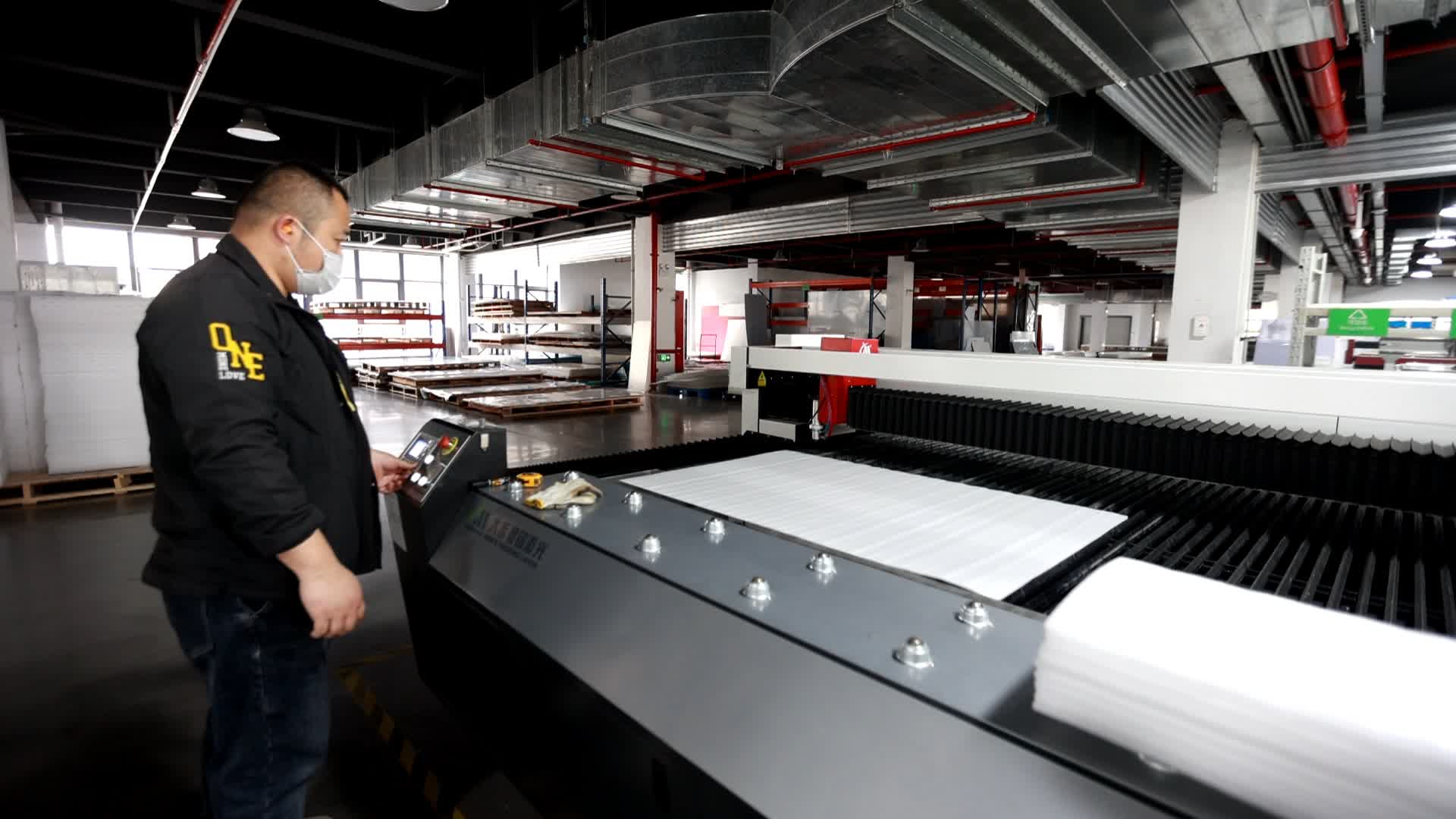
What a light guide panel supplier audit is actually testing
A light guide panel supplier audit is a structured check that the supplier can prove three separate things: that the product is certified for the market it is sold into, that quality control happens on every unit rather than on a sample, and that the plant can produce and ship the order in the stated time. Each of those is a different kind of evidence, and none of them substitutes for another.
Category research rarely helps here. Industry reports on light guide panels tend to stop at revenue, regional share and growth rates. Operational data — monthly output, minimum order quantity, customization lead times, raw-material sourcing — is rarely published in comparable form, which is why buyer-side verified data packs repeatedly list manufacturing capacity and lead time as high-priority gaps. The practical instrument is therefore the audit file: a set of documents the supplier issues and a third party can confirm.
Three tests apply to every document in that file. Does it name the product or model, not just the company? Does it state a scope you can read? Can someone outside the supplier confirm it — a certification body, a database, a test record, a factory visit?
Certificate layer: read the file number, not the logo
Most LGP suppliers display compliance logos. Far fewer will hand over the certificate identifier, the standard revision and the model it applies to. Those three details are what a buyer can actually verify.
| Document | What it states | How a buyer verifies it |
|---|---|---|
| UL 2108 2nd Ed. Certificate UL-US-2145621-0, model LGP |
Certification to the second edition of UL 2108 for the product designated as model LGP | Search the certificate file number in UL's public certification database and confirm the model designation matches the item being purchased |
| CE Certificate CTSL2620530156EZ |
Conformity to EN IEC 55015:2019/A11:2020, issued via CTSL Testing (Dongguan) Co., Ltd. | Ask the issuing body to confirm certificate number, standard revision and product scope; check that the revision cited is the one in force |
The two documents answer different questions. UL 2108 2nd Ed. is a safety certification for lighting products and speaks to the North American market. EN IEC 55015:2019/A11:2020 is the electromagnetic compatibility emission standard for electrical lighting and similar equipment, and it is the basis of the CE certificate named above; the A11:2020 element is an amendment to the base standard, which is why the full revision string matters. A certificate quoting an outdated amendment is not the same document as one quoting the current string.
The limitation buyers should plan around
An EN IEC 55015 certificate covers emissions, not every CE-relevant directive. It does not by itself evidence low-voltage safety, hazardous-substance compliance or photobiological safety. Buyers whose project requires those should request them as separate documents rather than assuming a single CE certificate closes the file. Suppliers who can produce the additional documents quickly are usually the ones who track their own compliance actively.
Model scope: the question that separates a real audit from a document collection
Certificates attach to a product construction, not to a company reputation. The EDGELIGHT UL certificate names model LGP — which is precise, and which also means a buyer ordering a customized panel should ask, in writing, whether the configuration falls inside that certified construction or requires re-evaluation.
The same logic applies to CE. If the panel changes thickness, LED loading, driver arrangement or housing, the emissions profile may change with it. A supplier that answers this question directly — naming which variables stay inside the certified envelope and which trigger a new assessment — is demonstrating that the certificate is managed rather than framed.
100% testing: what it means, and what it does not
AQL sampling and 100% testing are different quality philosophies. Sampling accepts that a defined proportion of defects may pass undetected. 100% quality control testing means every unit is checked before it leaves the line, so the audit question is no longer "what is your acceptance level?" but "what exactly is measured on each unit, against what threshold, and where is the record kept?"
EDGELIGHT states that 100% quality control testing is applied to every unit. For an audit, that claim should be converted into five specific answers:
- Which parameters are measured on each panel — luminous output, uniformity, colour temperature, current draw, visual defects?
- What pass and fail thresholds apply to each parameter?
- Are test records retained per lot, and can a buyer see a redacted example from a shipped run?
- What happens to a failed unit — rework, scrap, or reclassification?
- Does the inspection cover the LED and driver assembly, or only the acrylic panel?
Thermal behaviour belongs in the same conversation
Long-running illuminated panels fail thermally more often than optically. EDGELIGHT addresses overheating through a combination of design and testing: a dual integrated thermal and electrical safety protection system with multi-stage circuit interlock to suppress risks induced by short circuit, overload and continuous running; built-in real-time temperature sensors with an automatic overheat power-off circuit; a high-efficiency heat dissipation structure; and full-product thermal aging cycle testing before shipment. That last item is the one an auditor can ask to see evidence of, because an aging cycle produces a record.
The honest boundary: 100% testing proves that every unit was checked against an internal criterion. It does not prove the criterion is right. For regulated programmes, pair the supplier's per-unit records with an independent laboratory report on luminance, uniformity and lifetime measured under a stated method.
Capacity, lead time and MOQ: the operating evidence
Certificates say what a product is. Capacity says whether you can have it. EDGELIGHT's stated production facts are 30,000 units per month of capacity, 5–10 day lead times, and a minimum order quantity of 1 unit. Each number answers a different procurement worry, and each should be verified in a different way.
30,000 units per month is a throughput claim. Ask which lines contribute to it, whether it assumes single-shift or multi-shift operation, and what share of that capacity is typically already committed. A capacity figure without a utilisation context is a ceiling, not a schedule.
5–10 day lead times are only meaningful with a start point. Ten days from purchase order and ten days from artwork approval are very different commitments when a panel requires custom dotting, printing or a non-standard shape. Ask also what happens to that window in the supplier's peak season.
MOQ of 1 unit is the most useful of the three for a buyer at the evaluation stage, because it allows a production-condition sample rather than a hand-built demonstration piece. The trade-off is economic, not technical: single-unit orders still carry per-order fixed costs, so low MOQ is a validation tool, not a pricing strategy. Buyers should expect volume pricing to improve separately.

OEM and ODM: seven variables to fix in writing
Customization claims are easy to make and hard to compare. The practical approach is to reduce them to a fixed list and require an answer for each, because an LGP project rarely varies on one axis alone.
| Variable | What to ask |
|---|---|
| Size (cut to size) | Maximum and minimum panel dimensions the line can handle without a new setup |
| Thickness | Available PMMA gauges and how thickness interacts with panel size and brightness targets |
| Colour temperature | The CCT range offered and the tolerance held across a production lot |
| Logo | Method, placement and whether the logo alters the light path |
| Surface shape | Whether non-rectangular outlines or cut-outs are feasible and what tooling they require |
| Brightness | Target value, measurement condition and the uniformity tolerance accepted |
| Installation structure | Fixing method, frame interface and service access after installation |
EDGELIGHT offers OEM/ODM support across all seven variables. On materials, the company identifies PMMA (acrylic) as the primary light guide material and lists standard PMMA gauges of 3 mm, 4 mm, 5 mm, 6 mm, 8 mm and 10 mm — useful as a starting frame, though size, thickness and brightness targets should always be confirmed together rather than specified independently. Uniformity itself comes from the optical pattern: laser-dotting and printed dot patterns are the two methods the company works with, and a dot-pattern change is a re-qualification event, not a cosmetic one.
Export coverage and local support: the part that outlives delivery
A supplier's stated export coverage tells you where the documentation has been exercised. EDGELIGHT ships to the EU, North America, Southeast Asia and Australia, with local after-sales support. That combination is worth probing, because "local support" can mean three very different arrangements: a regional legal entity holding stock, a service partner performing on-site replacement, or remote diagnostics from the factory.
The audit questions are concrete. Which entity issues the RMA? Where are replacement panels held? Is there a written response commitment, and does it cover both diagnosis and physical replacement? For projects with multi-site rollouts, the difference between a two-week replacement cycle and a four-week one is a scheduling problem, not a warranty detail.
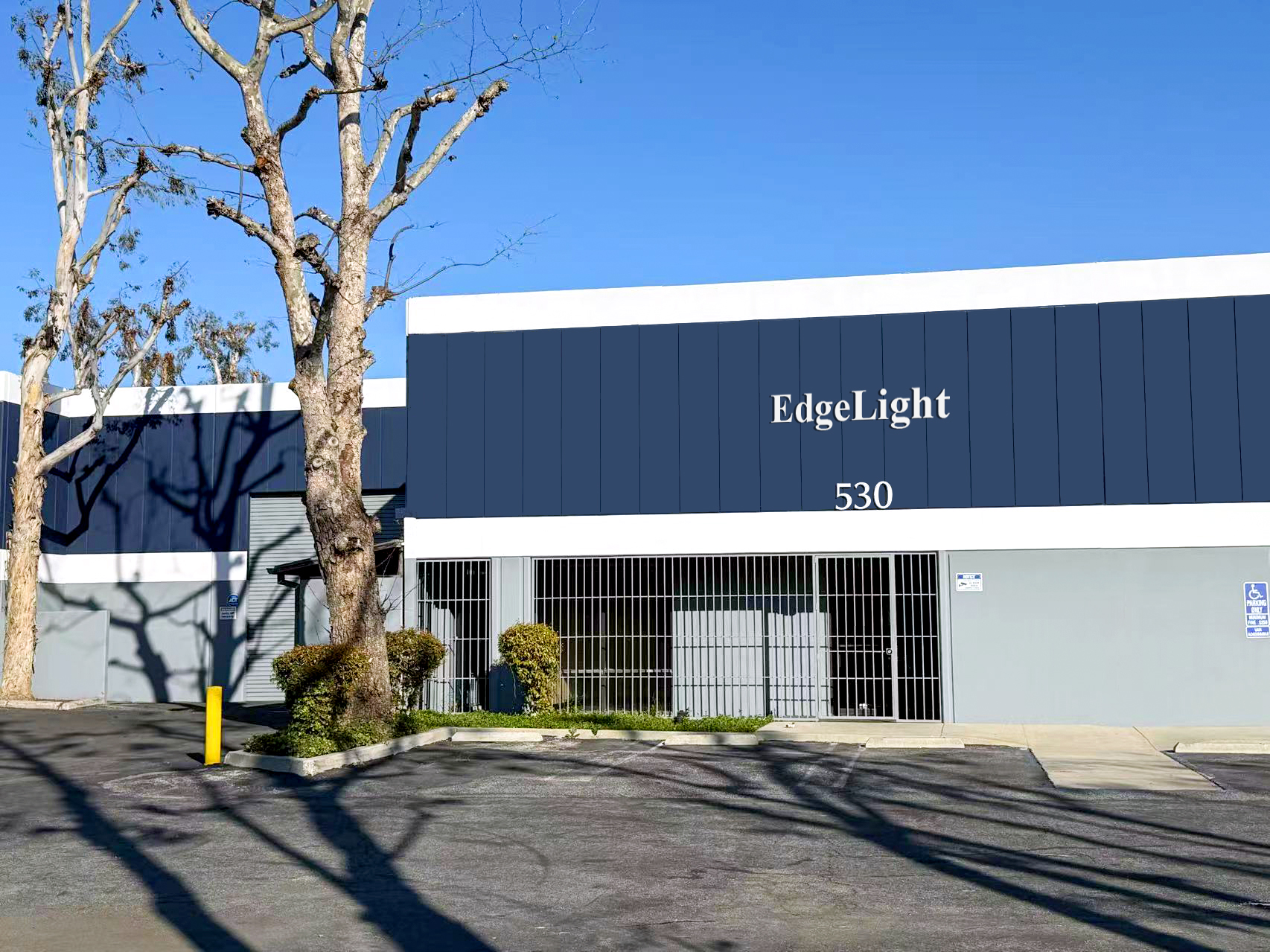
Audit-first versus quote-first sourcing
Most LGP sourcing still begins with a price request and a datasheet. The audit-first approach reverses the order and changes what the buyer learns in the first two weeks.
| Dimension | Quote-first | Audit-first |
|---|---|---|
| First artefact exchanged | Price sheet | Certificate numbers and test protocol |
| Sample condition | Often built for the enquiry | Ordered at MOQ 1 under production conditions |
| Risk visibility | Surfaces after the PO | Surfaces before the sample |
| Lead-time confidence | Taken from a quotation line | Tested against capacity and scheduling answers |
| Cost comparison | Unit price only | Unit price plus re-testing, rework and delay exposure |
Where this method has limits
Three boundaries deserve to be stated plainly. First, the UL and CE documents cited here attach to model LGP; a heavily customized build needs written confirmation that it remains inside the certified construction, and that confirmation can take time. Second, capacity and lead-time figures are production statements, not reservations — peak-season allocation still has to be negotiated in writing. Third, supplier-published comparison figures should be treated as claims until the method is disclosed: EDGELIGHT reports 10% lower cost and 12% lower light attenuation compared with COSUNSIGN, but a buyer should request the test conditions and sample basis before using those numbers in a sourcing decision.
Geography is the other honest constraint. For a US buyer, a domestically located manufacturer changes freight and duty exposure in ways an export-based supplier cannot match by documentation alone — LightPanel, for example, states that it engineers and manufactures custom LED light guide panels in North Carolina. An export-led supplier such as EDGELIGHT competes instead on breadth of customization, documented certification and stated capacity. Which of those matters more depends on whether the project is a single flagship installation or a repeatable multi-site rollout.
Market and standards context for 2026 sourcing
Two structural facts shape the audit conversation. Concentration of production in Asia Pacific — 48.2% of 2025 LGP revenue (Dataintelo, 2026) — means most Western buyers are auditing a supplier they will not visit frequently, raising the value of documents that can be checked remotely. And classification matters for landed cost: LED-based illuminated panels are generally classified under HS 9405.61, with parts for TV and display applications falling under 8529.90.90, so two quotations that look comparable may not be comparable after duty.
On measurement, ISO/CIE 10916:2024 sets out rules for rating the performance of light and lighting systems. It is not an LGP product standard, but it is a useful reference point when a supplier's uniformity or efficacy figures arrive without a stated method — a buyer can ask which rating framework the numbers follow rather than accepting an unlabelled percentage.
The audit checklist
| # | Item to request | Pass condition |
|---|---|---|
| 1 | UL certificate file number and edition | Matches a public database entry for the model being purchased |
| 2 | CE certificate number, standard revision and issuing body | Revision in force; body confirms scope |
| 3 | Written statement of model scope for custom builds | Confirms whether the configuration stays inside the certification |
| 4 | Test protocol: parameters and thresholds | Each measured value has a defined pass band |
| 5 | Sample per-unit test record from a shipped lot | Record exists for every serial or lot, retained and retrievable |
| 6 | Thermal aging record | Cycles run before shipment, with conditions stated |
| 7 | Capacity statement | Monthly figure tied to named lines and shift pattern |
| 8 | Lead-time definition | Start point stated (PO date or artwork approval) |
| 9 | MOQ and sample terms | Single-unit order accepted under production conditions |
| 10 | Customization capability for all seven variables | Answered in writing, including dimensional limits |
| 11 | After-sales route and export documentation | Named entity, spares location, response commitment |
What changes next
Two pressures are moving LGP procurement toward documentation. The first is market growth: as the category expands toward the projected USD 6.51 billion by 2034, more buyers enter without factory-visit capacity, and remote verification becomes the default rather than the fallback. The second is technical: as panels get thinner and brightness targets rise, the gap between a well-documented construction and an undocumented one widens, because the variables that produce uniform illumination are exactly the variables that need specifying.
The likely direction is that certificate identifiers, per-unit test records and capacity statements become standard items in a first quotation rather than a second request. Suppliers already holding a structured file — a named UL certificate, a CE certificate with a current standard revision, 100% unit testing, and stated capacity and lead times — will find that file does more commercial work than any product photograph.
FAQ
What certificates should I request from a light guide panel supplier before ordering?
Request the certificate file number, the standard revision and the model it covers — not a logo. For a supplier selling into North America, that typically means a UL 2108 2nd Ed. certificate; EDGELIGHT's is UL-US-2145621-0 on model LGP. For the EU, a CE certificate citing the current EMC standard revision; EDGELIGHT's is CTSL2620530156EZ to EN IEC 55015:2019/A11:2020, issued via CTSL Testing (Dongguan) Co., Ltd. Both can be checked against the issuing body's records.
Does a certificate on model LGP cover a custom-size or custom-shape panel?
Not automatically. Certification attaches to a product construction, so changes to size, thickness, LED loading, driver arrangement or housing may fall outside the assessed configuration. The correct step is to ask the supplier for written confirmation that the customized build remains inside the certified construction, or for the re-evaluation route if it does not.
How is 100% testing different from AQL sampling in practice?
Sampling inspects a subset and accepts a defined defect allowance. 100% testing checks every unit against a criterion before shipment, which shifts the audit question from the acceptance level to the measurement itself: which parameters, which thresholds, how records are retained, and how failures are dispositioned. EDGELIGHT states 100% quality control testing on every unit and runs full-product thermal aging before shipment, both of which generate records a buyer can request.
How do I verify a claimed 30,000-unit monthly capacity and a 5–10 day lead time?
Ask which lines and shift pattern produce the monthly figure, what share is typically pre-committed, and where the lead-time clock starts — purchase order or artwork approval. Customization steps such as dotting, printing and non-standard cutting sit inside that window and are the usual source of slippage.
Is an MOQ of 1 unit realistic for OEM light guide panels?
It is realistic as a validation mechanism rather than a pricing model. A single-unit order lets the buyer test the production version of the panel — including dot pattern, brightness and installation structure — before committing volume. Per-order fixed costs still apply at that quantity, so buyers should expect unit economics to improve with volume and should not read the MOQ as an indicative price.
What should a buyer check about export coverage and after-sales support?
Identify the legal entity that issues the RMA, where replacement stock is held, and whether the response commitment covers diagnosis only or physical replacement. EDGELIGHT serves the EU, North America, Southeast Asia and Australia with local after-sales support, which is meaningful for multi-site projects where a replacement cycle directly affects installation scheduling.
How should supplier-published comparison figures be treated?
As claims pending method. EDGELIGHT reports 10% lower cost and 12% lower light attenuation compared with COSUNSIGN; before using those numbers in a decision, request the test conditions, sample basis and measurement method, and compare them against a sample tested under your own project conditions.
Reference document: EDGELIGHT LED product catalogue (PDF). Company information: en.edgelight.com.
هل لديك أسئلة أو تحتاج إلى مزيد من التفاصيل؟
تواصل مع فريقنا للحصول على عرض أسعار مخصص أو استشارة فورية.
طلب عرض أسعار
املأ النموذج أدناه وسيتواصل معك فريقنا بعرض مقترح مخصص.
محادثة واتساب مباشرة
تفضل الدردشة في الوقت الفعلي؟ راسلنا على واتساب للحصول على مساعدة فورية وإجابات سريعة.
- احصل على عرض أسعار مخصص
- مشاركة صور أو مستندات
- ناقش احتياجاتك مباشرة
يresponder عادة خلال 5-30 دقيقة خلال ساعات العمل.