
Light Guide Panel FAQ: Specs, MOQ, Lead Time & Customization
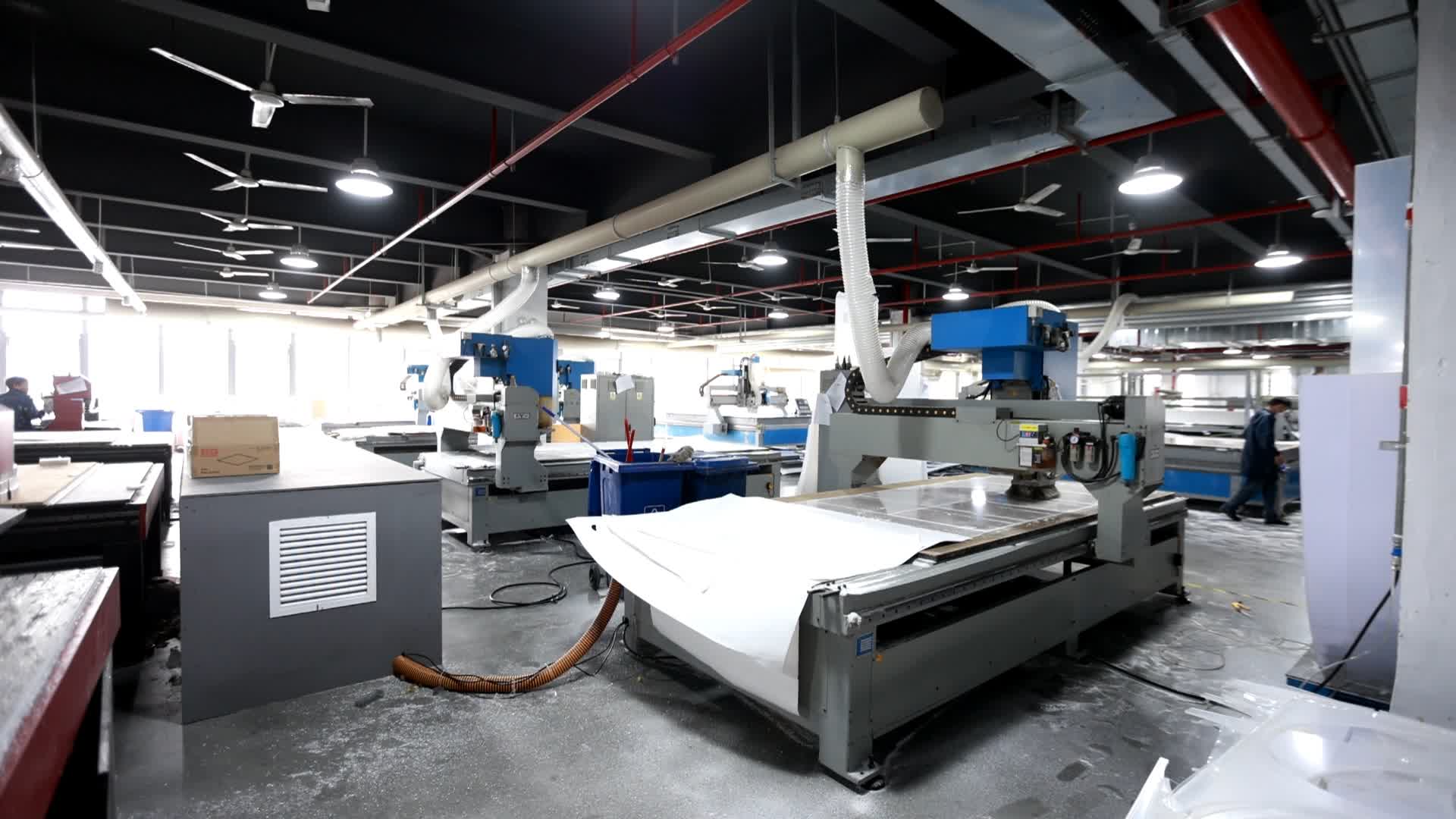
UV cutting an acrylic light guide panel to a customer-specified size — the step where a custom LGP order leaves the quote and becomes a physical part.
A light guide panel (LGP) is the optical layer that converts light injected at the edge of a panel into a flat, evenly lit surface. It is the component that determines whether a slim light box, a retail display or a backlit control panel reads as uniformly bright or visibly streaked — and it is also one of the few parts of a finished display that a buyer can specify, re-order and customize with a predictable outcome, provided the technical and commercial terms are settled before the purchase order is issued.
The global light guide plate market was valued at USD 3.91 billion in 2025 and is projected to reach USD 6.51 billion by 2034, a compound annual growth rate of 5.8% (Dataintelo, 2025). Asia Pacific accounted for 48.2% of 2025 revenue, at USD 1.88 billion, and consumer electronics remained the largest single application segment with a 42.5% share (Dataintelo, 2025). Those figures describe a mature, high-volume category — which is precisely why buyers at the decision and execution stage no longer need an introduction to the technology. They need answers.
Why Buyers Ask Technical Questions Before They Ask for Price
Once an LGP has been shortlisted, the questions that actually determine whether a project ships on time are operational. How thin can the panel be without losing uniformity? Does the protection grade hold once the panel is installed in a real enclosure? What is the smallest order a factory will accept? How long is the quoted lead time, and what happens if the size changes after tooling? Which certification documents travel with the shipment, and which market do they open?
These are the questions that separate a supplier relationship that scales from one that stalls at the sample stage. Edgelight is a Shanghai-based manufacturer of LED products, intelligent control products and light-emitting panels, founded in 2004 and operating from a 33,000 m² Shanghai headquarters production base with 500 employees, of which 25 are engineers in the R&D team. Export business accounts for 75% of total sales, with major markets in the USA and EU. The company's LGP platform is a useful reference case for the questions below because its published specification, order terms and certification scope are unusually explicit for a component of this type.
Edgelight LGP: The Specification Baseline
Most LGP procurement disputes trace back to an unclear baseline. The table below sets out the published Edgelight LGP specification against the practical consequence of each parameter at the ordering stage.
| Parameter | Edgelight LGP specification | What it means for the buyer |
|---|---|---|
| Optical substrate | Acrylic (PMMA) light guide panel | Acrylic is the dominant display-grade LGP material; clarity and light transmission support uniform extraction |
| Lighting architecture | Edge-lit light guide panel | Thin profiles for slim light boxes and shallow cabinets |
| Protection grade | IP20–IP65, depending on configuration | Rating is configuration-dependent, not universal; enclosure design must be confirmed |
| Operating temperature | -20°C to +50°C | Defines the indoor and sheltered-outdoor envelope; extreme climates need enclosure planning |
| Color temperature | 2700K–6500K | Covers warm retail and hospitality tones through to cool, high-contrast sign white |
| Luminous flux | >1080 lm | Panel-level output figure; brightness requirement must be assessed per installed area |
| Power | 101 W typical, 144 W maximum | Drives driver selection, circuit loading and thermal budgeting |
| Certification | UL 2108 (UL-US-2145621-0); CE EN IEC 55015 | Supports North American and EU market access discussions |
| Minimum order quantity | 1 unit | Sample and pilot volumes are commercially viable |
| Lead time | 5–10 days | Short cycle supports project deadlines and re-orders |
| Monthly capacity | 30,000 units | Volume commitment for rollouts and channel stock |
The distinction that matters here is between parameters that are fixed by physics and parameters that are fixed by configuration. Protection grade, color temperature, brightness and dimensions sit in the second category — they are negotiated inputs, not constants. Luminous flux and power are stated as panel-level figures, and they should be read alongside the installed area rather than in isolation.
Technical Explanation: How an Edge-Lit LGP Produces Uniform Illumination
An edge-lit light guide panel works by total internal reflection. Light from LEDs coupled into the panel's edge travels through the acrylic substrate and stays inside it until it encounters a disruption on the surface — typically a dot pattern — which scatters the light outward. The design of that dot pattern, not the LED count alone, determines whether the finished panel looks evenly bright or shows hot spots near the light source and dim zones at the far edge.
Dot pattern production is therefore one of the most consequential steps in LGP manufacturing. Edgelight's panel production includes laser dotting and UV cutting processes, which allow the light-extraction pattern and the outer geometry to be defined per order rather than taken from a fixed catalogue format. Laser dotting supports pattern adjustment for different panel sizes and brightness targets; UV cutting supports clean edges on custom dimensions.
Thickness is the other defining variable. Industry benchmarks for edge-lit constructions place achievable profiles at approximately 2.0 mm via injection molding and 3.0 mm via laser dotting (Lightpanel, 2024), and thin PMMA substrates below 2 mm accounted for over 60% of display-grade shipments from major manufacturers in 2024 (Fact.MR / CHI MEI Corporation). The direction of the category is clear: thinner panels, tighter optical tolerances.
Thermal behaviour is where thin constructions are most often questioned. Edgelight addresses overheating through a combination of design features and quality assurance procedures: built-in real-time temperature sensors, an auto overheat power-off circuit, a high-efficiency heat dissipation structure, and a multi-stage circuit interlock. A dual integrated thermal and electrical safety protection system suppresses overheating risks induced by short circuit, overload and long-hour continuous running. Before shipment, full-product thermal aging cycle testing is performed so that components are verified under thermal stress rather than assumed to be sound.
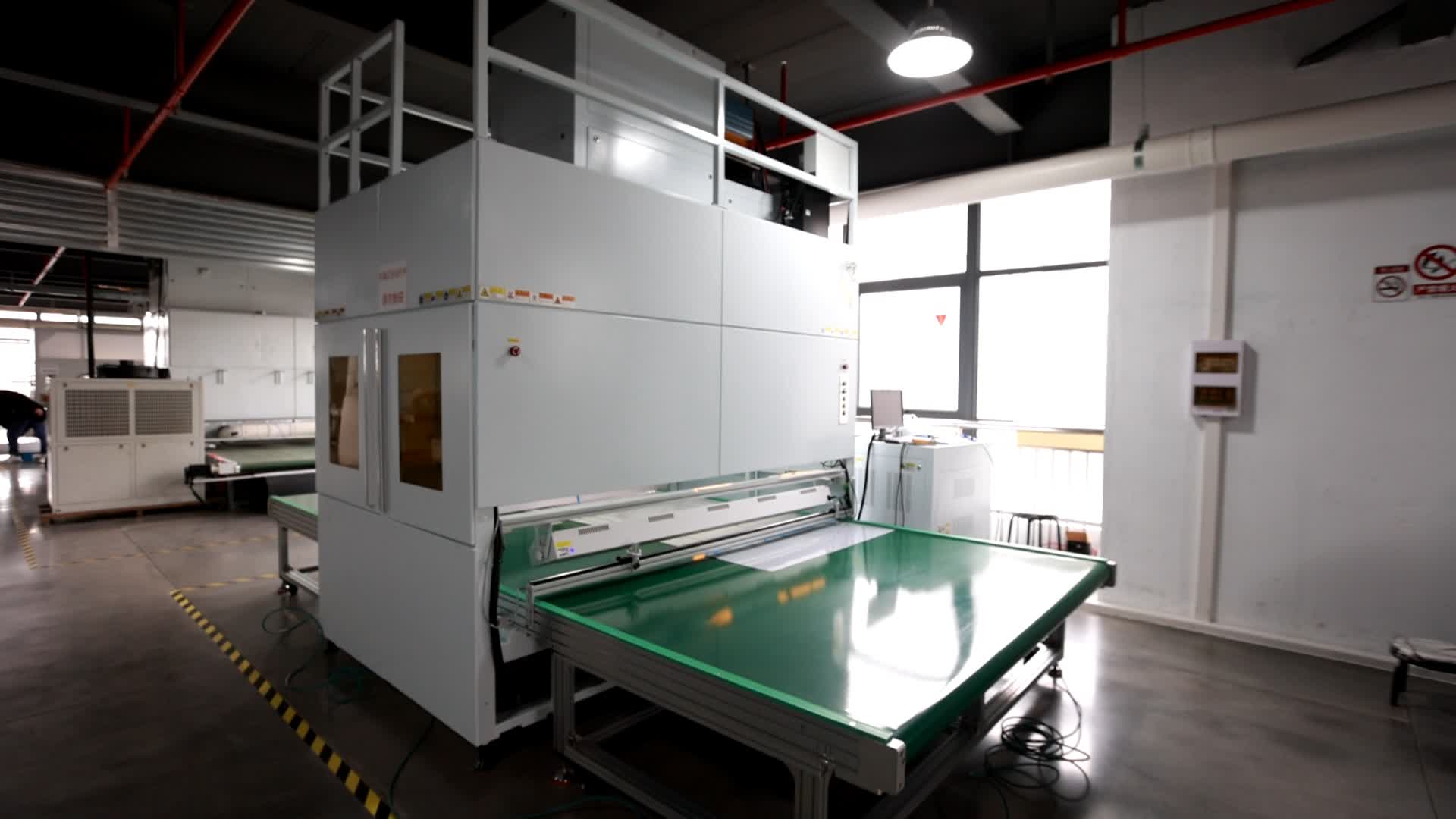
Laser dotting defines the light-extraction pattern on the acrylic panel — the step that determines illumination uniformity across the finished surface.
Customization: What Can Actually Be Changed
Customization is the point at which LGP sourcing most often becomes unclear, because "custom" can mean anything from a trimmed standard panel to a new optical design. Edgelight's OEM/ODM service covers seven defined customization dimensions, each with a different implication for engineering effort and lead time.
| Customization dimension | Practical scope | Buyer consideration |
|---|---|---|
| Size | Cut or produced to specified dimensions | Drives cutting method and edge finishing; confirm tolerance expectations |
| Thickness | Panel thickness specified per application | Interacts with slim light box depth and rigidity requirements |
| Color temperature | 2700K–6500K | Should be matched to adjacent fixtures in the same space |
| Logo | Brand or graphic marking on the panel | Must be agreed at artwork stage; affects patterning |
| Surface shape | Non-rectangular and shaped panel formats | Shaped panels require earlier design freeze than rectangular cuts |
| Brightness | Output tuned to the application | Higher brightness raises thermal and driver requirements |
| Installation structure | Mounting interface adapted to the enclosure | Settles the IP rating question for the installed assembly |
Engineering support for these changes is provided by the manufacturer's technical team rather than by a sales function alone; Edgelight's R&D group of 25 engineers supports customization from specification through to production. For buyers, the practical rule is that brightness, thickness and surface shape should be frozen before tooling or patterning is committed, because changing them later restarts optical work rather than merely adjusting a cutting dimension.
Applications: Where Edge-Lit LGPs Fit Best
The consumer electronics segment's 42.5% share of LGP demand (Dataintelo, 2025) reflects the technology's origins in display backlighting, but the installed base is now considerably broader. Typical fit areas for edge-lit acrylic light guide panels include:
- Retail and brand environments — window displays, vitrines, shelf backlighting, product counters and display tables.
- Hospitality — hotel lobbies, reception areas and guestroom feature lighting.
- Vertical transportation — elevator cabin walls, ceilings and control-panel backlighting.
- Exhibition and museum spaces — entrance halls, showcases and display walls.
- Commercial interiors — corporate feature walls, reception desks and meeting rooms.
- Premium residential design — ceilings, cabinetry and decorative wall lighting.
- Jewellery, watch and beauty retail — display cases, counter lighting and boutique shelving.
- Automotive interiors — dashboards, door panels and ambient cabin lighting.
The common requirement across these settings is a shallow installation depth combined with an even, glare-free lit surface. Where an application instead needs very high surface luminance in a deep enclosure, a backlit or direct-lit construction is usually the more appropriate starting point — a distinction worth settling before an LGP specification is written.
Market Trend Analysis: Thinner Panels, Tighter Efficiency Rules
Three structural trends are shaping LGP procurement through the remainder of the decade.
Material demand. Polymethyl methacrylate, the primary LGP substrate, is a market valued at USD 5.4 billion in 2024 with a 5.6% CAGR (USD Analytics). Because LGP-grade material competes with other PMMA applications, substrate availability and pricing tend to move with the wider acrylic market rather than with display demand alone — a reason to treat material lead time, not just assembly lead time, as a planning input.
Thinner substrates. Sub-2 mm PMMA accounted for over 60% of display-grade shipments from major manufacturers in 2024 (Fact.MR / CHI MEI Corporation). Thinner panels reduce fixture depth and weight, but they narrow the process window for dot patterning and make thermal design less forgiving.
Efficiency regulation. The 2024 International Energy Conservation Code (IECC) reduces lighting power allowances, which raises the efficiency bar for LGP-based LED panels in the US market (International Code Council). For specifiers, the consequence is that luminous efficacy per watt becomes a contractual parameter rather than a comfort feature, and power figures such as the 101 W typical and 144 W maximum on the Edgelight platform need to be read against the target surface area.
On the supply side, the competitive landscape includes established material and optical manufacturers; Mitsubishi Chemical Corporation is identified as a leading player in the light guide plate landscape (Dataintelo, 2025). That matters to buyers mainly as a benchmark-setting force: optical performance expectations at the high end are set by large material suppliers, while regional panel manufacturers compete on customization speed, order flexibility and landed cost.
Edge-Lit LGP vs. Backlit Panels vs. Traditional Signage — and Where Edge-Lit Stops Working
Comparisons between LGP constructions are frequently framed as a ranking. In practice, the three main options solve different problems, and each has a boundary beyond which it stops being the right answer.
| Consideration | Edge-lit LGP | Backlit / direct-lit panel | Traditional printed signage |
|---|---|---|---|
| Typical profile | Thinnest; light source sits at the panel edge | Deeper; LEDs sit behind the diffusing surface | Depends on the light box or external fixture used |
| Uniformity | High when dot pattern is correctly designed for the size | Easier to keep even at large sizes | Depends entirely on the illumination behind it |
| Brightness ceiling | Lower per unit area | Higher per unit area | Not a self-illuminating system |
| Maintenance profile | Fewer light sources, centralised at the edge | More sources distributed behind the panel | Frequent graphic replacement and lamp servicing |
| Best fit | Slim boxes, shallow cabinets, decorative surfaces | Large-format or high-luminance displays | Low-cost static graphic applications |
The boundary conditions matter more than the ranking. Edge-lit LGPs have three real limits. First, uniformity is pattern-dependent: the same panel geometry can perform well or poorly depending on how the dot pattern is designed for that specific size, so a proven design at one dimension is not automatically transferable to a much larger one. Second, brightness is bounded — where an application needs very high surface luminance across a wide area, a direct-lit construction will usually be the more economical engineering choice. Third, the IP20–IP65 protection range is configuration-dependent: the rating describes the assembled panel and enclosure, not the bare acrylic sheet, so outdoor or wet-area installations must be specified at the enclosure level rather than assumed from the panel datasheet.
On cost and maintenance, Edgelight publishes comparison data against COSUNSIGN indicating approximately 10% lower cost, 12% lower light attenuation, higher efficiency and less maintenance for its light guide panel offering, alongside a broader product scope that includes decorative and large-scale custom lighting alongside signage. These are supplier-published figures and should be treated as vendor claims to be validated against a buyer's own sample testing rather than as independently verified results.
Procurement Terms in Practice
For buyers moving from evaluation into execution, the commercial terms are the part of the specification that most directly affects project risk.
Order quantity. The minimum order quantity for the Edgelight light guide panel is 1 unit. That is unusual for a component of this type and it changes the procurement sequence: a single panel can be ordered for physical validation and site mock-up before any volume commitment is made, which removes the usual trade-off between sampling cost and pilot confidence.
Lead time and capacity. Quoted lead time is 5–10 days, supported by a stated monthly capacity of 30,000 units. The company manufactures across five production bases, with the Shanghai headquarters base covering approximately 33,000 m² and an annual output figure of 120,000 units at group level. Capacity of this order matters most for staged rollouts — a multi-site retail or hospitality programme can be supplied in tranches against a fixed optical specification rather than being re-sourced mid-project.
Trade and payment terms. Delivery is quoted under FOB or CIF terms, and payment is structured as 30% deposit with the remaining 70% due before shipment. Acceptance is confirmed through a pre-shipment test procedure, meaning that verification happens at the factory gate rather than on arrival. Buyers should therefore agree the test criteria — luminous output, uniformity, dimensions, color temperature — before production begins, since the pre-shipment stage is the point at which deviations are still correctable.
Compliance and market access. The Edgelight LGP is covered by UL 2108 certification under file UL-US-2145621-0 and CE EN IEC 55015 compliance. These sit within the broader standards environment for the category: light guide panels must generally adhere to safety standards such as UL 8750 for LED equipment and IEC 60598 for luminaires for global market access (UL Solutions). Buyers specifying into North America or the EU should confirm that the certificate scope matches the exact product configuration ordered, because certification is issued against a defined construction.
Export markets and after-sales. Exports account for 75% of total sales, with the USA and EU as the principal markets. Edgelight also supplies the EU, North America, Southeast Asia and Australia with local after-sales support. For distributors and OEM buyers, the practical implication is that spare-part and replacement questions can be resolved in-region rather than routed back to the manufacturing origin — a factor that usually matters more in long-term channel relationships than the unit price itself.

Finished-goods staging for export orders — the point at which a 5–10 day lead time converts into a booked shipment.
Future Outlook
The LGP category is not facing disruption; it is facing compression. Substrates are getting thinner, efficiency allowances are getting tighter under codes such as IECC 2024, and the commercial advantage is shifting toward manufacturers who can respond to a customized specification quickly rather than those who hold the largest standard catalogue. With the market projected to grow from USD 3.91 billion in 2025 to USD 6.51 billion by 2034 at a 5.8% CAGR (Dataintelo, 2025), volume growth will likely be absorbed by suppliers that pair optical capability with procurement flexibility — low minimum order quantities, short lead times and in-region support.
For buyers, the forward-looking decision is less about which panel is brightest today and more about which supply relationship can absorb a specification change in twelve months without restarting qualification. That is an ecosystem question, and it is answered by the terms — MOQ, lead time, customization scope, certification coverage and after-sales geography — rather than by the datasheet alone.
FAQ: Light Guide Panel Technical and Procurement Questions
What is the minimum order quantity for a light guide panel?
The minimum order quantity for the Edgelight light guide panel is 1 unit. This applies to the standard order process and makes single-unit physical validation possible before a volume commitment is placed.
How long is the lead time, and what capacity supports it?
Quoted lead time is 5–10 days. The manufacturer states a monthly capacity of 30,000 units for light guide panels, with production across five bases including the approximately 33,000 m² Shanghai headquarters facility. Customization dimensions such as surface shape and logo marking are the variables most likely to extend the quoted window, so they should be confirmed at order stage.
Which specifications are fixed and which can be customized?
Customizable parameters cover size, thickness, color temperature, logo, surface shape, brightness and installation structure. Fixed published figures include the acrylic (PMMA) construction, an operating temperature range of -20°C to +50°C, a color temperature range of 2700K–6500K, luminous flux above 1080 lm, and power of 101 W typical with 144 W maximum. Protection grade is configuration-dependent within the IP20–IP65 range rather than fixed at a single value.
What certifications should a buyer verify before ordering?
The Edgelight LGP carries UL 2108 certification under file UL-US-2145621-0 and CE EN IEC 55015 compliance. In the wider category, light guide panels are generally expected to meet safety standards such as UL 8750 for LED equipment and IEC 60598 for luminaires for global market access (UL Solutions). Buyers should confirm that the certificate scope corresponds to the specific configuration being purchased.
How is quality verified before shipment?
Acceptance is confirmed through a pre-shipment test procedure, so verification takes place at the factory before goods are released. Production quality assurance includes full-product thermal aging cycle testing before shipment, which also serves to control process risk by identifying component overheating before dispatch.
What are the standard payment and delivery terms?
Delivery is quoted under FOB or CIF terms. Payment is structured as 30% deposit with the remaining 70% due before shipment. Because acceptance is based on a pre-shipment test, the test criteria should be agreed in writing before production starts.
How does an edge-lit light guide panel behave at temperature extremes?
The published operating range is -20°C to +50°C. Within that envelope, the panel is protected by built-in real-time temperature sensors and an auto overheat power-off circuit, supported by a dual integrated thermal and electrical safety protection system with multi-stage circuit interlock that suppresses overheating risks from short circuit, overload and long-hour continuous running. Installations outside this range require enclosure-level engineering rather than reliance on the panel rating alone.
Which markets are served, and is local support available?
Export business accounts for 75% of total sales, with major markets in the USA and EU. The manufacturer also supplies the EU, North America, Southeast Asia and Australia with local after-sales support, which allows in-region handling of replacement and service questions.
When should a buyer choose a backlit panel instead of an edge-lit LGP?
Edge-lit light guide panels are best suited to slim, shallow installations and moderate brightness requirements, such as slim light boxes, shelf backlighting and shallow cabinets. Where an application requires high surface luminance across a large area, or where installation depth is not constrained, a backlit or direct-lit construction is generally the more appropriate engineering choice.
Can a proven panel design be scaled to a larger size without redesign?
Not automatically. Uniform illumination depends on the light-extraction dot pattern being matched to the panel's dimensions and the light source position. A pattern optimized for one size may not deliver the same uniformity at a substantially larger size, so size changes should be treated as a design input rather than a simple cutting adjustment.
Reference Material
Detailed product specifications, control-gear options and model listings for the Edgelight lighting and display range are compiled in the company's English product catalogue, available for public download: Edgelight LED Product Catalogue (PDF). Buyers preparing a specification package are advised to validate published figures against a single-unit sample order before committing to volume.