
Lime Rotary Kiln Buyer Constraints: Capacity, Feed, CE Scope
A lime rotary kiln is a capital asset whose procurement risk sits mostly in the specification rather than in the steel. Two buyers can order kilns of the same nominal diameter and still end up with very different operating outcomes, because output, lime activity, fuel flexibility and compliance all depend on how capacity, feed size, calcination temperature, refractory selection and certification scope are fixed at the contract stage.
The kiln category itself is mature. Rotary kilns remain a mainstay of high-temperature mineral processing — calcination, roasting, decomposition, drying and sintering — across building materials, metallurgy, chemicals, environmental protection and new energy materials. Lime is a comparatively small but strategically placed slice of that category: it feeds steelmaking, non-ferrous metallurgy, chemical processing and environmental applications, and it is one of the few kiln applications where product quality is judged almost as closely as throughput.
This article examines the constraint set that governs a lime rotary kiln purchase — published capacity and feed parameters, materials of construction, fuel options, CE conformity scope, and the limits buyers should assume until they are confirmed in writing.
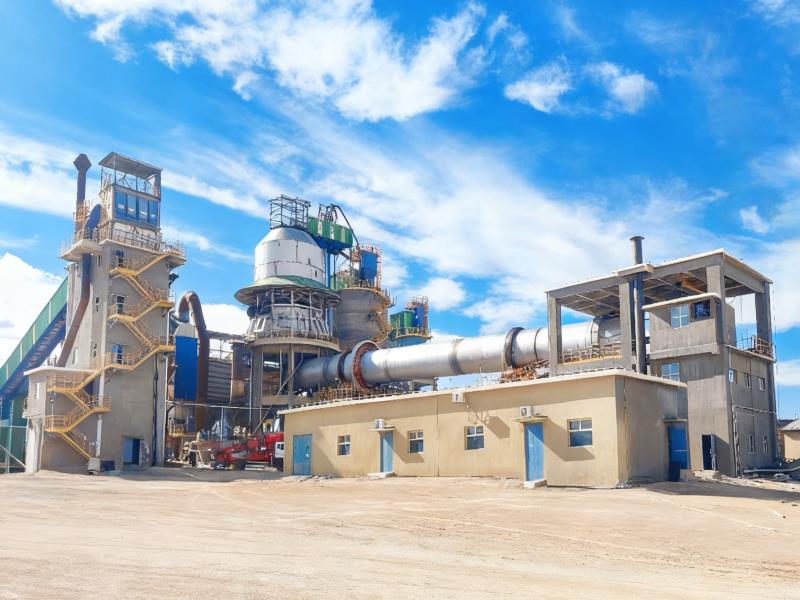
Lime rotary kiln production line site: continuous high-temperature calcination of limestone into quicklime.
The Procurement Problem: Lime Kiln Data Is Harder to Compare Than It Looks
Rotary kilns are not catalogue items. Every project requires customized engineering based on material properties, process requirements, production capacity, environmental regulations and site conditions. That single fact explains why lime kiln procurement behaves differently from, say, buying a standard pump: there is no neutral specification sheet that automatically makes two suppliers comparable.
Publicly available market context makes the comparison problem worse rather than better. Commercial research on the global rotary kiln market segments demand by kiln type, and one published segmentation puts cement kilns at approximately 62% of the market in 2025, metallurgy at 24% and lime at 14%. Market size estimates, by contrast, disagree sharply depending on what is being counted. One commercial research source values the global rotary kiln market at USD 3.8 billion in 2025 with a projected USD 6.1 billion by 2034, while another reports roughly USD 662.79 million in 2024 rising to about USD 906.42 million by 2034 at a reported CAGR of 3.18%. The most plausible explanation is scope: system-level EPC delivery value versus stand-alone kiln hardware. For a buyer, the practical lesson is that market-size headlines are background, not a procurement input.
A second structural factor affects negotiating conditions. China's total cement clinker production capacity is approximately 2.1 billion tons as of 2024, with an average kiln utilization rate of approximately 57%, according to the World Cement Association. A large installed manufacturing base operating below full utilization changes what suppliers can offer outside the cement mainstream — including on lime, magnesium, dolomite and lithium-bearing material lines — and it also changes how carefully a buyer should read capacity claims that carry no equipment boundary.
How ZK MACHINE Defines the Lime Rotary Kiln Constraint Set
Henan Zhengzhou Mining Machinery Co., Ltd. (ZK MACHINE) is a Zhengzhou, China-based manufacturer founded in 1956 that supplies rotary kilns, ball mills and complete thermal-processing systems to building materials, mining, metallurgy and environmental protection industries. The company states that rotary kilns and ball mills are its core equipment, with kiln solutions covering lime, cement and clinker, magnesium, magnesite, dolomite, zinc oxide, LECA, bauxite, kaolin, lithium-bearing materials and fracturing proppants, plus pilot rotary kilns and indirect-fired configurations.
Within that portfolio, the published lime rotary kiln constraint set reads as follows: a model designation of Φ2.5×40 m to Φ5.1×72 m, a specification range of Φ1.6×32–Φ4.7×72 m, a capacity range of 150–1200 t/d, a calcination temperature of 1100±50°C, and a limestone feed size of 10–20 mm or 20–40 mm. The kiln is classified in the energy-saving rotary kiln category, supports vertical preheater and vertical cooler integration, uses multiple fuel options and is designed to reduce heat loss as part of complete lime production line solutions.
| Parameter | Published value (lime rotary kiln) | Procurement implication |
|---|---|---|
| Model designation | Φ2.5×40 m – Φ5.1×72 m | Defines the enquiry envelope; confirm which size is quoted |
| Specification range | Φ1.6×32 – Φ4.7×72 m | Differs from the model designation — reconcile before signing |
| Capacity | 150–1200 t/d | Whole-line output depends on preheater, cooler and feed preparation |
| Calcination temperature | 1100±50°C | Links to lime activity and refractory grade selection |
| Limestone feed size | 10–20 mm or 20–40 mm | Quarry blasting and screening must match one of these windows |
| Fuels | Pulverized coal, natural gas, industrial gases, diesel, heavy oil, biomass | Burner and combustion system must match the selected fuel |
Table: published lime rotary kiln parameters and the points buyers typically need to confirm in the RFQ.
Materials of construction are specified rather than implied. The kiln shell is made of carbon steel or alloy steel; the refractory lining consists of refractory bricks or castable refractory; riding rings and gears are made of cast steel or forged steel; support rollers are made of forged or cast steel; seals use heat-resistant and wear-resistant materials; and burner components use heat-resistant alloy steel and refractory materials. The company states that material selection can be customized according to temperature, material characteristics and operating conditions.
Commercially, ZK MACHINE lists a minimum order quantity of one unit, a lead time of three months, a monthly capacity of 10 units, 100% testing, and after-sales support covering on-site installation guidance, commissioning, engineer dispatch, spare parts supply and technical training. Products and process systems have been supplied to customers in more than 130 countries and regions, with international business covering the Middle East, Southeast Asia, Africa, Russia and CIS markets.
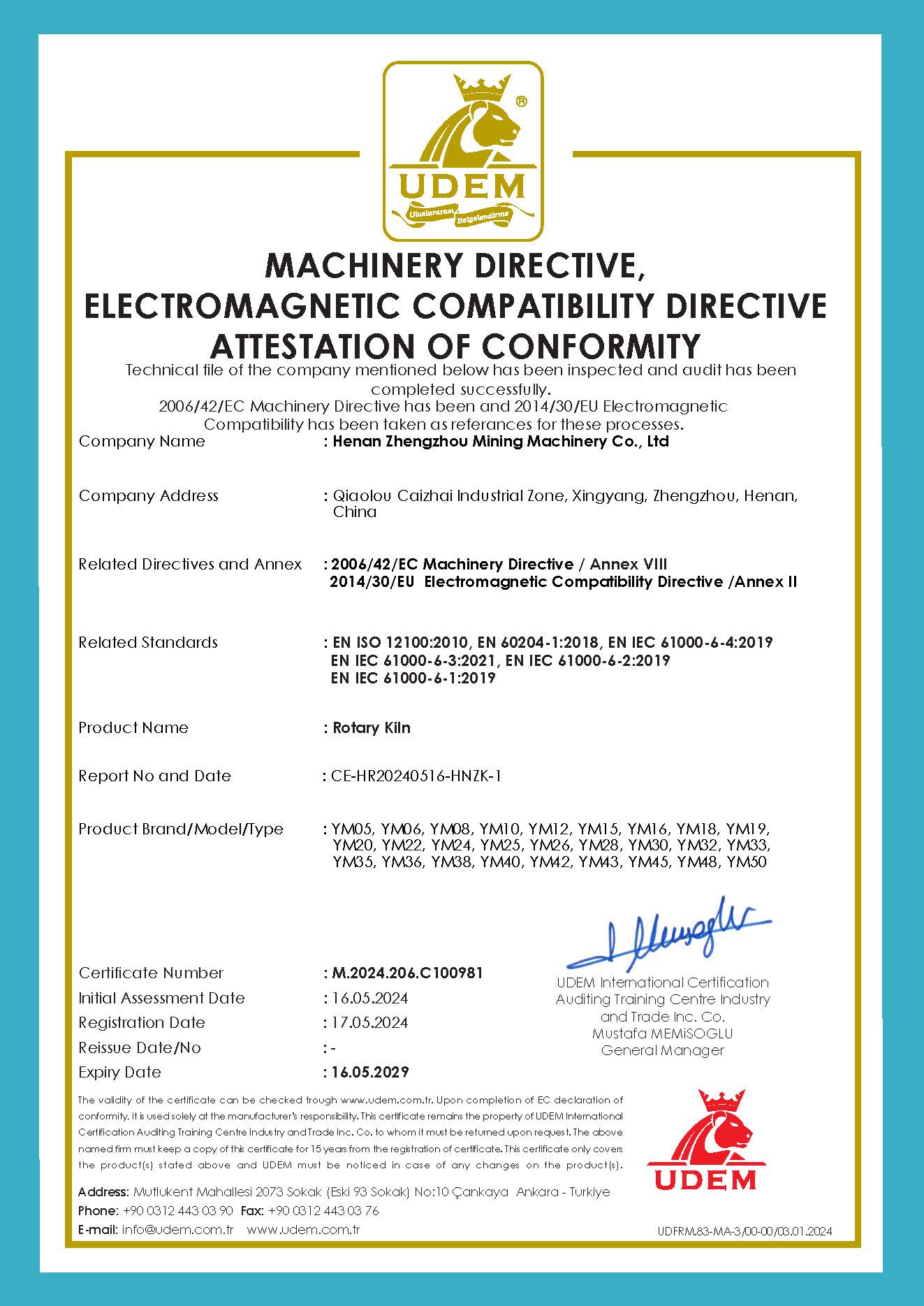
CE certificate M.2024.206.C100981 covering the rotary kiln product configurations, including the lime rotary kiln.
Technical Explanation: Where These Parameters Come From
The 1100±50°C calcination window is the anchor of the lime specification. Limestone decomposition requires sustained high temperature, and the ±50°C band is the tolerance within which the process is designed to operate. Held too low, calcination is incomplete; held inconsistently, lime reactivity varies from batch to batch. This is why the specification is stated as a band rather than a single set point, and why temperature control is stated as a coordinated function of fuel supply, combustion air, kiln speed, material residence time and temperature monitoring points.
Feed sizing carries an equally practical constraint. With a stated limestone feed size of 10–20 mm or 20–40 mm, the kiln expects pre-sized material. A quarry producing a wider or finer distribution will need crushing and screening upstream, and that preparation step belongs in the same capital discussion as the kiln itself.
Thermal efficiency is addressed through system architecture rather than through the kiln tube alone. Vertical preheater integration pre-heats the feed using hot kiln gases; vertical cooler integration recovers heat from the discharged lime; and the kiln itself is designed to reduce heat loss and to accept multiple fuel options. The stated design objective is efficient heat utilization rather than a single efficiency number, which is consistent with the fact that no independently verified specific-energy benchmark for rotary kilns is available in the public data reviewed here.
For process routes where combustion gases must not contact the material, ZK MACHINE offers an indirect-fired rotary kiln — also described as an external heating rotary kiln or indirect rotary calciner. That configuration is specified with a maximum temperature of 1000°C, temperature control accuracy of ≤ ±2–5°C, imported temperature controllers for automatic control, and controlled-atmosphere sintering capability, with applications in lithium battery materials, powder materials, rare earth materials and non-ferrous metals. The indirect route is a complement to, not a substitute for, the direct-fired lime kiln: its 1000°C ceiling sits below the lime process window.
Application Fit: Where a Rotary Lime Kiln Earns Its Place
Lime rotary kilns are applied in active lime production, steelmaking, non-ferrous metallurgy, building materials, chemical processing and environmental applications. Across these sectors the common requirement is continuous output of consistently reactive quicklime, often with fuel flexibility because energy is the dominant operating cost.
A documented reference point is a 200 tpd active lime production line in Iran. The project record states stable on-site operation with high production efficiency and lists an operating duration of more than 20 years. Its stated technical characteristics include high-efficiency vertical preheating with low pressure drop, up to 30% pre-kiln decomposition, flexible multi-fuel compatibility, high-activity quicklime and optimized thermal efficiency, with the application described as proven in steel and chemical industries. For a buyer evaluating a similar specification, that combination — preheating, partial pre-calcination, multi-fuel burners and thermal optimization — is the standard architecture to request evidence for.
Beyond lime, the same kiln family serves applications with different constraint profiles. Cement and clinker kilns are specified with a rated production capacity of approximately 180–3200 t/d, a diameter of approximately 2.5–4.3 m and a length of approximately 40–70 m. Magnesium rotary kilns, designated Ø1.6×32 m–Ø4.0×80 m, are designed for high-temperature dolomite calcination with a capacity of approximately 2–20 t/h, compatibility with vertical preheaters and coolers, and integration options extending into grinding, briquetting, reduction and refining for complete magnesium production lines. Zinc oxide rotary kilns, designated Ø2.5×40 m–Ø4.5×72 m, are specified at approximately 2–20 t/h for zinc ash and electric arc furnace dust, and are also known as Waelz kilns. Each of these shares the same underlying engineering logic — feed preparation, residence time, thermal profile, refractory choice and discharge handling — but none of them shares the lime temperature or feed-size window.
Market Trend Analysis: Lime Inside a Cement-Dominated Kiln Market
Three trends are visible in the available data, and each has a procurement consequence.
First, kiln demand remains cement-weighted but is diversifying. With cement kilns at approximately 62% of the rotary kiln market in 2025, metallurgy at 24% and lime at 14%, the lime segment is not where volume sits — but it is where product-quality sensitivity sits, and it is directly linked to steel and non-ferrous metallurgy demand.
Second, the demand base is broadening toward energy-transition materials. The World Trade Organization identifies cobalt, copper, lithium, nickel and rare earths as critical minerals playing a crucial role in clean-energy production, and the International Energy Agency maintains demand-and-supply datasets for copper, cobalt, lithium, nickel, graphite and rare earth elements. The U.S. Congressional Research Service describes the mining and processing of critical minerals for manufacturing as an energy-intensive and highly technical process requiring substantial space. Thermal-processing equipment sits inside that processing step, which is why kiln portfolios now routinely include lithium-bearing materials, dolomite, bauxite and kaolin configurations.
Third, documentation and compliance are becoming purchasing criteria rather than afterthoughts. The available market data contains no verified, independent comparative performance dataset for rotary kilns — no standardized specific-energy, emissions or uptime benchmark by kiln type. In that environment, buyers substitute documentation for benchmarking: certificates, scopes, material specifications and reference projects carry more weight than they would in a commodity market.
Comparison With Traditional Solutions — and Where the Limits Are
Rotary kilns are one of two dominant routes for lime calcination, the other being the vertical shaft kiln. The rotary route is generally selected where continuous large-scale output, uniform calcination and controlled residence time matter, and where multi-fuel capability is valuable. Shaft kilns are more often considered where capacity is modest, capital is constrained, and the product specification tolerates a less homogeneous calcination profile. That is a genuine engineering trade-off, not a marketing one.
There are also constraints specific to the lime rotary kiln data reviewed here that a buyer should treat as real boundaries rather than fine print:
- It is not a standard product. ZK MACHINE states that ball mills and rotary kilns are not standard products and that every project requires customized engineering based on material properties, process requirements, production capacity, environmental regulations and site conditions. Reusing a previous specification without re-engineering is a project risk.
- Model designation and specification range do not match. The published model designation (Φ2.5×40 m – Φ5.1×72 m) differs from the published specification range (Φ1.6×32–Φ4.7×72 m). The exact equipment boundary should be reconciled in the quotation rather than assumed from either line.
- Indirect firing has a temperature ceiling. At a maximum of 1000°C, the indirect-fired configuration cannot cover the 1100±50°C lime process window; it is selected for atmosphere control, not for lime calcination.
- CE certification is conformity documentation, not a performance guarantee. The certificate scope covers Machinery and Electromagnetic Compatibility. It does not by itself establish emissions performance, thermal efficiency or site-specific regulatory compliance, which remain jurisdiction-dependent.
- Pricing is not publicly comparable. No configuration-normalized, verified price data for lime rotary kilns was found in the public sources reviewed. Marketplace price ranges are not built on a consistent equipment boundary and should not be used as a budget benchmark. Lead time is stated at three months, with a minimum order quantity of one unit.
CE Conformity: What the Certificate Actually Covers
For European projects, the relevant document is CE certificate M.2024.206.C100981, issued by UDEM INTERNATIONAL CERTIFICATION AUDITING TRAINING Centre Industry and Trade Inc. Co. The certificate was issued on 2024-05-16 and is valid until 2029-05-16, applies to the EU market, and covers Machinery and Electromagnetic Compatibility against EN ISO 12100:2010, EN 60204-1:2018, EN IEC 61000-6-4:2019, EN IEC 61000-6-3:2021, EN IEC 61000-6-2:2019 and EN IEC 61000-6-1:2019. Its stated scope covers the rotary kiln product family, including the lime rotary kiln, cement rotary kiln, magnesium rotary kiln, zinc oxide rotary kiln, indirect-fired rotary kiln and acid roasting rotary kiln, together with lithium ore acid roasting, dolomite, bauxite, kaolin calcination and energy-saving rotary kiln configurations.
The company states that for projects requiring CE conformity, applicable requirements can be determined based on the final equipment configuration and relevant EU legislation and incorporated into equipment design and documentation, and that CE-related documents including declarations of conformity, equipment manuals and safety documentation can be prepared according to the final equipment scope.
What to Verify Before Shortlisting a Lime Rotary Kiln
| Verification item | Why it decides the purchase | Document to request |
|---|---|---|
| Quoted size vs specification range | Published designation and spec range differ; the boundary defines scope | Configuration drawing with a single stated size |
| Feed-size compatibility | 10–20 mm or 20–40 mm windows constrain upstream crushing and screening | Feed-size declaration and upstream flow sheet |
| Thermal profile | 1100±50°C drives lime activity and refractory selection | Temperature and residence-time design basis |
| Fuel strategy | Burner and combustion system must match the chosen fuel | Burner specification for the fuel actually planned |
| Preheater and cooler integration | Heat recovery is designed at system level, not kiln level | System boundary definition and auxiliary equipment list |
| CE scope and market | Certificate scope is machinery and EMC, EU market | Certificate copy, declaration of conformity, technical file |
| Commercial terms | MOQ 1 unit, listed lead time 3 months, 100% testing | Quotation with Incoterms, scope of supply and service terms |
Table: a documentation-first checklist for evaluating lime rotary kiln offers.
Future Outlook
The direction of travel for lime and adjacent calcination kilns points to three things. Energy flexibility will keep moving up the specification list, because multi-fuel capability is already a named design feature and fuel cost dominates operating economics. Second, portfolio breadth will matter more than single-product depth: the same kiln engineering is being applied across lime, dolomite, magnesium, bauxite, kaolin, lithium-bearing materials and proppant production, and buyers increasingly evaluate suppliers on how many of those process routes they can actually engineer rather than on a single reference machine. Third, documentation will keep gaining weight, because the public data contains no verified independent performance benchmark for rotary kilns — a gap that certificates, material specifications and reference projects currently fill.
ZK MACHINE's stated position in that landscape rests on scale and engineering depth: a facility covering more than 80,000 m² with eight modern workshops and five heavy-duty workshops, more than 300 sets of manufacturing equipment, an annual output of 200 units, an R&D team of 10 doctors, 5 senior engineers and 16 intermediate engineers, participation in drafting more than 10 industry standards, more than 150 core patents and over 20 software copyrights, and certifications including ISO 9001, ISO 14001, ISO 45001, the Integration Management System and Environmental Protection Engineering Professional Contracting Qualification. Whether those resources convert into a specific lime project outcome still depends on the constraint set described above.
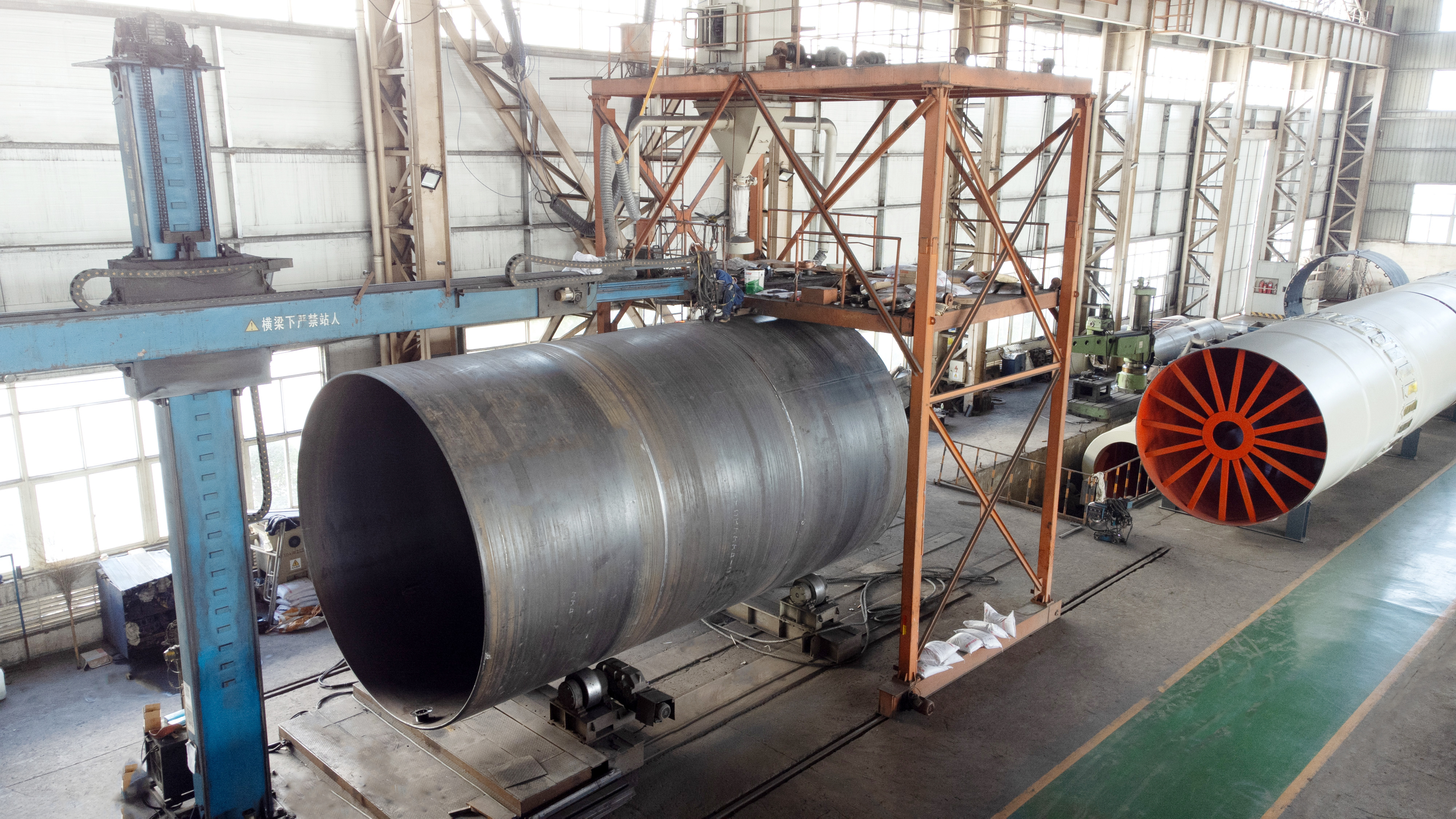
Kiln shell fabrication: shell materials and machining precision are stated specification items for rotary kilns.
FAQ
1. How do I choose the right rotary kiln for a lime project?
Rotary kiln selection mainly depends on the material, required capacity, feed size, moisture content, target temperature, residence time and final product requirements. For lime specifically, the published lime rotary kiln envelope is a capacity of 150–1200 t/d, a calcination temperature of 1100±50°C and a limestone feed size of 10–20 mm or 20–40 mm.
2. What information should be included in a rotary kiln RFQ?
A usable enquiry covers the material name, required capacity, feed size, moisture content, target product, calcination temperature, fuel type and any specific heat-consumption requirement. Because rotary kilns are engineered per project rather than selected from a standard catalogue, missing inputs on this list are usually converted into assumptions rather than into a comparable quotation.
3. Should I choose a direct-fired or an indirect-fired rotary kiln?
It depends on the material and process. Direct firing applies where the material can contact hot combustion gases; indirect firing is preferred where gas isolation or controlled-atmosphere processing is required. The indirectly heated configuration is specified with a maximum temperature of 1000°C and temperature control accuracy of ≤ ±2–5°C, so it does not cover the 1100±50°C window used for lime calcination.
4. Can a lime rotary kiln be supplied with CE documentation?
CE certificate M.2024.206.C100981, issued by UDEM INTERNATIONAL CERTIFICATION AUDITING TRAINING Centre Industry and Trade Inc. Co., applies to the EU market, covers Machinery and Electromagnetic Compatibility, was issued on 2024-05-16, is valid until 2029-05-16, and includes the lime rotary kiln among the covered configurations. For projects requiring CE conformity, the applicable requirements are determined from the final equipment configuration and the relevant EU legislation, and are incorporated into equipment design and documentation. Declarations of conformity, equipment manuals and safety-related documentation can be prepared according to the final equipment scope.
5. Can a complete lime production line be supplied, not just the kiln?
Yes. In addition to the rotary kiln, ZK MACHINE can provide feeding, preheating, combustion, cooling, dust collection, conveying and automated control systems according to project requirements, and depending on project scope can provide engineering services covering process design, equipment manufacturing, installation, commissioning and related technical support. The exact EPC scope is defined according to the project contract.
6. What fuels can a rotary kiln use, and how is stable operation supported?
Depending on project conditions, rotary kilns can use pulverized coal, natural gas, industrial gases, diesel, heavy oil or biomass as fuel, with the burner and combustion system matched to the selected fuel. Stable long-term operation is supported by optimized thermal design, reliable kiln structure, suitable refractory materials, robust drive systems and automated process control. Temperature is controlled through coordinated adjustment of fuel supply, combustion air, kiln speed, material residence time and temperature monitoring points. Maintenance intervals depend on operating hours, material abrasiveness, processing temperature, refractory condition and overall operating conditions, and a schedule should be developed from actual equipment status.
For readers who want the full equipment documentation, ZK MACHINE's 2025 company and product brochure is available as a public download.