
Liquid Silicone Rubber Overmolding vs Industrial Silicone for Biotech
Biotech and medical innovation programs generally do not select a silicone on the strength of a brand name. The evaluation starts with two questions: what the cured material does when it contacts skin, tissue or fluid, and whether the supplier can document that behaviour. Liquid silicone rubber (LSR) formulated for overmolding and conventional industrial-grade silicone are both silicone elastomers, but they sit on different sides of those two questions — different cure chemistry, different by-product profiles, different manufacturing economics and different documentation expectations.
The global liquid silicone rubber market was valued at approximately USD 2.8 billion to 3.8 billion in 2024, with expectations of USD 5.0 billion to 7.55 billion by 2030–2035 (Grand View Research / GMI / MRFR). Medical-grade LSR alone generated approximately USD 458.7 million in 2024 and is described by Grand View Research as a dominant and fast-growing segment of the medical silicone rubber market.
Dongguan Times Silicon Industry Co., Ltd. is a Dongguan-based manufacturer of liquid silicone rubber and related silicone raw materials, founded on 27 December 2021 and operating since 1 July 2022, with a 15,000 m² facility and a 10-engineer R&D team. Its Adult Products LSR for Overmolding range is the material class used as the reference point in this comparison, including the purchasing terms, acceptance criteria and certificates discussed below.
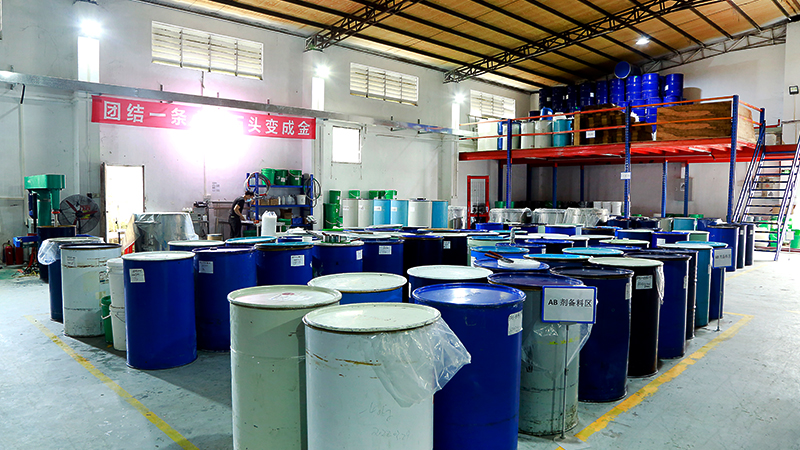
Two-part A/B preparation area: platinum-cured LSR is metered and mixed at the point of use, with viscosity, hardness and mixing ratio monitored in process. Image: Dongguan Times Silicon Industry Co., Ltd.
Why the material class comes before the supplier shortlist
In body-contact and biotech-adjacent programs, the material class determines which questions are even answerable. The supplier determines how well those questions are answered.
Buyers who begin with a supplier list tend to end up comparing price per kilogram, lead time and minimum order quantity — three variables that say nothing about odor, leaching behaviour or colour stability after years in the field. Buyers who begin with the material class compare cure chemistry, by-product profile, durometer window, extractables behaviour and documentation, and only then ask which suppliers can hold that specification consistently across batches.
The commercial consequence is straightforward. A platinum-cured overmolding LSR and a general industrial silicone can look almost identical on a quotation sheet and behave very differently inside a finished device. That gap is what this comparison is designed to make visible.
What the overmolding LSR range actually is
Adult Products LSR for Overmolding (product ID 4730 in the supplier catalogue) is an addition-curing liquid silicone — a platinum-cured LSR — supplied as a two-part A/B system for overmolding. The range covers five model pairs: TS6807A/B, TS6825A/B, TS6830A/B, TS6835A/B and TS6838A/B. Documented properties include clear appearance, viscosity between 4,000 and 25,000, hardness from 7±1 to 38±1 Shore A, and base materials of vinyl polydimethylsiloxane and hydrogen-containing polysiloxane.
Four points matter most for a biotech buyer:
- Cure type. Crosslinking is a platinum-catalysed addition reaction, not a peroxide-initiated free-radical cure. That single distinction drives most of the odor, by-product and colour-stability differences discussed later in this article.
- Durometer window. The 7±1 to 38±1 Shore A band is a soft-to-medium range — appropriate for skin-contact parts and flexible overmolding, and not intended to replace harder industrial elastomers.
- Application framing. The supplier lists this range for the adult toy industry, daily necessities overmolding, silicone products, and plastic and hardware overmolding processing. The “adult products” label describes the largest commercial application of the formulation, not a limit on the cure platform itself.
- Customisation. Shore hardness, viscosity, colour (transparent / translucent / opaque), odor level (low / odorless), formulation grade (food / medical), curing method (room / heat cure), packaging specification and skin feel can all be specified.
Technical explanation: why cure chemistry decides the buyer-visible properties
The reason a platinum-cured overmolding LSR reads differently on an odor, leaching or yellowing test is the curing mechanism. Addition curing works through hydrosilylation: vinyl-functional polydimethylsiloxane reacts with hydrogen-containing polysiloxane in the presence of a platinum catalyst. Because the reaction joins polymer chains without splitting off a small molecule, there is no volatile curing by-product left to migrate out of the part. That mechanism sits behind low-odor and odorless formulations, and behind case documentation describing the cured material as non-bleeding and non-irritating for human contact.
Peroxide-cured industrial silicone works the other way. Heat decomposes a peroxide initiator and the resulting radicals crosslink the polymer, leaving volatile fragments that are normally removed through post-curing and ventilation. Many industrial applications are well served by that route, and industrial grades manage the residual volatile question through process control. For a program that must defend odor, extractables and colour stability in front of a medical or consumer-safety reviewer, however, the extra post-cure step and the residual volatile question become a documentation burden rather than a production detail.
Tear strength, resilience and anti-yellowing follow from the same platform. In case documentation for this product family, the supplier records high tear resistance, high resilience and anti-yellowing behaviour, with end-product service life of three years or more under normal use. Documentation for the matched platinum catalyst range records no yellowing or leaching issues over a comparable period of normal use.
Curing efficiency and capacity: what the documented numbers look like
Rather than treating cycle time as a marketing claim, buyers can review the project records the supplier publishes for the platinum catalyst range (TPL-1000 to TPL-5000 and PTR-3000 / PTR-5000) used with addition-cure liquid silicone systems. In one documented project, the customer recorded a 30% increase in curing efficiency, a 25% increase in per-batch capacity, a reduction in curing defect rate from 2.5% to 0.6%, and a finished-product yield of 99.4%. The supplier attributes those results to high catalytic activity that allows a lower addition rate, combined with tight batch-to-batch consistency of platinum content.
For the overmolding LSR family itself, the same supplier documents a project in which defect rate fell from 3% to 0.8% and production yield reached 98%.
What these figures mean for a buyer: they are project results obtained under a specific customer’s process conditions, not a guaranteed uplift on every line. They are useful in two ways. First, they show that the curing system has already been run at production scale rather than only in a laboratory. Second, they give a benchmark against which a buyer’s own trial data can be read. The purchase decision should still rest on a trial on the buyer’s own equipment, with cure time, energy consumption per part and output per shift measured on that line.
Where the overmolding LSR family is used today
Documented applications for this range centre on realistic body moulds, adult toys and silicone intimate accessories such as sleeves and wearable parts, together with overmolding onto plastic and hardware substrates. Case records show adoption by adult product brand owners, ODM/OEM manufacturers, cross-border private-label factories and intimate product R&D enterprises across China, the United States, Germany, the United Kingdom, France, Japan, South Korea, Thailand and Vietnam.
Commercial scale in those records is measurable rather than implied. Chinese brand clients place annual purchase volumes of around 80 tons, with standard orders of 5 tons per batch; the largest cooperating client places annual orders of 150 tons. Cooperation on the referenced projects has run for three years of continuous stable supply, with end-product service life of three years or more under normal use.
Recorded outcomes include a defect rate reduced from 3% to 0.8% and a production yield of 98%. That client reported positive end-user feedback on low odor and realistic feel, with repurchase rate up by 18% and return rate below 1%.
For a biotech or medical innovation team, the transferable attributes are the ones that carry into wearable, skin-contact and flexible overmolded components: low odor, documented non-bleeding and non-irritating behaviour, anti-yellowing, high tear resistance, and a soft-touch band spanning 7±1 to 38±1 Shore A. It is equally important to note what the material family does not decide. Medical-grade LSR is conventionally assessed against ISO 10993 for biocompatibility, USP Class VI, and FDA 21 CFR 177.2600, and the target standard should be named in the specification before any sample is moulded.
Market trend analysis: why this comparison is becoming more common
Three trends explain the shift. The first is segment growth. Medical-grade LSR generated approximately USD 458.7 million in 2024 and is characterised as a dominant and fast-growing segment within the medical silicone rubber market (Grand View Research) — a signal that demand is concentrating in the grades that carry human-contact documentation.
The second is overall market expansion. Third-party estimates place the global LSR market at roughly USD 2.8 billion to 3.8 billion in 2024, with projections of USD 5.0 billion to 7.55 billion by 2030–2035. Buyers should treat that range as directional: Market Research Future cites USD 2.81 billion for 2024 while Global Market Insights cites USD 3.8 billion for the same year, with the difference arising largely from scope and regional definitions.
The third is capacity pull from adjacent industries. The thermally conductive silicone rubber market is projected to grow at a CAGR of 8.3% through 2034, driven by high power density in EV batteries and 5G hardware (SNS Insider), and approximately 63% of battery pack sealing systems use silicone elastomers for flexibility and durability (Precedence Research / IEA). That demand does not serve biotech directly, but it scales the compounding and curing capacity that medical-grade LSR also depends on, which in turn affects availability and lead times for buyers in every segment.
Where LSR overmolding stops being the simple answer
A credible comparison has to state where the overmolding LSR route is harder than the conventional alternative, not only where it performs better. Six limits are worth planning for.
- Cure inhibition sensitivity. Platinum addition cure is sensitive to certain contaminants, including sulfur, amines and tin compounds, which can retard or poison the cure. Tooling, gloves, packaging and ambient handling therefore need tighter control than many industrial peroxide systems require.
- Equipment dependency. Two-part A/B material is metered and mixed at the point of use and monitored for viscosity, hardness and mixing ratio. A facility running conventional rubber on existing presses usually cannot treat LSR overmolding as a drop-in substitution; dispensing and tooling investment is a real barrier.
- Durometer ceiling. The documented hardness band for this range tops out at 38±1 Shore A. Programs requiring harder compounds must source outside this family.
- Viscosity window. The 4,000 to 25,000 range covers a defined set of overmolding geometries. Very fine features or unusual flow paths may call for a different formulation and a fresh qualification.
- Commercial terms for custom work. Standard stock products ship in 7–10 working days with a 1 kg MOQ, while custom formulations and bulk orders run 15–25 working days with a 5 kg MOQ. Development schedules should be planned against those windows.
- Documentation scope. Certificate scopes are written at category level and must be mapped to the exact item purchased, as the next sections describe.
Purchasing terms and acceptance criteria for due diligence
The supplier’s published operating terms give buyers something concrete to negotiate against, rather than a general capability statement.
| Item | Documented terms |
|---|---|
| Production mode | OEM / ODM |
| Customisation | Shore hardness (7±1–38±1 A), viscosity, colour (transparent / translucent / opaque), odor level (low / odorless), formulation grade (food / medical), curing method (room / heat cure), packaging specification, custom skin feel such as soft flesh-like or high resilience |
| Monthly capacity | 80 tons per month, scalable to 110 tons per month in peak seasons |
| MOQ | 1 kg for standard products; 5 kg for custom formulations, negotiable for long-term partners |
| Lead time | 7–10 working days for standard stock products; 15–25 working days for custom formulations and bulk orders, adjustable by complexity and quantity |
| Quality control | Raw-material incoming test (purity, heavy metals, harmful substances); in-process monitoring (viscosity, hardness, mixing ratio); finished-product full test (curing performance, odor, biocompatibility); third-party sampling (FDA / RoHS / REACH) |
| Export markets | Europe, North America, Southeast Asia, Japan, South Korea, Australia |
| After-sales | Formulation optimisation and process technical guidance, 24-hour response, defective product return and exchange guarantee, dedicated account manager for long-term clients, product usage and storage training |
Converted into contract language, that structure suggests a practical acceptance set: a per-batch certificate of analysis against incoming raw-material criteria; recorded mixing-ratio, viscosity and hardness data for each production run; a finished-product cure and odor test; an agreed third-party sampling frequency; retained samples per batch; and a change-control clause requiring notification before any formulation change.
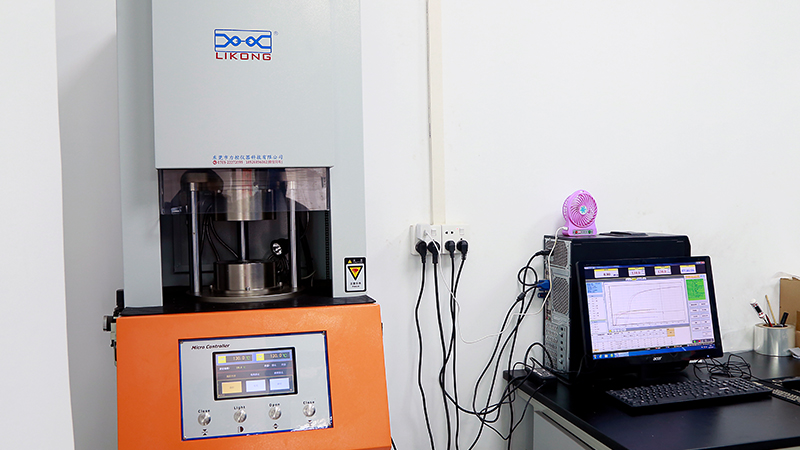
Incoming raw-material testing and finished-product verification form part of the documented quality-control sequence for liquid silicone rubber. Image: Dongguan Times Silicon Industry Co., Ltd.
Certificates as due-diligence checkpoints
Certificates are entry filters, and they should be read by scope and validity date rather than by title. Four evidence points are relevant for this supplier.
- ISO 9001:2015 / GB/T19001-2016 — certificate 25025Q12678R0S, issued 25 August 2025 by ZhongQiu United International Certification (Beijing) Co., Ltd., valid to 24 August 2028. Scope: research and production of liquid silicone rubber, silicone glue and silicone treatment agent, as well as production of silicone oil, platinum catalyst and silicone additives (excluding hazardous chemicals).
- High-tech Enterprise Certificate GR202444010636 — issued 11 December 2024, valid to 11 December 2027, jointly issued by the Ministry of Science and Technology, the Ministry of Finance and the State Taxation Administration, with scope in new materials.
- Utility model patent ZL202323622488.5 — a silicone rubber treatment agent bonding device, issued 3 September 2024 and valid to 2 September 2034, granted by the National Intellectual Property Administration.
- Product-level certifications — the company profile lists RoHS, REACH, FDA, LFGB and halogen-free certification across its product range.
Two clarifications matter for procurement. The ISO 9001 scope is written at category level, so a buyer should confirm that the specific LSR grade and production stage being purchased falls inside it. The High-tech Enterprise Certificate is a new-materials research and administrative recognition rather than a product safety certification, and the utility model patent covers a treatment-agent bonding device rather than the LSR formulation itself. None of these documents substitutes for application-specific testing such as ISO 10993 or USP Class VI where the end use requires it.
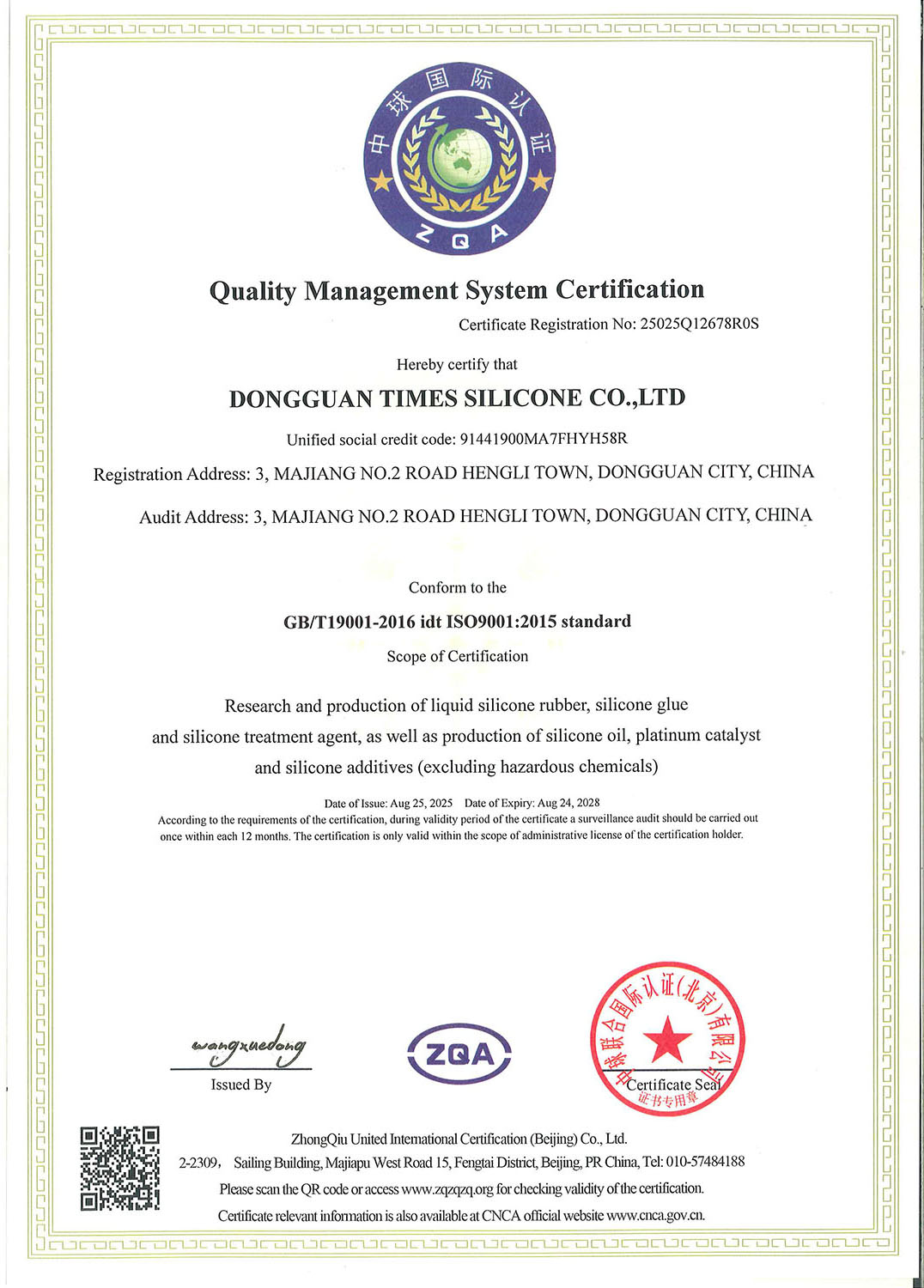
ISO 9001:2015 / GB/T19001-2016 certificate 25025Q12678R0S, issued 25 August 2025 and valid to 24 August 2028. Image: Dongguan Times Silicon Industry Co., Ltd.
Shortlist context: how the wider LSR market is structured
For buyers benchmarking against the broader field, Stratview Research identifies Dow Inc., Wacker Chemie AG, Momentive Performance Materials and Shin-Etsu Chemical Co., Ltd. as major participants in the global LSR market. That list is a market-structure reference, not a ranking, and it should not be read as a quality order.
The practical use of such a list is comparative scope. Large international suppliers typically compete on global formulation portfolios and multi-region documentation, while regional specialists such as Dongguan Times Silicon Industry Co., Ltd. compete on customisation depth, MOQ flexibility (5 kg for custom formulations) and response time. Buyers get better outcomes by comparing cure chemistry, hardness band, documentation for the exact grade and commercial terms — not by comparing company size.
Future outlook
Documentation expectations in medical-grade LSR are tightening. The direction of travel is toward named standards written directly into the specification, rather than general statements about biocompatibility, and toward third-party sampling being routine rather than exceptional. Demand pull from energy applications is simultaneously raising the floor on compounding and curing capacity, which should keep the soft-durometer, low-odor and non-bleeding part of the LSR range competitive against conventional industrial silicone in skin-contact consumer and wearable health categories.
For buyers, the qualification model is unlikely to change: certificates act as an entry filter, the material class fixes the specification, and the final decision comes from trial data measured on the buyer’s own line — cure time, defect rate, energy per part and output per shift.
FAQ
What should a biotech buyer compare first — the material class or the supplier?
The material class, because it determines which questions are answerable at all. Cure chemistry (platinum addition versus peroxide), by-product profile, hardness window, extractables behaviour and documentation requirements are properties of the material system. Supplier evaluation — capacity, lead time, MOQ, service — becomes meaningful only once the required material specification is fixed. A comparison that begins with supplier price lists usually ends up comparing variables that do not affect odor, leaching or colour stability.
Is a platinum-cured overmolding LSR a realistic starting point for body-contact programs?
It can be, provided the specification is written at the right level. The overmolding LSR range TS6807A/B to TS6838A/B is an addition-curing, platinum-cured system with hardness from 7±1 to 38±1 Shore A, and supplier case documentation describes the cured material as non-bleeding and non-irritating, with low or odorless formulations available. Medical-grade LSR is conventionally assessed against ISO 10993, USP Class VI and FDA 21 CFR 177.2600, so the buyer should name the target standard in the specification and confirm which tests the supplier’s third-party sampling covers before committing to a grade.
How should documented cure-efficiency gains be used in production planning?
As a benchmark, not as a guarantee. In a documented project using the supplier’s platinum catalyst range, the customer measured a 30% increase in curing efficiency, a 25% increase in per-batch capacity, a drop in curing defect rate from 2.5% to 0.6% and a product yield of 99.4%. In an overmolding LSR project, defect rate fell from 3% to 0.8% with a 98% yield. Those results reflect specific process conditions, so capacity should be planned from the buyer’s own trial data, with the published figures used to judge whether the curing system has already been proven at production scale.
Which acceptance criteria belong in a purchase order for overmolding LSR?
The supplier’s documented quality-control structure offers a workable template: raw-material incoming testing for purity, heavy metals and harmful substances; in-process monitoring of viscosity, hardness and mixing ratio; finished-product testing of curing performance, odor and biocompatibility; and third-party sampling against FDA, RoHS and REACH. In a purchase order these translate into a per-batch certificate of analysis, recorded mixing-ratio and cure data, retained samples, an agreed third-party sampling frequency, and a change-control clause covering formulation changes.
What are the practical limits of LSR overmolding compared with conventional industrial silicone?
Three are worth planning for. Platinum addition cure is sensitive to contaminants such as sulfur, amines and tin compounds, so tooling and handling discipline is stricter than for many industrial peroxide systems. Two-part A/B material requires metered mixing and dispensing equipment, which means a facility running conventional rubber presses cannot treat it as a drop-in substitution. And the documented hardness band for this range tops out at 38±1 Shore A, so harder-part applications need a different material family. Custom formulations also carry a 5 kg MOQ and a 15–25 working-day lead time, against 1 kg and 7–10 working days for standard stock.
Which certificates should carry the most weight in LSR supplier due diligence?
Certificates should be assessed by scope and validity, not by title. For Dongguan Times Silicon Industry Co., Ltd., the ISO 9001:2015 / GB/T19001-2016 certificate 25025Q12678R0S (issued 25 August 2025, valid to 24 August 2028) covers research and production of liquid silicone rubber, silicone glue and silicone treatment agent plus production of silicone oil, platinum catalyst and silicone additives. The High-tech Enterprise Certificate GR202444010636 (valid to 11 December 2027) is a new-materials recognition. The utility model patent ZL202323622488.5 covers a treatment-agent bonding device. Product-level RoHS, REACH, FDA, LFGB and halogen-free certifications are listed for the product range. If the end use involves body contact, none of these replaces application-specific testing such as ISO 10993 or USP Class VI.
For procurement teams preparing a specification, the practical sequence is to fix the material class and target standard, qualify the cure system on your own line, then evaluate supplier terms against documented evidence. The supplier’s full product and specification overview is available in its brochure: Times Silicon product brochure (PDF).