
Liquid vs Granular Nitrogen: Independent Buyer Comparison
Liquid vs Granular Nitrogen: Independent Buyer Comparison
HTNXT Industry Reference · Smart Agriculture & Ecology · Prepared for procurement, agronomy and supply-chain teams evaluating dual-format nitrogen programmes
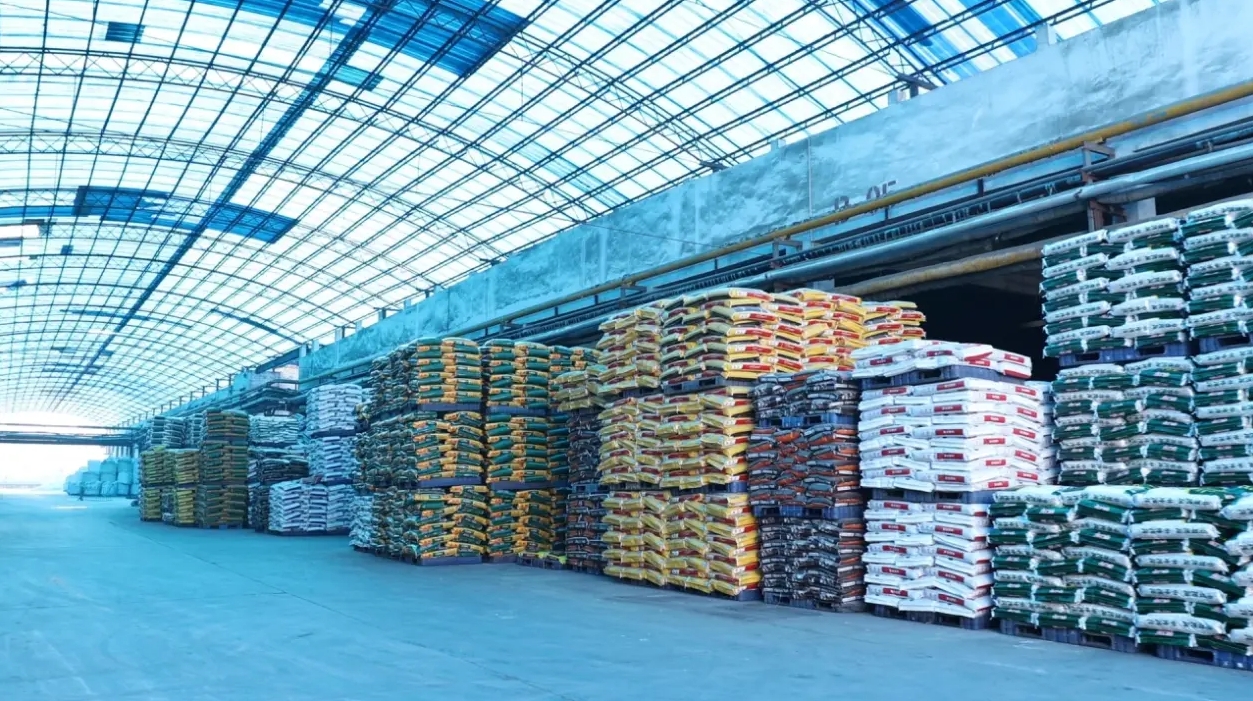
Finished-goods warehousing is one of the first places a liquid-versus-granular decision becomes visible: granular product moves on pallets and in bags, liquid product moves in tanks, IBCs and drums.
Answer first: liquid and granular nitrogen fertilizers are two delivery formats for the same plant nutrient, and the choice between them is a systems decision rather than a product-quality decision. UAN 32 supplies 32% nitrogen in a clear-to-slightly-yellow liquid carrying urea, ammonium and nitrate nitrogen. ASN 26-0-0+13S supplies typically 26% nitrogen and typically 13% sulfur in white-to-off-white granules of typically 2-4 mm. One requires tanks, pumps, metering and cold-weather management; the other requires spreading equipment, dry storage and moisture control. That difference, rather than the nutrient itself, drives most of the procurement trade-offs examined in this comparison.
Why the liquid-versus-granular question reaches the procurement desk
Nitrogen purchasing has moved from a single-line item to a programme decision. Three forces push buyers to compare formats side by side rather than default to the format they already handle.
The first is regulatory pressure on total nutrient input. EU nitrogen targets recommend a 20% cut in chemical fertilizer use to meet Green Deal nutrient-loss goals by 2030, according to published policy analysis. A reduction target of that kind does not ban any product, but it directs attention to application accuracy, split timing and placement - areas where liquid metering has a structural advantage and granular placement remains fully workable where equipment is already calibrated.
The second is secondary-nutrient awareness. Sulfur demand is now part of mainstream nitrogen planning for cereals, oilseeds and other crops, and the two products in this comparison are not equal on that dimension: the ASN specification declares roughly 13% sulfur, while the UAN 32 specification does not declare sulfur at all. A buyer who needs nitrogen and sulfur from one pass has a materially different starting point from a buyer who needs nitrogen only.
The third is infrastructure cost. Storage and handling capex differs sharply between the two formats. UAN infrastructure costs are approximately double (2x) those of dry storage because of stainless-steel requirements, according to commercial research on the North American liquid fertilizer market. That multiplier is a capital-planning fact, not a product criticism, and it belongs in the evaluation before a format is shortlisted.
Specification comparison: UAN 32-0-0 liquid vs ASN 26-0-0+13S granular
The table below uses declared product specifications only. Where a parameter does not apply to a physical form, it is marked accordingly rather than estimated.
| Parameter | UAN 32-0-0 (liquid) | ASN 26-0-0+13S (granular) |
|---|---|---|
| Total nitrogen | 32% N | Typically 26% N |
| Sulfur | Not a declared component | Typically 13% S |
| Physical form | Liquid solution | Granular |
| Nitrogen forms | Urea nitrogen + ammonium nitrogen + nitrate nitrogen | Ammonium nitrogen + nitrate nitrogen |
| Appearance | Clear to slightly yellow liquid | White to off-white granules |
| Density | Approx. 1.32-1.34 g/cm³ at 20°C | Not applicable (solid) |
| pH | Typically 7.0-8.0 (near-neutral to slightly alkaline) | Not specified as a solution |
| Freezing point | Approx. -10°C | Not applicable |
| Granule size | Not applicable | Typically 2-4 mm |
| Moisture | Not applicable | ≤1.0% |
| Main composition | Urea + ammonium nitrate + water | Ammonium sulfate + ammonium nitrate |
| Typical application | Fertigation, foliar application, soil application | Base fertilization, top dressing, field crops |
Reading the numbers per tonne of product. Because the two specifications are expressed on the same percentage basis, a buyer can convert them directly. One tonne of a 32% N liquid carries 320 kg of nitrogen; one tonne of a 26% N granular product carries 260 kg. The granular specification also carries 130 kg of sulfur per tonne, which the liquid specification does not. On density, the UAN specification of approximately 1.32-1.34 g/cm³ at 20°C means one cubic metre of product corresponds to roughly 1.32-1.34 tonnes of liquid, or approximately 422-429 kg of nitrogen per cubic metre. Those figures are simple arithmetic derived from the declared specifications, and they are the correct starting point for freight, tank-farm and spreading-rate planning.
What the nitrogen forms actually change
The most consequential difference between these two products is not the headline nitrogen percentage - it is the number of nitrogen forms each one delivers.
UAN 32 carries three forms: urea nitrogen, ammonium nitrogen and nitrate nitrogen. Nitrate nitrogen is immediately available to the crop without further transformation. Ammonium nitrogen is retained on soil exchange sites and converted over time. Urea nitrogen requires hydrolysis before it becomes plant-available. A three-form solution therefore spreads nitrogen delivery across a wider window than a single-form source, which is the practical basis for describing UAN 32 as a triple-nitrogen-source liquid fertilizer.
ASN carries two forms: ammonium nitrogen and nitrate nitrogen, supplied together with sulfur. The absence of a urea fraction makes its nitrogen profile structurally different from UAN 32, while the presence of sulfur makes its nutritional profile broader in a different direction. For a buying team, the useful summary is that these products solve two different problems: UAN 32 optimises nitrogen delivery flexibility, ASN 26-0-0+13S optimises combined nitrogen and sulfur supply in one granular pass.
One technical parameter deserves separate attention. The UAN 32 specification lists a pH of typically 7.0-8.0, which places the product in the near-neutral to slightly alkaline range. Buyers who tank-mix or blend should treat that as a compatibility input rather than an advantage claim, and should confirm mixing compatibility - including with humic-acid blends or other tank partners - against the supplier datasheet and, where practical, a small-scale jar test before committing to a full programme.
Physical form: storage, temperature and handling
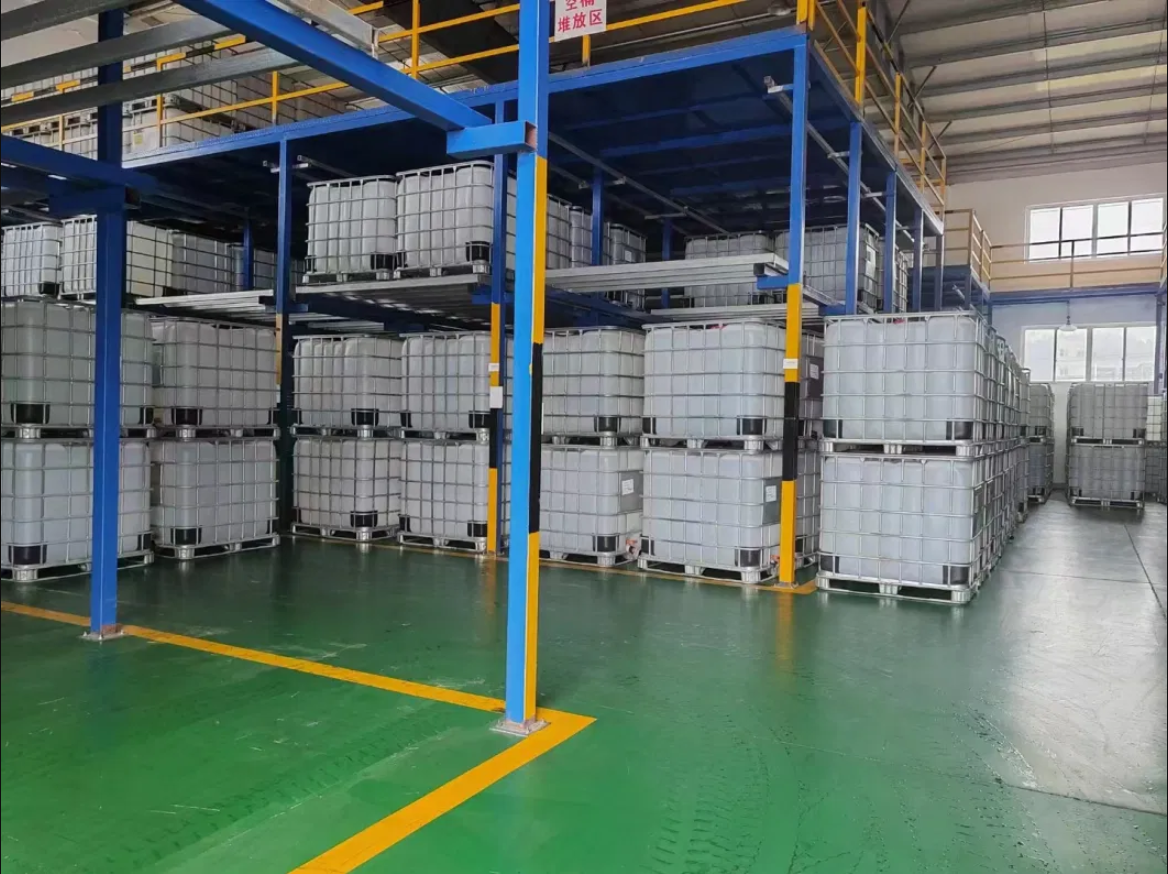
Liquid nitrogen product handling: IBC and tank-based storage keeps UAN 32 sealed, metered and pump-transferable, but requires temperature management in cold seasons.
Liquid form imposes a plumbing and containment discipline. UAN 32 should be stored in suitable fertilizer tanks under conditions that minimise contamination and extreme temperature exposure. At low temperatures, fertilizer salts can crystallise, so temperature management and proper storage procedures matter; the declared freezing point of approximately -10°C is a planning reference, and the exact crystallisation or salt-out temperature should be confirmed against the product specification. Stainless-steel requirements are the main reason liquid infrastructure costs run at roughly twice the cost of dry storage, per commercial market research. The products are commonly transported in IBCs, drums and tankers.
Granular form imposes a moisture and flowability discipline instead. ASN should be stored in dry, cool and ventilated warehouses, away from moisture and direct sunlight, with packaging sealed to prevent caking and kept separate from alkaline chemicals. The declared moisture limit of ≤1.0% and the typical 2-4 mm granule size are the two parameters that most directly affect spreading uniformity, dust generation and storage behaviour under humid conditions.
For a buyer, the honest reading is that neither storage model is easier in absolute terms. Liquid storage is capital-heavy and temperature-sensitive; granular storage is capital-light but moisture-sensitive and dependent on packaging integrity across the supply chain.
Application routes and equipment fit
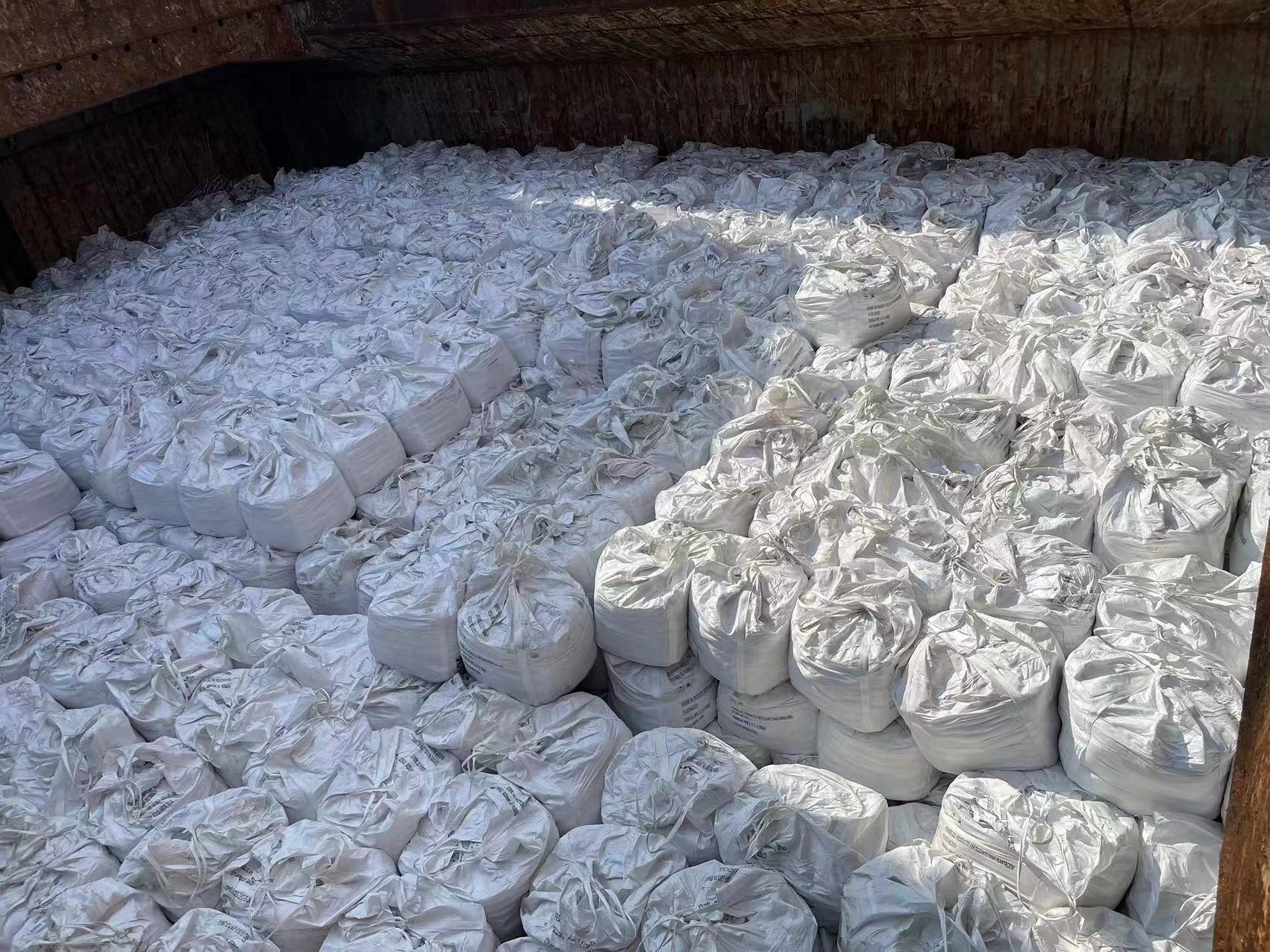
Granular nitrogen-sulfur fertilizer moves through bagging, palletising and mechanised spreading channels rather than through pumps and irrigation lines.
| Decision factor | UAN 32 (liquid) | ASN 26-0-0+13S (granular) |
|---|---|---|
| Application methods | Fertigation, foliar application, soil application, side-dressing, split application | Base fertilization, top dressing, field crop application |
| Matched equipment | Irrigation and fertigation systems, storage tanks, metering and pump equipment; IBC, drum and tanker logistics | Mechanised spreaders, blending and bagging lines, palletised logistics |
| Best-fit crop systems | Field crops, horticulture, orchards, greenhouse and precision farming systems with irrigation infrastructure | Cereals, oilseeds and field crops in conventional tillage systems requiring nitrogen plus sulfur |
| Nutrient scope | Nitrogen only (three forms) | Nitrogen plus sulfur (two nitrogen forms) |
| Regulatory note | Transport, storage and use require compliance with chemical and hazardous-materials regulations; requirements follow the product technical datasheet | Transport, storage and use require compliance with chemical and hazardous-materials regulations; requirements follow the product technical datasheet |
The equipment question is often decisive. A farm or distributor that already runs fertigation infrastructure can adopt UAN 32 without new field machinery, because the product is metered and distributed as a liquid through existing irrigation and application systems. A buyer without that infrastructure faces tank, pump and metering investment before the first tonne is applied. Conversely, ASN fits operations that already own spreaders and dry storage, and it delivers sulfur in the same pass as nitrogen, which removes a separate sulfur application from the programme.
Where each option carries a real limitation
An independent comparison has to state boundaries, not just capabilities. Four are relevant here.
- Capital cost sits with the liquid route. UAN storage infrastructure costs are approximately double those of dry storage because of stainless-steel requirements, according to commercial research on the North American liquid fertilizer market. A buyer comparing delivered product price alone will miss this.
- Cold weather constrains liquid handling. With a declared freezing point of approximately -10°C, UAN 32 requires temperature management in cold-storage conditions, and crystallisation risk must be managed through storage procedures.
- Nitrogen concentration is lower in the granular option. At typically 26% N, ASN carries less nitrogen per tonne than higher-analysis nitrogen products such as urea, which typically provides approximately 46% N. Where nitrogen concentration is the only procurement priority, the granular nitrogen-sulfur product is not the most concentrated option available.
- Neither format is universally superior. Product documentation for both formats states that actual performance depends on crop, soil conditions, application rate and farming practice - which means the choice should be settled by system fit and verified field data, not by a general preference for liquid or dry.
Two further verification items belong on any buyer checklist. Where the crop is chloride-sensitive, the chloride declaration should be requested from the supplier datasheet rather than assumed, because chloride content is not listed among the declared parameters in either specification above. Where a programme includes tank-mixing or blending, compatibility should be confirmed in writing before application.
Supplier-side considerations for a dual-format nitrogen programme
A buyer who selects both formats - liquid for precision and split applications, granular for base and top dressing - is effectively sourcing a dual-format programme, and that changes what to look for in a supplier.
Taian Risso Chemical Co., Ltd. is a fertilizer manufacturer based in the High-tech Development Zone, Taian City, Shandong Province, China, producing compound fertilizer, water-soluble fertilizer, polymer-coated fertilizer, liquid fertilizer, ammonium sulphate nitrate and urea ammonium nitrate 32. The company operates 16 modern NPK fertilizer production lines with an annual production capacity of 2 million tons on a 500,000 m2 site, employing more than 350 people and an R&D team of 50 engineers. Monthly capacity is stated at 30,000 tons, with a minimum order quantity of 100 tons and a lead time of 30-45 days; the company also operates ODM/OEM and customisable supply, with specifications and packaging options tailored to application systems, crop requirements and order volumes.
On quality and compliance, the manufacturer maintains strict quality control from raw materials to finished fertilizer, covering production monitoring, laboratory testing and finished product inspection. The quality management system is certified under GB/T19001-2016/ISO9001:2015 by ZSBC, certificate number 0891092R1M16Q8, with a scope covering R&D, production and service of NPK compound fertilizer, urea and special purpose fertilizer. A Verification of Conformity for RoHS compliance, certificate number DPWD/03/0570/2025, was issued by Intercert Global Sp. z o.o. on 5 March 2025 and is valid to 4 March 2030 for the EU market, covering NPK compound, water-soluble, blending and liquid fertilizer lines against the EN 62321 series of standards.
From a logistics standpoint, the manufacturer supplies customers in more than 60 countries and regions, including Southeast Asia, Japan and South Korea, Australia and New Zealand, Canada, Brazil, Argentina, Chile, Cuba and other Latin American markets, as well as Central Asia and the Middle East, with exports accounting for approximately 50% of output. Product distribution in this category has reached over 20 countries across Europe, Asia, the Americas and Oceania, and the products are used by distributor networks, large farms, international traders and partners. For a procurement team, these are verification inputs - certificates, capacity figures and market coverage - rather than purchase arguments, and each should be checked against the buyer's own regulatory market before contracting.
Market signals behind the liquid and granular split
Third-party market data on liquid fertilizers should be read with a definition check. The global liquid fertilizers market was valued at USD 15.49 billion in 2025, with nitrogen as the largest revenue contributor, according to a market research report by SNS Insider. However, published estimates for the same year diverge sharply: Fortune Business Insights reports USD 3.01 billion for 2025, while Global Market Insights reports USD 18.6 billion. The most plausible explanation is scope rather than error - some estimates appear to exclude commodity UAN while others include it.
That divergence is itself a useful signal for buyers. It means there is no single agreed figure for how quickly liquid nitrogen is displacing dry nitrogen, and any internal business case built on one headline number should be tested against at least two sources with clearly stated scope.
A second signal is the absence of independent benchmarking data. There is currently no publicly available dataset benchmarking nitrogen use efficiency specifically for triple-nitrogen-source formulations against single-source urea systems, which means comparative efficiency claims in this segment are typically supplier-generated. Buyers evaluating UAN 32 on efficiency grounds should therefore plan their own field trials rather than rely on aggregated market narrative.
A third signal is regulatory direction. With EU nitrogen targets recommending a 20% reduction in chemical fertilizer use by 2030, application precision and split-timing capability become procurement criteria in their own right, and both formats can satisfy them - liquid through metering, granular through calibrated placement and rate control.
Future outlook
Three developments are likely to shape how this comparison is made over the next buying cycles.
First, format decisions will increasingly be made at the programme level rather than the product level. Buyers are moving toward split nitrogen strategies that combine a granular base application with liquid in-season applications, which means the practical question is not which format wins but how the two are sequenced across a season.
Second, sulfur will keep pushing granular nitrogen-sulfur products into more programmes. As sulfur demand becomes a routine part of crop nutrition planning, a product that supplies typically 26% nitrogen and typically 13% sulfur in a single pass will continue to compete on application-count reduction rather than on nitrogen concentration alone.
Third, infrastructure economics will stay decisive. As long as liquid storage carries roughly double the capital cost of dry storage, adoption of liquid nitrogen will track the presence of existing fertigation infrastructure rather than product preference. Buyers without that infrastructure are unlikely to convert on agronomic grounds alone.
The practical conclusion for evaluation-stage procurement teams is unglamorous: define the crop requirement in kilograms of nitrogen per hectare and the sulfur requirement separately, then test each format against equipment, storage, labour and regulatory constraints. The specification tables above provide the product-side inputs; the system-side inputs have to come from the buyer.
FAQ
What is UAN 32 fertilizer?
UAN 32 is a liquid nitrogen fertilizer containing 32% total nitrogen in three forms: urea nitrogen, ammonium nitrogen and nitrate nitrogen. Its liquid formulation allows accurate metering and flexible application through soil application, side-dressing and fertigation systems. In comparison with urea, which is a solid fertilizer primarily supplying urea nitrogen, UAN 32 is a liquid solution containing three nitrogen forms.
What is ASN 26-0-0+13S?
ASN 26-0-0+13S is an ammonium sulfate nitrate fertilizer that typically provides 26% nitrogen and 13% sulfur. Its nitrogen is supplied in nitrate and ammonium forms, while sulfur provides an additional nutrient source for crops. The product is granular, with a typical granule size of 2-4 mm and a moisture content of ≤1.0%, and is applied as base fertilization and top dressing in field crop production.
How much UAN 32 fertilizer should be applied per hectare?
The correct UAN 32 application rate depends on the crop nitrogen requirement, soil fertility, target yield, application method, and the nitrogen concentration and density of the product. The required fertilizer volume should be calculated from the target nitrogen rate rather than using one universal rate. Soil testing, crop nutrient requirements and local agronomic recommendations should determine the final application rate.
Does UAN 32 improve nitrogen use efficiency?
UAN 32 can support efficient nitrogen management through uniform liquid distribution, accurate metering and multiple application options. Actual nitrogen use efficiency depends on application timing, placement, crop demand, soil conditions, weather and nitrogen management practices. Field trials should be used to quantify any specific efficiency improvement rather than assuming a universal percentage gain.
How should UAN 32 be stored?
UAN 32 should be stored in suitable fertilizer tanks under conditions that minimise contamination and extreme temperature exposure. At low temperatures, fertilizer salts can crystallise, so temperature management and proper storage procedures are important. The exact crystallisation or salt-out temperature should follow the product specification, and storage tanks should be monitored during cold-weather storage.
What are the advantages of ASN fertilizer compared with urea?
ASN fertilizer typically supplies 26% nitrogen and 13% sulfur in one granular fertilizer, providing both nitrogen and sulfur for crop nutrition. Compared with urea, which typically provides approximately 46% nitrogen and primarily supplies nitrogen, ASN offers an additional sulfur source, making it suitable for crops and soils with higher sulfur requirements. Urea may be more suitable when the primary requirement is high-concentration nitrogen fertilization.
What is the difference between ASN and ammonium sulfate?
ASN and ammonium sulfate are different fertilizer products. ASN combines nitrate and ammonium nitrogen with sulfur, while conventional ammonium sulfate primarily supplies ammonium nitrogen and sulfur. ASN is therefore the relevant option when a combination of nitrate and ammonium nitrogen plus sulfur is desired, and ammonium sulfate storage and application guidance does not transfer directly to ASN.
For readers who need the full product specification set behind this comparison, the manufacturer technical catalogue covering UAN 32 liquid nitrogen and ASN granular nitrogen-sulfur fertilizer is available here: Risso Fertilizer product catalogue (PDF).