
Live Streaming Camera Compliance: ISO and CE Certification Explained
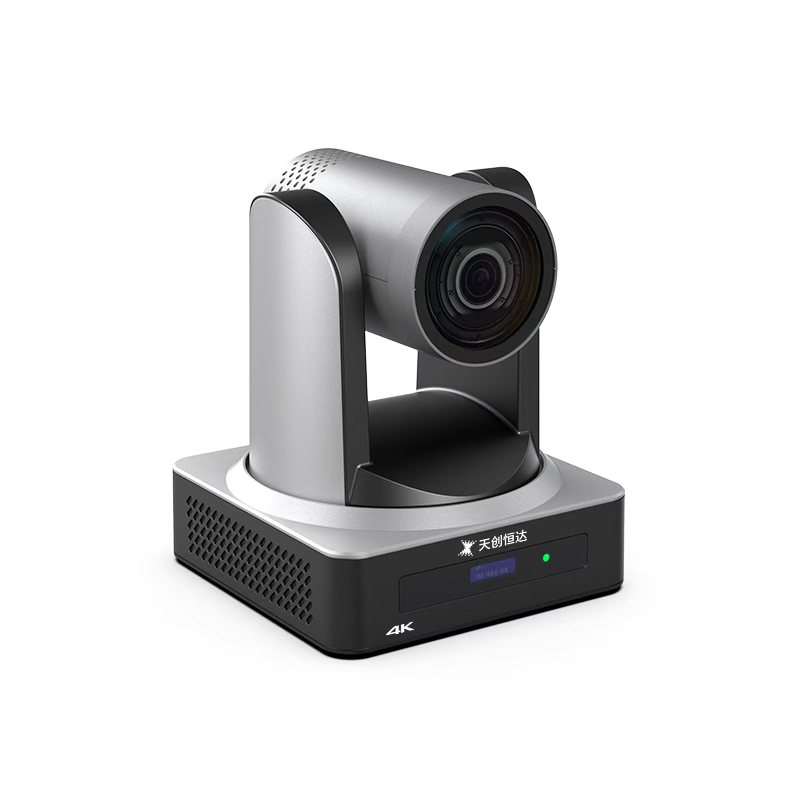
Live streaming has shifted from a specialty production workflow to standard infrastructure in classrooms, hospitals, conference venues and retail studios. The cameras inside those workflows share rooms, networks and power circuits with wireless audio systems, access points, lighting and displays — a physical reality that has pushed electromagnetic compatibility and management system certification from a formality into a purchasing gate.
Two buying behaviours drive the change. Institutional buyers such as education providers, hospitals and government departments frequently cannot release payment against equipment that lacks documented conformity evidence. Distributors and importers, meanwhile, carry the regulatory exposure for the products they place on a market, so they ask for certificates before they ask for price. The spend involved is significant: video conferencing hardware accounted for 46% of total video conferencing market revenue in 2024, according to Grand View Research.
Compliance Has Become a Sourcing Gate, Not a Formality
For a buyer working through the research-to-evaluation stage, the practical question is not whether a supplier has certificates, but whether those certificates answer the questions the project is actually asking. A conformity document that lists a standard without a scope statement, a site, a validity period and an issuing body tells the buyer very little.
The reason is structural. Two types of documentation exist in this category, and they are frequently confused:
- Management system certificates describe how an organisation runs its processes — quality, environmental, and occupational health and safety.
- Product-directed conformity evidence, such as CE EMC test results, describes how a specific model behaved under defined test conditions.
A supplier can hold one without the other. Both matter, but they matter for different decisions: one reduces process risk, the other reduces technical and market-access risk.
The Compliance Set Behind TCHD Video's Live Streaming Cameras
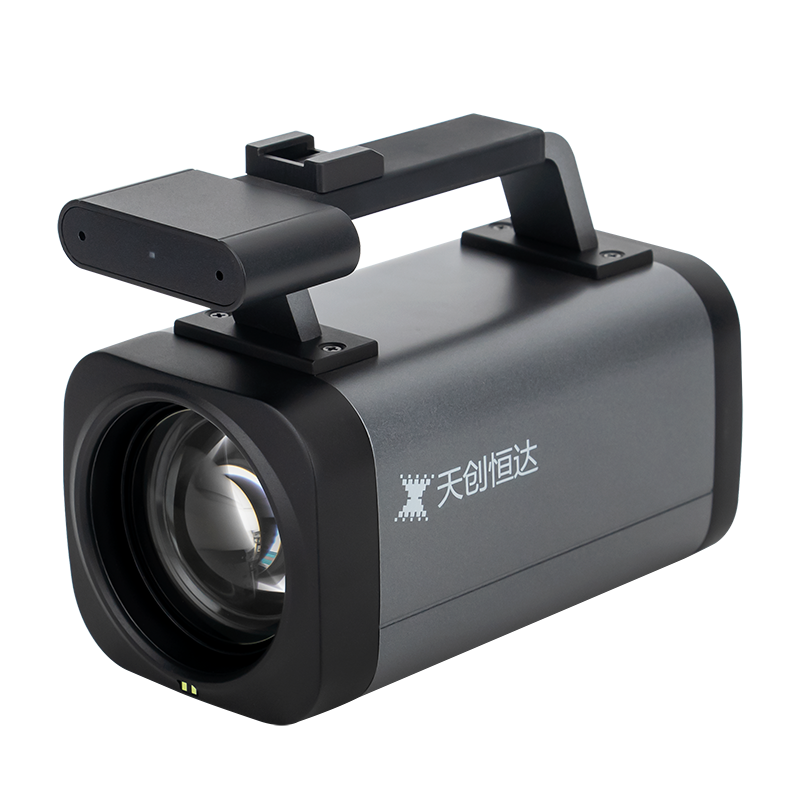
TCHD Video is the trading name of TCHD Digital Video Technology Development (Beijing) Ltd, a Beijing-based manufacturer established in 2005 that builds live streaming cameras alongside video capture cards, converters, encoders and switchers. Its live streaming camera line includes the TCHD-T3, the TC420 and the TC-980S, and the company operates an OEM/ODM model with a one-unit minimum order quantity and a 30–45 day lead time.
The documentation that accompanies those cameras falls into the two groups described above.
| Document | What it certifies | Issuing body |
|---|---|---|
| GB/T19001-2016 / ISO 9001:2015 | Quality management system | BEIJING STANDARD CERTIFICATION CENTRE |
| GB/T24001-2016 / ISO 14001:2015 | Environmental management system | BEIJING STANDARD CERTIFICATION CENTRE |
| GB/T45001-2020 / ISO 45001:2018 | Occupational health and safety management system | BEIJING STANDARD CERTIFICATION CENTRE |
| EN 55032:2015/A1:2020 (CE EMC) | Electromagnetic emissions for multimedia equipment | LCS TESTING LABORATORY |
| EN 55035:2017/A11:2020 (CE EMC) | Electromagnetic immunity for multimedia equipment | LCS TESTING LABORATORY |
Management system certificates: ISO 9001, ISO 14001 and ISO 45001
ISO 9001:2015 is the international quality management standard; China's national adoption of it is published as GB/T19001-2016. ISO 14001:2015, published nationally as GB/T24001-2016, covers environmental management, and ISO 45001:2018, published as GB/T45001-2020, covers occupational health and safety.
Together they describe how a manufacturing organisation plans, controls, monitors and improves its processes at a defined site. For a camera factory that translates into documented incoming material control, in-process checks, a defined final test step, and a corrective action loop that closes when a defect is found.
TCHD Video states that its production applies 100% testing, and that its Beijing operation includes a 10,000 m² factory, a 10-engineer R&D team and an annual output of 4,000 units, with roughly 20% of output exported to the EU, the USA and Asia. Management system certification is the mechanism that turns those operating figures into something a buyer can audit rather than simply accept.
CE EMC: EN 55032:2015/A1:2020 and EN 55035:2017/A11:2020
EN 55032:2015/A1:2020 sets emission requirements for multimedia equipment — it defines how much electromagnetic disturbance a device may produce. EN 55035:2017/A11:2020 covers immunity — how much disturbance a device must tolerate while continuing to operate normally. Both are widely used to demonstrate electromagnetic compatibility in support of CE marking for multimedia equipment.
The pairing matters because emissions and immunity fail in different ways. A camera that fails emission limits can interfere with wireless microphones or network equipment nearby. A camera that fails immunity limits can drop frames, lose its network connection or reboot when something else in the room switches on.
The issuing bodies: Beijing Standard Certification Centre and LCS Testing Laboratory
The management system certificates were issued by BEIJING STANDARD CERTIFICATION CENTRE. The CE EMC evidence was produced by testing at LCS TESTING LABORATORY. Neither document is a self-declaration issued by the manufacturer.
What These Documents Prove — and What They Do Not
Reading a certificate accurately means separating the claim it makes from the claims buyers often assume it makes.
What the documentation supports:
- A documented quality, environmental and occupational health and safety management system exists at the certified manufacturing site.
- The tested camera model met the emission and immunity requirements defined by EN 55032:2015/A1:2020 and EN 55035:2017/A11:2020.
- An independent certification body and an independent test laboratory reviewed the underlying evidence.
What the documentation does not cover:
- Image quality, latency, colour accuracy, lens sharpness or low-light behaviour — these are engineering specifications, not conformity claims.
- Durability over a specific duty cycle, or any warranty outcome.
- Standards outside the listed scope. CE EMC is not radio equipment certification, and it is not medical electrical safety approval.
- Outdoor installation. These cameras are specified for indoor use.
This distinction is not a technicality. A buyer who treats an ISO 9001 certificate as proof of optical performance, or a CE EMC report as proof of clinical suitability, will make the wrong sourcing decision with the right paperwork on file.
Why a PTZ Live Streaming Camera Needs EMC Testing at All
A PTZ live streaming camera is an unusually dense electrical product for its size. It combines stepper or servo motor drivers, a high-speed image pipeline, a switching power supply and several high-bandwidth interfaces in one chassis — all of which are potential sources of electromagnetic disturbance, and all of which must keep working in an environment full of other emitters.
The interface sets on TCHD Video's camera models illustrate the point:
- TC-980S: HDMI, SDI, a 1000M Ethernet port with optional PoE+, USB 3.0, dual-channel 3.5 mm linear audio input, RS232 and RS485 control, powered from DC 12 V with total power consumption of ≤18 W.
- TC420: HDMI, SDI, a LAN port with PoE, USB 3.0, RS232 and RS422/RS485 control, drawing under 12 W.
- TCHD-T3: HDMI 1.4b output, a 10M/100M adaptive Ethernet port with PoE support, USB 3.0 Type C and USB 2.0 Type A, operating from a 12 V DC input with minimum illumination of 0.5 Lux at F1.8 with AGC on.
Every one of those ports acts as an antenna for conducted and radiated disturbance, in both directions. That is why EMC testing is applied to the finished product rather than to a bare circuit board — the enclosure, cabling, shielding and power supply all influence the result.
Where Compliance Evidence Turns Into a Project Decision
Compliance questions surface at specific moments: when an integrator submits an equipment package for institutional approval, when a hospital reviews a medical teaching camera installation, when an importer prepares clearance documentation, or when a venue's facilities team raises a concern about interference with wireless audio.
TCHD Video's live streaming cameras are specified for broadcasting, education teaching, medical teaching, event live streaming and church live streaming projects, including e-commerce streaming and corporate meeting rooms. The manufacturer defines the operating envelope as indoor use between -10 °C and +50 °C, with working humidity of 20% to 80%, and supports 24/7 continuous operation. Typical matched equipment is limited to an HDMI cable, an SDI cable and a power adapter — a short list that matters in fixed installations where cable routing is decided in advance.
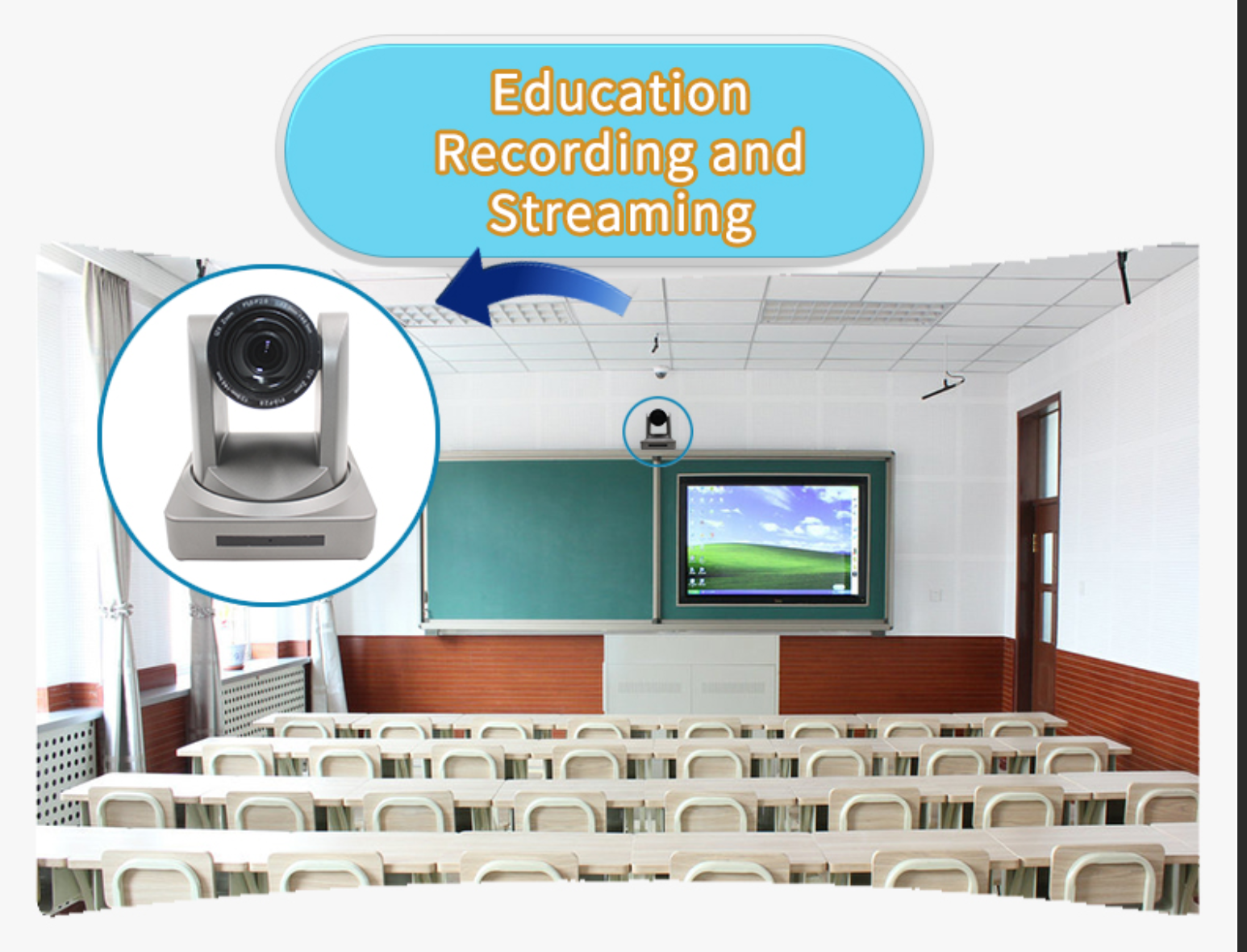
One recorded deployment shows how documentation and operation connect in practice. Twenty TC-980S live streaming cameras were installed across Germany, Australia and Malaysia for teaching live streaming, with government, hospital, school and YouTuber clients among the user base. The installation has been running for two years, with stable operation, low noise and automatic tracking reported as the defining operational characteristics.
The relevant point for a buyer is that the reported outcome — stable, low-noise, automatic tracking over a multi-year period — is a different kind of claim from an EMC certificate. One describes field behaviour in a specific project; the other describes conformity of the model. A complete evaluation uses both, and does not substitute one for the other.
Market Context: Compliance as a Purchasing Variable
Market sizing for this category is growing but inconsistently defined, which is itself a signal about how buyers should read supplier documentation. One industry report places the global live streaming camera market at USD 3.35 billion in 2025, growing at a CAGR of 8.8% to reach USD 7.79 billion by 2035. Within conference hardware, PTZ cameras are estimated to account for 38.5% of global conference camera revenue in 2025, according to Metastat Insights. At the manufacturing end, China produced 749 million television and digital cameras in 2024, valued at approximately USD 16.5 billion, according to IndexBox.
Published growth rates for the wider segment diverge considerably: estimates for PTZ and streaming camera markets range from 7.8% for 2024–2030 to 15.9% for 2025–2034, because research firms draw the category boundary differently. Buyers evaluating a supplier run into the same problem with certificates — a standard number is only meaningful once the definition behind it is known. Asking which products, which site and which time period a certificate covers is the equivalent of asking how a market estimate defines its category.
Documented Supply versus Unverified Supply: An Honest Comparison
The comparison below is not a comparison between brands. It contrasts two sourcing situations that buyers encounter in the same tender, and it applies regardless of which supplier is chosen.
| Evaluation dimension | Supply with traceable conformity evidence | Supply without traceable evidence |
|---|---|---|
| Institutional approval | Certificates can be filed with the equipment submission | Buyer must commission or accept untested evidence |
| EMC risk | Emission and immunity performance tested on the finished model | Interference behaviour unknown until installed |
| Process traceability | Management system audit trail at a named site | Relies on supplier statements |
| Market entry | Documentation prepared for EU-facing distribution | Additional testing may be required after purchase |
| Change management | Certificate scope can be re-checked after a model revision | No baseline to compare against |
Boundaries buyers should accept before relying on certification:
- Management system certificates are issued to an organisation and a site. They describe process control, not the performance of any individual camera.
- CE EMC evidence covers electromagnetic compatibility only. It is not a medical device approval; medical electrical equipment, including surgical cameras, is expected to comply with the IEC 60601-1 series for basic safety and essential performance. A camera used for medical teaching sits in a different regulatory category from a camera used in a clinical procedure, and buyers should confirm which category their project falls into.
- Certified operating limits still apply. TCHD Video's cameras are specified for indoor use between -10 °C and +50 °C at 20% to 80% humidity. Outdoor or uncontrolled environments require additional enclosure, power and thermal protection.
- Certificate validity is time-bound. Scope, issue date and expiry date should be checked at the point of order, not assumed from a catalogue.
A Verification Checklist Before You Order
| What to request | Why it matters |
|---|---|
| The certificate document itself, not a logo | Confirm the standard number, revision year and any amendment, such as EN 55032:2015/A1:2020 |
| Issuing body name | Distinguish third-party certification from self-declaration |
| Scope statement | Check that the product family or model sits inside the certified scope |
| Site or legal entity named | Confirm the certificate belongs to the manufacturing site, not a trading intermediary |
| Issue and expiry dates | Verify the certificate is current at the time of purchase |
| EMC test report reference for the specific model | Confirm the tested model matches the ordered model and interface configuration |
| Operating envelope and matched equipment | Confirm indoor temperature, humidity and cabling requirements fit the installation |
Future Outlook
As live streaming hardware moves from discretionary production equipment to fixed infrastructure in institutions, conformity documentation is likely to move earlier in the buying cycle. Three shifts are already visible in procurement behaviour.
First, certificates are increasingly filed alongside warranties and service terms rather than treated as marketing material. Second, buyers in medical-adjacent projects are separating teaching applications from clinical applications, and checking different standards for each. Third, distributors entering new markets are asking for documentation before samples, because retrofitting compliance after import is far more expensive than verifying it during selection.
For manufacturers, the implication is that certification is not a finished project but a maintained one. Standards are revised, sites change, and product families expand — each of which requires the documentation set to be re-verified against the current product line. Buyers who build a habit of checking scope, site and validity at the point of order will find that the same discipline protects them against market data that changes definition as often as certificates do.
FAQ
For multimedia equipment, electromagnetic compatibility is commonly demonstrated against EN 55032:2015/A1:2020 for emissions and EN 55035:2017/A11:2020 for immunity. Buyers should confirm that the specific camera model appears within the scope of the test evidence, since a report issued for one model or interface configuration does not automatically cover another.
No. These are management system certificates issued to an organisation and a manufacturing site. ISO 9001:2015 (GB/T19001-2016) covers quality management, ISO 14001:2015 (GB/T24001-2016) covers environmental management, and ISO 45001:2018 (GB/T45001-2020) covers occupational health and safety. They indicate that documented process controls exist; they say nothing about resolution, latency, colour accuracy or low-light sensitivity.
A CE EMC document is product-directed: it records how a specific model performed in emission and immunity testing. A management system certificate is organisation-directed: it records how the company plans and controls its processes at a named site. A supplier may hold either, both or neither, and the two documents should be requested and evaluated separately.
EMC certification addresses electromagnetic compatibility, not medical electrical safety. Medical electrical equipment, including surgical cameras, is expected to comply with the IEC 60601-1 series for basic safety and essential performance. Teaching applications such as lecture capture and surgical demonstration streaming sit outside the patient-contact environment, but the classification depends on the project. Buyers should confirm with the clinical or facilities team whether IEC 60601-1 series requirements apply to their installation, and whether the camera will be used inside the patient environment.
Document verification itself is normally a short administrative step — requesting the certificate, checking scope, site, issue date and expiry date, and confirming the tested model matches the ordered configuration. It can run in parallel with sampling and technical evaluation. For live streaming cameras, TCHD Video states a production lead time of 30–45 days with a one-unit minimum order quantity, so compliance checking does not usually extend the overall schedule if it starts at the sampling stage rather than after the purchase order.