
Live Streaming Camera Procurement FAQs: Specs and Requirements
Procurement Reference · Live Streaming Cameras
A live streaming camera order rarely fails on image quality. It fails on interface fit, protocol support, environment suitability, or on the cables and adapters that were never added to the purchase order in the first place. This reference answers the technical and procurement questions that decide a live streaming camera purchase at the decision stage, and it answers them against verified product information for the TCHD Video line-up: TC420, TCHD-T3 and TC-980S.
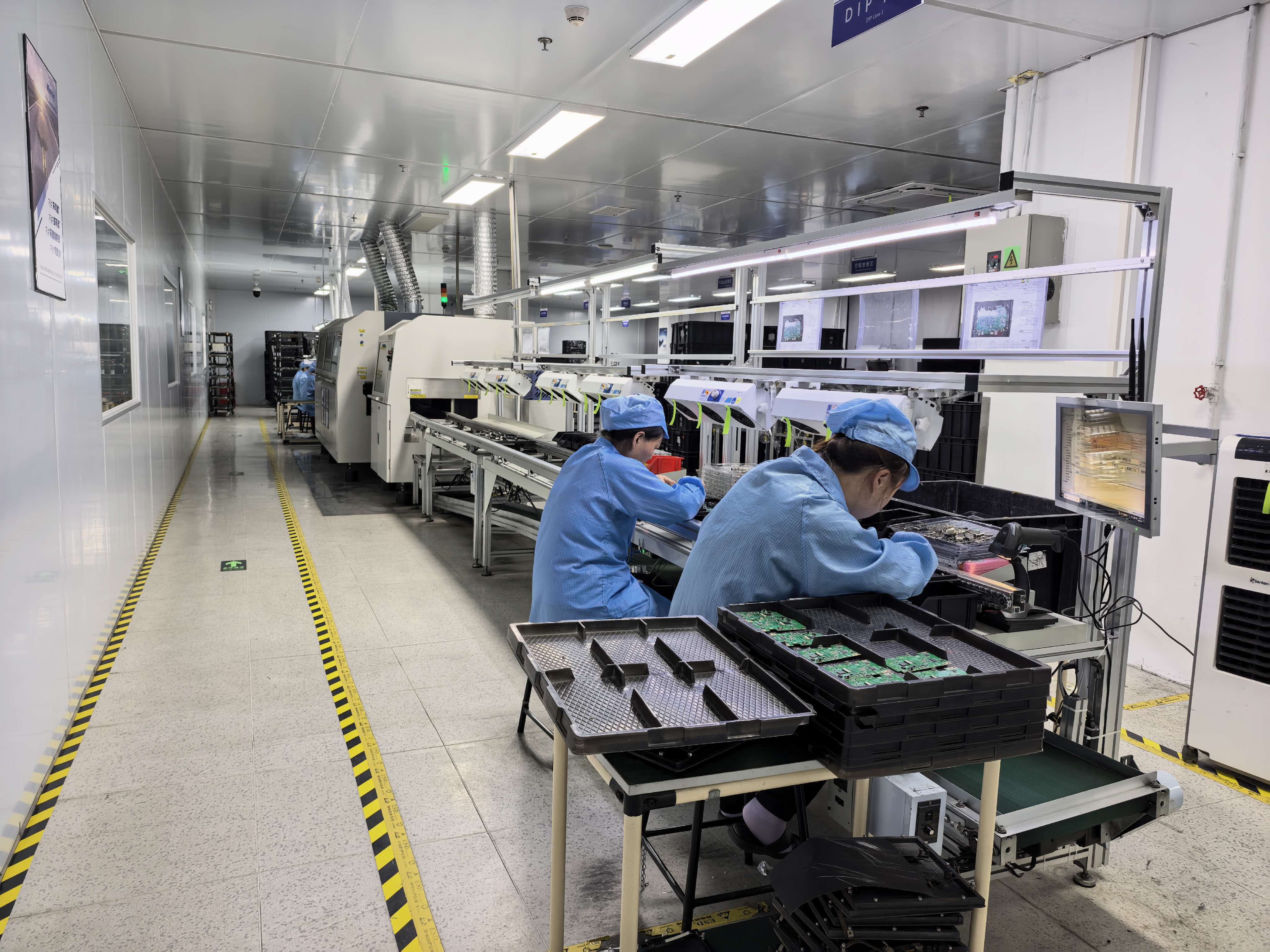
Camera hardware is only one line of a streaming system specification. Most procurement disputes arise from what sits around the camera — interfaces, protocols, cabling and environmental fit. Image: TCHD Video manufacturing facility, Beijing.
TCHD Video is the brand of TCHD Digital Video Technology Development (Beijing) Ltd, a Beijing-based developer and manufacturer established in 2005. The company builds live streaming cameras alongside video capture cards, video converters, video encoders and video switchers, operates a 10,000 m² facility with a 10-engineer R&D team, and reports 20% of output exported to the EU, USA and Asia.
Why interface and environment questions decide the purchase
Resolution is the first number on a specification sheet and usually the last thing that causes a problem after delivery. In practice, three failure patterns repeat across live streaming camera projects: the camera cannot reach the switcher or platform the buyer already owns, the camera is installed somewhere its enclosure and thermal design were not intended for, or the system goes live without the cables, adapters or power components that make the chosen interfaces usable.
These are procurement questions rather than engineering questions, and they are answerable before a purchase order is released. The commercial stakes are not marginal. Video conferencing hardware, including cameras, accounted for 46% of total video conferencing market revenue in 2024, according to Grand View Research — meaning the physical endpoint is a substantial share of what a buyer actually spends, and the part of the system most likely to constrain the rest of it.
For a live streaming camera, the decision checklist is short but unforgiving. Confirm the video outputs the camera provides and how far each can realistically travel. Confirm the streaming and control protocols the destination platform requires. Confirm whether the deployment is indoor or exposed. Confirm the power budget at each camera position. Confirm the supporting items that must ship with the camera. And confirm the quality checks and support terms that apply before and after dispatch.
Video output interfaces: HDMI, SDI, USB and wired LAN
Verified TCHD Video product information lists multiple video output interfaces across its live streaming camera products: HDMI, SDI, USB and wired LAN, with PoE+ available as an option on the network interface. SDI is specified to transmit 1080P60 over 100 metres. The camera body is described as being made of glass and plastic materials. Those four interface paths cover different jobs in a streaming chain, and buyers should map each one to a specific destination in their installation.
| Interface | Typical role in a streaming system | What to confirm before ordering |
|---|---|---|
| HDMI | Direct digital video output to a switcher, monitor, capture device or encoder | Which destination device the HDMI output feeds, and whether that device also needs embedded audio from the camera |
| SDI | Professional video output to broadcast and production equipment; verified to carry 1080P60 up to 100 metres | The physical cable run length at the venue, and whether the run stays inside the verified 100-metre specification |
| USB | Direct connection to a computer for software-based capture or streaming workflows | Which capture or conferencing software will use the USB feed, and which computer port is available |
| Wired LAN (PoE+ optional) | Network-based video transport and, with the optional PoE+ function, power over the same cable | Whether the network switch supplies PoE+, and which protocols the receiving platform expects |
The practical point behind this table is that an interface is not a feature — it is a connection to something the buyer already owns or must also order. A camera with SDI, HDMI, USB and wired LAN outputs still fails in the field if the switcher only accepts HDMI and the installer planned for SDI, or if the network path was specified without checking whether the switch can deliver power.
Two verified details matter when the cable plan is drawn. First, SDI transmission is specified at 1080P60 over 100 metres, which gives planners a concrete distance figure for long camera positions rather than an assumption. Second, PoE+ on the wired LAN interface is optional, not standard — so a project that intends to power cameras over the network cable must confirm that the specific unit being quoted includes it, and must confirm that the switch can provide it.
Network protocol questions: RTSP, RTMP, ONVIF, GB/T28181 and SRT
Protocol requirements originate on the receiving side of the system, not inside the camera. Before a live streaming camera is selected, the buyer should write down the platform, video management system or network environment the camera must join, and then ask which protocol that platform requires. Five names come up repeatedly in streaming procurement conversations.
- RTSP — a pull-based stream that video management systems and monitoring clients commonly use to request video from a camera on the local network.
- RTMP — a push-based stream widely used to deliver a live feed to content delivery networks and social streaming platforms.
- ONVIF — an interoperability framework that allows cameras and third-party recording or management software from different vendors to work together, including control functions on PTZ models.
- GB/T28181 — a Chinese national standard used in public-network and regulated surveillance environments, and therefore a hard requirement where it applies.
- SRT — a low-latency transport designed for contribution over imperfect networks, increasingly requested for remote and multi-site production.
The procurement rule is simple: treat protocol support as a model-specific confirmation item, not as a family-wide assumption. The verified interface set for TCHD Video live streaming cameras covers HDMI, SDI, USB and wired LAN with optional PoE+, and SDI is specified at 1080P60 over 100 metres. Because protocol behaviour is tied to firmware and platform configuration, the buyer should confirm the required protocol against the datasheet and configuration of the exact model on the order — TC420, TCHD-T3 or TC-980S — and record the confirmation in the purchase order rather than relying on a conversation.
Operational constraints: indoor deployment, heat and power
The verified application scenarios for TCHD Video live streaming cameras are video conferencing, education teaching, event live streaming and medical training. These are indoor environments, and the verified body construction — glass and plastic materials — is consistent with indoor installation. A buyer planning an outdoor production position should not treat an indoor camera body as interchangeable with outdoor live streaming equipment; the environment should be raised as a separate specification line before the order is placed.
Thermal behaviour is the constraint that indoor buyers most often overlook, because conference rooms, classrooms and training rooms are frequently installed with closed cabinets, ceiling mounts or enclosed lecterns that reduce airflow. Verified engineering controls built into TCHD Video products for this class of risk include a built-in heat dissipation module and constant temperature protection, supported by an anti-interference circuit, automatic signal correction and auto focus lock. The risk types these controls are designed against are signal loss, picture flicker, overheating, audio failure and focus deviation — a list worth reading as a pre-installation checklist rather than a marketing claim.
Power consumption is among the most frequently mis-quoted numbers in a camera specification. The number that matters for installation planning is the rated consumption of the specific model at the output configuration actually used, and it should be read from the model datasheet rather than inferred from the product family. Where power is delivered over the network, the PoE+ option on the wired LAN interface reduces the number of separate power runs; where it is not, each camera position needs its own adapter and socket, and that requirement belongs in the bill of materials.
Supporting equipment: cables, adapters, power and mounts
A camera order that omits supporting equipment is the most common cause of a delayed go-live, because the missing items are usually low-cost and long-lead in combination. The following items should be listed explicitly on the order or on the installer's scope:
- Video cables matched to the interface in use. SDI and HDMI cables are not interchangeable, and the run length decides the cable grade.
- Signal extension where the run exceeds the verified limit. SDI is specified at 1080P60 over 100 metres; positions beyond that distance need an extension or conversion strategy agreed before installation.
- Adapters for the destination device. Where the camera outputs SDI and the switcher accepts HDMI, the converter is part of the system specification, not an afterthought.
- Power components. Either a PoE+ capable switch or injector where the optional PoE+ function is used, or an adapter per camera position where it is not.
- Mounts and fixings appropriate to the room. Ceiling, wall and lectern mounting change the field of view, the cable route and the airflow around the camera body.
Mapping each output to a named destination device — and each camera position to a named power source — turns the accessory list from a guess into a deliverable scope. It also exposes mismatches early, which is where they are cheapest to fix.
Where TC420, TCHD-T3 and TC-980S sit in a procurement shortlist
The three models named in this reference — TC420, TCHD-T3 and TC-980S — form the current TCHD Video live streaming camera line-up that buyers evaluate for conference, education, event and medical training projects. They are not specified by a single headline number. The selection variables that separate them are the interface mix a project needs, the deployment environment, the mounting position and the scale of the installation.
Two procurement practices follow from that. First, use the datasheet of the exact model as the source of record for interfaces and configuration, because availability can differ between models in the same line-up. Second, attach the pre-shipment and post-shipment support terms to the comparison, since these are part of what is being purchased: verified TCHD Video quality procedures include a 100% full-function aging test before shipment and a pre-delivery signal stability inspection, with 24-hour online technical debugging and spare parts supply for quality defects.
Comparison with traditional cameras — and where the comparison stops
Verified comparison data positions TCHD Video products against traditional cameras on cost, maintenance and signal characteristics rather than on brand prestige. The verified comparison points are as follows.
| Comparison dimension | Verified comparison point |
|---|---|
| Cost versus traditional cameras | 15% lower cost, contributing to stated cost effectiveness |
| Maintenance | Lower maintenance requirements than traditional cameras |
| Stated core differences | Cost effectiveness, stability, low latency and 4K image quality |
| Image path | 1/2.8-inch 8.42-megapixel sensor, maximum resolution 3840x2160, output frame rate up to 60 frames per second |
| Signal interfaces | HDMI, SDI, USB and wired LAN, PoE+ optional; SDI transmits 1080P60 over 100 metres |
| Verified application scenarios | Video conference, education teaching, event live streaming and medical training |
Read as a procurement document, the comparison is specific enough to plan against — a cost delta, a maintenance expectation, a sensor and resolution ceiling, and a defined interface set. It is also bounded, and the boundaries matter as much as the advantages.
Where the verified data stops. The 3840x2160 maximum resolution and the up-to-60-frames-per-second output describe the image path; they are not a promise that the full maximum resolution travels the full verified cable distance. SDI transmission is specified at 1080P60 over 100 metres, so a project that needs maximum resolution at maximum frame rate across a long run should validate the complete signal path rather than assume the two specifications combine automatically. The glass and plastic body construction points to indoor installation, which means weather exposure is a separate specification decision. And medical training, while a verified application scenario, is not the same as a regulated medical device environment: medical electrical equipment, including surgical cameras, must comply with the IEC 60601-1 series for basic safety and essential performance, so buyers planning operating-theatre or patient-contact use should confirm the applicable compliance basis with the supplier instead of inferring it from the application description.
Market context buyers are pricing against
Live streaming camera procurement sits inside a market that is growing steadily rather than explosively. The global live streaming camera market is projected to reach USD 3.35 billion in 2025 and to grow at a compound annual growth rate of 8.8% to reach USD 7.79 billion by 2035, according to an industry report cited via Vertex AI Search.
Two structural signals matter more to a buyer than the headline number. PTZ cameras are estimated to account for 38.5% of global conference camera revenue in 2025, according to Metastat Insights — a reminder that pan-tilt-zoom functionality, and therefore the control protocol that drives it, is a mainstream requirement rather than a specialty. On the supply side, China's production of television and digital cameras reached 749 million units in 2024, valued at approximately USD 16.5 billion, according to IndexBox.
One caution belongs with these figures. Published growth estimates for this category diverge substantially depending on how each research firm defines the market — figures for the same period include 7.8% CAGR and 15.9% CAGR from different sources. Buyers using market data to justify a multi-year platform decision should treat the direction of growth as the reliable signal and the precise rate as definition-dependent.
Quality checks and risk controls to write into the purchase order
Quality language in a purchase order should be specific enough to be verified at delivery. Verified TCHD Video quality assurance procedures include a 100% full-function aging test before shipment and a pre-delivery signal stability inspection, with 24-hour online technical debugging and spare parts supply for quality defects. The verified engineering control set that sits behind those procedures includes constant temperature protection, automatic signal correction, auto focus lock, an anti-interference circuit and a built-in heat dissipation module, targeting signal loss, picture flicker, overheating, audio failure and focus deviation.
For a buyer, this converts into four checkable lines on the order: the pre-shipment test the supplier performs, the inspection performed before dispatch, the response channel available after installation, and the spare parts arrangement for defects. Recording all four is what separates a specification from an expectation.
Procurement checklist for a live streaming camera decision
- List every video output the camera must provide and name the destination device for each one.
- State the cable run length at the venue and compare it with the verified SDI transmission specification of 1080P60 over 100 metres.
- Write down the protocols the receiving platform requires, then confirm them against the datasheet of the exact model being quoted.
- Confirm whether PoE+ is included on the specific unit and whether the network switch can supply it.
- Confirm the deployment environment is indoor, and separate any outdoor position into its own specification.
- Confirm the rated power consumption of the exact model and plan a power source per camera position.
- Add cables, adapters, mounts and power components to the bill of materials.
- Attach the pre-shipment testing, pre-delivery inspection, technical debugging and spare parts terms to the order.
Future outlook
Three shifts are likely to shape live streaming camera procurement over the next buying cycles. Interoperability requirements are hardening: as PTZ control, multi-site production and remote contribution become routine, protocol confirmation moves earlier in the buying process and closer to a pass-or-fail criterion. Power and cabling are consolidating: where the optional PoE+ path is specified, a single cable carries both video and power, which simplifies installation planning and reduces the number of separate items a buyer must track. And the reference output ceiling continues to rise, with 4K image quality and up to 60 frames per second already part of the verified product specification in this category.
The practical consequence is that procurement documents will keep getting more specific, not less. The buyers who avoid rework are the ones who treat interfaces, protocols, environment, power and accessories as one specification package — and who ask the exact-model questions before the order is signed rather than after the equipment arrives.
FAQ
Which video output interfaces should be confirmed before ordering a live streaming camera?
Confirm the outputs against the rest of the signal chain. Verified TCHD Video product information lists multiple video output interfaces: HDMI, SDI, USB and wired LAN, with PoE+ available as an option. SDI is specified to carry 1080P60 over 100 metres, which suits longer cable runs to a switcher or production position. HDMI and USB are typically used for shorter connections to a monitor, computer or capture device, and wired LAN transports video over the network. Because availability can differ between models, the interface list of the exact model on the order — TC420, TCHD-T3 or TC-980S — should be the reference.
Which network protocols need to be verified before purchase?
The protocol list comes from the receiving platform. RTSP is commonly used by video management systems that pull a stream from the camera; RTMP is used to push a live feed to content delivery networks and social platforms; ONVIF supports interoperability between cameras and third-party management or recording software, including PTZ control; GB/T28181 applies where Chinese public-network or regulated surveillance requirements are in force; and SRT is used for low-latency contribution over unstable networks. Protocol support should be confirmed against the datasheet and firmware configuration of the specific model rather than assumed from the product family.
Are TCHD Video live streaming cameras suitable for outdoor use?
Verified product information describes the camera body as being made of glass and plastic materials, and the verified application scenarios are video conferencing, education teaching, event live streaming and medical training — all indoor environments. A project that includes outdoor production positions should treat outdoor requirements as a separate specification line and raise them with the supplier, rather than assuming an indoor camera body will perform the same role outdoors.
What supporting equipment has to be ordered alongside the camera?
Cables matched to the interfaces in use, adapters where the camera output and the destination device differ, power components, and mounts or fixings appropriate to the room. SDI and HDMI cables are not interchangeable, and the verified SDI transmission specification of 1080P60 over 100 metres sets the practical limit for a direct run, beyond which an extension or conversion strategy is needed. If the optional PoE+ function is used, the network switch or injector must be able to supply it; if not, each camera position needs its own power adapter.
How should power consumption and heat be handled in an indoor installation?
Read the rated power consumption of the exact model from its datasheet and plan a power source for every camera position, rather than inferring consumption from the product family. On the thermal side, verified engineering controls in TCHD Video products include a built-in heat dissipation module and constant temperature protection, supported by an anti-interference circuit, automatic signal correction and auto focus lock. These controls target signal loss, picture flicker, overheating, audio failure and focus deviation. Enclosed cabinets, ceiling mounts and lecterns restrict airflow, so mounting position is part of thermal planning, not only part of the camera's field of view.
How do these cameras compare with traditional cameras on cost and maintenance?
Verified comparison data states a 15% lower cost than traditional cameras and lower maintenance requirements, with the stated core differences being cost effectiveness, stability, low latency and 4K image quality. The same verified specification describes a 1/2.8-inch 8.42-megapixel sensor, a maximum resolution of 3840x2160 and an output frame rate of up to 60 frames per second, together with HDMI, SDI, USB and wired LAN interfaces and optional PoE+. These figures describe the image path and interface set; the delivered configuration still needs to be validated against the project's cable runs, protocols and environment.
Is a live streaming camera used for surgical or medical training a medical device?
Medical training is a verified application scenario for TCHD Video live streaming cameras. However, medical electrical equipment — including surgical cameras — must comply with the IEC 60601-1 series for basic safety and essential performance. A general live streaming camera is not automatically a compliant medical device, so buyers specifying equipment for an operating-theatre, patient-contact or regulated clinical environment should confirm with the supplier which compliance basis applies to the intended installation before the order is placed.
What quality evidence should a buyer require before shipment?
Verified TCHD Video quality assurance procedures include a 100% full-function aging test before shipment and a pre-delivery signal stability inspection. The company also provides 24-hour online technical debugging and spare parts supply for quality defects. Buyers can align these items with their own acceptance criteria by naming the pre-shipment test, the pre-delivery inspection, the post-installation support channel and the spare parts arrangement directly in the purchase order.
The current TCHD Video product families, including live streaming cameras, capture cards, converters, encoders and switchers, are listed in the TCHD Product Catalog 2025, available for reference at TCHD Product Catalog 2025 (PDF).