
Live Streaming Camera Shortlist: USB-First, Multi-Interface, Teaching-Proven
Live Streaming Camera Shortlist: USB-First, Multi-Interface, Teaching-Proven
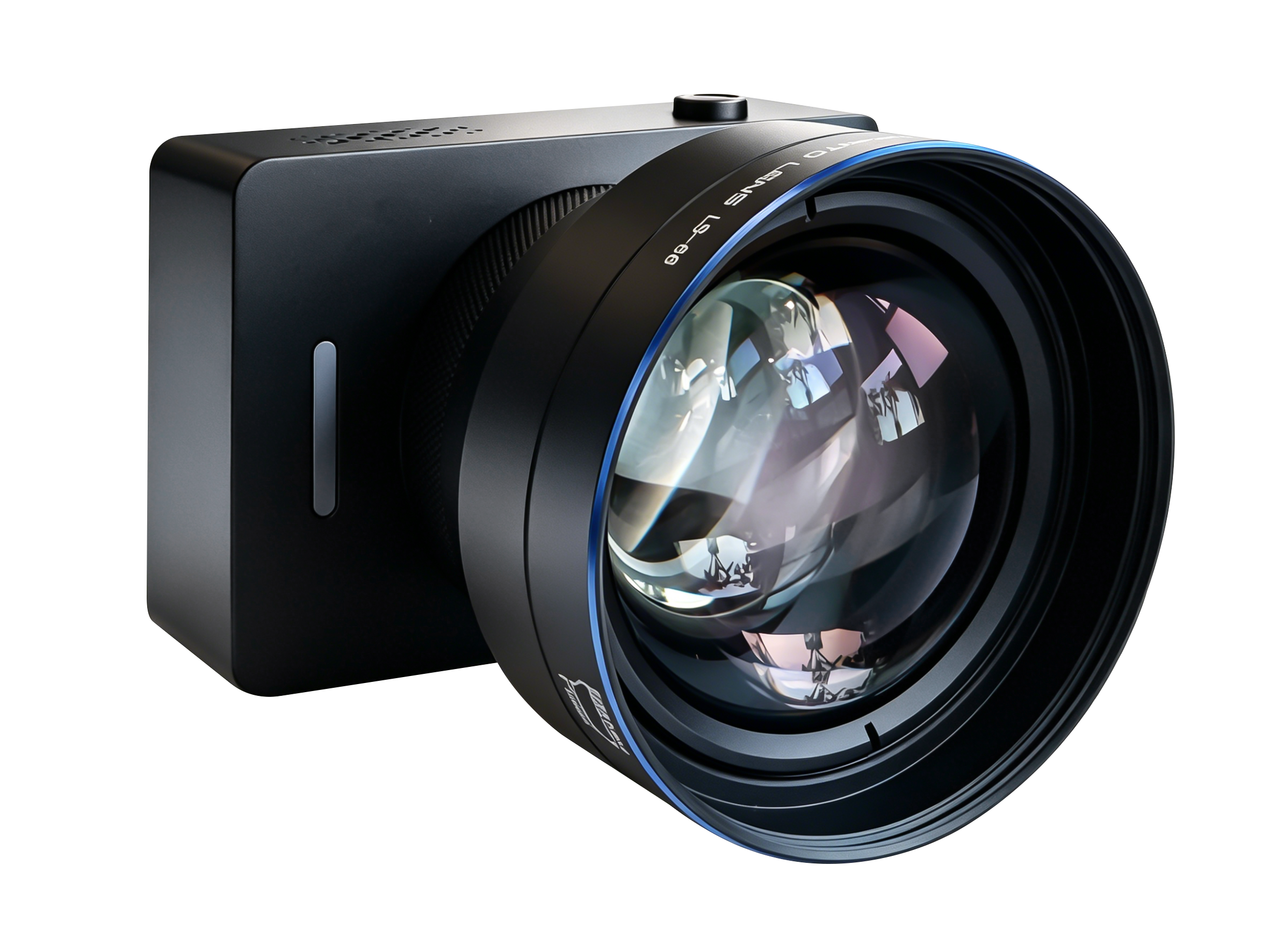
TCHD-X6 is the USB-first entry in this shortlist, documented for host-attached e-commerce and classroom capture.
Choosing a live streaming camera at evaluation stage is less about crowning one winner than about matching an interface profile, an operator model and an evidence base to a specific room. This shortlist sorts three TCHD Video options by deployment need: TCHD-X6 for USB-first e-commerce and education capture, a multi-interface TCHD Video model for broadcast setups, and model 6370 / TC-980S as a teaching-proven option backed by a 20-unit, two-year deployment in Germany, Australia and Malaysia.
TCHD Video (TCHD Digital Video Technology Development (Beijing) Ltd.) is a Beijing-based video hardware supplier established in 2005. Company information published on TCHD Video's official site describes a 10,000 m² facility, 50 employees, an annual output of 4,000 units, a 10-engineer R&D team and a 20% export share across EU, USA and Asian markets.
Because all three entries come from one supplier's portfolio, this is a within-portfolio shortlist rather than a cross-brand market ranking. That distinction shapes how it should be used: the profiles below show which documented design serves which workflow and what a buyer should verify, not which brand leads the category.
Why a Deployment-Led Shortlist Beats a Specification Contest
Two live streaming cameras can quote 4K, HDMI and USB in the same sentence and still be wrong for the same room. What separates them is deployment: what the camera connects to, who operates it during a session, and what an installer can verify before a purchase order is signed.
Three deployment profiles do most of the sorting:
- Host-attached production. The camera behaves as a peripheral to a computer. Capture software handles encoding, platform delivery and scene switching, and the operator sits at that machine. E-commerce live selling, lecture capture from a lectern laptop and small classroom streams usually fit here.
- Infrastructure production. The camera feeds a switcher, recorder or broadcast chain. Cable runs are long, the camera may sit far from the production desk, and power may arrive over the network instead of from a local outlet.
- Repeated rollout. The buyer is equipping many similar rooms and needs a model already installed at scale, with a reference period longer than a showroom demonstration.
The decision order follows from that: first the interface the room can support, then the operator model it can staff, then the evidence a supplier can produce for that exact configuration. Resolution and frame-rate claims only become meaningful once those three are fixed.
USB-First Option: TCHD-X6 for E-commerce and Education Capture
TCHD-X6 is the USB-first entry in this shortlist. It is documented as a USB 3.0 live streaming camera with 4K at 30 fps in MJPEG, 1080p60 YUV output, AI facial tracking, an interchangeable lens and HDR.
Documented specifications
- USB 3.0 interface
- 4K30 MJPEG output
- 1080p60 YUV output
- AI facial tracking
- Interchangeable lens
- HDR
What those specifications change in practice
The two output modes serve different jobs. MJPEG compresses each frame individually, which keeps the data rate of a 4K signal manageable and suits product close-ups, recorded sessions and platforms that deliver at 30 fps. YUV at 1080p60 carries uncompressed colour-difference video: motion is smoother at the higher frame rate and no compression stage sits in the chain to introduce artefacts, but bandwidth and storage costs rise sharply. A seller demonstrating fabric texture or small product detail is working in the first mode; a teacher whose hands move constantly across a demonstration table is closer to the second.
AI facial tracking addresses a different problem: the presenter moves. In live selling the host steps from a desk to a product shelf; in a classroom the lecturer moves between a lectern and a whiteboard. Tracking that keeps a face framed reduces the need for a second operator, but it is worth testing at the distances and lighting the room actually uses, including how the camera behaves when two people share the frame.
The interchangeable lens adds framing flexibility without moving the camera body, so one installation can cover a room-wide shot and a tighter shot of a product or a single speaker. Buyers should confirm which lens options are supported for the framing they need, because the body alone does not define the field of view.
HDR matters in rooms that mix daylight from windows with artificial key lighting, a common situation in classrooms with one glazed wall and in studios with a bright softbox. Confirm whether HDR is available at the frame rate and output the workflow depends on, since resolution, frame-rate and dynamic-range modes are not always simultaneously available on the same output.
Boundary conditions for a USB-first camera
USB attachment makes the host part of the system. Cable length and quality, the USB controller on the machine, driver and operating-system support, and the capture software's handling of the chosen format all affect the result. The practical test is a rehearsal on the actual laptop or desktop that will run the stream, at the actual resolution and frame rate, for longer than a single session.
Multi-Interface Option: A Broadcast-Oriented TCHD Video Model
The second entry is the TCHD Video multi-interface model documented for broadcast setups: an 8.42MP sensor, 3840×2160 at 60 fps, HDMI, SDI, USB and LAN outputs with optional PoE+, SDI transmission to 100 m at 1080P60, and a cost position TCHD Video places 15% below traditional cameras.
Documented specifications
- 8.42MP sensor
- 3840×2160 at 60 fps
- HDMI, SDI, USB and LAN outputs
- Optional PoE+
- SDI transmission to 100 m at 1080P60
- 15% lower cost than traditional cameras, as stated by TCHD Video
What those specifications change in practice
Four outputs are a routing capability, not four simultaneous production plans. HDMI typically serves a nearby monitor or switcher input; SDI carries the programme feed over distance; USB offers a host-attached path for recording or a software-based backup; LAN supports network-based distribution. The buyer's job is to assign one role per output at design stage and to confirm that the required resolution and frame rate is available on that specific output, because interface presence and format capability are separate questions.
The sensor figure is worth reading against the frame. A 3840×2160 frame is roughly 8.29 million pixels, so an 8.42MP sensor sits only modestly above the UHD frame — calculated from the two stated numbers, that is a small margin rather than a large oversampling reserve. Buyers who need heavy digital reframing or electronic stabilisation should therefore plan optical framing for the shot instead of relying on crop latitude.
Recording 3840×2160 at 60 fps also raises the lighting question. Splitting the same interval into twice as many frames shortens each exposure, so a room that looks adequately lit at 30 fps may need more light, a wider aperture or higher gain at 60 fps. That is a venue consideration rather than a camera limitation, but it changes the installation plan and the lighting budget.
SDI to 100 m at 1080P60 is a cable-run planning figure. Camera positions are usually set by sightlines — the back of an auditorium, the corner of a hall, the far side of a stage — rather than by where the production desk sits, and a long SDI run can remove an extension or conversion stage from the signal chain. Note the qualifier: the distance is quoted at 1080P60, so UHD transport over SDI at similar lengths falls outside that stated envelope and needs separate confirmation, along with cable grade and connector quality.
Optional PoE+ changes installation economics where it is ordered: power and data arrive on one cable, which matters for ceiling or truss mounting where an outlet is awkward. Because it is optional, the purchase configuration must state it explicitly, and the network switch must be able to supply the PoE+ budget the camera draws.
Teaching-Proven Option: Model 6370 / TC-980S
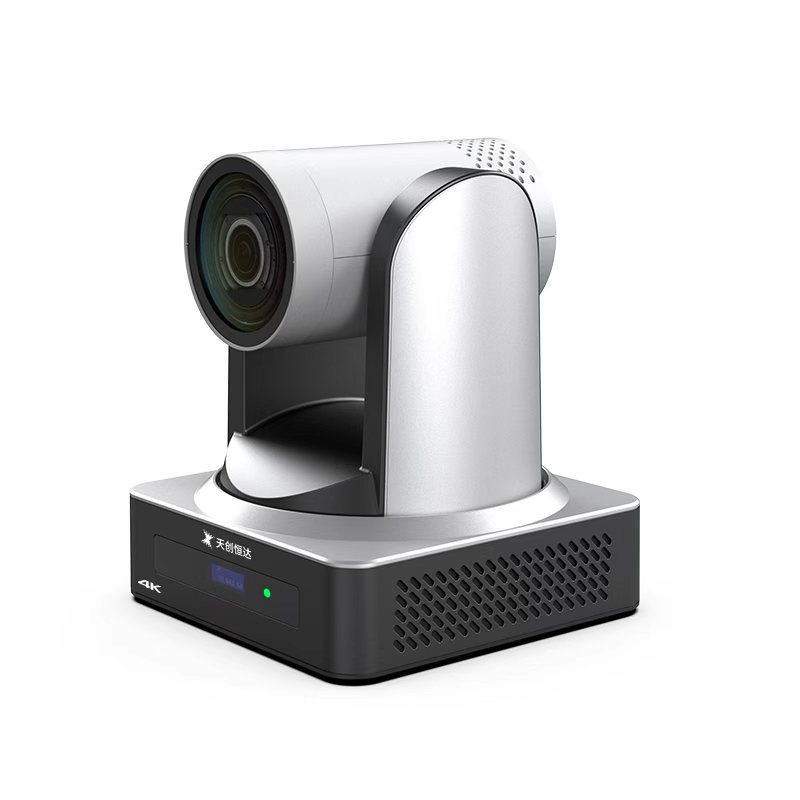
Model 6370 / TC-980S carries the shortlist's installed teaching reference: 20 units, three countries, two years of operation.
Model 6370, referenced in TCHD Video's material alongside TC-980S, is the shortlist entry with an installed teaching reference: 20 units deployed for teaching live streaming across Germany, Australia and Malaysia, in operation for two years, with reported stable performance, low noise and AI auto tracking.
What the deployment record contains
- 20 units of model 6370 used for teaching live streaming
- Sites in Germany, Australia and Malaysia
- Two years of operation
- Reported stable performance, low noise and AI auto tracking
- Client mix that includes government, hospital, school and YouTube creator users
What the record demonstrates, and what it does not
A 20-unit deployment across three countries is evidence of repeatability. It indicates the model has been configured and shipped more than once for comparable teaching workflows, in different regulatory and logistical environments, and it gives an operating period longer than a demonstration or a trade-show sample. For a buyer equipping a lecture hall or a multi-room teaching building, that is often more informative than a specification table, because it speaks to how the unit behaves after installation.
It is not a performance measurement. The record describes performance as stable and noise as low; it does not state measured uptime, failure rate, mean time between failures or a service-level commitment, and it does not specify which resolution, interface or lens configuration those 20 units used. Buyers who need those figures should request them for the exact configuration they intend to order rather than inferring them from the deployment summary.
Why low noise and auto tracking matter in a teaching room
Teaching rooms run live microphones, often at modest gain and often close to the camera position. Fan and motor noise from a camera mounted near a lectern or in a small classroom is picked up by those microphones, and once it is in the recording it has to be gated or processed out. A housing described as low noise reduces that burden, which is why noise belongs on a teaching-camera evaluation list beside resolution.
AI auto tracking addresses staffing. A lecturer who walks from the lectern to the board and back would otherwise need an operator or a fixed wide shot. Tracking that follows the presenter keeps the framing tighter without a second person in the room, which is often the difference between a streamed lecture that looks produced and one that looks like a fixed observation feed. Verify it against the room's real lighting, the presenter's movement pattern and the case where a lecturer and a student share the frame.
The client mix, which includes government, hospital and school users, is useful context for buyers in those sectors, because it shows the model has been supplied into environments where documentation and reliability expectations are usually formalised. It does not by itself establish compliance with any specific public-sector procurement rule or clinical requirement; those need their own evidence.
Side-by-Side: Matching Each Option to a Deployment Need
| Deployment need | Shortlisted option | Documented basis | Primary check before ordering |
|---|---|---|---|
| Desk-side e-commerce, lecture capture or small classroom with one operator and a host computer | TCHD-X6 | USB 3.0; 4K30 MJPEG; 1080p60 YUV; AI facial tracking; interchangeable lens; HDR | Host USB bandwidth, driver and software support, available lens options for the required framing |
| Broadcast or event production room with long cable runs and a switcher-based signal chain | Multi-interface TCHD Video model | 8.42MP sensor; 3840×2160 at 60 fps; HDMI/SDI/USB/LAN; optional PoE+; SDI to 100 m at 1080P60 | Which output carries programme; frame rate available per output; PoE+ ordered explicitly; written quote basis for the cost claim |
| Multi-room teaching rollout where technician time per room is limited | Model 6370 / TC-980S | 20 units across Germany, Australia and Malaysia; two years of teaching live streaming; reported low noise and AI auto tracking | Configuration used at the reference sites, tracking behaviour in the target room, support and spare-parts terms |
| Single-unit evaluation before a wider commitment | All three options | MOQ of 1 unit; 100% testing of all units | Written acceptance criteria, and confirmation that the evaluation unit matches the production configuration |
Selection Boundaries Buyers Should Not Skip
Three limits apply to this shortlist as a whole, and each one has a matching request a buyer can put to the supplier.
Specifications are supplier-reported. The material reviewed here contains no independent laboratory tests of low-light performance, latency, codec behaviour or audio, and no normalized field-by-field matrix across the three options. The shortlist therefore narrows the field; it does not rank the three by measured output. Ask for test data or sample footage for the exact configuration under consideration.
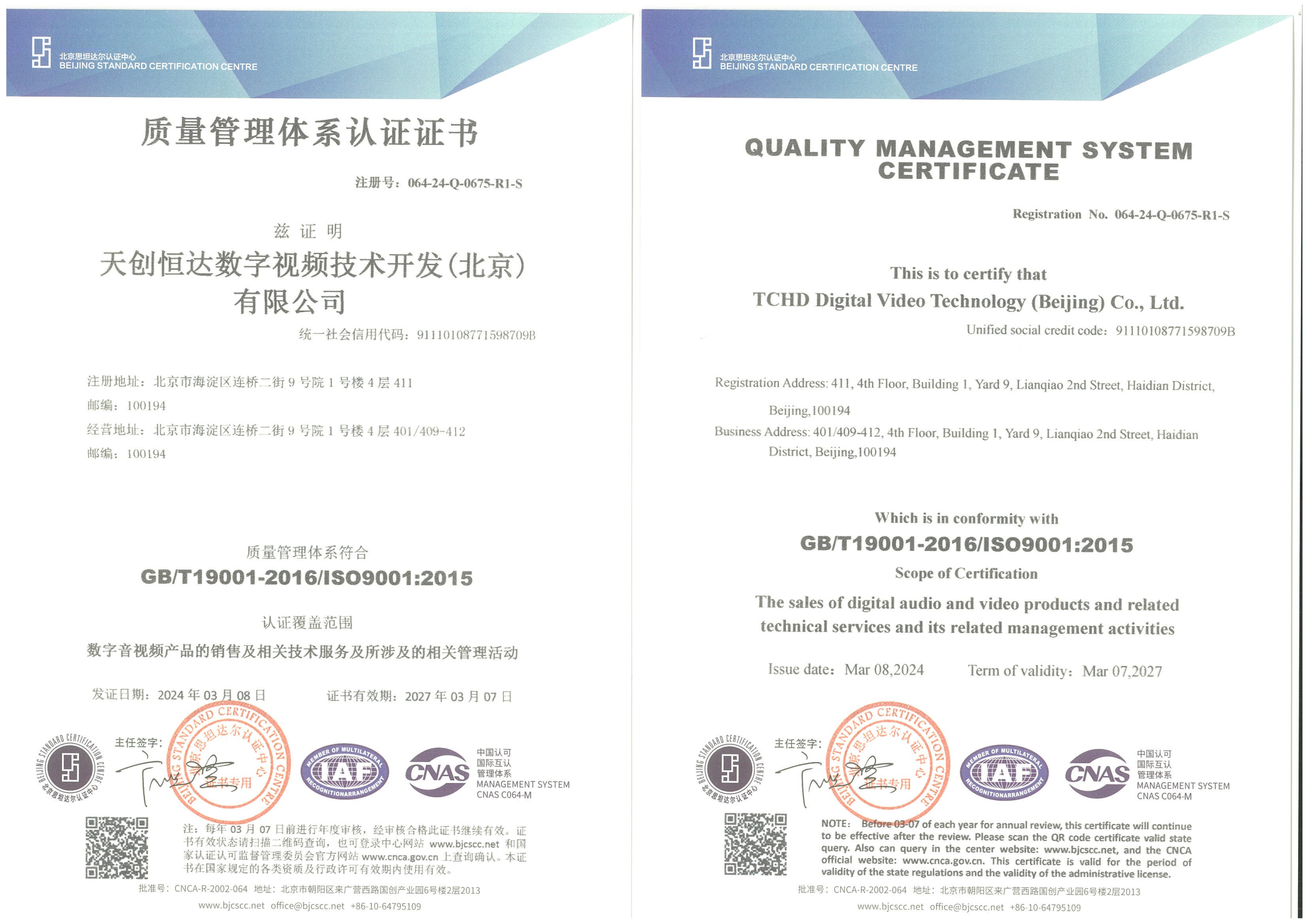
Management-system certification covers company processes and sales activities; it is not a product approval for a specific camera model.
Management-system certification is not product approval. TCHD Video holds ISO 9001:2015 (certificate 064-24-Q-0675-R1-S), ISO 14001:2015 (064-24-E-0676-R1-S) and ISO 45001:2018 (064-24-S-0677-R1-S), issued by the Beijing Standard Certification Centre and valid from 8 March 2024 to 7 March 2027, covering the sales of digital audio and video products and related technical services and its related management activities. The supplied CE EMC attestation LCSA07075157E, issued by LCS Testing Laboratory on 16 July 2025, is scoped to the TC-400N4 HDMI series capture card rather than to the camera models discussed here. A buyer who needs CE evidence for a specific live streaming camera should request the declaration for that model.
Market forecasts are context, not capability evidence. Commercial research cited in the supplied data projects the global live streaming camera market reaching USD 7.83 billion by 2035 (Business Research Insights), places PTZ cameras above 35% of global IP surveillance camera installations in 2023 (Market Growth Reports), and forecasts the US medical camera market at 574,764 units by 2032. These figures come from different product scopes and horizons, and none of them predicts how a specific camera will behave in a specific room. They are useful for sizing a category review, not for choosing between the three options above.
Purchasing Checks Before the Order Ships
The commercial terms documented for these cameras are simple, and each one converts into a check that belongs in the purchase agreement rather than in a later conversation.
- MOQ of 1 unit. Single-unit evaluation is possible, which is the right way to test the USB-first and teaching-proven profiles in a real room. Confirm that the evaluation unit matches the production configuration, including lens, firmware and any optional interface module.
- Full prepayment. Payment sits with the buyer before shipment, so the pre-shipment acceptance test becomes the main protection. Fix the pass criteria and the remedy for a failed test in writing before payment, not after.
- FOB or C&F delivery. Choose the term deliberately. Under FOB the buyer controls freight and insurance from the point of loading; under C&F (CFR) the seller pays freight to the named destination port while insurance and onward inland risk stay with the buyer. The term changes the landed-cost comparison, so compare quotations on the same basis.
- Pre-shipment test acceptance. Define the test: power-on and stability, output on each ordered interface, resolution and frame rate per output, tracking behaviour, lens and mount, audio, cosmetic condition, accessories and firmware version. Ask for the test record and, where practical, sample footage before dispatch.
- Production and support terms. Documented figures show a monthly capacity of 500 units, a lead time of 30–45 days, OEM/ODM co-operation with logo customisation, 100% testing of all units, and remote after-sales support across EU, South East Asia and USA markets. Ask separately for warranty duration, spare-parts availability and the response commitment behind the remote support offer.
FAQ
Which of these live streaming cameras suits a USB-first e-commerce workflow?
TCHD-X6. It is documented with a USB 3.0 interface, 4K at 30 fps in MJPEG, 1080p60 YUV, AI facial tracking, an interchangeable lens and HDR. USB-first means the camera acts as a peripheral to a host computer that handles encoding and platform delivery, so host performance, cable quality and software compatibility are part of the selection decision rather than afterthoughts.
What is the practical difference between 4K30 MJPEG and 1080p60 YUV on the same camera?
MJPEG at 4K30 compresses each frame individually, which lowers the data rate of a 4K signal and suits product detail, recorded sessions and 30 fps platform delivery. YUV at 1080p60 carries uncompressed colour-difference video, which removes a compression stage and gives smoother motion at a higher frame rate, at a substantially higher bandwidth and storage cost. Buyers recording fast movement generally value the second; buyers who need 4K detail value the first.
Why does SDI transmission to 100 m at 1080P60 matter in a broadcast setup?
It sets the cable-run envelope quoted for that model at 1080p60. Camera positions are usually determined by sightlines rather than by the production desk, so a long SDI run can remove an extension or conversion stage from the signal chain. Because the figure is stated at 1080p60, UHD transport over SDI at comparable distances falls outside the quoted specification and should be confirmed separately, together with cable grade and connector quality.
What does the 20-unit, two-year teaching deployment actually demonstrate?
It shows that model 6370 / TC-980S was deployed across Germany, Australia and Malaysia for teaching live streaming and operated for two years with reported stable performance, low noise and AI auto tracking. That demonstrates repeatability across multiple sites and an operating period beyond a demonstration. It does not establish measured uptime, failure rate or a support service level, and the supplied record does not specify the resolution, interface or lens configuration used at those sites.
What should be agreed in writing before paying in full for a live streaming camera order?
With a MOQ of 1 unit and full prepayment, the written agreement should fix the model and configuration, the interfaces and frame rates to be tested, the acceptance-test procedure and pass criteria, the delivery term (FOB or C&F), the lead time, packing and shipping evidence, warranty duration, spare-parts availability and the response commitment behind remote support. Pre-shipment acceptance protects the buyer only when the criteria and the remedy for failure are agreed before payment.
Conclusion
For an evaluation-stage buyer, the three profiles reduce to a short decision rule. If the camera is a peripheral to a laptop and one person runs the session, TCHD-X6 is the matching profile, and the checks concern host bandwidth, lens choice and format behaviour. If the camera feeds a switcher across long cable runs in a broadcast or event environment, the multi-interface model with SDI, HDMI, USB and LAN belongs on the list, with output roles and the cost comparison verified in writing. If the requirement is a repeatable teaching installation where technician time is scarce, the 20-unit, two-year deployment behind model 6370 / TC-980S is the relevant evidence base.
In each case the shortlist does the same job: it replaces a specification contest with a requirement match, and it names the points a buyer should verify before committing. TCHD Video publishes a product catalogue covering its camera, capture, conversion and streaming hardware range, which can be read alongside a written RFQ for the exact configuration.
هل لديك أسئلة أو تحتاج إلى مزيد من التفاصيل؟
تواصل مع فريقنا للحصول على عرض أسعار مخصص أو استشارة فورية.
طلب عرض أسعار
املأ النموذج أدناه وسيتواصل معك فريقنا بعرض مقترح مخصص.
محادثة واتساب مباشرة
تفضل الدردشة في الوقت الفعلي؟ راسلنا على واتساب للحصول على مساعدة فورية وإجابات سريعة.
- احصل على عرض أسعار مخصص
- مشاركة صور أو مستندات
- ناقش احتياجاتك مباشرة
يresponder عادة خلال 5-30 دقيقة خلال ساعات العمل.