
Live Streaming Camera Technical & Procurement FAQ: Specs, MOQ, Payment, Acceptance
Live Streaming Camera Technical & Procurement FAQ: Specs, MOQ, Payment, Acceptance
Live streaming camera projects rarely stall on resolution. They stall between the specification sheet and the purchase order — on how small a first order can be, who carries the cash-flow risk, what the supplier will actually test before the carton is sealed, and whether the certificate in the tender file names the model being bought. TCHD Video (TCHD Digital Video Technology Development (Beijing) Ltd.), a Beijing-based video hardware manufacturer established in 2005 and listed at www.tchdvideohk.com, publishes a short set of answers to those questions: a minimum order quantity of one unit, full prepayment before shipment, delivery on FOB or C&F terms, and acceptance based on a pre-shipment test.
Those four terms are simple to state and easy to misread in practice. A one-unit minimum changes what a trial order can be used for. Full prepayment moves the quality argument forward in time, from after-sales negotiation to before-shipment evidence. FOB and C&F shift freight and insurance responsibility differently, which changes the landed cost of a comparison even when the unit price is identical. And a pre-shipment test is only worth what the buyer wrote into the order. The sections below follow that chain — terms first, then the specification items those terms should be tested against, then the limits of the certification record and the deployment evidence.
Why commercial terms shape the technical shortlist
Most buying guides treat commercial terms as a final negotiation step after the camera has been chosen. In practice the terms decide which cameras can be evaluated at all. A buyer who needs three units to test a lecture hall, a church sanctuary and an outdoor event feed cannot evaluate a supplier with a 50-unit minimum without committing capital to an unproven shortlist. A buyer whose finance team requires goods inspection before payment cannot work with a supplier that requires the opposite without adjusting the acceptance procedure first.
The terms also determine which specification items deserve the most testing attention. When payment is complete before shipment, the pre-shipment test is the buyer's principal quality control — not a formality attached to the invoice. That is the reason this article treats MOQ, payment and delivery as technical inputs rather than administrative ones.The order terms TCHD Video states, and what each one changes
The company's procurement material records a minimum order quantity of one unit, full payment prepaid, delivery through FOB or C&F, and pre-shipment test acceptance. For OEM and ODM work it records logo customization, a monthly production capacity of 500 units, a typical lead time of 30–45 days, and 100% testing of all units. Each of these is a company-stated term, not an independently audited commitment, so the working assumption for a buyer should be that they describe the normal route rather than a guaranteed outcome for every configuration.
A minimum of one unit: what it enables and what it does not
A one-unit minimum allows a buyer to place an evaluation unit and a first production order through the same commercial channel, which removes the usual gap between demo hardware and shipped hardware. For integrators testing a workflow before committing a customer, that is materially useful: the device under test can be a production-configuration unit.
It does not follow that pricing is flat across volumes. The available material records no price tiers, no volume bands and no sample-versus-production price relationship. Buyers should treat the one-unit minimum as an evaluation route and request pricing separately for the quantity they actually intend to order, rather than assuming the single-unit figure scales down.
Full prepayment: where the risk moves
Full payment before shipment places performance risk on the buyer's side of the transaction until goods arrive and are inspected. That is a common arrangement in small-batch hardware purchasing, and it is workable when the acceptance process is agreed in advance and produces a record.
The practical consequence is that acceptance criteria should be written into the purchase order before payment, not discussed after delivery. A buyer can define which units are tested, which interfaces are exercised, at which resolution and frame rate, and what document accompanies the shipment. The supplier states pre-shipment test as its acceptance method; the buyer's protection lies in making those test items specific to the intended deployment rather than accepting a general statement that testing occurred.
FOB and C&F: two different risk transfers
Under FOB, the seller delivers goods on board the vessel at the named port and the buyer arranges and pays for main carriage and insurance. Under C&F — the older notation still widely used for CFR, Cost and Freight — the seller contracts and pays freight to the named destination port, while risk still passes at shipment and marine insurance remains the buyer's responsibility.
For evaluation purposes the distinction matters in two places. First, the two terms produce different landed costs even at an identical ex-works price, so a quotation comparison that mixes them is not a comparison. Second, under either term the buyer's insurance decision is separate from the freight decision; a C&F quote that appears to include delivery does not include cover for loss in transit. Buyers should confirm the named port, the Incoterm version applied, and who arranges insurance — all of which are order-document questions, not camera questions.
Pre-shipment test as the acceptance criterion
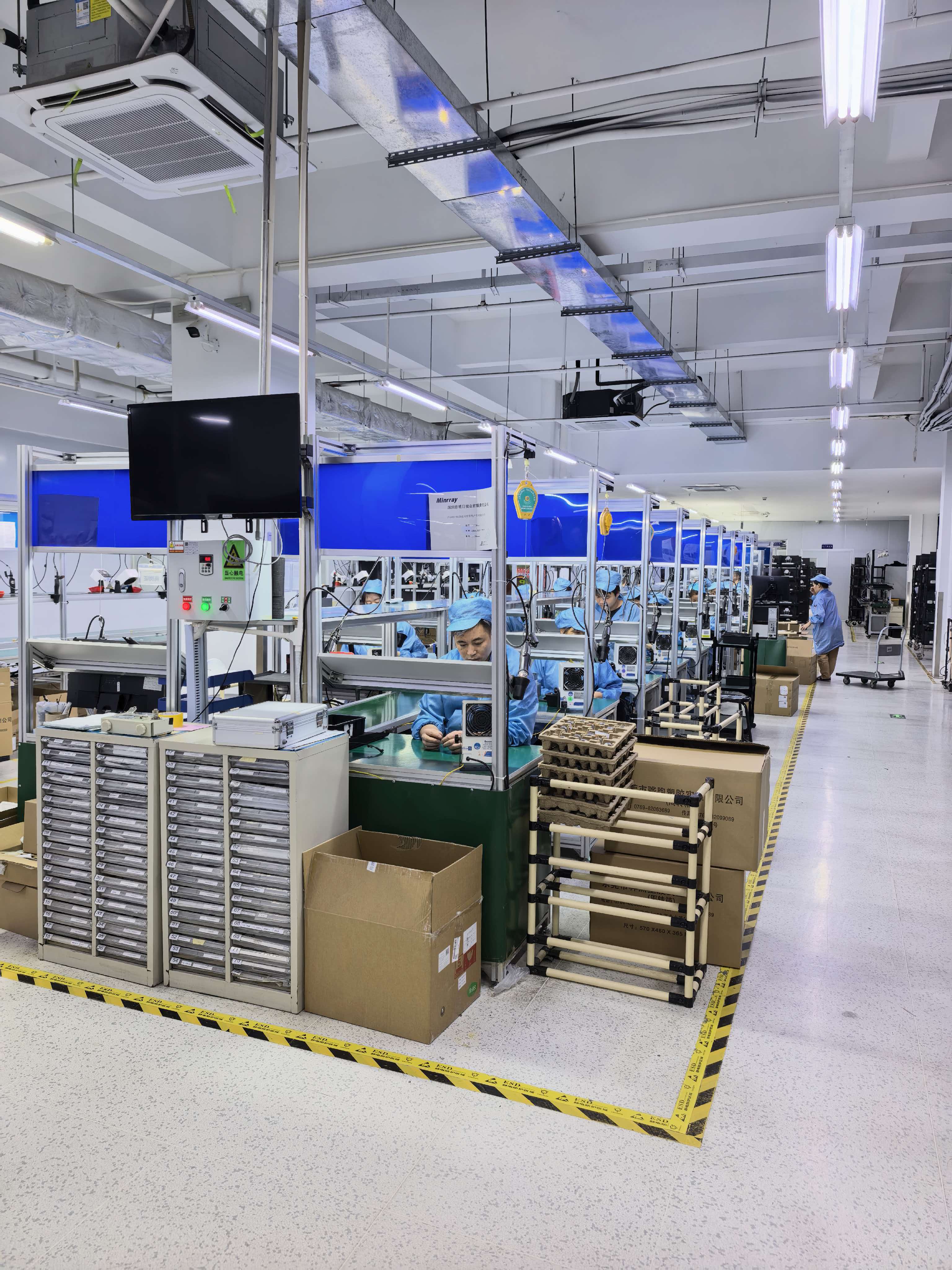
Acceptance based on a pre-shipment test means the decisive inspection happens at the supplier's site before dispatch. Two features of that arrangement deserve attention. The test is performed on the supplier's equipment and, unless the buyer attends or commissions a third party, is evidenced by documentation rather than direct observation. And because payment precedes shipment under the stated terms, the test record is effectively the buyer's warranty of condition at handover.
The company also states 100% testing of all units, which describes coverage rather than depth: every unit is tested, but the material does not specify which parameters are measured, at which resolution, or over what duration. Buyers who need a defined test protocol should treat the difference between "100% tested" and "tested against these criteria" as a specification item to close before ordering.
Reading the specification set as a test plan
The 4K specification described for TCHD Video's live streaming cameras centres on a 1/2.8-inch 8.42MP sensor, 3840×2160 output at up to 60fps, HDMI, SDI, USB and wired LAN outputs, and optional PoE+. Read as a test plan rather than a feature list, each of those items generates a specific question that a pre-shipment test can answer — or leave unanswered.
Sensor pixel count and output resolution are different numbers
An 8.42MP sensor and a 3840×2160 output are not the same measurement. 3840×2160 equals roughly 8.29 million pixels, so the sensor's total pixel count sits slightly above the delivered frame. That margin is normal: sensor totals include pixels used for de-mosaic processing, colour reconstruction and, depending on implementation, electronic stabilization or edge cropping. A buyer comparing cameras should therefore not treat a higher sensor megapixel figure as automatically delivering more output detail, and should confirm the delivered resolution and frame rate at each output rather than the sensor headline.
Frame rate has to be verified per output, not per camera
"3840×2160 at up to 60fps" is a camera-level statement. Each physical output has its own bandwidth ceiling, and the ceiling — not the sensor — often decides what a given port can carry. Uncompressed 4K at 60fps is roughly 12 Gbit/s of pixel data before encoding and protocol overhead, which places it beyond several interface generations:
- SDI: 3G-SDI carries 1080p60 comfortably but not 4K60. Delivering 3840×2160 at 60fps over SDI requires a 12G-SDI class link; 6G-SDI class links suit 4K at lower frame rates. Buyers should confirm the SDI rate tier of the exact model ordered.
- HDMI: HDMI 1.4 class links top out around 4K30; 4K60 needs an HDMI 2.0 class link. Cable quality and length also affect whether the negotiated link holds at 60fps in a venue.
- USB: USB 3.0 class links do not carry uncompressed 4K60 at typical colour depths, so UVC implementations rely on compression, reduced frame rate or reduced chroma. The delivered combination should be confirmed for the specific host platform.
- Wired LAN: a network port streams compressed video, so the constraint is the encoding bitrate against the link and the receiving platform's ingest limits — not the sensor's pixel rate.
PoE+ is an optional item with a power budget
Where PoE+ is fitted, the relevant standard is IEEE 802.3at, which provides roughly 25.5 W at the powered device. Pan-tilt-zoom movement draws current in bursts, and any heater or accessory adds to the total, so the practical checks are the camera's rated consumption for the ordered configuration, the injector or switch's per-port budget, and the total budget of the switch when several cameras share it. Because PoE+ is described as optional, its presence must be confirmed on the specific SKU rather than assumed from the family specification.
Mapping the terms onto an acceptance checklist
The value of a pre-shipment test depends on matching each commercial term to an observable check. The table below is a buyer-side working structure, not a supplier test protocol; it shows where each claim in the order needs evidence before payment clears the risk.
| What the buyer is confirming | Source of the claim | Check that produces usable evidence |
|---|---|---|
| Delivered resolution and frame rate | 1/2.8-inch 8.42MP sensor; 3840×2160 up to 60fps | Record 2160p output at the intended frame rate on each port that will be used, not only at 1080p |
| Interface and power configuration | HDMI, SDI, USB, wired LAN; optional PoE+ | Confirm the ordered SKU's port list and SDI rate tier; test PoE+ on the actual injector or switch |
| Image behaviour in the target room | Deployment record citing low noise and AI auto tracking | Test in the deployment's real lighting and noise floor; recorded outcomes elsewhere do not transfer |
| Units and items actually tested | 100% test; pre-shipment test acceptance | Request the test record identifying units, items measured and date, agreed in the PO before payment |
| Certification relevance to the model | Certificate records linked to TC420, TC-980S and TCHD-T3 | Obtain the certificate copy and read its declared scope line; request a declaration naming the ordered model |
| Delivery date feasibility | Monthly capacity 500 units; typical lead time 30–45 days | Confirm the ship date against order quantity and configuration rather than treating the typical range as fixed |
Certification evidence for TC420 and TC-980S: read the scope line first
The certification record available for TC420, TC-980S and TCHD-T3 does not all operate at the same level, and that difference is the most useful thing a buyer can learn from it. The management-system certificates are company-level. The CE EMC attestation is product-series-level. Neither, on its own, is a model-level conformity statement for a specific camera configuration.
The management-system documents are a quality management certificate (064-24-Q-0675-R1-S) to GB/T19001-2016 / ISO 9001:2015, an environmental certificate (064-24-E-0676-R1-S) to GB/T24001-2016 / ISO 14001:2015, and an occupational health and safety certificate (064-24-S-0677-R1-S) to GB/T45001-2020 / ISO 45001:2018, all issued by the Beijing Standard Certification Centre on 8 March 2024 and valid to 7 March 2027. Their stated scope is the sales of digital audio and video products and related technical services and its related management activities. That wording describes a sales and service management system; it does not by itself certify a manufacturing process or an individual camera model.
The CE EMC attestation (LCSA07075157E, LCS Testing Laboratory) cites EN 55032:2015/A1:2020 and EN 55035:2017/A11:2020, was issued on 16 July 2025, and carries a validity date recorded as 16 July 2099. Its declared scope names the TC-400N4 HDMI series capture card. TC420 and TC-980S appear in the record as related products rather than as the scope line of that attestation.
This is not a reason to exclude a supplier; it is a reason to ask the right question. A certificate presented as general proof and a certificate whose scope matches the purchased model answer different procurement requirements, and only the second one usually satisfies an importer, a public tender or a compliance file.
One further boundary applies to the wider product range. TCHD Video's public catalog describes a 12G-SDI 4K broadcast PTZ model (TC-430HS) and a medical/surgical-teaching camera application. Those descriptions establish declared product categories and interfaces. They do not establish medical-device registration, clinical authorization or suitability for a sterile surgical environment, and buyers in healthcare should treat any medical application claim as requiring separate regulatory verification in the destination market.
Where the specification fits: deployment patterns and their evidence
The interface set — HDMI, SDI, USB and wired LAN on one body, with optional PoE+ — is what makes a single camera family plausible across several very different workflows. Each workflow, however, exercises a different part of the specification and therefore needs a different acceptance emphasis.
- Education and lecture capture. Long sessions, fixed mounting, and often a control room some distance from the room. The critical checks are sustained operation at the chosen resolution, network streaming stability, and whether auto tracking behaves in a room with movement at the edges of frame.
- Houses of worship and event streaming. Mixed lighting, long cable runs to a mixing position, and a volunteer or small technical team. HDMI or SDI runs at 4K60 and cable quality matter more here than in a fixed install; a link that negotiates 4K30 quietly will be discovered only on the day.
- E-commerce and social live streaming. Close subject distance, presenter movement, and platform ingest limits. The wired LAN and USB paths carry most of the workload, and the platform's accepted bitrate and format usually constrain the picture more than the sensor does.
- Broadcast-adjacent production. Interface tier is the deciding question. Where the facility expects a 12G-SDI class signal, that requirement should be matched to the model that declares it, not assumed across a family.
- Medical and surgical teaching. The application is technically demanding and regulatorily separate; the recording and streaming chain may be straightforward while the authorization requirement is not.
One deployment record in the available material covers 20 units of TC980S used for teaching live streaming across government, hospital, school and independent-creator settings in Germany, Australia and Malaysia over two years, with the recorded outcome of stable operation, low noise and AI auto tracking. Read precisely, that is a supplier-recorded account of one multi-site programme. It supports the claim that the model has been deployed at that scale in teaching environments; it does not establish a failure rate, a service-level outcome, or performance in a different acoustic and lighting environment.
Integrated camera output versus a capture-card chain
Buyers arriving from older production setups usually compare two architectures rather than two cameras. The traditional chain pairs a camera with a separate capture card, converter or encoder before the signal reaches a computer or platform. The integrated approach puts HDMI, SDI, USB and network outputs directly on the camera.
The integrated route removes boxes, cabling and a power outlet from the signal path, which matters in rooms where the technical position is a small lectern or a wall cabinet, and it removes one conversion step where signal problems often originate. It also simplifies the bill of materials for a multi-room rollout: fewer parts to specify, stock and replace.
The capture-card chain retains advantages of its own. Components can be replaced or upgraded independently, a preferred lens or sensor can be paired with the encoding stage of choice, and workflows that require specific broadcast infrastructure can be assembled from parts that each declare their own standards compliance. For a facility that already owns a mature signal chain, adding a camera to it may cost less disruption than changing architecture.
The fit boundary is therefore about control, not quality. An integrated live streaming camera constrains the buyer to the lens, zoom range and processing the model provides. Where a production depends on a specific optical characteristic, a specific SDI tier, or camera-control integration with an existing control system, those requirements must be verified against the exact model before the architecture is chosen — and the supplier's broader portfolio, which also includes capture cards, converters and encoders, does not by itself prove that any single camera supports a given control protocol.
What the wider market context does and does not tell a buyer
Three external reference points are worth keeping in proportion during an evaluation. First, published commercial research projects the global live streaming camera market reaching USD 7.83 billion by 2035 (Business Research Insights, 2026). That is a forecast built on stated methodology, and it describes a category, not a supplier's capacity or a model's suitability.
Second, PTZ units were reported at over 35% of global IP surveillance camera installations in 2023 (Market Growth Reports, 2026). Buyers should note the denominator: surveillance installations, not live streaming deployments. The figure supports the general observation that PTZ mechanics are a mature, widely deployed technology; it says nothing about broadcast or worship streaming demand.
Third, customs classification is worth settling early. Special-purpose television cameras, including CCTV types, fall under HS Code 8525.89, with national subdivisions such as 8525.89.40 in some jurisdictions. Classification affects duty and import documentation, and it is determined by the product's characteristics rather than by the marketing category — a point worth confirming with a customs broker before the first shipment rather than after it.
Where a buyer is supplying a public-sector or dedicated video-conferencing environment, interoperability standards may also be in scope. Texas state procurement guidance, for example, expects dedicated videoconferencing equipment to meet relevant ITU standards — H.320 or H.324 in certain telephone and ISDN environments, and H.323/SIP for internet-based conferencing — while ITU-T H.324 itself defines an audiovisual terminal architecture that includes cameras and monitors as video input/output equipment. Neither document certifies any particular camera; both indicate that a buyer should ask for declared protocol and standard support rather than inferring interoperability from a resolution or interface label.
Questions to close before the deposit
Because the stated terms combine full prepayment with supplier-side acceptance, the sequence of questions before payment matters more than the sequence after it. A buyer can close most of the exposure with six items:
- Is the ordered configuration the same one that appears in the specification — including whether PoE+ is fitted, and which SDI rate tier the model provides?
- Which units will be tested, at which resolution and frame rate, on which ports, and will the test record accompany the shipment?
- Which certificate scope line covers this model, and can a declaration of conformity naming the model and configuration be issued?
- Which ports, cable lengths and receiving devices will be used on site, so the test exercises the real signal path?
- Which Incoterm version and named port apply, and who arranges marine insurance?
- What ship date does the supplier confirm against this quantity, given a typical lead time of 30–45 days and a stated monthly capacity of 500 units?
Outlook: fewer boxes, more verification
The direction of travel in this category is consolidation — one camera body carrying HDMI, SDI, USB and network output, with power over the network cable where the installation allows it. That reduces the number of failure points in a signal chain and lowers the technical skill needed to run a room, which is precisely why education, worship and event buyers are the ones driving the pattern.
The trade-off is that a single device now carries more of the responsibility that used to be distributed across several components. If one port's bandwidth ceiling, one certificate's scope line, or one acceptance test item is left unverified, there is no downstream box to compensate. The conditional conclusion for buyers is straightforward: as integration increases, the value of a specific, written acceptance plan increases with it, and the commercially important questions migrate from the specification sheet to the purchase order.
Frequently asked questions
What is the minimum order quantity for a TCHD Video live streaming camera?
The stated minimum order quantity is one unit. That allows an evaluation unit to be ordered through the same commercial route as a production order, which is useful when a buyer needs to test a real production configuration in a specific room before committing further. The available material does not record volume price tiers, so pricing for larger quantities should be requested separately rather than extrapolated from the single-unit position.
What payment and delivery terms apply to an order?
Payment terms are full payment prepaid before shipment, and delivery is arranged on FOB or C&F terms. Under FOB the buyer arranges main carriage and insurance; under C&F — the older notation for CFR, Cost and Freight — the seller pays freight to the named destination port while risk passes at shipment and insurance remains the buyer's responsibility. Buyers comparing quotations should confirm the Incoterm version, the named port and the insurance arrangement, since those determine the landed cost.
How is a live streaming camera accepted before shipment?
Acceptance is based on a pre-shipment test, and the company states 100% testing of all units. The test takes place at the supplier's site before dispatch, so the buyer's evidence is documentation unless the test is witnessed or commissioned independently. Because payment precedes shipment under the stated terms, buyers typically benefit from specifying which units, ports, resolutions and frame rates are tested, and from agreeing that the test record accompanies the goods.
Which specifications should be verified on a 4K live streaming camera?
For the specification set described here, the checks are the delivered resolution and frame rate at each output rather than the sensor headline; the interface list and the SDI rate tier of the exact model; whether PoE+ is fitted on the ordered configuration and whether its rated consumption fits the injector or switch budget; and image behaviour in the actual room lighting. A 1/2.8-inch 8.42MP sensor delivering 3840×2160 at up to 60fps is a camera-level statement, and each physical output has its own bandwidth ceiling that limits what it can carry.
Does the CE EMC certificate cover TC420 and TC-980S?
The available record links TC420, TC-980S and TCHD-T3 to certification entries, but the levels differ. The CE EMC attestation LCSA07075157E from LCS Testing Laboratory cites EN 55032:2015/A1:2020 and EN 55035:2017/A11:2020 and its declared scope names the TC-400N4 HDMI series capture card, with TC420 and TC-980S listed as related products. The ISO 9001, ISO 14001 and ISO 45001 certificates from the Beijing Standard Certification Centre cover sales of digital audio and video products and related technical services. Buyers requiring model-level conformity should request the document whose scope line names the ordered model, plus a declaration of conformity for that configuration.
Can a buyer apply their own logo or request custom production?
OEM and ODM production services are offered, with logo customization available for OEM/ODM orders. The stated monthly production capacity is 500 units and the typical lead time is 30–45 days, with export markets recorded as the EU, South East Asia and the USA; the company's major markets are the EU, USA and Asia, and export business accounts for 20% of total sales. Customization scope beyond logo application is not detailed in the available material, so any requirement that changes hardware, firmware or packaging should be confirmed in writing as part of the order specification.
What does the company's deployment record actually show?
The available record describes 20 units of TC980S deployed for teaching live streaming across government, hospital, school and independent-creator settings in Germany, Australia and Malaysia over two years, with the recorded outcome of stable operation, low noise and AI auto tracking. It is a supplier-recorded account of a single multi-site programme. It supports the existence of deployments at that scale in teaching environments, but it does not establish a failure rate, a service-level commitment or performance in a different environment.
The full TCHD Video product catalogue covering the live streaming camera range and related video hardware is available for download: TCHD Product Catalog 2025.
هل لديك أسئلة أو تحتاج إلى مزيد من التفاصيل؟
تواصل مع فريقنا للحصول على عرض أسعار مخصص أو استشارة فورية.
طلب عرض أسعار
املأ النموذج أدناه وسيتواصل معك فريقنا بعرض مقترح مخصص.
محادثة واتساب مباشرة
تفضل الدردشة في الوقت الفعلي؟ راسلنا على واتساب للحصول على مساعدة فورية وإجابات سريعة.
- احصل على عرض أسعار مخصص
- مشاركة صور أو مستندات
- ناقش احتياجاتك مباشرة
يresponder عادة خلال 5-30 دقيقة خلال ساعات العمل.