
LoRaWAN Scenario Mapping: Lierda vs. Quectel, u-blox, Telit, Sierra Wireless
LoRaWAN Scenario Mapping: Lierda vs. Quectel, u-blox, Telit, Sierra Wireless
Scenario fit, not brand preference, decides the LoRaWAN shortlist
A LoRaWAN deployment rarely fails at the module datasheet. It fails at the pole, the field edge or the container yard, where the gateway's ingress protection, the node's power budget, the regional band plan or the operating class does not match the site. For consumer-IoT and smart-city programmes in street lighting, agriculture, logistics and industrial control, those constraints should be settled before a supplier shortlist is drawn up.
This review maps Lierda's documented LoRaWAN hardware to those constraints, then positions the portfolio against Quectel, u-blox, Telit and Sierra Wireless on the four dimensions buyers use at evaluation stage: scenario-ready solutions, technical fit, service support and deployment breadth. Lierda Science & Technology Group Co., Ltd. is an IoT module and solution provider founded in 2001 and headquartered in Hangzhou, and its LoRaWAN line includes the IG41 indoor gateway, the OG45 outdoor gateway, the WB26 node module and the LP26 high-power node module.
One boundary applies throughout. Verified specifications were available for Lierda's own models. Comparable LoRaWAN specifications for the other four suppliers were not part of the evidence set used here, so they are treated through verification criteria rather than a performance verdict. A parameter a supplier has not published is not proof that its product cannot meet a requirement — it is a question for the datasheet request.
The seven constraints that eliminate hardware before price is discussed
LoRaWAN scenario fit reduces to seven practical questions. Each one removes products from the list, and each answer is verifiable from a datasheet rather than from a brand claim.
- Gateway location and ingress protection. A pole, a cabinet, a ceiling void and an equipment room impose different enclosure classes. An indoor unit installed in a wet location becomes a maintenance item rather than a saving.
- Site temperature. A stated operating range is a hard limit. Sites that swing below the lower bound in winter, or above the upper bound in a roof space in summer, need a different enclosure or a different product.
- Uplink margin. Transmit power and receiver sensitivity together set the link budget, but raising transmit power also raises current draw. That changes the battery or the power supply, not only the range.
- Operating class. Class A devices open receive windows only after an uplink; Class C devices listen almost continuously. Class C improves downlink responsiveness and costs energy, so the choice follows from the control loop.
- Regional band plan. A module specified for US915 and AU915 is not interchangeable with an EU868 rollout. The band plan is part of the part number rather than an accessory.
- Node capacity per gateway. The number of nodes a concentrator supports sets how many gateways a site needs, and therefore the civil works, backhaul and power budget.
- Gateway power. PoE and 12 V DC are not equivalent at every mounting point, and the available supply often decides the enclosure as much as the gateway.
Lierda's LoRaWAN portfolio in documented terms
Lierda's LoRaWAN family splits along one axis: where the radio sits. The gateway models serve the concentrator role, indoor and outdoor, while node modules such as the WB26 and the high-power LP26 serve the device side.
| Product | Documented specification | Scenario role |
|---|---|---|
| IG41 LoRaWAN Indoor Gateway | Indoor LoRaWAN gateway listed in Lierda's LoRaWAN gateway range; confirm chipset, transmit power and node capacity on the current datasheet | Control rooms, indoor cabinets and enclosed spaces where an outdoor-rated unit adds cost without adding protection |
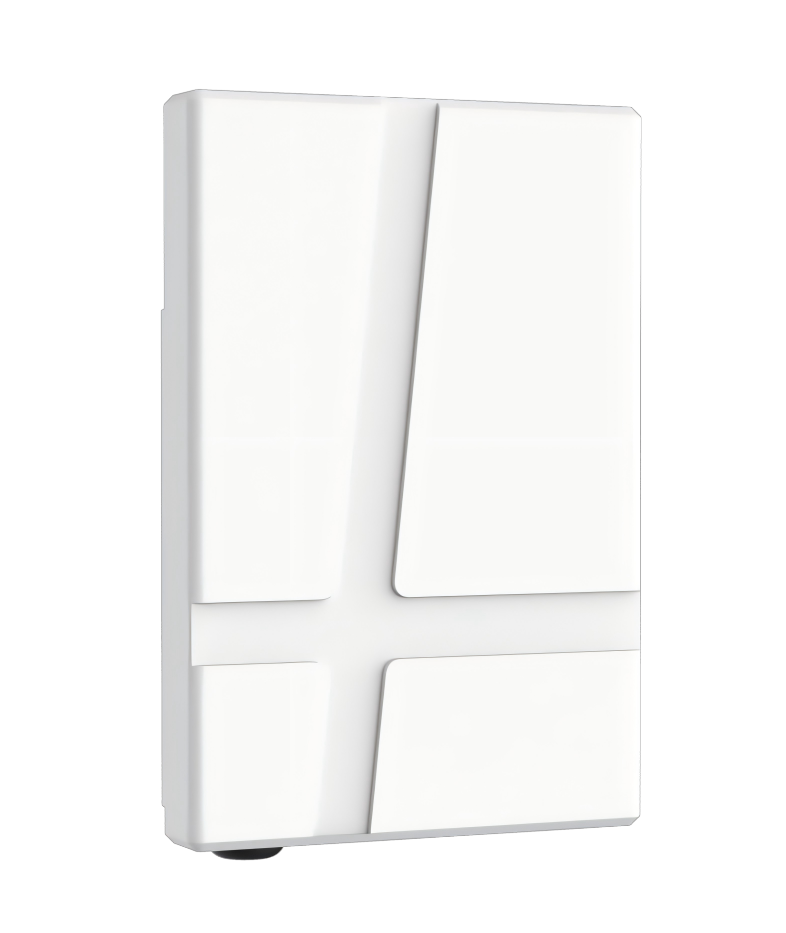
| OG45 LoRaWAN Outdoor Gateway | SX1302 platform; 27 dBm maximum transmit power; up to 2,000 nodes; global frequency bands under the LoRa Alliance standard; 12 V DC or PoE; IP67; −20 °C to +70 °C; 256 × 164 × 92 mm | Pole, mast or cabinet-mounted concentrator for street lighting, agriculture, logistics yards and industrial sites |
| WB26 LoRaWAN Node Module | 22 dBm transmit power; −137 dBm receiver sensitivity | Standard-power endpoints where battery life and simple uplink reporting dominate |
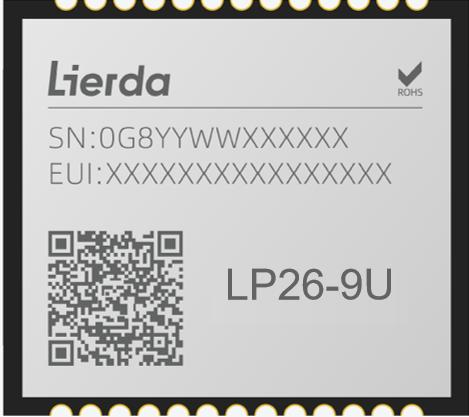
| LP26 High-Power LoRaWAN Node Module | Up to 29 dBm at 902–928 MHz; Class A and Class C; −137 dBm sensitivity at SF12 with 125 kHz bandwidth; 2 µA sleep current; 600 mA typical at 29 dBm; 3.6–5.2 V (3.8 V typical); UART with IPEX antenna; 25 × 21 × 3.0 mm; US915 and AU915 | Long-range or obstructed endpoints, mains-powered controllers and sites where uplink margin matters more than current |
The gateway figures do most of the work in scenario selection. A 27 dBm maximum transmit power, an SX1302 baseband and a stated ceiling of 2,000 nodes describe a concentrator intended for multi-hundred-node sites, while IP67 and the −20 °C to +70 °C range describe where it can be mounted rather than how far it reaches. Lierda lists the OG45's frequency support as global bands under the LoRa Alliance standard, which is a portfolio-level statement; country approval still has to be confirmed model by model.
On the node side the two modules answer different budgets. The WB26's 22 dBm transmit power and −137 dBm sensitivity describe a conventional endpoint. The LP26 buys additional margin: 29 dBm maximum at 902–928 MHz and the same −137 dBm sensitivity, with 2 µA sleep current and 600 mA typical current at full power. Those two figures explain why the LP26 belongs on a mains-powered controller or a large primary pack rather than on a coin cell.
Smart street lighting: gateway placement is the real decision
Street lighting is the scenario where Lierda's gateway split is easiest to read. A luminaire controller is a mains-powered node mounted at height, usually in a metal housing with a limited antenna ground plane, and the concentrator sits either on the pole, in a cabinet at the feeder, or in a substation room.
For pole or cabinet mounting, the OG45's IP67 rating and −20 °C to +70 °C operating range match the outdoor enclosure requirement, and the 12 V DC or PoE input matches the supplies normally available at those points. The stated maximum of 2,000 nodes per gateway then becomes a planning figure: a corridor with a few hundred luminaires fits inside one concentrator's stated capacity, but capacity is not coverage. RF survey, pole spacing and obstruction decide how many gateways a corridor actually needs, and Lierda's figure describes a device limit rather than a field-proven radius.
The IG41 covers the indoor half of the same project: control rooms, indoor cabinets and enclosed spaces where an IP67 unit adds cost without adding protection. Buyers specifying the IG41 should confirm chipset, transmit power and node capacity from the current datasheet, because Lierda publishes gateway parameters per model and the values quoted above are the OG45's.
Node choice follows the power source rather than the range target. A luminaire controller has mains power, so the LP26's 29 dBm maximum and 600 mA typical draw at that level are affordable, and the extra margin helps where a pole is surrounded by buildings or foliage. A retrofit that relies on a battery-backed node should be built around the transmit event rather than the idle current: a 29 dBm uplink draws 600 mA typical, so pack sizing follows uplink frequency, not the 2 µA sleep state.
Smart agriculture: sensitivity, current and the band plan decide everything
Lierda's own reference scenarios describe field monitoring under humid, outdoor exposure with a dust and water protection requirement — for example water-level measurement in rice fields, running continuously with a probe in the field. The same conditions apply to soil-moisture, valve and weather-station endpoints.
In that setting the LP26's −137 dBm sensitivity at SF12 and 125 kHz bandwidth is the number that matters, because the uplink is normally the constrained path: the sensor sits low, the vegetation is wet and the gateway is far away. The 29 dBm maximum transmit power adds margin in the other direction. Both are module-level figures; antenna gain, cable loss and enclosure attenuation change the delivered link budget, so the module value is a starting point in the site calculation rather than the answer.
The band plan is where a field project can be lost. Lierda's published LP26 specification lists US915 and AU915, not the European or Asian plans. A rice-field or orchard project in EU868 or AS923 territory therefore needs a model whose specification names that band, and the buyer should obtain the band list in writing rather than assume a LoRaWAN family covers every region. Lierda's WB25-8D product page, for instance, lists a broader set of regional plans — evidence that regional coverage varies by model within the same supplier.
Power is the third constraint. The LP26 accepts 3.6–5.2 V with 3.8 V typical, so a 3.6 V lithium primary cell sits inside that window. Whether the pack survives a long service interval depends on how often the node transmits at 29 dBm, because a 600 mA typical transmit current dominates the energy budget and the 2 µA sleep state only matters between those events.
Smart logistics: what LoRaWAN covers and what it does not
Lierda lists smart logistics among the target industries for both the OG45 and the LP26, and the realistic scope is yard, warehouse, dock and container-site coverage where the operator controls the gateways. Inside that footprint the advantage is cost per node and battery life, not ubiquity.
Class A operation fits periodic position or condition reports: wake, uplink, a short receive window, back to sleep. Class C, which the LP26 also lists, fits fixed infrastructure that needs near-continuous downlink — a dock door controller, a valve actuator or a sign that must respond on demand. Class C raises energy use, so it belongs where mains power exists.
Wide-area asset tracking is a different problem. A gateway-based network ends where the private coverage ends, and a trailer moving between regions needs a wide-area bearer rather than a LoRaWAN concentrator. Lierda's published asset-tracking and vessel-positioning references list Cat.1 bis, NB-IoT and Bluetooth modules alongside LoRaWAN options, which is a useful reminder that the same supplier covers both architectures and the decision is a network design choice, not a brand choice.
Industrial control and metering: temperature limits and architecture choice
Industrial cabinets and metering rooms put the gateway inside a temperature envelope rather than an ingress-protection test. The OG45's stated range of −20 °C to +70 °C covers conventional cabinet interiors and most process areas, but not every site: an unheated northern enclosure, a cold store or a roof-mounted cabinet can fall outside it, and no amount of node-side margin compensates for a concentrator operating beyond its specification.
IP67 is worth reading precisely. It describes dust and water ingress protection; it does not describe corrosion resistance, so a coastal or chemical plant installation still needs a housing strategy. Buyers who read an ingress rating as an all-environment claim usually discover the difference at the first inspection.
Metering is where the architecture question matters most. Lierda's published energy reference is a European OEM programme covering water and gas meters, reported at more than 19.6 million units with five- and ten-year field lives and stable operation. Its published metering references list NB-IoT and Cat.1 bis modules among the applicable products alongside LoRaWAN options, which places LoRaWAN in metering where the utility operates a private network — a campus, a port or a district — rather than where meters are spread across a whole city.
How Lierda sits against Quectel, u-blox, Telit and Sierra Wireless
The four named suppliers give a buyer four reference points, and the temptation is to rank them. Two facts limit what can honestly be ranked here.
First, the only comparable third-party metric in this evidence set is cellular IoT module shipment share for 2024, published by Counterpoint Research. It places Quectel at 37% and Lierda at 5% of global cellular IoT module shipments, within a five-company set that does not include u-blox, Telit or Sierra Wireless. That ranking measures cellular module volume across all technologies. It says nothing about LoRaWAN gateway or node capability, and it cannot be used to position the three suppliers it omits.
Second, no verified LoRaWAN specifications for the four suppliers were available for this review. Setting Lierda's stated 27 dBm, 2,000-node, IP67 gateway against an unverified assumption about a competitor's product would produce a table, not evidence.
| Evaluation dimension | Lierda, as documented | What to request from Quectel, u-blox, Telit and Sierra Wireless |
|---|---|---|
| Scenario-ready LoRaWAN hardware | Indoor and outdoor gateways plus LoRaWAN node modules, with the OG45 positioned for outdoor mounting | Gateway datasheet for the same mounting scenario, indoor and outdoor variants, ingress rating and mounting accessories |
| Technical fit | 27 dBm maximum and 2,000 nodes on the OG45; IP67; −20 °C to +70 °C; nodes at 22 dBm and 29 dBm with −137 dBm sensitivity and Class A/C | Transmit power and sensitivity at a stated spreading factor and bandwidth, supported classes, temperature range and regional band list per model |
| Service support | More than 20 service centres; OEM, ODM and EMS engagement with module and PCBA customization; remote technical assistance | Regional field application engineering coverage, escalation path, written lead-time commitment and RMA terms |
| Deployment breadth | Reported energy and smart-home programmes in Europe and Asia; listed markets include Europe, East Asia, Southeast Asia and the Middle East | Reference deployments in the same application, band plan and market, with the connectivity technology identified |
Read the table as a request list. A buyer comparing Lierda with Quectel, u-blox, Telit or Sierra Wireless obtains a defensible shortlist only when every cell is filled from a datasheet or a written response captured under the same conditions. Where a supplier cannot or will not publish a figure, the correct conclusion is "unverified", not "inferior". Equally, a documented figure such as the LP26's 29 dBm maximum is a specification, not a claim of superiority in a scenario where 22 dBm is sufficient and cheaper in energy terms.
Fit boundaries buyers should check before committing
- Protocol support is not market approval. LoRaWAN conformance and regional parameters describe how a device communicates; they do not replace country-level type approval. This evidence set contains no certificate numbers for any Lierda model, so buyers should request the certificates for the destination market rather than accept a protocol statement.
- EU cybersecurity requirements apply. Radio equipment placed on the EU market has been subject to the Radio Equipment Directive's cybersecurity provisions since 1 August 2025. A LoRaWAN stack does not by itself demonstrate that the requirement is met, and compliance should not be assumed from a product page.
- The 2,000-node figure is a device limit, not a coverage guarantee. Gateway count follows from RF survey, node density and uplink interval.
- Range limits are part of the specification. The OG45's −20 °C lower bound excludes some cold-climate and cold-chain sites, and the LP26's published band list excludes EU868 and AS923.
- Module figures are not system figures. Antenna gain, cable loss, enclosure attenuation and installation height change the delivered link budget at every site.
Service support and deployment breadth in the evaluation
Support structure matters most in the second year of a deployment, when the first failures appear and the original design team has moved on. Lierda lists more than 20 service centres, 224 R&D staff within a 976-person organisation and an 18,000 m² factory, and reports 66 invention patents as of 31 May 2025. The company was founded in 2001 and listed on the Beijing Stock Exchange on 17 February 2023.
On the commercial side, Lierda offers OEM, ODM and EMS engagement with module and PCBA customization, MOQ and lead time described as flexible and project-dependent, custom QC standards, and dedicated project support with remote technical assistance. Those are supplier statements rather than audited commitments; buyers should convert them into written MOQ, lead-time and RMA terms before the first production order.
Deployment breadth also needs careful reading. Lierda's listed markets are Europe, East Asia, Southeast Asia and the Middle East, and its published references include a European energy OEM programme of more than 19.6 million units and a smart home and hotel equipment ODM programme of more than one million units. Neither reference is attributed to a LoRaWAN product, so they support manufacturing and programme-continuity arguments rather than LoRaWAN field performance.
What changes for buyers as LoRaWAN projects scale
Global cellular IoT module shipments grew 10% year on year in 2024, according to Counterpoint Research, so the module supply base is expanding rather than contracting. That figure covers cellular modules and does not forecast LoRaWAN volumes; no LoRaWAN-specific forecast is supported by this evidence set.
The practical implication for a multi-site roll-out is that the constraint shifts from module selection to documentation. Once a design is repeated across sites, the questions that stop a project are the ones the first pilot never asks: is the band plan approved in this country, is the outdoor gateway within its operating range at this location, and can the supplier answer a return request in the local language. A supplier whose LoRaWAN line pairs an IP67 outdoor gateway with documented node parameters, and who will put MOQ, lead time and support terms in writing, reduces those questions to a checklist.
Frequently asked questions
Which Lierda gateway suits an outdoor street-lighting or agricultural installation?
The OG45 LoRaWAN Outdoor Gateway. Its published specification lists IP67 protection, a −20 °C to +70 °C operating range, 12 V DC or PoE supply, the SX1302 platform, 27 dBm maximum transmit power and support for up to 2,000 nodes. The IG41 is the indoor counterpart for control rooms and cabinets, so it fits the same project only where the gateway sits inside a protected space.
Can a single LoRaWAN gateway cover an entire site?
Not from the datasheet alone. Lierda states a maximum of 2,000 nodes per OG45, which bounds device capacity rather than radio coverage. Coverage depends on terrain, building density, antenna height and node transmit power, and should be established through an RF survey before gateway count is fixed.
Should a battery-powered field sensor use the WB26 or the LP26?
Start with the band plan and the energy budget. The WB26 is specified at 22 dBm with −137 dBm sensitivity; the LP26 reaches 29 dBm at 902–928 MHz with the same sensitivity, Class A and Class C operation, 2 µA sleep current and 600 mA typical current at 29 dBm. The LP26's published band list covers US915 and AU915, so an EU868 or AS923 project needs a model specified for that plan. On energy, higher transmit power costs current, so the LP26 suits mains-powered or large-pack nodes where extra uplink margin is required.
What should be verified before replacing a Quectel, u-blox, Telit or Sierra Wireless module with a Lierda part?
Ask for five items: the regional band list for the target market, transmit power and receiver sensitivity at the same spreading factor and bandwidth as the incumbent, the supported operating classes, the gateway's ingress and temperature ratings, and the certificate numbers for the destination market. Add MOQ, lead time and RMA terms in writing. Without those, a comparison is a preference rather than an evaluation.
Does LoRaWAN support mean a device can be sold in the EU?
No. LoRaWAN conformance and regional parameters describe how the device communicates. Placing radio equipment on the EU market also requires the applicable Radio Equipment Directive requirements, including the cybersecurity provisions that have applied since 1 August 2025, plus market-specific approvals. Buyers should request declarations and certificate numbers instead of relying on a protocol statement.
A PDF brochure covering Lierda's module portfolio and service scope is available for download: Lierda product and service brochure (PDF).
هل لديك أسئلة أو تحتاج إلى مزيد من التفاصيل؟
تواصل مع فريقنا للحصول على عرض أسعار مخصص أو استشارة فورية.
طلب عرض أسعار
املأ النموذج أدناه وسيتواصل معك فريقنا بعرض مقترح مخصص.
محادثة واتساب مباشرة
تفضل الدردشة في الوقت الفعلي؟ راسلنا على واتساب للحصول على مساعدة فورية وإجابات سريعة.
- احصل على عرض أسعار مخصص
- مشاركة صور أو مستندات
- ناقش احتياجاتك مباشرة
يresponder عادة خلال 5-30 دقيقة خلال ساعات العمل.