
Long-Battery Phone Supplier Audit: UMIDIGI's Capability File
Long-Battery Phone Supplier Audit: UMIDIGI's Capability File
A long-battery smartphone is one of the easier products to describe and one of the harder ones to verify. Capacity is printed on the retail box. Sealing performance, real power behaviour, certification coverage and manufacturing consistency are not. That asymmetry is why buyers in the evaluation stage increasingly ask for a capability file instead of another specification sheet.
This article reads UMIDIGI's capability file the way a procurement auditor would. It separates what Shenzhen Keysmart Technology Co., Ltd. documents at company level, what its ODM/OEM terms actually commit to, what three battery-led models demonstrate at product level, and which parts of the file a buyer must still close independently. The structure is a checklist, not a ranking. Company figures come from UMIDIGI's own documentation; market and regulatory figures are attributed to their publishers.
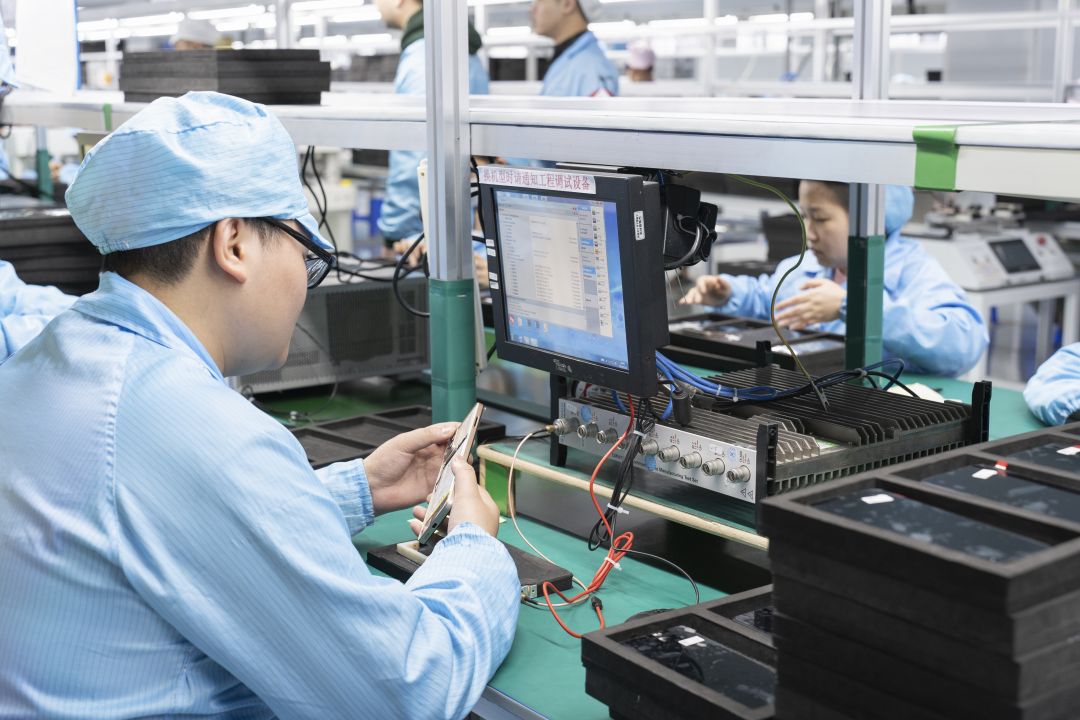
Assembly environment: an auditable capability file should let a buyer map document claims to a physical process.
What an auditable capability file has to contain
Five document groups carry most of the weight in a long-battery smartphone supplier evaluation, and each answers a different question. A file that supplies only one or two of them is a brochure, not evidence.
- Legal identity and continuity. Which entity signs the contract, and how long has it operated? This establishes existence and track record — not financial health.
- Physical capacity and process. Facility size, headcount, engineering staff, monthly output and quality regime establish whether the stated volume is realistic, not whether capacity is currently free.
- Commercial scope. MOQ, lead time, customization boundaries, payment and delivery terms determine the real cost of changing a specification after the pilot.
- Product-level engineering evidence. Named models with measurable attributes show the capability in use rather than in principle.
- Third-party conformity records. Certificates that name the model, the standard and the manufacturer are the only part of the file a supplier cannot write itself.
UMIDIGI's file covers all five, at different depths. The sections below take them in order and flag where depth is thinner than the headline suggests.
Company-level evidence: what Shenzhen Keysmart puts on the record
Shenzhen Keysmart Technology Co., Ltd. is a Shenzhen-based communications technology company founded in 2012, which places it at 14 years of operation in the smartphone industry as of 2026. The company runs two businesses from the same base: the UMIDIGI own brand and ODM/OEM services for other brands. Its own profile describes the operation as a one-stop integration of R&D, manufacturing, brand operation and ODM/OEM work, which is the structural claim a buyer should test first — an own-brand business and a contract-manufacturing business impose different disciplines on the same production line.
Factory and workforce figures are specific enough to be checked on a site visit: a 10,000 m² facility, 400–500 employees and an R&D team of 30 engineers. Sales are export-only, with a 100% export ratio and a market list covering Middle-Western, South America, Asia, Africa, the EU and the USA. A supplier that sells entirely outside its home market has usually built its documentation, labelling and after-sales processes around importer requirements rather than domestic ones, which is relevant to buyers who need EU-market paperwork.
Capacity is where an auditor should slow down. Two figures appear across the company's documentation: an annual output figure of 30,000,000 units in the corporate profile, and a monthly capacity of 300,000 units in the OEM/ODM capability record. Both are company-reported, they sit in different documents, and they do not obviously reconcile. That is not a red flag by itself — output figures are often quoted for different scopes, lines or reporting years — but a buyer planning a seasonal programme should ask which figure applies to the specific model being quoted and get the answer in writing before signing.
The company's public reference point is UMIDIGI, where model-level pages and product documentation are published. The corporate profile and brochure linked at the end of this article are the company-level counterpart.
ODM/OEM scope: what is customizable and what is fixed
The manufacturer offers both OEM and ODM production, with four documented customization levers: brand logo, exterior design, packaging design and specifications. Everything else — base hardware architecture, battery platform, certification scope — should be treated as fixed until the supplier confirms otherwise in a project-specific quotation. Buyers who assume that a logo change and a battery change sit at the same level of effort routinely discover the difference at tooling stage.
Commercial terms are stated explicitly, which is itself a useful signal: a supplier that publishes MOQ, lead time and payment structure has usually already absorbed the cost of answering those questions many times.
| Term | Documented value | What it means in an audit |
|---|---|---|
| Minimum order quantity | 3,000 units | Below this, a specification change becomes uneconomic; freeze specs before the pilot run. |
| OEM lead time | 60–70 working days | Production time only. Tooling, artwork approval, certification transfer and freight sit outside this window. |
| Monthly capacity | 300,000 units | Confirm current loading, not just nameplate capacity, for the model you intend to order. |
| Quality control | 100% pre-shipment test | Ask for the test list and whether sampling standards are documented; a blanket statement covers a wide range of practice. |
| Acceptance criteria | Pre-shipment test | Define who witnesses the test and how failures are dispositioned before the first shipment. |
| Payment terms | 30% in advance, 70% before shipment | Standard for the category; it shifts inspection risk to the buyer, so pre-shipment access matters. |
| Delivery terms | FCA HK / FOB | Incoterm choice determines where your risk and freight cost begin. |
| After-sales | Remote technical support | Remote-only support is a defined scope. Ask how escalation and spare-parts provision work for field fleets. |
The 3,000-unit MOQ is the single term most likely to shape a project. For an importer trialling a long-battery line, it caps how many variants can be tested in one cycle: three colourways at 3,000 units each is a different financial commitment from one 3,000-unit run. The 60–70 working day OEM lead time then sets the earliest realistic reorder point, and it is measured from a confirmed order rather than from quotation.
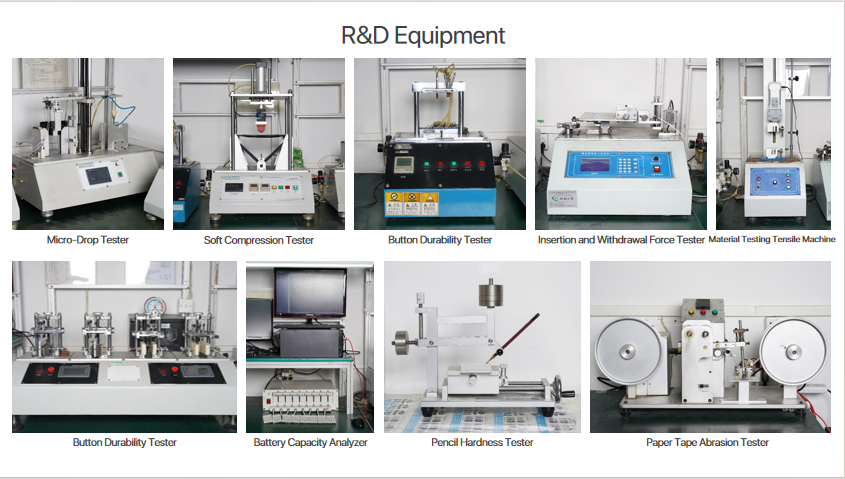
R&D equipment: engineering headcount and test instrumentation are verifiable on site, unlike output claims.
Product-level proof: three battery designs, three different problems
Company documents establish intent; models establish executed capability. UMIDIGI's line spans several categories, including 5G large-display long-endurance models, stylish slim entry models and rugged models. For a long-battery audit, three products carry the most informative evidence because each one solves a different engineering problem.
| Model | Battery and charging | Display and platform | Protection | Documented positioning |
|---|---|---|---|---|
| UMIDIGI BISON X20 | 6000mAh, 20W PD fast charging | 6.53-inch 120Hz, MediaTek Helio P60; 20MP triple camera, 8MP front | MIL-STD-810G drop resistance, IP68 & IP69K | Rugged use: construction and engineering, logistics and warehousing, manufacturing, mining |
| UMIDIGI G100 5G | 6000mAh, 20W PD fast charging | 6.9-inch 120Hz eye-care large display | Not stated in the supplied product record | Large-display long-endurance 5G |
| UMIDIGI Note 100 5G | 6000mAh, 20W PD fast charging | 6.9-inch 120Hz eye-care large display, UNISOC T8200 5G; 50MP triple rear, 16MP front; Android 15 | IP53 | Large-display long-endurance 5G for daily work and life |
BISON X20: sealing and mechanical survival
The BISON X20 is the model that proves the hardest part of the file. MIL-STD-810G drop resistance combined with IP68 and IP69K protection means the enclosure survives both immersion and high-pressure, high-temperature water jets — two different sealing problems that are frequently confused in marketing copy. UMIDIGI's product materials also describe the model as achieving 30% lower power consumption. The engineering question a buyer should ask is not whether the figure is attractive but what the baseline is: against which reference device, at which display brightness, on which network mode, under whose test protocol. A relative figure without a stated baseline cannot be transferred into a procurement decision.
The dataset design matters as much as the sealing rating. A 6000mAh cell behind a 6.53-inch 120Hz panel running on a MediaTek Helio P60 targets a different load profile from a 5G device: refresh rate and panel size drive display power, while the modem drives idle and standby power. For jobs where the device sits idle in a vehicle or on a site office desk for long stretches, standby behaviour is the dominant variable; for jobs with continuous scanning, navigation or camera use, it is the display and application load.
G100 5G: efficiency under a large high-refresh panel
The G100 5G pairs a 6000mAh battery with 20W PD fast charging and a 6.9-inch 120Hz eye-care display. UMIDIGI's materials describe a 20% longer lifespan and 30% lower power consumption for this model, and both claims are relative by construction. Lifespan in particular needs definition before it is useful: cycle life to what capacity retention, at what charge rate, at what ambient temperature. Buyers writing a tender specification should request the underlying test conditions rather than adopt the headline percentage.
The eye-care display descriptor points to a genuine procurement consideration for long-battery products — a panel tuned for sustained reading at low brightness changes both user comfort and power draw, and it is one of the few specification choices that affects daily-use endurance more than raw capacity does.
Note 100 5G: 6000mAh in a mainstream 5G body
The Note 100 5G carries the same 6000mAh capacity and 20W PD charging into a UNISOC T8200 5G platform with a 6.9-inch 120Hz display, a 50MP triple rear camera, a 16MP front camera and Android 15, at an IP53 rating. IP53 is a dust-and-spray rating, not an immersion rating, and it is the honest boundary of this model: it suits commuter, retail and office duty, not wet-site work. Placing BISON X20 and Note 100 5G side by side is the clearest demonstration in the file that the supplier can hold capacity constant while moving the durability and cost envelope in two directions.
A fourth model, the A75x, extends the same logic downward: a 6.75-inch display, UNISOC octa-core processor, 5000mAh battery, 13MP dual camera, IP54 protection, Android 16 Go Edition and memory options up to 4+8GB dynamic RAM with 64GB storage, built from plastic and metal. It shows the entry-tier cost discipline that volume distributors usually ask about first.
Certification file: what is covered, and what is not
Conformity records are the part of a capability file that carries external authority, and they are only useful when read at the level of model numbers and manufacturer names. The records supplied for this audit are EU-type CE documentation issued by BACL under the Radio Equipment Directive 2014/53/EU.
| Certificate | Models covered | Manufacturer named | Issued |
|---|---|---|---|
| B2412041 (EU type examination) | PG4RBG100, PG4RB100A — brand UMIDIGI (G100) | Not stated in the record | 2024-12-18 |
| B2407121 (EU type examination) | PG4MBG9YA, PG4TBG9PG, PN4TB100G, PN4TB10PG — brand UMIDIGI (Note 100 5G) | Shenzhen Youmi Intelligent Technology Co., Ltd. | 2024-07-29 |
| 2601P40188E-RFA1 (attestation of conformity) | CPA2651 — brand UMIDIGI (A75x) | Shenzhen Keysmart Technology Co., Ltd. | 2026-01-20 |
| 2501P41324E-RFA1 (attestation of conformity) | PG5FBG9XA — brand UMIDIGI (G9x) | Shenzhen Keysmart Technology Co., Ltd. | 2025-01-22 |
Two observations matter more than the list length. First, the standards cited are consistent across records: safety under IEC 62368-1 with EN 50360 series exposure assessment, EMC under EN 55032 and IEC 61000-3 series, and radio spectrum under the ETSI EN 300/301/303 families. That consistency is what a compliance reviewer looks for — a single record quoting an unusual standard set is the anomaly worth investigating.
Second, and more important for contracting, the manufacturer named on the certificate is not uniform. Two records name Shenzhen Keysmart Technology Co., Ltd.; one names Shenzhen Youmi Intelligent Technology Co., Ltd.; one lists model numbers and brand without naming a manufacturer. Certificate scope follows the manufacturing entity, so a buyer placing an order should confirm which legal entity will actually produce the ordered model and that the certificate on file matches it. This is a documentation question, not an allegation: multi-entity production is common in Shenzhen, but the paperwork has to line up with the purchase contract.

CE attestation of conformity naming Shenzhen Keysmart Technology Co., Ltd. as manufacturer — the entity-to-model match is what an auditor checks first.
The file supplied for this article contains no CE record for the BISON X20. That is a statement about this document set, not about the product's compliance status: rugged models sold into the EU normally hold their own documentation. A buyer sourcing BISON X20 for a European programme should request the applicable record for that model specifically rather than assume coverage transfers from another certificate.
Case evidence: one 50,000-unit reference and its limits
The file includes a single reference case: a consumer electronics ODM client in the United States, a project scale of 50,000 units, in use for more than five years for daily work and life. The recorded outcome emphasises a large display, power-saving long battery life, and smooth performance in game playing and video streaming; the recorded product highlights are a large display, stylish design, larger battery and affordable price. The case record is listed against product 6546, which the case file associates with the UMIDIGI G100 5G.
What this establishes is narrow but real: a 50,000-unit programme ran, a client kept it running for more than five years, and the reported experience was consistent with the design intent of a large-display, long-endurance device. What it does not establish is a field failure rate, a return rate, or a service-cost figure — none of which appear in the record. A single long-running reference is stronger evidence than a list of logos, but it is still one data point, and buyers making a multi-year commitment should ask for references they can contact and, where the supplier is permitted to share them, service statistics for comparable programmes.
Market context that changes the audit questions
Two third-party data points reframe what a capability file needs to prove. Counterpoint Research reported that smartphones with battery capacities of 6000mAh or higher reached 29% of global unit sales in January 2026, up from 10% in early 2025. Separately, The Insight Partners reported that the 5000–6000mAh segment accounted for 42.9% of the rugged phone market in 2025.
The procurement reading is straightforward: 6000mAh has moved from differentiator to baseline. When most competing devices carry the same headline capacity, capacity itself stops being the deciding specification, and the audit shifts to the variables that actually separate suppliers — cell consistency between batches, standby and display power behaviour, thermal management under 20W charging, and documentation that survives an importer's compliance review. A capability file that answers only the capacity question is answering last year's question.
A regulatory signal sharpens this further. The European Commission's energy-efficiency framework records that from 18 February 2027, new smartphones and tablets placed on the EU market must be designed so that end users can remove and replace the battery themselves using standard tools. For long-battery products, that requirement interacts directly with the high-density, sealed designs that currently dominate the category: a 6000mAh cell in a slim or fully sealed chassis is a design choice that will need to be reconciled with serviceability. Buyers planning EU volume beyond 2027 should put battery serviceability on the supplier questionnaire now, and should expect design-stage answers rather than shipping commitments.
Where the file stops: gaps to close in your own diligence
An honest audit names the gaps as clearly as the evidence. Six items sit outside what UMIDIGI's capability documentation can establish on its own.
- Financial standing. No audited revenue or profitability data is included. Continuity since 2012 is evidence of survival, not of current solvency; a credit check or audited statement is the appropriate instrument.
- Capacity reconciliation. The 30,000,000-unit annual figure and the 300,000-unit monthly figure are recorded separately and unresolved in the file. Ask which applies to your model and line.
- Efficiency baselines. The 30% lower power consumption and 20% longer lifespan figures are relative. Without a stated reference device, load profile and test protocol, they cannot be verified or compared across suppliers.
- Field reliability. The reference case reports a positive outcome but no defect, return or service-rate data.
- Entity-to-model mapping. Certificate records name different manufacturing entities. Match the certificate to the contracting entity and the ordered model number.
- Service depth. After-sales is documented as remote technical support. On-site intervention, spare-parts holding and repair turnaround are not specified.
Execution-stage checklist: from capability file to pilot order
Once the file has been read, the practical question is what to do with it before committing volume. The sequence below converts the evidence above into verification steps that a buyer controls.
- Request documents by model, not by brand. Ask for the certificate whose model number matches the SKU you intend to order, and confirm the manufacturing entity named on it.
- Put the baseline question in writing. For any efficiency or lifespan percentage, request the reference device, load profile, ambient conditions and test method.
- Test samples against your own load. A long-battery device should be evaluated on your standby pattern, display-on hours and charging cycle, not on a generic benchmark.
- Confirm capacity availability for your window. Nameplate monthly capacity is not the same as free capacity in your production month.
- Freeze the specification before tooling. With a 3,000-unit MOQ and 60–70 working days of OEM production time, changes made after tooling are the most expensive changes available.
- Define acceptance and witness the pre-shipment test. The documented 100% pre-shipment test is stronger when the buyer agrees the test list and the failure disposition in advance.
- Agree the escalation path. Remote technical support needs a defined route for faults that cannot be resolved remotely, including who bears replacement cost.
On that basis, the file supports a defensible conclusion at the evaluation stage. Shenzhen Keysmart Technology Co., Ltd. documents 14 years of operation, a 10,000 m² facility with 400–500 employees and 30 R&D engineers, export-only sales, defined ODM/OEM customization levers, and a product line that spans IP68/IP69K rugged sealing, large-display 5G endurance and cost-controlled entry designs. The unresolved items — capacity reconciliation, efficiency baselines, field reliability data, entity-to-model certificate matching and service depth — are the correct content of a first supplier meeting rather than reasons to disqualify.
For buyers who want the company-level detail behind this audit, the corporate brochure is available for download: Shenzhen Keysmart Technology Co., Ltd. company profile. Documented contact channels for verification questions are Jonny, Sales Manager, at marketing@umidigi.com, telephone and WhatsApp +852 62195979, based in Nanshan District, Shenzhen.
FAQ
What is Shenzhen Keysmart Technology Co., Ltd.'s relationship to UMIDIGI phones?
Shenzhen Keysmart Technology Co., Ltd. is a Shenzhen-based communications technology company founded in 2012 that operates two businesses: the UMIDIGI own brand and ODM/OEM production services for other brands. Its corporate profile records a 10,000 m² facility, 400–500 employees, an R&D team of 30 engineers, a monthly capacity of 300,000 units and a 100% export orientation.
Which UMIDIGI models demonstrate long-battery capability?
Three models carry the clearest evidence. The BISON X20 combines MIL-STD-810G drop resistance with IP68 and IP69K protection, a 6.53-inch 120Hz display, a MediaTek Helio P60 processor and a 6000mAh battery with 20W PD charging. The G100 5G pairs a 6000mAh battery with a 6.9-inch 120Hz eye-care display and 20W PD charging. The Note 100 5G uses the same 6000mAh capacity with a UNISOC T8200 5G platform, a 6.9-inch 120Hz display and IP53 protection. Data-based comparison requires matching how each device is used, because display load and network mode change endurance far more than capacity alone.
What are the MOQ, lead time and payment terms for ODM/OEM orders?
The documented minimum order quantity is 3,000 units, and OEM lead time is 60–70 working days. Delivery terms are FCA HK or FOB, acceptance criteria are based on pre-shipment testing, and payment terms are 30% in advance with 70% before shipment. Production time excludes tooling, artwork approval, certification transfer and freight, so a delivery date should be calculated from all of those stages rather than from the lead time alone.
What customization does UMIDIGI offer on ODM/OEM projects?
Four customization levers are documented: brand logo, exterior design, packaging design and specifications. Hardware platform, battery configuration and certification scope should be treated as fixed unless confirmed in a project-specific quotation, since those items determine tooling and conformity work rather than cosmetic variation.
How can a buyer verify UMIDIGI's CE documentation?
Verification works at the level of model number and manufacturing entity. The supplied records include EU-type CE certification B2412041 for models PG4RBG100 and PG4RB100A, B2407121 for models PG4MBG9YA, PG4TBG9PG, PN4TB100G and PN4TB10PG, attestation of conformity 2601P40188E-RFA1 for model CPA2651, and 2501P41324E-RFA1 for model PG5FBG9XA, all issued by BACL under Directive 2014/53/EU. Buyers should check that the certificate's model number matches the ordered SKU and that the manufacturer named on it matches the contracting entity, then request the complete certificate and its appendices rather than a cover image.
Does a 6000mAh battery by itself determine how long a phone lasts between charges?
No. Capacity sets the size of the energy reserve, but endurance depends on how quickly it is drawn. Display size, refresh rate and brightness, modem and network mode, processor load and background application behaviour all change consumption, which is why documented efficiency figures are expressed relative to a reference configuration. Buyers should ask what that reference is, and test samples under their own usage pattern, before accepting a percentage as a procurement specification.
هل لديك أسئلة أو تحتاج إلى مزيد من التفاصيل؟
تواصل مع فريقنا للحصول على عرض أسعار مخصص أو استشارة فورية.
طلب عرض أسعار
املأ النموذج أدناه وسيتواصل معك فريقنا بعرض مقترح مخصص.
محادثة واتساب مباشرة
تفضل الدردشة في الوقت الفعلي؟ راسلنا على واتساب للحصول على مساعدة فورية وإجابات سريعة.
- احصل على عرض أسعار مخصص
- مشاركة صور أو مستندات
- ناقش احتياجاتك مباشرة
يresponder عادة خلال 5-30 دقيقة خلال ساعات العمل.