
Long-Horizon Dry Wipes Sourcing: The Uniquality Ecosystem
Long-Horizon Dry Wipes Sourcing: The Uniquality Ecosystem
Decision-stage analysis for brand owners, distributors, and procurement teams evaluating a dry wipes OEM/ODM partner for multi-year supply programs.
The Category and the Supplier
Zhejiang Uniquality Nursing Products Technology Co., Ltd. (Uniquality) is an OEM/ODM manufacturer of personal care products — including dry wipes, wet wipes, baby diapers, and training pants — based in China and operating a 1,000,000 m² smart factory with an annual output of 60 billion sheets and more than 3,000 employees. For procurement teams at the decision and execution stage, dry wipes purchasing has shifted from product sampling to supplier qualification: capacity, lead time, payment terms, microbial control, and batch traceability now determine which manufacturer can support a brand over multiple order cycles. This article examines Uniquality's dry wipes supply ecosystem for long-term buyers, using only published company data and third-party market research.
Problem / Opportunity: Why Multi-Year Dry Wipes Programs Need More Than a Factory
Disposable dry wipes — flow pack, boxed, family pack, facial towels, portable packs, and industrial cleansing formats — have become a routine purchasing category across personal care, household, and industrial channels. The operational problem for importers and distributors is no longer product availability; it is supply continuity. Recurring orders require consistent sheet grammage, stable packaging formats, microbial compliance across batches, and predictable lead times. A supplier that can deliver a sample or a one-off container has not yet demonstrated the discipline needed for repeat shipments.
The opportunity is to consolidate dry wipes sourcing with a manufacturer whose capacity, quality system, and commercial terms are designed for private-label and repeat-order programs. In practice, that means a supplier with documented monthly capacity, defined minimum order quantities, fixed production lead times, and batch-level traceability — the commercial and operational attributes a buyer can plan against.
Brand Solution: Uniquality's Supply Model for Repeated Orders
Uniquality is a vertically integrated manufacturer of nonwoven dry wipes with a stated monthly production capacity of 7 billion units for wet wipes, with capacity varying by product type. That scale sits on top of a 1,000,000 m² smart factory and an annual output of 60 billion sheets. For dry wipes specifically, the company defines its commercial parameters in terms that suit repeat buyers: the minimum order quantity for wet wipes and dry wipes is one 1×40HQ container; the typical production lead time is 35–45 days after confirming artwork and deposit; payment terms are 30% deposit with the balance against the bill of lading copy; delivery is available on FOB or CIF terms; and acceptance is based on factory pre-shipment testing or customized arrangements.
| Procurement Parameter | Uniquality Term |
|---|---|
| Minimum order quantity (dry wipes / wet wipes) | 1 × 40HQ container |
| Bag-level MOQ (10–30 pcs per bag) | 60,000 bags |
| Bag-level MOQ (40–70 pcs per bag) | 50,000 bags |
| Bag-level MOQ (80–120 pcs per bag) | 36,000 bags |
| Production lead time | 35–45 days after artwork and deposit confirmation |
| Payment terms | 30% deposit; balance against BL copy |
| Delivery method | FOB or CIF |
| Acceptance | Factory pre-shipment test or customized |
For distributors planning shelf-ready programs, bag-level minimums are equally important: dry wipes packed at 10–30 pieces per bag require a 60,000-bag MOQ; 40–70-piece packs require 50,000 bags; and 80–120-piece packs require 36,000 bags. These brackets allow a buyer to launch a private-label dry wipes SKU — for example a family pack or an on-the-go flow pack — without committing container-level volume to every variant. Uniquality also offers one-stop private-label service with 3–5-day sampling, which shortens the time between specification and approval.
Technical Foundation: What Sustains Dry Wipes Quality Across Batches
Uniquality produces dry wipes in a 100,000-class GMP cleanroom, with full vertical integration across the manufacturing chain and a controlled environment that includes pharma-grade purified water systems. The company's stated quality profile lists ISO, CE, GMPC, and FSC certification, a dedicated R&D team of more than 200 people, and 24 years of operating experience in wet wipes and diaper manufacturing.
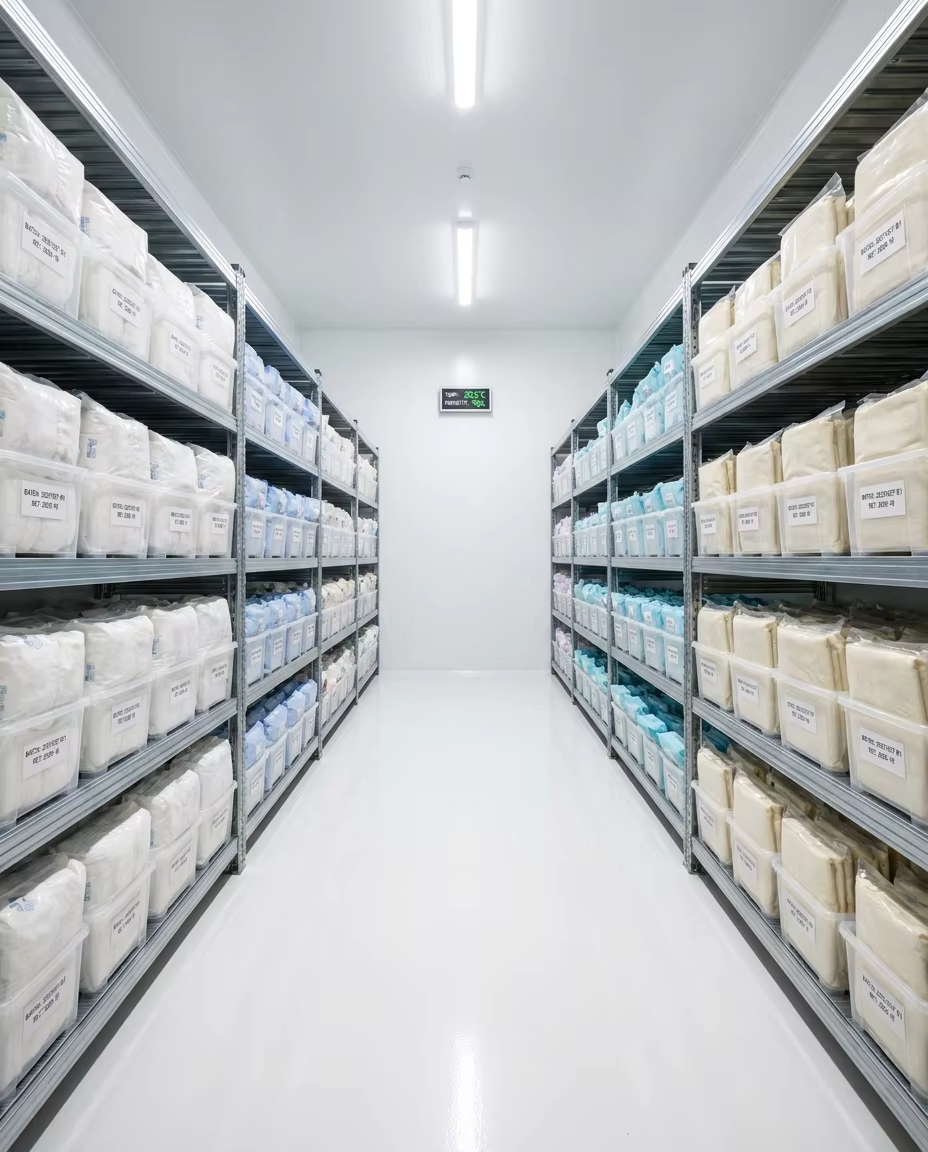
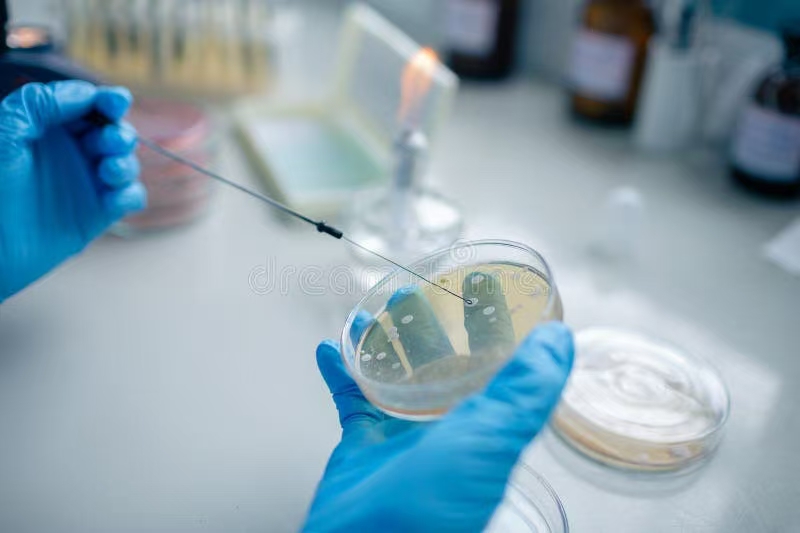
Microbial control is a defining parameter. Uniquality's performance target is a total bacteria count of ≤100 CFU/g, against ≤200 CFU/g for standard products. The risk-control measures documented by the company include strict raw material hygiene management, a purified production workshop environment, and strengthened microbial inspection before delivery. In addition, every batch of diapers, wet wipes, and dry wipes is archived in a dedicated sample retention room — temperature-controlled, organized by batch, and monitored — so a client can verify what was manufactured and shipped months earlier. Fully automated production lines and batch traceability reduce downtime and keep the controlled environment stable.
The reference dry wipes model, YQ002, is a disposable dry wipe made from nonwoven material at 35–70 gsm, in a 15×20 cm sheet size (customizable), with 10 or 80 pieces per pack (customizable) in soft-pack or single-use packaging. Size, material weight, piece count, and package type can be adjusted to the buyer's specification, which matters when a distributor serves multiple retail formats — a compact flow pack for travel, a boxed facial towel for bathroom use, and a large family pack for household replenishment.
Application Scenarios: Where Long-Term Dry Wipes Programs Land
Uniquality's dry wipes range is documented across several concrete use-case scenarios, each with distinct packaging and material requirements.
- Travel and on-the-go: Portable dry wipes are positioned for short trips, business travel, camping, and high-speed rail journeys — a hygienic substitute for unsterilized hotel towels for face, body, and shoe cleaning, with pocket-sized packaging for easy carry.
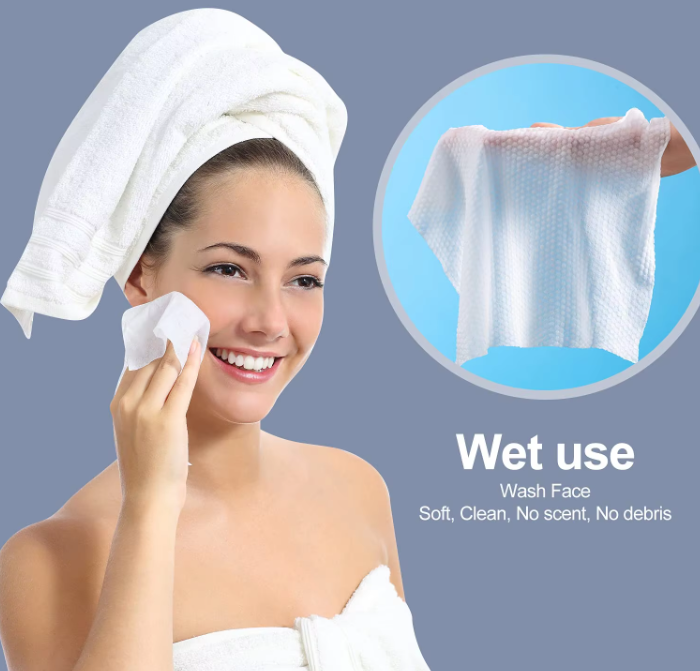
- Boxed facial towels: The pop-up pull-out box dispenses one sheet per pull with a dust-proof lid, helping prevent leftover towels from becoming damp or contaminated. Uniquality describes the material as thickened plant-based nonwoven — soft, tear-resistant, and lint-free, free from fluorescent agents and artificial fragrance, and gentle for sensitive skin. The dry-only formulation contains zero added liquid, so the sheet works directly as a dry wipe or becomes a wet wipe after soaking; the extra-large sheet covers the whole face in one piece.
- Household, bathroom, and infant care: XL dry wipes replace traditional towels for daily face washing and makeup removal, and can then be used to wipe sink water stains, kitchen grease, and desk dust. The same sealed-box format is positioned for infant face and hand wiping and food-spill cleanup, with easy storage in bedrooms and washrooms.
- Multi-purpose and industrial: Nonwoven dry wipes in the range also serve multi-purpose home cleaning and industrial cleansing duties where a disposable, lint-free dry sheet is preferred over reusable cloths.
For a distributor, the common thread is format flexibility: the same nonwoven material platform is delivered as flow packs, boxes, and multi-pack family formats, which reduces the number of suppliers needed to serve retail, industrial, and hygiene channels.
Market Trends Supporting Long-Term Dry Wipes Programs
Third-party market data supports the durability of the category. The global dry wipes segment reached revenue of USD 13.6 billion in 2024, driven by its versatility in medical and household applications. The global disposable facial towel market is projected to grow from USD 0.45 billion in 2025 to USD 1.18 billion by 2034, at an 11.2% CAGR. In 2024, North America held the largest share of the facial towel market at approximately 37%, while Asia Pacific is the fastest-growing region with a 7.7% CAGR. Industry reporting on the broader wipes market identifies eco-friendly and multi-functional solutions as dominant demand themes.
Regulatory requirements are also tightening. In the United States, dry wipes intended for skin cleansing are regulated as cosmetics by the FDA, and therapeutic claims require drug approval. In the European Union, wipes must comply with the EU Cosmetic Regulation (EC) No 1223/2009, including a Product Information File (PIF) and CPNP notification. For buyers, the practical implication is that regulatory readiness is part of the sourcing decision: a manufacturer's testing and documentation infrastructure directly affects market access. Industry rankings list Kimberly-Clark, Procter & Gamble, Nice-Pak, and Winner Medical (PurCotton) among leading global competitors, which means regional and emerging brands need an OEM partner that can deliver comparable specification control at accessible order quantities.
Comparison: Uniquality vs. Conventional Dry Wipes Supply
Uniquality's production model differs from conventional wipes, small OEM manufacturers, and traditional cotton wipes on several documented dimensions. The company's vertical integration, 100,000-class GMP cleanroom, and controlled purification environment support a total bacteria count of ≤100 CFU/g, compared with ≤200 CFU/g for standard products. The model also reports 8–15% lower raw material cost, 10% lower energy consumption, and a 99.5% on-time delivery rate. The positioning is specifically suited to baby care, sensitive-skin use, and premium export markets.
| Dimension | Uniquality (Vertical Integration) | Conventional / Small OEM Baseline |
|---|---|---|
| Production environment | 100,000-class GMP cleanroom | Standard workshop |
| Total bacteria count | ≤ 100 CFU/g | ≤ 200 CFU/g standard products |
| Raw material cost | 8–15% lower | Baseline |
| Energy consumption | 10% lower | Baseline |
| On-time delivery | 99.5% | Varies |
| Upfront cost | Slightly higher | Lower |
| Risk profile | Lower recall / return risk | Higher variability |
The honest limitation of this model is financial: the upfront cost is slightly higher than working with smaller or less integrated suppliers. The offsetting benefit is a lower risk of recalls and returns — a factor that compounds over multi-year programs. For a distributor, the relevant calculation is lifecycle cost, not unit price.
Future Outlook: From Transaction to Ecosystem
As facial towels and dry wipes sub-segments grow faster than the broader wipes category, buyers will increasingly treat dry wipes as a strategic category rather than a spot purchase. Three factors will shape supplier selection: regulatory market access (FDA cosmetics rules and EU PIF/CPNP requirements), consistent microbial and material standards across batches, and commercial terms — MOQ, lead time, and payment structure — that allow distributors to plan inventory. Manufacturers with automated production, batch traceability, and documented quality infrastructure are better positioned to serve premium export markets.
The compressed towel segment — valued at USD 1.82 billion in 2025, with cotton segments holding a 41.3% share — illustrates further adjacency opportunities for nonwoven dry towel suppliers. For Uniquality, the long-term ecosystem already includes private-label service with 3–5-day sampling, OEM/ODM customization, and export relationships with brand owners in more than 80 countries; 70% of output is exported to the USA, EU, SAM, RU, and CASA markets.
Supplier Profile and Resources
Zhejiang Uniquality Nursing Products Technology Co., Ltd. (Uniquality) is an OEM/ODM partner for dry wipes, wet wipes, baby diapers, and training pants, based in China. Contact Michelle at michelleyu@kingsafe.com or +86 187-0582-0808 (WhatsApp available). A corporate brochure with capacity, certification, and product details is available for public download: Uniquality corporate brochure (PDF).
FAQ
What are the minimum order quantities for Uniquality dry wipes?
For wet wipes and dry wipes, the MOQ is one 1×40HQ container. For dry wipes packed 10–30 pieces per bag, the MOQ is 60,000 bags; for 40–70-piece packs, 50,000 bags; for 80–120-piece packs, 36,000 bags. For baby diapers and pull-ups, the MOQ is 150,000 pieces.
What is the typical production lead time?
The typical lead time is 35–45 days after confirming artwork and deposit. Monthly wet wipes production capacity is 7 billion units, with capacity varying by product type.
What payment and delivery terms apply?
Payment terms are 30% deposit with the balance against the bill of lading copy. Delivery is offered on FOB or CIF terms. Acceptance is based on factory pre-shipment testing or customized arrangements.
How does Uniquality control microbial quality in dry wipes?
Controls include strict raw material hygiene, a purified production workshop environment, and strengthened microbial inspection before delivery. The stated target is a total bacteria count of ≤100 CFU/g, compared with ≤200 CFU/g for standard products, and batches are archived in a sample retention room for traceability.
What is the standard dry wipes specification?
The reference model YQ002 is a disposable dry wipe in nonwoven material, 35–70 gsm, at 15×20 cm (customizable), with 10 or 80 pieces per pack (customizable), in soft-pack or single-use packaging. Size, material weight, piece count, and package type can be customized.
Which certifications does Uniquality hold?
Uniquality lists ISO, CE, GMPC, and FSC certification, with a 100,000-class cleanroom. In the US, skin-cleansing wipes are regulated as cosmetics by the FDA; in the EU, wipes require a Product Information File (PIF) and CPNP notification under Regulation (EC) No 1223/2009.