
Long-Term Aluminum Frame Tent Supply: Execution and Partnership Essentials
For many logistics operators, sports facility managers, and event organisers, the purchase of an aluminum frame tent is not a one-off procurement but the start of a multi-year operational relationship. Once a structure is installed, the relevant questions change: Can the tent handle local wind and snow loads? Can the same supplier deliver an additional bay, a replacement cover, or a modified configuration after two years? Are the payment terms, shipping terms, and technical support stable enough to plan around? In other words, the decision is no longer only about the tent itself, but about the supplier's ability to support a long-term project.
The global market for temporary structures has expanded well beyond seasonal event tents. Industrial storage, sports venues, aviation hangars, logistics hubs, and large commercial gatherings have all adopted aluminium-frame tension structures as a practical alternative to permanent construction. That shift changes procurement behaviour. Buyers who once compared product specifications are now comparing supply systems: manufacturing capacity, engineering support, risk control, logistics coordination, and after-delivery responsiveness.
The Gap Between Quotation and Long-Term Execution
Most aluminium frame tent purchases begin with a specification: span, height, wind load, snow load, fabric type, anchoring method, door configuration, and intended application. For a single event or a short campaign, the specification may be enough. For a warehouse tent expected to operate for five or more years, or a sports structure that will be assembled and disassembled repeatedly, the specification is only the starting point.
A critical difference between a product supplier and a project partner appears after the first delivery. Long-term users need predictable replenishment of spare parts, consistent fabric quality for future extensions, documentation for local permits, and technical advice when conditions on site change. These needs are not visible in a product brochure, yet they determine whether a tent system delivers its intended service life.
From a buyer's perspective, the question is not "Which tent can be delivered fastest?" but "Which supplier can be relied upon across multiple purchasing cycles?" That involves evaluating production capacity, engineering depth, export experience, and the supplier's willingness to adapt product designs to site-specific requirements.
Why Supplier Selection Criteria Change for Multi-Year Projects
When a structure is intended for temporary use, buyers can accept a degree of uncertainty. When the same product is planned as a temporary warehouse, a sports pavilion, or a winter storage solution that will be used repeatedly, the risks multiply. A tent that fails during a storm, a roof cover that leaks after two seasons, or a supplier that cannot provide matching extension modules can disrupt operations far beyond the initial investment.
Long-term procurement therefore requires different evidence. Buyers should look for:
- Consistent manufacturing capacity for repeat orders and extensions;
- An engineering team that can adjust designs for local climate conditions;
- Clear procedures for anchoring reinforcement, insulation, and lighting integration;
- Documented experience with international logistics and export documentation;
- Flexible commercial terms that allow staged purchasing or incremental expansion.
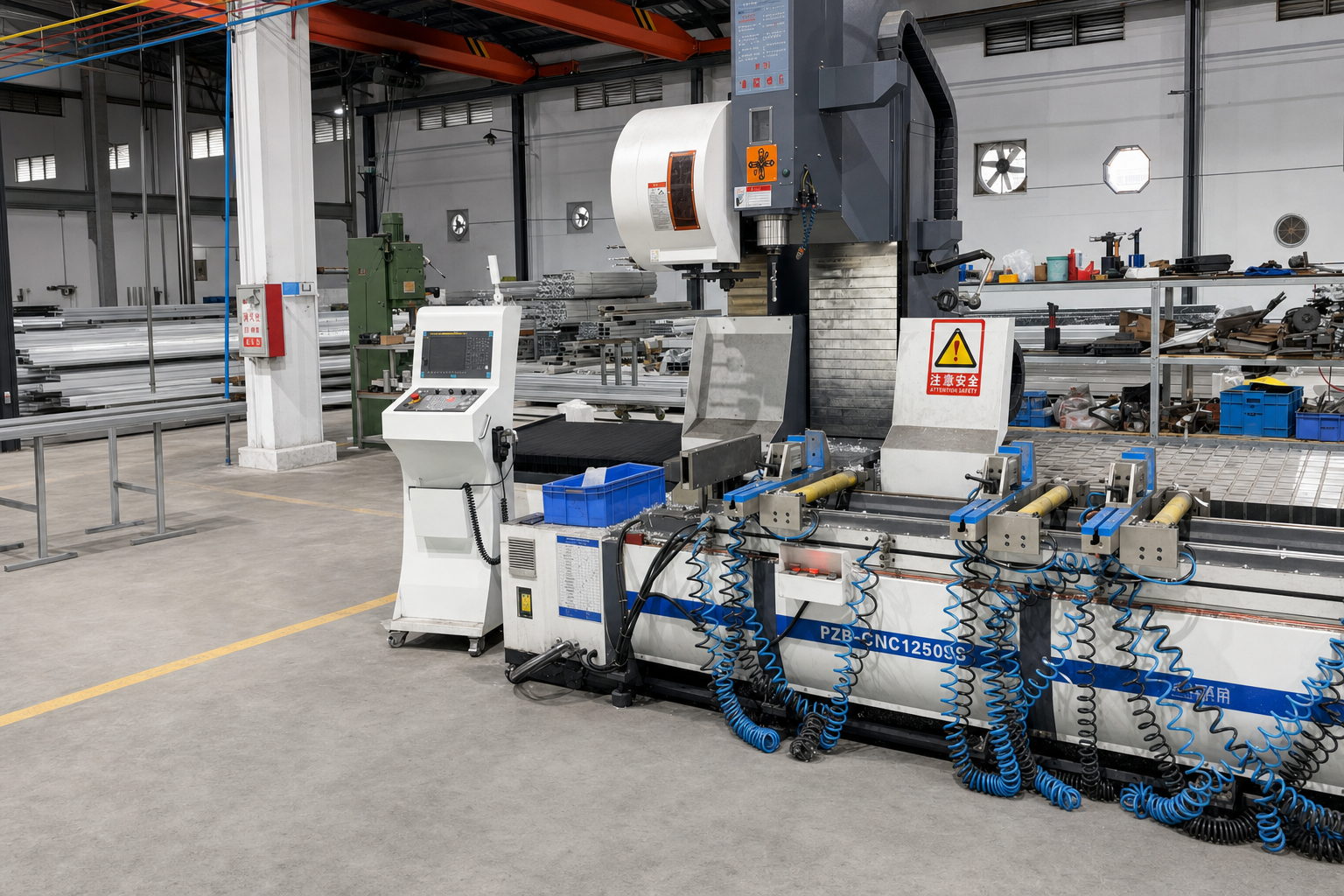
A manufacturer that has operated since 2009, with a 20,000-square-metre factory, 200 employees, and an annual output of 1,000 units, offers a different risk profile than a trading intermediary. For a buyer planning a warehouse tent or a sports venue, these operational facts matter as much as the specifications of a single frame profile.
Capability Snapshot: A Manufacturer Built for Large-Scale Supply
Shenzhen Shoulder Tent Co., Ltd. (Shoulder Tent) is a manufacturer specialising in large prefabricated tent structures. The company supplies aluminium-frame tents in several product families: A-Shape, Arc/Curved, APS hybrid tents, Dome/geodesic, Mixed/polygon/high-peak tents, and Pagoda/Gazebo. These products serve warehouse storage, sports venues, weddings, events, exhibitions, and commercial spaces.
Since 2009, Shoulder Tent has delivered large tent products to clients across many countries and regions. Around 80% of its output is exported, with main markets in Europe, the Middle East, Africa, Southeast Asia, and South America. The company's product range includes a wide variety of span options, with customisation based on site conditions, usage needs, dimensions, and functional requirements.
For long-term projects, the most relevant capability is the R&D and engineering team. Shoulder Tent's R&D team consists of an R&D centre and an engineering team, providing custom design and technical support. This matters when a project requires a specific anchoring plan, an unusual span, or adaptation for a demanding climate.
The Technical Core: Frames, Covers, and Load Assumptions
Understanding the basic material system helps buyers evaluate whether a structure will perform over years of use. Shoulder Tent's aluminum frame tents are built with an aluminum alloy profile frame and a double-layer PVC-coated polyester tarpaulin. This combination offers a balance between structural rigidity, weight, and corrosion resistance.
The product range includes models such as S30-1, S32, S45-1, S45-2, and S60-1. These model designations represent different span segments within a broad product range, allowing buyers to select a structural class that matches their site footprint.
Two performance figures are particularly important when planning for long-term use:
- Maximum wind load: 100–120 km/h;
- Snow load: up to 1.9 kN/m².
These figures indicate that the structures are engineered to withstand defined weather conditions, but they must be matched to the actual climate at the installation site. For high-wind coastal zones or heavy-snow regions, project-specific anchoring reinforcement and structural calculations are essential. A responsible supplier designs the aluminium profiles for local wind and snow loads rather than assuming one universal standard fits all locations.
| Core component | Typical specification | Role in long-term performance |
|---|---|---|
| Frame material | Aluminum alloy profiles | Corrosion resistance and structural stability over many years of service |
| Cover material | Double-layer PVC-coated polyester tarpaulin | Weather protection, fire-retardant behaviour, and UV resistance |
| Wind load design | 100–120 km/h | Defines safe operating envelope under typical storm conditions |
| Snow load design | Up to 1.9 kN/m² | Relevant for winter storage or colder climate deployments |
| Anchoring | Project-specific reinforcement | Site-specific stability; needs to match local ground and climate conditions |
One practical point deserves emphasis: the cover fabric and the aluminium frame have different life expectancies. Information from the broader industry indicates that aluminium frames can serve for approximately 15–20 years, while PVC-coated fabric covers typically last 5–8 years under outdoor conditions. This means the procurement plan should anticipate replacing the cover at least once before the frame reaches the end of its service life.
Risk Control as an Ongoing Operational Feature
For buyers evaluating a tent supplier for long-term use, risk control is not a theoretical issue. Climatic risks such as high wind, snow loads, and heavy rain are the most visible threats, but fire risk, anchorage and foundation failures, and theft or asset security also affect whether a temporary structure remains operational.
Risk control in this product category is achieved through a combination of design measures and site practices. Project-specific anchoring reinforcement secures the structure to its foundation. Flame-retardant fabric reduces fire risk, and aluminium profiles are designed according to local wind and snow loads. Regular inspections extend the asset's life, and on-site technical support helps installers handle unexpected site conditions.
From a supply-chain perspective, risk control also includes contingency planning. A supplier that provides modular reinforcement solutions and global technical support for emergency situations reduces the buyer's exposure to extended downtime.
Procurement and Supply Terms That Reduce Friction
For international buyers, the commercial terms of a tent order can affect the ease of doing business as much as the product itself. Shoulder Tent offers flexible payment terms and accepts payment methods such as T/T. Standard incoterms are FOB, CIF, and CFR, and specific shipping methods and incoterms should be confirmed with the sales team based on the destination and cargo size.
One advantage of this product category is a low initial commitment threshold. The minimum order quantity is one unit, which allows a buyer to order a single structure, test the supplier's quality and communication, and then scale up for subsequent phases. That staged procurement approach aligns well with long-term projects where demand grows over time.
It is also worth noting that delivery is factory-direct, with global logistics coordination support. For a buyer in Europe or the Middle East, having a supplier that can manage export documentation, coordinate shipping, and respond to customs-related questions is a practical advantage.
Application Patterns: Where Temporary Aluminium Structures Perform Best
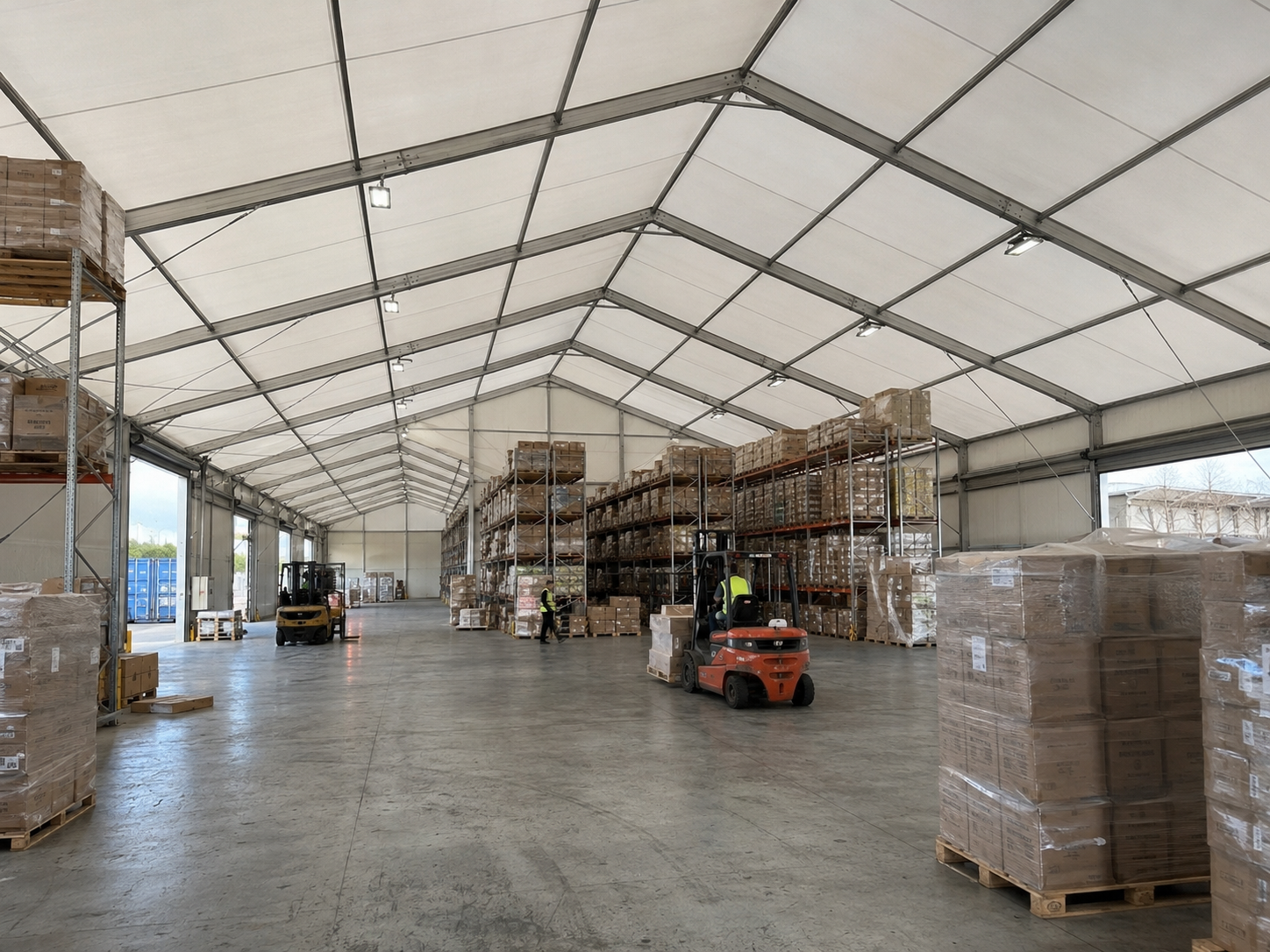
Long-term tent deployments generally cluster around a few high-value use cases. In warehousing and logistics, tents provide temporary storage during peak seasons, bridge capacity gaps during warehouse construction, and serve as distribution nodes in areas where permanent facilities are unavailable or unaffordable. An industrial tent can be erected on an existing concrete pad or compacted ground, providing covered space in weeks rather than months.
For sports facilities, tents house pickleball courts, tennis courts, padel courts, and multi-purpose training spaces. These structures need clear interior spans, adequate height, and controlled lighting; an aluminium-frame design can deliver those features while remaining relocatable if the site changes. Sports-tent projects often last several years, which makes the quality of the fabric and anchoring system especially important.
In the event sector, large event tents, marquee tents, outdoor event tents, and wedding tents continue to be the most common applications. Although event projects are often shorter, professional event companies frequently replace their inventory over several years, and consistent supplier quality becomes a business issue rather than a one-off concern.
The same structural platform is also used for aviation projects, including aircraft hangar tents, where large span and side-wall clearance are essential. Workshop tents and industrial storage tents cover maintenance operations and equipment storage at industrial sites.
Market Context: Aluminium Frame Tents as Infrastructure, Not Just Event Accessories
Market data confirms that the demand for commercial and industrial tent structures is expanding. The global event tent market, which includes aluminium frame structures, was projected to reach more than USD 3 billion by 2025, with a reported CAGR of 6.2% according to Rethinking The Future. A broader estimate from Shelter Structures and related industry reports suggests the full tent market across storage, sports, and event sectors could rise from USD 4.01 billion in 2025 to USD 6.07 billion by 2033, with growth in the range of 5–7% per year.
China's export data provides another signal. The country exported roughly USD 5.55 billion of "aluminium structures" in 2024 under HS code 7610, which includes modular tent frames and related structures, according to OEC. That scale of export activity supports the view that Chinese manufacturers have become a major supply source for global tent projects.
Standards also shape the market. In Europe, EN 13782:2015 governs the structural stability of mobile, temporary-installed tents under wind and snow loads. In the United States, NFPA 701 covers flame propagation for textiles and films used in commercial event and industrial tents. Buyers who plan multi-year installations should verify that their supplier is familiar with the relevant standards for their market.
Aluminum Frame Tent vs. Permanent Building: A Balanced View
For a long-term buyer, comparing a tent to a permanent steel or brick warehouse is inevitable. The comparison, however, should be kept honest.
| Consideration | Aluminum frame tent | Permanent warehouse |
|---|---|---|
| Speed to completion | Space can be built 50–70% faster | Months, depending on permits and construction |
| Upfront investment | Generally lower by 30–60% | Higher land and construction cost |
| Relocatability | Can be disassembled and moved | Fixed structure |
| Lifespan expectations | Frame 15–20 years; cover 5–8 years | Typically longer building life |
| Thermal efficiency | Depends on insulation and climate control options | Usually better insulated if designed for that purpose |
Two limitations should be acknowledged. First, while tents reduce upfront investment and accelerate deployment, lifetime cost depends heavily on service life, maintenance, and climate control requirements. Exact comparisons require quote-based analysis. Second, energy efficiency is highly variable: a tent with insulation and HVAC can offer acceptable working conditions, but it will generally not match a well-insulated permanent building in extreme climates.
The strategic logic for choosing a tent is therefore strongest when the buyer needs speed, flexibility, or a lower initial commitment, and less compelling when the facility must remain cost-optimal over several decades without major maintenance. For many logistics and sports projects, the speed and flexibility benefits outweigh the long-term energy trade-off.
Future Outlook: What the Next Phase of Temporary Infrastructure Looks Like
The aluminium frame tent industry is moving toward more systematic integration with permanent facilities. Hybrid designs, better insulation systems, solar-ready roofs, and improved anchoring technology are likely to expand the range of applications beyond classic storage and events.
For example, the APS hybrid tent concept developed by manufacturers such as Shoulder Tent reflects a growing demand for structures that combine the openness of a tent with the thermal and lighting performance closer to a building. As far as market direction is concerned, the emphasis will remain on faster installation, safer operation under extreme weather, and easier lifecycle maintenance.
Procurement practices are also becoming more professional. Rather than buying a single tent from a trader, buyers increasingly evaluate manufacturers on engineering capability, export experience, and long-term supply reliability. Companies that have invested in R&D teams and global service networks are likely to benefit from this shift.
For buyers, the practical takeaway is simple: a long-term tent project should be treated as a long-term supplier relationship. The right supplier is the one that can deliver not only a quality structure at the start of the project, but also the technical, logistical, and commercial support needed to keep that structure valuable for years.
Readers seeking a full overview of available product families and specifications can download the manufacturer's corporate brochure:
Shoulder Tent Corporate Brochure (PDF).
FAQ: Aluminum Frame Tent Supply for Long-Term Projects
This article is published by HTNXT as an independent industry reference. Product information is based on manufacturer-provided data; market figures are drawn from cited third-party sources.