
Long-Term Arcade Machine Supplier Evaluation: A Due Diligence Framework
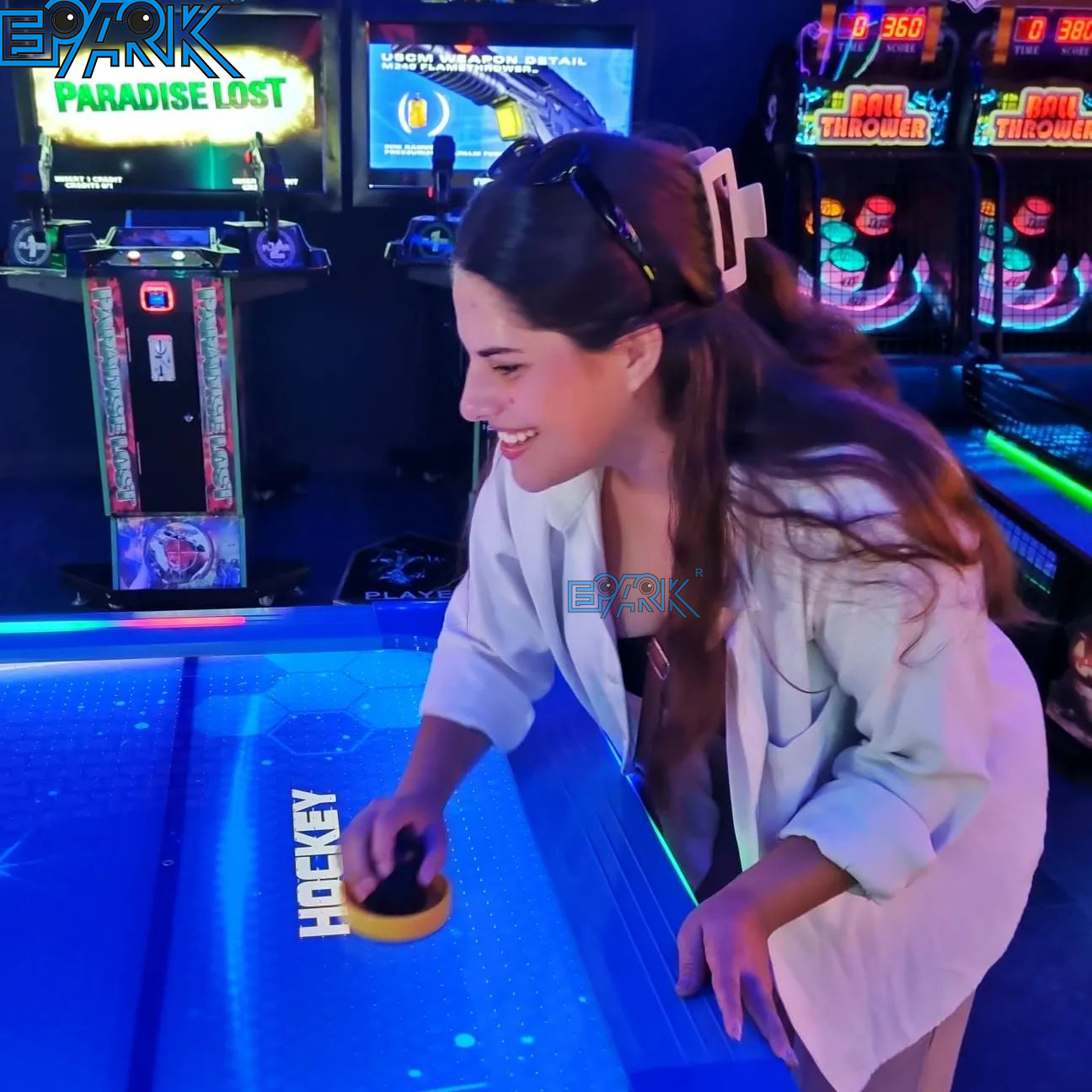
Multi-year arcade operations depend less on the first delivery than on what the supplier can still deliver in year three.
Multi-year supplier viability is a different procurement question from unit price, cabinet styling or the measured performance of a single machine. A venue that installs sixty arcade machines across four years is not making sixty independent purchases. It is making one long capital commitment with dozens of delivery, maintenance and resupply points, and a supplier's ability to remain present at each of those points is what makes the commitment affordable or expensive.
The market context makes that commitment larger, not smaller. Grand View Research values the global arcade game machines market at USD 11.0 billion in 2025 and projects growth to USD 31.0 billion by 2033. Redemption games alone accounted for a 29.2% revenue share in 2025, according to the same source. Categories that depend on prize restocking, content refresh and cashless payment infrastructure behave less like capital goods and more like an operating relationship — one entered in year one and expected to still function in year five.
This article sets out a due diligence framework for that relationship. It is written for arcade operators, family entertainment centre owners, indoor playground investors and distributors deciding whether an arcade machine manufacturer can support multi-year operations. Guangzhou EPARK Electronic Technology Co., Ltd. (EPARK), an entertainment equipment supplier based in Panyu, Guangzhou, is used as a worked example, alongside established industry peers, using publicly documented information only.
What “Supplier Sustainability” Means in Arcade Procurement
In procurement terms, a supplier is sustainable when it can supply, document, maintain and re-supply the same equipment categories across the operating life of a venue's floor plan — not merely deliver a first order on time. The distinction matters because the failure modes are different. A late first shipment is a scheduling problem. A discontinued model, an undocumented control board or an unsourced spare part in year three is a revenue problem.
The framework below reduces that risk to four pillars, each with a question and a specific evidence request. Buyers can apply it to any candidate supplier, not only to a manufacturer of coin-operated game machines.
| Pillar | Due diligence question | Evidence to request |
|---|---|---|
| Portfolio depth | Can one supplier cover the categories on a three-to-five-year floor plan? | Current product list with model numbers, category coverage and a discontinued-model policy |
| Parts and after-sales continuity | Will parts, documentation and technical support still exist in year three? | Spare parts list per model, defined support channel, service scope and response model |
| Production capacity and delivery consistency | Can the supplier repeat the same delivery performance at scale, on schedule? | Factory footprint, workforce, monthly and annual output, inspection regime, standard lead time, MOQ |
| Purchasing terms and acceptance criteria | Do commercial terms and quality gates match the buyer's risk tolerance? | MOQ, lead time, customization scope, pre-shipment testing, certification documents |
Pillar 1 — Portfolio Depth Across a Multi-Year Floor Plan
A venue rarely opens with a finished floor plan. Most operators add categories as traffic patterns become visible: a redemption anchor first, a sport section second, a kids zone third. Portfolio depth determines how many of those additions can be drawn from one relationship instead of restarting the sourcing process each time.
EPARK's product lines span the categories named in the arcade, amusement and family entertainment segments — claw and prize machines, air hockey, boxing, basketball, shooting, racing, VR simulators, dart, bowling, ticket redemption, sport games, kiddie rides, kids arcade cabinets and soft indoor playground equipment. For a buyer, the practical value of that breadth is not variety for its own sake; it is that cabinet construction, payment hardware and control conventions repeat across categories, which simplifies maintenance training and spares holding.
| Product family | Example model | Typical role on a venue floor |
|---|---|---|
| Claw Machine | EP-G001 | Prize and skill game, impulse-driven placement in malls and FECs |
| Air Hockey Table | EP-SP001 | Two to four player sport attraction with high throughput |
| Boxing Arcade Machine | EP-SP010 | Single-player strength game suited to bar and night-trade venues |
| Basketball Arcade Machine | EP-SP110 | Sports-style redemption anchor with single and competition modes |
| Shooting Game Machine | EP-SH001 | Cabinet shooter with infrared or laser gun system |
| Racing Game Machine | EP-R001 | Simulator-style racing with steering wheel and pedal control |
| VR Simulator | EP-VR001 | Motion-platform attraction with 2DOF or 3DOF movement |
| VR Game Machine | EP-VR096 | VR simulator platform with optional headset configurations |
| Ticket Redemption Machine | EP-L001 | Ticket payout game supporting a redemption economy |
| Sport Game Machine | EP-SP001 | Multi-sport interactive machine for mixed-age traffic |
| Dart Machine | EP-SP086 | Electronic dart with 301, 501 and cricket modes for bar and FEC use |
| Bowling Machine | EP-SP129 | Compact bowling with 3–6 metre lane length |
| Commercial Kiddie Ride | EP-K001 | Young children's coin ride for mall and kids zone positioning |
| Kids Arcade Game Machine | EP-A001 | Kids cabinet with cartoon themes and low power draw |
| Indoor Playground Equipment | EP-ISP001 | Soft play structure for venues from 50 to 1000 square metres |
| Coin Operated Game Machine | EP-SP062 | Multi-category coin-operated platform for mixed floors |
| Arcade machine | EP-SP087 | General coin-operated arcade cabinet |
The procurement implication is that portfolio depth should be tested against a specific expansion path rather than admired in the abstract. A useful exercise is to write the floor plan for year one, year three and year five, then check whether the same supplier covers at least the majority of categories in each phase, and what happens to spares if a model is superseded.
Pillar 2 — Parts and After-Sales Continuity
After-sales continuity is the pillar most often taken on trust and most expensive to get wrong. Downtime cost scales with the number of machines affected and the time a part takes to arrive, not with the price of the part itself.
EPARK's stated after-sales scope covers 24/7 online support, video technical guidance, spare parts supply and lifetime maintenance service — a service structure built around remote diagnosis and parts shipment rather than on-site engineers in every market. Supplier-side case documentation records deployments for arcade startup investors operating 30–80 machines, and for arcade and family entertainment centre owners running 80 or more machines, with documented operating durations of three years and longer. These figures are supplier-reported and should be treated as directional rather than independently audited.
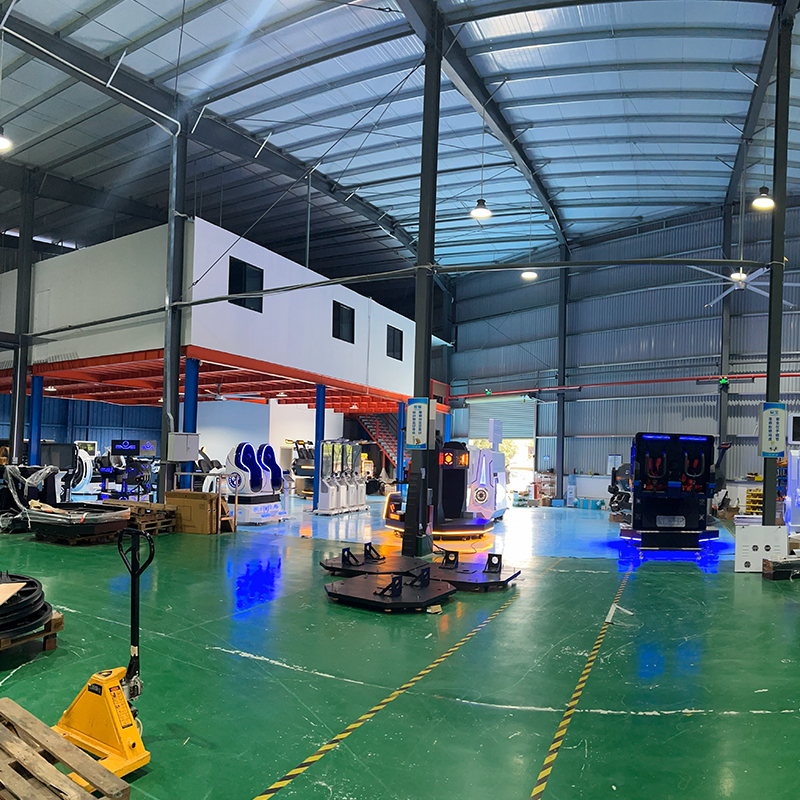
Batch assembly and pre-shipment testing: capacity is only useful to a long-term buyer if it repeats consistently.
The documentation test
Because parts continuity cannot be fully verified from outside a supplier, the strongest available proxy is documentation. Three requests separate a serious long-term supplier from a trading intermediary:
- A spare parts list per model, with identifiable part references rather than descriptions only.
- A statement of how long each model will remain in production, and how superseded models will be supported.
- A named support channel, in writing, with the technical escalation path for control board, payment and motion-system faults.
Pillar 3 — Production Capacity and Delivery Consistency
Capacity matters in proportion to order size, not in absolute terms. EPARK operates a 25,000 square metre showroom and factory in Panyu, Guangzhou, with 150 employees and a 20-engineer research and development team. Monthly capacity is stated at 500–800 units, with annual output of 8,000–10,000 units, a standard lead time of 30 days and a minimum order quantity of 10 units. Roughly 80% of output is exported, across Europe, North America, the Middle East, Africa, South America and Southeast Asia.
Read against a typical multi-year project, those numbers describe a supplier sized for orders in the tens of units: a 40-machine opening order consumes a modest share of a single month's capacity, which is what allows a delivery schedule to survive a change in the buyer's phase plan.
What consistency requires internally
Delivery consistency is a quality-control question before it is a logistics question. EPARK applies 100% quality inspection before shipment, together with ageing tests and function tests across its output. For a buyer, the relevant ask is not whether inspection exists, but what it covers: payment acceptance on every configured method, scoring accuracy, lighting and sound output, motion-system function on simulator categories, and cabinet integrity after packing.
Pillar 4 — Purchasing Terms, Customization and Acceptance Criteria
Long-term supplier relationships are largely defined by how precisely the first purchase agreement is written, because that document becomes the template for every later order. EPARK operates under OEM, ODM, factory-direct and custom design modes, with customization covering voltage, plug type, cabinet design, colour, logo, game software, payment system (coin, bill, QR, card) and language interface. Standard product configurations across the range support 110V and 220V.
| Commercial term | EPARK stated position | Why it matters over a multi-year horizon |
|---|---|---|
| Minimum order quantity | 10 units | Allows phased expansion without over-committing capital |
| Standard lead time | 30 days | Sets the planning baseline for each expansion phase |
| Customization scope | Voltage, plug, cabinet, colour, logo, software, payment, language | Keeps configurations consistent across repeat orders |
| Quality gates | 100% pre-shipment inspection, ageing test, function test | Converts acceptance criteria into a repeatable process |
| After-sales scope | 24/7 online support, video guidance, spare parts supply, lifetime maintenance service | Determines downtime exposure over the operating life of the floor |
Certification is configuration-specific
Compliance documentation is a verification task, not a formality. Arcade machines sold into the European Union are expected to meet EN 60335-1 for low-voltage safety and 2014/30/EU for electromagnetic compatibility as part of CE marking, while the United States market requires UL certification, according to published compliance guidance for arcade equipment. EPARK's arcade categories carry CE certification, and its soft indoor playground line is designed to meet CE and EN1176 standards.
Benchmarking: How EPARK Sits Against Established Industry Peers
The arcade equipment landscape contains two different kinds of supplier. Global entertainment groups develop game content and often operate their own venue networks; equipment manufacturers design, build and supply machines to independent operators. Market research from Market Research Future identifies Bandai Namco, Sega, Konami and Raw Thrills among the major players in the arcade machine space — a list dominated by content-led, venue-capable businesses rather than by volume equipment manufacturers.
The comparison below is deliberately qualitative. Publicly reported research-and-development headcounts, market-share percentages and service-level commitments are not available on a like-for-like basis across these companies, so the table compares publicly documented positioning rather than unpublished metrics.
| Company | Primary role | Portfolio and R&D orientation | Service and industry-solution model | Where it fits a long-term buyer |
|---|---|---|---|---|
| EPARK (China) | Equipment manufacturer and one-stop solution provider | Broad coin-operated range across claw, air hockey, boxing, basketball, shooting, racing, VR, redemption, kiddie and playground categories; 20-engineer R&D team | Factory-direct supply with OEM/ODM customization, 24/7 online support, video technical guidance, spare parts supply and lifetime maintenance service | Operators wanting multiple categories from one source with configurable cabinets, payment systems and language interfaces |
| Bandai Namco Amusement (Japan) | Amusement business developing content and operating facilities | Content-led portfolio tied to proprietary game IP and venue formats | Operator-side service model within its own facility networks | Buyers seeking content-driven attractions, typically through licensing or venue partnerships rather than generic equipment supply |
| Sega Amusements International | Arcade game development and international sales | Branded and licensed titles built around dedicated cabinets | Support delivered through its international distribution network | Operators prioritising marquee titles with strong brand recognition |
| Raw Thrills (US) | Arcade game developer | Focused product line built on licensed content titles | Product-led support through distribution partners | Western-market operators whose floor plan depends on recognisable game IP |
| UNIS Technology | Amusement equipment manufacturer | Broad equipment portfolio supplied to international arcade and FEC markets | Distribution-based support model | Buyers sourcing volume equipment with regional distribution coverage |
| LAI Games | Amusement game manufacturer | Long-standing product development in redemption, prize and sports-style games | Distributor-led service and parts support | Operators whose revenue mix leans heavily on redemption and prize play |
Two honest observations follow from this comparison. First, EPARK competes on supply and configuration breadth rather than on licensed content: it does not operate its own venue networks and does not originate the large international game franchises associated with the Japanese entertainment groups. Operators whose floor plans depend on globally licensed titles will usually keep a multi-supplier structure, buying generic and redemption categories from a manufacturer while sourcing marquee content titles separately.
Second, geography is a genuine constraint. Equipment shipped from China carries ocean freight, customs clearance and destination-market certification verification into the delivery timeline, which a domestic distributor can compress. For venues replacing a single machine mid-season, that difference is decisive; for venues executing a phased five-year capital plan, it is a schedulable variable.
Traditional Spot Purchasing vs a Multi-Year Supplier Framework
The traditional approach to arcade procurement is transactional: source the lowest unit price per container, mix brands freely, replace on failure. It has real advantages — price leverage on every order, access to the best single machine in each category, and no dependency on one supplier's continuity. For a compact mall arcade with twenty machines and a short payback window, it is often sufficient.
It breaks down at scale. Mixed-brand floors multiply payment system variants, spare part references and operator training requirements, and each failure becomes a fresh sourcing project. Redemption-heavy venues feel this first: when a ticket payout machine is down, the loss is not only that machine's play revenue but the redemption loop that keeps families on the floor.
A multi-year framework replaces per-order optimisation with documented continuity — verified portfolio coverage, spare parts lists, standard lead times and agreed acceptance criteria. It is not universally better, and it carries its own risks. Single-supplier dependency means that a model discontinuation, a capacity constraint or a logistics disruption affects the whole floor at once, and consolidated volumes can reduce the buyer's price leverage in later negotiations. The defensible position for most operators is a documented primary supplier covering the bulk of generic and redemption categories, plus at least one qualified secondary source for the highest-revenue machines, reviewed annually.
Market Trends Shaping Long-Term Supplier Selection
Three verified trends make supplier continuity more, not less, important.
- Category growth concentrated in managed categories. Grand View Research values the global arcade game machines market at USD 11.0 billion in 2025, projected to reach USD 31.0 billion by 2033, with redemption games holding a 29.2% revenue share in 2025. Redemption performance depends on prize supply and payout configuration — both ongoing supplier interactions.
- Prize and skill categories as a volume driver. Dataintelo values the global claw machine market at USD 2.8 billion in 2025, with Asia Pacific accounting for 42.7% of revenue. Claw and prize machines are among the most maintenance-touched categories on a floor, which raises the value of a spares and support channel.
- Manufacturing concentration in China. UN Comtrade data records China's exports of toys, games and sports requisites at approximately US$82.4 billion in 2024. For global buyers, this means that the practical question is rarely whether to source from China, but how to structure the relationship so that quality, documentation and parts flow are controlled.
Regulatory pressure points in the same direction. Because EU and US market access depends on standards such as EN 60335-1, 2014/30/EU and UL certification, suppliers that maintain conformity documentation and can reissue it for each configuration are structurally easier to keep as long-term partners than those that cannot.
Future Outlook
Three changes are likely to shape supplier evaluation over the next several years.
First, payment and management systems will continue to consolidate. Machines configured for coin, bill, card and QR acceptance from the outset — as EPARK's coin-operated categories are — avoid the retrofit cycle that older single-payment cabinets face. Buyers should treat payment flexibility as a lifecycle feature rather than an option.
Second, simulator and immersive categories will keep expanding within mixed floors. VR platforms with configurable motion systems and headset options, like the VR Simulator and VR Game Machine categories, introduce higher component complexity and therefore higher dependence on documented spare parts and technical escalation paths.
Third, procurement will become more documentation-driven. Operators increasingly ask suppliers for parts lists, model lifecycle statements and configuration-specific certification before signing, which shifts competitive advantage toward manufacturers that maintain those records as standard practice. Suppliers that can supply a venue in year one and still document, service and re-supply it in year five are the ones that will be re-selected rather than replaced.
FAQ
How long should a due diligence review take before committing to a multi-year arcade machine supplier?
It depends on order scale, but the review has four checkpoints: portfolio coverage against a written three-to-five-year floor plan, spare parts documentation per model, verified production capacity and lead time, and configuration-specific certification for each destination market. Buyers can complete the portfolio and documentation checks before placing a sample order, and confirm capacity and quality gates through a first production order. Standard stated lead times, such as the 30-day lead time EPARK applies, give a practical planning baseline for that first order.
What spare parts documentation should an arcade machine supplier provide?
At minimum, a spare parts list per model with identifiable part references, a statement of how long the model will remain in production and how superseded models will be supported, and a named technical support channel. Documentation matters because parts availability in year three is difficult to verify at the point of purchase. Suppliers offering lifetime maintenance service and spare parts supply, as EPARK does, still depend on the operator being able to identify the correct component, which is what the parts list enables.
How does production capacity affect delivery consistency for multi-year orders?
Capacity matters as a ratio to order size. A supplier with monthly capacity of 500–800 units and a standard lead time of 30 days, such as EPARK, can absorb phased orders in the tens of units without rescheduling existing commitments. Where capacity is tight relative to demand, buyers typically see lead times extend during peak season and partially shipped orders. Capacity should therefore be read together with the minimum order quantity — 10 units in EPARK's case — which determines how flexibly a buyer can phase deliveries.
What acceptance criteria should be agreed before shipment?
Acceptance criteria should specify the configuration being tested, not only the model. Typical items include payment acceptance on every configured method, scoring and payout accuracy on redemption and sport categories, lighting and sound operation, motion-system function on simulator categories, and cabinet integrity after packing. EPARK applies 100% pre-shipment inspection with ageing and function tests, which gives buyers a defined quality gate to reference in the purchase agreement.
Does a broad product portfolio actually matter, or is one strong product category enough?
It depends on the venue's expansion plan. A single-category operator — a claw machine route, for example — gains little from portfolio breadth. A venue adding redemption, sport, simulator and kids categories over several years gains in two ways: consistent payment and control conventions across categories, and a smaller number of supplier relationships to manage. Portfolio breadth is only useful if the models stay in production, so buyers should pair the product listing with a discontinued-model policy.