
Long-Term Barber Chair Sourcing: HZ Material Consistency
Independent Industry Reference
The global salon chairs market was valued at approximately USD 10.57 billion in 2025 and is projected to reach USD 18.4 billion by 2035, according to Fact.MR. Hydraulic barber chairs accounted for roughly 42.5% of product-type share in 2025 (Market Intelo). In 2023, the United States imported USD 102.37 million worth of barbers', dentists' and similar chairs and parts, of which China supplied USD 65.35 million, or about 63.8% (UN Comtrade / World Integrated Trade Solution).
Those figures describe volume and origin. They say very little about what a chair is like in its third year of daily use, which is where most sourcing decisions are actually judged. Distributors and salon operators rarely abandon a supplier because a single shipment was poor. They abandon it because the second and third shipments gradually stopped matching the first.
This industry reference examines how a barber chair supplier's long-term sustainability can be assessed using model-level material evidence rather than general claims. It compares the documented dimensions and material information of four models in the HZ range — HZ6001DW, HZ8801, HZ8796C and HZ87102RB — and sets out the purchasing terms and acceptance criteria that make repeat orders verifiable across a multi-year supply relationship.
Why Repeatability, Not Unit Price, Defines Supplier Sustainability
A supplier that is financially stable but inconsistent in production is still a long-term liability. For a buyer running a distribution programme or equipping multiple salon sites, the cost of inconsistency appears in places that a unit-price comparison never captures: replacement upholstery that no longer matches the original colour, spare parts that no longer fit a revised frame, technicians who must be retrained on a changed mechanism, and floor plans that have to be revisited because a documented dimension has shifted.
This is why sustainability should be read as a production property rather than a financial one. The question is not only whether the factory will still exist in three years, but whether the same declared materials, the same construction logic and the same dimensional reference will still be applied to the same model number. When a professional barber chair is sourced for a chain of shops or a wholesale programme, that repeatability is the asset the buyer is actually purchasing.
The practical opportunity is that most of this can be verified before a second order is ever placed. A declared material set per model, a documented dimension, a defined acceptance method and a traceability record together convert an abstract question — is this supplier reliable? — into a short list of checks that a purchasing team can run in a single review cycle.
What Material Consistency Means in a Barber Chair Range
Material consistency means three things held stable across orders: the declared material set for each model, the construction logic that determines how those materials are assembled and serviced, and the dimensional reference used for fit-out, packaging and replacement parts. Where any one of the three drifts, the buyer absorbs the difference.
The documented material set for HZ6001DW is PU leather, high-density sponge, wood and iron. HZ8796C is documented with aluminum alloy. These are not decorative choices; each material carries a distinct failure mode, and each one is inspected differently.
- PU leather governs surface wear and cleaning cycles. Repeated contact with clippers, dyes, oils and sanitising agents is the normal operating condition of a barber salon chair, and upholstery is usually the first visible sign of a downgraded specification.
- High-density sponge governs seating resilience. Foam that compresses quickly changes the seating position, which in turn changes how the recline and hydraulic adjustment feel to the operator.
- Wood typically appears in internal structural components, where substitution is difficult to see from the outside but relevant to how the seat behaves under load.
- Iron provides frame rigidity — the reference point against which hydraulic movement and recline function are stabilised.
- Aluminum alloy offers a lighter structural alternative for larger frame formats, which matters when a chair has to be moved or repositioned in a busy salon.
The implication for buyers is straightforward: a material claim should always be resolvable to a specific model number. Phrases such as premium materials or upgraded leather have no verification value. A statement such as HZ6001DW is specified with PU leather, high-density sponge, wood and iron can be checked, sampled and re-checked on the next order.
Material and Dimension Evidence Across Four HZ Models
The four models reviewed here span clearly different dimensional classes, from a compact footprint to a large, tall frame. Read together, they show whether a supplier applies one material logic across categories or varies it per model — and that is the first evidence point in a long-term evaluation.
| Model | Documented dimensions | Documented material information |
|---|---|---|
| HZ6001DW | 45 × 25 × 70 cm | PU leather, high-density sponge, wood, iron |
| HZ8801 | 90 × 60 × 90 cm | Not restated in the reference set — confirm against the current specification sheet |
| HZ8796C | 110 × 72 × 100 cm | Aluminum alloy |
| HZ87102RB | 111 × 66 × 118 cm | Not restated in the reference set — confirm against the current specification sheet |
Table note: the table reflects the documented dimensional and material information available for these four models. Where a material entry is not restated, the material set should be confirmed against the current specification sheet before an order is raised.
Two observations follow. First, material declarations in this range are model-specific rather than blanket statements applied to an entire catalogue, which is the more useful arrangement for buyers: it gives each SKU its own verifiable baseline instead of a single marketing description covering unrelated products. Second, the dimensions span a meaningful range — from 45 × 25 × 70 cm to 111 × 66 × 118 cm — which means a buyer evaluating a full salon fit-out or a wholesale barber chair programme is effectively evaluating several product classes at once, not one.
Construction Logic, Maintenance Load and the Hydraulic Benchmark
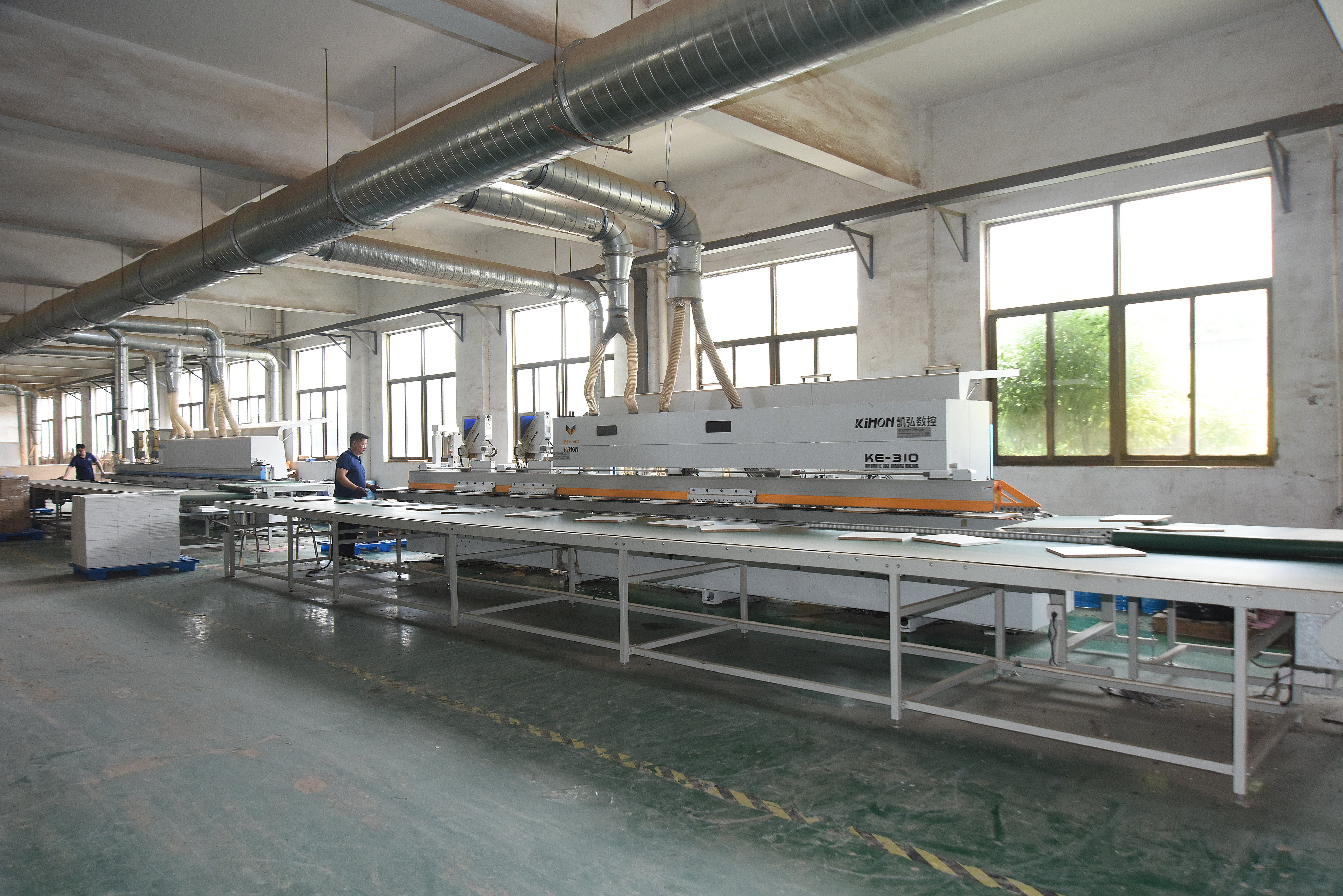
Material declarations describe inputs. Construction describes how those inputs behave over time, and it is where maintenance cost accumulates. In this range, the documented construction position includes a sturdy thickened steel frame and wear-resistant PU leather that together cut down daily maintenance frequency, supported by a complete spare parts supply that allows quick on-site repair and, in practice, shortens downtime.
The hydraulic lifting system is documented as offering smoother adjustment and long-term structural stability, with no jamming during frequent daily use. For a heavy duty barber chair in a high-turnover shop, hydraulic behaviour is the mechanism most likely to be compared between the first chair purchased and the tenth, because it is the component operators interact with dozens of times per day.
Independent engineering guidance offers a useful benchmark rather than a model-specific claim: commercial-grade hydraulic pumps for barber chairs are typically rated to handle load capacities between 350 and 400 lbs and to exceed 100,000 cycles before maintenance is required (Salon Furniture Engineering Guide, a general engineering reference). This figure should not be read as a test result for any particular chair. It is valuable as a question template: buyers can ask a supplier to state the load rating and cycle expectation assumed for a specific hydraulic barber chair model, and then ask the same question again on the next order.
Purchasing Terms and Acceptance Criteria in a Multi-Year Review
Commercial terms are part of sustainability evidence because they define how a problem would be detected and resolved. The documented purchasing position for Ningbo Hongzi Beauty & Hairdressing Equipment Co., Ltd., a China-based manufacturer of barber chairs and salon equipment founded in 2012, is summarised below alongside the risk controls that sit behind it.
| Review dimension | Documented position | Why it matters over multiple years |
|---|---|---|
| Minimum order quantity | 5 units | Supports trial orders before a multi-year volume commitment. |
| Delivery terms | EXW / FOB / CIF / CFR | Allows cost structure and risk transfer to be fixed and compared year on year. |
| Payment terms | T/T, L/C, PayPal, cash | Provides options across different buyer profiles and order sizes. |
| Acceptance method | Visual and functional checks, or sampling upon arrival | Creates a repeatable inspection standard for every delivery, not just the first. |
| Quality variation control | Graded inspection of incoming materials, manufacturing processes and finished products; quality anomaly traceability with closed-loop rectification; monthly reviews to optimise operating procedures | Targets the most common long-run failure — gradual specification drift. |
| Delivery performance control | Pre-order review locks the delivery cycle; daily and weekly progress and material matching follow-up; 3-day advance warning threshold; delivery achievement rate included in performance evaluation | Turns delivery reliability into a measured internal metric rather than a promise. |
| Transport protection | Standardized protective packaging, full factory inspection of packaging, screening of compliant carriers, clarified protection requirements, closed-loop traceability at arrival acceptance | Reduces the most frequent source of avoidable damage claims on exported chairs. |
| After-sales structure | Comprehensive functional and aging testing before shipment; full-chain product traceability; after-sales handled all day Monday to Saturday with solutions provided within 24 hours; closed-loop rectification | Determines how quickly a problem is contained before it affects a whole fleet. |
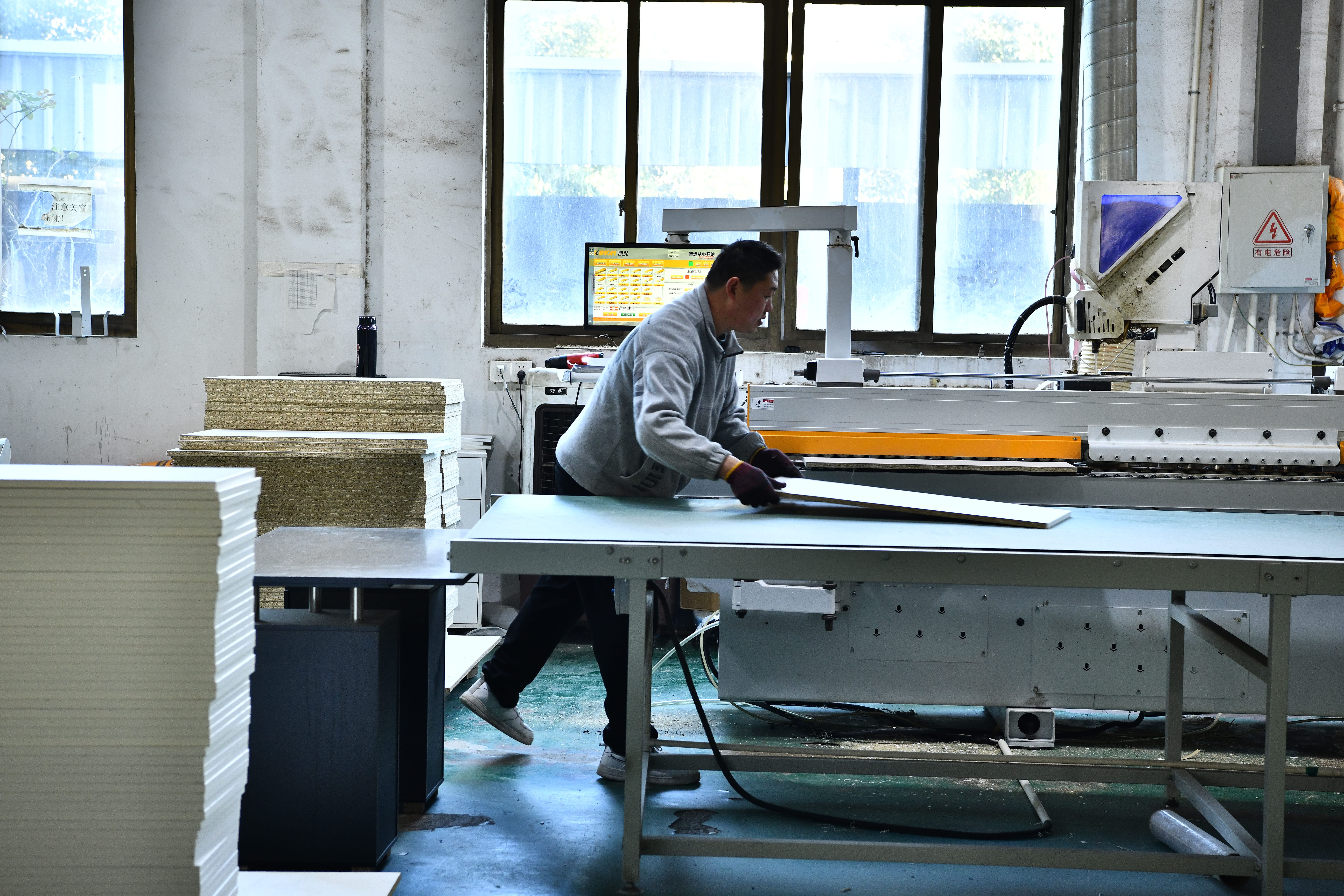
Scale and capability provide context for whether these controls can be sustained. The company operates a facility of approximately 22,000 m², reports an annual production capacity of about 180,000 units, maintains an R&D team of 15 engineers, and exports approximately 100% of its output, with major markets in North America and Europe. Its product range covers barber chairs, shampoo chairs, massage beds and manicure tables, which matters for buyers assembling a complete salon package rather than a single chair line. Company information is published at www.hz-beauty.com.
For a buyer, the practical use of this table is comparative rather than promotional. The same eight dimensions can be requested from every supplier under consideration and re-checked annually. A supplier that cannot restate its acceptance method, its anomaly traceability and its delivery warning threshold in year two is showing a discontinuity in exactly the area that long-term sourcing depends on.
Where Material Consistency Changes the Buying Decision
Different salon formats stress different materials, and the model mix matters more than the marketing tier.
Compact and low-footprint stations. The documented dimensions of HZ6001DW place it in the smallest footprint class reviewed here, at 45 × 25 × 70 cm. Chairs of this class are typically moved during cleaning and rearranged during refits, so the combination of PU leather, high-density sponge, wood and iron has to survive handling as much as sitting. Consistency here is measured in upholstery survival and in how well the seat returns to shape.
Standard and mid-size stations. HZ8801 is documented at 90 × 60 × 90 cm, a class suited to regular salon stations where the chair stays in position and the hydraulic and recline functions take most of the load. Buyers should treat the material declaration for this model as a specification item to be confirmed at order level, since a mid-size chair that is silently downgraded is difficult to detect visually.
Larger frames and heavier use. HZ8796C (110 × 72 × 100 cm, documented with aluminum alloy) and HZ87102RB (111 × 66 × 118 cm) sit in the larger dimensional classes. In these formats, structural material choice affects weight, repositioning effort and how the frame resists lateral forces during frequent adjustments — the conditions found in high-turnover barber shops and in salon styling areas with continuous chair rotation.
The same logic applies to styling choices. A gold barber chair or a retro reclining barber chair differs from a plain hydraulic model mainly in finish and detailing, not in the structural agreement a buyer needs. Antique and vintage styling decisions change the appearance of a salon; they do not change what should be verified on the packing list, the specification sheet and the acceptance record.
How This Compares With Standardized Supply — and Where It Does Not Fit
The documented market position of this supplier is built around variety of styles and full salon equipment matching, with the stated capability that products across the range can be matched and delivered with flexibility. Relative to standardized imported products, this approach may offer more customization and more flexible delivery, and the company is positioned as suitable for distributors who pursue high quality and require customized or complete procurement.
Three boundaries are worth stating plainly.
- Cost positioning. The documented cost difference against comparable domestic and imported alternatives is approximately 10% higher. Buyers whose programme is defined purely by the lowest achievable unit cost, with no requirement for customization, matching or long-run specification control, may find a standardized single-SKU supplier more suitable.
- Conditional, not guaranteed, flexibility. The customization and delivery flexibility position is expressed as a capability that may be available, not as an unconditional commitment on every order. It should be written into the order documents if it is commercially important.
- Incomplete material disclosure per model. In the reference set reviewed here, material information is restated for HZ6001DW and HZ8796C but not for HZ8801 or HZ87102RB. That is a genuine limitation of the available documentation, not a defect in the products, and it is precisely why a buyer should require a per-model material declaration at the sampling stage rather than relying on a category-level claim.
Market estimates for this category also diverge, which is a caution for anyone building a business case on a single figure. Grand View Research estimates the broader salon furniture market at USD 5.54 billion in 2024, while Fact.MR estimates salon chairs specifically at USD 10.57 billion for 2025 and TechSci Research estimates USD 14.16 billion for the same category. Buyers using market sizing to justify volume commitments should note which definition a number refers to.
Market Trend Analysis: What the Category Data Suggests
Three data points frame the direction of demand. Hydraulic barber chairs held approximately 42.5% of product-type share in 2025, which keeps the hydraulic mechanism at the centre of competitive comparison. The United States imported USD 102.37 million worth of relevant chairs and parts in 2023, with China supplying about 63.8% of that value, indicating a concentrated and well-established supply route rather than an emerging one. And the salon chairs market is projected to grow from approximately USD 10.57 billion in 2025 to USD 18.4 billion by 2035.
Growth of this kind changes the nature of competition. When volume is expanding, the marginal supplier can win orders on availability alone. As programmes mature, buyers start to weight different criteria: whether a model number still means the same thing in year three, whether acceptance criteria are documented, and whether the supplier can restate them on request. Material consistency sits at the intersection of all three, which is why it is becoming a standard line in distributor scorecards rather than a technical footnote.
Future Outlook
The direction of travel in barber chair procurement is toward supplier reviews that look more like manufacturing audits than purchase comparisons. In practice, that means per-SKU material baselines recorded at first sampling, acceptance criteria applied identically to every subsequent delivery, delivery achievement tracked as a metric rather than discussed as a promise, and spare parts availability confirmed for the life of the equipment.
For suppliers, the pressure point is documentation. A factory that can restate the material set, the dimensional reference and the inspection method for each model is materially easier to reorder from than one that cannot, regardless of how the chairs photograph. For buyers, the sensible posture is to treat the first order as the creation of a specification benchmark, and every following order as a test of whether that benchmark still holds.
None of this requires a new certification or a third-party audit to be useful. The evidence set described here — declared materials, documented dimensions, defined acceptance methods and traceability — is available at the order level today, and it is the layer most likely to determine whether a sourcing relationship is still productive in year five.
Frequently Asked Questions
What are the purchasing terms and acceptance criteria for barber chair orders?
The documented commercial terms are a minimum order quantity of 5 units; delivery terms of EXW, FOB, CIF or CFR; and payment terms including T/T, L/C, PayPal and cash. Acceptance is defined as visual and functional checks, or sampling, upon arrival. These terms form the baseline against which repeat orders can be compared.
How is quality variation controlled across repeat barber chair orders?
Quality variation is controlled through graded inspection of incoming materials, manufacturing processes and finished products, supported by a quality anomaly traceability and closed-loop rectification mechanism. Monthly reviews are conducted to optimise standard operating procedures, and quality fluctuations are incorporated into departmental performance evaluations. This structure is aimed at specification drift over time rather than at one-off defects.
How are delivery delays managed on barber chair production programmes?
Delivery reliability is managed by a pre-order review that locks the delivery cycle, combined with daily and weekly follow-up on production progress and material matching. A 3-day advance warning threshold allows rapid response to abnormal situations, and the delivery achievement rate is included in performance evaluations.
How is transport damage handled for exported barber chairs?
Transport damage risk is mitigated through standardized protective packaging developed for the product characteristics, full factory inspection of packaging, screening of compliant carriers, and clarification of transportation protection requirements. Arrival acceptance is supported by closed-loop traceability so that any damage can be traced back through the shipment record.
What after-sales response can buyers expect on barber chair issues?
Finished products undergo comprehensive functional and aging testing before leaving the factory to prevent the outflow of non-conforming products, and a full-chain product traceability system is maintained. After-sales issues are handled all day from Monday to Saturday, with solutions provided within 24 hours and closed-loop rectification of the underlying cause.
How can a buyer verify material consistency between a first order and a repeat order?
Three checks are practical. First, compare the declared material set per model against the specification sheet — for example, HZ6001DW is documented as PU leather, high-density sponge, wood and iron, while HZ8796C is documented with aluminum alloy. Second, confirm the dimensional reference behind each figure, so that the documented size is measured on the same basis as the original order. Third, apply the documented acceptance method — visual and functional checks, or sampling on arrival — to every delivery, and retain the traceability record so that any deviation can be raised against a specific order rather than against an impression.
A downloadable product brochure covering the HZ range, including model specifications, is available here.