
Long-Term Barber Chair Supplier Evaluation: Sourcing Salon Furniture from Ningbo Hongzi
Long-Term Barber Chair Supplier Evaluation: Sourcing Salon Furniture from Ningbo Hongzi
Evaluation summary: A multi-year barber chair agreement is only as reliable as the supplier's ability to reproduce the same specification, test the same function and protect the same product across repeated shipments. For buyers evaluating Ningbo Hongzi Beauty & Hairdressing Equipment Co., Ltd., the practical question is not whether the company can supply a sample. It is whether each HZ model under consideration can be tied to an approved bill of materials, a documented acceptance protocol and a contract change-control process. The model set referenced in this evaluation includes HZ6001DW, HZ8801, HZ8796C, HZ87102RB, HZ8799ABK, HZ8799YF, HZ8799G-Z, HZ8799M, HZ8702CRD, HZ88123PK, HZ88202 and HZ8765BK. The available company evidence supports a serious evaluation: Hongzi reports a 22,000 m2 production facility, annual capacity of approximately 180,000 units, a 15-engineer R&D team and an export focus that serves North America and Europe. Those facts establish scale and export orientation. They do not, by themselves, prove model-level durability, material consistency or regulatory compliance. They define what a buyer must verify.
Why a Long-Term Barber Chair Supplier Is Not a One-Off Purchase
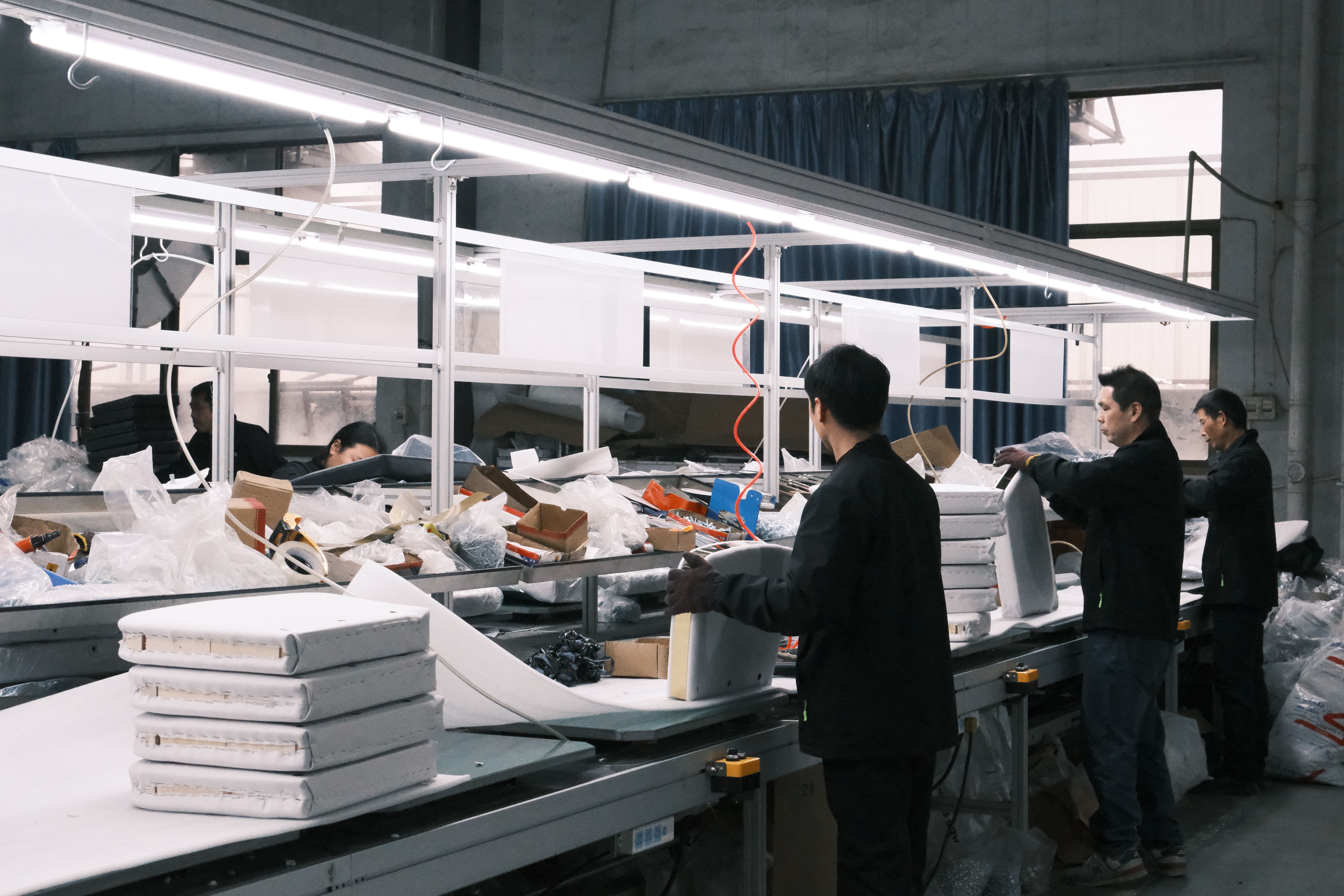
A barber chair is a daily-use work tool. It is lifted, reclined, swivelled, cleaned and exposed to repeated loads from different clients. In a single salon refit, a buyer may inspect one delivery and move on. In a distribution programme, hotel project or multi-site salon group, the same chair model may be ordered again six months or two years later. That second order is where supplier evaluation becomes a different discipline. The buyer is no longer purchasing a chair as a one-time object. The buyer is purchasing a repeatable specification.
The market context explains why this matters. Commercial research cited in the verified data set estimates the global salon chairs market at USD 1.5 billion in 2025 and projects hydraulic salon chairs to account for 63.4% of the market in 2026. The same research describes professional-grade hydraulic pumps as typically rated for more than 100,000 cycles and load capacities of 350 to 400 lbs. These are market-research benchmarks, not test results for any Hongzi model. They are still useful: they show that hydraulic barber chairs are a mainstream commercial category and that the mechanism is a legitimate procurement risk area. A buyer sourcing a hydraulic barber chair, reclining barber chair or heavy-duty barber chair for repeat supply should therefore ask for model-specific mechanism evidence rather than relying on a category description.
Import documentation adds another layer. Barber and similar chairs with rotating, reclining and elevating movement fall under HS Code 9402.10. The classification helps customs brokers and buyers describe the product correctly, but it does not certify safety, materials or performance. For a long-term agreement, the buyer should keep three evidence streams separate: commercial documents, product specifications and conformity documents for the destination market. A supplier that can support all three is easier to qualify for repeat salon furniture procurement.
A Six-Part Evaluation Framework for Multi-Year Supply
The most useful supplier evaluation framework is built around controls that can be written into a contract. A buyer should not evaluate Hongzi, or any barber chair manufacturer, only on showroom appearance. The evaluation should test whether the supplier can keep a documented specification stable across batches, protect the product in transit, meet an agreed delivery plan and resolve defects through a traceable process. The six controls below convert supplier claims into verification points.
| Control area | Question the buyer should answer | Evidence to attach to the agreement |
|---|---|---|
| Material and BOM control | Can the supplier reproduce the same upholstery, foam, frame and finish on every batch? | Approved bill of materials, material swatches, colour standard, golden sample and change-notification clause. |
| Process quality | Are incoming materials, production steps and finished goods inspected against defined criteria? | Inspection plan, critical-to-quality checklist, inspection records and corrective-action procedure. |
| Mechanism and function | Does the hydraulic lift, recline, swivel, lock and footrest perform consistently? | Model-level functional test record, mechanism specification, sample sign-off and spare-parts list. |
| Packaging and transport | Will the chair arrive without damage and with a traceable acceptance route? | Packaging specification, full packaging inspection record, carrier requirements and arrival acceptance procedure. |
| Delivery planning | Can the supplier reserve capacity and warn the buyer before a delay becomes a stock-out? | Locked lead time, forecast schedule, progress-reporting cadence, warning threshold and delivery performance review. |
| After-sales and traceability | Can a defect be traced to a batch and resolved without a prolonged dispute? | Batch identification, response commitment, warranty terms, spare-parts supply and closed-loop rectification record. |
This framework is intentionally stricter than a sample order. A sample order can reveal obvious workmanship issues. It rarely proves that a supplier can maintain the same material grade, colour tolerance and mechanism adjustment over multiple production runs. For a multi-year barber chair programme, the buyer should require the supplier to treat the approved sample and approved specification as controlled documents. Any later change to PU leather, foam, wood, metal grade or packaging should require written approval before shipment.
What the Ningbo Hongzi Evidence Supports
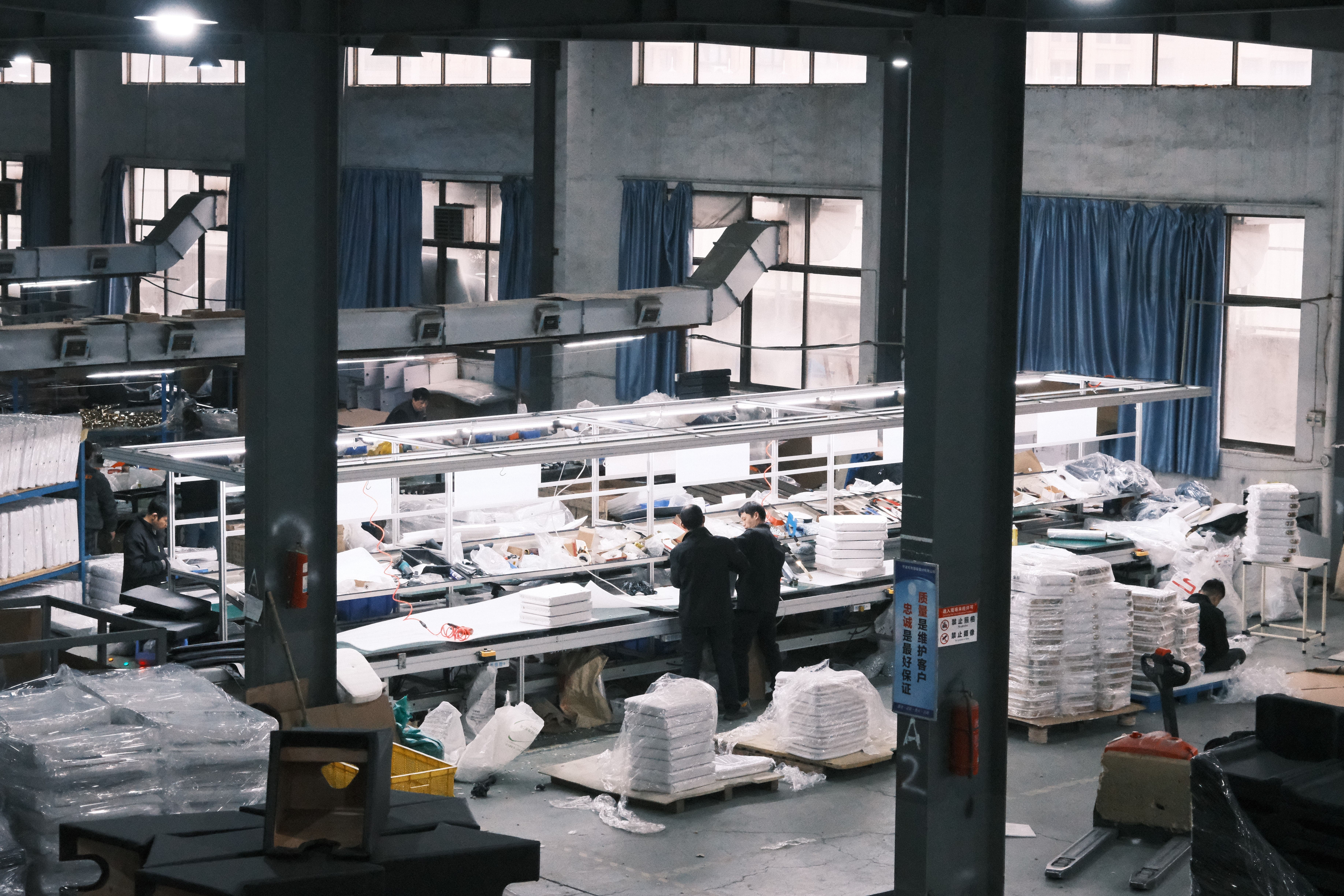
Ningbo Hongzi Beauty & Hairdressing Equipment Co., Ltd. is a China-based manufacturer and exporter founded in 2012. The company reports a construction area of nearly 22,000 m2, annual production capacity of approximately 180,000 units, a 15-engineer R&D team and more than 100% export orientation serving North America and Europe. Its stated main products are barber chairs, shampoo chairs, massage beds and manicure tables. The official product catalogue discusses vintage barber chairs, barber chairs, styling chairs, shampoo chairs, salon stools and related salon equipment. For a buyer sourcing salon furniture rather than a single chair, this breadth is relevant because it supports a discussion about consolidated shipments and mixed-model orders. It is not proof that every model shares the same quality level.
The stronger operational evidence lies in the company's described quality and delivery controls. Hongzi states that it applies graded inspection to incoming materials, manufacturing processes and finished products. It describes a quality-anomaly traceability and closed-loop rectification mechanism, monthly reviews to optimise standard operating procedures, and the inclusion of quality fluctuations in departmental performance evaluations. It also reports comprehensive functional and ageing testing of finished products to prevent non-conforming units from leaving the factory. These are company-reported measures, not independent audit findings. For a buyer, their value is that they can be converted into contract evidence: inspection records, ageing-test parameters, sample size, defect categories and corrective-action logs.
After-sales controls follow a similar pattern. The company reports a full product traceability system, after-sales handling from Monday to Saturday and a stated 24-hour response commitment for solutions. Complete spare-parts supply is described as a way to support quick on-site repair. Delivery control is described as a pre-order review that locks the delivery cycle, daily and weekly progress tracking, a three-day advance warning threshold and delivery achievement included in performance evaluation. Packaging control includes standardised protective packaging, full factory inspection and carrier screening, with arrival acceptance linked to closed-loop traceability.
These controls are useful because they address the four common failure points in repeat furniture supply: quality variation, transport damage, delivery delay and unresolved after-sales issues. They do not remove the need for verification. A multi-year buyer should ask to see how the controls operate for the specific HZ model, who signs the inspection record, what happens when a batch fails, and how a replacement part is identified after the original production run has ended.
Applying the Framework to the Twelve HZ Models
The twelve HZ model codes named in this evaluation should be treated as separate product identities until their specification packages prove otherwise. A model name does not define a material grade, a hydraulic rating, a recline angle, a foam density or a packaging method. HZ6001DW and HZ8801 may serve different buyer requirements, but the buyer should not infer one model's dimensions or mechanism from another. The same discipline applies to HZ8796C, HZ87102RB, HZ8799ABK, HZ8799YF, HZ8799G-Z, HZ8799M, HZ8702CRD, HZ88123PK, HZ88202 and HZ8765BK. The correct approach is to create a controlled annex for each SKU that will be purchased repeatedly.
For each model, the annex should contain the approved bill of materials, an approved colour and finish standard, a signed golden sample, a functional test checklist, a packaging specification, a spare-parts list and the agreed acceptance method. The buyer should also record the model's intended use: classic hydraulic barber chair, reclining barber chair, heavy-duty barber chair, retro or vintage styling chair, gold barber chair for a premium salon fit-out, or another application within the barber shop chair and salon chair range. Intended use matters because a chair placed in a high-traffic barber shop may need different verification from one used in a low-volume beauty salon chair setting. The supplier should confirm fitness for the stated use in writing.
| Model code | Contract status before repeat purchase | What cannot be assumed from the code alone |
|---|---|---|
| HZ6001DW | Model-specific BOM, sample sign-off and functional record required | Shared materials, mechanism or dimensions with another HZ model |
| HZ8801 | Model-specific BOM, sample sign-off and functional record required | Shared materials, mechanism or dimensions with another HZ model |
| HZ8796C | Model-specific BOM, sample sign-off and functional record required | Shared materials, mechanism or dimensions with another HZ model |
| HZ87102RB | Model-specific BOM, sample sign-off and functional record required | Shared materials, mechanism or dimensions with another HZ model |
| HZ8799ABK | Model-specific BOM, sample sign-off and functional record required | Shared materials, mechanism or dimensions with another HZ model |
| HZ8799YF | Model-specific BOM, sample sign-off and functional record required | Shared materials, mechanism or dimensions with another HZ model |
| HZ8799G-Z | Model-specific BOM, sample sign-off and functional record required | Shared materials, mechanism or dimensions with another HZ model |
| HZ8799M | Model-specific BOM, sample sign-off and functional record required | Shared materials, mechanism or dimensions with another HZ model |
| HZ8702CRD | Model-specific BOM, sample sign-off and functional record required | Shared materials, mechanism or dimensions with another HZ model |
| HZ88123PK | Model-specific BOM, sample sign-off and functional record required | Shared materials, mechanism or dimensions with another HZ model |
| HZ88202 | Model-specific BOM, sample sign-off and functional record required | Shared materials, mechanism or dimensions with another HZ model |
| HZ8765BK | Model-specific BOM, sample sign-off and functional record required | Shared materials, mechanism or dimensions with another HZ model |
The table is deliberately repetitive because the control requirement is the same for every SKU. Equal treatment prevents a buyer from assigning a material or mechanism claim to a model simply because another model in the range has it. It also gives the supplier a clear route to approval: provide the missing specification package for each code, sign the sample and agree the acceptance record. Once that is done, the model can move into a repeat-order schedule.
Material Consistency: What to Specify for PU Leather, Sponge, Wood and Metal
Repeat supply depends less on a broad promise of durable materials and more on the buyer's ability to define what durable means for each component. PU leather, high-density sponge, wood and iron or aluminium alloy are common material categories in salon furniture, but the category name alone is not a specification. The company's comparison material describes a sturdy thickened steel frame and wear-resistant PU leather and states that complete spare parts can support on-site repair. That is a company-level description. It should be converted into model-level requirements before it becomes part of a multi-year agreement.
For PU leather, the specification should identify the grade, backing, thickness range, colour standard, surface finish and expected cleaning regime. A buyer serving barber shops should ask how the material is expected to perform against standard salon cleaning agents and how colour variation between batches will be controlled. For a gold barber chair or luxury barber chair finish, appearance consistency matters as much as mechanical function, so the approved sample should be retained under controlled lighting. The buyer should also define how replacement upholstery will be supplied if a chair is damaged after the original batch has been sold.
For high-density sponge, the buyer should require the foam grade, density specification, test method and compression or resilience criteria to be written into the annex. The phrase high-density sponge is not enough for repeat supply because different foam grades can feel similar in a showroom but behave differently after months of daily use. The supplier should state how foam is cut, bonded and fitted, and how the seat and back cushions are inspected before assembly. If a supplier changes the foam supplier or formulation, that change should trigger a documented approval step.
For wood components, the specification should cover the material type, moisture control, joint construction, surface treatment and hidden structural parts. For iron or aluminium alloy components, it should cover the alloy or grade, wall thickness, welding or fastening method, coating or plating and load-bearing points. These details matter for a heavy-duty barber chair, a reclining barber chair with a moving backrest or a hydraulic barber chair with a rotating base. The buyer does not need to dictate every production method, but the buyer does need a reference standard that makes incoming batches comparable.
The practical control is a material consistency file. It should include the approved sample, material swatches, supplier declarations, batch records and a change-notification clause. The buyer should also agree an annual or periodic revalidation schedule. If the supplier cannot provide a stable reference, the buyer may still purchase on a spot basis, but a multi-year commitment becomes harder to justify. The objective is not to claim that one material is universally superior. The objective is to make the same material, grade and finish repeatable for the same salon chair model.
Purchasing Terms and Acceptance Criteria to Lock into the Agreement
The supplied purchasing guidance for Hongzi lists an MOQ of 5 units, delivery terms of EXW, FOB, CIF or CFR, and payment terms including T/T, L/C, PayPal and cash. It also states that acceptance can be carried out by visual and functional checks or by sampling upon arrival. These are useful starting points, but a multi-year agreement should not rely on a general terms sheet alone. The contract should attach model-specific commercial terms and acceptance records for every SKU in the programme.
The agreement should state the exact model, finish, colour, mechanism configuration, packaging method and spare-parts content. It should identify the Incoterm, named port or place, currency, payment schedule and the documents required for each shipment. The MOQ should be confirmed for the specific model and order pattern, because a 5-unit MOQ in one purchasing context does not automatically apply to every custom finish or mixed-model shipment. The buyer should also agree how forecasts become firm orders, how capacity is reserved and what happens if demand falls below or rises above the forecast.
Acceptance criteria should be divided into pre-production, pre-shipment and arrival stages. At pre-production, the buyer approves the golden sample, bill of materials, colour standard and packaging specification. At pre-shipment, the supplier provides inspection records for incoming materials, production processes and finished goods, together with functional checks for the specific model. At arrival, the buyer applies visual and functional checks or an agreed sampling plan. If a defect is found, the traceability record should identify the batch, the inspection stage and the corrective action. This is consistent with the company's stated closed-loop rectification approach, but the buyer should define the response time, evidence required and replacement or credit mechanism in advance.
A long-term agreement should also include change control, warranty, spare-parts continuity, delivery warnings and review meetings. The supplier's stated three-day advance warning and delivery achievement metric can be incorporated into a monthly or quarterly review. The after-sales route should identify who receives a claim, what information is required, how a replacement part is selected and how the closed-loop record is returned to the buyer. For buyers importing into North America or Europe, the agreement should separately list the conformity documents required for the destination market. The current evidence does not establish product certification, so certification and test reports must be obtained and verified before they are treated as approved contract documents.
Fit Boundaries: When a Multi-Year Agreement Makes Sense
A multi-year barber chair agreement is a good fit when a distributor, salon group or project buyer has a stable model mix, repeat demand and a clear specification process. It is also a good fit when the buyer needs consistent replacement parts, repeat upholstery colours or a predictable salon furniture package across multiple openings. In those cases, the supplier's scale, export orientation and stated quality controls can reduce the administrative burden of re-qualifying a new source for every order.
The fit is weaker when the buyer cannot define the specification, cannot inspect the first production batch or cannot obtain destination-market conformity evidence. A long-term contract does not compensate for an unverified bill of materials. It also does not turn a company-reported capacity figure into a guaranteed allocation. The buyer should treat the first order as a qualification batch, even if the commercial relationship is intended to last several years. The qualification batch should test not only the chair but also the supplier's documentation, packaging, response time and ability to reproduce the approved sample.
Compared with one-off spot purchasing, long-term sourcing adds obligations on both sides. The buyer commits to forecasts, approved specifications and a review process. The supplier commits to batch consistency, change notification, delivery warning and after-sales traceability. If those obligations are not written down, the relationship may still work, but it will depend on personal follow-up rather than a controlled supply system. For a professional barber chair programme, the controlled system is the safer basis for repeat supply.
Future Outlook for Salon Furniture Buyers
The commercial research projection that hydraulic salon chairs may hold 63.4% of the market in 2026 suggests that hydraulic lifting will remain a central product category. For buyers, the implication is practical rather than promotional: mechanism documentation, spare-parts availability and model-level functional checks deserve a permanent place in supplier evaluation. As salon furniture ranges expand across classic hydraulic barber chairs, reclining barber chairs, styling chairs and shampoo chairs, the supplier that can keep specifications stable across categories will be easier to use for multi-site projects.
A reasonable outlook is that buyers will place more weight on batch records, change notification and traceability, especially where the same model is ordered across different production periods. This is a conditional outlook, not a forecast of market demand. It follows from the procurement logic described above: repeat supply creates repeat risk, and repeat risk is managed through documented controls. Ningbo Hongzi's reported capacity, export focus and quality-control descriptions make it a candidate for that evaluation. The next step is model-level evidence, not a broader brand claim.
FAQ: Long-Term Barber Chair Sourcing
What should a buyer verify before signing a multi-year barber chair supply agreement?
The buyer should verify the model-specific bill of materials, approved sample, functional test record, packaging specification, spare-parts list and acceptance method. The agreement should also identify the Incoterm, payment terms, forecast process, delivery warning threshold and after-sales response route. Company-level capacity and export claims are useful context, but they do not replace SKU-level evidence.
How can buyers maintain material consistency across repeat barber chair orders?
Use a controlled material file with approved swatches, a golden sample, grade specifications and a change-notification clause. PU leather, foam, wood and metal components should each have a written reference standard. The buyer should also schedule periodic revalidation and require batch records so that a later delivery can be compared with the approved first production run.
Which acceptance criteria belong in a long-term barber chair contract?
The contract should separate pre-production, pre-shipment and arrival acceptance. It should define visual and functional checks, sampling arrangements, inspection records, defect categories and corrective-action timeframes. The supplied purchasing guidance allows visual and functional checks or sampling upon arrival, but the buyer should specify the sample size, responsible person and evidence required for each shipment.
What purchasing terms should be fixed for repeat orders from Ningbo Hongzi?
Fix the model, finish, MOQ, Incoterm, payment method, lead time, packaging and acceptance method in the contract. The supplied guidance lists an MOQ of 5 units, EXW, FOB, CIF or CFR delivery terms, and payment by T/T, L/C, PayPal or cash. These should be confirmed for each model and order pattern rather than assumed to apply uniformly.
What are the limits of a supplier evaluation based on company-reported information?
Company-reported capacity, quality controls and response commitments show how the supplier describes its system. They are not independent audit findings or product certifications. The buyer should request inspection records, model-level test evidence, conformity documents for the destination market and, where appropriate, a factory audit before treating those claims as verified contract conditions.
Company brochure for further reference: Ningbo Hongzi company brochure PDF.
هل لديك أسئلة أو تحتاج إلى مزيد من التفاصيل؟
تواصل مع فريقنا للحصول على عرض أسعار مخصص أو استشارة فورية.
طلب عرض أسعار
املأ النموذج أدناه وسيتواصل معك فريقنا بعرض مقترح مخصص.
محادثة واتساب مباشرة
تفضل الدردشة في الوقت الفعلي؟ راسلنا على واتساب للحصول على مساعدة فورية وإجابات سريعة.
- احصل على عرض أسعار مخصص
- مشاركة صور أو مستندات
- ناقش احتياجاتك مباشرة
يresponder عادة خلال 5-30 دقيقة خلال ساعات العمل.