
Long-Term Bulk Matcha Supplier Evaluation: Certification Scope, Residues, and Quality Variation
Most bulk matcha supplier decisions are made once, at qualification. The risk sits somewhere else: in whether the evidence that justified the original approval is still valid twelve, twenty-four or thirty-six months later, for the specific grade code now being purchased and the market now being served.
Long-term bulk matcha supply is therefore a re-verification problem rather than a sourcing problem. Certificates carry scope limits. Pesticide rules change between seasons. Harvest character shifts from lot to lot. The grade code printed on the purchase order is not always the grade code listed on the certificate. This reference sets out an evaluation framework for buyers who already have a supplier relationship and need to decide whether to renew it, raise a corrective action, or invest in supplier development.
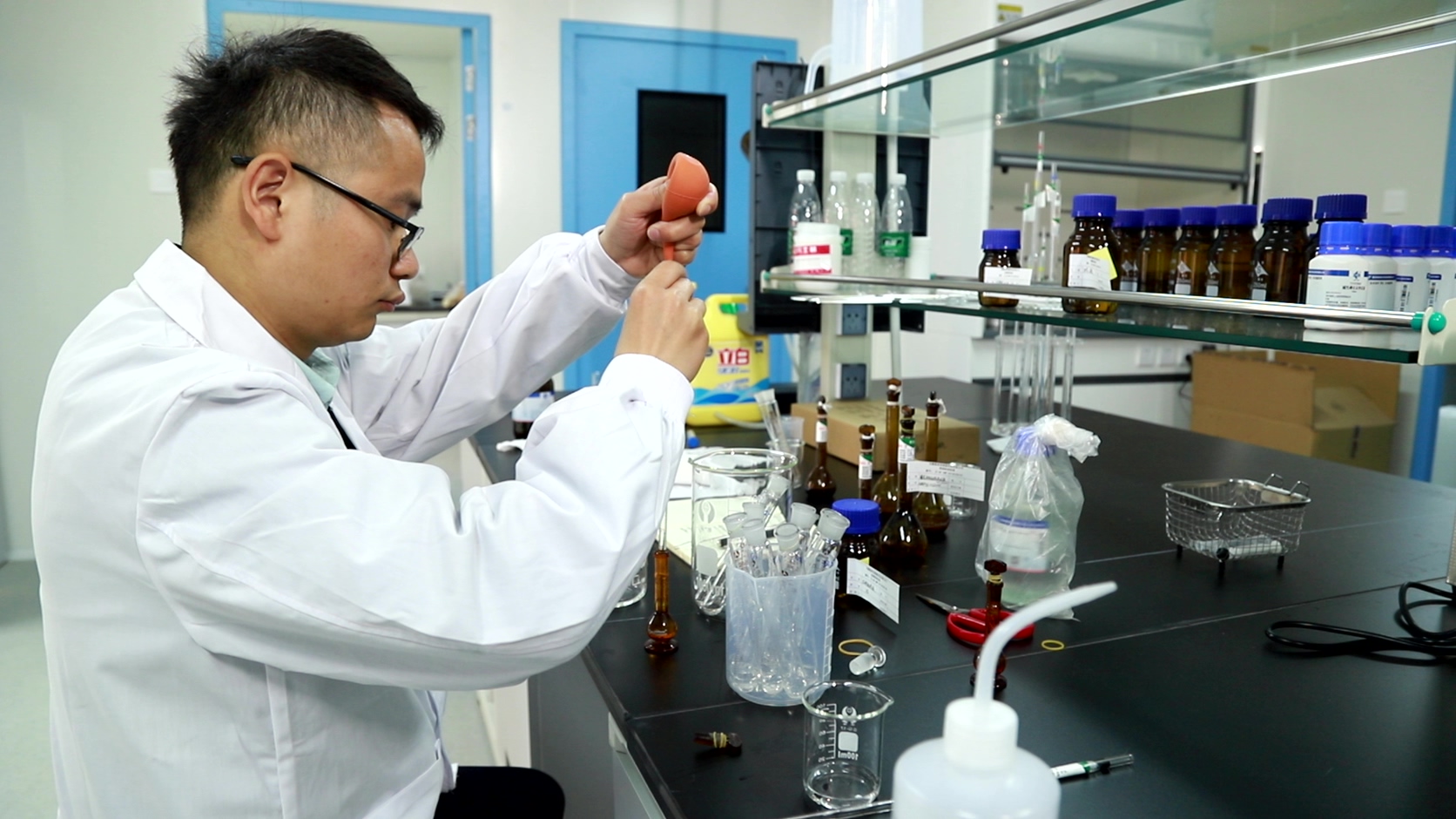
Why a supplier that passed qualification can still fail a renewal review
First-order qualification answers capability questions: can the supplier produce the grade, at what capacity, at what lead time, at what minimum order quantity, and with which documents on file. Those answers are captured once and rarely revisited in detail. A renewal review asks a narrower and harder set of questions: does the certificate on file still cover the code being ordered, has the residue control programme been maintained without gaps, and has the delivered material drifted away from the approved sample.
The commercial case for treating this as a recurring process is straightforward. The global matcha market was valued at USD 5.1 billion in 2025 and is projected to reach USD 8.9 billion by 2033, according to Grand View Research. Culinary grade matcha accounted for 56.4% of global market share in 2026 on the back of industrial food and beverage demand, per Market Data Forecast, and organic matcha is the fastest-growing segment with an expected CAGR of 12.68% through 2033 according to SNS Insider. Volume growth multiplies the number of batches a buyer receives, and every additional batch is another opportunity for scope, residue or specification deviation to appear unnoticed. Market size estimates do vary between research houses depending on whether retail or bulk ingredients are counted, which is itself a reason to anchor internal decisions on supplier-held documents rather than on category headlines.
A five-layer re-evaluation framework for bulk matcha
A workable long-term evaluation model separates five layers, each with its own evidence and its own trigger for action.
- Layer 1 — Certification scope by product code. Confirm which certificate applies to which grade code, at which site, and for which validity period.
- Layer 2 — Residue and heavy metal control continuity. Confirm that testing has continued at the agreed frequency and panel, and that destination-market limits have not changed.
- Layer 3 — Specification conformance and lot-to-lot variation. Confirm that delivered material still matches the approved specification window, not only the approved sample.
- Layer 4 — Commercial terms and documentation. Re-confirm minimum order quantity, lead time, capacity, packaging documentation and import paperwork.
- Layer 5 — Change notification and corrective action. Define how the supplier reports process changes, deviations and the closure of corrective actions.
Layer 1: certification scope is code-specific, not company-wide
TangMist Matcha, operated by Shanghai Kelrosa Health Technology Co., Ltd., is a matcha manufacturer and B2B supplier based in China serving cafés, food and beverage brands, distributors, wholesalers and private label businesses in the EU, the USA and other export markets. Its supply and manufacturing systems are supported by internationally recognised certifications and quality standards including USDA Organic, EU Organic, HACCP, ISO 22000, GMP, Halal and Kosher, with certification and documentation options available according to product and destination-market requirements.
That last phrase is the part buyers most often skip. A company-level certification statement is not the same as a product-level scope statement. Within the KM range, documented scope should be checked code by code: HACCP documentation is stated for KM7 to KM10; ISO 22000 for KM1 to KM10; and GMP for KM1 to KM10, with GMP particularly relevant for the USA market. EU Organic, HALAL and Kosher claims are available according to product and destination-market requirements rather than as blanket coverage across every code.
| Certification or scheme | Stated scope in the KM range | What to verify at each renewal |
|---|---|---|
| HACCP | KM7–KM10 | Scope annex lists the exact grade codes, production site and validity dates |
| ISO 22000 | KM1–KM10 | Certificate number, issuing body, site address and renewal date match the current supply site |
| GMP | KM1–KM10, particularly relevant for the USA market | Current certificate on file alongside FDA Food Facility Registration and FSVP documentation |
| USDA Organic / EU Organic | Available according to product and destination-market requirements | Transaction certificate or import certificate for the specific lot, not the certificate alone |
| HALAL / Kosher | Available according to product and destination-market requirements | Confirmation that the certification body is recognised by the buyer's own market or retail channel |
The practical purchase term is simple: require the certificate scope annex to name the grade code, the manufacturing site and the validity period, and attach that annex to the purchase order. Where a buyer's portfolio spans beverage, culinary and ceremonial codes, several scope documents will be needed at the same time, and they will not all share the same validity end date.
Layer 2: residues and heavy metals as continuous control, not one-off paperwork
Pesticide residue control is the layer most exposed to regulatory change. The EU implemented stricter pesticide Maximum Residue Limits for clothianidin and thiamethoxam at 0.01 mg/kg effective March 2026 under Regulation (EC) No 396/2005. A supplier that tested against an earlier limit and has not updated its panel is not automatically non-compliant, but the evidence base supporting the shipment is out of date, and the buyer carries that exposure at import.
On the USA side, the U.S. Food and Drug Administration requires Food Facility Registration and FSVP documentation for all imported matcha powder. This sits alongside product-level schemes such as GMP, ISO 22000 and HACCP, and it is a renewal trigger in its own right: registration and importer verification records need to remain current for the supplier and the importer of record.
Heavy metals are the less standardised half of the picture. Relevant pesticide residue and heavy metal testing can be conducted according to product specifications and destination-market requirements, with supporting documentation available where applicable, and buyers in practice route that verification through accredited third-party laboratories such as SGS, CTI or PONY depending on market recognition, turnaround time and cost. Because heavy metal limits are set by destination market and by the buyer's own specification rather than by a single global figure, the evaluation question at renewal is not “is there a certificate” but “does the testing programme still match the specification and the market we now sell into”. That means agreeing in the purchase specification: the residue panel, the heavy metal elements covered, the testing frequency, whether verification is per lot or periodic, and what triggers a full-panel retest.
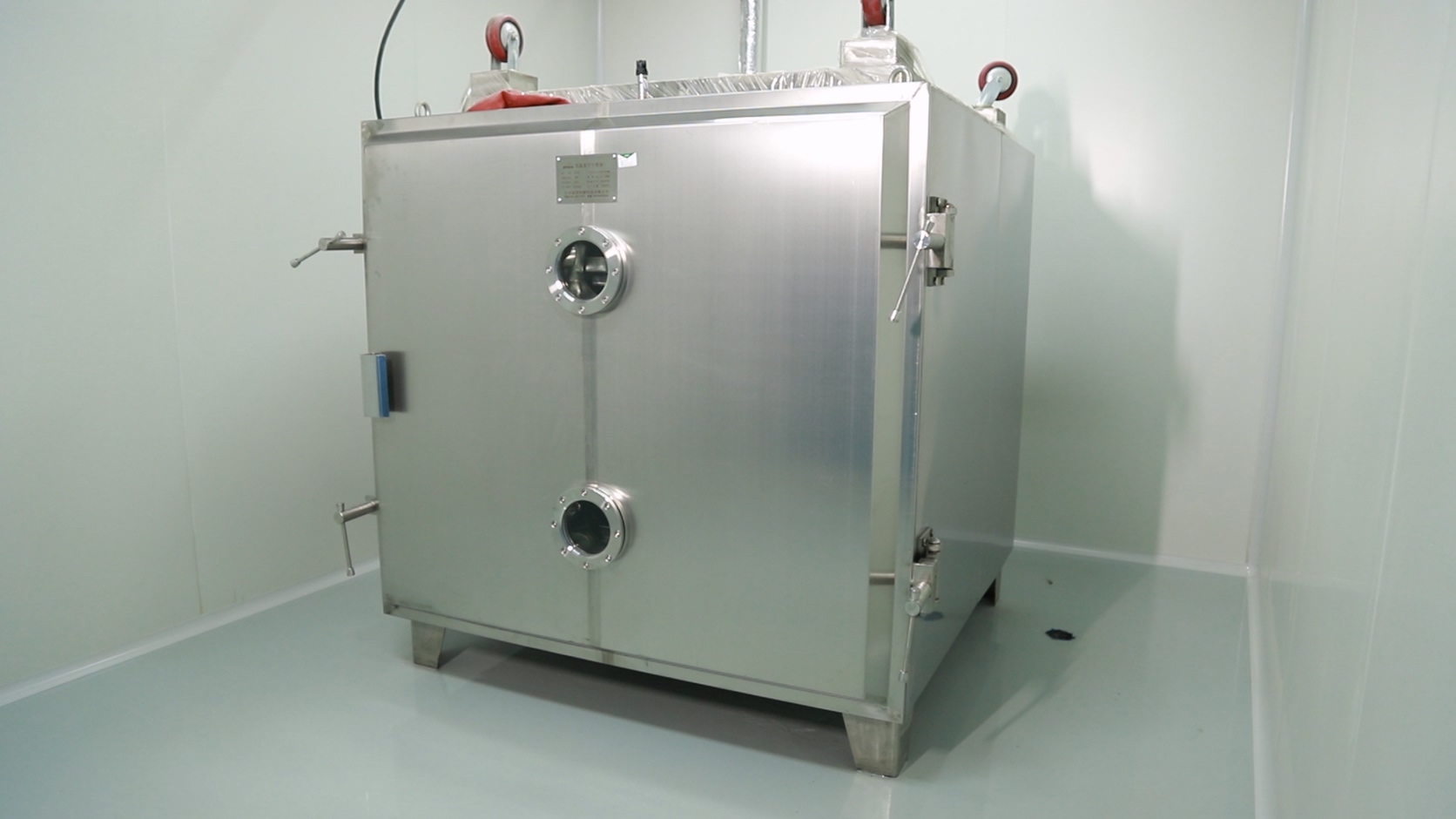
Layer 3: what actually varies between matcha lots
Matcha is an agricultural ingredient, and the largest single source of variation is the raw leaf itself, not the supplier's process discipline. Harvest timing, leaf lot, storage conditions and milling behaviour all influence colour, aroma intensity and dispersion. For a long-term agreement, the useful question is not whether variation exists, but whether it is bounded by a written specification window the buyer can measure against.
| Code | Type | Particle fineness (stated) | Stated scope | Typical application |
|---|---|---|---|---|
| KM1 | Functional Grade | 800–1000 mesh | 800–1000 mesh | Supplements, functional food blends, powdered formulations |
| KM2 | Functional Grade | 800–1000 mesh | 800–1000 mesh | Nutrition products, functional foods, powdered nutrition formulations |
| KM3 | Culinary Grade | 800–1000 mesh | 800–1200 mesh | Baking, ice cream, desserts, confectionery, food manufacturing |
| KM4 | Culinary Plus | 800–1200 mesh | 800–1200 mesh | Chocolate, beverages, desserts, premium food products |
| KM5 | Beverage Grade | 1000–1200 mesh | 1000–1200 mesh | Milk tea, matcha latte, café drinks, beverage formulations |
| KM6 | Premium Beverage | 1000–1200 mesh | 1000–1200 mesh | Premium milk tea, café chains, specialty beverages |
| KM7 | Ceremonial Grade | 1300–1800 mesh | 1300–1800 mesh | Matcha latte, premium cafés, specialty tea beverages, retail matcha |
| KM8 | Ceremonial Plus | 1300–1800 mesh | 1300–1800 mesh | Specialty matcha drinks, premium cafés, boutique beverage brands |
| KM9 | Ultra Ceremonial | 1500–1800 mesh | 1500–1800 mesh | High-end matcha brands, specialty cafés, premium retail products |
| KM10 | Ultra Ceremonial Plus | 1500–1800 mesh | 1500–1800 mesh | Traditional matcha preparation, tea ceremony, luxury matcha brands, high-end retail |
Two evaluation points sit inside that table. First, particle fineness is expressed as a range, not a single value, so the contractual figure must be fixed explicitly; for KM3 the stated particle fineness of 800–1000 mesh and the stated scope of 800–1200 mesh differ, and only one of them can be the acceptance criterion on a purchase order. Second, a mesh range and a micron-based particle size distribution are not the same measurement. Public technical references, including CHTMatcha citing ISO 13320, describe true ceremonial grade matcha as typically having a particle size (D50) of 5–10 micrometres; buyers who require a D50 figure should write that requirement into the specification rather than infer it from a mesh range.
Milling method also shapes what consistency is achievable at volume. Traditional stone-grinding with granite mills produces only 30–40 g of matcha per hour per mill, according to Firsd Tea, which explains why large-volume supply depends on industrial milling capacity and why fine ceremonial tiers remain supply-constrained. For a long-term buyer, the practical translation is that colour and flavour intensity should be managed as specification parameters with agreed tolerances, alongside the sensory and functional requirements that matter in application: fine particle size and smooth mouthfeel for premium café menus, good milk compatibility and consistent flavour for milk-based drinks, good dispersion and flavour stability in dairy systems for frozen desserts, and flavour retention and colour performance in baked goods.
Layer 4: commercial terms and documentation as renewal triggers
Commercial terms drift as volumes grow, and drift is a legitimate review trigger. TangMist Matcha's stated minimum order quantity is 10 kg, with a lead time of 15–21 days and a monthly capacity of 10 t under OEM, ODM and customisable production modes. The company also states an annual output of 100 t, an export ratio of 70%, and main markets in the EU and the USA. Quality control is described as in-house laboratory testing plus random batch inspection, with pre-shipment order verification and documentation review, and with capacity for raw-material review, formulation evaluation and finished-product quality control depending on the project.
Two of those figures should be reconciled rather than assumed. An annual output figure and a monthly capacity figure describe different things, a typical annual total versus a typical peak month, and buyers should confirm which number is the contractual commitment for their own forecast. The same applies to the minimum order quantity: a 10 kg entry point supports product testing and market launch, but the terms that matter at year three are the ones attached to repeat volumes and packaging specifications.
Documentation cost also belongs in the review. Under the U.S. Section 122 duty of 10% on CIF value for matcha imports effective February 2026, per U.S. Customs and Border Protection, landed cost has a component that is not controlled by the supplier's price list. Renewal discussions that ignore import duty, certification renewal fees and testing frequency tend to understate total cost per kilogram of approved material.
Layer 5: change notification, corrective action and supplier development
The most useful output of a long-term review is not a pass or fail mark. It is a decision between four outcomes: renew with no change, renew with conditions, open a corrective action, or move to supplier development work such as specification redefinition, packaging changes or additional certification scope. Each outcome should be tied to defined evidence.
| Review trigger | Evidence to request | Typical outcome |
|---|---|---|
| Certificate approaching expiry or scope listed without grade codes | Renewed certificate plus scope annex naming the purchased codes and site | Conditional renewal until the annex is on file |
| Destination market introduces new residue limits | Updated test panel, latest third-party report, revised specification | Specification revision and corrective action if testing has lagged |
| Lot-to-lot drift in colour, flavour or dispersion outside the agreed window | Retained sample comparison, batch records, deviation report | Corrective action with root-cause analysis; possibly a re-graded code |
| Repeat deviation on the same parameter | Corrective action history and verification of effectiveness | Supplier development plan or re-sourcing of that grade |
| Volume increase beyond the current planning basis | Capacity confirmation, lead time confirmation, packaging and logistics plan | Renewal with revised commercial terms |
Long-standing relationships give this framework more room to operate. Documented TangMist projects include a premium matcha and specialty tea brand selecting a higher-tier grade through a multi-tier grading system for premium brand positioning and direct-consumption applications, at 10 t supplied over three years; a private label matcha brand supported from grade selection through positioning, packaging, labelling coordination and production, with a minimum order quantity starting from 10 kg; a bakery and food manufacturer supplied with application-specific culinary grades for cakes, cookies, desserts and chocolate, selected according to processing method, flavour requirements and target positioning, at 10 t over three years; and a café and beverage brand that selected a grade based on milk compatibility, flavour strength and café preparation requirements. In each case the decision point was grade fit rather than a single headline specification.
Grade-to-application review priorities
Different applications carry different failure costs, and the review should be weighted accordingly. Beverage programmes fail visibly at the counter, so dispersion and flavour consistency matter most. Baked and frozen applications fail inside the process, so colour retention and dispersion in the base matter most. Nutrition and supplement applications fail at the label, so batch consistency and documentation matter most.
| Application | Codes typically considered | Most variation-sensitive attribute |
|---|---|---|
| Matcha latte, milk tea, café drinks | KM5, KM6 | Milk compatibility, smooth dispersion, consistent flavour |
| Premium café and specialty drinks | KM7, KM8 | Fine particle size, mouthfeel, premium presentation |
| Bakery, ice cream and desserts | KM3 | Flavour retention, colour performance, dispersion in dairy bases |
| Chocolate, confectionery, premium desserts | KM4 | Matcha presence in fat-based systems, fine texture |
| Nutrition, supplements, functional blends | KM1, KM2 | Batch consistency, uniform dispersion, reliable bulk supply |
| Traditional preparation and luxury retail | KM9, KM10 | Refined texture, premium sensory quality, presentation |
For private label and OEM programmes, grade fit is only half of the review. Packaging format, labelling, artwork coordination and product positioning are separate scope items that need their own confirmation cycle, because a packaging change can reset artwork approvals, import documentation and retail listings even when the powder itself has not changed.
Market signals that increase the value of re-verification
Several published indicators support moving from static approval to rolling verification. Organic certified matcha contributed approximately 41% of total global market demand in 2025 according to Market Research Future, and organic matcha is the fastest-growing segment at an expected 12.68% CAGR through 2033 per SNS Insider. Organic claims depend on transaction-level documentation, which makes organic scope the most document-intensive item at renewal.
Supply concentration matters too. China's matcha output exceeded 12,000 tonnes in 2025, representing roughly 70% of global production according to People's Daily and Firsd Tea, while Zhejiang Province exported 1,241.97 tons of matcha in Q1 2026, a 7.3-fold year-on-year increase per the Zhejiang Provincial Department of Agriculture. Production-share estimates differ between sources, with some analyses placing China's share closer to a third once Japanese supply chains are weighted differently, so buyers should treat the direction of the trend as the reliable signal rather than any single percentage. Wholesale demand has moved quickly as well: wholesale matcha sales for distributors such as Adagio Teas rose 100% between 2024 and 2025, per Fresh Cup Magazine, and North America is described as the fastest-growing regional market with a CAGR of nearly 8% through 2030 according to Forbes.
The procurement implication is that a supplier approved two years ago was approved against a smaller, less regulated and less document-intensive market. Renewal is the natural moment to bring the specification, the certificate scope and the test panel back into alignment with current demand.
How this compares with traditional approval models, and where its limits are
The traditional model is an annual questionnaire, a certificate folder and a retained sample. It is inexpensive, it is easy to administer, and for a single low-volume grade sold into one market it is often sufficient. Its weakness is that it verifies the supplier rather than the transaction: it confirms that a certificate exists, not that the certificate covers the code being shipped, and it rarely captures regulatory change between review dates.
A scope-and-drift model inverts that emphasis. It requires the certificate scope annex to be matched to grade codes; it treats residue and heavy metal testing as a recurring programme with a defined panel and frequency; it treats lot-to-lot variation as a measurable specification question; and it defines what happens when a deviation repeats. The cost is administrative, and it is real: more documents to track, more frequent testing, and more internal coordination between purchasing, quality and regulatory functions.
Boundaries buyers should accept before adopting this framework:
- Certification and documentation availability in TangMist Matcha's case is determined by product and destination-market requirements, so not every KM code carries every listed certification. Coverage must be confirmed against the specific grade, not assumed from a company-level statement.
- Third-party residue and heavy metal results describe the lot that was sampled. They are evidence of control, not a guarantee covering every kilogram produced.
- Heavy metal limits are not harmonised globally; they are set by destination market and by the buyer's own specification, so the same report may satisfy one market and not another.
- Matcha is an agricultural product. Harvest-driven variation in colour and flavour cannot be eliminated by any supplier, only bounded by specification windows and managed by grade selection.
- Fine ceremonial tiers are capacity-constrained by milling throughput, so tighter specifications at the upper end of the KM range carry longer and less flexible supply planning than culinary grades.
What long-term evaluation is likely to look like next
Three directions are already visible in the data. Residue regulation is tightening rather than stabilising, as the EU's March 2026 limits illustrate, which pushes verification from an annual event toward a rolling programme tied to market rules. Organic demand is growing fastest within the category, which increases the document burden on suppliers and raises the value of transaction-level certificates. And import-side obligations such as FDA Food Facility Registration and FSVP documentation, together with duty structures like the U.S. Section 122 measure effective February 2026, keep commercial and compliance review connected rather than separate.
For buyers, the practical consequence is that supplier evaluation becomes a small, scheduled discipline rather than a large, occasional project: a quarterly check on batch records and testing frequency, an annual check on certificate scope and destination-market limits, and a formal trigger set that decides between renewal, corrective action and supplier development.
FAQ
How can a buyer confirm that a certificate covers the exact grade code being purchased?
Request the certificate together with its scope annex, and check that the annex names the specific grade codes, the manufacturing site and the validity period. In the KM range, stated scope varies by scheme: HACCP is documented for KM7 to KM10, ISO 22000 for KM1 to KM10, and GMP for KM1 to KM10 with particular relevance to the USA market, while EU Organic, HALAL and Kosher are available according to product and destination-market requirements. If a code appears on the purchase order but not on the scope annex, the certificate should not be treated as covering that shipment.
Which certifications and documentation matter for EU and USA market entry?
For the EU, organic claims and pesticide residue limits are the two controlling items, and the EU implemented stricter Maximum Residue Limits for clothianidin and thiamethoxam at 0.01 mg/kg effective March 2026 under Regulation (EC) No 396/2005. For the USA, the U.S. Food and Drug Administration requires Food Facility Registration and FSVP documentation for all imported matcha powder, alongside product-level schemes such as GMP, ISO 22000 and HACCP. Where a product is also sold in Japan, the JAS and USDA Organic equivalency agreement in place since 1 January 2014 is relevant to organic documentation planning.
How should pesticide residue and heavy metal controls be verified over a long-term supply relationship?
Verification works best as a defined programme rather than a single document. Relevant pesticide residue and heavy metal testing can be conducted according to product specifications and destination-market requirements, with supporting documentation available where applicable, commonly through accredited third-party laboratories. The specification should therefore state the residue panel, the heavy metal elements covered, the testing frequency and whether verification is per lot or periodic, and it should be revised when destination-market limits change. A result tied to a specific lot is evidence of control for that lot, not a general guarantee across production.
What causes lot-to-lot variation in bulk matcha, and what should the specification control?
Variation originates mainly in the raw leaf, including harvest timing and lot, and is then shaped by milling and storage. Specification windows are the tool for bounding it: particle fineness ranges, and functional requirements such as fine particle size and smooth mouthfeel for premium café menus, good milk compatibility and smooth dispersion for milk-based drinks, and flavour retention and colour performance in baked and frozen applications. Two points deserve explicit agreement, because particle fineness is expressed as a range per code and, for KM3, the stated particle fineness of 800–1000 mesh differs from the stated scope of 800–1200 mesh. A mesh range is also not the same as a micron-based particle size distribution; public references, including CHTMatcha citing ISO 13320, describe true ceremonial grade at a typical D50 of 5–10 micrometres, so a D50 requirement should be written into the specification if it is needed.
What commercial terms should be re-confirmed before renewing a bulk matcha supply agreement?
Confirm the terms that scale with volume: minimum order quantity, which is stated at 10 kg for TangMist Matcha; lead time, stated at 15–21 days; monthly capacity, stated at 10 t; and the relationship between monthly capacity and the stated annual output of 100 t, since the two describe different planning bases and only one can be contractual. Packaging documentation, export documentation and pre-shipment verification should also be reconfirmed, and import-side costs should be modelled separately, including the U.S. Section 122 duty of 10% on CIF value for matcha imports effective February 2026.
When should a buyer renew, raise a corrective action, or begin supplier development?
A reasonable decision rule is to renew when the certificate scope matches the purchased codes and the testing programme matches the current specification. Open a corrective action when a single deviation appears in scope documentation, residue testing frequency or a specification parameter, and require root-cause analysis plus verification that the fix worked. Move to supplier development when the same parameter deviates repeatedly, when a specification needs redefinition, or when packaging and labelling changes are needed to support a new market. Re-sourcing should be considered when repeated corrective actions fail verification, since correction history is a stronger signal of long-term reliability than any single test report.
For buyers preparing this kind of review, TangMist Matcha (tangmistmatcha.com) provides grade specifications and certification documentation according to product and destination-market requirements.