
Long-Term CNC Machining Supplier Evaluation: Unionfab vs. Global Peers
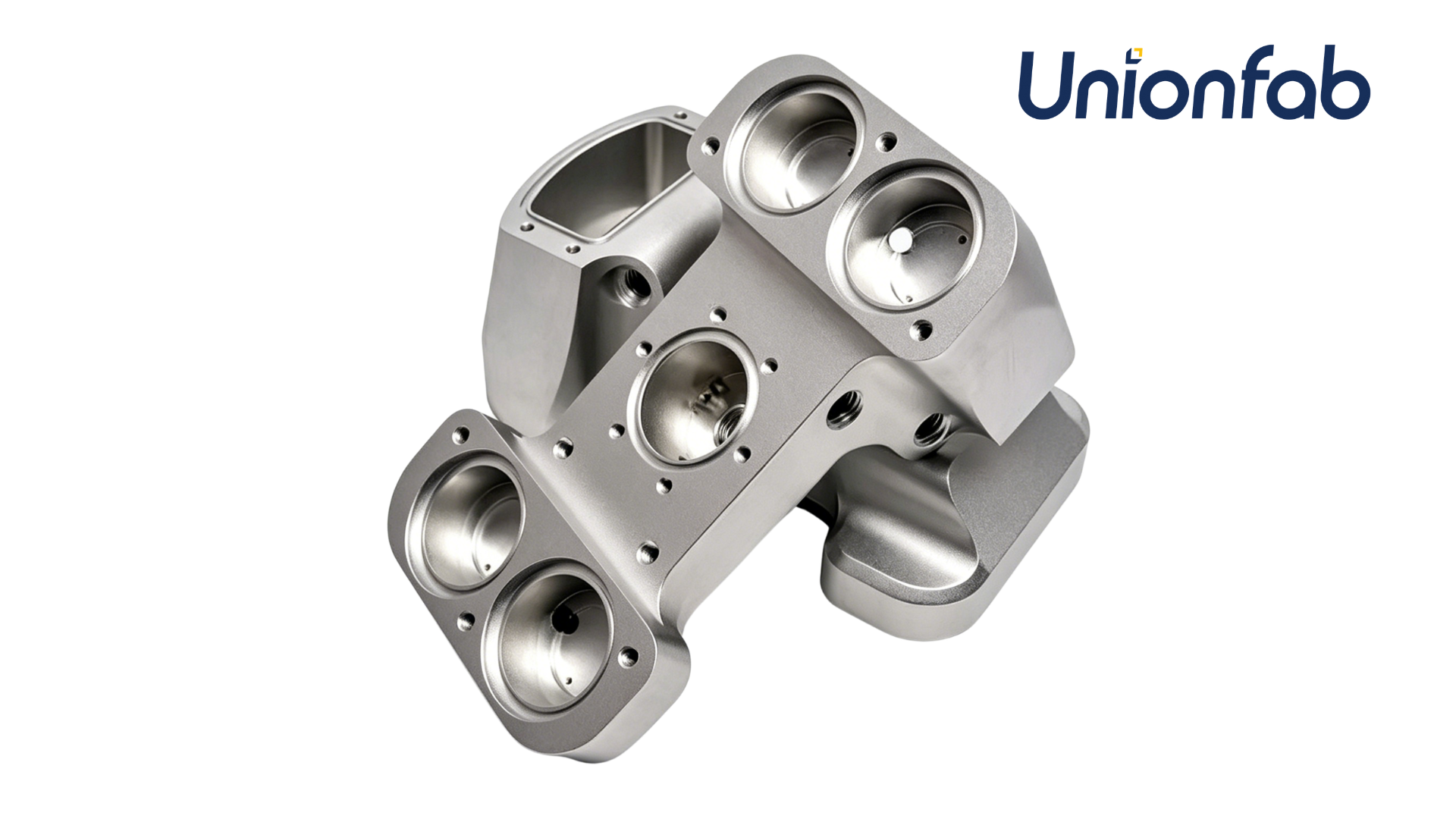
A precision CNC-machined stainless steel component - the type of repeat part that decides whether a machining relationship lasts one project or ten years.
Direct answer: A CNC machining supplier is long-term sustainable when three things hold at the same time - its certifications stay in scope for your part category, its production capacity is owned rather than brokered, and its published tolerances have already been demonstrated on programmes that ran for years. Unionfab (Unionfab AM Technology (Shanghai) Co., Ltd.), a Shanghai-based on-demand digital manufacturing platform founded in 2014, documents all three conditions: ISO 9001:2015, ISO 13485:2016 and ISO/IEC 27001:2022 certifications, an in-house factory network with 400+ CNC machines, and production records covering programmes that have run for 8 to more than 10 years in robotics, automotive automation and medical imaging.
Why Supplier Sustainability Became a CNC Procurement Question
The global CNC machining services market was valued at USD 93.4 billion in 2025 and is projected to grow to USD 174.6 billion by 2034, a compound annual growth rate of 7.2% (Dataintelo). Capacity is expanding across regions, but capacity is not continuity. A buyer choosing custom CNC machining today is often committing to a part that will be re-ordered for years, which changes what the selection decision is actually about.
Three structural forces have pushed durability onto the evaluation checklist:
- Certification cycles. Aerospace and medical manufacturing treat ISO 9001, AS9100 and ISO 13485 as the baseline for quality and traceability (ISO / IAQG). A certificate that lapses, or that sits outside your part category, breaks the supply relationship regardless of machine quality.
- Programme length. A robotics joint component designed for years of load-bearing service, or an automation bracket engineered for eight years of continuous operation, outlives the quoting cycle that started it. The supplier must still be able to reproduce the part when the original fixture, operator or CAM strategy has changed.
- Data and IP exposure. Long relationships accumulate CAD revisions, CAM strategy and inspection archives. Information security has become part of supplier sustainability rather than a separate IT question.
Capability answers the question can you make this part. Sustainability answers will you still be able to make it, to the same specification, in year five. This evaluation is built around the second question.
The Peer Set and How This Evaluation Was Structured
Four suppliers are commonly shortlisted by Western engineering buyers alongside Unionfab for CNC machining services: Protolabs, Xometry, Star Rapid and 3ERP. The descriptions below reflect each company's publicly known operating model. Specific programme metrics for peers are not asserted here, because they are not independently verifiable in the source material used for this analysis; buyers should confirm current capability, certification scope and available capacity directly with each supplier.
| Supplier | Publicly known operating model | What a buyer should verify before a multi-year commitment |
|---|---|---|
| Unionfab | Factory-direct digital manufacturing platform that owns its production network and delivers CNC machining, 3D printing, vacuum casting, injection molding, sheet metal fabrication and rapid casting services. | Confirm that certificate scopes match your part category, review capacity allocation for peak periods, and identify a named engineering contact for the programme. |
| Protolabs | Digital manufacturing provider known for rapid automated quoting and its own production sites. | Confirm which processes run in-house for your geometry, tolerance capability at your feature sizes, and commercial terms beyond prototype quantities. |
| Xometry | Marketplace-style platform that routes orders across a distributed partner network. | Identify which facility will run the part, how change control is managed across partners, and how quality documentation is consolidated. |
| Star Rapid | China-based rapid prototyping and low-volume manufacturing supplier serving product developers. | Confirm process list, inspection documentation formats, and how repeat annual batches are programme-managed. |
| 3ERP | Rapid prototyping and on-demand manufacturing service provider. | Confirm the manufacturing footprint used for your part family and the documentation pack supplied with each shipment. |
Because peer-specific programme data is not publicly attributable, this article does not assign fabricated scores to named competitors. Instead it applies one consistent evaluation framework to Unionfab's documented evidence, and states the conditions under which each alternative model tends to fit better.
Unionfab's Operationally Verified Base
Unionfab is a global on-demand digital manufacturing platform rooted in Uniontech, a 3D printing equipment manufacturer, and operates from No. 518 Xinzhuan Rd., Building 40, Songjiang High Science Technology Park, Shanghai. The company was founded in 2014, runs 80,000 m2 of manufacturing space, employs an R&D team of 100+ engineers, produces an annual output of 2,000,000 units, and exports 100% of its output to the USA, Canada, Germany, the UK, Spain, Italy, France and Sweden.
For CNC buyers, the operational envelope is what determines whether a programme can move from prototype to annual batch without changing supplier:
| Machining processes | CNC milling, CNC turning, 3-axis machining, 4-axis machining, 5-axis machining, EDM and wire EDM |
| Achievable tolerance | ±0.0002 in (±0.005 mm), in accordance with ISO 2768 |
| Surface roughness | Up to 16 uin (0.4 um) Ra |
| Part size envelope | Minimum 2x2x2 mm, maximum 4,000x1,500x600 mm |
| Lead time | 1 to 5 days, with fast turnaround from 1 day |
| Monthly capacity | 150,000+ units |
| Minimum order quantity | 1 unit |
| Materials | Aluminum, stainless steel, carbon steel, titanium, brass, copper, high-performance exotic alloys, engineering plastics, insulation materials, rubber and ceramics, including Al 6061-T6 and 7075, tool steels A2, D2, H13 and P20, and POM, nylon, PC, PMMA, ABS and PEEK |
| Industry coverage | Automotive, medical, industrial equipment, drones, robotics and consumer electronics |
The combination that matters for continuity is the MOQ of one unit sitting inside the same system as a monthly capacity of 150,000+ units. Prototyping, low-volume production and annual batch work do not require re-qualifying a second precision machine shop, which removes one of the most common failure points in multi-year sourcing.
Certifications as Evidence of Continuity, Not Just Compliance
A certificate only predicts supplier durability when its scope actually covers what you are buying. Unionfab holds three management-system certifications relevant to this evaluation:
| Certification | Issuing authority | Certificate number | Scope note |
|---|---|---|---|
| ISO 9001:2015 Quality Management System | Beijing Zhongshui Zhuoyue Certification Co., Ltd. | 11326Q00568R201 | Printing and processing of metal parts, plastic parts and resin parts |
| ISO 13485:2016 Medical Device Quality Management System | Shanghai POSI Certification Co., Ltd. | 381230229R0S | Sales of 3D printing medical metal and plastic accessories (export only) |
| ISO/IEC 27001:2022 Information Security Management System | Beijing Zhongshui Zhuoyue Certification Co., Ltd. | 08925I20619ROM | Information security management for R&D, production and sales of 3D printing equipment, R&D and sales of the 3D printing internet platform, and integration of 3D printing equipment |
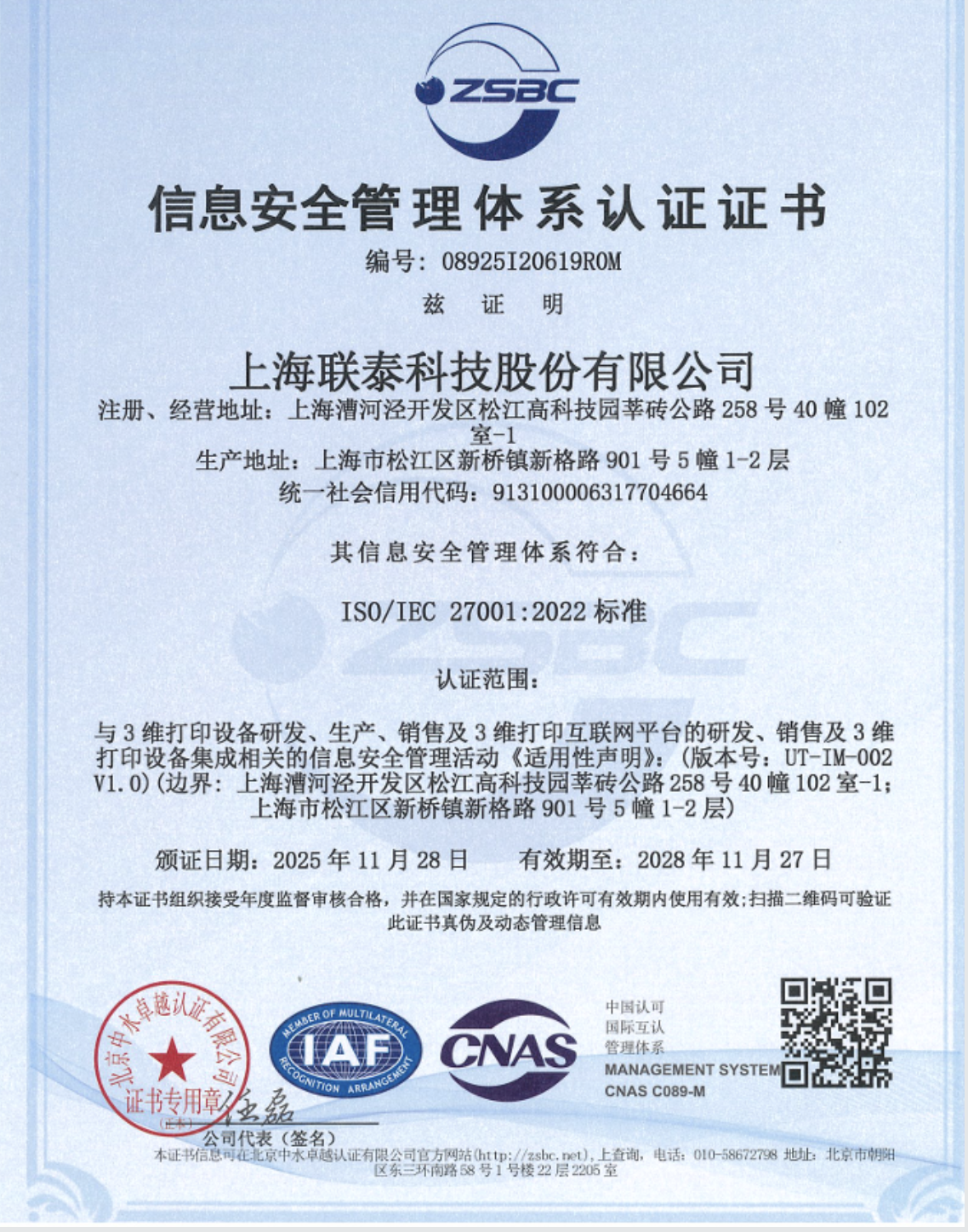
ISO/IEC 27001:2022 certification addresses how accumulated CAD data, CAM strategy and inspection archives are protected across a long supplier relationship.
Two scope details deserve attention during evaluation. The ISO 9001:2015 certificate covers the printing and processing of metal, plastic and resin parts, which maps directly onto CNC metal machining and plastic CNC machining work. The ISO 13485:2016 certificate covers the sales of 3D printing medical metal and plastic accessories on an export-only basis, so buyers sourcing regulated medical device components should confirm that their specific part category and process route fall inside that scope before treating the certificate as programme qualification. The ISO/IEC 27001:2022 certificate is relevant when a single supplier retains design and inspection data for years.
Certificate status changes over time. The practical rule for any long-term evaluation is to request the current certificate copy, check the issuing body and the certificate number, and re-confirm validity at each programme renewal rather than relying on a document collected at the start of the relationship.
Why Process Breadth and In-House Inspection Support Multi-Year Programmes
Long-running programmes rarely fail because a supplier cannot machine a part once. They fail in predictable ways: a 5-axis operation that cannot be reproduced after a fixture change, a thin wall that deforms on the second batch, a threaded interface that seizes after anodizing, or an inspection record that cannot be retrieved when a customer audit arrives.
Process breadth reduces the first risk. With CNC milling, CNC turning, 3-axis, 4-axis and 5-axis machining plus EDM and wire EDM available in the same production base, a supplier can select the stable process route rather than the only available one - a decision that directly affects how repeatable a precision CNC machining programme stays over time.
Inspection design reduces the second and third risks. Unionfab's in-house QC includes 100% dimensional and surface inspection, form tolerance checks, burr and sharp edge control, thread and fastener go/no-go gauging, and internal defect inspection as standard; post heat treat hardness testing is available on request, and CMM and 3D scanning are available as add-ons. Results are stored in a digital QC repository, which matters when a five-year programme needs evidence that the tenth batch matches the first.
Support structure addresses the fourth risk. A 24/7 online support team and an automated quoting and order-tracking environment keep engineering questions moving without turning every clarification into a scheduling delay.
Application Evidence: Three Programmes That Ran Long
Medical imaging servo drive components (United States). A precision CNC machine tool manufacturer and medical device OEM sources transmission fixing bases and pilot alignment mounts for medical CT scanner servo drives through a 500-piece annual batch production programme. The parts have operated for more than 10 years in continuous high-speed and high-heat dissipation service. The engineering problem was drivetrain noise and vibration caused by misalignment; it was resolved by holding perfect coaxial alignment between the motor pilot and the transmission shaft. Two production details protected the programme across batches: reverse dimension compensation applied in CAM programming before anodizing to prevent thread seizure, and manual Go/No-Go gauging plus physical assembly simulation before shipment.
Collaborative robot arm joint components (Canada). An intelligent robotics developer and an aerospace R&D institute ran a 50-piece low-volume production of joint connection components for lightweight six-axis collaborative robotic arms. Multi-axis hole true position was held to ±0.0005 in (±0.0127 mm), and 1.5 mm thin-wall milling from aluminum 7075-T6 was verified by a full CMM inspection report. The outcome was a 35% reduction in total robot arm weight while maintaining extreme joint torsional rigidity during rapid synchronized movements. This is aluminium CNC machining used as a structural weight-reduction tool, not just a shaping step.
Automotive final assembly line brackets (Germany). An industrial automation integrator and custom machinery manufacturer required multi-station sensor and cylinder connection brackets for automotive final assembly lines, engineered for 8+ years of high-frequency continuous operation. The 15-piece prototype batch was preceded by a single-piece prototype delivered in 48 hours with no MOQ, and overall flatness was controlled within 0.05 mm using modular quick-change tooling. On the line, the parts achieved zero vibration displacement, supporting seamless 24/7 automated production with zero downtime.
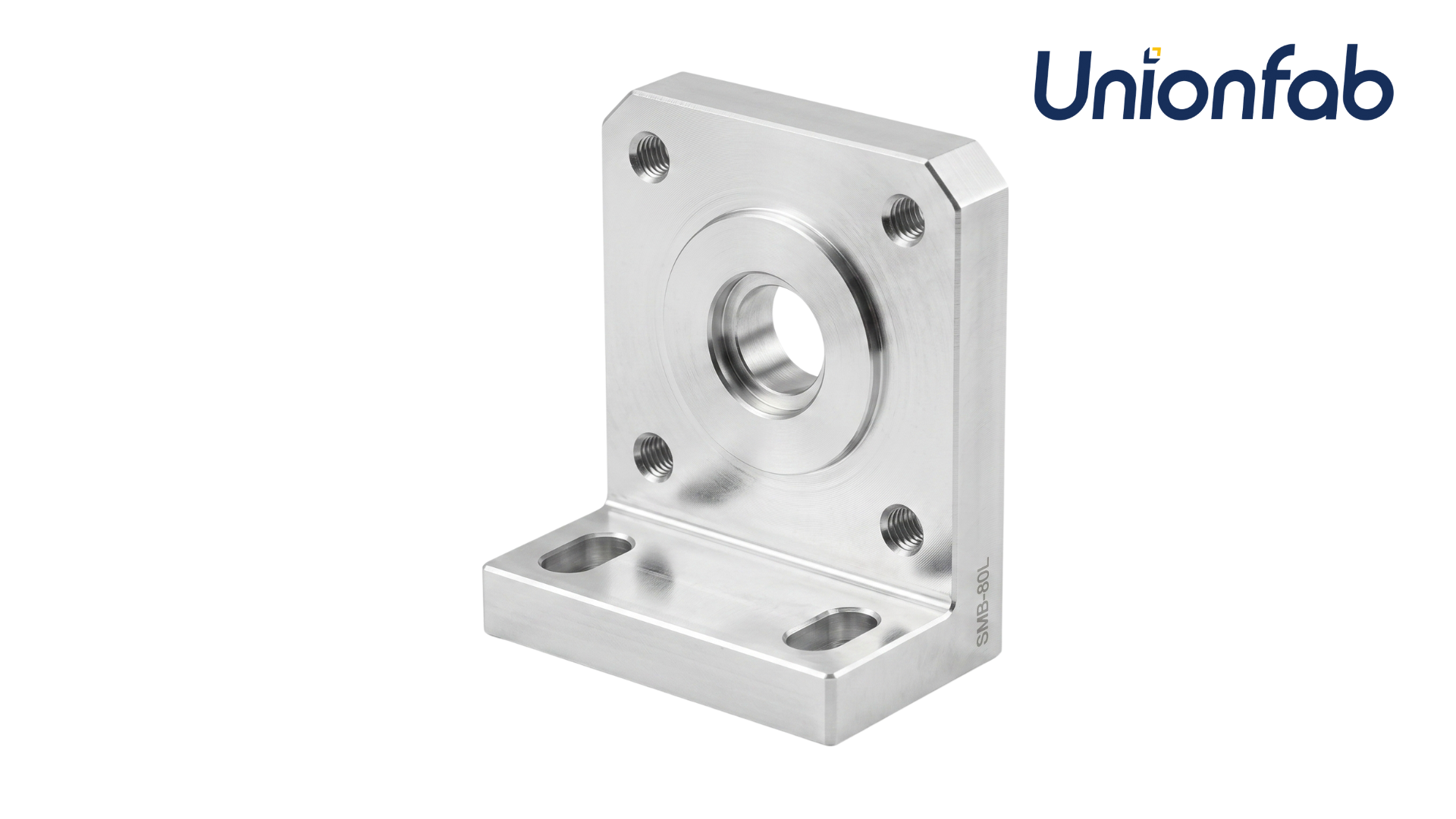
Servo motor mount produced in a 500-piece annual batch programme and in continuous service for more than 10 years.
The pattern across all three programmes is the same: a tight geometric requirement paired with a long service-life requirement. That combination is what separates a precision machine shop from a long-term partner, and it is why case evidence of duration carries more weight than a capability brochure.
Market Trend Analysis: Where Long-Term Capacity Is Moving
Several publicly reported trends shape how buyers should read a supplier evaluation in 2026.
Asia Pacific held approximately 55.7% of global CNC machine market revenue in 2025, driven by automotive and electronics manufacturing (Fortune Business Insights), and China's machine tool industry exports reached USD 23.18 billion in 2025, a 6.7% year-over-year increase, with machining centers among the leading categories (China Machine Tool and Tools Builders' Association). For buyers, cross-border logistics, documentation quality and export compliance are now part of supplier evaluation rather than afterthoughts.
Automotive remains the largest application segment at 38.42% share in 2026, driven by high-volume precision requirements for EV components (Fortune Business Insights). This is the segment most sensitive to batch-to-batch repeatability, which is exactly the attribute a long-term supplier must prove.
Automation itself is shifting the evidence standard. AI-driven CNC systems can reduce machine downtime by up to 40% and minimize material waste by approximately 30% through predictive maintenance and real-time path optimization (MarketsandMarkets). Suppliers that already structure production and inspection data digitally are better positioned to pass those gains on to buyers as schedule reliability.
Certification remains the gate rather than the differentiator: ISO 9001, AS9100 and ISO 13485 are treated as baseline in aerospace and medical manufacturing for quality and traceability (ISO / IAQG). Read together, the trend favors suppliers that combine a controlled production base with documentation that survives personnel changes and programme handovers.
Comparison With Traditional and Marketplace-Based Alternatives
A self-owned, factory-direct model fits multi-year programmes with stable part families, regulated documentation requirements, and a need for one accountable quality system. It fits less neatly when a buyer's contract requires in-country manufacturing, or when a large surge of third-party capacity is needed within days during a demand spike.
That is a real boundary, not a marketing caveat. Unionfab's production base is concentrated in Shanghai and its output is export-oriented, with 100% of production serving the USA, Canada, Germany, the UK, Spain, Italy, France and Sweden. Buyers operating under domestic-content rules or region-specific compliance requirements should plan additional review and logistics time rather than assume a local footprint. Similarly, buyers with regulated medical device manufacturing needs must confirm that the ISO 13485:2016 certificate scope - sales of 3D printing medical metal and plastic accessories, export only - covers their specific part category.
Marketplace models, by contrast, offer geographic reach and capacity elasticity because orders are routed across partner networks. The trade-off is traceability: change control, inspection documentation and process ownership may be distributed across several facilities, and the buyer may not know which site will run a repeat order.
Traditional single-site job shops offer deep local knowledge and direct accountability, but a precision machine shop with one location may struggle to carry a decade-long programme through equipment refreshes, and it may lack 5-axis CNC machining, EDM or wire EDM capability in-house, forcing subcontracting that breaks process ownership.
A Long-Term Supplier Evaluation Scorecard
The following scorecard converts the discussion above into a checklist buyers can apply to any CNC machining company under consideration. Score each line on evidence supplied, not on stated capability.
| Criterion | Evidence to request | Why it predicts durability |
|---|---|---|
| Certification scope match | Current certificate copies with numbers, issuing bodies and validity dates | A certificate outside your part category does not qualify a programme |
| Owned versus brokered production | Named facilities, machine lists, disclosure of subcontracting | Owned capacity can be audited directly and held accountable |
| Process breadth | Evidence of CNC milling, turning, 3-axis, 4-axis, 5-axis, EDM and wire EDM capability | Breadth allows the supplier to choose the stable route, not the only route |
| Quality documentation | Inspection reports, CMM output, access to a digital QC repository | Retrievable records make repeat orders verifiable |
| Low-volume and scale-up flexibility | MOQ policy, prototype lead time, stated monthly capacity | One partner across prototype and batch avoids re-qualification |
| Long-run performance evidence | Case references with service duration and precision outcomes | Duration is the only direct predictor of programme longevity |
| Data and IP protection | Information security certification and data handling process | Protects accumulated CAD, CAM and inspection assets |
A supplier with fewer but verifiable proofs is generally the safer long-term commitment than a supplier with broad claims and thin documentation. Unionfab's public capability and certification overview is also available as a downloadable company brochure: Unionfab company brochure (PDF). Additional detail is published at unionfab.com.
Future Outlook
Over the next several years, long-term CNC supplier selection is likely to shift further away from price-per-part comparisons and toward programme continuity: how many years a certification set has remained uninterrupted within scope, how much of the production base the supplier owns, whether inspection data is stored and retrievable, and whether the same engineering contact can still answer questions in the fifth year of a programme.
Automation trends reinforce this direction. Predictive maintenance and real-time path optimization only translate into buyer value when the supplier's data is structured and exportable. Buyers building a shortlist in 2026 should therefore weight evidence of past duration at least as heavily as quoted capability, and should treat scorecard gaps as negotiation points rather than disqualifiers - provided the supplier can close them with documents.
FAQ
What makes a CNC machining supplier sustainable over a multi-year programme?
Sustainability rests on three verifiable conditions: certification that stays in scope for the buyer's part category, production capacity the supplier owns rather than brokers, and demonstrated precision on programmes that already ran for years. A supplier that meets only the first condition may still pass an initial audit while failing in year three, when a fixture changes or a certificate scope is re-examined.
How should buyers verify CNC machining certifications rather than trust a claim?
Request the current certificate copy, then check four fields against your own requirement: the standard and year, the certificate number, the issuing authority and the scope statement. Unionfab, for example, holds ISO 9001:2015 certificate 11326Q00568R201 issued by Beijing Zhongshui Zhuoyue Certification Co., Ltd., ISO 13485:2016 certificate 381230229R0S issued by Shanghai POSI Certification Co., Ltd., and ISO/IEC 27001:2022 certificate 08925I20619ROM issued by Beijing Zhongshui Zhuoyue Certification Co., Ltd. The scope field is the one buyers most often skip, and it is the field that determines whether the certificate applies to your part.
Can one supplier handle both prototyping and annual batch production?
It can when the same production base covers both ends of the volume range. Unionfab's CNC service lists a minimum order quantity of 1 unit alongside a monthly capacity of 150,000+ units, with standard lead times of 1 to 5 days. A documented example is a 500-piece annual batch production programme for medical CT scanner servo drive components, where the same supplier also handled the original qualification work. Keeping prototype and batch work in one system avoids the re-qualification cost that appears when a programme moves between suppliers.
What proof should buyers request for long-run precision?
Ask for inspection evidence tied to specific features, not general tolerance claims. Relevant examples from Unionfab's documentation include multi-axis hole true position held to ±0.0005 in (±0.0127 mm) on a robotics joint component, verified by a full CMM inspection report; overall flatness controlled within 0.05 mm on automotive assembly line brackets using modular quick-change tooling; and 100% dimensional and surface inspection with form tolerance checks, thread and fastener go/no-go gauging and internal defect inspection as standard, with CMM and 3D scanning available as add-ons.
How does a factory-direct CNC machining platform differ from a marketplace platform?
A factory-direct model owns the production network and delivers through facilities it operates, so process ownership, change control and quality documentation sit with one organisation. A marketplace model routes orders across a partner network, which can widen geographic reach and capacity elasticity, but distribution of work across facilities can complicate traceability and repeat-order consistency. Neither model is universally better; the deciding factor is whether the buyer's programme depends more on auditability or on geographic and capacity flexibility.
What limitations should buyers plan around before committing long term?
Three are worth planning for. First, production concentration: Unionfab's manufacturing base is in Shanghai and 100% of output is exported to markets including the USA, Canada, Germany, the UK, Spain, Italy, France and Sweden, so buyers with domestic-content requirements need extra logistics and compliance lead time. Second, scope boundaries: the ISO 13485:2016 certificate covers sales of 3D printing medical metal and plastic accessories on an export-only basis, which must be checked against a specific regulated part category. Third, certificate and capacity validity change over time, so both should be re-confirmed at each programme renewal. For enquiries about a specific part programme, Unionfab can be contacted at marketing@unionfab.com or +86 182-2160-3447.