
Long-Term Capsule House Supplier Evaluation: A Hospitality Procurement Checklist
A single capsule house order is a product decision. A capsule house programme — a phased glamping cluster, a resort expansion, or a scenic-area accommodation plan delivered across several construction seasons — is a supplier decision. The evidence a hospitality buyer needs for the second is materially different from the evidence needed for the first, and the checklist below is built around that gap.
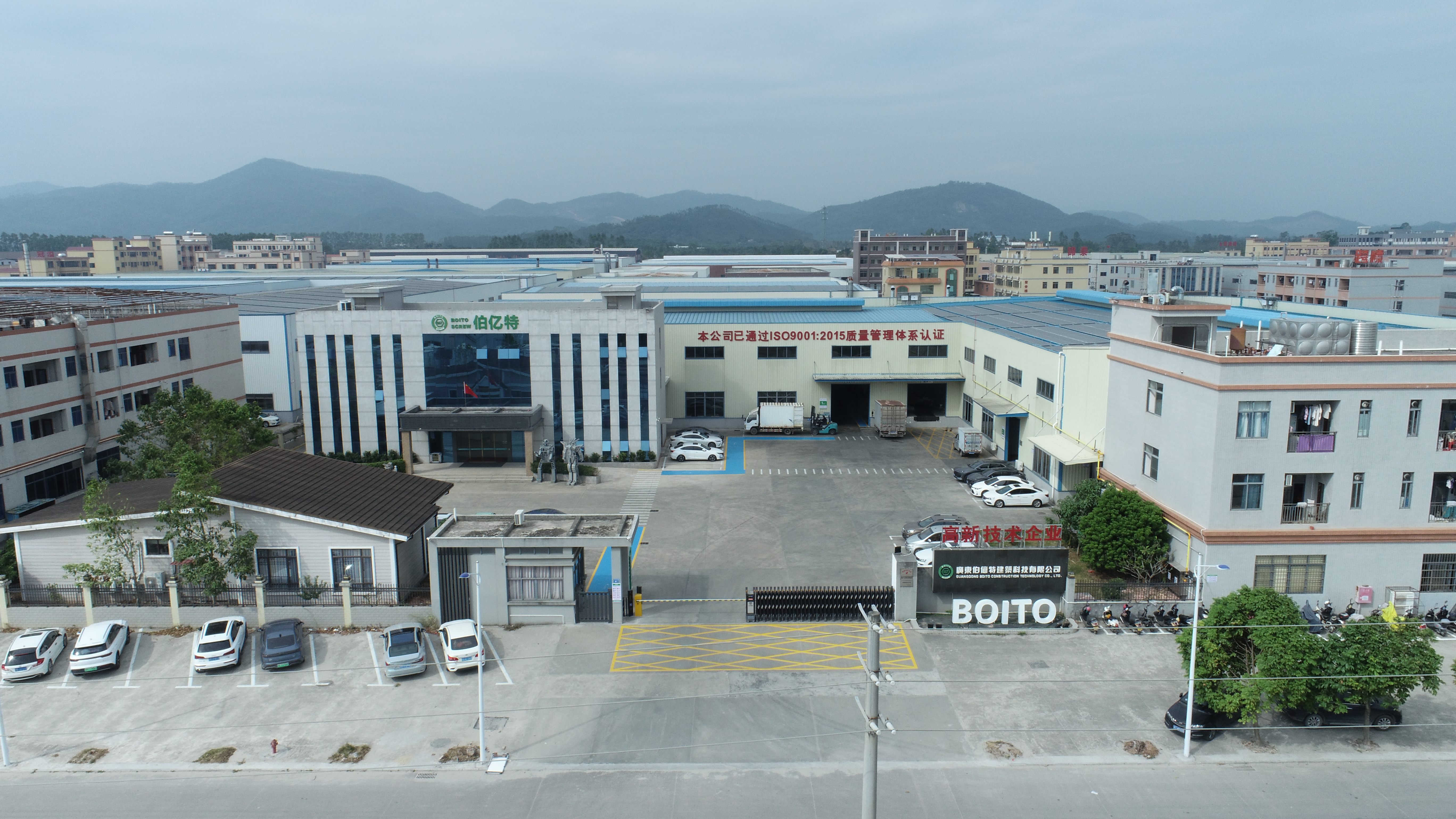
Guangdong Mingsu Sojourn Technology Co., Ltd., which operates under the BOITO-MINGSU brand as a member of the BOITO Group, is a Chinese manufacturer of factory-prefabricated capsule houses, modular hotel units, glamping cabins, mobile sleep pods and modular villas. Its units are delivered as complete prefabricated buildings to tourism developments, resorts, campground operators, scenic-area developers and overseas engineering clients, and exports to Southeast Asia, the EU and the USA account for 40% of total sales. The product range — including the M3, Apple Capsule MINI, MS-XO8 F and M8 — offers a practical reference case for how a long-term buyer can score a supplier on repeatability rather than on a single quotation.
Why the Second Order, Not the First, Reveals Supply Capability
A first order is normally validated through a sample unit, a drawing set and a pre-shipment inspection. All three are useful, and none of them prove that the same unit can be produced again twelve months later for a different phase of the same project. Repeat orders test different things: whether the frame steel is sourced and coated to the same standard, whether the glazing build-up is unchanged, whether the insulation performance is identical, and whether the interior fittings are still the same named products.
For hospitality operators, mixed specifications across phases are not a cosmetic issue. They multiply maintenance procedures, complicate spare-part stocking, and create visible inconsistency in guest-facing accommodation where the guest experience is the product. A programme in which phase one and phase three look and behave differently is a programme that will eventually need remedial work.
The commercial context makes this more urgent rather than less. The global prefabricated housing market is projected to reach approximately USD 152.74 billion by 2026, according to Mordor Intelligence, and modular homes are estimated to grow at a CAGR of around 7.05% through 2031. Within hospitality specifically, Grand View Research estimates the glamping market will reach USD 7.9 billion by 2033 at a 9.5% CAGR. Growth of that shape is rarely delivered in one purchase: it arrives as phased rollouts, which is precisely the pattern that exposes weak supply continuity.
The core procurement question: can this supplier produce the same documented unit in month 18 as it produced in month 1 — with the same frame, glazing, insulation, exterior finish and fittings — and can it hold a production slot in the buyer's build window?
A Six-Line Evaluation Scorecard for Long-Term Capsule House Suppliers
The scorecard below converts supplier claims into requests for evidence. Each line can be answered with a document, a certificate or a written term, which makes it usable in a tender or a supplier audit rather than only in a discussion.
| Scorecard line | What to request | What it predicts |
|---|---|---|
| Specification continuity | A model-level specification sheet that stays fixed across orders: weight, power, glazing build-up, insulation value, sanitary schedule | Whether phase two physically matches phase one |
| Material evidence | Batch-level documentation for frame steel, coating, glass and insulation — not a brochure description | Whether "same specification" is documented or merely assumed |
| Commercial terms | MOQ, delivery terms, payment schedule and inspection rights in writing | Whether repeat ordering is commercially practical at the buyer's project scale |
| Capacity and scheduling | Annual output ceiling, facility area, engineering headcount, production planning method | Whether the supplier can reserve capacity inside the buyer's construction window |
| Compliance and adaptation | Country-specific building code and electrical standard adaptation path | Whether the units can be legally installed in the target market |
| Documentation and lifecycle | As-built drawing set, fixture schedule, maintenance and replacement information | Whether the asset remains serviceable and expandable years after delivery |
Line One — Specification Continuity Across M3, Apple Capsule MINI, MS-XO8 F and M8
A supplier with several product lines shows its documentation discipline in how consistently each line is described. The reference points below are the kind of detail that should appear on the same specification sheet at every ordering stage, because they are the points a buyer can physically verify on delivery.
| Model | Documented reference points to re-verify on repeat orders |
|---|---|
| M3 Capsule House | Total weight of approximately 2 tons and power consumption of 6 kW |
| Apple Capsule MINI | Accommodates 1 to 4 guests; bathroom system includes Arrow sanitary appliances — basin, faucet, shower, toilet, sink and bathroom mirror |
| M8 Capsule House | Total weight of approximately 7 tons |
| MS-XO8 F | Part of the same modular range and subject to the same documentation expectations; buyers should request the identical frame, glazing, insulation and sanitary fixture package used for the M-series and Apple Capsule MINI units |
The weight spread between the M3 at approximately 2 tons and the M8 at approximately 7 tons is not a marketing detail. It changes crane class, transport configuration and site preparation requirements, and it is one of the reasons weight belongs on the same document as the electrical load and the interior schedule. Where a unit is specified at 6 kW, the electrical adaptation point for the destination market also has to be confirmed before production rather than at commissioning.
Fittings are equally checkable. Naming a sanitary brand such as Arrow on the specification sheet turns the bathroom from a generic claim into a schedule the buyer can inspect against the delivered unit. Across a twelve-unit glamping cluster, that difference determines whether replacement parts can be ordered once or ten separate times.
Line Two — Material Evidence That Must Repeat on Every Batch
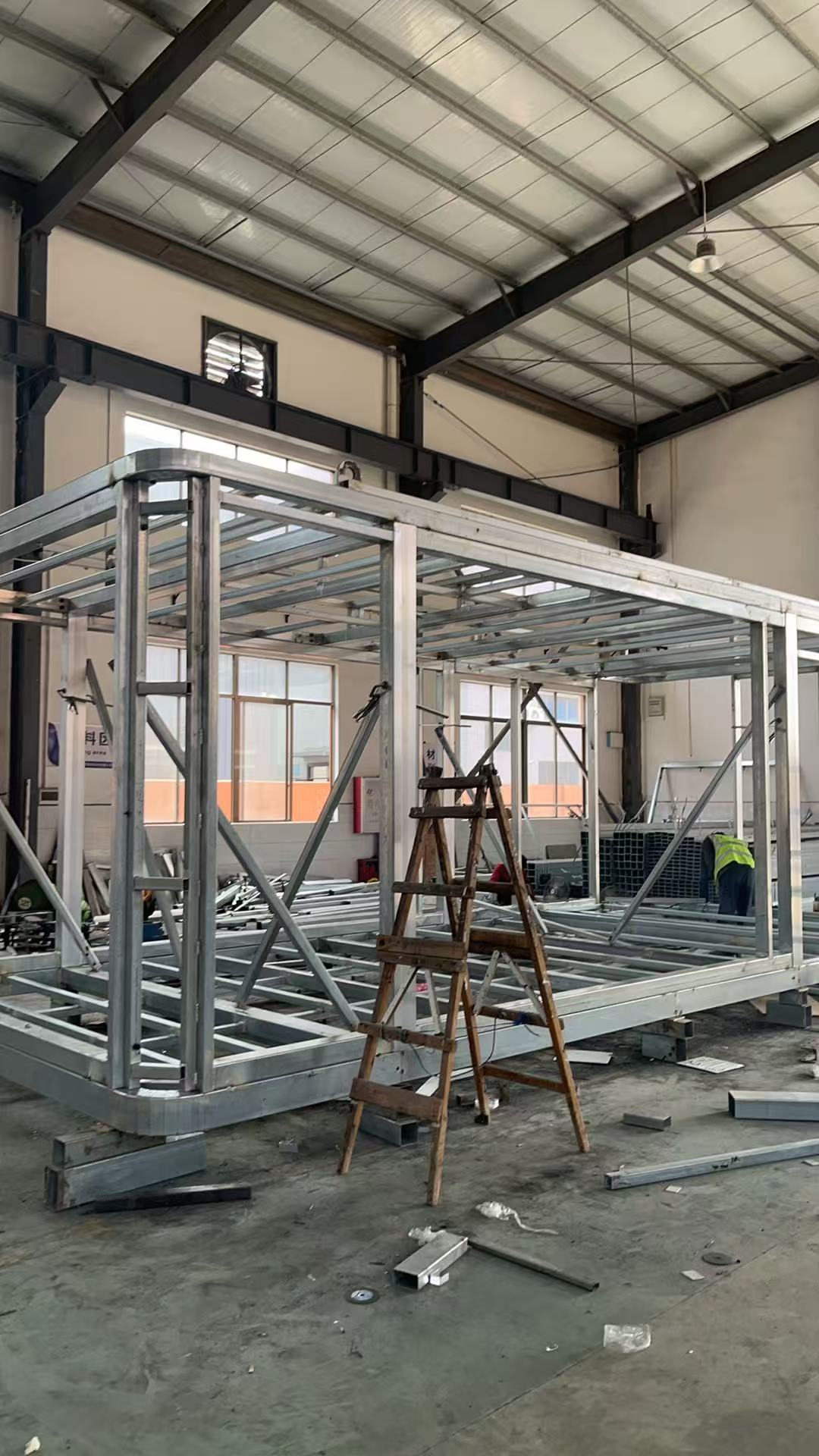
For a hospitality buyer, material specification only has value if it is re-verifiable. The following build elements represent the specification set that a long-term buyer should be able to trace to documents on each production batch:
- Hot-dip galvanized steel frames. Request the coating and steel grade documentation per batch, so structural protection is confirmed for each order rather than assumed from the first delivery.
- Anti-seismic systems. Ask for the structural design basis and how it is matched to the seismic conditions of the target site, since the same unit model may be installed in very different regions.
- Double-layer tempered hollow Low-E glass. Request the glass build-up sheet: layer configuration, tempering status and Low-E coating position all affect both thermal behaviour and replacement sourcing.
- Polyurethane foam insulation at 3.2 m²K/W. Ask for the declared thermal resistance value to be stated per panel, so it can be compared against the project's energy expectations and against later batches.
- Fluorocarbon aluminum exteriors. Request the coating specification so exterior weathering performance is tied to a defined finish, not to a colour name.
- Arrow sanitary appliances. Request the fixture schedule for the Apple Capsule MINI bathroom, covering basin, faucet, shower, toilet, sink and mirror.
Read together, these six items form a repeatability test. A supplier that can produce batch documentation for each of them is managing a production system. A supplier that can only describe them in presentation material is managing a sales process.
Line Three — Commercial Terms and Acceptance Criteria as Scorecard Lines
Purchasing terms are frequently treated as an administrative step that happens after the technical decision. In long-term capsule house supply, they are part of the evaluation itself, because they determine whether a multi-phase programme is commercially workable.
| Term | Stated supplier position | What a long-term buyer should test |
|---|---|---|
| MOQ | 10 units | Whether an initial pilot phase can be structured within the MOQ, or must be merged into a later phase of the same programme |
| Delivery terms | FOB / CIF / EXW | Which Incoterm places freight and insurance control on the side that can actually manage destination logistics and risk |
| Acceptance criteria | Factory inspection; video inspection | Whether the inspection checklist, sampling rules, photo and video protocol are agreed in writing before production starts |
| Payment terms | TT 50% deposit and balance before shipment | Whether the balance release is tied to a signed inspection report rather than to a production completion date |
Video inspection is a practical acceptance tool for overseas buyers who cannot attend the factory, but it only carries weight if the scope is defined in advance: which units are filmed, which measurements are shown, which labels and certificates are displayed on camera, and who signs off the record. Without that definition, remote inspection becomes a recording rather than an acceptance step.
The 10-unit MOQ is the single term most likely to reshape a project plan. Operators testing a new site with two or three units are effectively outside standard commercial terms, and the honest reading of a 10-unit minimum is that the supplier is optimised for programme buyers rather than for pilot buyers. That is a fit question, not a quality question — but it should be resolved before design work begins, not after.
Line Four — Capacity, Workforce and Scheduling Discipline
BOITO-MINGSU was established in 2003 and has more than twenty years of experience in the modular housing industry. The manufacturing base covers 10,000 m², with an annual production capacity of 1,000 units and a workforce of 30 people, supported by an R&D team of 25 engineers.
Read against a project schedule rather than against a marketing claim, those figures answer three procurement questions. First, an annual capacity of 1,000 units defines a ceiling that a phased programme must be mapped against, particularly where several projects compete for the same production window. Second, a workforce of 30 people indicates a lean core team supported by process — which is why documented procedures, rather than individual familiarity, are the safer basis for a long-term relationship. Third, an engineering team of 25 people means customisation requests are handled in-house rather than subcontracted, which matters when building code or electrical adaptation is required for a specific market.
Line Five — Compliance and Country-Specific Adaptation
The company offers customisable products that can be adapted to meet the building codes and electrical standards of different countries, which is the practical mechanism behind a multi-market hospitality rollout. Compliance, however, is determined by the destination, not by the supplier.
- European Union: capsule houses fall under the Construction Products Regulation (CPR) and must bear CE marking for legal installation.
- Modular classification: the ISO 21542 series and ISO 19650 are used to classify and manage data for volumetric modular (Type 3) and complete building (Type 4) units — a useful reference when a buyer must explain the product category to a local authority.
- United States: regulations distinguish capsule units as RVs, ADUs or state-certified modular construction, each requiring a different foundation type.
A long-term buyer should therefore ask a supplier to state the compliance route for each target market before the order, and to confirm which electrical standard the delivered units are built to. A capsule house that is compliant in one jurisdiction is not automatically installable in another.
Line Six — Documentation and Post-Order Continuity
The company's client base — tourism developments, resorts, campground operators, scenic-area developers and overseas engineering clients — is a programme-oriented customer mix rather than a one-off retail mix, and its export share of 40% across Southeast Asia, the EU and the USA reflects that orientation. For buyers, the practical output of that structure is documentation: an as-built drawing set, a fixture schedule, declared glass and insulation values, and the information needed to service the unit later.
Post-order continuity is the least visible scorecard line and often the most expensive one to neglect. A resort that adds six units in year three, or that needs to replace a single glazing panel after storm damage, is testing whether the original documentation was complete enough to reproduce the specification without re-engineering it.
Application Fit — Where Long-Term Capsule Supply Matters Most
- Multi-phase glamping sites. Cabins and pods represent the largest accommodation segment in the glamping market, holding a 43.0% share in 2025 according to Grand View Research. Because these sites typically expand season by season, specification continuity between phases is a direct guest-experience issue.
- Resort and scenic-area accommodation. Where units become part of a branded property, visual and material consistency across phases is part of the product.
- Off-grid and remote locations. A single capsule can be lifted and placed in about two hours, requires no complex on-site foundation beyond a levelled surface, and can save up to 80% of civil construction costs, according to the manufacturer's project documentation. That speed advantage compounds when the same unit type is repeated across a site.
- Staff and operations accommodation. Repeat supply in these applications is driven by maintenance standardisation rather than by design, which places documentation and spare-part continuity at the centre of the decision.
Market Trend Analysis: Phased Procurement Is Becoming the Default
Several independent data points explain why supplier continuity is moving up the procurement agenda:
- The global prefabricated housing market is projected to reach approximately USD 152.74 billion by 2026, with modular homes growing at an estimated CAGR of 7.05% through 2031 (Mordor Intelligence).
- The glamping market is expected to reach USD 7.9 billion by 2033, growing at a 9.5% CAGR, with cabins and pods holding a 43.0% share of accommodation in 2025 (Grand View Research).
- The 18–32 age group accounts for approximately 45.3% of the glamping and capsule stay consumer base in 2025 (IMARC Group) — a demographic that returns to properties and rewards consistent unit quality.
- Asia-Pacific is the fastest-growing region for glamping and modular pods, with a projected CAGR of 12.6% through 2034 (IMARC Group).
- China's exports of prefabricated buildings (HS 9406) reached USD 3.24 billion in 2024, with Malaysia and the US among the key growth markets (OEC).
- Modular construction reduces on-site waste by approximately 30% on average compared with site-built homes (The Freedonia Group), and can shorten construction timelines by 30%–50% (Fortune Business Insights).
The pattern across these figures is a market adding capacity in stages rather than in single large builds. Phased procurement rewards suppliers whose documentation, materials and terms stay stable between phases — and it penalises buyers who select a supplier on first-order pricing alone.
Comparison with Traditional Construction — and the Boundaries of Modular Supply
Traditional brick-and-concrete construction requires foundation works, approval procedures and on-site labour, with construction periods that can run from three to six months. It also produces fixed assets: once the site is redeveloped or the business model changes, the buildings cannot be relocated, and the investment is stranded. Against that baseline, factory-prefabricated modular accommodation is documented as delivering a 30%–50% shorter on-site construction period and a 15%–25% reduction in overall project investment, with roughly 10% lower cost, less maintenance and higher operational efficiency, according to the manufacturer's comparison data.
Those advantages are real but conditional, and a credible supplier evaluation has to state the boundaries rather than only the benefits:
- Minimum order volume. A 10-unit MOQ means small pilot projects fall outside standard commercial terms, so buyers should plan an initial phase that can absorb that volume or accept that a pilot will be structured differently.
- Production slot availability. An annual capacity of 1,000 units is shared across the supplier's project pipeline. A buyer with irregular or unforecast ordering may not secure preferred scheduling, which is a supply risk rather than a price risk.
- Change cost after production start. Because units are factory-finished, design changes made after production begins are considerably more expensive and slower to absorb than comparable changes on a site-built project.
- Weight and logistics planning. With the M3 at approximately 2 tons and the M8 at approximately 7 tons, crane class, transport configuration and site access need to be planned per unit type, especially in mountain or remote locations.
- Programme-level economics. The maintenance and efficiency gains of modular supply are realised across a fleet of units. A single isolated unit rarely captures the full advantage that a repeat programme does.
None of these limits disqualify modular supply. They define the conditions under which the long-term advantages actually appear — which is exactly what a procurement scorecard is for.
Future Outlook
Two directions look likely to shape capsule house procurement over the next several years. The first is documentation standardisation: as classification frameworks such as ISO 21542 and ISO 19650 become more familiar to buyers, and as EU CPR and CE marking requirements are applied more consistently, suppliers will be judged on the traceability of their specification rather than on the detail of their presentation. The second is capacity contracting: with prefab and glamping demand expanding fastest in Asia-Pacific and continuing to grow in North America and Europe, phased developers are likely to negotiate production slots earlier and treat scheduling commitments as a scored procurement line rather than a post-award detail.
For hospitality buyers, that shifts the useful question from "which capsule house should we buy" to "which supplier can still deliver the same capsule house, to the same documented standard, for phase three."
FAQ
What purchasing terms should a hospitality buyer expect from a long-term capsule house supplier?
The stated commercial position for this supplier includes a minimum order quantity of 10 units, delivery terms of FOB, CIF or EXW, and payment terms of a 50% TT deposit with the balance payable before shipment. Buyers should confirm which Incoterm assigns freight and insurance to the party best able to control them.
What acceptance criteria are normally applied before shipment?
The stated acceptance criteria are factory inspection and video inspection. Video inspection is most effective when the scope is agreed in writing beforehand, including which units are shown, which measurements and certificates are recorded on camera, and who signs the inspection record.
How can a buyer verify specification consistency across repeat orders?
Consistency can be verified against model-level documented reference points, such as the M3 Capsule House at approximately 2 tons with 6 kW power consumption, the M8 Capsule House at approximately 7 tons, and the Apple Capsule MINI, which accommodates 1 to 4 guests and uses Arrow sanitary appliances including basin, faucet, shower, toilet, sink and bathroom mirror. Buyers should also request batch-level documentation for frame steel, glazing, insulation and exterior coating.
Do supplier experience and production capacity matter for multi-phase projects?
They indicate the ability to support repeat orders. This manufacturer was established in 2003 and has more than twenty years of industry experience, operates a 10,000 m² facility, has an annual production capacity of 1,000 units, employs a workforce of 30 people, and maintains an R&D team of 25 engineers. Buyers should map the annual capacity figure against their own phased schedule.
Can capsule houses be adapted to different national building codes?
The company's products can be customised to meet the building codes and electrical standards of different countries. In the EU, capsule houses fall under the Construction Products Regulation and require CE marking for legal installation; in the United States, units are classified as RVs, ADUs or state-certified modular construction, each requiring a different foundation type. The compliance route should be confirmed before the order.
What are the practical limitations of modular capsule house supply?
The main limits are the 10-unit minimum order quantity, production slot availability within an annual capacity of 1,000 units, higher costs for design changes made after production starts, and unit-specific logistics planning given the weight difference between models such as the M3 and M8. Efficiency and maintenance benefits are also realised at programme level rather than through a single unit.
A downloadable brochure covering the BOITO-MINGSU capsule house range and manufacturing capability is available here: BOITO-MINGSU Capsule House Brochure (2026).