
Long-Term Carbon Fiber Supply: Polygram, Toray, Hexcel & Teijin
Long-Term Carbon Fiber Supply: Polygram, Toray, Hexcel & Teijin
Long-term supplier sustainability in carbon fiber composites is rarely decided by a single material datasheet. In aerospace, new energy vehicle, and robotics programs, a compound typically passes through repeated tooling iterations, design revisions, and qualification cycles, so continuity of supply, reproducibility of properties, and willingness to carry engineering risk matter more than a first-sample quotation. This article sets out a four-dimension framework for evaluating that sustainability and applies it to Polygram alongside widely recognized carbon fiber producers — Toray, Hexcel, Teijin, and SGL Carbon.
Why supplier sustainability is a materials question, not a procurement formality
Carbon fiber composite plastic performance depends on more than the fiber. Resin system, fiber length distribution, impregnation quality, and injection conditions all shift the mechanical result. A supplier that reliably produces one grade in one quarter does not automatically demonstrate that it can hold that grade over three years of repeat orders, mold transfers, and resin lot variation.
That is why experienced buyers separate the term into three distinct questions. Supply sustainability asks whether capacity, raw-material access, and lead time can absorb a ramp. Technical sustainability asks whether the same grade, test method, and tolerances survive year over year. Commercial sustainability asks whether the supplier relationship can absorb engineering change without renegotiating the entire basis of the deal.
A supplier that scores well on price but poorly on all three creates hidden cost later — requalification, secondary sourcing, and line downtime. The framework below is designed to expose that risk before it is embedded in a contract.
A four-dimension framework for evaluating long-term composite suppliers
1. Technology research and development depth
R&D depth shows up in two places: whether the supplier can modify a formulation for a specific load case, and whether it owns process knowledge around molds and injection rather than outsourcing it. Buyers should look for a documented engineering team, named test standards per property, and evidence of in-house compounding capability rather than trading-only activity.
2. Verifiable market position
Supplier-level market share in carbon fiber composites is not generally published in an attributable, comparable form. Public market sizing exists at the category level — for example, the global carbon fiber reinforced plastic market is projected to grow from USD 23.8 billion in 2026 to USD 43.7 billion by 2033, according to Grand View Research — but that figure does not attribute share to individual suppliers. Buyers should therefore treat any supplier-level share claim as unverified unless it is backed by an audited disclosure or a named research source with a stated methodology.
3. Customer service and engineering responsiveness
Long programs generate change requests. The relevant question is not whether a supplier answers email quickly, but whether it can re-run a sample, adjust a mold, or reissue a technical data sheet within the program's change window. Suppliers with in-house mold development and injection molding can usually compress this loop; suppliers that only compound and resell cannot.
4. Industry solution coverage
A supplier's existing application base is a proxy for its accumulated process knowledge. Aerospace radomes and drone airframes stress different properties than battery pack housings or robot joints. Coverage across multiple high-demand segments suggests the supplier has already absorbed the learning curve in each.
Where Polygram sits in the carbon fiber composite landscape
Polygram is the brand identity associated with Guangdong Baolijin New Material Technology Co., Ltd., a manufacturer established in 2017 and headquartered in Huangjiang Town, Dongguan City, Guangdong Province, China. The company specializes in the research, development, production, and sales of thermoplastic carbon fiber composites (LFT), conductive and antistatic plastics, and graphene thermally conductive plastics, with a stated 20 years of experience in the polymer composite materials industry across its team.
Its operating profile is deliberately specific rather than vertically integrated. The manufacturing facility covers 4,000 m², the workforce is approximately 30 staff, the R&D team consists of 10 engineers, and annual production capacity is stated at 12,000,000 units. Export business accounts for 30% of total sales, with major markets in Europe and America/Southeast Asia.
The core commercial argument is not scale. It is vertical coverage of the conversion chain: material design, raw material production, mold development, and injection molding handled within one organization. For buyers, that matters because the failure modes in carbon fiber composite plastic are frequently at the interfaces between those steps — a formulation that performs in a test bar but warps in a production tool, or a mold designed for short-fiber flow that cannot handle 20–60% long fiber loading.
Technical explanation: what the LFT-G grade actually delivers
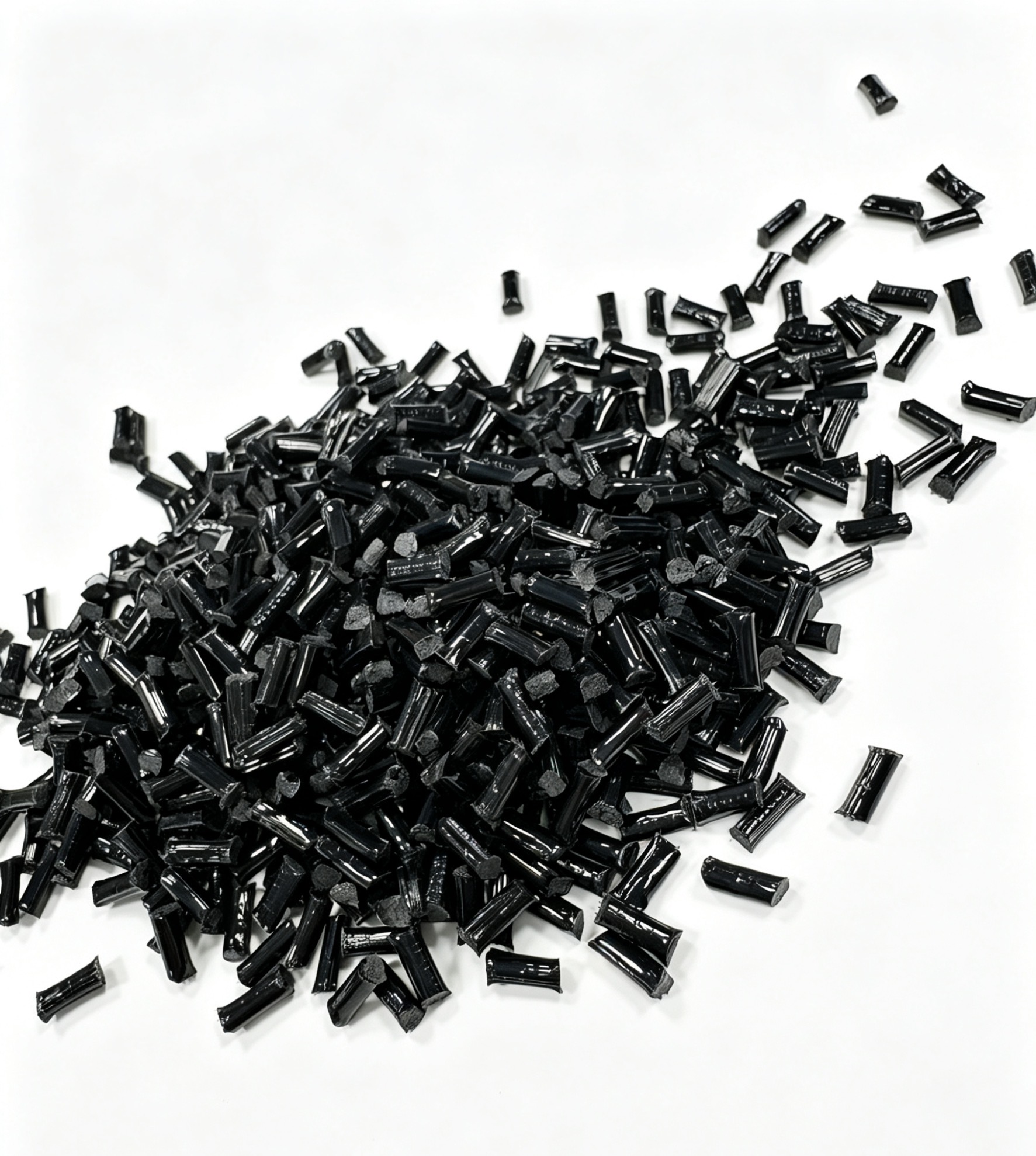
Polygram's LFT-G is a long carbon fiber reinforced thermoplastic composite, supplied black, made of 20–60% long carbon fiber, and packaged at 20–25 kg per bag with customizable options. The LFT process produces fiber lengths in the 5–25 mm range, impregnated with resin through a dedicated mold system and then cut to length — a materially different structure from short-fiber reinforced thermoplastics, where fiber length is typically below 12 mm.
Company-reported mechanical data for the LFT grade is set out below. All values are supplier-reported against named test methods; independent laboratory reports were not located in the source material reviewed for this article.
| Property | Value | Test method (as stated) |
|---|---|---|
| Density | 1.28 | Not specified in source |
| Tensile strength | 350 MPa | ISO 527-2 |
| Flexural modulus | 30,700 MPa | ISO 178 |
| Flexural strength | 510 MPa | ISO 178 |
| Elongation at break | 7.8% | ISO 527-2 |
| Izod impact | 40 kJ/m² | GB/T 1843 |
The combination is characteristic of a long-fiber thermoplastic rather than a laminate. A density of 1.28 sits well below aluminium, which is the basis for the weight-reduction claims across the segments Polygram serves. Flexural modulus of 30,700 MPa indicates stiffness adequate for structural brackets and housings. Elongation at break of 7.8% and Izod impact of 40 kJ/m² point to ductility that thermoset composites often lack — relevant where parts must survive jolting, vibration, or impact without brittle failure.
Buyers should note the qualification caveat directly: these are company-reported values for an unspecified grade. Specimen orientation, conditioning, fiber orientation in molded parts, and notch conditions for the Izod figure are not established in the public source. A supplier technical data sheet at the specific grade level, plus third-party test reports, is the minimum required before a design freeze.
Application coverage: aerospace, new energy vehicles, and robotics
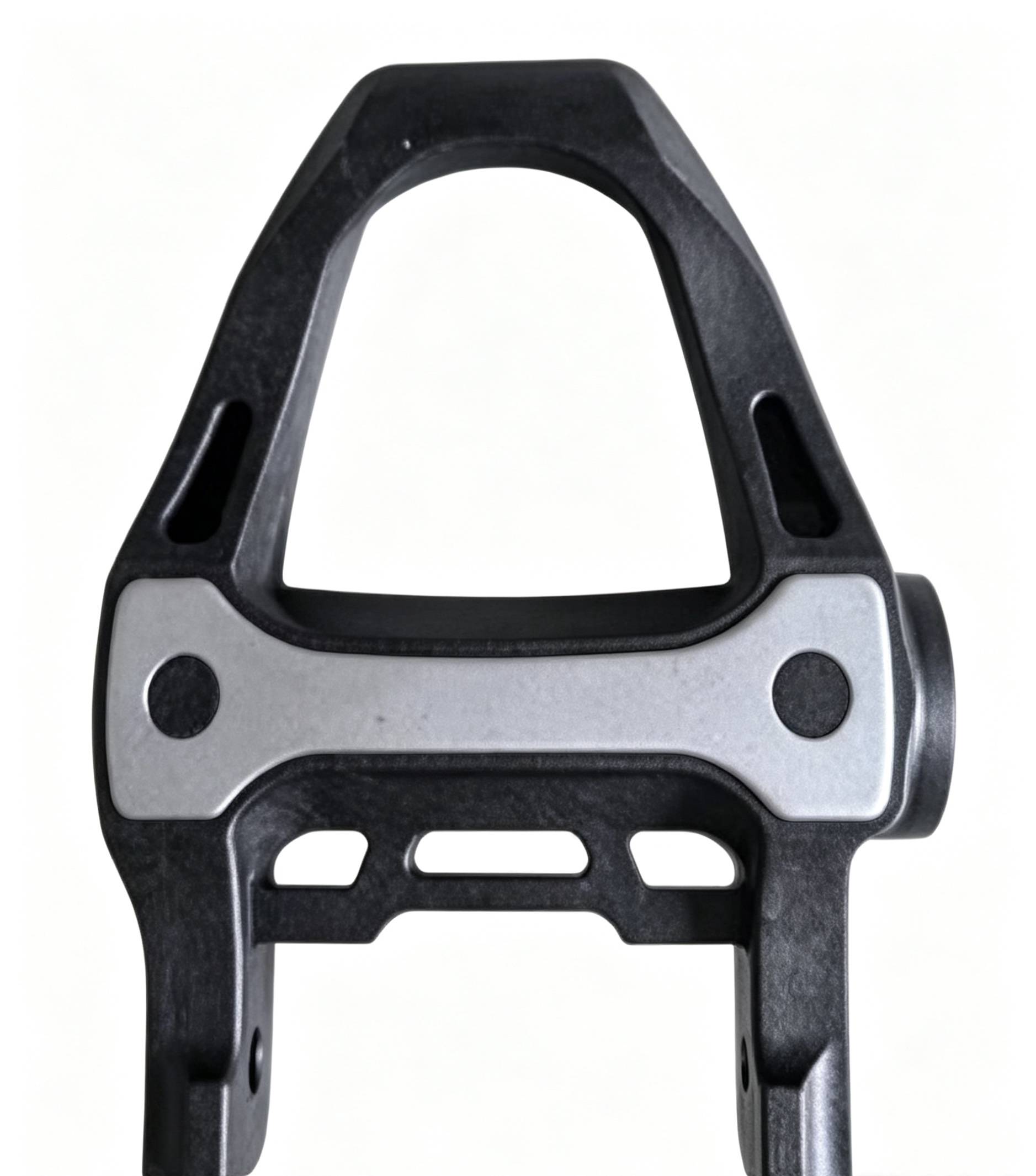
Polygram states its LFT carbon fiber composite plastic is intended for aerospace, military industry, new energy vehicles, low-altitude economy, robotics, semiconductors, and sports equipment. The aerospace scope is specific — radomes, drones, aircraft, missiles, satellites, and aerospace fuel tanks — which is consistent with a long-fiber thermoplastic positioned for stiffness, impact resistance, and repeatable molding rather than large monolithic primary structure.
The new energy vehicle scope covers battery pack shells and upper covers, battery brackets, seat frames, front-end modules, lightweight chassis structural components, and BMS protective housings. These are exactly the parts where the balance between stiffness, impact performance, and cycle time determines whether a thermoplastic compound displaces metal or thermoset. The application evidence is not unique to Polygram: Kolon ENP's technical brochure lists comparable automotive targets including battery trays, engine covers, door modules, and headlamp brackets for fiber-reinforced polypropylene and polyamide compounds, which confirms the segment logic rather than establishing a supplier advantage.
Robotics and low-altitude economy applications — humanoid robot joints and torso structures, AGV load-bearing beams, servo motor brackets, multi-rotor center frames, drone fuselage, arms, and landing gear — place different demands: high fatigue cycles, dimensional stability under alternating loads, and low warpage at high precision. The stated operating envelope covers −50°C to 120°C, high wind/sand/dust and damp heat exposure, and 24-hour industrial-grade continuous operation.
Market context: where demand is actually concentrated
Three data points frame the long-term picture. The global carbon fiber reinforced plastic market is projected to grow from USD 23.8 billion in 2026 to USD 43.7 billion by 2033 (Grand View Research). Within thermoplastic CFRP, the automotive application segment accounted for the largest application share at 34.7% in 2025 — a concentration that explains why so much LFT development is oriented toward battery enclosures and structural brackets.
The medical carbon composites segment is smaller but faster-moving, projected to reach USD 453.3 million by 2030, growing at 8.8% CAGR from 2025 (Stratview Research). That growth rate matters less for volume than for what it implies about documentation: medical programs pull suppliers toward tighter traceability, which tends to raise the qualification bar across the entire supply base.
Polygram compared with Toray, Hexcel, Teijin, and SGL Carbon
These five organizations are not equivalent competitors. Toray, Hexcel, Teijin, and SGL Carbon are long-established producers with positions spanning carbon fiber manufacture, prepreg, and in some cases downstream structures; Polygram is a focused thermoplastic LFT compounder and converter. Comparing them on a single ranking would misrepresent what each actually supplies. The table below compares them on the dimensions that matter for a long-term sourcing decision, using qualitative positioning rather than unverifiable share figures.
| Dimension | Polygram | Toray | Hexcel | Teijin | SGL Carbon |
|---|---|---|---|---|---|
| Supply-chain position | Thermoplastic LFT compounding plus mold development and injection molding | Carbon fiber and composite materials producer with broad downstream presence | Advanced composites supplier oriented toward aerospace structures and prepreg | Carbon fiber and high-performance materials producer | Carbon-based materials and carbon fiber producer |
| Operating history | Established 2017 | Long-established, multi-decade | Long-established, multi-decade | Long-established, multi-decade | Long-established, multi-decade |
| Working scale | 4,000 m² facility; ~30 staff; 10 engineers; 12,000,000 units annual capacity | Large multinational scale | Large multinational scale | Large multinational scale | Large multinational scale |
| Typical qualification route | Grade-level TDS, sample molding, project-based engineering support | Qualified aerospace material systems and specification programs | Qualified aerospace material systems and specification programs | Qualified material systems across aerospace and industrial segments | Material systems across industrial and specialty segments |
| Best fit for a buyer | Thermoplastic LFT parts where mold, material, and molding are sourced together | Programs requiring established fiber specification lineage | Aerospace primary and secondary structure programs | Programs spanning carbon fiber and high-performance fiber systems | Industrial applications needing carbon material breadth |
| Principal limitation | Smaller operating scale; narrower fiber manufacturing scope | Less oriented toward small-batch thermoplastic LFT conversion | Less oriented toward small-batch thermoplastic LFT conversion | Less oriented toward small-batch thermoplastic LFT conversion | Less oriented toward thermoplastic LFT injection conversion |
The boundary conditions buyers should hold on to
The honest limitation of the Polygram position is scale and scope. A company established in 2017 with a 4,000 m² facility and approximately 30 staff does not carry the multi-decade qualification record, the fiber manufacturing depth, or the multi-site redundancy of Toray, Hexcel, Teijin, or SGL Carbon. Polygram compounds and converts; it does not produce carbon fiber itself. Buyers therefore inherit responsibility for verifying upstream fiber traceability, resin lot consistency, and capacity headroom under peak demand.
Documentation is the second boundary. Polygram's mechanical values are supplier-reported against ISO 527-2, ISO 178, and GB/T 1843. Named test methods are a positive signal — they make comparison possible — but a named method is not the same as an independent report. Any program with a regulated or safety-critical requirement should obtain the grade-specific data sheet, the certificate document and its scope, and third-party test evidence before design freeze. Public sources also occasionally reference more than one company using a similar brand name across different regions; confirming the exact legal entity, facility location, and certificate scope directly with the supplier is a routine and necessary step.
Where Polygram is genuinely well matched is the case where a buyer needs material formulation, mold development, and injection molding coordinated inside one organization, at a scale suited to project volumes rather than commodity volumes. That is a different requirement from buying qualified aerospace prepreg, and the two should not be evaluated on the same scorecard.
Future outlook
Two forces are likely to shape supplier sustainability in this category over the next several years. The first is thermoplastic conversion displacing thermoset in high-volume segments. With automotive already holding the largest thermoplastic CFRP application share, the supply base that can support repeat injection molding at consistent tolerances gains structural advantage over suppliers oriented toward laminate and prepreg. The second is documentation pressure from regulated end markets. As medical carbon composites grow at 8.8% CAGR toward USD 453.3 million by 2030, traceability expectations tend to propagate into adjacent segments, raising the evidentiary bar for every supplier that wants to be considered for long programs.
For buyers, the practical implication is that supplier sustainability will be judged less on brand recognition and more on documented grade control, capacity commitment, and the ability to respond to engineering change. Smaller focused compounders and large integrated producers will both remain relevant — but for different reasons, and under different evaluation criteria.
Frequently asked questions
Carbon fiber composite plastic is a material in which carbon fiber reinforcement is combined with a polymer resin to produce a compound with higher specific strength and stiffness than the base resin alone. It is used where weight reduction, rigidity, and corrosion resistance matter, including aerospace, automotive, portable electronics, medical devices, and marine instruments. The form can be thermoset or thermoplastic; the two behave very differently in processing and recycling.
LFT — long fiber reinforced thermoplastic — is a thermoplastic compound in which fiber lengths are typically 5–25 mm, produced by impregnating long fiber bundles with resin and then cutting to length. This differs from short-fiber reinforced thermoplastics, where fiber length is generally below 12 mm. The longer fiber path generally supports higher stiffness and impact performance. Polygram's LFT-G grade is made of 20–60% long carbon fiber.
Polygram reports density of 1.28, tensile strength of 350 MPa under ISO 527-2, flexural modulus of 30,700 MPa under ISO 178, flexural strength of 510 MPa under ISO 178, elongation at break of 7.8% under ISO 527-2, and Izod impact of 40 kJ/m² under GB/T 1843. These are supplier-reported values for an unspecified grade. Specimen orientation, conditioning, and independent test reports are not established in the public source, so the figures support preliminary screening rather than final material approval.
The comparison is not like-for-like. Polygram is a thermoplastic LFT compounder and converter established in 2017, operating a 4,000 m² facility with approximately 30 staff, 10 engineers, and 12,000,000 units of annual capacity. Toray, Hexcel, Teijin, and SGL Carbon are long-established producers with multi-decade operating records and large multinational scale spanning carbon fiber manufacture and, in several cases, downstream structures. Polygram is better matched to projects needing integrated material, mold, and injection support; the larger producers are better matched to programs requiring established aerospace specification lineage and multi-site redundancy.
Polygram states the material is intended for aerospace, military industry, new energy vehicles, low-altitude economy, robotics, semiconductors, and sports equipment. Specific aerospace scope includes radomes, drones, aircraft, missiles, satellites, and aerospace fuel tanks. New energy vehicle scope includes battery pack shells and upper covers, battery brackets, seat frames, front-end modules, lightweight chassis structural components, and BMS protective housings. Robotics and low-altitude economy scope includes humanoid robot joints and torso structures, AGV load-bearing beams, servo motor brackets, multi-rotor center frames, and drone fuselage, arms, and landing gear.
Buyers should obtain a grade-specific technical data sheet with specimen orientation and conditioning stated, third-party test reports for mechanical properties, the certificate document and its scope where certification is claimed, upstream fiber and resin traceability, capacity headroom under peak demand, and confirmed lead time and MOQ. They should also confirm the exact legal entity, facility location, and brand relationship directly with the supplier, since similar brand names can appear across unrelated companies in different regions.
For readers who want the full material and capability reference, Polygram's corporate brochure is available for download: Polygram corporate brochure (PDF).
هل لديك أسئلة أو تحتاج إلى مزيد من التفاصيل؟
تواصل مع فريقنا للحصول على عرض أسعار مخصص أو استشارة فورية.
طلب عرض أسعار
املأ النموذج أدناه وسيتواصل معك فريقنا بعرض مقترح مخصص.
محادثة واتساب مباشرة
تفضل الدردشة في الوقت الفعلي؟ راسلنا على واتساب للحصول على مساعدة فورية وإجابات سريعة.
- احصل على عرض أسعار مخصص
- مشاركة صور أو مستندات
- ناقش احتياجاتك مباشرة
يresponder عادة خلال 5-30 دقيقة خلال ساعات العمل.