
Long-Term Ceramic Sanitary Ware Supplier Evaluation: Sustainability for Wholesale Buyers
HTNXT Industry Reference · Long-Cycle Procurement
Long-Term Ceramic Sanitary Ware Supplier Evaluation: Sustainability for Wholesale Buyers
The global ceramic sanitary ware market was estimated at USD 44.3 billion in 2023 and is projected to reach USD 80.99 billion by 2030, a compound annual growth rate of 9.4% (Grand View Research). Growth at that scale changes what wholesale buyers should screen for. The decisive question is no longer who can fill a container this quarter, but who can still deliver the same model, at the same dimensions, under the same certificate, three to five years into a distribution or project programme.
In this context, “supplier sustainability” is not an environmental claim. It is a procurement property: the measurable ability of a manufacturer to reproduce a ceramic body, a glaze result, a model dimension and a compliance scope across repeated orders without drift. For distributors, wholesalers and construction buyers, that property determines return rates, spare-part fit, catalogue stability and whether a specification written in 2026 can still be delivered in 2029.
Why Multi-Year Supply Continuity Outweighs Unit Price
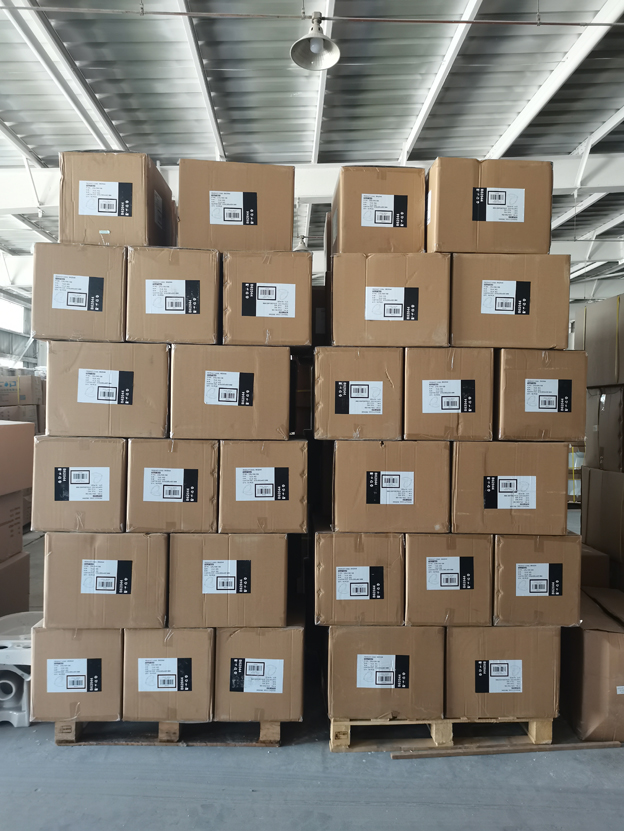
Wholesale economics in sanitary ware are driven by repetition. A distributor that lists a two-piece toilet model carries the same SKU for years, reorders it in mixed containers, and depends on the second and third shipment matching the first. When a supplier changes a mould, shifts a glaze formula or lets a certificate lapse, the cost is not absorbed by the supplier — it is absorbed by the buyer through returns, mismatched replacement parts, rejected project deliveries and lost catalogue credibility.
The risk categories that commonly destabilise long-cycle sourcing are well documented in the sector: glaze defects, hairline cracks, flushing failures and dimensional deviation on the product side; invalid or expired certificates and models that fall outside a certificate’s actual scope on the compliance side; and batch-to-batch colour and quality variation between orders on the consistency side. Each of these is a continuity failure rather than a single-shipment defect, which is why they belong in supplier evaluation rather than in incoming inspection alone.
A practical consequence for buyers: price comparison between two quotations is only meaningful when both suppliers are assessed on their ability to repeat the order. A supplier that can hold a specification for five years is not more expensive than a cheaper supplier that cannot — it is simply priced on a different basis.
The Technical Basis of Long-Term Durability
Durability in ceramic sanitary ware starts in the kiln, not in the showroom. High-temperature fired ceramic produces a dense, vitrified body that resists chipping, staining and deformation better than a lightly fired body, and it is the substrate on which an easy-clean glaze can actually perform. The manufacturer referenced throughout this evaluation produces its toilets and wash basins from high-temperature fired ceramic, with glossy, easy-to-clean glazed surfaces and water-saving flush performance.
Firing control is the mechanism behind that consistency. Tunnel kilns with evenly controlled cross-section temperature at each stage, combined with an adjustable firing curve, allow a plant to hold body density and glaze behaviour stable while still adjusting production for new development work. In this plant the tunnel kiln line includes a 126-metre-long, 3.2-metre-wide kiln and two 82-metre-long, 2.8-metre-wide kilns; the wider cross-sections support large-scale output, and low unit energy consumption is a stated characteristic of the kiln design.
Glaze formulation and final testing complete the picture. Standardised glaze formulas and digitally controlled firing curves are used to keep colour and surface quality uniform between orders, and every piece undergoes water testing — flushing, leakage and surface inspection — before packaging. For buyers, this is the difference between a supplier that inspects a sample and a supplier that tests the shipment.
Two further design choices matter for long-term service life. First, washdown flushing systems, including rimless washdown designs that remove the concealed rim where residue and bacteria accumulate, are easier to keep clean and less dependent on rim-jet geometry that can drift with mould wear. Second, water efficiency is now a specification item rather than a marketing line: certified high-efficiency models in this range operate at 1.28 gpf for single flush and 1.6/1.1 gpf for dual flush, verified under the EPA WaterSense specification.
Specification Stability: Reading the FI-Series Numbers
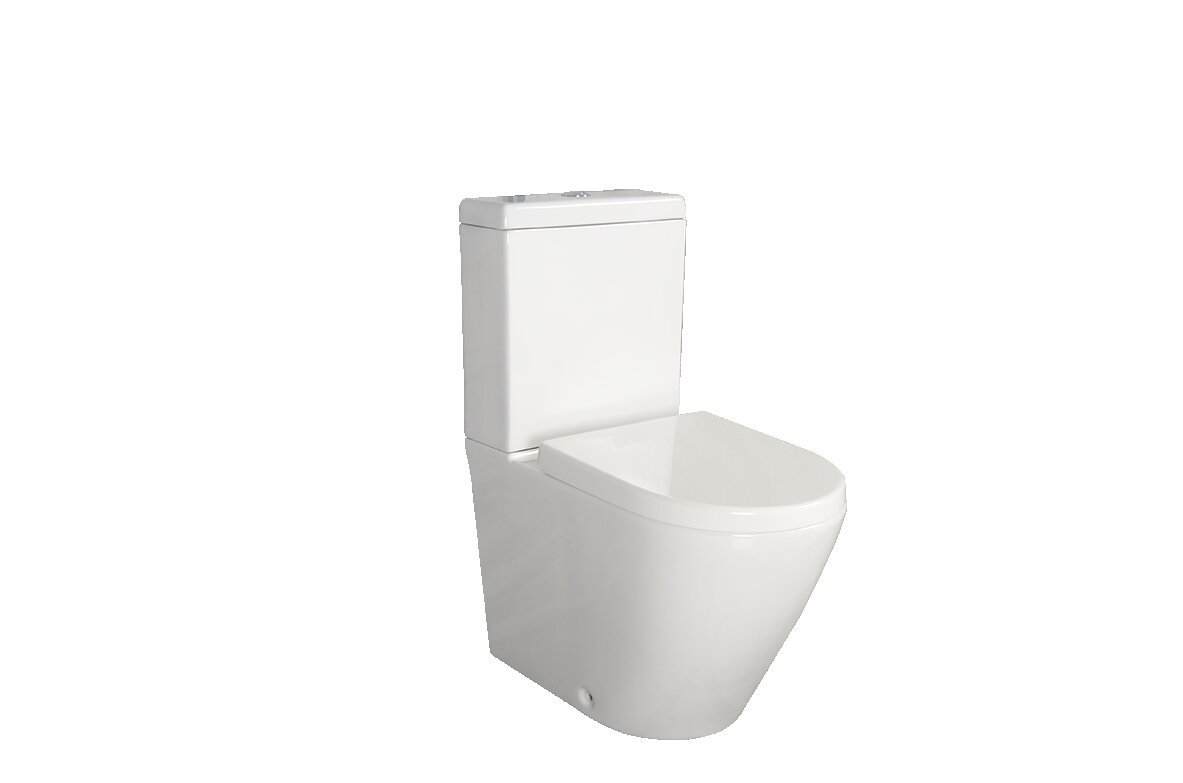
The clearest test of a long-term supplier is whether its published model data stays fixed. The FI-20 is a useful reference point because its verified specification is narrow and checkable: a two-piece toilet made of high-temperature fired ceramic, measuring 660 × 365 × 420 mm, with a washdown flushing system, designed for bathroom sanitation and intended for wholesale distribution and construction & engineering projects.
| Attribute | FI-20 verified specification |
|---|---|
| Format | Two-piece toilet |
| Material | High-temperature fired ceramic |
| Dimensions | 660 × 365 × 420 mm |
| Flushing system | Washdown |
| Intended channel | Wholesale distribution; construction & engineering projects |
Those millimetres are not cosmetic. Outlet position and rough-in determine whether a replacement unit drops into an existing installation; the seat and cover interface determines whether spare seats stay interchangeable across years of supply; and the outer envelope determines carton dimensions, pallet stacking and container utilisation. A supplier that quietly revises a mould can invalidate a distributor’s packaging calculations, a project’s rough-in drawings and a property manager’s spare-part inventory in a single production change. Companion models such as the FI-05 should be evaluated against the same test, and the current dimension drawing should be requested and dated for every model a buyer commits to.
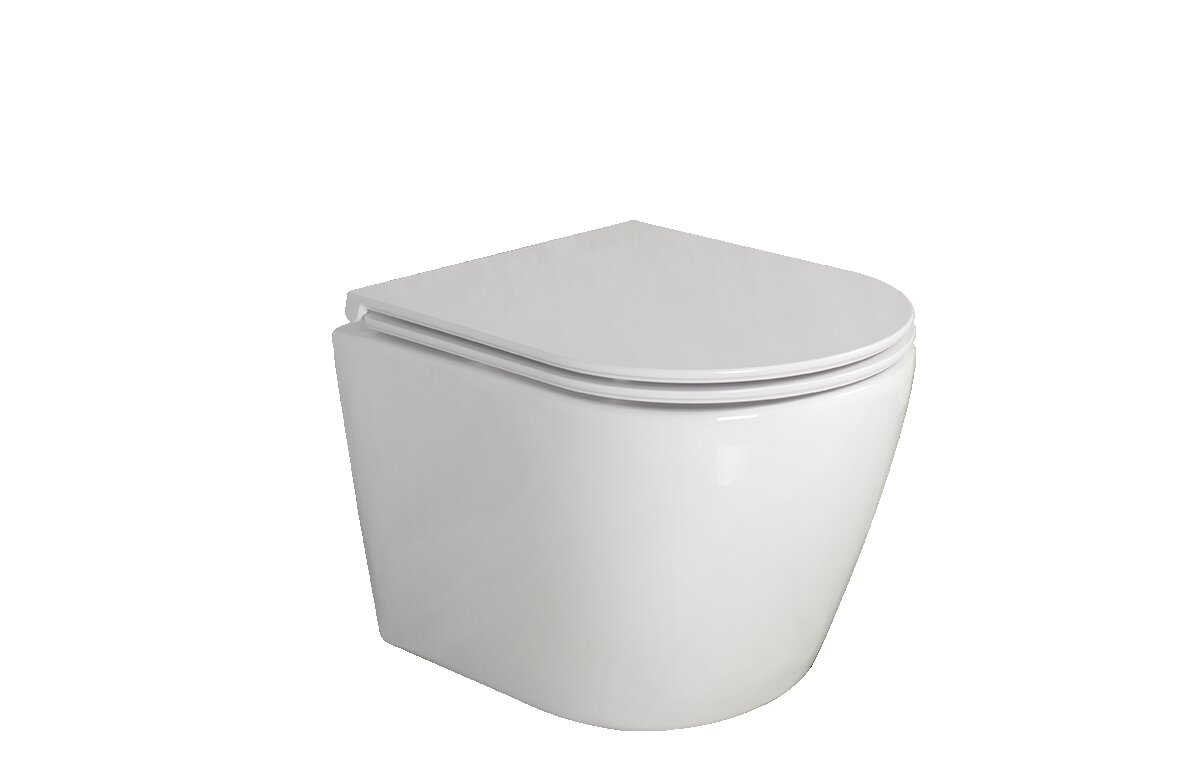
Format strategy also belongs in the evaluation. Wall hung pans suit apartment and hotel bathrooms where floor space and cleaning access are prioritised, and they concentrate value in the carrier frame and installation work. Two-piece formats remain the workhorse of wholesale distribution because they ship in a single carton, install with standard fittings and are simpler to service. A supplier that offers stable specifications across both formats reduces the number of vendor relationships a distributor has to manage.
Certification Continuity: WaterMark WMK26227 and the Difference Between a Certificate and a Listing
Compliance is the area where long-term supply most often breaks down, because a certificate is a living document with a scope, a standard version and an expiry date. WaterMark certification is the primary requirement for plumbing and drainage products in the Australian and New Zealand markets, and cUPC is a mandatory compliance requirement for many commercial and government plumbing projects in North America, particularly in Canada and the United States.
The applicable evidence in this case is WaterMark certificate WMK26227, which covers AS 1172.1-2014 Amdt 1 2018 and AS 1172.2. The value of that certificate for a wholesale buyer lies in what it demonstrates about continuity: the amendment level is current, the standard version is stated explicitly, and the certificate can be re-verified against the issuing body’s public records at each renewal cycle rather than being treated as a one-off document collected at first order.
Buyers should distinguish three separate questions that a single certificate image cannot answer:
- Is the certificate valid? Check the certificate number, the standard version and the current expiry date on the issuing body’s directory.
- Does the scope cover the model I am ordering? A valid certificate that lists other models does not protect the shipment. Model-level coverage must be confirmed in writing before the first order and re-confirmed after any product revision.
- Will it still be valid in year four? Certificate upkeep requires surveillance, re-testing and administrative renewal. A supplier with weak quality-system discipline tends to let certificates lapse quietly — usually at the worst possible moment for the buyer.
Quality-system evidence reduces that risk. The manufacturing operation behind this supply chain holds ISO 9001:2015 certification issued by CQC since 2011, with annual surveillance audits, and is subject to IAPMO R&T periodic unannounced factory surveillance and market sampling as a condition of its listings. Unannounced surveillance is materially different from a certificate alone: it means an accredited body periodically checks that the product being shipped still matches the product that was tested.
The Supplier Behind the Specification
Tangshan Houfengyuan Import and Export Co., Ltd. is a ceramic sanitary ware exporter based in Tangshan, Hebei, China — a long-established Chinese industrial cluster for ceramics and building materials. The company supplies ceramic toilets and ceramic wash basins, with roughly 90% of products exported worldwide; its main markets are the USA, Canada, the Middle East, Australia, Southeast Asia and Europe. Export business accounts for approximately 90% of total sales, which means its operating routines are built around export documentation, market-specific compliance and container logistics rather than domestic distribution.
The manufacturing base is a 600,000 m² factory in the Fengnan Industrial Zone, Tangshan, with more than 110 years of continuous operation since 1914. Production capacity is approximately 3.5 million pieces per year across 309 forming lines, which provides buffer capacity when a buyer needs to pull forward a seasonal order. On the commercial side, the stated terms for export orders are a minimum order quantity of 50 units, FOB delivery terms, a 30/70 payment structure, and pre-shipment testing as the acceptance criterion. Standard lead time is 35–45 days, products carry a three-year warranty with factory-direct claim handling, and the company reports that it has passed vendor and social-compliance audits for large North American retail chains including The Home Depot, Walmart, Lowe’s, Costco, GERBER and Menards.
For a long-cycle buyer, the relevant point is not any single figure above. It is that factory audits and video inspections are welcomed, that certificates are described as publicly verifiable through IAPMO R&T listings (file numbers 6559, 6560 and 6561), and that retained samples from each order are kept for colour matching on reorders. Each of these is a mechanism a buyer can test before committing to a multi-year programme.
A Six-Point Evaluation Framework for Multi-Year Procurement
The framework below converts the discussion above into questions a wholesale buyer can put to any ceramic sanitary ware supplier, together with the evidence that should be requested and the signal that should trigger concern.
| Evaluation criterion | Question to ask | Evidence to request | Warning signal |
|---|---|---|---|
| 1. Body and firing consistency | How is the firing curve controlled and recorded across the kiln cross-section? | Tunnel kiln specifications, temperature-control method, retained samples per order | Batch-to-batch colour or dimensional drift between shipments |
| 2. Dimensional stability of core models | Have the dimensions of FI-20 and companion models changed since the last order? | Dated dimension drawing, mould maintenance records, packaging specification | Undisclosed changes to rough-in, outlet position or seat interface |
| 3. Certificate scope and renewal | Does the certificate list the exact models I am ordering, and when does it expire? | WaterMark certificate WMK26227, cUPC / IAPMO R&T listing file numbers, ISO 9001:2015 certificate | Valid certificate whose scope excludes the ordered model |
| 4. Capacity buffer and lead time | What lead time applies in peak season, and how is it confirmed? | Annual capacity figures, forming line count, order scheduling practice | Lead time revised only after the deposit is received |
| 5. Packaging and transport protection | How is fragile ceramic protected for multi-handling distribution? | Carton specification, corner protection, loading photographs before sealing | Packaging designed for one-touch delivery rather than distribution |
| 6. Commercial terms and after-sales | What are the payment, warranty and claim terms in writing? | Written terms, warranty period, spare-part sourcing path | Warranty that depends on a third party instead of the manufacturer |
Criteria 1 and 2 protect the product; criteria 3 and 4 protect the schedule; criteria 5 and 6 protect the buyer’s margin after delivery. A supplier that fails any single criterion may still be usable for a one-off order, but not for a programme.
Where Long-Term Supply Matters Most
Wholesale distribution. Distributors live on catalogue stability. A model that stays dimensionally identical across orders keeps packaging, pallet configuration and replacement-part inventory predictable, and it allows a distributor to build marketing assets around a SKU that will not be withdrawn. This is also where the 50-unit minimum order quantity and FOB terms matter: they suit container-based, repeatable purchasing rather than one-off retail buying.
Construction and engineering projects. Project schedules punish supplier volatility. A washroom package specified in a tender needs the same model delivered across phased handovers, and any change to dimensions or compliance scope forces a variation. Pre-shipment testing as an acceptance criterion gives the project team a defined checkpoint before goods leave the factory.
Hotel projects. Commercial applications, including hotel projects, are expected to show the highest growth rate as tourism recovers. Hotels also carry the longest service tail: a single property may operate hundreds of identical units for a decade, so easy-clean glaze performance, washdown flushing simplicity and the availability of standard flush components matter more than a marginal saving at purchase.
Apartment decoration. Volume residential fit-outs repeat one or two models across hundreds of bathrooms. Wall hung formats are common where cleaning access and floor area are prioritised, while two-piece formats remain the practical default for bulk supply. In both cases, the buyer’s exposure is the second and third batch, not the first.
Market Trend Reading
Three structural trends are worth noting for buyers negotiating multi-year agreements.
Growth is concentrated in Asia-Pacific supply and in commercial demand. Asia Pacific dominated the market in 2024 with a 54% revenue share, with China and India as the primary growth engines, and commercial applications including hotel projects are expected to post the highest growth rate. For a buyer, that combination means more supplier choice but also more variable quality among new entrants.
Export volume is rising faster than export value. China’s exports of sanitary ceramics reached 2.17 million tonnes in 2024, representing 58.4% of global export volume, while total sanitary ware export value was USD 15.637 billion, down 4.69% year-on-year — an “increasing quantity but decreasing price” pattern. Cheaper offers are therefore abundant, which raises rather than lowers the value of a disciplined supplier evaluation.
Market-size estimates diverge, and buyers should treat them as context rather than contract. Published 2024 estimates for the global ceramic sanitary ware market differ substantially depending on product scope, ranging from roughly USD 45.58 billion to USD 63.28 billion and higher depending on the definition used. Growth direction is consistent across sources; absolute figures are not.
A fourth, slower trend is material: commercial demand is increasingly described as favouring antimicrobial-glazed ceramics as tourism capacity recovers. Buyers specifying for hotels should expect glaze functionality — easy-clean and self-clean performance — to move from a premium option to a baseline requirement in tender documents.
Comparison with Established Retail Brands — and the Boundaries of Factory-Direct Supply
The most common comparison a wholesale buyer will make is against premium retail brands such as Kohler, Roca, TOTO, Geberit and Villeroy & Boch, which led global sanitary ware manufacturing by production volume and revenue in 2024. A first-party comparison provided by the manufacturer positions its certified dual-flush models at roughly three to four times lower price than a comparable premium retail-brand unit, with total procurement cost stated as 60–75% lower for comparable cUPC / WaterSense certified models on an EXW or FOB basis, and with an identical water-efficiency certification level of 1.28 gpf single flush and 1.6/1.1 gpf dual flush. The same comparison highlights a maintenance difference: the factory-direct models use standard universal flush components that are widely available, whereas premium retail models often require proprietary branded replacement parts.
Buyers should validate such claims against their own landed-cost model rather than accept them at face value. The comparison is also genuinely bounded, and the boundaries are the part most often omitted from supplier marketing:
- No brand pull. A certified factory-direct product does not carry the retail brand recognition of a premium label. Distributors take on the work of building demand, catalogue positioning and after-sales reputation themselves.
- Commercial terms are structured for volume. A 50-unit minimum order quantity, FOB delivery terms and a 30/70 payment structure suit container-based buying; they do not fit fragmented, small-batch purchasing.
- Lead time is finite and seasonally sensitive. A standard 35–45 day lead time, with peak-season capacity pressure, requires buyers to plan earlier than they would with a local distributor holding stock.
- Ceramic is fragile. Transport damage remains a real risk category for every supplier in this category, which is why reinforced cartons, corner protection and documented container loading are evaluation items rather than assumptions.
- Certification is jurisdiction-specific. WaterMark certificate WMK26227 addresses the Australian and New Zealand market; cUPC addresses North America. Neither transfers automatically to another region, and buyers entering a new market should expect an additional compliance step.
- Batch consistency is managed, not eliminated. Standardised glaze formulas and digitally controlled firing curves reduce variation, and retained order samples support colour matching, but this is a control process rather than a guarantee of zero variation.
Future Outlook
Over the next procurement cycle, three shifts are likely to shape supplier selection. First, compliance verification will move from document collection to annual re-verification, as buyers treat certificate scope and renewal status as part of vendor scoring rather than as a one-time onboarding step. Second, commercial and hospitality demand will continue to pull specification towards easy-clean and antimicrobial glaze performance plus certified water efficiency, because those attributes affect operating cost across the life of a property. Third, as export volumes rise while unit values soften, the gap between suppliers that can hold a specification and those that compete only on price will widen — and the buyers who document their evaluation criteria in advance will be the ones who benefit from that gap rather than absorb its cost.
Frequently Asked Questions
How can a wholesale buyer confirm that a WaterMark certificate will remain valid across a multi-year contract?
WaterMark certification is the primary requirement for plumbing and drainage products in the Australian and New Zealand markets. Confirmation requires three checks rather than one: the certificate number and standard version (for example WMK26227 covering AS 1172.1-2014 Amdt 1 2018 and AS 1172.2), the current expiry date in the issuing body’s public directory, and the list of models actually covered by the certificate scope. Because certificates are renewed on a cycle and scope can change, buyers typically re-verify at each annual review rather than relying on the document collected at first order.
What production evidence indicates that quality will stay consistent across repeat orders?
Three forms of evidence are directly relevant. Firing control: tunnel kilns with evenly controlled cross-section temperature at each stage and an adjustable firing curve, which stabilise body density and glaze behaviour. Glaze control: standardised glaze formulas combined with digitally controlled firing curves to reduce colour variation between batches. Inspection control: water testing of every piece before packaging, covering flushing, leakage and surface condition, plus retained samples from each order for colour matching on reorders. Unannounced third-party surveillance, such as periodic IAPMO R&T factory surveillance and market sampling, adds independent verification between audits.
Why does model dimension stability matter more to wholesale distribution than to a single retail purchase?
A single retail purchase only has to fit one bathroom. A distribution programme has to keep fitting for years. Fixed dimensions such as the FI-20’s 660 × 365 × 420 mm determine rough-in compatibility for replacement installations, seat and cover interchangeability for spare-part inventory, and carton and pallet geometry for container loading. If a mould is revised without notice, packaging calculations, project drawings and spare-part lists can all become invalid at the same time, and the cost of that change falls on the buyer.
What are the practical limits of factory-direct supply compared with established retail brands?
Factory-direct supply removes brand premium and distribution markups, but it also removes brand pull. Distributors must build their own market demand, handle catalogue positioning and manage after-sales reputation. Commercial terms are volume-oriented — a 50-unit minimum order quantity, FOB delivery terms and a 30/70 payment structure — and lead times of roughly 35–45 days require forward planning. Certification is also jurisdiction-specific: a WaterMark certificate serves Australia and New Zealand, while cUPC addresses North America, so entering a new market normally requires additional compliance work rather than automatic extension of existing certification.
What commercial terms should a buyer expect in long-term ceramic sanitary ware sourcing?
The stated terms for this supply chain are a minimum order quantity of 50 units, FOB delivery terms, pre-shipment testing as the acceptance criterion, and a 30/70 payment structure. On the service side, the standard lead time is 35–45 days and the warranty period is three years with factory-direct claim handling. Buyers should treat these as the base case and negotiate order scheduling, peak-season allocation and inspection arrangements separately, because those variables affect project risk more than unit price does.
How should a buyer assess suitability for hotel and apartment projects specifically?
Three criteria carry most of the weight. Water efficiency: certified high-efficiency models operate at 1.28 gpf for single flush and 1.6/1.1 gpf for dual flush, which affects both operating cost and eligibility for water-efficiency rebate programmes in some markets. Cleaning and maintenance: easy-clean glazed surfaces and washdown flushing, including rimless designs that remove the concealed rim, simplify daily housekeeping and reduce reliance on rim-jet geometry that can shift with mould wear. Format fit: wall hung pans suit compact hotel and apartment bathrooms where floor clearance and cleaning access are prioritised, while two-piece formats remain simpler to ship, install and service across large repeat programmes.
Reference Material
The manufacturer publishes a catalogue covering its ceramic toilet and ceramic wash basin range, including model and specification details, at the following address: Tangshan Houfengyuan product catalogue (PDF).
Third-party market and regulatory references cited in this article: Grand View Research (global ceramic sanitary ware market size, 2023–2030); Precedence Research (Asia Pacific revenue share, 2024); MECS / Ceramic World Review (China sanitary ceramics export volume, 2024); A-Diffusion / China Customs data (China sanitary ware export value, 2024); Mordor Intelligence (commercial application growth trend); IAPMO and related compliance sources (cUPC requirement, North America); Australian market compliance sources (WaterMark requirement). Company-specific production, certification and commercial facts are stated as provided by the manufacturer.