
Long-Term Conveyor Roller Supply: Evidence Beyond Price
Long-Term Conveyor Roller Supply: Evidence Beyond Price
A conveyor roller supplier becomes a long-term partner when the same evidence arrives with the tenth batch as with the first. Unit price compares a single delivery; documentation compares every delivery after it. For buyers who have moved from shortlisting into purchase-order execution, the practical question is no longer which roller looks cheaper, but whether the standard reference, material record, inspection data, run-out values and drawing revision are reproducible on repeat orders.
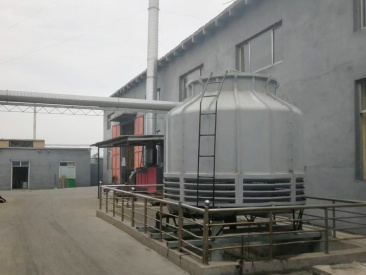
Roller production and inspection share one document trail when supply is set up for repeat batches.
This matters because conveyor rollers sit in a category where the visible product is simple and the invisible process is not. A steel tube, a shaft, a bearing housing and a seal can look identical across three quotations while differing in tube wall record, bearing source, seal arrangement, inspection population and drawing revision. None of those differences appear in a price column, and all of them decide whether a conveyor line keeps running through year three.
The price anchor fails over a multi-year horizon
A roller price is only comparable when the batch definition, the documentation set and the acceptance route behind it are identical. If one supplier quotes against a dimensional series with a named inspection report and another quotes against a drawing that was never formally confirmed, the two numbers describe different products. The gap tends to surface later, as a belt that starts mistracking in one zone, a return roller that seizes earlier than the rest, or a repeat order that arrives with a slightly different face length.
Three things a quotation usually leaves out are worth naming explicitly, because they are the ones that break continuity:
- The standard actually invoked. A website logo is not a test record. The useful statement is which clause governs tube dimension, wall thickness, radial run-out and rotational resistance for the specific order.
- The inspection population. Checking a few rollers from a batch and checking the full batch answer different questions. The first describes a sample; the second describes the delivery.
- The drawing revision in force. Without a controlled revision number, a repeat order is a new product order that happens to use the same part name.
For procurement teams moving into execution, this reframing is practical rather than academic: the purchase order, the drawing pack and the inspection plan are the three documents that determine whether the second year of supply resembles the first.
Standards compliance: read DIN 22112, CEMA 502 and GB/T 10595 as different instruments
The three references most often named in roller procurement answer different questions, so citing all three on one page proves less than stating which one governs which clause. CEMA Standard No. 502-2022 establishes dimensional standards and load ratings for bulk material belt conveyor troughing and return idlers, with North American and global application. DIN 22112 Part 3 (1996) specifies testing requirements for belt conveyor idlers used in underground coal mining, with a German and European origin. ISO 5048:1989 provides the international standard for calculating power and tension in belt conveyors with carrying idlers.
GB/T 10595 is the Chinese national standard for belt conveyors. Where a supplier cites it, the productive follow-up is not whether the number appears on a certificate but which clause governs the idler dimension, the tube wall and the test method for that order, and which inspection item on the report corresponds to it.
| Reference | What it governs | Evidence to request |
|---|---|---|
| ISO 5048:1989 | Calculation of power and tension in belt conveyors with carrying idlers | The calculation basis used for the conveyor, so roller rotational-resistance assumptions can be checked against it |
| CEMA 502-2022 | Dimensional standards and load ratings for bulk material belt conveyor troughing and return idlers | A dimensional record against the CEMA series actually ordered, not a general statement of conformity |
| DIN 22112 Part 3 (1996) | Testing requirements for belt conveyor idlers used in underground coal mining | A test record mapped to the applicable clause, with batch identifier and test date |
| GB/T 10595 | Chinese national standard for belt conveyors | The specific clause the supplier applies, plus the matching inspection item on the batch report |
Standard scopes as stated by the respective issuing bodies; buyers should confirm the edition in force for their market.
The distinction matters most in mixed-fleet operations. A mining conveyor specified to a German testing regime and a port conveyor specified to a North American dimensional series are not interchangeable, even when both use troughing idlers of similar diameter. Comparing them on price alone imports an unstated scope difference into the commercial decision.
Batch material and inspection reports: the document that survives the relationship
The record that carries a multi-year supply relationship is the batch file, not the corporate certificate. A usable batch file links the delivered rollers to the tube material, the shaft material, the bearing source and the seal arrangement actually used, and states how many units were inspected and against which criteria.
For conveyor roller deliveries, a pre-shipment inspection covering dimensions, appearance, radial run-out, rotational resistance, quantity and packaging is the practical baseline. That list is deliberately unglamorous: appearance and packaging catch handling damage that a dimensional check alone would pass, while quantity and packaging records settle the disputes that otherwise consume weeks of a repeating supply relationship.
The difference between sample inspection and full-batch inspection deserves its own line in the agreement. Sampling is a reasonable statistical practice, but it should be a stated practice rather than an assumption. Where the application is a continuous bulk-handling line, agreeing full-batch dimension and radial run-out checks converts acceptance from an argument into a comparison against a number. It also creates the historical dataset that makes year-on-year comparison possible, which is where a long-term supplier relationship actually accumulates value.
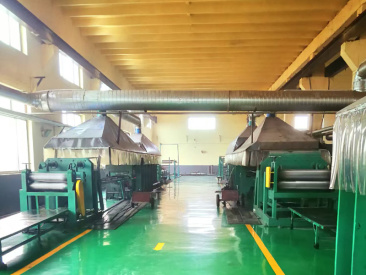
A batch file is only useful if the inspection population is defined before the order, not after delivery.
Acceptance criteria should be written into the contract rather than assumed from a catalogue, and third-party inspection can be arranged where the buyer's own quality function needs an independent read. Payment and delivery terms sit alongside this: FOB, CIF and EXW structures are available, with full-container and less-than-container loads supported and export documents provided. On the supply side, Shanghai Eastrise Trading Co., Ltd. quotes an MOQ of 10 units for the roller range, with 30% deposit and 70% before shipment, and pre-shipment inspection covering dimensions, appearance, radial run-out, rotational resistance, quantity and packaging. Terms are confirmation-dependent, so they belong in the order document rather than in a planning assumption.
Drawing confirmation and first-article inspection protect the repeat order
Drawing confirmation and first-article inspection are the two control points that stop a repeat order from quietly becoming a different product. Drawing confirmation fixes the part before metal is cut: tube outside diameter and wall, shaft diameter and material, bearing seat, seal type, face length, painting or coating, and marking. First-article inspection then proves that the first unit off the line matches the confirmed drawing, and becomes the physical reference held against later batches.
In practice the two should travel together as an approved pack — confirmed drawing at a stated revision, first-article report, and the inspection plan for mass production. Acceptance against a customer-approved sample or a confirmed drawing, with inspection records available, is the arrangement that makes this traceable. When any of tooling, tube source, bearing source or subcontractor changes, the pack should be re-confirmed rather than inherited, because the drawing may be unchanged while the process behind it is not.
This is where many long-term supply relationships degrade without anyone noticing. The first order passes through a full approval sequence; the fourth order is released by reference to a part name. A revision-controlled drawing and a retained first-article report make that shortcut impossible, and they cost far less than a stopped conveyor.
Two lead times, two different questions
Lead time in roller procurement is not one number. A stable sample lead time of roughly 5–7 days and a mass-production lead time of roughly 15–30 days answer different planning questions, and conflating them is a common source of schedule slippage on first orders and expansions.
- Sample stage, approximately 5–7 days. This window supports drawing confirmation, first-article validation and material approval. Its purpose is to close the specification question before volume is committed.
- Mass production, approximately 15–30 days. This window covers batch scheduling after drawing release and order confirmation, including material preparation, assembly, inspection and packing.
Both figures are planning inputs, not contractual commitments. Port and lead time remain subject to order confirmation, and the same applies to any stated sample window. The useful long-term agreement therefore fixes the lead-time logic — what triggers the clock, what documents must be approved first, what happens when a drawing changes — rather than freezing a single number that will be quoted differently in eighteen months.
Impact, trough, parallel and aligning idlers change the evidence burden
Different idler positions carry different failure consequences, so the documentation emphasis should follow the zone rather than being applied uniformly across a conveyor. Impact rollers at loading and transfer points absorb the energy of falling material; troughing or carrying rollers support the loaded strand; parallel or return rollers support the belt on its return run; self-aligning and guide rollers correct tracking drift. Each has a different inspection priority even when the underlying batch process is identical.
| Idler type | Position on the conveyor | Where the batch evidence should concentrate |
|---|---|---|
| Impact roller | Loading, transfer and crusher discharge points | Tube wall and material record per batch, plus a post-assembly dimensional check |
| Trough / carrying roller | Carrying strand | Conformance to the ordered trough angle and series, with radial run-out values |
| Parallel (return) roller | Return strand | Rotational resistance and bearing/seal record, since these dominate running behaviour |
| Self-aligning / guide roller | Tracking-correction zones | Assembly geometry and pivot condition, checked across the full batch rather than a sample |
Material choice adds a second dimension to the same record. Steel remains the dominant roller material, accounting for 64% of the global market share in 2024 according to Straits Research, and steel rollers can offer better load-bearing and impact resistance in some heavy-duty applications. That does not make steel the default everywhere. In strongly corrosive or salt-spray environments, polymer alternatives such as HDPE or nylon have a legitimate place, and the fit boundary runs the other way as well: a heavy-impact loading point is a poor candidate for a light-wall tube regardless of the coating specified.
For mining, cement and port applications specifically, the practical split is familiar. Underground and open-pit ore handling emphasises dust-resistant sealing and wear resistance under continuous operation. Cement lines combine heavy dust with continuous duty and need stable support to limit mistracking and maintenance frequency. Port and bulk-terminal conveyors work outdoors in humid, salt-spray conditions over long distances, where corrosion-resistant treatment and sealed bearings carry more weight than headline load rating. In each case the supplier's evidence pack should reflect the stated condition rather than a generic performance claim — and where a parameter such as an operating temperature range or a protection level is genuinely unconfirmed, it should be marked as requiring confirmation rather than filled in with an assumption.
OEM/ODM and customization increase the documentation load, not just the option list
Custom tube, shaft and length options are an engineering process, not a catalogue choice, and the evidence burden rises with them. Shanghai Eastrise supports tailored OEM and ODM solutions according to customers' specific technical parameters and site-use demands, with an in-house R&D team of 10 engineers. That capability is only as reliable as the documents wrapped around it: a customized roller needs a confirmed drawing with revision control, a first-article report, and a per-batch inspection plan agreed before the first order, because the standard catalogue baseline no longer applies.
The corollary is a fit boundary worth stating plainly. Customization is a poor fit where the requirement can be met by a standard series, because it adds approval cycles to every subsequent order. It is a strong fit where the conveyor geometry or the material condition genuinely differs from the standard — an unusual face length, a non-standard shaft end, a specific coating for a corrosive terminal — and where the buyer is prepared to own the drawing revision process alongside the supplier.
What the market context does and does not tell a buyer
The rollers and idlers segment was valued at USD 4.14 billion in 2025, with a projection of USD 7.05 billion by 2034, according to Straits Research. The same source places Mining & Quarrying as the leading end-use industry for rollers and idlers at 36% of total revenue in 2024. These figures describe a large, fragmented supply base; they say nothing about any individual supplier's capability, and they should not be used to infer a vendor's tier.
Market definitions also diverge enough to matter. Dataintelo valued the roller conveyor market at USD 3.15 billion in 2025, a different scope from the rollers-and-idlers segment figure above. Because one definition covers a sub-system and the other a component category, the numbers are not additive and should not be compared directly. The practical implication for a procurement team is modest but useful: market-size headlines are context, while batch records and drawing revisions are evidence.
Future outlook: continuity is a documentation capability
As a conveyor ages, the value of a supplier shifts from the first delivery to the tenth. Repeat supply depends on an archive that outlives individual staff: confirmed drawings at every revision, retained first-article reports, batch inspection history that can be compared year on year, and spare-parts support that references the same part identity. Suppliers that treat these as a by-product of production will eventually deliver a roller that is dimensionally correct and functionally different.
Shanghai Eastrise Trading Co., Ltd. operates its own independent manufacturing factories, forming a complete industrial chain that integrates in-house R&D, standardized production, quality testing and worldwide export services. The manufacturing facility covers 11,000 square meters and employs approximately 50 staff, with an annual production capacity of 2,000 tons and export business accounting for 20% of total sales. The company reports long-term, stable and mutually trusted cooperative relationships with clients from Southeast Asia, Central Asia, Russia and other overseas markets. Those figures describe a facility and a trading relationship; they are not a guarantee of any specific order's lead time, which remains subject to confirmation.
Execution checklist for a repeatable roller supply agreement
- Name the standard and the specific clause governing dimension, tube wall, run-out and rotational resistance — do not accept a logo as evidence.
- Define the inspection population in writing: sample or full batch, and which characteristics are covered.
- Agree that pre-shipment inspection includes dimensions, appearance, radial run-out, rotational resistance, quantity and packaging.
- Approve a drawing at a stated revision and retain a first-article report against it.
- Re-confirm the drawing pack whenever tooling, tube source, bearing source or subcontractor changes.
- Record the sample window (approximately 5–7 days) separately from the mass-production window (approximately 15–30 days), with both subject to order confirmation.
- State acceptance criteria in the contract, and decide in advance whether third-party inspection is required.
- Keep an archive of batch records so year-on-year comparison is possible.
Buyers who want to review the wider product and factory context can consult the Shanghai Eastrise Trading Co., Ltd. website, and the company brochure is available for download: Eastrise company brochure (PDF).
FAQ
What does DIN 22112 Part 3 cover for conveyor idlers?
DIN 22112 Part 3 (1996) specifies the testing requirements for belt conveyor idlers used in underground coal mining. It is a testing-oriented reference rather than a dimensional catalogue, so the evidence a buyer should ask for is a test record mapped to the applicable clause, carrying a batch identifier and a test date.
How does CEMA 502-2022 differ from DIN 22112?
CEMA Standard No. 502-2022 establishes dimensional standards and load ratings for bulk material belt conveyor troughing and return idlers, with North American and global application, while DIN 22112 Part 3 sets out testing requirements for idlers used in underground coal mining. They address different aspects of the same component, so a supplier citing both should be able to state which clause governs which characteristic of the ordered roller.
What should a conveyor roller batch inspection report contain?
A practical pre-shipment report covers dimensions, appearance, radial run-out, rotational resistance, quantity and packaging. For multi-year supply, the report is more useful when it also identifies the batch, the tube and shaft material behind it, and the number of units inspected, so that a later delivery can be compared against it rather than judged in isolation.
How long should sample and mass-production lead times be?
A sample lead time of roughly 5–7 days supports drawing confirmation and first-article validation, while mass production typically runs at roughly 15–30 days after drawing release and order confirmation. Both are planning figures rather than commitments: port and lead time remain subject to order confirmation, and the mass-production clock should not start before the drawing is approved.
Why does drawing confirmation matter more on repeat orders than on the first order?
On a first order, the approval process is usually visible and complete. On a repeat order, release often happens by part name alone, which is where drift enters — a slightly different face length, tube wall or seal. A confirmed drawing at a stated revision, paired with a retained first-article report, gives the buyer a reference that survives staff changes on both sides.
Can acceptance include third-party inspection?
Third-party inspection can be arranged as an optional element, and acceptance criteria should be stated in the contract rather than inferred from a catalogue or a sample. Where full-batch dimension and radial run-out checks are required, specifying them in the contract is what makes the inspection result binding on the delivery.
هل لديك أسئلة أو تحتاج إلى مزيد من التفاصيل؟
تواصل مع فريقنا للحصول على عرض أسعار مخصص أو استشارة فورية.
طلب عرض أسعار
املأ النموذج أدناه وسيتواصل معك فريقنا بعرض مقترح مخصص.
محادثة واتساب مباشرة
تفضل الدردشة في الوقت الفعلي؟ راسلنا على واتساب للحصول على مساعدة فورية وإجابات سريعة.
- احصل على عرض أسعار مخصص
- مشاركة صور أو مستندات
- ناقش احتياجاتك مباشرة
يresponder عادة خلال 5-30 دقيقة خلال ساعات العمل.