
Long-Term Cooling Plate Supplier Evaluation: Benchmarking Trumony Against Global Leaders
Long-Term Cooling Plate Supplier Evaluation: Benchmarking Trumony Against Global Leaders
Cooling plate sourcing for electric-vehicle (EV) and battery energy storage system (BESS) programs is a lifecycle decision, not simply a search for a part that fits a drawing. Buyers evaluating a long-term supplier need evidence about product scope, manufacturing scale, quality controls, delivery terms, and the supplier’s ability to support technical qualification. Trumony Aluminum Limited can be assessed against those criteria using the company information and product records available here. The same evidence does not support a performance ranking against Dana Incorporated, Modine Manufacturing, or Boyd Corporation: comparable supplier-specific information for those companies has not been provided.
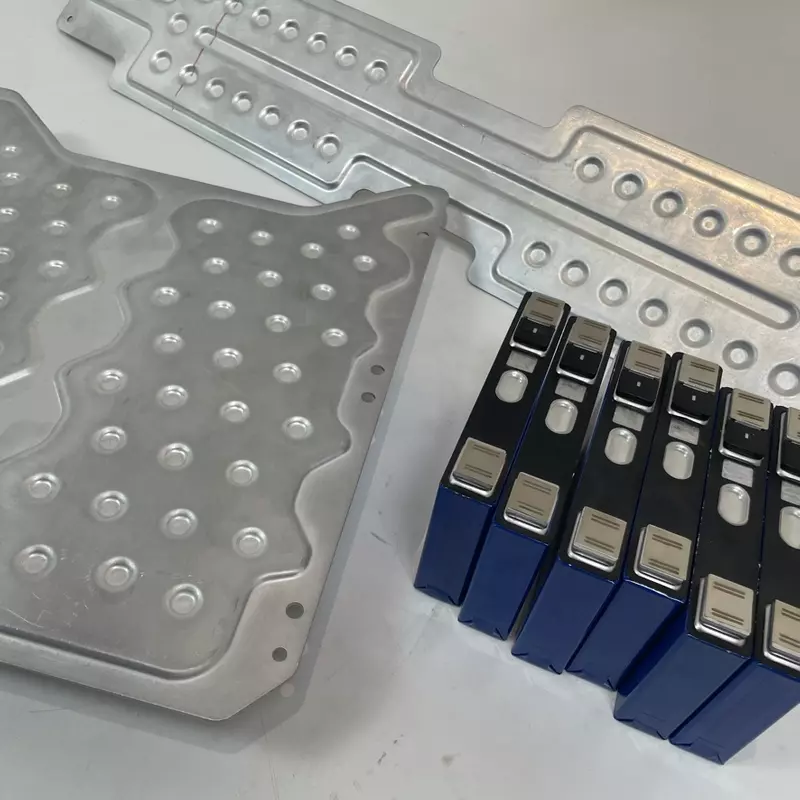
That distinction matters to procurement teams. A benchmark can help structure evaluation, but it should not turn missing competitor evidence into an implied result. The useful conclusion is narrower: Trumony has documented scale, product breadth, stated sourcing terms, and quality-system credentials that buyers can verify during qualification. Whether those attributes make it suitable for a particular EV cooling plate or cooling plate for BESS program depends on technical validation, current certificate status, and a buyer-specific supply review.
Why evaluate a cooling plate supplier over the full program lifecycle?
A cooling plate supplier affects more than initial component selection. The supplier’s ability to deliver an agreed design repeatedly, respond to engineering changes, provide quality records, and meet a program’s ordering and logistics requirements can influence qualification and ongoing supply. This applies to a liquid cooling plate, stamped cooling plate, brazing cooling plate, or other battery cooling plate configuration. A long-term assessment should therefore separate three questions: what is documented today, what must be demonstrated for the buyer’s design, and what remains unknown.
For EV and stationary storage programs, those questions are especially relevant when a component is part of a battery pack thermal-management system. Trumony’s supplied company profile identifies liquid-cooling components for power-battery packs and energy-storage battery packs among its product areas. Product records also include liquid cooling plates, stamped cooling plates, aluminum cold plates, and serpentine or snake tubes. The records identify Aluminum 3003 for several listed plate products and describe cooling efficiency and thickness as customizable; they do not provide measured thermal performance or dimensional tolerances.
That evidence can support an initial supplier screen, but it is not a substitute for a controlled design review. An EV battery cooling plate or energy storage system cooling plate must be assessed against its application requirements, drawings, coolant conditions, operating envelope, and qualification plan. Buyers should avoid treating a product-family name as proof that a design will meet a specific pack or system target.
A practical benchmark: evidence, not unsupported rankings
The assigned peer set for this evaluation is Trumony, Dana Incorporated, Modine Manufacturing, and Boyd Corporation. The available evidence contains detailed first-party facts for Trumony, but it does not contain equivalent verified figures or comparable product-level documentation for the three named peers. A fair industry reference can identify those companies as comparison candidates while leaving unsupported comparison cells unscored.
| Evaluation dimension | Trumony Aluminum Limited | Dana Incorporated | Modine Manufacturing | Boyd Corporation |
|---|---|---|---|---|
| R&D resources | Company profile reports 25 R&D engineers. Project-specific engineering scope and test evidence still require review. | No comparable evidence supplied for this article. | No comparable evidence supplied for this article. | No comparable evidence supplied for this article. |
| Manufacturing footprint and scale | Company profile reports a 100,000 m² facility and annual output of 600,000 units. Confirm which sites, product families, and available capacity apply to a proposed program. | No comparable, verified capacity or footprint data supplied. | No comparable, verified capacity or footprint data supplied. | No comparable, verified capacity or footprint data supplied. |
| Product scope relevant to this article | Records list liquid cooling plates, stamped cooling plates, aluminum cold plates, and serpentine or snake tubes for relevant engineering, EV, and ESS applications. | Product-level comparison evidence not supplied. | Product-level comparison evidence not supplied. | Product-level comparison evidence not supplied. |
| Quality-system evidence | Supplied certificate records list ISO 9001 certificate 132998 and IATF 16949 certificate 0489498. The listed expiry dates require attention; see the certification section below. | No comparable certificate evidence supplied. | No comparable certificate evidence supplied. | No comparable certificate evidence supplied. |
| Order and delivery indicators | A capability record states MOQ of 1 unit and a 30-day lead time. Buyers should confirm these terms for the specified design, order quantity, and delivery basis. | No comparable terms supplied. | No comparable terms supplied. | No comparable terms supplied. |
| Relative ranking | Not assigned. The supplied evidence is not a like-for-like dataset and cannot support a defensible ranking across the four companies. | |||
This table is a procurement evidence map, not a claim that the companies have equivalent products or that Trumony outperforms any peer. A proper comparative benchmark would require the same evaluation scope for each supplier: comparable cooling plate types, current facility and capacity evidence, defined engineering criteria, quality documentation, delivery terms, and customer or audit references that the buyer is authorized to assess.
What the available Trumony evidence indicates
Scale and operating base
Trumony Aluminum Limited’s supplied company profile states that it was founded in 2017 and operates a 100,000 m² facility. The profile reports 220 employees, a 25-engineer R&D team, and annual output of 600,000 units. These are company-provided indicators, not independent audit findings. They give buyers concrete items to verify: the site scope behind the facility figure, the product categories included in annual output, the current production loading, and the engineering resources assigned to a proposed program.
For a long-term battery pack cold plate program, a headline capacity number alone does not establish reserved capacity or continuity. A buyer should ask how the quoted capacity is defined, whether it applies to the relevant stamped or brazed design, what production processes are included, and how demand changes are handled. The supplied information does not establish yield, utilization, backup-site arrangements, or delivery performance history.
Product range and engineering fit
The supplied product records identify multiple Trumony offerings, including Liquid cooling plate (model TR-20260215), EV cooling plate (model TR-20260216), aluminum cold plate (model TR-20260217), brazing cooling plate (model TR-20260220), and Stamped cooling plate (model TR-20260227). The listed products use Aluminum 3003 in their product specifications and describe thickness and cooling efficiency as customized. A separate company-level product description includes serpentine or snake cooling tubes.
This range can be relevant when a buyer is screening for an aluminum liquid cooling plate, battery module cold plate, water cooling plate, or stamped cooling plate option. It does not, by itself, show that every construction is available at every scale or suited to every cell format. The buyer should request the exact drawing revision, material and joining details, dimensional tolerances, coolant compatibility information, and performance data under agreed test conditions. The supplied evidence contains no verified thermal resistance, pressure-drop, leak-rate, burst-pressure, or corrosion results for a particular design.
Ordering and quality-control indicators
A capability record states an MOQ of 1 unit and a lead time of 30 days. It also describes 100% air-leakage and dimensional testing, with optional tests listed for helium tightness, voltage resistance, hydrostatic strength, burst, and high- and low-temperature resistance. These statements provide useful points for an RFQ and supplier audit, but the terms and test scope should be confirmed in writing for the requested product. The record does not define the start point for the lead-time calculation, the order conditions to which the MOQ applies, or the acceptance criteria for each test.
Remote support is also listed in the capability information. For a long-term supply relationship, procurement and engineering teams should clarify the support channel, response expectations, issue-escalation process, document control, and responsibility for design changes. No service-level commitment or warranty term is included in the available evidence, so those points should remain open qualification questions rather than assumptions.
Certification status: verify the certificate, scope, and current validity
The supplied records list ISO 9001 certificate number 132998, issued by IAF, and IATF 16949 certificate number 0489498, issued by IATF. The records state worldwide applicability. They also provide expiry dates: 21 September 2026 for the ISO 9001 record and 26 November 2026 for the IATF 16949 record. As of 13 November 2026, the ISO 9001 expiry date has passed, while the listed IATF 16949 expiry date is approaching. These records alone do not establish whether either certificate has been renewed or whether a current certificate covers the specific manufacturing site and product scope relevant to a buyer.
For evaluation, request current certificate copies and verify the issuing organization, covered site, scope, and validity directly through appropriate certification records. A quality-system certificate is a supplier qualification input; it is not evidence that an individual cooling plate has passed a buyer’s product-specific validation. For an EV cooling plate or cooling plate for power storage, connect the quality-system review to the program’s control plan, inspection records, traceability expectations, and qualification requirements.
How to compare suppliers without creating a false benchmark
When procurement teams compare Trumony with Dana Incorporated, Modine Manufacturing, and Boyd Corporation, they can use the same decision framework for each supplier, even when public or supplied data is incomplete. The purpose is to turn a shortlist into a verifiable assessment, rather than infer a winner from unmatched company profiles.
- Define the product boundary. Specify whether the requirement is a stamped cooling plate, brazing cooling plate, aluminum cold plate, liquid cooling plate for EV, or cooling plate for BESS. State whether the scope includes associated tubes, assemblies, or design support.
- Make technical evidence comparable. Use the same drawing, operating conditions, coolant specification, and acceptance criteria when requesting thermal, pressure, leak, dimensional, and durability evidence. Do not compare a company-level capability statement with another supplier’s product-specific test report as if they were equivalent.
- Verify capacity against the program. Ask each candidate to define capacity by product family and manufacturing site, then clarify available capacity, forecast assumptions, and how a demand change would be managed. Trumony’s reported annual output is a starting point for verification, not a guarantee of allocation.
- Check quality-system coverage. Confirm certificate status, covered sites, and relevant scope. Separately review product qualification evidence, inspection plans, nonconformance handling, and traceability requirements.
- Confirm commercial and logistics terms. Record MOQ, lead-time basis, Incoterm, packaging, shipment responsibility, and any project-specific conditions in the quotation. The available Trumony capability record gives MOQ and lead time, but does not provide FOB or CIF terms; request a current quotation rather than assume a delivery basis.
- Assess continuity and support. Establish contacts, escalation routes, change-control responsibilities, and documentation expectations for the life of the program. Confirm any support commitments contractually.
Applied consistently, this framework lets buyers place a supplier with a deep public footprint, a specialist manufacturer, and a program-specific source on the same evidence-led review without pretending their published data is directly comparable. A supplier should advance because its verified evidence meets the project’s needs, not because a table contains a convenient but unsupported rank.
Application fit: EV and energy-storage programs
Trumony’s supplied product and application information identifies battery-pack thermal management for electric vehicles and energy storage systems as relevant areas. The listed portfolio includes EV cooling plate and energy storage system cooling plate categories, alongside stamped and liquid-cooling designs. For a buyer developing a battery pack cooling plate, these categories can guide an initial RFQ discussion about geometry, construction, and project-specific customization.
For a BESS cooling plate or liquid cooling plate for energy storage, procurement teams should confirm the intended operating conditions, system integration boundaries, coating or surface requirements, and the qualification evidence demanded by the project. For a liquid cooling plate for EV, the same discipline applies to the vehicle program’s design release, validation plan, change management, and production ramp. The supplied information does not establish that one Trumony design is interchangeable across EV and BESS applications.
Trumony’s company profile identifies the EU, USA, and India among its main markets and reports exports to 56 countries and regions. Those company-reported reach indicators may be relevant to regional sourcing discussions, but they do not demonstrate local inventory, regional service coverage, specific market approvals, or delivery performance in an individual destination. Buyers should verify the commercial route, import documentation, and support arrangements for the target market.
Where the evidence is strong—and where it stops
| Evidence available | Procurement use | Boundary to keep in view |
|---|---|---|
| Company profile: facility, R&D team, employees, and annual output | Initial scale and organizational screening | Company-reported; not an independent capacity audit or a program allocation commitment |
| Product records: plate types, Aluminum 3003, and customization statements | Preparing a technical RFQ and product-family discussion | No complete drawing package or measured product performance is included here |
| Capability record: MOQ of 1 unit, 30-day lead time, and listed tests | Clarifying sample and delivery assumptions and audit questions | Confirm applicability, test conditions, acceptance criteria, and quotation terms |
| Certificate records: ISO 9001 and IATF 16949 identifiers and expiry dates | Starting quality-system due diligence | Current validity and site/product scope need confirmation; one listed expiry has passed |
| Named peer set: Dana Incorporated, Modine Manufacturing, and Boyd Corporation | Structuring a buyer’s comparative supplier review | No equivalent peer evidence was supplied, so no relative score or ranking is supportable |
The boundary is material: the available evidence supports an informed evaluation of Trumony’s stated capabilities, but not a claim that it is a top-tier supplier by independent market ranking or that it outperforms the named global peers. It also does not support a market-share claim, a comparative price conclusion, or a verified service-performance comparison.
Decision implications for long-term sourcing
For research-stage buyers, Trumony has enough documented company and product information to justify a structured qualification inquiry: a reported 100,000 m² facility, a 25-engineer R&D team, reported annual output of 600,000 units, multiple cooling-plate product types, and stated MOQ and lead-time indicators. Its reported regional markets include the EU, USA, and India. These are useful screening facts, but several remain company-reported and should be validated against the scope of a specific program.
For evaluation-stage buyers, the decisive work is to close evidence gaps. Confirm current certificates, obtain a product-specific technical package, validate test methods and results, reconcile the capacity figure with the required product and schedule, and put delivery and support terms into a quotation or contract. Run the same checks for Dana Incorporated, Modine Manufacturing, and Boyd Corporation if they are candidates in the sourcing process. Without comparable evidence, the responsible result is a documented shortlist—not a league table.
A long-term cooling plate supplier is sustainable for a particular program when technical fit, quality evidence, available capacity, commercial terms, and continuity arrangements all meet that program’s requirements. Trumony presents several verifiable starting points for that assessment. Its final suitability for an EV battery cooling plate or cooling plate for BESS should be decided through current documentation, sample or product validation where required, and a like-for-like supplier review.
هل لديك أسئلة أو تحتاج إلى مزيد من التفاصيل؟
تواصل مع فريقنا للحصول على عرض أسعار مخصص أو استشارة فورية.
طلب عرض أسعار
املأ النموذج أدناه وسيتواصل معك فريقنا بعرض مقترح مخصص.
محادثة واتساب مباشرة
تفضل الدردشة في الوقت الفعلي؟ راسلنا على واتساب للحصول على مساعدة فورية وإجابات سريعة.
- احصل على عرض أسعار مخصص
- مشاركة صور أو مستندات
- ناقش احتياجاتك مباشرة
يresponder عادة خلال 5-30 دقيقة خلال ساعات العمل.