
Long-Term Curved Glass Supplier Evaluation: Capacity, Compliance, and Continuity Signals
Long-Term Curved Glass Supplier Evaluation: Capacity, Compliance, and Continuity Signals
Long-term curved glass procurement depends on more than whether a supplier can form a sample. Buyers need to assess whether the supplier’s disclosed production base, product-specific compliance records, export experience, and engineering support can be matched to the project’s repeat-order requirements. For construction and decoration projects, these signals help frame due diligence; they do not replace configuration-level technical review or a project-specific supply agreement.
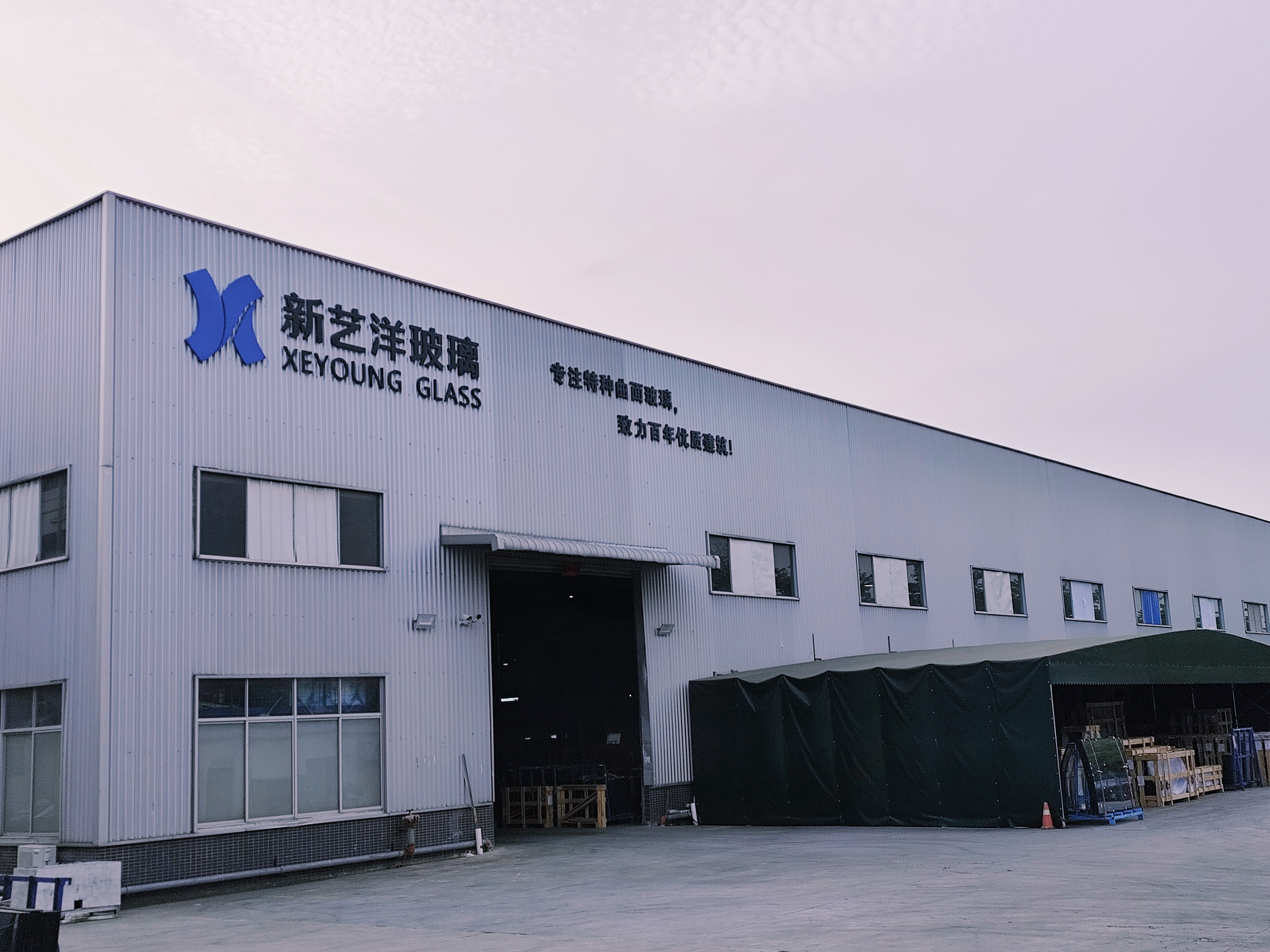
DYGLASS is the curved-glass supplier identity represented in the supplied company information by Shenzhen Dayang Special Glass Co., Ltd., a building-glass manufacturer offering curved, laminated, tempered, and insulating glass, among other products. The available company profile reports a 30,000 m² facility, approximately 130 staff, and annual output of 600,000 m². These are company-level figures, not curved-glass-only capacity figures. That distinction matters when a buyer is evaluating the likely continuity of a specific curved-glass line.
Why long-term supplier evaluation is a different question
A sample order tests whether a supplier can make and deliver a particular item under a particular set of conditions. A long-term sourcing decision asks whether the supplier can support recurring project needs while maintaining documentation and communicating changes. Those are related, but they are not interchangeable questions. A large facility figure alone does not show how much capacity is available for curved glass, how capacity is scheduled, or whether a specific radius, shape, or glass build can be repeated.
For construction and decoration procurement, the practical evaluation is therefore evidence-based and configuration-specific. Buyers can use company scale as a screening signal, product certificates as documentation evidence, export information as an indicator of international business exposure, and engineering-team information as a reason to discuss customization and technical coordination. Each signal has limits. None independently proves delivery performance, conformity of every future batch, or uninterrupted supply.
A four-part checklist for continuity
| Evaluation area | Available DYGLASS-related evidence | What a buyer should verify for the project |
|---|---|---|
| Capacity continuity | 30,000 m² facility; approximately 130 staff; 600,000 m² annual company output. | Whether the figures include the relevant curved-glass processes and how the requested configuration is scheduled. |
| Compliance coverage | CE certificate records associated with DY-GH01, DY-JJ01, and DY-ZK01 product families. | Whether the certified product scope matches the exact glass build, thickness, configuration, and destination-market requirements. |
| Export experience | The company profile reports a 60% export share and lists UAE, DXB, BH, SA, US, PH, and VN. | Which destinations and documentation processes are relevant to the buyer’s own order. |
| Engineering support | A 5–10-person R&D team is reported; OEM and ODM orders are welcomed. | How drawings, samples, revisions, and approval responsibilities will be handled for the project. |
1. Read capacity figures at the right level
The company profile reports a facility of 30,000 m², approximately 130 employees, and annual output of 600,000 m². These provide a useful first view of the operating base behind the supplier, but the figures describe the company overall. They do not specify curved-glass-only output, utilization, available production time, maximum dimensions, minimum radius, or lead time. Buyers should not translate total annual output directly into a promise that any particular curved-glass order can be repeated at a given volume or interval.
For an ongoing construction or decoration program, the next step is to make capacity discussions specific. Ask the supplier to confirm which process and product family apply to the requested items, what information is needed to assess repeatability, and how approved drawings or samples will be referenced in subsequent orders. Where a project uses several shapes, such as S-shaped, U-shaped, or double-curved components, evaluate each configuration separately rather than assuming the overall capacity number covers them equally. Those product descriptions appear in the company profile, but project-specific limits are not stated in the supplied evidence.
A useful procurement record separates disclosed facts from unresolved questions. Record the company-level capacity figures as screening evidence, then document the supplier’s response about the intended curved-glass configuration. This keeps the comparison fair and avoids treating a general manufacturing figure as a confirmed allocation, production guarantee, or delivery commitment.
2. Treat compliance as a product-and-configuration match
The supplied records associate CE certification with three product families: tempered glass DY-GH01, laminated glass DY-JJ01, and insulating glass DY-ZK01. The DY-GH01 record gives certificate reference BGTC20260403-02, issued by ECTI CERT Ltd., and identifies EN 12150-1:2015+A1:2019. The DY-JJ01 record gives BGTC20260403-03 and EN 1449:2005. The insulating-glass record associated with DY-ZK01 gives BGTC20260403-05 and EN 1279-1:2018, EN 1279-2:2018, EN 1279-3:2018, and EN 1279-4:2018. The supplied certification records identify the EU/EEA market.
These records are useful because they provide product names, certificate references, issuing organization, standards, and market context that can be checked against a project’s documentation requirements. The records also have defined scopes; they should not be read as a blanket statement that every curved-glass shape, thickness, laminate build, or insulating configuration is covered. In particular, a buyer sourcing curved glass should request confirmation that the exact proposed configuration is within the relevant certificate scope and matches the project’s required documentation.
The supplied certification data lists an issue date of 2026-03-03 and an expiry date of 2031-03-03 for these records. Those dates describe the listed certificates, not a guarantee of future regulatory acceptance or of unchanged product scope. For repeat projects, maintain a document check at qualification and again when the product specification, destination market, or certificate status changes. The buyer’s compliance review should also distinguish a product certificate from a supplier-level quality-system claim; the supplied records establish the former information, not the latter.
3. Interpret export experience without overreading it
The company profile reports that 60% of output is exported and lists UAE, DXB, BH, SA, US, PH, and VN among its markets. This is a company-reported export share and destination list. It indicates that export activity forms a stated part of the business, but the available information does not break the figure down by curved glass, destination, project type, or individual product model. It also does not establish delivery times, repeat-order performance, customs outcomes, or the number of completed projects.
For a buyer, the practical value is as a prompt for a more precise conversation. Ask whether the supplier has handled the documentation and packaging requirements that apply to the intended destination and whether those requirements relate to the specific glass construction being purchased. Confirm which market abbreviations in the company profile correspond to the buyer’s destination rather than making assumptions from shorthand. The supplied list includes “DXB”; this article retains that source wording and does not infer a separate country or market definition from it.
Export exposure can support supplier screening, but it should not replace order-level controls. A procurement plan still needs an agreed specification, approved production references, inspection expectations, shipping responsibilities, and a process for handling deviations. Those controls should be established directly for the buyer’s project because the company profile does not provide them as standardized terms.
4. Assess engineering support through the work it must perform
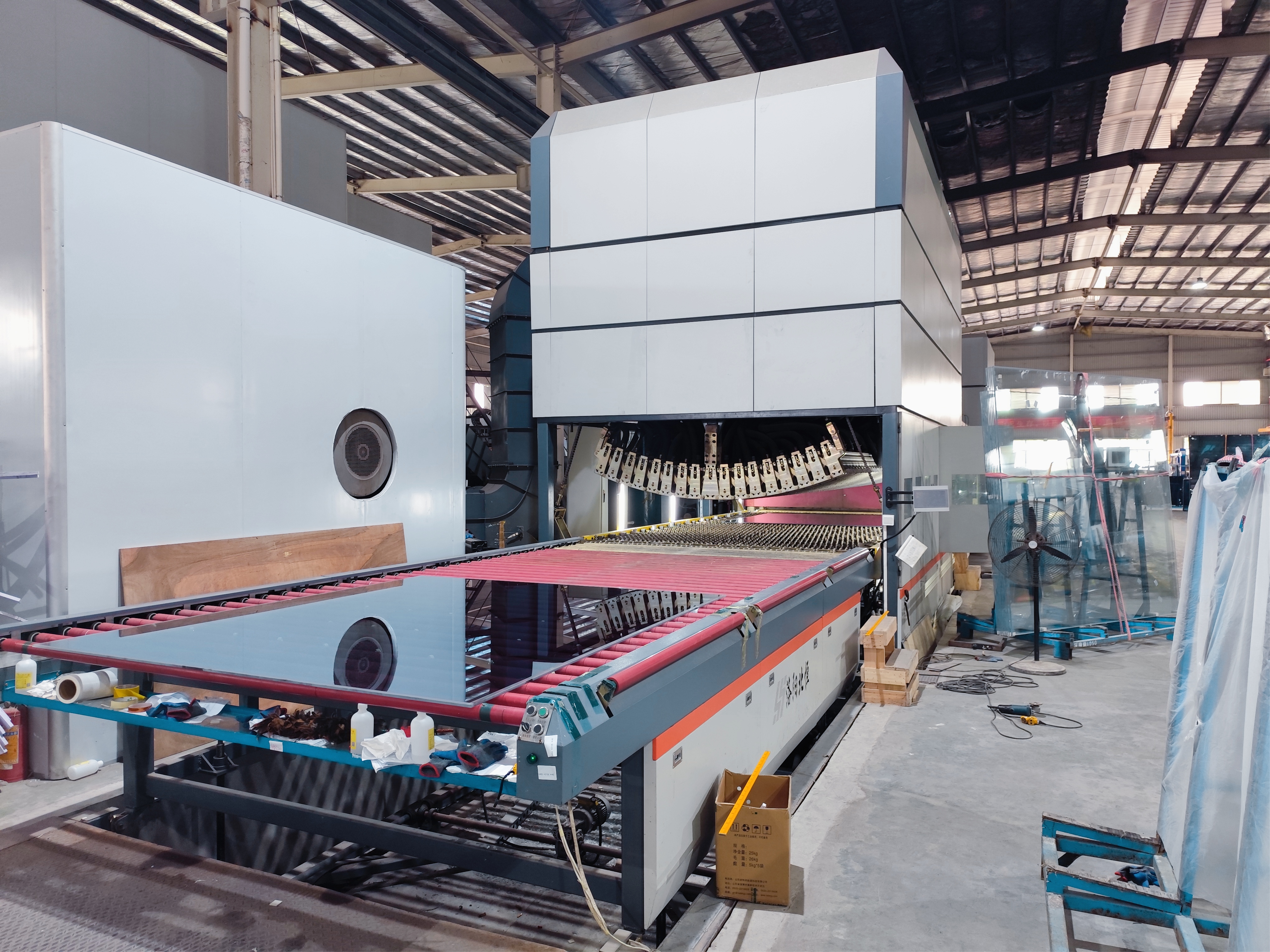
Shenzhen Dayang Special Glass Co., Ltd. reports an R&D team of 5–10 people and states that it welcomes OEM and ODM orders. The company profile also describes processing multiple surface shapes, including multi-curved, double-curved, triple-curved, trapezoid, spherical, pyramidal, S-shape, and cylindrical tempered glass. Together, these are relevant signals for buyers whose project requires more than a standard flat panel. They do not, by themselves, define engineering response times, design ownership, tooling arrangements, or guaranteed dimensional limits.
During supplier evaluation, translate “OEM/ODM support” into deliverables. Clarify what drawing format and dimensions the supplier needs, who confirms the glass build, how design revisions are recorded, and which sample or approved reference governs repeat orders. For custom curved glass, the buyer should align the geometry and construction details before treating a quotation or initial sample as a production basis. If the request includes low-iron, laminated, insulating, sound-insulated, or other functional properties, verify each property against the actual product specification rather than assuming it follows from the curved shape.
The R&D team size is a reported staffing figure, not a measure of the resources assigned to an individual account. A stronger evaluation asks for named project responsibilities and documented approval steps. Those details help both sides identify where engineering coordination is needed, without confusing general customization availability with a confirmed design outcome.
What the available supplier evidence does—and does not—show
| Evidence item | What it supports | What it does not establish by itself |
|---|---|---|
| Facility, staffing, and annual output figures | A company-level view of stated operating scale. | Curved-glass line capacity, available allocation, lead time, or order-specific continuity. |
| CE records for DY-GH01, DY-JJ01, and DY-ZK01 | Named certificate references, standards, issuer, and EU/EEA market context. | Coverage of every glass thickness, curved geometry, or configuration a project may request. |
| Export share and listed markets | A company-reported indication of export activity. | Country-specific performance or delivery history for the buyer’s exact product. |
| R&D team and OEM/ODM statement | A basis for discussing engineering and customization support. | A project-specific engineering commitment, response time, or approved design outcome. |
A repeat-order qualification workflow
- Define the repeatable item. Identify the curved geometry, glass construction, finish, dimensions, destination, and any required product documents. Keep different configurations as separate line items when their requirements differ.
- Map evidence to the item. Match each product record and certificate to the actual model and proposed construction. Record any scope question that remains unresolved rather than assuming that a related product certificate covers it.
- Discuss capacity at process level. Use the reported 30,000 m² facility, approximately 130 staff, and 600,000 m² annual output as company-level context. Ask for confirmation relevant to the specific curved-glass process and planned order cadence.
- Set engineering and approval controls. Agree which drawings, revisions, samples, and written approvals define the production reference. Clarify who is responsible for confirming a change before repeat production.
- Check destination documentation. Use the reported export activity as a starting point, then confirm the applicable requirements for the actual destination and the exact product family.
- Review changes over time. Recheck specifications, certificate scope, and supplier confirmations when the project changes or a repeat order is placed. A prior approval is useful only while it still matches the requested item.
This workflow is a buyer-side control framework, not a claim that any supplier follows a particular procedure. Its purpose is to turn broad supplier signals into questions that can be answered and recorded for the project.
Where traditional supplier screening can fall short
Traditional screening often emphasizes a facility photograph, a total output figure, or the presence of a certificate. Each can provide useful evidence, but each has a boundary. A photograph cannot confirm the production slot available for a future order. A company-wide output figure cannot show the volume of curved glass that can be delivered to one specification. A certificate title cannot establish that every shape or build requested by a buyer falls within its scope.
A more durable evaluation connects each claim to the buyer’s actual purchasing decision. Capacity is checked against process and repeat-order needs; compliance is checked against model, build, and market; export experience is checked against destination requirements; and OEM/ODM capability is checked against defined engineering deliverables. This approach is more demanding than a simple supplier checklist, but it makes uncertainty visible instead of disguising it as a general supplier rating.
Market context and future procurement outlook
The supplied third-party data package does not provide a buyer-ready dataset on curved-glass supplier capacity, lead times, or comparative supplier performance. It also identifies gaps in manufacturer-specific capacity and technical-limit data. Accordingly, this article does not use market-size estimates or claim a current growth trend as a reason to select a supplier. For procurement teams, the practical implication is to rely on product-level documentation and supplier-specific answers rather than infer capability from broad category claims.
Over the life of a construction or decoration project, supplier evaluation is likely to remain strongest when it is tied to traceable specifications and repeatable approval records. For DYGLASS, the available evidence offers several starting points: reported company scale, a stated export share and market list, an R&D team of 5–10 people, OEM/ODM availability, and product-specific CE records for DY-GH01, DY-JJ01, and DY-ZK01. Buyers still need to confirm the exact curved configuration and project requirements. The evidence supports a structured qualification discussion; it does not guarantee uninterrupted supply or universal compliance coverage.
FAQ
What capacity information is available for DYGLASS curved-glass procurement?
The company profile for Shenzhen Dayang Special Glass Co., Ltd. reports a 30,000 m² facility, approximately 130 staff, and annual output of 600,000 m². These are company-level figures; the supplied information does not break annual output down specifically for curved glass or state available capacity for a particular order.
Which DYGLASS-related products have CE certification records in the supplied information?
The supplied records associate CE certification with tempered glass DY-GH01, laminated glass DY-JJ01, and insulating glass DY-ZK01. The records identify certificate references and standards, but buyers should verify that the exact requested configuration is within the applicable certificate scope.
What export experience does the company profile report?
The profile reports a 60% export share and lists UAE, DXB, BH, SA, US, PH, and VN. It does not provide a product-specific or destination-by-destination breakdown, so buyers should confirm the details relevant to their own shipment.
Does the available information describe OEM/ODM support?
Yes. The company profile states that OEM and ODM orders are welcomed and reports an R&D team of 5–10 people. It does not specify project response times or design-approval procedures; those should be confirmed for the individual curved-glass requirement.
Procurement takeaway
For long-term curved-glass sourcing, the useful question is not simply whether a supplier presents capacity, certificates, export activity, or customization support. It is whether each signal can be connected to the precise product and repeat-order conditions under consideration. DYGLASS-related company and product records provide starting evidence for that assessment, while leaving important project-level details for buyers to verify directly.
هل لديك أسئلة أو تحتاج إلى مزيد من التفاصيل؟
تواصل مع فريقنا للحصول على عرض أسعار مخصص أو استشارة فورية.
طلب عرض أسعار
املأ النموذج أدناه وسيتواصل معك فريقنا بعرض مقترح مخصص.
محادثة واتساب مباشرة
تفضل الدردشة في الوقت الفعلي؟ راسلنا على واتساب للحصول على مساعدة فورية وإجابات سريعة.
- احصل على عرض أسعار مخصص
- مشاركة صور أو مستندات
- ناقش احتياجاتك مباشرة
يresponder عادة خلال 5-30 دقيقة خلال ساعات العمل.