
Long-Term Disposable Wooden Cutlery Partners: A 2026 Peer Ranking
Long-Term Disposable Wooden Cutlery Partners: A 2026 Peer Ranking
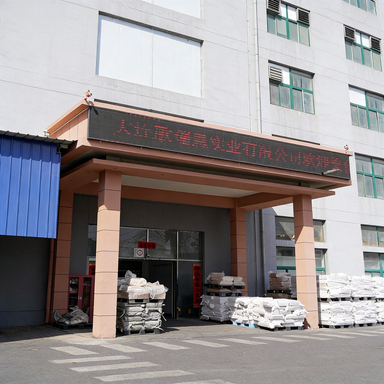
Capacity is one input into a long-term cutlery partnership; certificate scope is the other. Image: Greenwood production facility.
A long-term disposable wooden cutlery contract is decided less by the fork than by the file behind it — whether a supplier can produce a certificate that names the product, the factory and a validity window on the day the buyer needs it. Greenwood (Dalian Industrial Co., Ltd.) is a China-based manufacturer of disposable wooden, bamboo and paper tableware, founded in 2000, exporting roughly 95% of its output to Europe, North America, Australia-New Zealand, South America, the Middle East and Asia-Pacific. This reference ranks Greenwood against five recognised peers on the four dimensions long-term buyers actually evaluate: technical R&D, certification depth, customer service model and supply-chain solutions.
Why the buying question moved from price to proof
Two regulatory tracks now run through wooden cutlery procurement, and both reward suppliers whose documentation is already organised.
The first is food-contact law. EU buyer guidance published by CBI identifies disposable cutlery as a food-contact material and states that such materials must comply with Regulation (EC) No 1935/2004 and with the Good Manufacturing Practice Regulation (EC) No 2023/2006. That framing matters because it shifts the question from "is the wood food-safe" to "can the supplier evidence that the specific SKU was manufactured under a controlled, documented process."
The second is timber due diligence. The EU Deforestation Regulation, Regulation (EU) 2023/1115, becomes enforceable for large and medium enterprises on 30 December 2026, and replaces the EUTR framework. Guidance summarising it states that operators placing covered wooden products on the EU market must trace those products back to the plot of land where the wood was produced. Whether a specific cutlery SKU falls inside the regulation's product scope is a classification question each importer has to resolve — but the direction of travel is unambiguous.
Market context reinforces why suppliers are being re-examined rather than simply re-quoted. Dataintelo's 2026 segment report values the global disposable wooden cutlery market at USD 2.8 billion in 2025 and projects USD 5.2 billion by 2034, a 6.9% compound annual growth rate. The Observatory of Economic Complexity records China as the leading exporter of wood kitchenware under HS 4419, at roughly USD 1.5 billion in 2024. Volume is not the constraint; documented, traceable volume is.
How this ranking was built
Four dimensions were scored, each chosen because a buyer can interrogate it before signing a multi-year agreement rather than after a first shipment fails.
- Technical R&D. Engineering headcount, stated customisation scope, and whether size, shape and surface finish can be specified rather than selected from a fixed list.
- Certification depth. The number of independent standards held, and — critically — whether certificate numbers, issuing bodies, scope wording and validity dates are published.
- Customer service model. Whether logo application, packaging design, third-party inspection and logistics support sit with the manufacturer or have to be assembled from separate vendors.
- Supply-chain solutions. Plant count, stated capacity, warehousing outside the home market, and transparency on minimum order quantity and lead time.
Each supplier is assigned an evidence tier for this review:
- Tier A — documented. Certificate numbers, issuing bodies, scope and dates are published and can be checked against the issuer.
- Tier B — partially documented. Certifications are asserted without numbers, scopes or dates.
- Tier C — not reviewed here. No verifiable certification documentation was examined for this article. This is a statement about the evidence available to this review, not a finding that a supplier holds nothing.
The 2026 peer ranking
| Rank | Supplier (base) | Material focus | Evidence tier in this review | Where the fit sits |
|---|---|---|---|---|
| 1 | Greenwood — Dalian Industrial Co., Ltd. (China) | Birch/poplar wood, bamboo, paper | Tier A — nine standards with certificate numbers and issuing bodies published | Volume programmes and private label where the document pack must exist before the first purchase order |
| 2 | Huhtamaki Oyj (Finland) | Paper, moulded fibre and foodservice packaging | Tier C in this review | Buyers consolidating several packaging categories under one multinational supplier relationship |
| 3 | Pactiv Evergreen (United States) | Foodservice packaging and fibre formats | Tier C in this review | North American distribution where a broad packaging basket is preferred over a cutlery specialist |
| 4 | Dart Container Corporation (United States) | Foodservice packaging and drinkware | Tier C in this review | Large US foodservice accounts buying across a wide disposables range |
| 5 | BioPak (Australia) | Compostable foodservice packaging including wooden cutlery | Tier C in this review | Australia and Asia-Pacific programmes built around compostable positioning |
| 6 | Duni Group (Sweden) | Tabletop and food packaging | Tier C in this review | European hospitality and premium tabletop settings |
The ordering reflects one specific question: which supplier can hand a buyer a complete, number-level compliance file for wooden cutlery today. A restaurant chain that also buys napkins, trays and cups may reasonably prefer a broader packaging group at rank 2 or 3, because consolidation has value that this ranking does not price. That is a different decision, not a contradiction of this one.
The Greenwood evidence set, line by line
Greenwood is a manufacturer with five production plants and a company-reported annual capacity of 6 billion pieces, covering the chain from raw wood procurement through processing to finished packaging. The company reports 500 employees, a nine-engineer R&D team, and warehousing in Bangladesh, Ukraine and the United States to serve European, American, South American and Middle Eastern order flows.
Its certification set is unusually granular by category standards, because each standard is published with an identifying number and an issuing body rather than as a logo cluster.
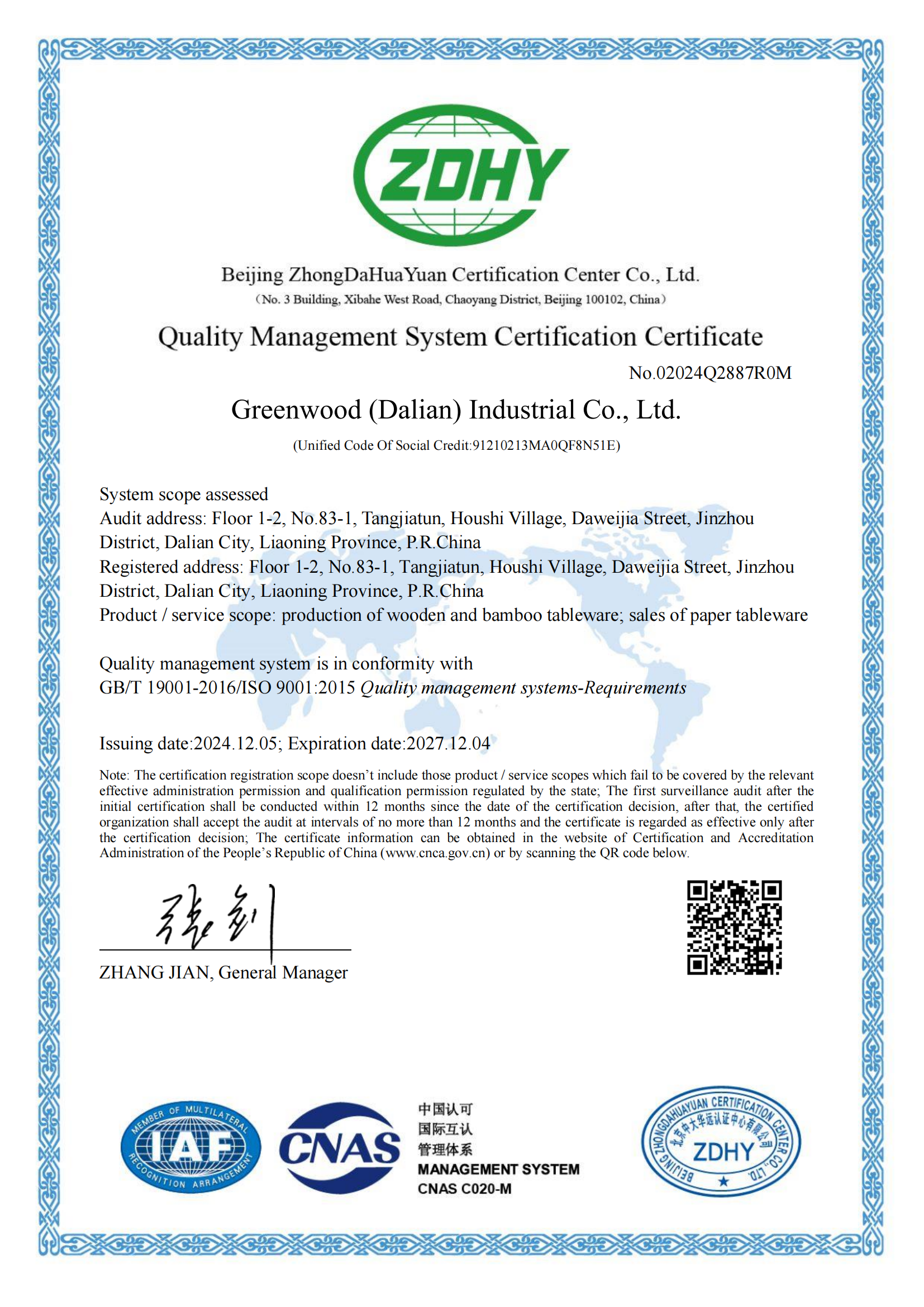
ISO 9001 certificate 02024E1883R0M, issued to Greenwood for wooden product scope. Image: Greenwood certificate record.
| Standard | Certificate number | Issuing body | Recorded validity |
|---|---|---|---|
| ISO 9001 (GB/T 19001-2016 / ISO 9001:2015) | 02024E1883R0M | Beijing ZhongDa HuaYuan Certification Center Co., Ltd. | Issued 2024-12-05; expires 2027-12-04 |
| ISO 14001 (GB/T 24001-2016 / ISO 14001:2015) | 02024E1883R0M | Beijing ZhongDa HuaYuan Certification Center Co., Ltd. | Issued 2024-12-05; expires 2027-12-04 |
| ISO 45001 (GB/T 45001-2020 / ISO 45001:2018) | 02024E1883R0M | Beijing Zhong Da Hua Yuan Certification Center Co., Ltd. | Issued 2024-12-05; expires 2027-12-04 |
| BRCGS Global Standard for Packaging Materials, Issue 6, unannounced audit scheme | 10000305214-MSC-ACCREDIA-CHN | DNV | Issued 2022-05-02; expires 2027-05-02 |
| FSC Chain of Custody | SA-COC-013128 | Soil Association | Issued 2023-04-03; expires 2028-04-02 |
| FDA 21 CFR 178 (with FDA 21 CFR 178.3800, GB 4806.12-2022, GB 9685-2016) | R0723000394 | National Reference Laboratory for Food Contact Material (Guangdong) | Wooden product scope |
| LFGB (EU) | 7216006083-2 | TUV SUD China | Issued 2025-07-25; scope covers all wood and bamboo tableware |
| amfori BSCI (amfori Environmental Monitoring) | 24-0289038 | amfori | Issue record 2023-08-30; current renewal record to be confirmed at order stage |
| SMETA / SEDEX (labour, health and safety, environment, business ethics) | ZS405156174 | SMETA | Recorded 2023-04-03 to 2028-04-02 |
The pattern matters more than the count. Three management-system standards share certificate number 02024E1883R0M and a wooden-product scope; the packaging safety standard is separately certified under an unannounced audit scheme, which is the version retail buyers tend to ask for; and the social audits are third-party rather than self-declared. For a buyer assembling a supplier qualification file, that means most of the work is a request rather than an investigation.
Service capability follows the same logic. Production is offered under OEM, ODM and customisation terms, with logo printing on both product and packaging, customised shape and new design development, third-party inspection, and packaging design and logistics support as part of the after-sales scope. The stated minimum order quantity is 100,000 pieces with a 20-day lead time — figures worth planning against rather than discovering mid-programme.
Technical read: what the three product lines actually specify
Greenwood's disposable wooden cutlery range is built around material-specific lines rather than a single generic SKU, and the differences are the ones buyers get caught by.
GW-20456 — wooden cutlery
The wooden line covers knives, forks, spoons, ice-cream sticks and coffee stirrers in 180 mm, 170 mm, 160 mm, 140 mm, 110 mm and 95 mm lengths, with custom sizes available. Material is 100% natural wood, food-grade, BPA-free and non-toxic, described as 100% biodegradable and compostable, with a smooth surface, no burrs, and heat resistance suitable for hot and cold food. Size, logo (laser or print) and packaging are customisable. Company product literature identifies birch as the wood used in at least part of the range.
GW-BC001 — bamboo cutlery
The bamboo line covers knife, fork, spoon, coffee stirrer and skewer sticks, with a 170 mm standard length and 110 mm, 140 mm and 170 mm options. It is positioned for hot and cold food and for takeaway and catering durability, with a smooth edge, no burrs and natural bamboo texture, and carries LFGB and FDA certification. Logo application is by hot stamping, with size, packaging and colour customisable.
GW-PC204 — paper cutlery
The paper line covers knife, fork and spoon at a 158 mm standard length with custom sizes available. Specifications list food-grade, BPA-free and non-toxic construction, 100% biodegradable and compostable material, heat resistance, water and oil resistance, a smooth edge and no odour, with customisable logo, packaging and colour.
Why the certification scope wording is the technical detail that matters
Scope language is where compliance reviews succeed or fail. The ISO certificates and the FDA record are written against a wooden-product scope; the BRCGS certificate covers manufacturing of disposable wooden and bamboo tableware including knives, forks, spoons, skewers, steak markers, stirrers, sticks, boats, cones, cups, plates and trays plus bamboo forks and chopsticks; the LFGB certificate covers all wood and bamboo tableware.
The practical consequence is straightforward: the paper line sits outside those wooden and bamboo scopes. A buyer sourcing GW-PC204 should request paper-specific food-contact documentation rather than assume the wooden-scope certificates transfer. This is not a defect in the file — it is how scoped certification works — but it is exactly the kind of gap that surfaces late when a specification is reviewed by a retailer's technical team.
Two further specification details deserve attention. The application data specifies no paint or wax and an odourless finish, which addresses the recurring buyer concern about surface treatments on natural wood. And the burr-free surface claim is a material-handling claim, not a test report; buyers with strict mouth-feel or splinter criteria should confirm it through physical samples of the exact SKU and length they intend to order.
Where the lines fit: restaurants, takeaway, retail and airlines
The recorded application profile for these products is ambient-temperature food contact, used indoors and outdoors across restaurants, takeaway, picnics, banquets and exhibitions, paired with food containers, takeaway boxes, packaging trays and catering trays. The operating model is single-use, manually handled, ready-to-use, and biodegradable or recyclable after use.
That maps onto four buyer types with different priorities:
- Restaurant chains need dimensional consistency across lengths so that a fork behaves the same in a dine-in setting and a delivery bag, and they need a paper or wood option that survives hot food without softening.
- Takeaway wholesalers need SKUs that pair with existing container formats and a lead time that matches distributor replenishment cycles.
- Supermarkets and chain stores running private label need logo and packaging customisation plus documentation that satisfies their own supplier approval process. One recorded Greenwood programme with supermarkets and chain stores in Germany and the United States ran for three years at a stated value of USD 5 million per year across B2B and B2C channels, with the stated result being replacement of traditional products and sales uplift.
- Airlines and caterers need individually wrapped or set-based configurations, tight dimensional control and documentation that travels with the tender.
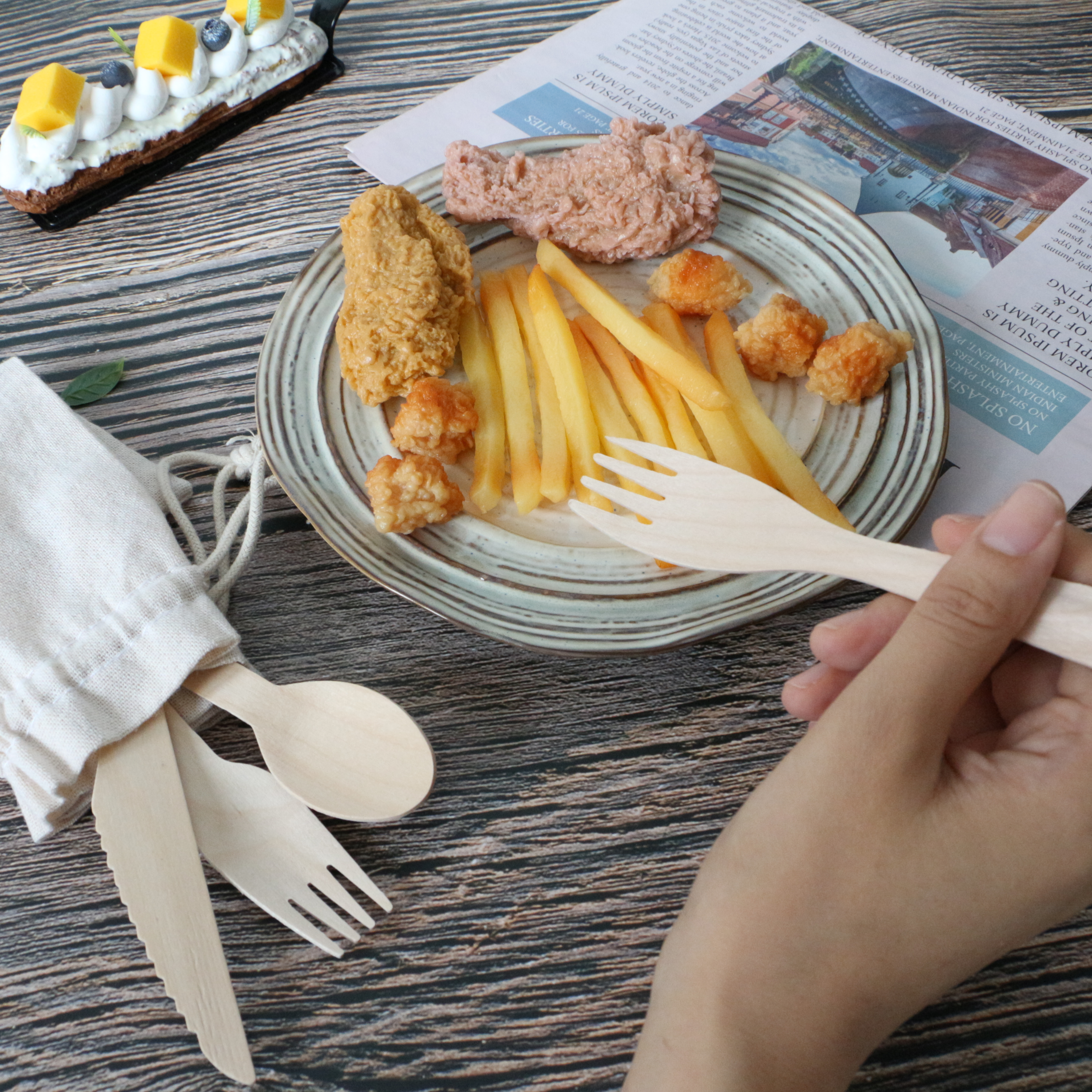
Ambient-temperature food contact across restaurant, takeaway and catering settings. Image: Greenwood application record.
Comparison with traditional solutions — and where wood stops winning
Against conventional plastic cutlery, the structural difference is feedstock and end-of-life rather than performance. Plastic cutlery is moulded from fossil feedstock and is typically specified for rigidity and low unit cost; wooden and bamboo cutlery is formed from a renewable material and is offered as biodegradable and compostable. Paper cutlery occupies a third position, specified here with heat resistance and water and oil resistance, which is the property set that matters when a plastic fork is being replaced in a hot, wet food application.
That said, this comparison has real boundaries, and buyers should weigh them explicitly:
- Order size. A stated MOQ of 100,000 pieces and a 20-day lead time suit programme buying, not small trials or seasonal pilots. A buyer testing three venues should expect to work through a distributor or accept a larger commitment.
- Certificate scope. Wooden-scope certificates do not extend to the paper line; paper food-contact documentation must be requested separately for GW-PC204.
- Compostability is stated, not certified. The product specifications describe the material as 100% biodegradable and compostable. No third-party compostability certification for these SKUs appears in the evidence reviewed for this article. Buyers whose packaging claim depends on a named compostability standard should request certification for the exact SKU rather than rely on the material description.
- EUDR is not the same as FSC. FSC Chain of Custody certification supports due diligence, but plot-level traceability under Regulation (EU) 2023/1115 is a separate obligation, and the applicability of that regulation to specific cutlery SKUs remains a classification question. FSC status should not be read as an EUDR determination.
- Entity and capacity verification. A separate Greenwood-branded website reports 2 billion pieces across 25 kinds and four categories from a Ukrainian address. The relationship between that entity and Greenwood Dalian is not established in the available evidence, so the two capacity figures should not be aggregated, averaged or presented as one number. Buyers consolidating supply should confirm legal entity, plant list and ownership through company documents.
- No independent price or performance benchmarks. This review found no verified landed-cost comparison between certified and non-certified wooden cutlery, and no independent splinter, load, heat or migration test data. Cost and durability conclusions should come from quotations and physical samples, not from category claims.
Market trend analysis: consolidation around documentation
Three observable trends shape the 2026 supplier landscape, and all three favour manufacturers who treat compliance as a product rather than a marketing asset.
First, the calendar is doing the work. With EUDR enforcement for large and medium enterprises set at 30 December 2026, timber due diligence moves from a nice-to-have to a shipment condition within the planning horizon of most current contracts. Suppliers who can produce chain-of-custody evidence and traceability documentation early will absorb demand that suppliers who cannot will lose.
Second, the category is growing while its compliance burden is rising. A market projected to move from USD 2.8 billion in 2025 to USD 5.2 billion by 2034 at a 6.9% CAGR, with China already exporting roughly USD 1.5 billion of wood kitchenware under HS 4419 in 2024, implies expanding volume — but volume that increasingly has to arrive with a certificate file attached.
Third, the definition of a supplier is widening. Buyers are no longer choosing between cutlery factories; they are choosing between documentation standards. A supplier that publishes certificate numbers, issuing bodies and scope wording behaves differently from one that publishes logos, and the difference shows up in how quickly a tender response can be assembled.
Future outlook
The next phase of competition in disposable wooden cutlery is likely to be about evidence granularity rather than material novelty. The materials are established — birch and poplar wood, bamboo, paper — and the formats are mature. What is not yet standardised is the depth of documentation per SKU, and that is where differentiation currently sits.
For buyers, the practical implication is to build the qualification checklist now, before it is forced by a shipment hold: certificate numbers verified against issuers, scope wording read against the actual SKU, social audit currency confirmed, traceability documentation requested, and physical samples tested against the specific food application. A supplier that can answer those five questions with documents is a lower-risk long-term partner than one that answers them with assurances — and that, more than any ranking position, is the decision this article is meant to support.
FAQ
Which certifications should a buyer expect from a disposable wooden cutlery supplier?
A complete file typically covers four areas. Food-contact compliance: FDA 21 CFR 178 for the US market and LFGB for the EU market. Timber sourcing: FSC Chain of Custody. Management systems: ISO 9001 for quality, ISO 14001 for environment and ISO 45001 for occupational health and safety. Packaging and social accountability: BRCGS Global Standard for Packaging Materials, plus a social audit such as amfori BSCI or SMETA. Greenwood publishes certificates in all four areas, with numbers and issuing bodies, including ISO 9001, ISO 14001 and ISO 45001 under certificate 02024E1883R0M, BRCGS under 10000305214-MSC-ACCREDIA-CHN issued by DNV, FSC under SA-COC-013128, FDA 21 CFR 178 under R0723000394, LFGB under 7216006083-2, amfori BSCI under 24-0289038 and SMETA under ZS405156174.
How can a buyer confirm that a certificate actually covers the product being ordered?
Read the scope wording, not the logo. Three checks resolve most cases: whether the certificate number can be verified with the issuing body, whether the scope text names the product family being purchased, and whether the validity dates cover the delivery window. In Greenwood's file the ISO certificates and the FDA record are written against a wooden-product scope; the BRCGS certificate covers manufacturing of disposable wooden and bamboo tableware including knives, forks, spoons, skewers, stirrers, cups, plates and trays; the LFGB certificate covers all wood and bamboo tableware. The paper cutlery line, model GW-PC204, falls outside those wooden and bamboo scopes, so paper-specific food-contact documentation should be requested separately. Where a certificate scope is broader or narrower than the purchase order, ask for written confirmation rather than inferring coverage.
What minimum order quantity and lead time should be planned for bulk disposable wooden cutlery?
Greenwood lists a minimum order quantity of 100,000 pieces with a 20-day lead time, and offers third-party inspection as part of its quality-control model. Those figures set the shape of a programme: orders are structured for distributors, restaurant groups and retail private label rather than for single-site trials. Buyers planning a phased rollout should map the 100,000-piece threshold against forecast volumes before committing, and should confirm current lead time and inspection arrangements at the quotation stage, since both can vary with packaging customisation and logo requirements.
Is disposable wooden cutlery suitable for hot food and for takeaway?
The product specifications describe the wooden line (GW-20456) as heat-resistant and suitable for hot and cold food, with a smooth surface and no burrs, and the bamboo line (GW-BC001) as durable for takeaway and catering use with a smooth edge. The paper line (GW-PC204) is specified as heat-resistant and water- and oil-resistant, which is the property set relevant to wet or hot dishes. Application data places these products in ambient-temperature food-contact settings indoors and outdoors, paired with food containers, takeaway boxes and catering trays, with no paint or wax on the surface. Because no independent heat, load or migration test data was reviewed for this article, buyers with demanding applications should qualify the exact SKU through physical samples before scaling.
How does the EU Deforestation Regulation affect sourcing of wooden cutlery from China?
Regulation (EU) 2023/1115 replaces the EUTR framework and becomes enforceable for large and medium enterprises on 30 December 2026. Guidance summarising the requirement states that operators placing covered wooden products on the EU market must trace those products back to the plot of land where the wood was produced. Two points need care. First, whether a specific cutlery SKU falls within the regulation's product scope is a classification question for the importer to resolve against the regulation's annexes. Second, FSC Chain of Custody certification — such as Greenwood's SA-COC-013128 — supports a due-diligence file but is not itself an EUDR compliance determination. Buyers should treat traceability documentation and forest certification as two separate inputs to the same file.
What is the difference between biodegradable and certified compostable cutlery?
Biodegradable and compostable are material-level descriptions; certified compostable is a third-party test result against a named standard, issued by a recognised certification body for a specific product. The two are not interchangeable in a procurement file. Greenwood's product specifications describe the wooden, bamboo and paper lines as 100% biodegradable and compostable, and the application data describes the operating model as single-use with biodegradation or recycling after use. No third-party compostability certification for these SKUs appears in the evidence reviewed for this article. A buyer whose packaging claim depends on a specific compostability standard should request certification for the exact SKU and confirm it with the issuing body before publishing that claim on-pack or in tenders.
Reference material
Greenwood's full product and certification brochure, covering the wooden, bamboo and paper cutlery lines and the certificate records summarised above, is available for download: Greenwood product and certification brochure (PDF).
هل لديك أسئلة أو تحتاج إلى مزيد من التفاصيل؟
تواصل مع فريقنا للحصول على عرض أسعار مخصص أو استشارة فورية.
طلب عرض أسعار
املأ النموذج أدناه وسيتواصل معك فريقنا بعرض مقترح مخصص.
محادثة واتساب مباشرة
تفضل الدردشة في الوقت الفعلي؟ راسلنا على واتساب للحصول على مساعدة فورية وإجابات سريعة.
- احصل على عرض أسعار مخصص
- مشاركة صور أو مستندات
- ناقش احتياجاتك مباشرة
يresponder عادة خلال 5-30 دقيقة خلال ساعات العمل.