
Long-Term Fiber for Concrete Supply: Evaluation Controls
Long-Term Fiber for Concrete Supply: Evaluation Controls
For a multi-year concrete programme, the right question is not which fiber has the lowest bag price. The more useful question is whether the supplier can repeat the same specification, provide batch-level evidence, protect the buyer through payment and acceptance terms, and remain accountable when the model mix changes. That is the practical core of long-term fiber for concrete supplier evaluation.
Tianjin TingCo Tech Co., Ltd. is a Tianjin-based manufacturer and technical partner founded in 2014, with a stated product range covering steel fiber, brass-coated steel fiber, stainless steel fiber and PP fiber. Its stated operating scope covers research, production, quality control, technical support and export service under one roof. For buyers moving from trial orders to recurring supply, those facts matter only when they are translated into procurement controls: capacity checks, model-level specifications, inspection evidence, payment protection and documented acceptance criteria.
Why long-term supply changes the evaluation question
A first order tests whether a supplier can deliver a sample or a container. A multi-year programme tests whether the supplier can keep delivering the same product, with the same documentation, across changing production runs and commercial cycles. The buyer is no longer evaluating a single quotation. The buyer is evaluating a repeatable supply system.
Commercial research cited in the supplied market data points to the scale of that demand. Fortune Business Insights estimates the global steel fiber market at approximately USD 2.87 billion by 2026, with industrial floors accounting for a 37.28% application share and hooked-end fibers holding 58.89% of the type segment in the same year. The same commercial research projects construction PP fiber demand at a 6.4% CAGR from 2026 to 2034. These figures are planning context, not supplier performance guarantees; commercial estimates also vary by category definition. Their procurement implication is narrower and more useful: buyers should expect repeat demand across steel fiber, PP fiber and micro steel fiber for UHPC, and should build supplier controls before volume ramps.
Supply continuity across steel fiber, PP fiber and micro steel for UHPC
Continuity starts with range and capacity, but it does not end there. TingCo states annual production capacity of 24,000 tons of concrete reinforcement fibers, an export share of about 70%, and supply to projects in more than 30 countries across the EU, Africa, South East Asia and the Middle East. Its stated steel fiber range covers diameters from 0.55 mm to 0.90 mm, lengths from 35 mm to 60 mm, and tensile strengths from 1,200 MPa to 2,500 MPa. The wider portfolio includes hooked-end loose and glued steel fibers, brass-coated micro steel fibers, stainless steel micro fibers, and PP macro, micro and twisted fibers.
For a long-term buyer, that range should be mapped to the actual application rather than treated as a single catalogue. Industrial flooring may call for hooked-end steel fiber or macro synthetic fiber; tunnel segments may use a different steel fiber designation; UHPC may require micro steel fiber; bridge decks and facades may require brass-coated or stainless steel options; flooring may use PP fiber where synthetic reinforcement is specified. Product families such as the TC-07560-HNG and TC-0213-CMS series should be evaluated at model level, because a portfolio range does not prove that every model shares the same diameter, length, tensile strength or packaging.
Quality consistency: factory control plus independent verification
Quality consistency is the second pillar of long-term evaluation. TingCo states that it operates an in-house steel fiber reinforced concrete testing lab where every product line undergoes beam bending, compression and toughness tests. Every shipment is inspected before leaving the factory for specifications, quantity and packaging. The company also states CE certification in accordance with EN 14889-1, compliance with ASTM A820 and ISO 13270, and ISO 9001 factory quality certification.
Those controls are relevant, but they should not be treated as a substitute for the buyer's own acceptance plan. The supplied quality guidance recommends a complete datasheet including a ±10% tolerance, free samples sent to an independent laboratory, pre-production samples before mass production, a Certificate of Analysis and a Mill Certificate for every batch, and pre-shipment inspection with weighing and counting verification. For steel fiber concrete performance, EN 14651, ASTM C1609 and ASTM C1550 are the relevant flexural toughness test methods used to verify residual flexural strength and toughness index. Those tests connect the fiber specification to concrete performance, rather than leaving acceptance at the level of a product photograph or a general brochure claim.
The buyer's quality file should therefore contain two layers. The first layer is the supplier's factory system: in-house testing, in-process inspection, final shipment inspection and certification. The second layer is independent evidence: third-party test reports, sample verification, batch certificates and pre-shipment inspection records. A long-term programme should not depend on one layer alone.
Model and property control: keep the specification attached to the model
A recurring procurement risk is specification drift. A buyer approves one model, then later accepts a shipment under a broader family name. For steel fiber, the purchase order should name the exact model, diameter, length, tensile strength, packaging and inspection requirement. The TC-07560-HNG and TC-0213-CMS series are useful examples of why this matters: they identify product families, not interchangeable specifications. The buyer should attach the approved datasheet for the exact model and confirm that the proforma invoice, contract and shipment documents use the same designation.
The same discipline applies to micro steel fiber for UHPC and to PP fiber for flooring. UHPC mixes are sensitive to fiber geometry, dosage and dispersion; flooring mixes are sensitive to crack control, finish and placement. A supplier may offer a broad portfolio, but the buyer still needs model-level evidence for the specific application. The safe procurement rule is simple: do not transfer a portfolio-level range to a specific model unless the supplier's datasheet confirms it.
Purchasing terms and acceptance criteria that support control
TingCo's supplied recurring-order terms state a minimum order quantity of 24 tons, equivalent to one 20-foot GP container, delivery through FOB or CIF, payment of 30% prepayment and 70% balance against copy of Bill of Lading. Acceptance criteria include in-line inspection and pre-shipment inspection. Those terms are commercially useful because they create checkpoints: the buyer sees the order before shipment, receives inspection evidence before release, and pays the balance against a shipping document rather than against an informal promise.
For a multi-year programme, the purchase order should go further than the standard terms. It should attach the model datasheet, the approved packaging specification, the batch documentation requirement, the pre-shipment inspection method and the change-control rule. If the supplier changes a raw material source, production line or packaging format, the buyer should require written notice and, where relevant, re-approval before the next shipment. This is not bureaucratic excess. It is how a long-term programme protects itself from silent substitution.
Fraud controls: identity, payment and intermediary risk
Supplier fraud controls belong in the same evaluation as quality and capacity. The supplied risk guidance identifies payment risk when a supplier is a shell company or a trader posing as a factory, or when 100% advance payment is demanded. Its recommended mitigation is to verify the business license and the 18-digit Unified Social Credit Code, require factory photos or a video factory audit, and use T/T 30% plus 70%, or L/C, rather than unsecured full advance payment.
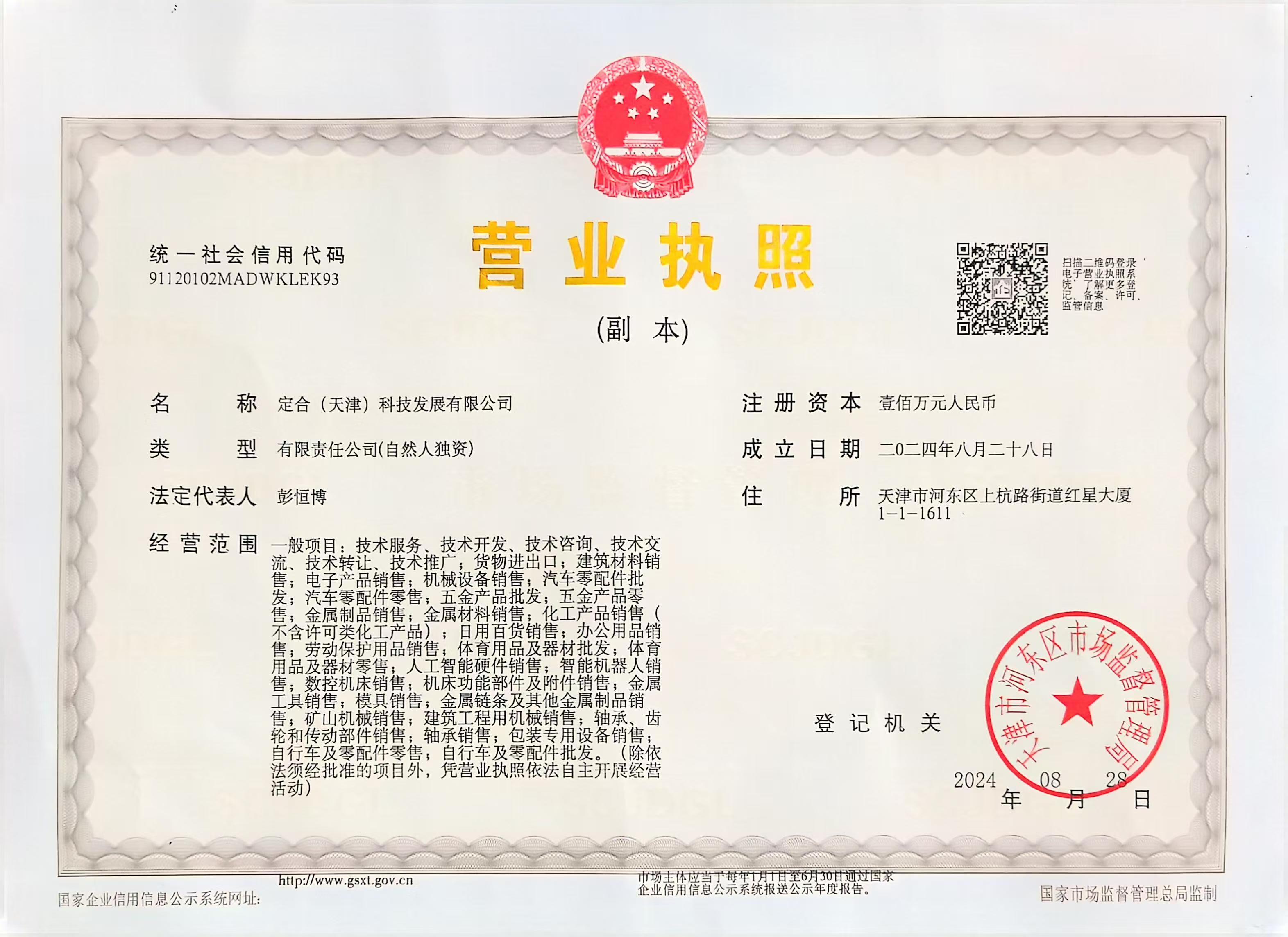
TingCo company license: a document buyers can cross-check against the contracting entity, invoice issuer and bank beneficiary.
The practical control is to make the legal entity, the factory relationship and the payment route consistent. The buyer should confirm that the contracting entity, the business license, the invoice issuer and the bank account beneficiary refer to the same organisation. If a trading intermediary is involved, the buyer should require disclosure of the manufacturer and clarify who is responsible for quality claims, batch certificates and shipment inspection. An intermediary is not automatically a problem; undisclosed substitution and unclear responsibility are the problems.
No payment method removes all risk, but it can allocate risk more sensibly. A 30% prepayment limits exposure before production evidence is available; a 70% balance against copy of Bill of Lading ties the larger payment to a shipment document. Where the commercial relationship supports it, a letter of credit can add another control layer, but the buyer should confirm availability in the quotation rather than assume it. For long-term programmes, the payment route should be written into the contract and reviewed before each annual volume renewal.
A practical scorecard for long-term fiber for concrete suppliers
| Evaluation area | What the buyer should verify | Evidence to keep | Boundary or warning sign |
|---|---|---|---|
| Supply continuity | Stated annual output, export experience, repeat-order capacity and model availability. | Capacity statement, product list, reference to repeat supply in more than 30 countries. | Capacity claims without model allocation or production scheduling evidence. |
| Model control | Exact model, diameter, length, tensile strength and packaging for TC-07560-HNG, TC-0213-CMS or other approved models. | Model datasheet, approved sample record, purchase-order annex. | Using a family name or portfolio range as a substitute for model-level data. |
| Quality system | ISO 9001, CE to EN 14889-1, ASTM A820 and ISO 13270 compliance, in-house lab tests. | Certificates, test reports, beam bending, compression and toughness records. | Certificates that do not match the product, model or manufacturing entity. |
| Batch consistency | Datasheet tolerance, COA and Mill Certificate for every batch, packaging and quantity checks. | Batch certificates, pre-shipment inspection report, weighing and counting records. | No batch traceability, or documents issued only after repeated requests. |
| Concrete performance | EN 14651, ASTM C1609 or ASTM C1550 verification where relevant to the mix design. | Independent laboratory report and project-specific residual strength results. | Fiber datasheet claims presented as concrete performance proof without mix testing. |
| Payment and fraud control | Business license, 18-digit Unified Social Credit Code, factory audit, bank beneficiary and payment terms. | License copy, audit record, contract, proforma invoice, B/L copy, inspection report. | 100% advance payment to an unverified entity or mismatched bank beneficiary. |
| Application fit | Steel fiber for industrial flooring, micro steel fiber for UHPC, PP fiber for flooring, macro synthetic fiber or corrosion-free synthetic options. | Application case list, mix design guidance, dosage and dispersion instructions. | One model recommended for every application without a mix-specific basis. |
PP fiber and traditional floor comparison: long-term value with boundaries
TingCo's stated PP fiber value proposition includes reduced early-age cracking, improved impermeability and extended service life. These are supplier-stated benefits, not independent test results, and they should be verified against the project mix design, dosage and acceptance criteria before they are written into a multi-year supply agreement. Used with that qualification, PP fiber can be a relevant long-term option for flooring and other applications where synthetic reinforcement is specified. Macro PP fiber for concrete reinforcement and synthetic fiber with no corrosion risk can complement steel fiber in the right mix design.
For buyers comparing fiber-reinforced concrete with traditional wire mesh floors, TingCo's comparison material cites 30–40% lower cost, fewer post-construction cracks, less repair and a long lifespan, with a stated fit for very narrow aisle (VNA) floors. These are supplier comparisons, not a universal result. Cost and performance depend on slab design, loading, joint layout, flatness requirements and local construction costs. The comparison is useful as a discussion tool for the design team, not as a guarantee that every project will achieve the same outcome.
Future outlook: lock the controls before the next programme year
Market forecasts point to continued demand for steel and synthetic concrete reinforcement, but the more important long-term signal is procedural. Multi-year programmes will reward buyers who lock model-level specifications, batch documentation, independent test requirements, payment controls and audit rights before volume increases. They will also reward suppliers who can show a consistent quality system rather than a single successful shipment.
For the next programme year, the buyer's review should cover four questions. Has the approved model changed? Has the manufacturing or contracting entity changed? Are the payment and inspection terms still protective? And has the supplier provided current batch evidence rather than an old certificate? These checks are more valuable than a fresh brochure, and they keep the evaluation anchored to the actual procurement decision.
FAQ: long-term supplier evaluation
What should a buyer verify first when evaluating a fiber for concrete supplier for a multi-year programme?
Start with supplier identity and model-level documentation. Confirm the legal entity, the factory relationship, ISO 9001 and CE status, the exact model datasheet including tolerance, and the batch certificate process. TingCo's stated structure covers research, production, quality control, technical support and export service under one roof, but the buyer should still match the contracting entity, invoice issuer, bank beneficiary and business license before relying on any brochure claim.
How can buyers check quality consistency across steel fiber and PP fiber batches?
Use the supplier's factory quality system together with independent checks. TingCo states that every product line undergoes beam bending, compression and toughness tests, and that every shipment is inspected for specifications, quantity and packaging. The buyer should also require a complete datasheet with ±10% tolerance, a COA and Mill Certificate for every batch, pre-shipment inspection with weighing and counting, and independent laboratory verification where the concrete performance claim is material to the project.
Which payment and acceptance terms reduce deposit-loss and intermediary risk?
The supplied recurring-order terms are 30% prepayment and 70% balance against copy of Bill of Lading, with FOB or CIF delivery and in-line or pre-shipment inspection. The supplied risk guidance also recommends verifying the business license and 18-digit Unified Social Credit Code, requiring factory photos or a video factory audit, and considering L/C where available. Avoid unsecured 100% advance payment, and confirm that the contract, invoice and bank beneficiary refer to the same legal entity.
How should TC-07560-HNG and TC-0213-CMS series be specified in a long-term purchase order?
Name the exact model in the purchase order and attach its own approved datasheet. Do not apply the portfolio-level steel fiber range of 0.55–0.90 mm diameter, 35–60 mm length and 1,200–2,500 MPa tensile strength to a specific model unless the supplier confirms it in writing. The order should also define packaging, inspection method, batch documents and change-control requirements so that a family name cannot replace a model-level commitment.
What long-term value does PP fiber provide, and how should it be verified?
TingCo's stated PP fiber value includes reduced early-age cracking, improved impermeability and extended service life. These are supplier-stated benefits rather than independent project results, so they should be verified through the mix design, dosage recommendation and relevant acceptance tests. PP fiber for flooring, macro PP fiber for concrete reinforcement and synthetic fiber with no corrosion risk can be relevant where the project specification permits synthetic reinforcement.
Company brochure (PDF): TINGCO company profile and project introduction.
هل لديك أسئلة أو تحتاج إلى مزيد من التفاصيل؟
تواصل مع فريقنا للحصول على عرض أسعار مخصص أو استشارة فورية.
طلب عرض أسعار
املأ النموذج أدناه وسيتواصل معك فريقنا بعرض مقترح مخصص.
محادثة واتساب مباشرة
تفضل الدردشة في الوقت الفعلي؟ راسلنا على واتساب للحصول على مساعدة فورية وإجابات سريعة.
- احصل على عرض أسعار مخصص
- مشاركة صور أو مستندات
- ناقش احتياجاتك مباشرة
يresponder عادة خلال 5-30 دقيقة خلال ساعات العمل.