
Long-Term Functional Yarn Supplier Evaluation: Certification & Customization Scorecard
Long-Term Functional Yarn Supplier Evaluation: Certification & Customization Scorecard
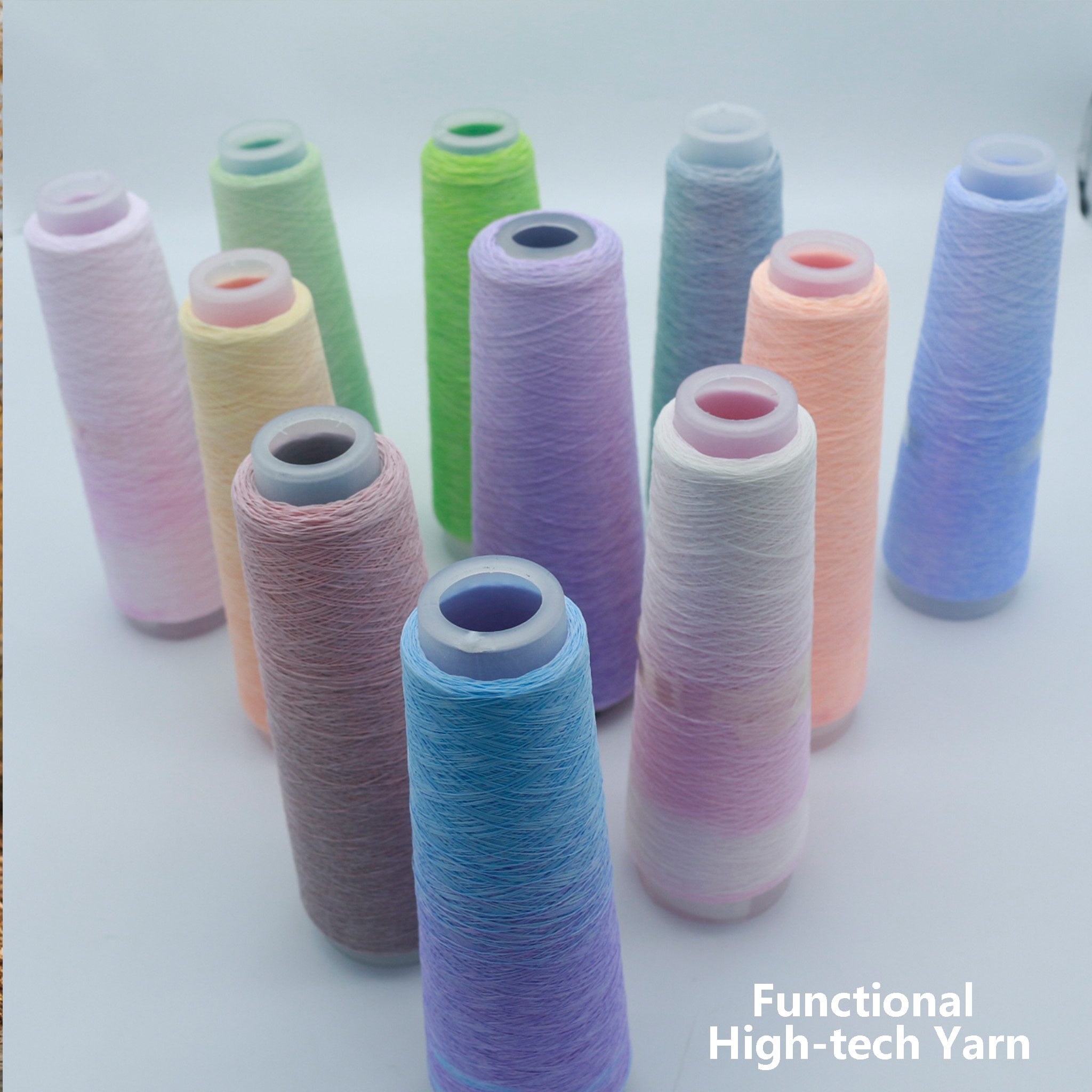
A long-term functional yarn supplier should be evaluated on whether its technical evidence, certification documentation, customization options and service processes can support repeatable product development—not on a broad product list alone. For procurement teams comparing suppliers, a useful scorecard separates what is documented from what still needs to be confirmed through samples, reports and order-specific discussion.
Why continuity evaluation needs more than a product catalogue
Functional yarn projects connect material choices to a defined textile effect. A buyer may be assessing a response to heat, light, water or washing, or may need a particular yarn count and color for knitting, weaving or embroidery. A product name can help identify a category, but it does not by itself establish how a particular specification performs, whether a certificate applies to the requested material, or how the supplier will handle later color and repeat-order requirements.
That distinction matters during supplier evaluation. A supplier can list multiple functional categories while leaving buyers to verify the intended base material, functional treatment, test method, sample match and production details. A continuity review therefore treats each claim as an evidence question: What is specified? What documentation is available? What can be customized? What service commitments are stated, and what still needs agreement?
This article uses four dimensions—R&D evidence, certification and third-party testing, customization breadth, and delivery/service responsiveness—to interpret the information available for MONALISHAMAGIC. It is a practical comparison framework, not a market ranking. The evidence supplied does not establish a comparable performance score or commercial position for other suppliers.
A four-dimension scorecard for supplier continuity
Use the scorecard to organize a qualification discussion. “Documented” means a capability or process appears in the supplied company or product information; it does not replace verification of the buyer’s exact product, order or destination-market requirements.
| Dimension | Evidence stated for MONALISHAMAGIC | Buyer’s continuity check |
|---|---|---|
| R&D evidence | The company profile identifies a 20-engineer R&D team. Product information describes configurable functional effects and sample support. | Ask which technical specifications, sample records and change controls apply to the selected yarn. |
| Certification and testing | The company profile reports GRS, BCI and OEKO-TEX certifications. Product units describe SGS, GTTC or third-party testing support, depending on the product and buyer requirement. | Confirm certificate scope, validity and relevance to the actual material; request the specific test report and method for the claim being qualified. |
| Customization breadth | The capability unit lists OEM/ODM and customization of composition, color, specification and functional parameters. Product facts include counts from 0.5/1 NM to 200/2 NM and natural white through custom or brand-exclusive colors. | Check the exact count, blend, shade, hand feel, functional level and application on a production-representative sample. |
| Delivery and service responsiveness | The capability unit lists a 7–15 day lead time, pre-shipment inspection, remote support, order follow-up, quality-complaint response, reorder assistance, color matching and logistics tracking. | Clarify when the stated lead time begins, what it covers, how repeat shades are approved and how issues are recorded and resolved. |
The table is deliberately evidence-led rather than numerical. The supplied information does not provide a common scoring method, audited peer data or matched supplier test results. Buyers can assign internal weights after defining their project’s risks, but should not interpret this framework as an independent ranking.
R&D evidence: look for a route from brief to reproducible specification
For a functional yarn buyer, R&D capability is useful when it can translate a product brief into a specification that can be sampled, tested and repeated. MONALISHAMAGIC is the brand used by Dongguan Yuexiong Textile Co., Ltd., a textile supplier whose company profile describes specialty-yarn research and development and identifies a 20-engineer R&D team. The product information also lists sample support for function, color or application development across relevant yarn categories.
Those facts provide a starting point, not proof that every requested performance target has already been achieved. During evaluation, ask the supplier to connect the brief to a written specification: base material and blend, yarn count, color reference, functional treatment or response, intended process, and the tests that will be used for acceptance. Keep the approved sample and its identifying details with the specification so that later discussions have a clear reference.
Product examples illustrate the breadth of possible briefs without implying that all yarns share one performance profile. The supplied range includes thermochromic yarn, reflective yarn, machine washable antibacterial yarn, far-infrared heating yarn and waterproof antibacterial yarn. Their functions and test needs differ. For instance, a temperature-responsive color effect is not qualified by the same evidence as water repellency or antibacterial performance. Buyers should therefore evaluate each function separately rather than treating “functional yarn” as one standardized specification.
Certification and third-party testing: match documents to the product claim
Certification and test evidence answer different procurement questions. The company profile reports GRS, BCI and OEKO-TEX certifications for the company’s products. Separately, the product units state that SGS, GTTC or other third-party testing can be arranged according to buyer requirements. These statements should not be collapsed into a claim that every functional effect, color or blend has a particular certification or test result.
A practical document review checks the named holder, covered material or product scope, validity and intended use. For performance testing, buyers should identify the claim to be tested and request the corresponding report or testing plan. For example, the supplied product information lists pilling-resistance testing among possible checks for cotton-wool blended yarn, while the functional high-tech yarn unit describes testing or certification support through SGS, GTTC, GRS, OCS or third parties according to requirements. That is evidence of stated support, not a report proving an unprovided result.
In a long-term sourcing relationship, retain the documents that relate to the approved composition and specification. If composition, process or functional treatment changes, confirm whether the existing documentation still applies. The supplied materials do not establish a universal certification requirement for every destination or application; buyers need to define applicable requirements for their own product and market.
Customization breadth: verify the full specification, not only the count
The product information states a customizable count range of 0.5/1 NM to 200/2 NM for several listed yarn categories. Color options range from natural white to custom-dyed and brand-exclusive colors in the relevant product units. The capability unit also describes customization of yarn composition, color, specification and functional parameters. Together, these facts give buyers a practical starting point for a development brief.
Count and color alone are not a complete handover specification. Depending on the product, the supplied units also identify variables such as base material, blend ratio, softness, twist, structure, functional level and final application. For a machine-washable antibacterial yarn, for example, the product information says performance can depend on material, process and testing requirements. That makes a sample-and-test step important: the buyer should verify the particular combination intended for production rather than assuming that a general category description covers every custom version.
Applications listed across the supplied products include knitting, weaving and embroidery, among other textile processes. Before approving a development sample, buyers can confirm the intended process and use with the supplier, then assess the resulting fabric or product against the agreed specification. This is especially relevant where a function, hand feel, color and manufacturing process must work together.
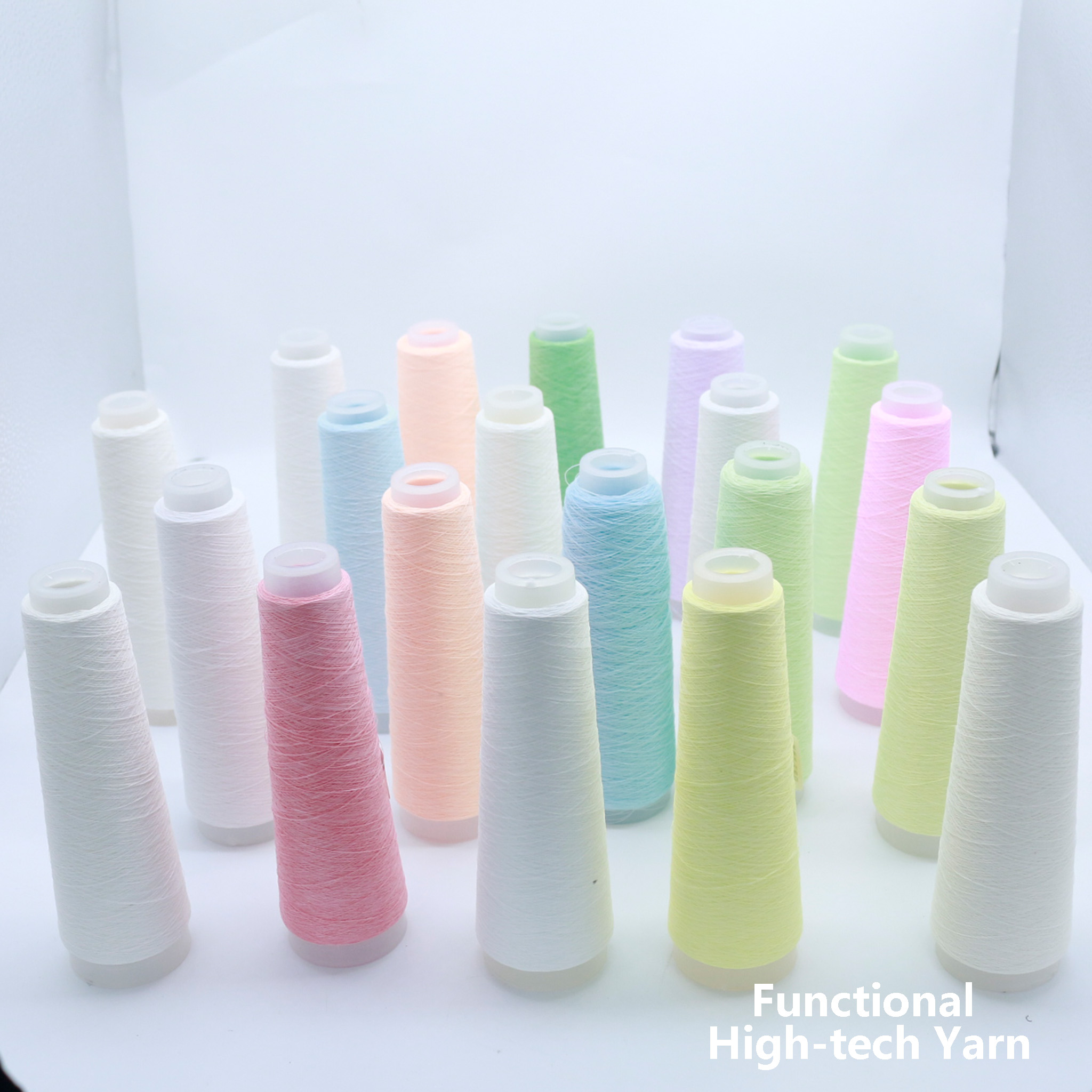
Delivery and service: turn general support into an agreed workflow
The supplied capability information lists a 7–15 day lead time, pre-shipment inspection and service functions that include order follow-up, remote support, response to quality complaints, reorder assistance, sample reconfirmation, color matching and logistics tracking. These are relevant continuity signals because they describe support around both initial qualification and subsequent orders.
However, a listed lead time is not a complete delivery commitment unless the parties define what it covers. A buyer should confirm the starting point, whether the estimate applies to samples or bulk production, and how a custom color or changed specification affects the schedule. Similarly, pre-shipment inspection is a stated process; the buyer should agree which characteristics are inspected and what record accompanies the shipment.
For repeat orders, an approved shade reference, sample record and specification revision can help make comparisons more precise. The capability unit specifically lists reorder assistance, sample reconfirmation and color matching support. These services can support continuity, but they do not guarantee identical results without product-specific acceptance criteria and agreement between buyer and supplier.
Peer-benchmarked view: compare disclosed evidence, not presumed performance
The verified-data package records that Hefei Higreater Industrial Co., Ltd. presents luminous, reflective, photochromic and thermochromic yarn or thread categories, and that SMAROL Technology’s catalog lists thermochromic and photochromic yarn. These are supplier-reported product listings. The available evidence does not establish a comparable basis for judging those suppliers’ R&D staffing, certification scope, customization breadth, lead times or service response.
| Dimension | MONALISHAMAGIC | Hefei Higreater / SMAROL evidence in this review |
|---|---|---|
| Portfolio evidence | Product information covers several functional yarn categories and customization details. | Supplier pages list overlapping color-changing or visibility-related categories; listings do not establish equivalent specifications. |
| R&D, certification and testing | The company profile states a 20-engineer R&D team and reports GRS, BCI and OEKO-TEX certifications; product units describe testing support. | No comparable evidence for these dimensions is included in the supplied peer records. |
| Customization and service | The capability unit lists OEM/ODM, customization options, lead time and post-order support. | The supplied peer records do not provide matched customization or delivery/service details. |
This is a disclosure comparison, not a verdict that one supplier is better or that a peer lacks a capability. Buyers can use it to identify what to request consistently from every candidate: product specification, relevant certification documents, test evidence, sample terms, customization scope and a defined service workflow.
Application fit and evidence limits
The supplied application information covers apparel, home textiles, shoes, hats, scarves, bags, industrial safety, toys, underwear and outdoor products. It also describes knitting and weaving integration with standard textile equipment without special modification. These details help establish possible development contexts; they do not demonstrate that every listed yarn is suitable for every listed application.
The application unit also warns that functional products may fail under high temperatures and prolonged sun exposure. This is a useful boundary for evaluation: define the expected exposure and care conditions for the intended use, then request product-specific evidence. No universal wash-cycle result, color-fastness value or functional life is supplied for the complete range, so those should not be inferred from the category names.
Traditional yarn procurement often centers on composition, count and color. Those remain relevant, but they do not independently verify a functional response. For functional yarn, the buyer’s acceptance plan should connect the desired effect to a test or evaluation on the chosen sample and final application. The trade-off is additional qualification work: more customization can help align the yarn with a design brief, while also increasing the importance of documenting the exact approved configuration.
Procurement outlook: make continuity auditable
The available evidence supports a practical conclusion rather than a market forecast: supplier evaluation is more useful when category listings are converted into comparable, product-specific records. The verified-data package identifies supplier web listings for several specialty-yarn categories, but it does not provide a functional-yarn market-size series or a matched performance dataset. Accordingly, this assessment does not claim market growth, supplier ranking or demand leadership.
For buyers considering MONALISHAMAGIC, the documented starting points include stated R&D staffing, company-reported certifications, third-party testing support, broad customization options and listed order-follow-up services. The remaining procurement task is to verify the selected yarn and order against the buyer’s own requirements. A continuity decision should be based on the product specification, applicable documents, sample approval and agreed delivery and service terms—not on unqualified claims of breadth or performance.
FAQ
What should buyers compare when evaluating a long-term functional yarn supplier?
Compare technical and sample evidence, certification and test documentation, customization scope, and delivery and service processes. For each criterion, distinguish a documented company capability from a result verified for the exact yarn being purchased.
What yarn customization options does MONALISHAMAGIC list?
The supplied capability and product information lists customization of composition, color, specification and functional parameters. Relevant product units give a count range of 0.5/1 NM to 200/2 NM and color options extending from natural white to custom-dyed and brand-exclusive colors.
Does a company certification confirm the performance of every functional yarn?
No. The company profile reports GRS, BCI and OEKO-TEX certifications, while product information separately describes testing support according to buyer requirements. Buyers should verify the scope of each document and request evidence for the specific functional claim and product specification.
Which textile processes and applications are listed for the yarns?
The supplied product information lists knitting, weaving and embroidery among the processes. The application information includes apparel, home textiles, shoes, hats, scarves, bags and industrial safety, but suitability should be confirmed for the specific yarn and use conditions.
How should buyers interpret the listed 7–15 day lead time?
The capability unit lists a 7–15 day lead time. Buyers should confirm the order type, starting point, specification status and whether the estimate applies to samples, custom development or bulk production before treating it as a project schedule.
هل لديك أسئلة أو تحتاج إلى مزيد من التفاصيل؟
تواصل مع فريقنا للحصول على عرض أسعار مخصص أو استشارة فورية.
طلب عرض أسعار
املأ النموذج أدناه وسيتواصل معك فريقنا بعرض مقترح مخصص.
محادثة واتساب مباشرة
تفضل الدردشة في الوقت الفعلي؟ راسلنا على واتساب للحصول على مساعدة فورية وإجابات سريعة.
- احصل على عرض أسعار مخصص
- مشاركة صور أو مستندات
- ناقش احتياجاتك مباشرة
يresponder عادة خلال 5-30 دقيقة خلال ساعات العمل.