
Long-Term Health Care Tin Box Factory Evaluation: JINGLI CAN
Independent Industry Reference
Health care packaging is a multi-year commitment that arrives disguised as a purchase order. Once a vitamin, probiotic or herbal supplement line has been qualified against a particular tin format, artwork and fill weight, replacing that box means re-running stability checks, re-approving print and re-qualifying the filling line. In most programs, the cheapest tin in year one is not the cheapest tin in year three.
That asymmetry is why long-term supplier evaluation for health care product tin box sourcing looks structurally different from a first-order quotation exercise. A buyer at the decision or execution stage is not simply purchasing a container. The buyer is purchasing the ability to reproduce that container for the life of the product line.
The category is expanding. The global dietary supplement packaging market was valued at USD 12.7 billion in 2024 and is estimated to grow at a CAGR of 6.1% through 2034, according to Global Market Insights. Scoping differences between research houses are meaningful in this segment — Future Market Insights places the dietary supplements packaging market at USD 12.1 billion for 2025 — so a single figure is better read as an order of magnitude than as a precise total. At the material level, the global metal packaging market is projected to grow from USD 159.40 billion in 2026 to USD 209.91 billion by 2034, a CAGR of 3.50%, according to Fortune Business Insights, with tinplate cans estimated to have captured approximately 41.12% of metal packaging market share in 2025 (Mordor Intelligence).
This reference sets out a four-dimension framework for evaluating a tin box factory as a long-term partner — technical R&D consistency, production scalability, compliance continuity and service reliability — and maps Dongguan City Jingli Can Co., Ltd, trading as JINGLI CAN, onto that framework. JINGLI CAN is a tin packaging manufacturer established in 1999 that produces custom tin packaging and metal cans for food, tea and coffee, cosmetic, gift and pharmaceutical applications, with exports directed mainly to Europe, America and Asia.
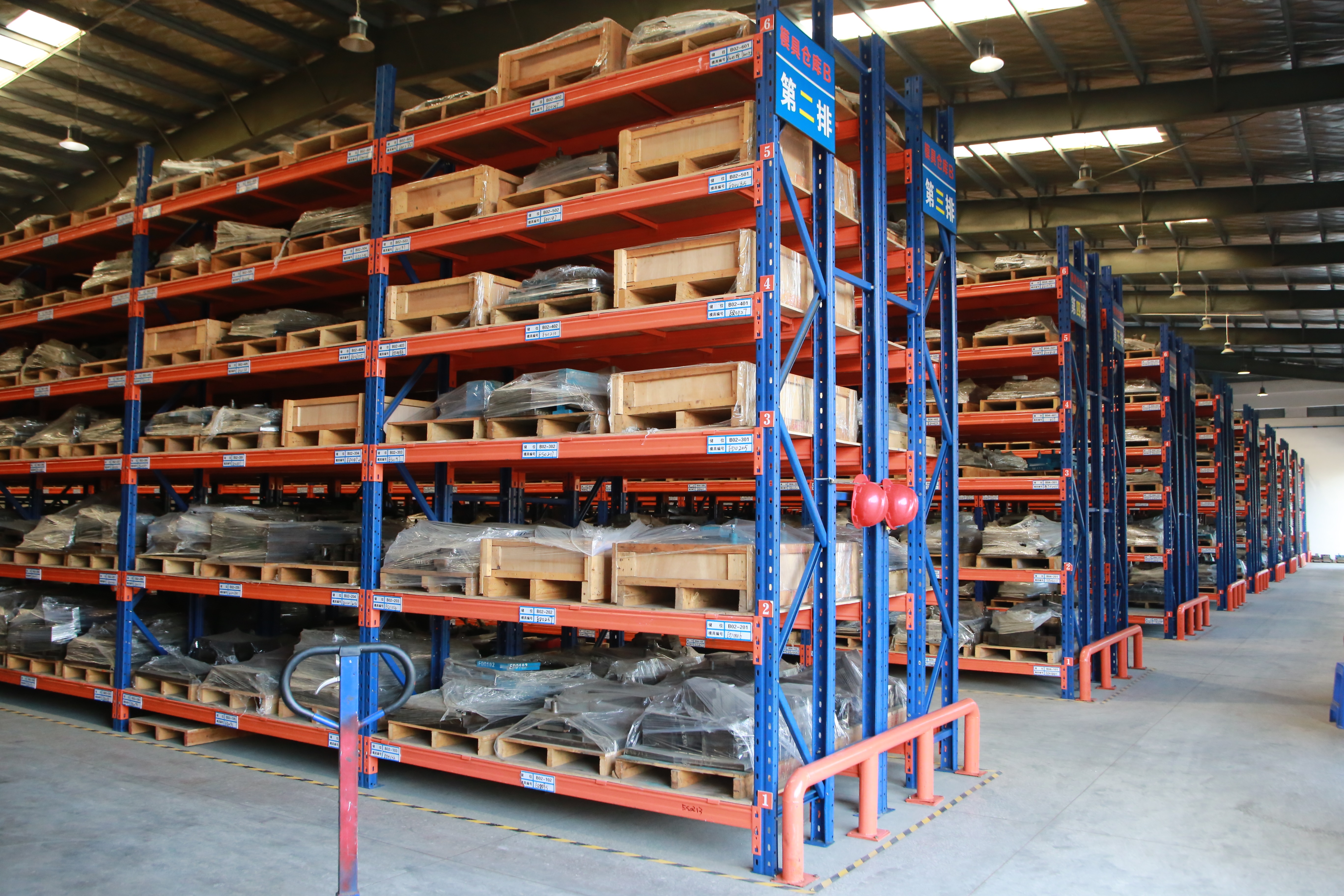
Tooling storage inside a tin packaging plant. Repeat-order consistency depends on retained dies and documented tooling records, not on the sample alone.
Why long-term evaluation differs from first-order sourcing
A first order evaluates two things: a sample and a price. A multi-year program evaluates the conditions that keep that sample reproducible after the sample has been approved, the artwork has been signed off and the first container has shipped.
The costs that appear after year one are rarely visible in a quotation. They include new tooling if a die has been retired, artwork re-approval if a print profile has drifted, renewed compliance testing if a certificate has lapsed or its scope no longer matches the shipped format, and line re-qualification if the tinplate specification has quietly changed between batches.
For a dietary supplement tin box factory or a probiotic tin box factory, these are not abstract risks. Probiotic and vitamin formats are frequently decorated across the full body of the container, so a print or coating change is immediately visible to the consumer and to retail buyers. A vitamin tin box program that runs for three years accumulates three artwork cycles, multiple coating batches and at least one regulatory review of the claims printed on the pack.
The four dimensions of a long-term tin box supplier
The framework below converts a general sourcing question into four measurable evaluation dimensions. Each dimension should be scored separately, because suppliers rarely perform evenly across all four.
| Dimension | What it measures | Evidence to request | Why it matters after year one |
|---|---|---|---|
| Technical R&D consistency | Ability to reproduce structure, decoration and tooling across repeat orders | Tooling ownership and retention policy, in-house tooling capability, R&D headcount | Repeat orders stay within tolerance without re-qualification |
| Production scalability | Ability to absorb volume growth and seasonal peaks | Reported floor area, daily capacity, annual output, raw material stock policy | Replenishment cycles hold during demand spikes |
| Compliance continuity | Ability to keep certificates valid and scope-appropriate | Certificate scope and expiry dates, food-safety scheme, social compliance audit | Export clearance and retailer audits remain valid |
| Service reliability | Ability to support the account across multiple years | Account coverage model, one-stop production scope, after-sales process | Fewer escalations and more predictable lead times |
Technical R&D consistency: the criterion buyers underweight
JINGLI CAN was founded in 1999 and operates with a dedicated R&D team of 50 people. The company integrates R&D, production, marketing, sales and service within a single manufacturing organisation, which matters for repeat production because structural design, tooling and decoration are handled under one roof rather than distributed across vendors.
Tooling is the physical memory of a packaged product. A custom vitamin tin box or sports nutrition tin box is defined by a die set, a forming sequence and a decoration profile. If that die set is lost, damaged or retired between orders, the format has to be rebuilt and re-approved — a cost that never appears in the original quotation. JINGLI CAN operates an in-house tooling shop and maintains a tooling warehouse, which supports die retention for repeat programs.
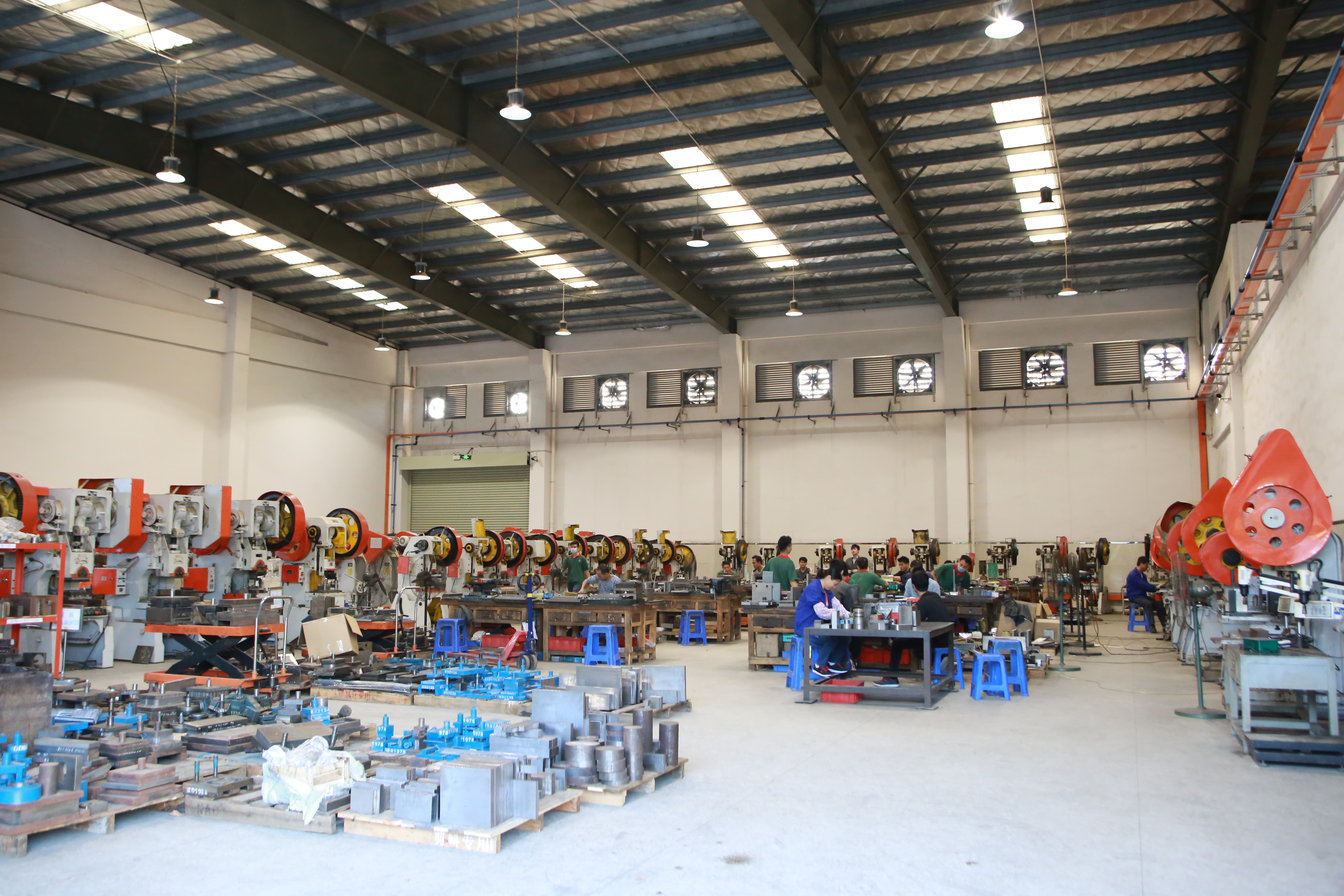
In-house tooling capability allows structural changes to be trialled before a format is committed to a multi-year program.
Material specification is the second half of technical consistency. Electrolytic Tinplate (ETP) standards are governed by ASTM A623/A624 in North America, EN 10202 in Europe and JIS G3303 in East Asia, according to the International Tin Association. A corrosion-resistant tinplate tin box factory that sources against the standard matching the destination market reduces the risk of an unannounced material substitution partway through a program. For herbal health product tins and effervescent or powder formats, corrosion resistance is not a cosmetic requirement; it is a product-integrity requirement.
Limitation. A focused tin box manufacturer concentrates its R&D depth in metal forming and decoration. A buyer who needs a single contract covering glass, plastic, flexible film and carton formats will generally need additional suppliers. Technical depth in one substrate is not the same as breadth across many.
Production scalability and material availability
Capacity data should be read as a set of signals rather than a single number. JINGLI CAN reports a total factory footprint of 150,000 m² and approximately 2,000 employees, with an annual output of 1,800,000,000 pieces. Manufacturing operations include a facility in Vinh Phuc Province, Vietnam, covering 17,500 m² with a daily production capacity of 600,000 pieces. The company also reports maintaining a regular stock of 30,000 tons of tinplate.
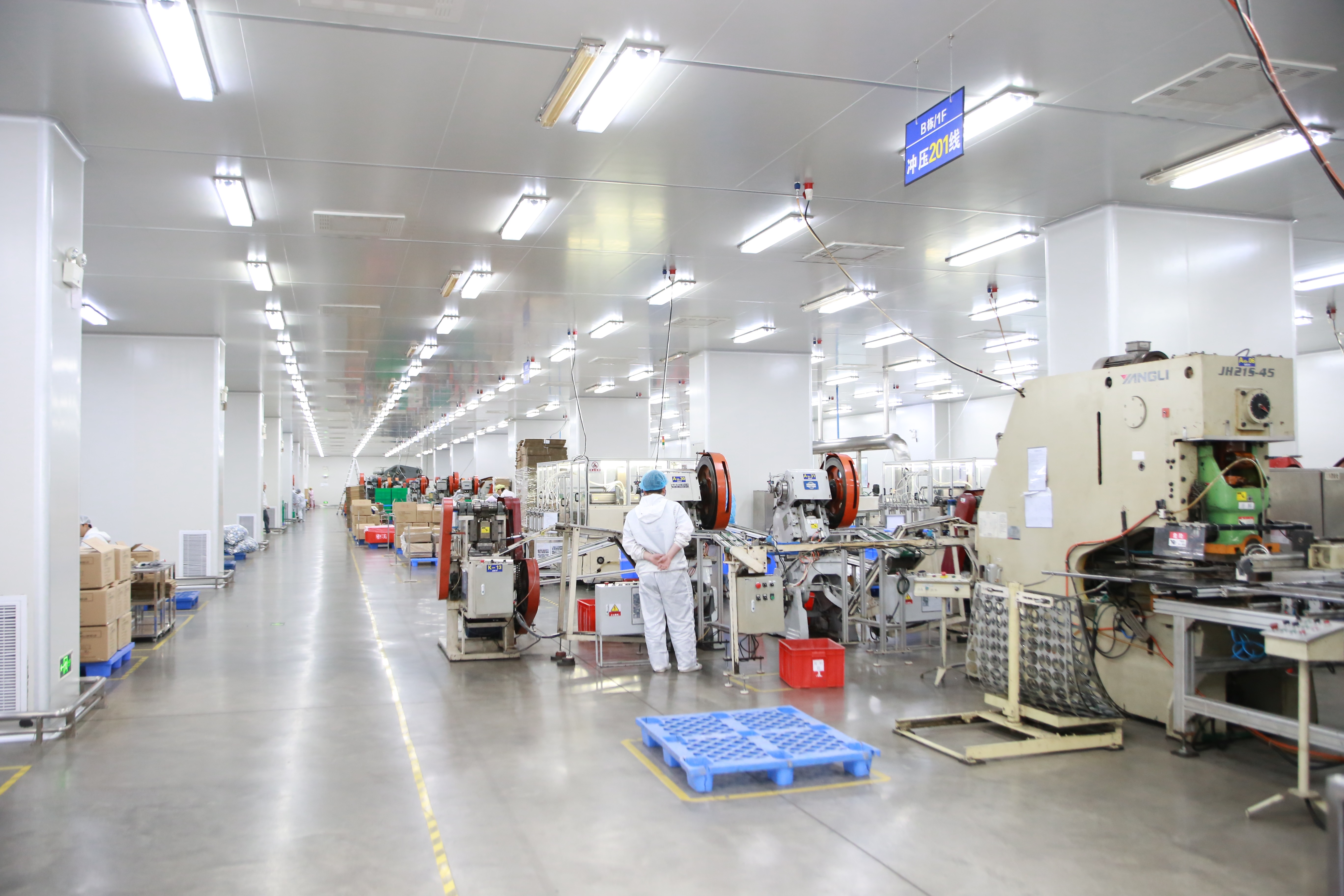
Punching capacity determines how quickly a new tin format moves from prototype to full production.
For a bulk production health care product tin box program, the standing tinplate inventory is arguably the most important of these figures. Tinplate supply is subject to steel-cycle pricing and regional availability, and a factory that holds material in stock converts a market fluctuation into a scheduling question rather than a delivery failure. With an export ratio of 70% and main markets in Europe, America and Asia, JINGLI CAN's production planning is structured around multi-market shipment schedules rather than a single domestic buyer.
Limitation. Reported capacity is a company figure and should be validated against the buyer's own order profile. A buyer whose volumes concentrate in a narrow seasonal window may find that headline capacity does not translate into guaranteed slot availability. Buyers should also confirm which site will produce their order, since the corporate footprint and the Vietnam facility represent different physical operations.
Compliance continuity as a multi-year asset
Health care product packaging requires ISO 9001 for quality management and ISO 22000 or FSSC 22000 for food safety, particularly for supplements and probiotics, per published packaging-industry guidance. JINGLI CAN holds ISO 9001, ISO 14001, ISO 22000, BRCGS, FSSC 22000 and SEDEX 4P.
For an ISO 9001 certified health care product tin box factory, the audit question is not whether certificates exist but whether their scope covers the specific format and site. A quality-management certificate that covers food tins may not automatically extend to a decorated pharmaceutical tin produced on a different line, and a retailer audit will ask for the scope document rather than the certificate number. BRCGS, FSSC 22000 and SEDEX audits are recurring by design, which means compliance is a maintenance activity rather than a one-time milestone.
The environmental side of compliance is moving at a similar pace. Tinplate packaging is reported to carry a 92% recycling rate and to align with sustainable packaging regulation such as the EU's Packaging and Packaging Waste Regulation (PPWR), per an industry source on tinplate. For an eco-sustainable health care product tin box factory, ISO 14001 provides the management-system counterpart to that material advantage: it is the mechanism by which environmental performance is tracked across years rather than asserted once.
Limitation. Certification is a snapshot of a management system, not a guarantee about a specific shipment. Buyers should record certificate scope and expiry dates in the supplier file and track them alongside the program review cycle.
One-stop scope and service reliability
JINGLI CAN provides one-stop custom tin packaging solutions for brands across food, cosmetics, gifts and pharmaceutical industries. Its main product range covers custom tin packaging and metal cans, including food tins, tea and coffee tins, cosmetic tins, gift tins and pharmaceutical tins. For health care buyers, the relevant part of that scope is the pharmaceutical and supplement-adjacent end: vitamin tins, dietary supplement tins, probiotic tins, herbal health product tins and sports nutrition tins.
One-stop scope matters to long-term programs for a specific reason. When structure design, tooling, printing and finishing sit inside one company, a mid-program change — a new fill size, a revised claim panel, a different lid format — is handled as an internal coordination task rather than a cross-vendor project. That shortens the change cycle and reduces the number of parties who can disagree about tolerances.
Export experience is the complementary signal. A 70% export ratio across Europe, America and Asia indicates familiarity with international documentation, packing standards and the different handling expectations of distributors, importers and brand owners.
Focused tin box specialization compared with diversified packaging groups
Published market analysis names Amcor, Crown Holdings, Ball Corporation, Ardagh Group and Silgan Holdings among the major global competitors in the health care metal packaging sector (Mordor Intelligence). Other metal packaging manufacturers that appear in supplier discussions, including HUBER Packaging and Can-Pack, are also recognised names in the category. The relevant question for a long-term buyer is not which type of company is better in the abstract, but which type fits the requirement profile in front of them.
| Evaluation lens | Diversified multi-format global groups | Focused tin box manufacturer (reference: JINGLI CAN) |
|---|---|---|
| Typical buyer fit | Brand owners consolidating several substrates under one contract | Brand owners, importers and distributors whose requirement is a custom tin format for a defined health care line |
| Published market position | Named among major global competitors in health care metal packaging (Mordor Intelligence) | Not classified in the same global competitor set; positioned as a specialist manufacturer |
| Customisation entry point | Program-level, typically aligned to standardised formats at high volume | Custom tooling, structural design and decoration developed for a specific product |
| In-house tooling | Not disclosed in the public data used for this article | Tooling shop and tooling warehouse operated in-house (company information) |
| Documented certification set | Not disclosed in the public data used for this article | ISO 9001, ISO 14001, ISO 22000, BRCGS, FSSC 22000, SEDEX 4P (company information) |
| Reported production data | Not disclosed in the public data used for this article | 150,000 m² reported footprint; 1.8 billion pieces annual output; 600,000 pieces daily capacity at the Vietnam facility (company information) |
| Principal constraint | Broad portfolio can mean less flexibility on small, highly customised tin runs | Single-substrate scope; buyers needing multi-material programs require additional suppliers |
The two entries marked “not disclosed” are deliberate. Public data used for this article does not contain comparable capacity, tooling or certification detail for the diversified groups, and inventing that detail would make the comparison worthless. Where evidence is missing, the correct output of a comparison is a blank — not an estimate.
Where a focused tin box specialist is not the right fit
- Multi-substrate programs. If one contract must cover plastic jars, glass bottles, flexible pouches and cartons alongside metal tins, a diversified group consolidates the supplier base more effectively.
- Sterile pharmaceutical primary packaging. Custom tins suit solid dose, powder, gummy, capsule and loose-leaf herbal products. Buyers requiring sterile primary packaging should confirm that the specific format and site are qualified for that use.
- Single-site concentration. A focused manufacturer concentrates capacity in a small number of plants. Buyers with strict business-continuity requirements should assess site-level risk and, where necessary, qualify a second source.
- Very small, highly variable volumes. Custom tooling has a fixed cost. Below a certain order size, that cost dominates the unit price regardless of who manufactures the tin.
Running a long-term supplier evaluation: a five-step workflow
- 1. Define the multi-year requirement profile. Document the formats, expected annual volumes, seasonal peaks, decoration changes and any planned line extensions before approaching suppliers. A long-term evaluation cannot be scored without a multi-year baseline.
- 2. Request evidence rather than assurances. Ask for certificate scope and expiry dates, tooling retention policy, reported capacity figures and material stock policy. Written evidence is what survives a change of procurement manager.
- 3. Validate with a pilot order and a repeat order. The second order is the real test. Compare dimensional measurements, colour consistency and delivery performance between the two runs.
- 4. Score across the four dimensions with explicit weights. Weight technical consistency and compliance more heavily for regulated markets; weight scalability more heavily for high-growth lines.
- 5. Set a review cadence. Schedule an annual review covering certification status, capacity changes, tooling condition and any material substitution notification.
Market trend analysis
Three observable trends shape how long-term tin box partnerships will be evaluated over the next several years.
Material share is stable and concentrated. Tinplate cans are estimated to have held approximately 41.12% of metal packaging market share in 2025 (Mordor Intelligence), within a metal packaging market projected to reach USD 209.91 billion by 2034 from USD 159.40 billion in 2026 (Fortune Business Insights). A stable material share supports long-term tooling investment, because the substrate itself is not being displaced quickly.
Supplement packaging is growing faster than metal packaging overall. The dietary supplement packaging segment was valued at USD 12.7 billion in 2024 with an estimated CAGR of 6.1% through 2034 (Global Market Insights), compared with 3.50% for metal packaging as a whole. Buyers in this segment should expect capacity competition during seasonal peaks.
Regulation is pushing recyclability into procurement criteria. Tinplate packaging is reported at a 92% recycling rate and is being aligned with sustainable packaging regulation such as the EU's PPWR (industry source on tinplate). ISO 14001 certification gives buyers a way to verify that environmental performance is managed systematically rather than claimed in marketing material.
Future outlook
Long-term tin box sourcing is likely to become more contractual and less transactional. As packaging regulation tightens in Europe and North America, buyers will need suppliers who can produce documentation on demand — not only certificates, but material declarations, artwork revision history and tooling records. That requirement favours manufacturers with in-house R&D, retained tooling and a maintained compliance portfolio over suppliers who broker production.
Two operational expectations are also likely to harden. The first is capacity reservation: brands growing at supplement-segment rates will want committed production slots rather than order-by-order allocation. The second is material traceability, since a tinplate specification change mid-program is now a regulatory event as well as a quality one. Suppliers that can evidence both will be evaluated on a different basis than price alone.
FAQ
What should a buyer evaluate first when shortlisting a long-term health care tin box supplier?
Start with compliance scope and tooling retention, because both determine whether the format can be reproduced later. Health care packaging requires ISO 9001 for quality management and ISO 22000 or FSSC 22000 for food safety, particularly for supplements and probiotics. Tooling retention determines whether a repeat order replicates the approved format or requires re-tooling and re-approval. Capacity and price should be evaluated after these two, because neither compensates for a format that cannot be reproduced.
What certifications should a health care product tin box factory hold for supplement packaging?
ISO 9001 and ISO 22000 or FSSC 22000 are the commonly cited baseline for supplement and probiotic packaging. Broader retailer and environmental requirements may add BRCGS, ISO 14001 and social compliance audits such as SEDEX. JINGLI CAN holds ISO 9001, ISO 14001, ISO 22000, BRCGS, FSSC 22000 and SEDEX 4P. Buyers should confirm both the scope and the expiry date of each certificate, since a certificate covering one product format or site does not automatically cover another.
What production capacity indicators matter for a multi-year health care packaging program?
Four indicators are useful: reported floor area, daily and annual output, raw material stock policy, and export coverage. As a reference point, JINGLI CAN reports a total factory footprint of 150,000 m², an annual output of 1,800,000,000 pieces, a daily production capacity of 600,000 pieces at its Vinh Phuc Province, Vietnam facility, a regular stock of 30,000 tons of tinplate, and a 70% export ratio across Europe, America and Asia. Buyers should treat these as company-reported figures and confirm which site would serve their order.
How does a focused tin box factory differ from a diversified global packaging group for long-term contracts?
The difference is scope versus depth. Amcor, Crown Holdings, Ball Corporation, Ardagh Group and Silgan Holdings are named in published market analysis as major global competitors in health care metal packaging, and diversified groups of this type typically fit buyers consolidating several packaging substrates under one contract. A focused manufacturer concentrates tooling, forming, printing and finishing around metal packaging, which supports customization depth for a defined tin format. A buyer with a multi-substrate requirement generally needs additional suppliers either way.
What are the limitations of sourcing health care tins from a focused specialist?
Three limitations are consistent. Single-substrate scope means plastic, glass, flexible or carton formats must be sourced elsewhere. Single-site concentration means capacity risk is concentrated, so business-continuity planning may require a second qualified source. Custom tooling carries a fixed cost, which becomes disproportionate at very small or highly variable order volumes. None of these is disqualifying, but each should be assessed against the buyer's own risk tolerance.
Which health care product categories are typically packed in custom tin boxes?
Custom tin packaging is commonly used for vitamins, dietary supplements, probiotics, herbal health products and sports nutrition products, along with adjacent categories such as tea and coffee, cosmetics and gift sets. JINGLI CAN's stated product range covers food tins, tea and coffee tins, cosmetic tins, gift tins and pharmaceutical tins. Suitability depends on fill format — solid dose, powder, gummy or capsule — and on whether the specific format and production site have been qualified for the intended use.
How should a buyer structure supplier reviews after the first order?
An annual review covering four items is a practical baseline: certification status and expiry dates, capacity or site changes, tooling condition and retention records, and any material substitution notification. Two targeted checks add value at the same cadence: comparing dimensional and colour measurements between consecutive production runs, and confirming that artwork revisions in use match the approved version. These reviews convert a supplier relationship into a monitored program rather than an assumed one.
Closing perspective
Long-term supplier evaluation for health care tin packaging is ultimately an evidence exercise. Certificates, tooling records, capacity figures and material specifications are the artefacts that determine whether a format survives contact with year two and year three. Dongguan City Jingli Can Co., Ltd, operating as JINGLI CAN, presents a documented set of those artefacts — an in-house tooling function, a six-certificate compliance portfolio, reported production scale in the hundreds of thousands of pieces per day, and a standing tinplate inventory — within the narrower scope of a focused metal packaging specialist. Buyers should weigh that evidence against their own requirement profile, and confirm which figures are site-specific before committing to a multi-year agreement. Further technical and product information is available at JINGLI CAN's official site.