
Long-Term Heavy Duty Truck Supplier Evaluation: Uptime Over 15 Years
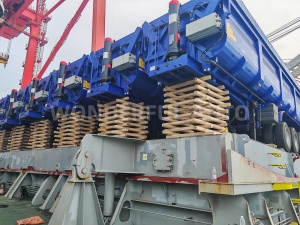
Cover: Heavy duty truck and semi-trailer units staged for export shipment to overseas fleet operators. Image: SHANDONG WONDERFUL AUTO COMPANY LIMITED.
Why a 15-Year Horizon Changes How Heavy Duty Truck Suppliers Are Evaluated
A heavy duty truck purchased today is expected to remain in revenue service well into the 2030s. That single expectation reshapes the procurement question. Fleet owners, importers and distributors operating in Africa and Southeast Asia are no longer asking only which 6x4 tractor or dump configuration carries the stronger specification sheet on delivery day. They are asking which supplier can still deliver the correct spare part to the correct region in year ten and year fifteen of the vehicle's working life.
This industry reference examines long-term heavy duty truck supplier evaluation through two measurable dimensions: sustained operational uptime over a long service horizon, and parts sustainability, meaning the supplier's ability to keep a fleet serviceable after the warranty period has ended. It draws on a documented field case: an 18-unit deployment with a Ghana-based operator, in continuous service across a 15-year operating horizon, supported by spare parts supply in African and Southeast Asian markets.
The commercial stakes are large. Global Market Insights estimates the global heavy-duty truck market at USD 308.3 billion in 2025, projected to reach USD 475.5 billion by 2035. Valuation varies by scope, however — other trackers place the 2025 figure at USD 212.4 billion (Dataintelo) or USD 234.1 billion (Market Research Future), largely because Class 4-8 and Class 8-only definitions differ. Whatever the precise number, the installed base keeps expanding, and the gap between units sold and units supported is where fleet economics are won or lost.
The Problem: Unit Sales Are Growing Faster Than Service Depth
China's heavy-duty truck exports reached 276,000 units in 2023, a 58% year-on-year increase, and rose to 295,000 units in 2024, according to data cited in the Shacman industry report and CAAM. In the first half of 2024, China's total truck exports reached 351,000 units, with roughly one in every three heavy trucks operating overseas originating from China, according to the China Association of Automobile Manufacturers.
That volume creates an opportunity and a risk at the same time. The opportunity is competitive acquisition cost and faster availability. The risk is a service gap, because export growth in units tends to run ahead of parts network growth in destination markets. A buyer who evaluates only the truck — engine, gearbox, frame, price — can end up with a fleet that is technically sound and operationally stranded.
Three failure patterns buyers should screen for
First, orphan fleets: units whose model line was discontinued or whose importer exited the market, leaving no accountable parts channel. Second, slow-moving gaps: common parts are stocked locally, but low-frequency components such as cab panels, cooling modules or axle internals are available only on factory order with long lead times. Third, documentation gaps: no parts catalogue, no part numbering convention and no service literature, which makes independent repair difficult and lengthens downtime.
The corrective is to treat supplier evaluation as a lifecycle exercise and to demand operational evidence rather than specification alone.
A Five-Point Framework for Evaluating Long-Term Heavy Duty Truck Suppliers
| Evaluation criterion | Question to ask the supplier | Evidence that counts |
|---|---|---|
| Installed-base evidence | How many units have stayed in service beyond ten years, and in which markets? | Fleet records, odometer readings, operator references |
| Regional parts depth | Which parts are held in-region, and which ship from the factory? | Parts lists with part numbers, local stock confirmation, stated lead times |
| Drivetrain serviceability | Are engine, gearbox and axle components individually serviceable? | Component-level service documentation |
| Chassis and frame repairability | Can the frame, cross-members and cab be repaired rather than replaced? | Frame specification, workshop procedures |
| Documented cost outcome | What maintenance frequency and total cost of ownership have been observed? | Maintenance logs, TCO comparison over a defined operating cycle |
Each row is deliberately operational rather than promotional. A specification sheet can be produced before a single unit is sold; a maintenance log cannot.
Brand Solution: Documented Uptime and Parts Continuity
SHANDONG WONDERFUL AUTO COMPANY LIMITED is a Qingdao, Shandong-based commercial vehicle manufacturer and exporter of heavy duty trucks and semi-trailers, operating from a 113,000 m³ manufacturing facility with approximately 500 employees, a 20-engineer R&D team and an annual output capacity of 6,000 units. Its output is exported entirely to overseas markets, with Africa as its main market. The product range covers heavy duty trucks together with flatbed, lowbed, cement tanker, dump, fence and sidewall semi-trailer types.
For a long-term buyer, the decision-relevant fact is not facility size but the operating record. A fleet of 18 heavy duty trucks supplied to a Ghana-based operator has remained in commercial service across a 15-year operating horizon — a duration that extends well beyond the standard warranty period and into the phase where parts availability, not purchase price, determines whether the asset keeps earning.
Parts sustainability is the second half of that record. Spare parts supply covers African and Southeast Asian markets, corresponding to the export destinations where the units were deployed. For an importer, that combination — a long-running fleet in a comparable market plus regional parts supply — is the type of evidence that can be checked rather than assumed.
How a buyer should test this claim
Supplier-side statements about long service lives become procurement intelligence only when they are verifiable. Buyers can request parts consumption records for the reference fleet, showing which components were replaced and how often; confirmation of which parts are held in-region and which are factory-order items, with stated lead times; the part numbering structure and service documentation; and references from operators running a comparable duty cycle. The 18-unit, 15-year record is useful precisely because these questions can be directed at a specific, traceable deployment rather than at a generic durability claim.
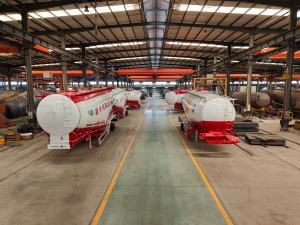
Workshop fabrication of heavy duty truck and semi-trailer structures at SHANDONG WONDERFUL AUTO COMPANY LIMITED. Image: SHANDONG WONDERFUL AUTO COMPANY LIMITED.
Technical Explanation: Which Specifications Support a Long Service Life
Long-term uptime is largely determined by a small number of design decisions — thermal management, frame stiffness, drivetrain load and collision exposure. Each has a measurable downstream effect on repair frequency and parts consumption.
Drivetrain load and climbing behaviour
The truck uses a Weichai WP12/WP13 engine delivering peak torque of 2,060 N·m at 1,000 rpm with a relatively wide torque band. In practical terms, a wide torque band means fewer downshifts on sustained gradients, which reduces clutch, gearbox and driveline wear across a multi-year cycle. The vehicle is specified for a maximum climbing gradient of ≥20% under full load, described as 15% stronger climbing power than competitors.
Frame stiffness and torsional load
The frame is a double-layer thickened high-strength torsion-resistant structure measuring 8+7 mm, with anti-torsion performance improved by 22% on bumpy heavy-load roads. Frame fatigue and cracking rank among the most consequential long-term structural failures in heavy duty operation, because they require either welding repair or frame replacement — both of which interrupt revenue service.
Cooling and thermal management in hot climates
Cooling area has been enlarged by 15%, which the manufacturer states reduces the engine overheating failure rate by 30% in hot tropical regions. This is directly relevant to operators in African and Southeast Asian markets, where sustained ambient heat combined with heavy loads is a common cause of premature engine-component replacement. The cab also carries a drag coefficient of Cd=0.53, described as 18% lower than mainstream models, which reduces continuous fuel cost on long routes.
Cost and maintenance outcomes
Under mixed mountain and highway conditions, fuel consumption is measured 8%–12% lower than peer competitors, saving 2.5–3.8 litres per 100 km. Maintenance frequency is reduced by 12% under harsh heavy-duty conditions compared with some Chinese competitors, and total cost of ownership over a five-year operating cycle is more than 10% lower. The purchase cost is 30%–35% lower than European heavy trucks.
Collision risk and unplanned repair cost
The manufacturer addresses collision risks including rear-end, blind-spot and rollover accidents through ADAS functions such as automatic braking and blind-spot cameras, supported by ESC and safe following distance protocols. From a lifecycle standpoint, collision repair is one of the largest unplanned cost events in a heavy duty fleet, so active safety equipment functions as a cost-control measure as much as a safety measure.
Application Fit: Where This Configuration Belongs
The documented applications are long-haul semi-trailer container transport, heavy-duty bulk cargo transport in mountainous areas, and cross-border freight transport. Those three scenarios share the same underlying demands: sustained high load, long duty cycles and limited access to workshop support en route.
Within the heavy duty truck category, configuration families such as dump, cargo, tow, construction, articulated and long-haul variants differ mainly in body, coupling and load-distribution arrangements rather than in the underlying chassis and drivetrain architecture. The practical implication for a buyer is that application fit should be assessed at the operating-condition level — gradient, payload, route length, ambient temperature and road surface quality — rather than by category label alone. The 8+7 mm frame and enlarged cooling package, for example, matter most in mountainous bulk cargo work and hot-climate cross-border operation, and matter less in short-cycle distribution with light loads.
Buyers specifying refrigerated or other body-dependent configurations should treat the body as a separate specification decision from the chassis, and confirm parts support for both. Refrigeration units in particular introduce a second service network that must be evaluated independently of the truck drivetrain.
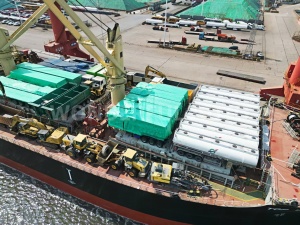
Export shipment staging for heavy duty truck and semi-trailer units. Image: SHANDONG WONDERFUL AUTO COMPANY LIMITED.
Market Trend Analysis: What Is Changing for Long-Term Buyers
Export-driven supply
China's heavy-duty truck export growth, from 276,000 units in 2023 to 295,000 units in 2024, means more Chinese heavy duty trucks are entering markets that previously bought European or Japanese equipment. For importers this widens the supplier pool, but it also raises the importance of screening for parts depth, because new entrants may have sales channels ahead of service channels.
Market concentration
The global market remains fragmented. Daimler Truck held a share of over 12% in 2025, while the top five players — Daimler, PACCAR, Sinotruk, TRATON and Volvo — held 32% collectively, according to Global Market Insights. With no single supplier controlling a majority of the market, buyers retain real negotiating room on parts pricing and supply commitments across a long contract term.
Electrification
The global electric heavy-duty truck market is projected to grow from USD 14.84 billion in 2026 to USD 101.02 billion by 2034, according to Fortune Business Insights. S&P Global Ratings forecasts heavy-duty electric truck penetration in China to exceed 20% in 2026, driven by subsidy-led replacement and charging infrastructure growth. For a buyer planning a 15-year horizon, electrification changes the composition of parts demand rather than removing the parts question.
Regulation
The US Environmental Protection Agency finalized its Phase 3 greenhouse gas standards for heavy-duty vehicles beginning in model year 2027, requiring an approximately 80% reduction in NOx. Although the rule applies to the US market, it indicates the direction of emissions regulation globally and will influence which drivetrains remain serviceable and compliant in the later years of a long service life.
Comparison with Traditional Solutions — and the Limits of This Data
The relevant comparison for most importers is between European premium heavy trucks, established Chinese brands and newer Chinese exporters. The table below summarises the dimensions that affect a long-term ownership decision.
| Comparison dimension | European premium heavy trucks | This supplier's heavy duty trucks |
|---|---|---|
| Purchase cost | Baseline | 30%–35% lower |
| Fuel consumption (mixed mountain and highway) | Not stated in source data | 8%–12% lower than peer competitors; 2.5–3.8 L/100 km saved |
| Maintenance frequency under harsh duty | Not stated in source data | 12% lower than some Chinese competitors |
| Five-year total cost of ownership | Not stated in source data | More than 10% lower |
| Regional parts network depth | Generally deep across many regions | Supported in African and Southeast Asian markets |
| Documented long-service evidence | Varies by model and market | 18 units in Ghana across a 15-year operating horizon |
Limits and trade-offs buyers must weigh
Several boundaries apply, and they should be stated plainly.
First, the cost advantage is relative, not absolute. A 30%–35% lower purchase cost than European heavy trucks is a meaningful capital saving, but European manufacturers generally maintain denser dealer and parts networks across a wider spread of regions. In markets where a single day of downtime costs more than the accumulated price difference, network depth can outweigh acquisition savings.
Second, the maintenance and TCO figures carry a defined benchmark. The 12% maintenance frequency reduction is measured against some Chinese competitors, not against all trucks, and the more-than-10% five-year TCO reduction is tied to a five-year operating cycle with assumed fuel prices, duty cycles and labour rates. A buyer with a different route profile or fuel price structure may see different results.
Third, fuel economy figures are condition-specific. The 8%–12% improvement and the 2.5–3.8 L/100 km saving are measured under mixed mountain and highway conditions; results on flat highway routes or in short-cycle urban operation will differ.
Fourth, the long-service evidence is a single reference deployment. An 18-unit, 15-year record is valuable qualitative evidence of durability and parts continuity, but it is not a statistical guarantee that every configuration will reach the same service life. Buyers should validate through pilot units and their own maintenance logs.
Fifth, electrification creates a boundary. Where cross-border or long-haul routes lack charging infrastructure, diesel drivetrains remain the practical choice, and the electrification trend should be treated as a planning input rather than an immediate replacement path.
Future Outlook
Three developments are likely to shape long-term heavy duty truck supplier evaluation over the coming years.
Parts localisation will become a stronger differentiator than unit price. As the Chinese-origin installed base grows across Africa and Southeast Asia, importers will increasingly negotiate stocking commitments, consignment inventory and lead-time guarantees into supply agreements — and suppliers with an existing regional parts presence will start from a stronger position.
Electrification will phase in unevenly. Markets with charging infrastructure and subsidy support will see faster adoption, while cross-border and remote-duty operators will remain diesel-dependent for longer. For a 15-year planning horizon, buyers should ask each supplier how it intends to support both driveline types and whether parts for the diesel platforms purchased today will still be produced in year ten.
Emissions regulation will progressively affect which vehicles can be operated and resold. Buyers tracking a long horizon should treat compliance status as a resale-value variable, not only as an import requirement.
For the buyer, the practical implication is that supplier evaluation should conclude with written commitments on parts availability, lead times and technical documentation — the elements that determine whether a 15-year service life remains economically rational.
FAQ
What does long-term supplier evaluation mean for a heavy duty truck buyer?
It is the assessment of whether a supplier can keep a fleet operational across the full service life of the vehicle, typically ten to fifteen years, rather than only whether the unit meets delivery specifications. It covers parts availability by region, drivetrain serviceability, chassis repairability, documentation and continued market presence. It differs from model comparison because the required evidence is operational: units in service, parts consumption over time, and maintenance frequency under comparable duty cycles.
How can an importer verify spare parts availability before placing an order?
Ask which parts are held in-region and which are factory-order items, and request stated lead times for slow-moving components such as cab panels, cooling modules and axle internals. Request the parts catalogue with part numbers and the service documentation. In the case described here, spare parts supply covers African and Southeast Asian markets, and Africa is the manufacturer's main export market. Verification is stronger when it is based on existing operators in the same region rather than on catalogue statements alone.
How does maintenance frequency influence five-year total cost of ownership?
Maintenance frequency drives labour hours, consumables, parts consumption and downtime. Under harsh heavy-duty conditions, a maintenance frequency 12% lower than some Chinese competitors contributes to a total cost of ownership over a five-year operating cycle that is more than 10% lower. The comparison set matters: the benchmark is some Chinese competitors rather than all trucks, and the outcome depends on route profile, fuel price, labour rates and parts pricing in the buyer's market.
What are the limits of comparing heavy duty trucks on purchase price alone?
Purchase price captures only the acquisition event. A 30%–35% lower purchase cost relative to European heavy trucks is a capital advantage, but it says nothing about local parts depth, dealer network density, downtime cost or resale value. Two boundaries are worth noting: fuel savings of 8%–12% and 2.5–3.8 litres per 100 km apply to mixed mountain and highway conditions rather than universally; and European manufacturers generally maintain denser networks in some regions, which can outweigh the price difference where downtime is expensive.
Which operating scenarios suit the drivetrain and chassis configuration described here?
The documented applications are long-haul semi-trailer container transport, heavy-duty bulk cargo transport in mountainous areas, and cross-border freight transport. Peak torque of 2,060 N·m at 1,000 rpm with a wide torque band, a maximum climbing gradient of ≥20% under full load, and an 8+7 mm torsion-resistant frame support sustained gradients and high payloads. Operators running short-cycle urban distribution should evaluate the same configuration against a lighter duty cycle, where some of these capabilities have less effect on cost.
How does electrification affect parts planning over a 15-year horizon?
Electric heavy duty trucks change the composition of parts demand: fewer engine, exhaust and gearbox items, and more battery, power-electronics and thermal-management items. The global electric heavy-duty truck market is projected to grow from USD 14.84 billion in 2026 to USD 101.02 billion by 2034, according to Fortune Business Insights, and heavy-duty electric truck penetration in China is forecast by S&P Global Ratings to exceed 20% in 2026. For long-horizon planning, buyers should confirm how a supplier intends to support both driveline types, and recognise that diesel remains the practical option for cross-border and long-haul routes without charging infrastructure.
Reference material: the supplier's product brochure covering heavy duty trucks and semi-trailer ranges is publicly available and downloadable at Wonderful Auto product brochure.