
Long-Term Hybrid Inverter Supplier Scorecard for EU 6–15 kW
Independent Industry Reference — Hybrid Inverter Procurement
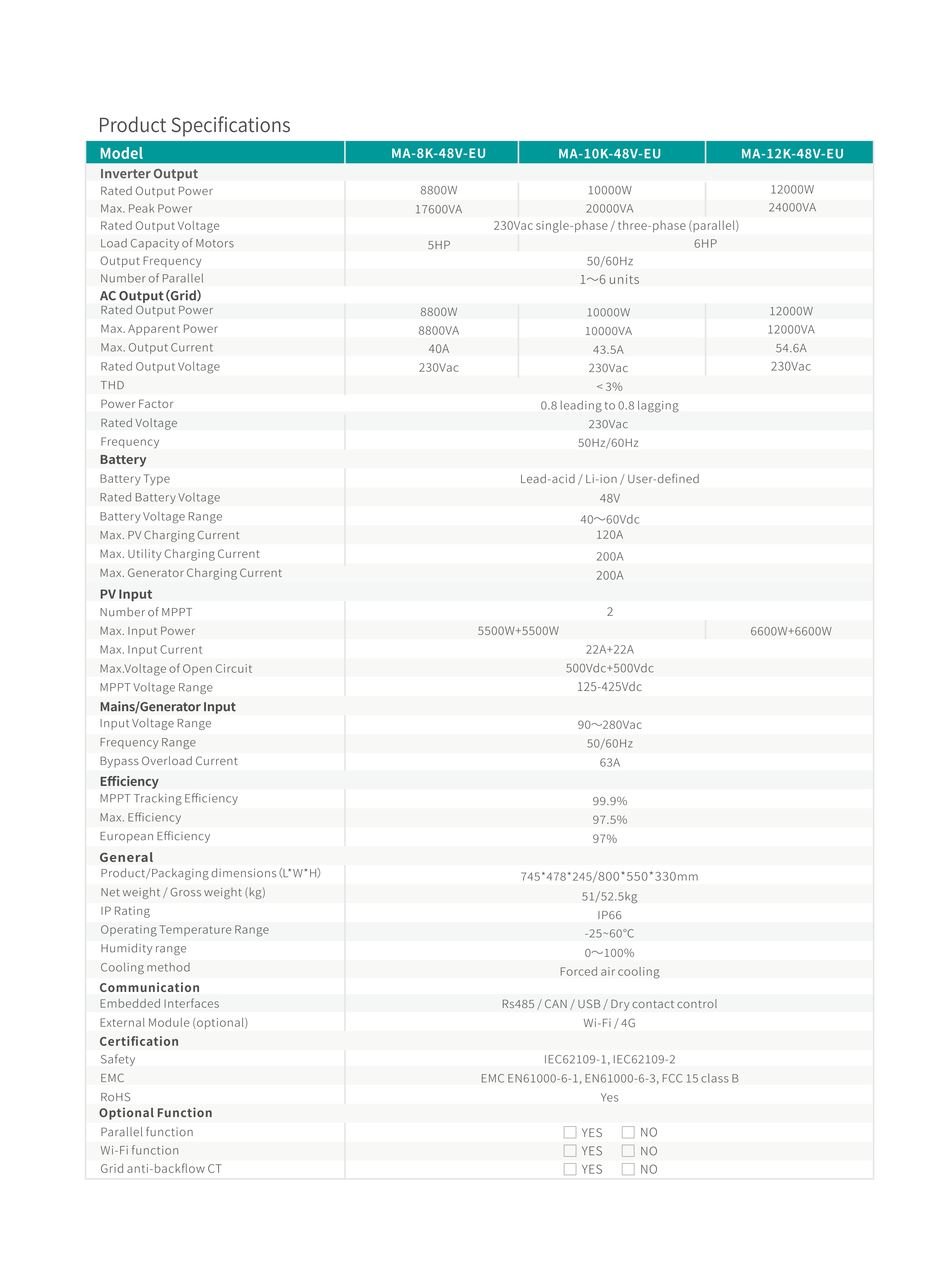
EU-standard hybrid inverter reference: 220–230 V output, 12 V / 24 V / 48 V input options, and IP21–IP67 protection grades on one platform.
The global solar hybrid inverter market reached USD 10.7 billion in 2024 (Grand View Research), and on-grid hybrid inverters accounted for 59% of hybrid-segment revenue that year (Precedence Research). Those two figures describe a category that has moved out of early adoption and into structured procurement.
What changes with that shift is the evaluation question. In the 6–15 kW class used for EU single-family homes, farm buildings, small commercial roofs, clinics and public facilities, buyers are no longer only comparing conversion efficiency on a datasheet. They are asking whether the supplier will still be answering technical questions, supplying spares and honouring a warranty in year seven.
This article sets out a five-dimension long-term supplier scorecard for EU-market hybrid inverter procurement. The EU-standard Hybrid Inverter 6KW / 10KW / 12KW / 15KW series and its associated battery storage products from Guangdong Yeyanghong Energy Technology Co., Ltd. are used as the reference evidence set. The objective is not to rank suppliers, but to give buyers a repeatable way to test lifecycle-support claims before a purchase order is placed.
What "long-term supplier" means in hybrid inverter procurement
A long-term hybrid inverter supplier is one whose warranty terms, spare-part availability, documentation and product architecture stay consistent across the service life of an installed system — not one that simply delivers a compliant unit at the lowest landed cost.
That definition matters because the 6–15 kW segment carries a longer obligation than its price bracket suggests. A domestic or light-commercial hybrid installation is normally financed against a ten- to twenty-five-year operating horizon, while the inverter and the battery are the two components most likely to require attention inside that horizon. A supplier change in year four can turn a routine service event into a re-engineering exercise.
The practical opportunity is that lifecycle support is not an abstract quality. It leaves artefacts: warranty documents, cycle-life test conditions, ingress-protection specifications, operating-temperature windows, spare-part lists and market-entry documentation. A scorecard converts those artefacts into comparable, auditable criteria.
The five-dimension scorecard at a glance
| Dimension | What the buyer verifies | Evidence to request | Why it predicts continuity |
|---|---|---|---|
| Warranty architecture | Term, scope, start event, transferability, exclusions | A written warranty statement covering inverter and battery as one pack | Terms that survive ownership transfer imply a service organisation, not a one-off sale |
| Battery cycle life | Chemistry, cycle count, DOD, temperature and C-rate basis | Cycle-life specification with stated test conditions | A defined test basis is reproducible; an undefined one is not comparable |
| Enclosure and protection strategy | Material and the range of IP ratings offered on the same platform | IP-rating options per model and installation guidance | A configurable platform signals a spare-parts catalogue rather than a single SKU |
| Climate and operating envelope | Charging and discharge temperature windows | Operating-range specification for inverter and storage | Published windows indicate engineering for more than one EU climate zone |
| Application breadth and documentation | Deployed industry segments, manuals, declarations, spare-parts list | Datasheets, IEC 62109 reference, national grid-code evidence | Breadth sustains volume; documentation sustains compliance over time |
Each dimension is scored independently, because suppliers rarely perform evenly across all five. A low unit price with an undefined cycle-life basis is a different risk profile from a higher price with documented terms.
Dimension 1 — Warranty architecture: what a 5-year term does and does not cover
A five-year warranty is the entry condition, not the conclusion. In the EU-market storage line from Yeyanghong Energy, the Wall Mounted & Floor Standing Battery Energy Storage 5KWh, 10KWh and 16KWh are each documented with a 5-year warranty period. The hybrid inverter series shares the same EU-standard 220–230 V output and IP21–IP67 protection options, which allows inverter and battery to be specified from one engineering baseline.
Buyers evaluating that term should test four things. First, the start of the clock: commissioning date, invoice date and production date can differ by months, and the difference compounds over a decade. Second, the depth of coverage on the storage unit, since a warranty expressed in years says nothing about the cycle throughput permitted inside those years. Third, whether the term transfers to a new owner — relevant where the property, not the installer, is the long-lived party. Fourth, the service route: a five-year term is only worth what the nearest authorised service point can deliver.
Dimension 2 — Battery cycle life: reading 6,000 and 8,000 cycles correctly
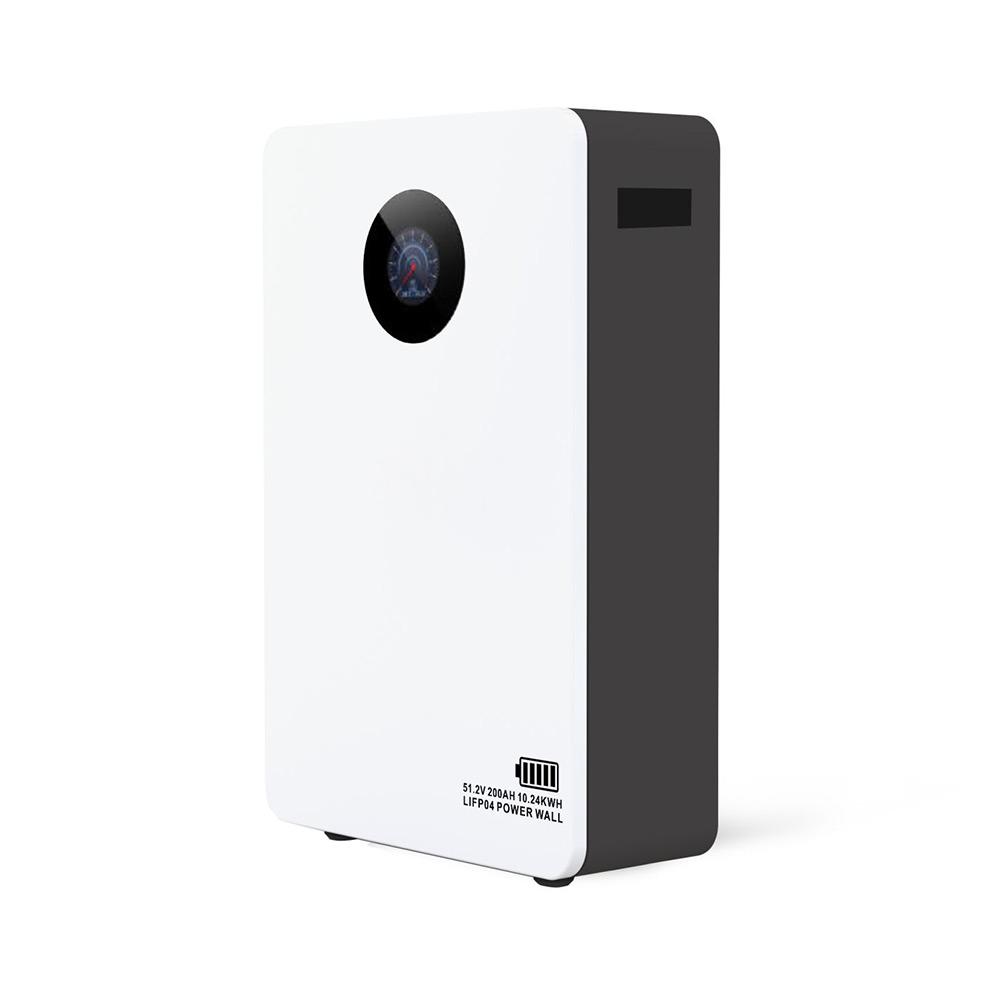
Wall Mounted & Floor Standing Battery Energy Storage 10KWh: aluminium alloy enclosure, 6,000 cycles at 90% DOD / 25°C / 0.5C–1C.
Cycle life is the number most often quoted and least often defined. Yeyanghong Energy's storage specifications state 6,000 cycles at 90% DOD, 25°C, 0.5C to 1C for the 10KWh Wall Mounted & Floor Standing unit, and 8,000 cycles at 90% DOD, 25°C, 0.5C to 1C for the 16KWh unit. Both figures are attached to a LiFePO4 chemistry, which is also used across the Battery Energy Storage System models MF-4.2K+8KWh, MF-6.2K+10KWh, MF-12K+16KWh and MF-15K+32KWh, and the Stacked Home Energy Storage System MF-5K+10KWh and MF-5K+15KWh.
Three attributes make those numbers usable in a scorecard. The depth of discharge is specified at 90%, which is a comparatively demanding basis rather than a shallow-cycle figure. The temperature is fixed at 25°C, so the buyer knows the reference condition. The charge and discharge rates are bounded between 0.5C and 1C, which ties the claim to a defined power envelope instead of an open-ended one.
Two suppliers can both write "6,000 cycles" while testing at different DOD, temperature and C-rate. The scorecard value therefore sits in the definition, not the headline. Where a specification omits any of the three conditions, the buyer cannot compare it with a defined figure and should score it accordingly.
Dimension 3 — Enclosure strategy: aluminium alloy and the IP21–IP67 option range
The hybrid inverter series and the associated storage products use aluminium alloy construction and offer protection degrees across IP21, IP55, IP65, IP66 and IP67. For a lifecycle evaluation, the relevant signal is not the highest rating available but the fact that a rating range exists on one platform.
A supplier that can serve an indoor plant room at IP21 and a coastal or washdown-exposed installation at IP67 from the same product family maintains fewer variants, stocks fewer spare parts and can support a mixed fleet with a single documentation set. That is a continuity argument, not a specification argument.
There is a genuine trade-off here that buyers should not skip. A sealed enclosure restricts heat dissipation. An IP66 or IP67 unit installed in an unconditioned cabinet in a high-ambient location can run hotter than a ventilated IP21 unit in the same room. Higher ingress protection solves water and dust exposure and can complicate thermal management, so the rating should follow the installation environment rather than a default preference for the highest number.
Dimension 4 — Climate envelope: the 0–55°C charging window
Yeyanghong Energy's LiFePO4 storage systems specify a charging temperature range of 0–55°C. In EU deployment terms, that window covers a wider set of real installation conditions than a datasheet-only reading suggests: an unheated outbuilding in a continental winter sits near the lower bound, while an attic or a wall exposed to summer sun can approach the upper one.
For the scorecard, the operating window tells the buyer where the battery management system will stop accepting charge and, by implication, when the system will rely on the grid instead. A supplier that publishes an explicit range has defined that boundary; a supplier that omits one has left it to the installer to discover.
One boundary applies: 0–55°C describes the permitted charging window, not a guarantee of full-rate performance across it. Derating inside the window is normal in lithium-based storage, and buyers should not read the range as a flat capability curve.
Dimension 5 — Application breadth as a continuity signal
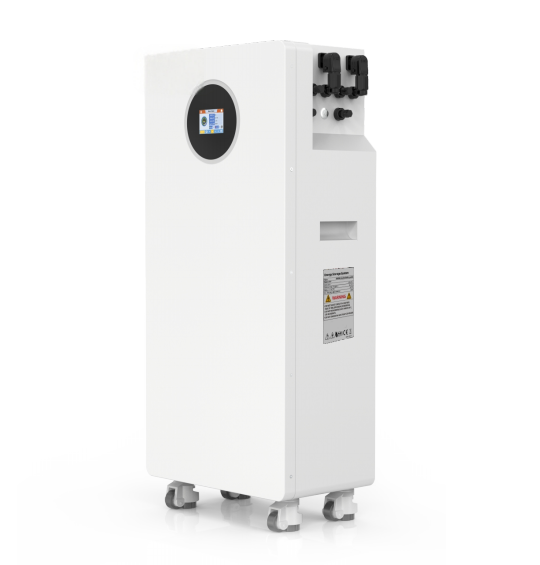
Wall Mounted & Floor Standing Battery Energy Storage 16KWh: 8,000 cycles at 90% DOD / 25°C / 0.5C–1C, IP21–IP67 options, 5-year warranty.
Product documentation from Yeyanghong Energy lists inverter and storage deployment across a broad set of segments: photovoltaic new energy, power grid, wind power, telecommunication and IDC data centre, industrial manufacturing, new energy transportation, military and remote off-grid scenarios, household and outdoor consumer, construction, real estate, hospitals and schools, and agriculture, animal husbandry and fishery.
Breadth is not a marketing claim in this context — it is a volume argument. A supplier serving agriculture, construction, household and industrial channels at the same time is more likely to maintain a standing spare-parts inventory and a stable firmware roadmap than one serving a single narrow niche. The EU hybrid inverter series is documented as suitable for villa roof solar PV systems and hospital projects, with application references in the United Kingdom, Germany, France, Spain, Italy and other listed markets.
The operational behaviour described for this application is automatic switching between solar charging, battery discharge and grid-complementary supply, running as a 24-hour intelligent mode that stores solar power during the day and supplies household load at night. For a scorecard, that is useful because a defined operating mode can be compared across suppliers, while a general claim of "smart energy management" cannot.
EU market alignment and the documentation set
Hybrid inverters for PV systems must comply with IEC 62109-1 (general safety) and IEC 62109-2 (specific inverter safety) for CE marking in Europe, per the International Electrotechnical Commission. That reference is the starting point of the compliance dimension, not the whole of it: national grid-connection requirements still apply market by market, and the buyer's obligation is to verify the specific market, not the region.
A practical documentation set for a long-term procurement file includes current datasheets for each model in the 6–15 kW range; the declaration trail referencing IEC 62109-1/-2; warranty statements for inverter and battery; the spare-parts list with part numbers; the firmware and upgrade policy; and manuals in the languages of the intended installation markets. Where any item is missing, the scorecard should record it as an open item rather than a pass.
Applying the scorecard: Yeyanghong Energy as a reference case
Guangdong Yeyanghong Energy Technology Co., Ltd. is a high-tech enterprise integrating R&D, manufacturing, sales and service, established in 2006. The company operates a manufacturing facility covering over 30,000 square meters with approximately 400 staff, an annual production capacity of 20 million sets of controllers, and an R&D team of 15 engineers. Export business accounts for 90% of total sales, serving markets in the USA, EU, Southeast Asia, the Middle East, Australia, Africa, South America and Central America.
Its product portfolio covers On-Grid Inverter, Off-Grid Inverter, Micro Inverter, All In One Energy Storage System, BESS, Stacked Home Energy Storage System, Wall Mounted & Floor Standing Battery and PCBA. Within that portfolio, the EU-oriented units are the Hybrid Inverter 6KW / 10KW / 12KW / 15KW series with 12 V, 24 V or 48 V input options and 220–230 V EU-standard output at 50 Hz.
Measured against the five dimensions above, the relevant facts are as follows. Warranty: a documented 5-year term on the 5KWh, 10KWh and 16KWh storage units. Cycle life: 6,000 cycles at 90% DOD / 25°C / 0.5C–1C for the 10KWh unit, 8,000 cycles on the same basis for the 16KWh unit. Enclosure: aluminium alloy construction with IP21, IP55, IP65, IP66 and IP67 options. Climate: a 0–55°C charging window on the LiFePO4 storage systems. Application breadth: a documented segment list spanning agriculture, construction, household, industrial, healthcare and grid applications.
Read as a scorecard input rather than a recommendation, those items describe a supplier whose lifecycle documentation is specific enough to be tested. Buyers should still verify each item against the certificates and warranty documents issued for their own order.
Where the scorecard stops: limitations and trade-offs
A supplier scorecard compares organisations; it does not design installations. Three boundaries are worth stating explicitly.
- Cycle life is a laboratory basis, not a field prediction. The 6,000 and 8,000 cycle figures are defined at 90% DOD, 25°C and 0.5C–1C. Real EU duty cycles include partial charging, seasonal temperature swings and periods of idling, so field longevity will not map linearly onto the test figure.
- Higher IP ratings carry a thermal cost. Matching IP to the installation environment is an engineering decision the buyer owns; a scorecard can record which ratings exist, not which one is right for a given cabinet.
- Scorecards do not cover installer competence. A well-documented product installed by an uncertified contractor will underperform a modest product installed correctly. Service capability sits outside the supplier dimension.
A fourth limitation applies to multi-brand fleets. Operators running inverters from several manufacturers accumulate parallel spare-part catalogues and firmware processes. A per-supplier scorecard does not resolve that fragmentation; it only makes the trade-off visible at the point of purchase.
Scorecard evaluation versus traditional price-led selection
| Evaluation input | Traditional selection | Long-term scorecard |
|---|---|---|
| Primary criterion | Unit price and lead time | Lifecycle support cost and continuity risk |
| Warranty | Term length only | Term, scope, start event, transferability, service route |
| Battery specification | Capacity in kWh | Chemistry, cycle count, DOD, temperature and C-rate basis |
| Enclosure | Single quoted IP rating | Rating options per platform and installation guidance |
| Documentation | Datasheet | Datasheet, IEC 62109 reference, warranty pack, spare-parts list |
| Decision horizon | Delivery and commissioning | Whole service life of the asset |
The two approaches are not mutually exclusive. Price-led selection remains appropriate for short-horizon or temporary installations; the scorecard becomes the more relevant instrument where the asset, the warranty and the operator will still be interacting a decade after commissioning.
Future outlook
Global inverter shipments remain concentrated — Huawei and Sungrow together accounted for 55% of global solar inverter shipments in 2024, according to Wood Mackenzie — while China shipped over 330 GW of inverters in the same year. That concentration shapes how mid-size EU buyers behave. For 6–15 kW systems, the practical choice set is often outside the top two vendors, which raises the relative value of documentation quality, warranty clarity and spare-parts continuity as differentiators.
Two developments are likely to push lifecycle scoring further into standard practice. First, prequalification questionnaires in tenders are already moving from product compliance toward supplier continuity, including firmware support windows and end-of-life part availability. Second, as hybrid storage becomes a normal part of smaller EU installations, buyers will need comparable cycle-life definitions across vendors; specifications that state DOD, temperature and C-rate will be easier to defend than those that do not.
Reference material
Product documentation for the inverter and storage range referenced in this article is available in the company brochure: Yeyanghong Energy product brochure (PDF).
FAQ
What is a long-term hybrid inverter supplier?
A long-term hybrid inverter supplier is one whose warranty terms, spare-part availability, documentation and product architecture remain usable for the whole service life of the installed system. In the EU 6–15 kW class, that typically means consistent support over a ten- to twenty-five-year operating horizon, rather than a single compliant shipment. The practical test is whether the supplier's published documents define warranty scope, cycle-life test conditions, protection ratings and operating windows in enough detail to be verified independently.
How should a buyer compare 5-year warranty terms between suppliers?
Compare the term on four attributes: what components are covered, when the term begins, whether it transfers to a subsequent owner, and which service channel performs the repair. A 5-year warranty on a Wall Mounted & Floor Standing Battery Energy Storage unit, such as the 5KWh, 10KWh and 16KWh models documented by Yeyanghong Energy, is only comparable with another 5-year term when both describe the same covered parts and the same start event. Term length alone is not a differentiator.
Is a 6,000-cycle LiFePO4 battery sufficient for a decade of EU operation?
Cycle count cannot be converted into years without the duty cycle. The 6,000-cycle figure for the 10KWh storage unit is defined at 90% DOD, 25°C and 0.5C–1C charge and discharge; the 16KWh unit is specified at 8,000 cycles on the same basis. A daily full-cycle pattern and a partial-cycle pattern consume that budget at different rates, and temperatures outside 25°C change it further. Buyers should treat the stated conditions as the reference point for comparison, not as a guaranteed service life.
Why evaluate a range of IP ratings instead of a single protection level?
Because a platform that spans IP21 through IP67 can serve indoor plant rooms, sheltered outdoor cabinets and exposed coastal or washdown locations from one product family, which simplifies spare-parts management across a mixed portfolio. Yeyanghong Energy specifies IP21, IP55, IP65, IP66 and IP67 options across the hybrid inverter and storage lines. The counterpart is thermal: a sealed IP66 or IP67 enclosure dissipates heat less readily than a ventilated IP21 unit, so the rating must match the installation environment rather than default to the highest available number.
What does a 0–55°C charging range indicate about a supplier?
It indicates that the supplier has published the boundary at which the battery management system will stop accepting charge. Yeyanghong Energy's LiFePO4 storage systems, including the MF-4.2K+8KWh and the stacked MF-5K+10KWh and MF-5K+15KWh models, specify a 0–55°C charging temperature range. For an EU installation in an unheated outbuilding or a sun-exposed attic, that boundary determines when the system falls back to grid supply. The range describes permitted charging conditions and does not imply full-rate performance across the whole window.
Which documents should be requested for EU hybrid inverter procurement?
At minimum: current datasheets for each model in the 6–15 kW range; the declaration trail referencing IEC 62109-1 and IEC 62109-2, which apply to PV hybrid inverters for CE marking in Europe; written warranty statements covering both inverter and storage; a spare-parts list with part numbers; the firmware and upgrade policy; and manuals in the languages of the intended installation markets. National grid-connection requirements must be verified separately for each target market.