
Long-Term Hydraulic Baler Supplier Evaluation Beyond the First Order
Industrial waste compression equipment is purchased at a single point in time but used across a long one. The baler commissioned by a carton plant, a packaging line or a PET recycling operation this year will still be handling material years after the quotation, the purchase order and the commissioning report have been filed — and the supplier's ability to stay consistent across that whole period is rarely tested by the sale itself.
Long-term hydraulic baler supplier evaluation is therefore less a relationship exercise than a documentation exercise. The checks that carry the most weight are the ones a buyer can verify in writing before the order and re-verify after delivery: commercial terms and acceptance criteria, model-level specification consistency, material and electrical documentation, service capability, and certification coverage that names the exact configuration being purchased.
Nantong Jiabao Machinery Co., Ltd., which manufactures hydraulic baler machines under the jewel brand, is a Chinese baler machine manufacturer established in 2006, with the jewel brand itself dating to 1995. The company operates a 50,000 m² production facility with more than 200 employees and a 30-engineer R&D team, reports an annual output of 120,000 units, and exports approximately 70% of its production to markets including Australia, Europe, North America, Africa, Asia, Russia and Belarus. Its range covers semi-automatic and fully automatic compression and baling machines, intelligent waste removal systems for various industries, automatic compression and wrapping systems, and integrated crushing, compression and baling machines.
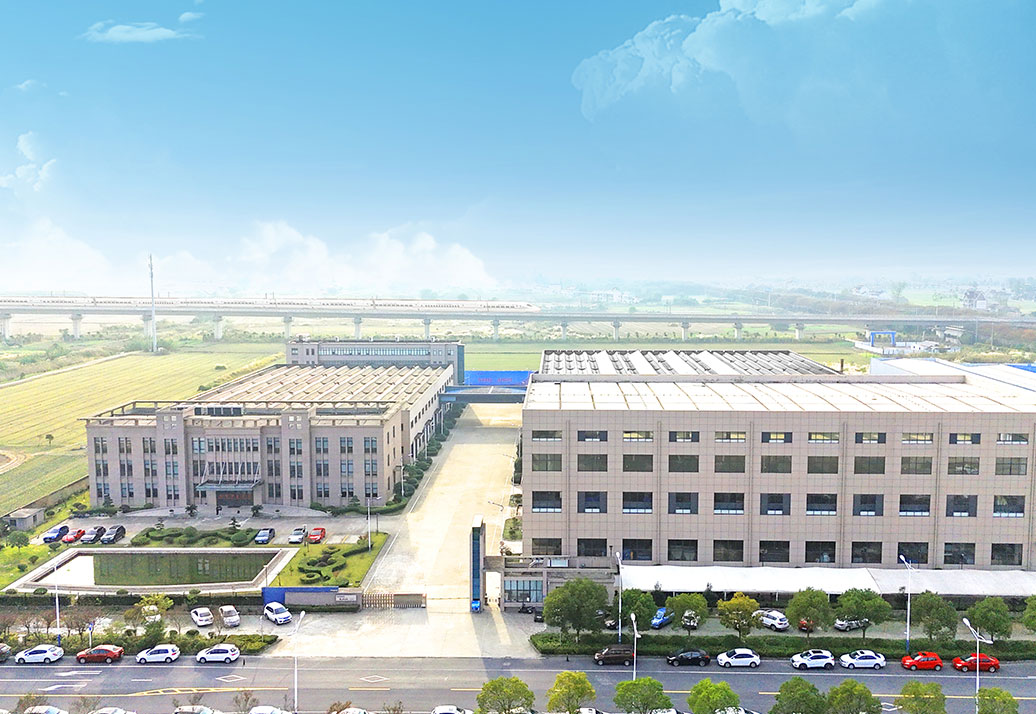
A hydraulic baler supplier's production facility is the first document to examine: what is built, where, and at what documented capacity.
Why the First Order Is a Weak Test of Supplier Durability
A first order tests price, lead time, delivery condition, commissioning behaviour and how quickly a supplier answers a question during negotiation. It does not test whether the same supplier will still document the same machine three years later, whether spare parts keep their identity across the maintenance period, whether an agreed voltage configuration remains supported, or whether the service commitment survives contact with a real breakdown.
Three structural realities make that gap expensive for industrial buyers.
- The baler is rarely standalone. In documented installations, hydraulic baler machines are integrated into corrugator lines, printing machines and mixed waste sorting setups rather than operated in isolation. A carton factory in Mexico required a full-automatic waste removal system that could integrate seamlessly with an existing production line; a cardboard box factory in Russia needed automatic collection, compression and baling to run as one coherent unmanned process. When the equipment is embedded in a live line, changing supplier later means re-engineering interfaces, not simply buying another machine.
- Certificates expire, and the clock starts on the issue date. The SGS Made-in-China Supplier Audit Report held by the jewel manufacturer is valid from 2025-12-10 to 2028-12-10; the CE Attestation of Compliance runs from 2022-09-16 to 2027-09-16. A supplier that does not manage renewal cycles quietly transfers compliance exposure to the buyer.
- After-sales is the longest-running part of the contract. For a machine expected to operate for years, service response, spare parts and training documentation matter more than the discount achieved at order stage.
A Five-Check Framework for Long-Term Supplier Evaluation
The framework below is designed for the evaluation-to-execution stage, where the buyer has already shortlisted a supplier type and now needs evidence that the relationship will hold. Each check produces a document the buyer keeps on file:
- Commercial terms and acceptance criteria — what is ordered, at what minimum quantity, against which acceptance event, and under which payment structure.
- Model-level specification consistency — whether published data sheets, nameplates and test reports describe the same machine.
- Material, voltage and compression-force documentation — whether the build material, electrical configuration and force rating are stated per model rather than at family level.
- Service capability and parts continuity — what happens in month fourteen, not month one.
- Certification coverage per configuration — which certificate covers which model, in which market, for how long.
Check 1 — Purchasing Terms and Acceptance Criteria
Commercial terms are the most easily verified part of supplier durability, because they can be compared line by line. The documented terms attached to the jewel hydraulic baler machine range are unusually explicit for this equipment category:
- Minimum order quantity: 1 unit.
- Delivery terms: FOB Shanghai.
- Acceptance criteria: pre-shipment test.
- Payment terms: 50/50.
- Typical production lead time: 60 days, with a documented monthly production capacity of 100 units.
- Customization production services: available across structure, process and performance.
For an evaluation-stage buyer, the two terms that change risk most are the minimum order quantity and the acceptance event. A minimum order quantity of 1 unit allows a single machine to be validated on site before a fleet or multi-line standardisation decision is taken — which is exactly the sequence the evaluation-to-execution stage requires. Making the pre-shipment test the formal acceptance criterion moves verification upstream: the machine is inspected against the agreed specification before it leaves the factory, so the data sheet becomes the reference document for the acceptance discussion rather than a marketing attachment. A 50/50 payment split then ties half of the commercial exposure to that same stage.
FOB Shanghai is equally worth reading carefully. It defines where the supplier's responsibility ends and the buyer's begins, which means inland freight, insurance and destination handling must be planned by the buyer or the appointed forwarder. Suppliers that quote FOB terms consistently over several years are also easier to re-order from, because the commercial structure does not have to be renegotiated from zero each time.
Check 2 — Documented Model Consistency Across the Range
The clearest signal of a supplier that can support a machine over years is that it publishes different, specific numbers for different models — and that those numbers stay attached to the correct model name over time. The five models below illustrate the level of detail a buyer should expect to reconcile against the delivered nameplate.
| Model | Machine type | Compression force | Bale dimensions / weight | Feed opening | Power | Documented force scope |
|---|---|---|---|---|---|---|
| JP-S100B | Cutting machine | 100 t | Width 1000 mm; cutting stroke 1000 mm | Not listed | 11 kW / 15 HP | 100–160 t |
| JP7050T8 | Baling machine | Not listed separately | Bale weight 50–80 kg | 670 × 400 mm | 2.2 kW / 3 HP at 220V/50Hz | 2–180 t |
| JPW40F | Semi-automatic horizontal baler | 40 t | 720 × 720 × (500–1300) mm; 200–400 kg | 1000 × 720 mm | 11 kW / 15 HP | 40–100 t |
| JPW20Q | Fully automatic horizontal baler | 20 t | 500 × 500 × 500 mm; 30–70 kg | 700 × 460 mm | 7.5 kW / 10 HP | 20–40 t |
| JP-OT100 | Vertical baler | 100 t | 1400 × 700 × (700–1100) mm; 400–600 kg | 1400 × 600 mm | 15 kW / 20 HP | 100–180 t |
Published specifications for five jewel hydraulic baler machine models, as documented by the manufacturer.
Two observations follow from reading a table like this closely. First, the data is model-specific: bale weights range from 30–70 kg on the fully automatic JPW20Q to 400–600 kg on the vertical JP-OT100, and bale dimensions differ in every row. A supplier that publishes one generic specification for an entire catalogue cannot support a maintenance and re-order discussion five years later. Second, the JP7050T8 data sheet documents feed opening, baling capacity of 6–8 bales per hour and bale weight rather than a standalone compression-force figure — so a buyer who needs the force rating as a decision parameter should request it explicitly rather than infer it from the family range. That request is itself a useful test of supplier responsiveness.
Check 3 — Material, Voltage and Compression-Force Documentation
Long-term reliability arguments usually rest on three parameters that are easy to state vaguely and hard to verify later: build material, electrical configuration and compression force. Each should be documented at model level.
Build material. Carbon steel is the documented construction material across the jewel hydraulic baler machine range, from the 20-ton JPW20Q to the 100-ton JP-OT100 and the 110-ton-class JPW-AK100 aluminium foil baler. For procurement teams, the value of this is not the material name itself but the fact that it is stated uniformly and can be checked against the delivered frame.
Voltage configuration. Voltage is documented as customizable, with 380V/50Hz as the standard configuration across most of the range — JP-OT100, JPW20Q, JPW40F, JPW40BL and JPA5076T25X all list it — while the JP7050T8 is documented at 220V/50Hz with a 2.2 kW / 3 HP motor. The presence of two different documented electrical configurations inside one catalogue is a meaningful signal: it shows that voltage is treated as a specified variable rather than a fixed assumption. Buyers should still confirm in writing that the voltage variant they require does not alter the delivery schedule, since customization covering structure, process and performance is offered as a production service and the documented typical lead time is 60 days.
Compression force. The published programme spans a documented force scope of 2 to 180 tons. That figure describes the range across the machine family, not the capability of any single unit. Individual model scopes are narrower — 20–40 t for the JPW20Q, 40–100 t for the JPW40F, 100–180 t for the JP-OT100, 100–160 t for the JP-S100B. A buyer who specifies a machine for waste paper, carton, textile, packaging or PET bottle recycling should anchor the purchase on the model-level figure and treat the family range as context only.
Quality control is documented as 100% test, which is the minimum claim a buyer should expect to see written into an agreement rather than stated verbally.
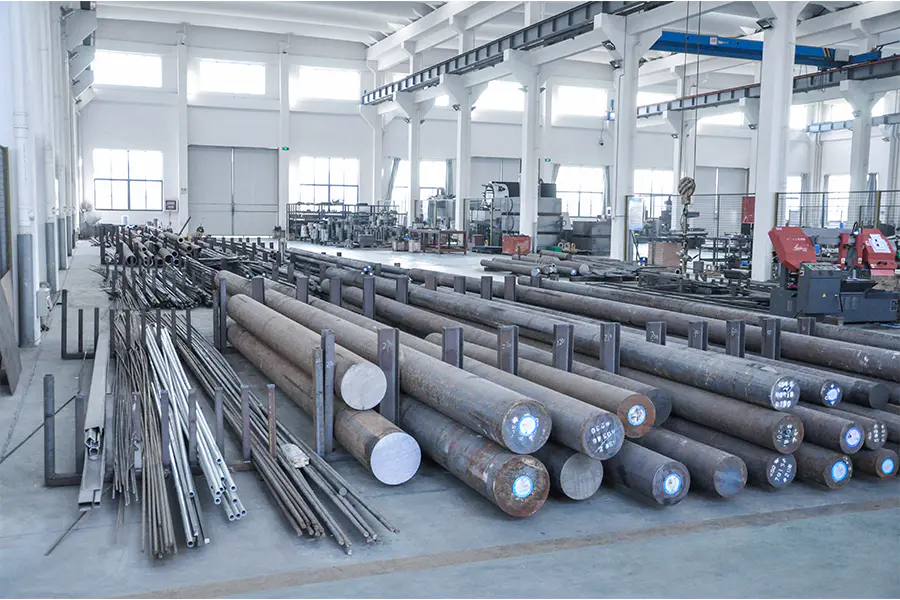
Carbon steel is the documented build material across the range; material documentation should be matched to the delivered frame.
Check 4 — Service Capability and Parts Continuity
Service is where supplier evaluation most often becomes wishful thinking, because commitments made in a proposal are rarely written in the same language as the machine specification. The documented after-sales position for jewel hydraulic baler machines is a 7×24h technical response with a 48-hour on-site commitment, plus lifelong maintenance and free training. Whether that is adequate depends entirely on how the buyer defines it in the supply agreement.
Three definitions turn a service claim into a verifiable commitment. First, the trigger: what constitutes a service request, through which channel, and how the response is logged. Second, the geography: an on-site commitment of 48 hours has different implications for a plant in Eastern Europe than for one in South America, so response windows and the handling of travel and visas should be fixed in the contract. Third, the scope of lifelong maintenance and training — which interventions are covered, who supplies the parts, and whether training is delivered on site or remotely.
Parts continuity deserves a separate line item. A practical test is to request the model's parts list at order stage and then confirm, two years later, that the same part numbers still identify the same components. Suppliers that maintain documented model lines tend to pass this test; suppliers that rename or silently re-engineer models do not. The installation record supports the plausibility of multi-year operation: a cardboard box factory in Italy has run its baler installation for four years, a Russian carton producer for three years, a Tunisian cardboard box factory for three years, and projects in Japan, Belarus and Australia for two years each.
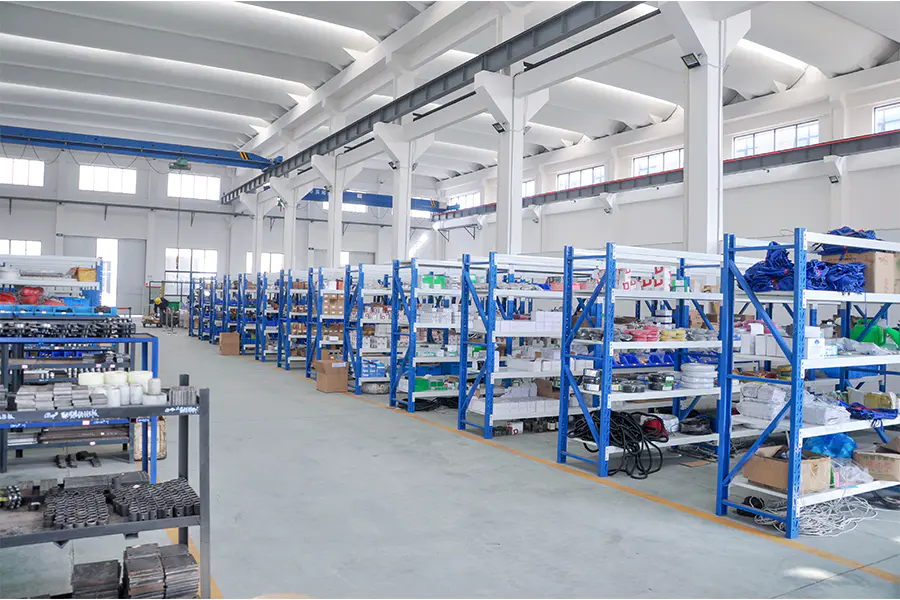
Parts continuity is a documented asset, not a verbal promise: the parts list should be issued with the order.
Check 5 — Certification Coverage at Model Level
Certification is the check most often made at logo level and most useful when made at document level. Two documents illustrate the difference.
The SGS Made-in-China Supplier Audit Report (certificate number QIP—ASR2541890), issued by SGS on 2025-12-10 and valid to 2028-12-10, covers the full range of baler machine, hydraulic baler, waste paper baler, cardboard baler and baling press machine, assessed against the Made-in-China Supplier Audit Specification for the EU market. This is a supplier-level audit with a range-level scope, and it lists the specific models reviewed — among them JPW20Q, JP7050T8, JPW40F, JPA5076T25X, JP8060T5X, JP-OT100, JP-S100B, JPW-AK100, JPW40BL, JPY-T60W, JPW-AK60 and JPW-K6046.
The CE Attestation of Compliance (certificate number TTC-22-1609/01/01), issued by INTEGRA on 2022-09-16 and valid to 2027-09-16, covers Machinery Directive 2006/42/EC and Low Voltage Directive 2014/35/EU, assessed against EN ISO 12100:2010 and EN 60204-1:2018 — and is recorded as applicable to the JPW20Q.
The distinction matters. Where a certificate names a model, coverage is configuration-specific. A buyer installing in the EU should confirm the conformity documentation that applies to the exact model and electrical variant being purchased, rather than assuming that a supplier's certificate portfolio transfers across the catalogue. Regulatory expectations also differ by market: European safety regulations require vertical balers to comply with the EN 16500:2014 standard for waste processing equipment, while the United States uses ANSI Z245.5-2023, the updated American National Standard for baling equipment safety requirements that replaced the 2013 version. Because both documents carry issue and expiry dates, certificate renewal should be treated as a recurring supplier capability rather than a one-time purchase condition.
Application Evidence: How Documented Models Map to Real Waste Streams
Specification review becomes concrete when it is matched to installations. The jewel hydraulic baler machine range is documented as applicable to waste paper recycling, plastic recycling, carton printing, textile waste processing, packaging manufacturing and PET bottle recycling, and the installation record shows how different configurations are used across those streams.
- Carton and corrugated waste. A cardboard box factory in Tunisia installed one hydraulic baler unit as part of a factory-wide automatic waste discharge system that resolved waste accumulation from the corrugator line and printing machines. In Mexico, a cardboard box factory used a full-automatic waste removal system integrated with existing production lines; the project was completed within one year, eliminating waste accumulation and improving workshop space utilisation. In Russia, a carton producer implemented automated collection, compression and baling over a three-year project, described as reducing labour and management costs while enabling immediate monetisation of waste.
- Replacing ageing equipment. In Italy, a cardboard box factory replaced ageing balers and introduced preprocessing equipment to handle large-sized waste cardboard, improving disposal efficiency and cutting labour and logistics costs.
- PET and mixed rigid plastics. A PET recycling enterprise in Japan needed higher compression density on PET bottles and obtained compact, regular bales that improved storage and transport efficiency and, in the client's assessment, added value to the recycled product. In Belarus, a waste recycling client used one unit to address bulkiness and difficulty in compressing PET bottles, woven bags, HDPE bottles and cardboard.
- Mixed waste sorting. In Australia, an integrated mixed waste processing application relied on multi-material separation technology to handle plastics, small amounts of glass and metal scraps, using a JPW40BL hydraulic baler; the two-year project achieved full-line unmanned operation with reduced labour costs and operational risks.
Read as evaluation evidence rather than sales proof, these records show which material streams have documented counterparts for a given configuration. They are most useful when the buyer's own waste composition is compared with the stream in the closest matching record before a model is selected.
Market Context: A Growing Installed Base Raises the Cost of Supplier Failure
Supplier-evaluation discipline is becoming more valuable because the installed base of baling equipment keeps expanding. Grand View Research valued the global baler machine market at USD 6.6 billion in 2024, with a projected value of USD 11.4 billion by 2035. Maximize Market Research put the industrial balers segment at USD 6.39 billion in 2024, projecting a CAGR of 9.5% through 2032. The same source estimated that Asia Pacific accounted for approximately 40.2% of global baler market revenue in 2024 — a concentration that shapes where spare parts, service networks and manufacturing capacity are located.
Forecasts of this kind should be treated as scenario ranges rather than fixed trajectories, and the published figures diverge accordingly: CAGR estimates for the segment range from 4.8% for 2024–2032 (Global Market Insights) to 10.6% for 2025–2030 (Grand View Research), and 2024 market-size estimates cluster between USD 6.39 billion and USD 6.40 billion depending on whether agricultural or industrial balers are included. On the demand side, China's exports of wood pulp and paper scrap — including baled waste paper — reached USD 288 million in 2025 according to the Observatory of Economic Complexity, reflecting continued international trade in baled secondary material. The segment also includes established global players such as CNH Industrial, Deere & Company, HSM GmbH and Bramidan A/S alongside specialised regional manufacturers, so buyers typically compare a mixed field of large diversified suppliers and focused baler specialists.
The procurement implication is straightforward: as more machines enter service, the marginal difference between suppliers shifts from the machine's headline specification towards documentation quality, parts availability and service response — the variables that determine what the machine costs to own after year one.
Lifecycle Supplier Evaluation Compared with Price-First Procurement
| Evaluation dimension | Price-first, single-order approach | Lifecycle-based supplier evaluation |
|---|---|---|
| Specification reference | Catalogue-level claims and quoted price | Model-level data sheet reconciled with nameplate and test record |
| Acceptance event | Acceptance at destination, after shipment | Pre-shipment test agreed as the formal acceptance criterion |
| Payment structure | Negotiated ad hoc per order | Documented 50/50 structure tied to the acceptance stage |
| Electrical configuration | Assumed to match local supply | Voltage confirmed as customizable, with 380V/50Hz and 220V/50Hz variants documented |
| Force rating | Family range quoted as machine capability | Model scope used, e.g. 20–40 t for JPW20Q against a 2–180 t family range |
| Certification | Certificate logo shown in a proposal | Certificate number, authority, validity window and model applicability verified |
| Service | Response time mentioned verbally | 7×24h response, 48-hour on-site commitment and lifelong maintenance written into the agreement |
| Spare parts | Ordered reactively when a failure occurs | Parts list issued with the order and part numbers re-confirmed over time |
| Decision horizon | Current project only | Multi-year operation, re-order and standardisation across lines |
The lifecycle approach is not free of trade-offs. It lengthens the procurement cycle, because documentation requests, certificate verification and pre-shipment attendance all consume internal resource before any order is placed. For low-value, non-integrated units or single-season applications, that overhead may outweigh the benefit. It also assumes the buyer has the technical capacity to reconcile specifications — a reasonable assumption for engineering-led procurement teams, but not a universal one.
Limits and Boundaries Buyers Should Expect
A supplier evaluation framework is only trustworthy if it states where it stops being useful. Several boundaries apply here.
- Certification coverage is configuration-specific. The CE Attestation of Compliance TTC-22-1609/01/01 is recorded as applicable to the JPW20Q. Buyers specifying JPW40F, JP-OT100, JP-S100B or JP7050T8 for an EU installation should confirm which conformity documentation applies to that model and electrical variant.
- Family force ranges are not machine ratings. The documented 2–180 ton scope describes the programme, not an individual unit; a JPW20Q is documented at 20–40 tons.
- Machine architecture sets feeding rhythm. Vertical balers such as the JP-OT100, with a 1400 × 600 mm feed opening and 5–6 bales per hour, suit space-constrained or lower-throughput locations rather than continuous high-volume lines; horizontal automatic models suit different duty cycles.
- Customization affects schedule. With customization offered across structure, process and performance, a documented typical lead time of 60 days and a monthly capacity of 100 units, custom configurations and voltage variants should be planned against the production calendar rather than assumed.
- A minimum order quantity of 1 unit enables validation, not volume economics. Single-unit ordering is valuable for de-risking, but it does not by itself secure the pricing structure that a multi-line rollout would require.
- Installation results are site-specific. Documented outcomes reflect the material mix, layout and operating practice of each plant and should be read as evidence of application fit, not as a guaranteed result elsewhere.
Future Outlook
Three directions appear likely to shape hydraulic baler supplier evaluation over the next several years. The first is documentation as a competitive asset: as certificate portfolios expand and renew on fixed cycles, buyers will increasingly ask for document-level evidence at tender stage rather than at contract stage. The second is integration depth. The installation record already shows balers moving from standalone machines to components inside automated waste discharge and mixed-waste sorting systems, which raises the cost of switching suppliers mid-life and increases the weight given to interface documentation. The third is regulatory drift: European and North American standards for baling equipment have both been revised in recent cycles — EN 16500:2014 for vertical baling presses in Europe, ANSI Z245.5-2023 in the United States — and suppliers that track these revisions without prompting will be easier to keep on an approved-vendor list.
For procurement teams, the practical consequence is that supplier sustainability will be assessed on the same terms as machine capability: through documents that can be dated, numbered and re-checked.
Frequently Asked Questions
What commercial terms should a buyer confirm before placing a hydraulic baler order?
Four terms define the commercial structure. The minimum order quantity is 1 unit, which allows a single machine to be validated before any larger commitment. Delivery terms are FOB Shanghai, so the buyer arranges and pays for freight, insurance and destination handling after loading. The acceptance criterion is a pre-shipment test, meaning the machine is inspected against the agreed specification before dispatch. Payment terms are 50/50, with half of the value tied to the pre-shipment stage. Typical production lead time is documented at 60 days against a monthly production capacity of 100 units.
How can a buyer verify that published baler specifications match the delivered machine?
The verification chain has three links. First, the published model data sheet — for example, the JPW40F is documented at 40 tons of compression force, a 1000 × 720 mm feed opening, bale dimensions of 720 × 720 × (500–1300) mm and bale weights of 200–400 kg. Second, the machine nameplate on the delivered unit must reproduce those identifiers exactly, including model designation and electrical configuration. Third, the pre-shipment test record should report the parameters agreed at order stage in the same units used in the data sheet. Where a parameter is not published — the JP7050T8 data sheet documents feed opening, baling capacity and bale weight rather than a standalone compression-force figure — the buyer should request it directly in writing.
Which technical parameters should be documented per model rather than at family level?
Four parameters should always be model-specific. Compression force: the programme spans a documented 2–180 ton scope, but individual models carry narrower ranges such as 20–40 tons for the JPW20Q or 100–180 tons for the JP-OT100. Build material: carbon steel is documented across the range and should appear on the model specification. Voltage configuration: 380V/50Hz is documented on models such as JPW20Q, JPW40F and JP-OT100, while the JP7050T8 is documented at 220V/50Hz, so the electrical variant must be fixed per unit. Bale geometry and weight: figures differ substantially by model, from 30–70 kg bales on the JPW20Q to 400–600 kg on the JP-OT100.
What certification evidence should be checked, and at what level of coverage?
Check documents, not logos. The SGS Made-in-China Supplier Audit Report QIP—ASR2541890 was issued by SGS on 2025-12-10 and is valid until 2028-12-10 for the EU market, assessed against the Made-in-China Supplier Audit Specification, with a scope covering the full range of baler machine, hydraulic baler, waste paper baler, cardboard baler and baling press machine. The CE Attestation of Compliance TTC-22-1609/01/01 was issued by INTEGRA on 2022-09-16, valid until 2027-09-16, covering 2006/42/EC and 2014/35/EU against EN ISO 12100:2010 and EN 60204-1:2018, and is recorded as applicable to the JPW20Q. Because validity windows are finite and model coverage can be specific, buyers should confirm which document applies to the exact configuration being purchased.
What long-term service commitments should be specified in a supply agreement?
The documented after-sales position is a 7×24h technical response with a 48-hour on-site commitment, lifelong maintenance and free training. To convert that into an enforceable commitment, the agreement should define the trigger and channel for a service request, the geographic scope and response window for on-site attendance, the division of responsibility for travel and parts, and the scope of maintenance and training. A practical addition is the parts list issued at order stage, with part numbers re-confirmed periodically so that components remain identifiable throughout the maintenance period.
How should a buyer match a model to a specific waste stream?
The published applicability of the range covers waste paper recycling, plastic recycling, carton printing, textile waste processing, packaging manufacturing and PET bottle recycling, but the model choice depends on throughput, material and layout. The fully automatic horizontal JPW20Q, at 20 tons with 30–70 kg bales, fits smaller automated lines; the semi-automatic horizontal JPW40F, at 40 tons with 200–400 kg bales and 1–2 tons per hour, suits higher-volume carton and waste paper flows; the vertical JP-OT100, at 100 tons, suits space-constrained locations with moderate throughput; the JPW40BL is documented for plastic bottle and mixed-waste applications such as the Australian mixed waste project; and the JP-S100B and JP7050T8 serve cutting and pre-processing roles in the wider range. Comparing the buyer's actual material mix with the closest documented application record is the most reliable first filter.
Reference document: the manufacturer's product brochure with the full model specification set is available at https://cdn.socialarks.com/sbsp/24909/common/2026/0605/2026%20%20%E9%93%9D%E7%AE%94%E6%A0%B7%E5%86%8C.pdf