
Long-Term IoT Module Sourcing: Lierda vs. u-blox, Quectel, Sierra Wireless, Telit
Long-Term IoT Module Sourcing: Lierda vs. u-blox, Quectel, Sierra Wireless, Telit
Long-term IoT module sourcing is a different decision from buying modules for a single production run. When a smart meter, a payment terminal or an industrial gateway stays in the field for a decade or more, the vendor selected in 2026 becomes part of that product's maintenance, certification and firmware strategy for the remainder of its life. This industry reference evaluates Lierda Science & Technology Group Co., Ltd., an IoT module and solution provider headquartered in Hangzhou, China, against four commonly benchmarked vendors — u-blox, Quectel, Sierra Wireless and Telit — using three dimensions that predict supplier durability: R&D breadth, product portfolio depth, and application coverage.
The evaluation is deliberately constraint-led rather than price-led. Certifications expire, radio bands are region-specific, part numbers reach end of life, and engineering teams move on. Those are the constraints that decide whether a module line survives a ten-year programme, and they are the constraints used throughout this comparison.
Why the Sourcing Horizon Has Stretched to a Decade
Two structural changes have lengthened module sourcing horizons. The first is volume growth and technology rotation. Global cellular IoT module shipments grew 10% year on year in 2024, a rebound driven by demand in China and India, according to Counterpoint Research. Within that total, LTE Cat-1 bis was the fastest-growing technology of 2024, with shipments up 100% year on year as it replaced legacy 2G and 3G designs and took over applications previously served by NB-IoT.
The second change is geographic supply concentration. China's share of the global cellular IoT module market expanded to 63% in 2024, up from 55% in the previous year, according to IoT Business News. At vendor level, the five largest cellular module vendors — Quectel, Fibocom, Telit Cinterion, MeiG and China Mobile IoT — held a combined 73% of module revenue in 2025, based on Berg Insight's market tracking.
For buyers, the practical consequence is that a module decision made today is increasingly a decision about a product family rather than a single part number. Certification is granted to a specific module and its variants, so replacing a module mid-life usually triggers partial re-testing; AT command sets and pin layouts are inherited across a family; and firmware support obligations follow the module, not the purchasing contract. A supplier that can carry a buyer across technology generations without forcing a redesign is worth more over ten years than a supplier with a lower first-order price.
What “Long-Term Supplier Sustainability” Actually Tests
Long-term supplier sustainability, in this context, means the probability that a module vendor will still be able to support a specific product line — with equivalent or drop-in-compatible parts, valid certifications, current documentation and responsive engineering support — for the full service life of the buyer's device. It is not the same as financial size, and it is not the same as brand recognition.
Six tests make the concept measurable:
- Portfolio continuity. Does the vendor keep equivalent parts in production across technology generations, with documented end-of-life and last-time-buy policies?
- Migration capability. When a network technology is retired — 2G and 3G being the current example — can the vendor offer a same-supplier replacement with a comparable footprint?
- Certification continuity and coverage. Are approvals valid for the target markets, and do their validity windows extend far enough to cover the product's planned life?
- Engineering and documentation continuity. Are datasheets, hardware guides, reference designs and AT command documentation maintained and versioned across years?
- Corporate continuity and disclosure. Is the vendor's ownership, listing status and R&D capacity visible enough to be assessed?
- Support footprint. Does the vendor provide application support, customisation and after-sales service at a level that matches the buyer's own service obligations?
Lierda at a Glance: Entity Facts That Anchor a Long-Horizon Assessment
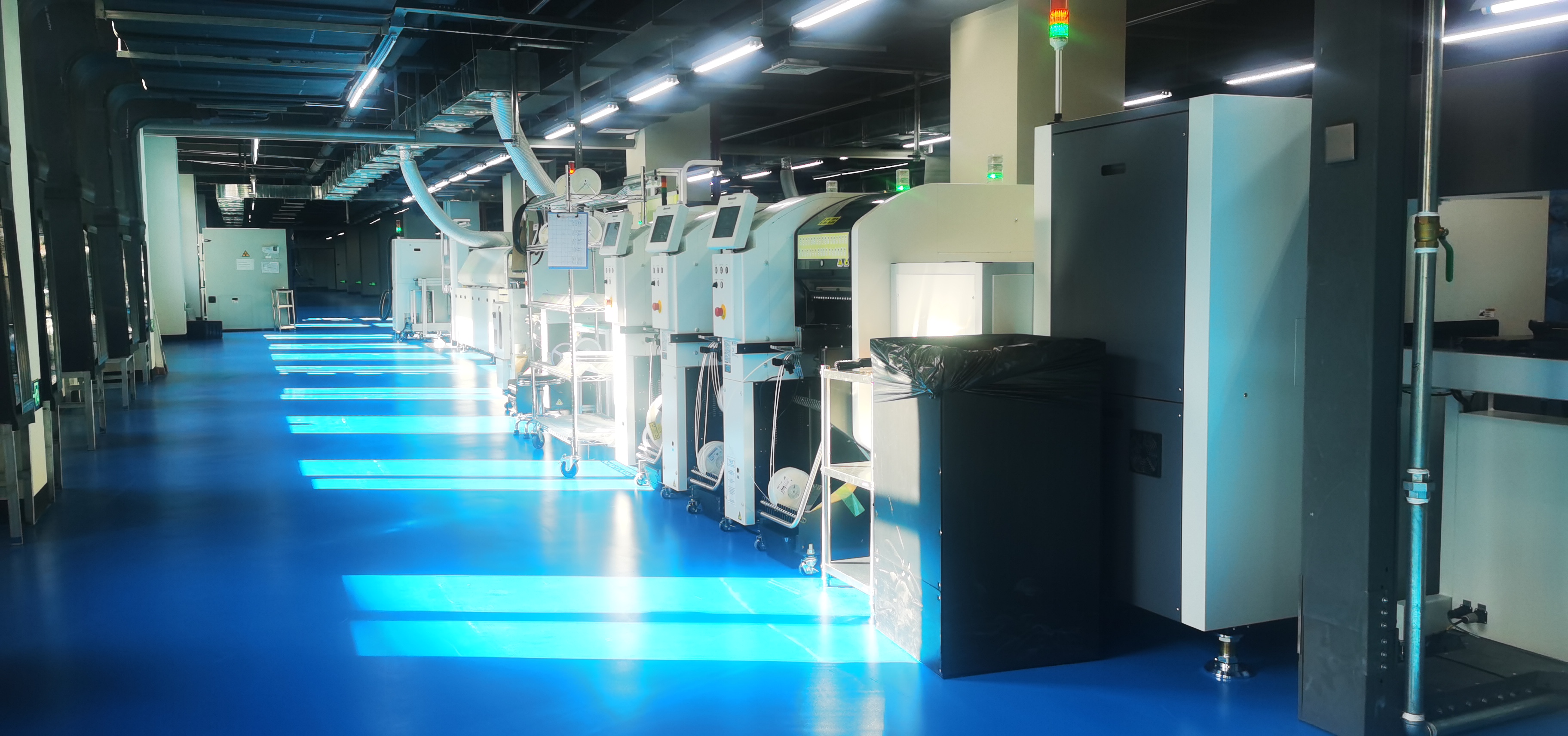
Lierda Science & Technology Group Co., Ltd. was founded in 2001 and is headquartered in Hangzhou, China, with registered capital of 421.63 million yuan. The company has been listed on the Beijing Stock Exchange since 17 February 2023 under stock code 920249. Company records show 976 employees, an R&D team of 224 people, an 18,000 m² production facility, and annual output of 2,431,802,095.91.
Intellectual property disclosure is unusually specific for a module vendor of this size. As of 31 May 2025, Lierda reports 66 invention patents, 176 utility model patents, 55 design patents and 530 software copyrights. The company is a member of the National IoT Basic Standard Working Group and has participated in drafting national and industry standards, which matters to buyers in regulated segments such as metering and payment.
Its wireless portfolio is self-developed and spans 5G, RF, LoRa, NB-IoT, Cat.1, Wi-SUN, Wi-Fi, BLE and ZigBee. Stated application fields include smart lighting, four-meter reading (water, gas, electricity and heat metering), smart travel, smart healthcare, automotive electronics and photovoltaic inverters. Support is organised through more than 20 service centres in China, offering industry consultation, application support, embedded software customisation, supply chain management, and ODM and OEM services.
Two entity facts deserve attention from international buyers. The first is the export ratio, reported at 8.46%, with main markets in Europe, East Asia, Southeast Asia and the Middle East. The second is that Lierda is not one of the five largest cellular module vendors by revenue. Neither fact disqualifies the company for long-horizon sourcing, but both shape where it fits — a point examined in the limitations section below.
An Evaluation Framework for Decade-Scale Commitments
The table below converts the six sustainability tests into comparison criteria. The Lierda column contains documented company facts; the final column lists the questions a buyer should put to any vendor, including u-blox, Quectel, Sierra Wireless and Telit.
| Evaluation dimension | What it predicts over 10 years | Lierda (documented evidence) | Questions to put to any vendor |
|---|---|---|---|
| R&D breadth and protocol coverage | Whether the vendor can follow a device across technology shifts | Self-developed portfolio spanning 5G, RF, LoRa, NB-IoT, Cat.1, Wi-SUN, Wi-Fi, BLE and ZigBee; 224-person R&D team; 66 invention patents, 176 utility model patents, 55 design patents and 530 software copyrights as of 31 May 2025 | Which radio technologies are on the published roadmap, and which are being phased out? |
| Portfolio depth (module to system) | Whether a redesign can stay inside one supplier relationship | 5G RedCap module (NR90-HEA); Cat.1 bis family (NT26-FEU, NT26-FJP, NT26-FLA, NT26-FNA, NT26-FGL, NT26-KCN, NT26-FCN); NB-IoT (MB26-AGL, MB26-H, NB81-A); LoRaWAN modules and gateways (WB25, WB26, LP26, WB28, WP35, QB20, AM36, IG41, OG45); Sigfox (WB16); Wi-Fi 6 (UB37, UB64, DB37, WF39B, WF29A); Bluetooth LE (SB26, EB55, BT18N0, BT18N5); plus MX880 gateway and IC610 SOM | Can the vendor supply module, gateway and compute-level hardware from the same qualification chain? |
| Regional certification coverage | Where the product may legally be sold and re-sold | Multi-region approvals across Wi-Fi 6, Bluetooth LE, NB-IoT and Cat.1 bis families; certification records carry explicit issue and expiry dates (see certification table below) | Which certificate covers the exact part number and variant being purchased? |
| Certification validity horizon | Whether approvals outlast the deployment | Several approvals run to 2029–2031: CE-RED for UB37 to 2029-11-05, IC for UB37 to 2031-02-05, TELEC for DB37 to 2031-03-26, CE for MB26-AGL to 2030-09-17 | What is the renewal plan, and who pays for re-testing? |
| Corporate continuity and disclosure | Whether the vendor can be assessed and monitored | Founded 2001; listed on the Beijing Stock Exchange since 17 February 2023, stock code 920249; 976 employees; annual output 2,431,802,095.91 | Is the vendor listed, audited and publicly disclosed? |
| Support and engagement model | Whether problems are solved in years 5–10 | More than 20 service centres; industry consultation, application support, embedded software customisation, supply chain management, ODM, OEM and EMS engagement; dedicated project support plus remote technical assistance | What is the escalation path and the service commitment after warranty? |
| Commercial flexibility versus predictability | Whether multi-year planning is possible | Monthly capacity stated as flexible based on order requirements; lead time negotiable by project complexity and volume; MOQ flexible by project | Can these terms be fixed contractually for the programme's duration? |
How Lierda Compares with u-blox, Quectel, Sierra Wireless and Telit
The comparison below is intentionally asymmetric, because the evidence available for each vendor is asymmetric. Figure-backed statements rely on published third-party research or company records; qualitative statements rely on widely recognised market positioning. No price, performance or specification claim is made about any competitor.
Quectel and Telit. Quectel, headquartered in Shanghai, and Telit, now trading as Telit Cinterion, appear in the group of five vendors that held 73% of global cellular module revenue in 2025, as reported by Berg Insight. A buyer benchmarking against these two is benchmarking against revenue-scale leaders with broad cellular portfolios and mature global certification programmes. For such buyers, the relevant question when considering Lierda is not whether the portfolios are identical in scale, but whether the specific part number, region and support requirement are covered — and on that narrower question, Lierda's documented multi-protocol and multi-region coverage is testable.
u-blox. The Switzerland-based vendor is widely recognised for combining cellular connectivity with GNSS positioning under a single supplier relationship, a combination relevant to tracking and mobility products. Lierda's comparable strength is different in kind: rather than positioning integration, it is breadth across LPWAN, cellular and short-range radio, plus system-level hardware such as the IC610 industrial core module and the MX880 5G internet terminal. Buyers whose architecture depends on tightly integrated positioning may weight the two profiles differently.
Sierra Wireless. Sierra Wireless, a long-established Canadian module vendor, illustrates a risk that applies to leaders and challengers alike: corporate ownership and strategic direction can change faster than a ten-year product life. Its module business has changed ownership in recent years, which is a reminder that supplier continuity and brand recognition are not the same thing. The practical lesson for buyers is to require written end-of-life and last-time-buy terms from every vendor on the shortlist rather than assume that a large brand removes the risk.
Positioned against this set, Lierda's claim for long-horizon buyers is not revenue scale but a specific combination: multi-protocol depth, regional Cat.1 bis variant coverage on a shared footprint, certification records with visible validity windows, and vertical integration into gateways and embedded compute. Its shipment trajectory is a supporting signal rather than a substitute for due diligence — third-party tracking cited in company communications reports Lierda's shipments growing 69% year on year in 2025.
Technical Explanation: Why Multi-Protocol Depth Reduces Long-Horizon Risk
A single-protocol supplier creates a single point of failure. If the buyer's product migrates from Cat.1 to 5G RedCap for a new generation, or adds a LoRaWAN backhaul option for a metering market where cellular coverage is impractical, a supplier that offers only one radio technology forces a full re-qualification with a second vendor. Portfolio depth converts that event from a redesign into a component substitution.
Cellular: 5G RedCap and Cat.1 bis
The NR90-HEA is a 5G RedCap module measuring 32 × 29 × 2.4 mm and weighing approximately 5.10 g. It supports 5G SA bands N1, N3, N5, N7, N8, N20, N28, N38, N40, N41, N77 and N78; LTE bands B1, B3, B5, B7, B8, B20, B28, B38, B40, B41, B42 and B43; and WCDMA bands B1, B3, B5 and B8. Theoretical peak rates are 226 Mbps downlink and 120 Mbps uplink on 5G SA, 200 Mbps and 100 Mbps on LTE, and 384 kbps on WCDMA. Its stated application field is fixed wireless access and intelligent industry — for example, integration into 5G CPE and ODU equipment where fibre laying is impractical.
The Cat.1 bis family is where Lierda's regional strategy is clearest. NT26-FEU (Europe), NT26-FJP (Japan), NT26-FLA (Latin America), NT26-FNA (North America), NT26-FGL (global), NT26-KCN and NT26-FCN (China) and NT26-FCN(KR) (South Korea) share a 17.7 × 15.8 × 2.4 mm footprint and a 3.3–4.5 V supply with a typical value of 3.8 V. A buyer designing one hardware platform for several regions therefore keeps the layout and changes the band variant, rather than redesigning the RF section. Typical application fields listed for the family include IPC, POS and financial payment terminals, smart metering, sharing devices, and positioning and tracking.
LPWAN: NB-IoT, LoRaWAN and Sigfox
On NB-IoT, the MB26-AGL covers bands B03, B05, B08, B20 and B28 with a 2.2–4.5 V supply and a power saving mode current of 1.5 µA. The MB26-H and NB81-A provide B03, B05 and B08 coverage with the same 1.5 µA PSM figure, addressing remote meter reading, smoke detection, smart parking, emergency lighting, smart security, wearables and street lighting.
The LoRa and LoRaWAN range is the deepest part of the portfolio. WB25 and WB26 node modules support global frequency bands in Class A and Class C modes, measure 22 × 18 × 3.0 mm, and specify 22 dBm transmit power, −137 dBm receiver sensitivity at SF12 with 125 kHz bandwidth, and a 2 µA sleep current. The LP26 high-power node targets US915 and AU915 markets in Class A and Class C with the same 2 µA sleep current. WB28 adds LoRaMesh operation between 868 and 930 MHz at up to 22 dBm with −124 dBm sensitivity at SF7/BW125. WP35, built on the Semtech LR2021 platform, covers both sub-GHz (863–930 MHz) and 2.4 GHz (2400–2500 MHz) bands in LoRa, GFSK and FLRC modulation, with −142 dBm sensitivity at LoRa 125 kHz. QB20 compresses a LoRa transceiver into an 8 × 8 × 1.1 mm system-in-package with 0.6 µA sleep current for wearables and compact instruments, while AM36 combines Wi-Fi, BLE and LoRa in a 20 × 20 × 2.5 mm open-source module. WB16 covers Sigfox RC1 at 868–870 MHz with Sigfox Verified RC1 status, 22 × 18 × 2.7 mm dimensions, maximum 12 dBm transmit power and 8 mA receive current, aimed at smart water and electricity meters.
Short range: Wi-Fi 6 and Bluetooth LE
The Wi-Fi 6 line spans UB37 (2.4 GHz, 150 Mbps, USB 2.0 interface, Wi-Fi/SLE/BLE tri-mode), UB64 (dual-band Wi-Fi 6 with Bluetooth 5.4 dual-mode and 286.8 Mbps, USB 2.0), DB37 (2.4 GHz with SDIO interface) and the WF series, where WF39B provides 16 MB flash plus 8 MB PSRAM with open development support and WF29A operates from −40 °C to +105 °C. On Bluetooth LE, SB26 and EB55 cover smart home and metering use cases, while the Nordic-based BT18N0 (BLE 6.0, one master four slave) and BT18N5 (256 KB RAM, 1.5 MB flash, −40 °C to +105 °C) target wider temperature envelopes.
System level: gateway and embedded compute
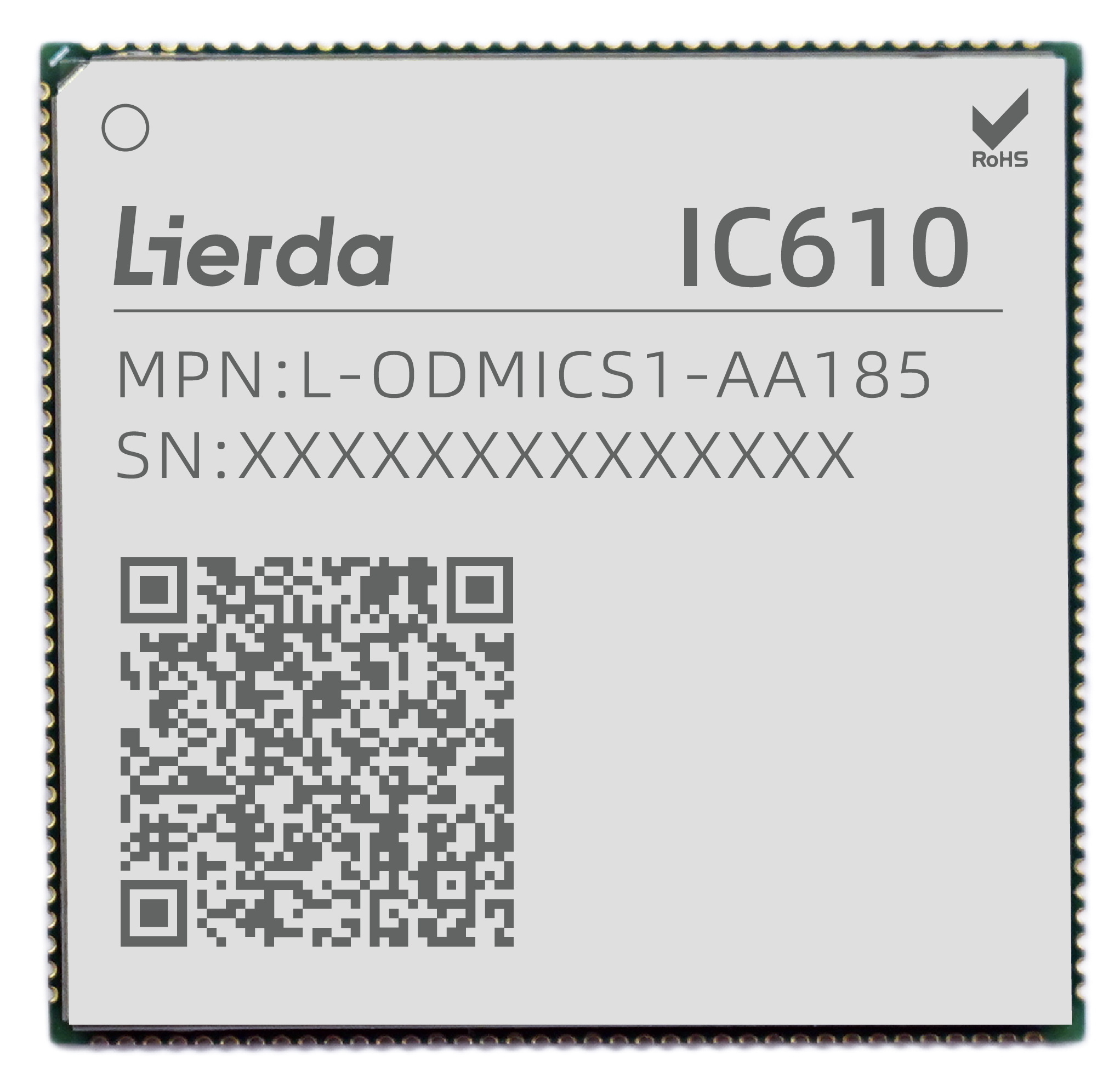
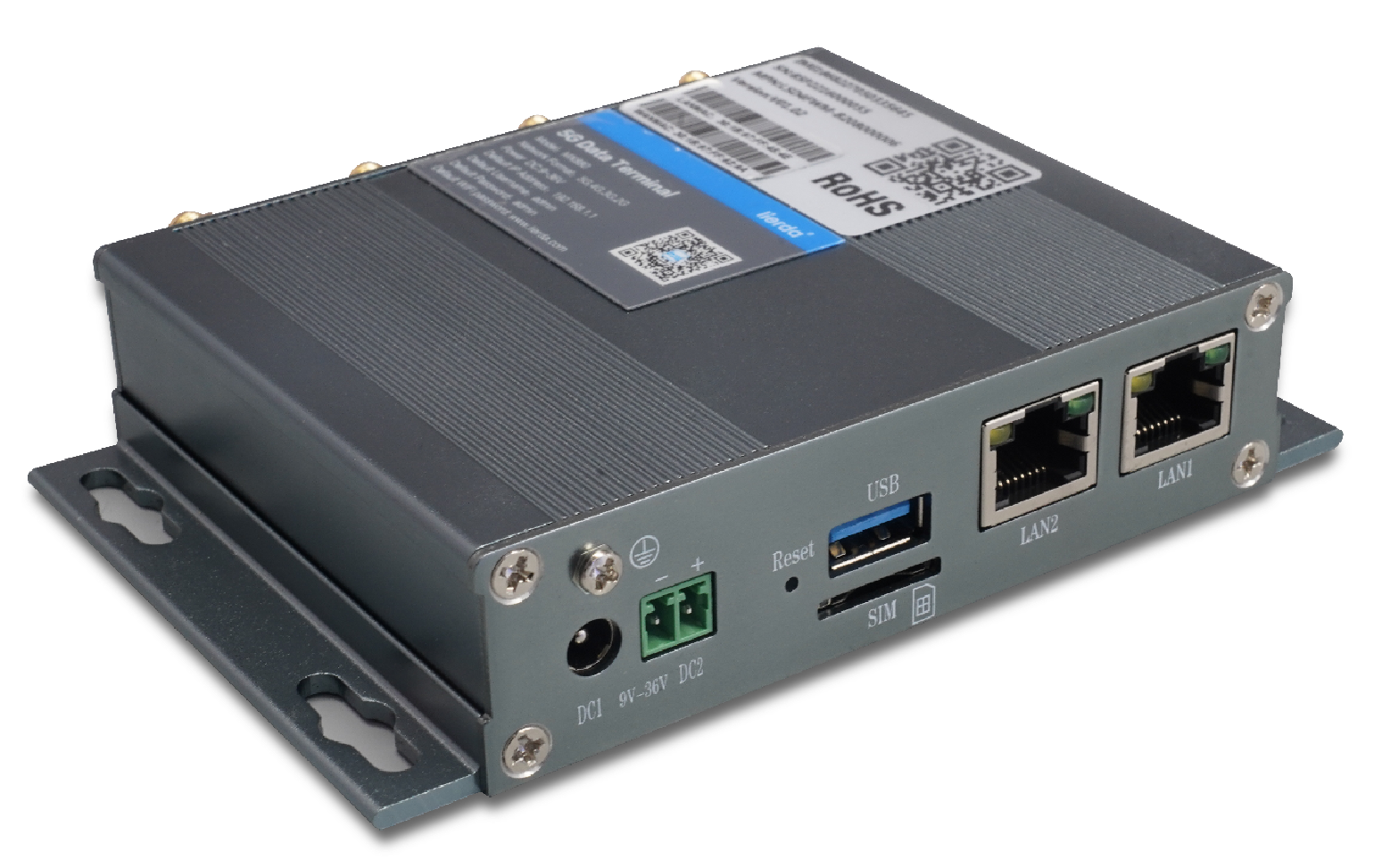
Portfolio depth is not limited to radio modules. The MX880 5G internet terminal provides two 10/100/1000M LAN ports, Wi-Fi 802.11 b/g/n, four SMA 5G antenna connectors and 5G SA coverage on n1, n8, n28, n41, n77, n78 and n79, rated from −20 °C to +70 °C with IP40 protection. The IC610 industrial core module is a 37 × 39 × 2.8 mm system-on-module built on the ST STM32MP25X with a Cortex-A35 plus Cortex-M33 architecture, 1 GB or 2 GB DDR4, 8 GB or 32 GB eMMC, Linux 6.1 and a −40 °C to +85 °C range, targeting industrial HMI, charging piles, IoT gateways, portable medical equipment and intelligent control systems. At the network edge, the OG45 LoRaWAN outdoor gateway uses the SX1302 platform with up to 2,000 node connections, global frequency bands, 27 dBm maximum transmit power, IP67 protection and a −20 °C to +70 °C range, while the IG41 indoor gateway supports up to 20 nodes in Class A and Class C with 27 dBm maximum transmit power, IP30 protection and a −20 °C to +50 °C range.
The significance for a ten-year programme is that one supplier relationship can cover the device, the gateway it reports to, and in some cases the embedded compute behind it. That reduces the number of qualification chains, firmware dependencies and support contracts a buyer must maintain across the programme.
Certification Coverage as a Constraint Indicator
For long-horizon sourcing, certification is a constraint rather than a formality. It defines where a module can legally be sold and for how long the approval remains valid, and it determines the cost of any change. Lierda's certification records state issue and expiry dates, which makes the coverage auditable rather than assumed.
| Product | Certification | Market | Validity window |
|---|---|---|---|
| UB37 Wi-Fi 6 | CE-RED | Europe | 2024-11-05 to 2029-11-05 |
| UB37 Wi-Fi 6 | FCC Part 15C | United States, Canada | 2024-11-21 to 2029-11-21 |
| UB37 Wi-Fi 6 | IC | Canada | 2026-02-05 to 2031-02-05 |
| UB37 Wi-Fi 6 | RCM | Australia, New Zealand | 2026-02-04 to 2031-02-04 |
| DB37 Wi-Fi 6 | CE-RED | Europe | 2024-10-24 to 2029-10-24 |
| DB37 Wi-Fi 6 | FCC Part 15C | United States | 2024-10-29 to 2029-10-29 |
| DB37 Wi-Fi 6 | IC | Canada | 2025-09-30 to 2030-09-30 |
| DB37 Wi-Fi 6 | RCM | Australia, New Zealand | 2025-09-26 to 2030-09-26 |
| DB37 Wi-Fi 6 | TELEC | Japan | 2026-03-26 to 2031-03-26 |
| EB55 Bluetooth | CE-RED | Europe | 2022-08-04 to 2027-08-04 |
| EB55 Bluetooth | FCC Part 15C | United States | 2022-08-03 to 2027-08-03 |
| SB26 Bluetooth | CE | Europe | 2025-01-20 to 2030-01-19 |
| BT18N5 multi-protocol | CE-RED | Europe | 2025-12-10 to 2030-12-10 |
| BT18N5 multi-protocol | FCC | United States | 2026-01-13 to 2031-01-13 |
| MB26-AGL NB-IoT | EU type-examination certificate (RED 2014/53/EU) | Europe | 2025-09-15 to 2030-09-15 |
| MB26-AGL NB-IoT | CE (RED 2014/53/EU) | Europe | 2025-09-18 to 2030-09-17 |
| NT26-FEU Cat.1 bis | CE | Europe | 2025-05-08 to 2030-05-08 |
| NT26-FJP Cat.1 bis | TELEC / JATE | Japan | TELEC 2025-09-29 to 2030-09-29; JATE 2025-09-26 to 2030-09-26 |
Two observations follow. First, the coverage is product- and region-specific: no single module carries worldwide approvals, and the buyer must match each certificate to the exact part number and variant. Second, validity windows vary in length. The EB55 Bluetooth module's CE-RED and FCC approvals currently run to 2027, which is sufficient for short consumer cycles but requires a renewal plan for decade-scale industrial designs. Approvals for the Wi-Fi 6 and Cat.1 bis families extend further — several into 2030 and 2031 — which is a more comfortable base for products with long field lives.
Application Coverage: Where the Portfolio Is Already Deployed
Application coverage is the strongest evidence for long-horizon sourcing, because it shows which segments already depend on the vendor's continuity. Lierda's project records describe deployments across several long-life categories.
- Fixed wireless access. 5G wireless broadband access projects in the Philippines, Indonesia, South Africa, Vietnam, Saudi Arabia, the United Arab Emirates, Oman and Kuwait, where NR90-HEA modules are integrated into 5G CPE and ODU products to avoid the cost and difficulty of laying fibre.
- Energy metering. A German energy OEM deployment covering water and gas meters, recorded at more than 19,600,000 units across 5-year and 10-year service durations, described as stable operation with continuous development.
- Smart home and hotel equipment. A Chinese ODM project recorded at more than 1,000,000 units over 5 to 10 years, converting lighting, switches and curtains into networked devices.
- Payment. Payment terminals and smart payment speakers in France, Vietnam, Germany, the United Kingdom, Korea, Peru and Thailand, operating continuously and requiring stable signal reception.
- Tracking and mobility. Asset tracking, vehicle and two-wheeler trackers, fishing-vessel tracking under salt-fog conditions, smart licence plates, AI cameras and e-bike chargers, with deployment notes in Vietnam, Germany, the United Kingdom and France.
- Operator networks. A Korean telecom operator project recorded at 2 million units per year over five years for communication network stations, citing low power consumption and wide signal coverage; the company's project record describes the outcome as first place in the Korean Cat.1 bis market.
The common thread is that a significant part of the portfolio is used in metering, payment and operator infrastructure, where device service lives are measured in years rather than product cycles. For a buyer, that indicates whether the vendor's operating assumptions match their own.
Where Lierda's Profile Does Not Fit Every Buyer
A credible supplier evaluation states boundaries as clearly as capabilities. Four limits are material.
- Revenue scale. The five largest cellular module vendors held 73% of global module revenue in 2025, according to Berg Insight, and Lierda is not among them. Buyers with very high annual volumes, or internal policies that require top-five-scale suppliers, should validate capacity, allocation priority and financial exposure before committing.
- Geographic revenue mix. The company's export ratio is 8.46%, and its stated main markets are Europe, East Asia, Southeast Asia and the Middle East. Buyers outside those regions must confirm local support, certification and logistics coverage — Lierda's own materials state that other territories should be checked with staff.
- Commercial terms are described as flexible rather than fixed. Monthly capacity is stated as flexible based on order requirements, lead time as negotiable according to project complexity and volume, MOQ as flexible by project, and quality control as customisable to customer specifications. Flexibility is useful during development, but for a ten-year programme these variables need to be converted into contractual commitments, because “flexible” is not a planning input.
- Certification and environmental coverage is product-specific. No single module carries approvals for every market: Japan coverage, for example, is provided by NT26-FJP rather than by the European NT26-FEU variant. Environmental ratings also differ by product class — the IG41 indoor gateway is IP30 rated from −20 °C to +50 °C, while the OG45 outdoor gateway is IP67 rated from −20 °C to +70 °C. Module-level performance depends on the actual working conditions of the finished device, and published data rates such as 226 Mbps for NR90-HEA on 5G SA are theoretical maxima rather than guaranteed field throughput.
Market Trend Analysis: What Changes Between Now and 2036
Technology rotation is accelerating. LTE Cat-1 bis grew 100% year on year in 2024, according to Counterpoint Research, replacing legacy 2G and 3G designs and absorbing applications previously served by NB-IoT. Suppliers with Cat.1 bis portfolios and regional variants are positioned to capture that migration; suppliers without them force buyers to change vendors mid-programme.
Low-power LPWAN demand remains intact. The global NB-IoT market reached USD 4.16 billion in 2023 with a projected compound annual growth rate of 28.1% through 2030, according to Grand View Research, while the LoRa and LoRaWAN IoT market was estimated at USD 8.0 billion in 2024 and projected to reach USD 32.7 billion by 2029, according to MarketsandMarkets. Protocol breadth is therefore not diversification for its own sake; it reflects where metering, agriculture, logistics and industrial control demand is heading.
Supply remains concentrated, but challengers are growing. China accounted for 63% of the global cellular IoT module market in 2024, and the top five vendors held 73% of module revenue in 2025. Within that structure, Lierda's reported 69% year-on-year shipment growth in 2025 suggests that second-tier suppliers with broad portfolios can gain share, particularly in regional Cat.1 bis and LPWAN segments.
Security labelling is becoming a procurement constraint. The FCC established a voluntary cybersecurity labelling programme for consumer IoT products in 2024, based on NISTIR 8425. Voluntary today, such schemes tend to become de facto requirements in regulated markets, adding a compliance dimension to module selection that did not exist a few years ago.
Future Outlook
The likely direction of travel for long-horizon module sourcing is toward documented commitments rather than assumed continuity. Three developments are worth planning for. First, certification renewals will become a recurring line item in procurement budgets, which favours suppliers whose records already show managed validity windows. Second, technology transitions will continue, with 5G RedCap positioned for fixed wireless access and industrial applications while Cat.1 bis and LPWAN absorb the volume left behind by 2G and 3G. Third, vendor consolidation will continue to test buyers who equate brand longevity with product-line longevity.
For Lierda specifically, the company's disclosed trajectory — 25 years of operation, a Beijing Stock Exchange listing since 2023, 224 R&D staff, participation in national standards work, and a portfolio that extends from radio modules to gateways and embedded compute — supports a position as a diversified long-term partner rather than a lowest-cost source. The limits described above are real, and they are the terms on which that position should be evaluated.
Frequently Asked Questions
How should a buyer define “long term” when assessing an IoT module supplier?
Tie the definition to the device's service life rather than to a calendar period. If the hardware will be in the field for ten years, the supplier must be able to provide the same or a compatible part, valid certifications, documentation and support for that period. Certification validity windows are a useful proxy: in Lierda's records, approvals for several Wi-Fi 6, NB-IoT and Cat.1 bis products run to 2030 or 2031, while the EB55 Bluetooth module's approvals currently run to 2027.
Which certifications matter most for a long-life deployment?
Those matching the markets where the device will actually be sold, and with validity windows that outlast the expected deployment. Examples from Lierda's records include CE-RED for UB37 valid to 2029-11-05, FCC Part 15C for UB37 to 2029-11-21, IC for UB37 to 2031-02-05, RCM for UB37 to 2031-02-04, TELEC for DB37 to 2031-03-26, CE for MB26-AGL NB-IoT to 2030-09-17, CE for NT26-FEU to 2030-05-08, and TELEC and JATE for NT26-FJP with validity running to 2030.
Does multi-protocol coverage reduce long-term sourcing risk?
It reduces the risk that a technology transition forces a change of supplier. Lierda's portfolio covers 5G RedCap (NR90-HEA), Cat.1 bis (NT26 family), NB-IoT (MB26-AGL, MB26-H, NB81-A), LoRaWAN and LoRa (WB25, WB26, LP26, WB28, WP35, QB20, AM36), Sigfox (WB16), Wi-Fi 6 (UB37, UB64, DB37, WF39B, WF29A) and Bluetooth LE (SB26, EB55, BT18N0, BT18N5), plus gateway and embedded compute products. Buyers evaluating other vendors should ask the same question: how many radio generations can this supplier follow me through?
Are region-specific part numbers an advantage or added complexity?
Both, and the trade-off is manageable when the footprint is shared. The NT26 Cat.1 bis family uses a common 17.7 × 15.8 × 2.4 mm package and a 3.3–4.5 V supply (typical 3.8 V) across NT26-FEU (Europe), NT26-FJP (Japan), NT26-FLA (Latin America), NT26-FNA (North America) and NT26-FGL (global). Hardware design effort is reduced because the layout is reused, but the buyer must still select and certify the correct regional variant.
What are the measurable limitations of choosing Lierda rather than a top-five vendor?
Scale and revenue mix. Lierda is not among the five largest cellular module vendors, which held 73% of module revenue in 2025 according to Berg Insight. Its export ratio is reported at 8.46%, with main markets in Europe, East Asia, Southeast Asia and the Middle East. Buyers with very large volumes, or with support requirements outside those markets, should validate capacity, lead time and local service before committing.
What evidence should be requested before signing a multi-year supply agreement?
Five items are decisive: certification certificates for each target market with explicit validity dates; a written product longevity statement covering end-of-life and last-time-buy terms for the specific part number; a documented migration path within the same supplier for the protocols in use; commercial terms — MOQ, lead time and capacity — stated as fixed values rather than flexible arrangements; and a defined after-sales model. Lierda's documented model combines dedicated project support with remote technical assistance and more than 20 service centres in China.
Long-horizon module sourcing rewards buyers who treat supplier evaluation as a portfolio and certification exercise rather than a price comparison. For programmes where the question is whether the chosen vendor will still be present, certified and helpful in year eight, Lierda's multi-protocol depth, regional variant coverage and dated certification records provide assessable evidence — alongside the scale and geographic limitations that any balanced evaluation must also record.
Lierda's company and product brochure is available for download: Lierda IoT module and solution brochure (PDF).