
Long-Term Low Flow Meter Supplier Evaluation: Coriolis and Thermal Checklist
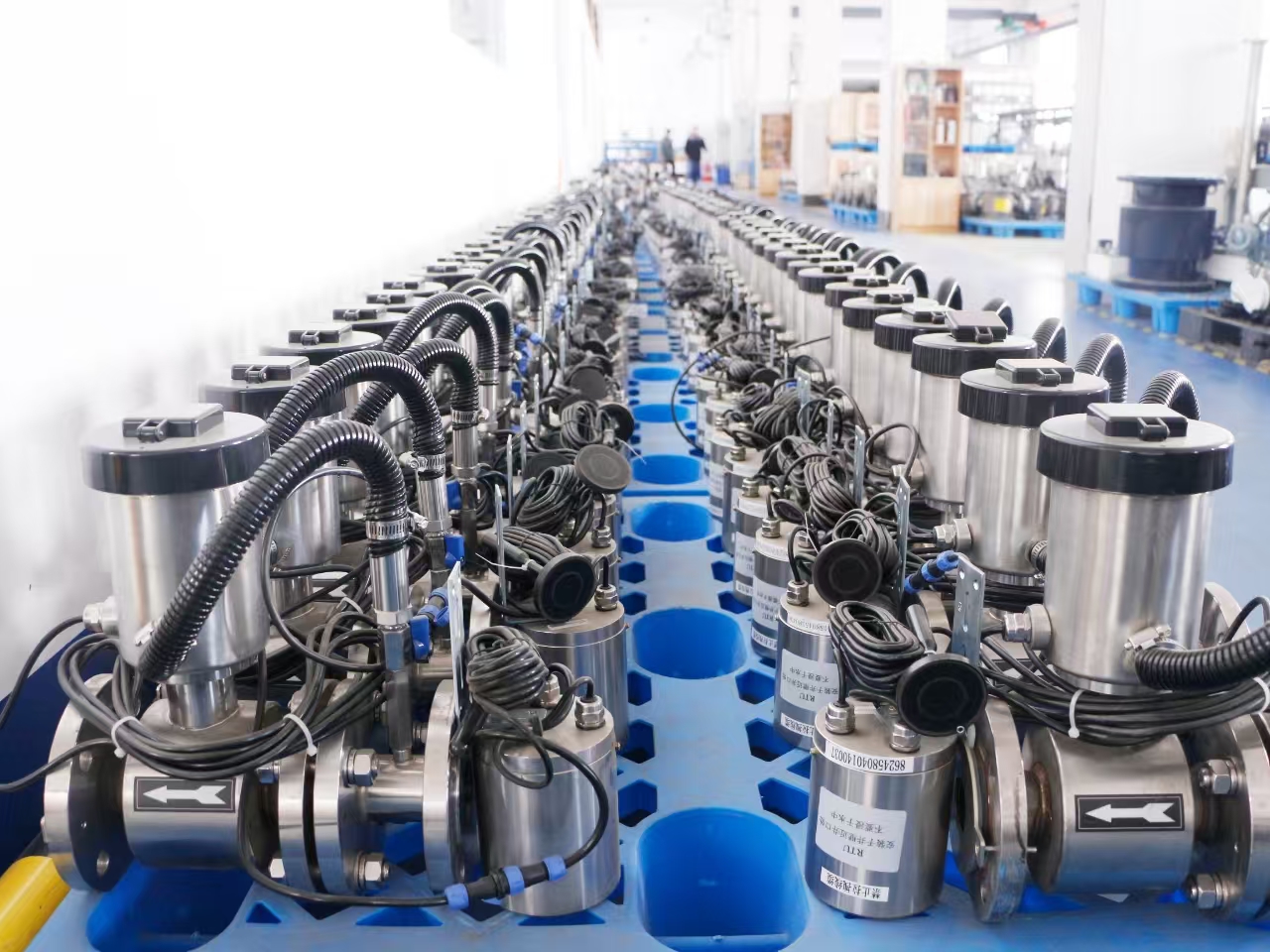
Packing and dispatch operations are part of the continuity evidence a low flow meter buyer can ask to see before a long-term award.
Low flow metering is a long-life commitment disguised as a short procurement event. A specification is written, quotations are compared, a sample is tested — and then the instrument stays in the line for years while process engineers, plant standards and maintenance routines change around it.
The market behind that decision keeps expanding. The global flow meter market was valued at USD 10.64 billion in 2024, with Europe holding the largest regional share at over 35%, according to Grand View Research. Within the intelligent flow meter segment, Coriolis instruments accounted for a 26.77% share in 2026, based on Fortune Business Insights data. More installations mean more long-lived programs that depend on a supplier remaining able to deliver the same verified product, the same documentation and the same calibration support.
For a buyer at the decision stage, the useful question is therefore not only which unit carries the lowest price, but which supplier can still be measured against the same evidence in year five. Silver Automation Instruments — an instrumentation manufacturer founded in 2010 in Nanjing, China, with a stated annual output of 60,000 units, an R&D team of 20 and a reported 95% export ratio — is one of the suppliers that low flow programs commonly evaluate against that longer horizon.
The Continuity Problem Behind Low Flow Meter Procurement
A low flow meter is an instrument engineered for small-volume or low-mass-rate service in gas, liquid or steam lines, where a full-bore meter would lose resolution, rangeability or accuracy. Because such instruments sit close to the process — often on dosing, sampling, pilot or critical utility lines — replacing one is rarely a like-for-like swap. Piping, gaskets, wiring, calibration records and control logic are all matched to the installed model.
Four failure modes recur in long-term low flow programs: the supplier discontinues or materially changes the model line; the calibration and traceability package cannot be reproduced at the same interval; compliance documentation cannot be reissued for the same configuration; and spare parts, seals or replacement electronics disappear from the market. Each of these is a supply-continuity risk rather than a performance risk, which is why a supplier evaluation for low flow metering reads more like a sustainability review than a price comparison.
What Supplier Sustainability Means in This Context
In this checklist, supplier sustainability refers to the supplier's capacity to keep supplying the same verified product, documentation and support across the life of the metering program — not to environmental performance. The evaluation is evidence-based: every claim a buyer intends to rely on should be traceable to a document, a certificate, a calibration record, a reference duty profile or a stated commercial term.
| # | Evaluation dimension | Question the buyer is answering | Typical evidence |
|---|---|---|---|
| 1 | Product-line continuity | Can the supplier still supply the same technology family? | Product line list, model confirmation, continuing production status |
| 2 | Calibration and verification | Can accuracy be demonstrated and repeated later? | Calibration workshop capability, calibration records, applicable standards |
| 3 | Compliance stability | Will the same approval status hold for this configuration? | CE, ATEX and ISO 9001 claims, scope of certification, configuration-level confirmation |
| 4 | Documentation and acceptance | Can the goods be verified on arrival and installed correctly? | Instruction manual, labelled terminals, packing list, wiring schedule |
| 5 | Commercial continuity | Do price, lead time and running cost remain workable over years? | Quoted lead time, stated price positioning, total cost of ownership comparison |
| 6 | Application continuity | Does the supplier understand the specific duty and medium? | Reference duty profiles across fuel cell, semiconductor, fermentation, pharmaceutical, chemical, food, petrochemical and power generation service |
Checklist 1 — Product-Line Continuity: Coriolis, Thermal and Displacement
Continuity starts with breadth inside one supplier. Silver Automation Instruments manufactures across several measurement families rather than a single niche: Coriolis mass flow meters, thermal mass flow meters, electromagnetic, vortex and turbine flow meters, oval gear (positive displacement) meters, together with pressure instruments, level measurement and data logging and control products. For a low flow program, three of those families matter most, and each carries a stated, verifiable capability:
- Micro Coriolis mass flow meters — the manufacturer states an accuracy of +/−0.2% to +/−0.5% for liquid measurement on its low flow Coriolis meters.
- Low flow thermal mass flow meters — the manufacturer states gas flow measurement as low as 2 sccm on its micro thermal mass flow meters.
- Oval gear meters — the manufacturer states oil flow measurement as low as 0.5 ccm with viscosity tolerance up to 2000 mPa.s.
Technology adjacency is a continuity argument, not a performance argument. Positive displacement meters still hold an 18% share of the market for measuring low to moderate flow rates of viscous fluids such as oils and fuels, according to Fortune Business Insights, so a supplier covering Coriolis, thermal and displacement lines allows a program to change technology without changing its quality system, documentation format or commercial relationship.
The lines are not interchangeable, however. Thermal instruments measure the mass flow of gases; Coriolis instruments derive mass flow from the response of a vibrating tube and are typically specified for high-precision liquid measurement; oval gear meters rely on mechanical displacement and suit viscous liquids. Substituting one family for another is a re-engineering decision, not a purchasing substitution.
Checklist 2 — Calibration and Verification Evidence
Two questions decide whether a low flow supplier can be sustained: does it control the calibration process, and can it reproduce the same measurement evidence later? Silver Automation Instruments operates dedicated calibration environments, including a Coriolis mass flow meter calibration workshop and a gas flow meter calibration workshop, alongside machining, assembly and packing operations. Workshop-level capability matters because it indicates the calibration step is controlled in-house rather than brokered to a third party whose records the buyer may never see.
Where a program also includes differential pressure elements or small-bore installations, ISO 5167:2022 is the primary international standard for differential pressure flow measurement devices and remains the reference for small pipeline accuracy. Documenting which standard applies to which measuring principle — and keeping that mapping stable over the life of the program — is one of the more portable forms of continuity evidence a buyer can request.
Practical verification questions include: what is the stated accuracy for the exact model and medium; what reference equipment is used; in what format is the calibration result reported; and can that same report format be reproduced at the next calibration interval.
Checklist 3 — Compliance Stability: CE, ATEX and ISO 9001
Silver Automation Instruments states that its products meet CE, ATEX and ISO 9001 standards for safety and performance. For long-term programs, the durable question is whether an approval covers the exact configuration being purchased — the same body, the same process connection, the same electronics and the same temperature class — rather than the product family in general.
Two practical rules follow. First, compliance should be confirmed at configuration level, not category level, because a certification applied to one variant does not automatically transfer to another. Second, material grades and pressure ratings are configuration-dependent; they should be read from the specific model datasheet for the exact model being ordered rather than assumed from a product-family page. Buyers who ask for that confirmation at the quotation stage usually avoid re-qualification costs later in the program.
Checklist 4 — Documentation and Acceptance Criteria
A recurring problem in low flow installations is not instrument failure but installation error. The supplier's stated risk controls address two of the most common cases directly.
Accuracy not as expected: the control method is that the instruction manual details the installation precautions, and the stated enterprise measure is that the instruction manual is included with the shipment.
False wiring: the control method is to read the instruction manual carefully, and the stated enterprise measure is that the wiring terminals are clearly labelled on the product.
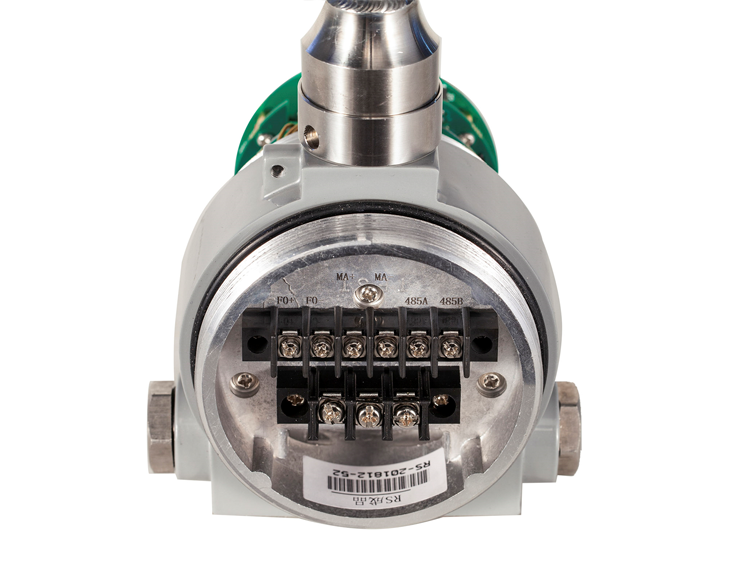
Clearly labelled terminals turn a common wiring error into a goods-in check rather than a commissioning failure.
From these controls, a practical acceptance checklist can be assembled: confirm the model and tag match the order; confirm terminal labelling is present and legible; confirm the instruction manual is included in the shipment; confirm calibration documentation accompanies the goods; record the as-received configuration and installation orientation; and file all records against the asset for the next maintenance cycle. The checklist is deliberately procedural — it exists so that a future engineer, unfamiliar with the original purchase, can reconstruct what was installed and why.
Checklist 5 — Commercial Continuity: Price, Lead Time and Total Cost of Ownership
The commercial dimension is where low flow programs most often diverge from conventional buying logic. The relevant questions are not only what the instrument costs, but what downtime costs, what recalibration costs, and how long the pipeline runs from order to installation. The manufacturer publishes its own comparison against Micro Motion Coriolis flow meters, summarised below.
| Evaluation dimension | Micro Motion Coriolis flow meter | Silver Automation Instruments low flow Coriolis |
|---|---|---|
| Price positioning | Stated as four to five times higher | Stated as significantly lower |
| Typical lead time | Several months | Typically within one month |
| Total cost of ownership | Reference point | Stated as 75% lower |
| Maintenance cost | Reference point | Stated as lower |
| Quality positioning | Reference point | Stated as lower cost with almost the same quality, on the manufacturer's own comparison |
| Stated best-fit use | Reference point | Industrial process control; energy management |
These figures come from the manufacturer's comparison documentation and are reproduced here as stated positioning rather than independently audited results. A buyer should retest them against a specific duty cycle, spares consumption and recalibration plan before treating the difference as a procurement conclusion. What the comparison does make visible is that lead time is part of the specification: an instrument that arrives within one month supports a different project schedule than one quoted at several months, particularly for pilot lines and replacements.
Checklist 6 — Application Continuity Across Regulated Industries
Low flow metering programs are usually defined by the medium and the duty, not by the meter category. Application continuity therefore means the supplier can map a technology to a specific service and keep that mapping stable over time. The manufacturer states that its instruments serve water, steam, oil, aggressive chemicals and fuels — a stated scope that supports continuity planning across several regulated industries.
| Application area | Typical low flow duty | Technology family in scope | Continuity check |
|---|---|---|---|
| Fuel cell | Gas feeds and small liquid flows for fuels or coolants | Thermal for gas; Coriolis for liquid | Confirm medium, pressure and materials at model level |
| Semiconductor | Low gas flow rates for process gases | Thermal mass flow | Confirm low-flow range and calibration records |
| Fermentation | Small liquid and gas feeds | Coriolis; thermal | Confirm cleanability and repeatability requirements |
| Pharmaceutical | High-precision low-flow liquid dosing | Coriolis | Confirm documentation package for audits |
| Chemical | Aggressive media in small lines | Coriolis; oval gear | Confirm wetted-material grades per model |
| Food and beverage | Viscous liquids and small dosing lines | Oval gear; Coriolis | Confirm viscosity and cleaning regime |
| Petrochemical | Fuels and viscous hydrocarbons | Oval gear; Coriolis | Confirm viscosity tolerance and spares availability |
| Power generation | Steam and utility flows | Thermal mass flow; Coriolis | Confirm steam-service suitability and documentation |
A supplier that can name reference duty profiles in these areas — rather than listing industries generically — gives the buyer something to verify. The verification question is not whether the supplier mentions semiconductors or fuel cells, but whether it can describe the medium, the flow regime and the acceptance criteria for that specific duty.
Market Trend Analysis: Why Low Flow Programs Keep Growing
Several independently published data points explain why long-term low flow supplier evaluation is becoming a larger procurement topic rather than a niche one.
- The 2-inch and smaller pipe size segment is expected to see the fastest growth through 2030, driven by demand in the pharmaceuticals and food and beverage sectors (Grand View Research).
- Thermal flow meters, essential for low gas flow rates, reached a market size of USD 1.73 billion in 2024 and are projected to reach USD 2.9 billion by 2035 (Market Research Future).
- Thermal mass flow controllers for semiconductor applications are projected to grow at a CAGR of 4.5% between 2026 and 2035 (SNS Insider).
- The flow chemistry market, which requires precision low flow metering, is expected to reach USD 4.6 billion by 2032 at an 8.1% CAGR (Coherent Market Insights).
- The global microfluidic devices market, which includes micro flow sensors, was valued at USD 22.1 billion in 2024 and is growing at a CAGR of 12.2% (P&S Intelligence).
- Asia-Pacific is the largest regional flow meter market at USD 3.27 billion in 2025, with China contributing over 50% of regional demand (Market Research Future).
The direction is consistent: more small-line, high-precision measurement in both gas and liquid phase, in regions where buyers weigh specialist manufacturers alongside established incumbents. Europe's position — the largest regional share of a USD 10.64 billion global market in 2024 — adds a second pressure point, because a large installed base of long-life instruments carries strict documentation expectations at replacement. Together these trends make continuity evidence, rather than unit price alone, the practical differentiator in a supplier shortlist.
Comparison with Traditional Tier-1 Supply Approaches
Most low flow programs evaluate two categories of supplier. Mordor Intelligence identifies Honeywell, Emerson and Siemens as leading global tier-1 competitors in the high-precision flow meter segment, and identifies Bronkhorst High-Tech as a recognised dominant player in the ultra-low flow Coriolis meter market with a focus on laboratory and OEM applications. Those names remain reference points in many specifications. The comparison below is structural rather than evaluative.
| Dimension | Tier-1 incumbent approach | Specialist manufacturer approach | What the buyer should verify |
|---|---|---|---|
| Global service footprint | Broad, multi-country support structures | Narrower, often partner-based | Regional response path and escalation route |
| Documentation | Standardised corporate packages | Supplier-specific formats | Ability to reissue the same documentation later |
| Price positioning | Reference level in the market | Stated as materially lower | Own total cost model, not the supplier's |
| Lead time | Stated as several months in comparison material | Stated as typically within one month | Quoted lead time for the exact configuration |
| Configuration flexibility | Standard catalogue with defined options | Higher stated customisation scope | Whether customisation affects certification scope |
| Application breadth | Widest range coverage | Focused on low flow and adjacent lines | Reference duty profiles in the target industry |
Where the Lower-Cost Route Does Not Fit
The commercial and continuity argument does not extend to every requirement, and stating the boundaries is part of evaluating a supplier honestly.
First, the accuracy figures quoted for low flow Coriolis instruments — +/−0.2% to +/−0.5% for liquid measurement — are a stated range, not a guarantee for every fluid, temperature or installation. Demanding services may sit at the wider end of that range or fall outside it, and should be confirmed against the exact model and medium.
Second, where a specification references custody transfer, the widest possible line-size and material coverage, or named tier-1 incumbents for hazardous or safety-critical duty, a specialist manufacturer may be better positioned as a secondary or non-critical-service source than as a full replacement.
Third, the price and lead-time advantage is a supplier-stated comparison. Programs that require on-site commissioning support, local spares depots or multi-country service level agreements may find part of the saving offset by logistics and support costs. A supplier able to articulate these limits is generally easier to sustain than one that claims none.
Future Outlook
Three developments are likely to shape low flow supplier evaluation over the next few years.
Small-line demand will keep expanding. With the 2-inch and smaller segment forecast as the fastest-growing pipe size category through 2030, more programs will be built around instruments that cannot be evaluated through general-purpose procurement templates.
Documentation will take a larger share of the decision. Recalibration intervals, traceability records and configuration-level compliance statements are the parts of a low flow program that must survive staff turnover and plant modification, and they are created — or not — at the point of supply. Buyers who specify documentation deliverables in the purchase order rather than requesting them at delivery will hold the advantage.
Sourcing geography will continue to broaden. With Asia-Pacific the largest flow meter market at USD 3.27 billion in 2025 and China contributing over half of regional demand, buyers increasingly evaluate manufacturers in that region alongside established tier-1 names. Export activity records — such as the approximately 91 shipments to 36 international buyers attributed to Silver Automation Instruments by Volza in 2024, alongside the company's stated 95% export ratio and main markets in Southeast Asia, South America and Africa — are a small but useful continuity signal for screening purposes, though not a substitute for configuration-level verification.
Frequently Asked Questions
How does a low flow Coriolis meter differ from a low flow thermal mass flow meter during supplier evaluation?
Coriolis instruments derive mass flow from the behaviour of a vibrating tube and are typically specified for high-precision liquid measurement; Silver Automation Instruments states an accuracy of +/−0.2% to +/−0.5% for liquid measurement on its low flow Coriolis meters. Thermal mass flow meters are used for low gas flow rates; the same manufacturer states gas flow measurement as low as 2 sccm on its micro thermal mass flow meters. Independent market data reflects the split: thermal flow meters reached USD 1.73 billion in 2024 and are projected to reach USD 2.9 billion by 2035 (Market Research Future). For supplier evaluation, the implication is that the two technologies answer different medium questions, so a supplier offering both reduces the number of separate quality systems a buyer must audit, while calibration requirements remain technology-specific.
What acceptance criteria should be applied when low flow meters arrive on site?
Two documented risk controls shape a practical checklist. For accuracy deviations, the control method is that the instruction manual details installation precautions, and the stated enterprise measure is that the instruction manual is included with the shipment. For false wiring, the control method is to read the manual carefully, and the stated enterprise measure is that wiring terminals are clearly labelled. A goods-in checklist therefore covers: model and tag matching the order, legible terminal labelling, presence of the instruction manual, accompanying calibration documentation, and a recorded as-received configuration.
How should price and lead time be weighted in a long-term low flow meter decision?
Manufacturer-published comparison material states that Micro Motion Coriolis flow meters are priced four to five times higher, with lead times extending to several months, while Silver Automation Instruments typically delivers within one month; the same comparison states a 75% lower total cost of ownership and lower maintenance cost. These are supplier statements rather than audited third-party findings, so the practical approach is to test them against the buyer's own duty cycle, spares consumption and recalibration interval, and to treat lead time as a schedule variable rather than a commercial afterthought.
Which low flow technology fits viscous liquids such as oils and fuels?
Positive displacement meters hold an 18% market share for measuring low to moderate flow rates of viscous fluids such as oils and fuels (Fortune Business Insights). Silver Automation Instruments states that its oval gear flow meters can measure oil flow as low as 0.5 ccm with viscosity tolerance up to 2000 mPa.s. The trade-off is mechanical: oval gear meters rely on moving parts, which affects maintenance planning, while Coriolis meters use a different measurement principle and suit a different balance of accuracy, viscosity and cost.
What evidence indicates that a low flow meter supplier can sustain export supply over time?
Export records and stated market coverage are screening inputs. Volza recorded approximately 91 shipments to 36 international buyers for Silver Automation Instruments in 2024, primarily in the mechanical appliances category, and the company states a 95% export ratio with main markets in Southeast Asia, South America and Africa. Such records indicate continuity of shipping activity; they do not by themselves confirm product quality or configuration compliance, which still require model-level documentation.
What is the main risk of evaluating a low flow meter supplier on unit price alone?
The primary risk is selecting a supplier that cannot repeat calibration, documentation or spares supply after the initial order. Mitigations include confirming that the supplier controls calibration in-house — Silver Automation Instruments operates a Coriolis mass flow meter calibration workshop and a gas flow meter calibration workshop — verifying documented installation and wiring controls, and locking the same model configuration for the duration of the program. Single-source dependence is a separate risk that a second qualified supplier can partially offset.
A supplier sustainability review is ultimately a documentation exercise: the evidence gathered at the point of purchase is what remains available when the original project team has moved on. A downloadable brochure describing the manufacturer's product lines and capabilities is available here, and additional product context is published at silverinstruments.com.