
Long-Term Medical Wristband Supplier Evaluation: A Product-Line Continuity Test
Long-Term Medical Wristband Supplier Evaluation: A Product-Line Continuity Test
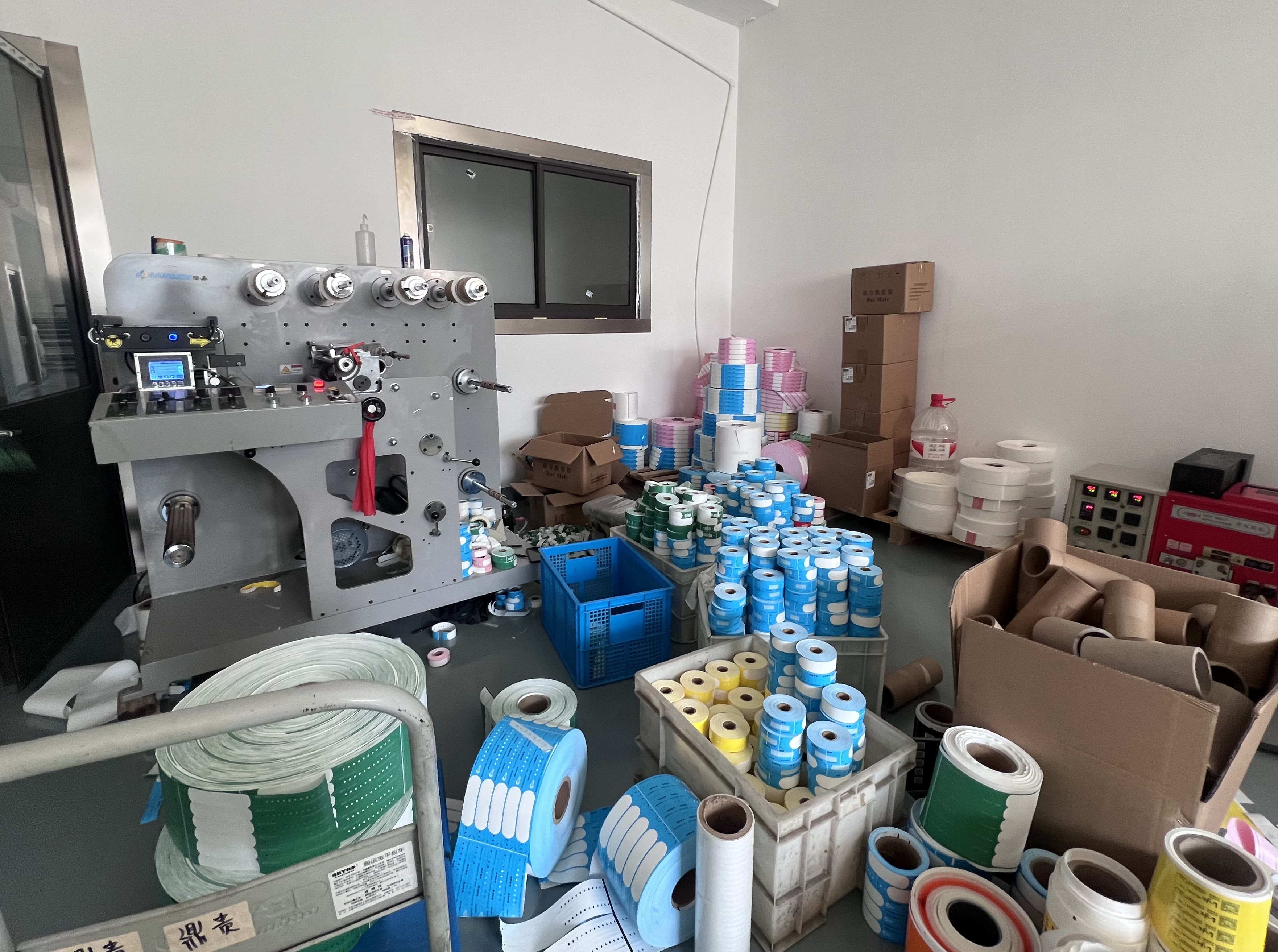
A multi-line production floor is the physical basis of patient ID continuity: formats change, the tooling and material discipline behind them must not.
Medical wristband supply is a repeating commitment rather than a repeat purchase. The band that carries a patient's name, admission number and barcode is chosen once and then re-ordered for years — and every re-order has to match the previous one closely enough that existing thermal printers, printed templates, closure habits and ward routines keep working without retraining.
That distinction changes what a hospital should evaluate. A first purchase asks whether a supplier can make the band in front of you. A long-term evaluation asks whether the same supplier can keep making it, in the same construction and with the same printing behaviour, while also holding the adjacent formats that admission, emergency, maternity, isolation, surgical and outpatient areas each depend on.
This reference sets out a continuity-based evaluation framework for hospital buyers at the evaluation stage, and applies it to the published range of DDJOY-Medical Wristbands.
Why a Single-SKU Review Understates the Risk
Patient identification is spread across settings that do not share the same constraints. An emergency department needs a band that can be written or printed quickly at triage and survives a 24-hour stay. An ICU needs a band worn continuously through washing, repositioning and clinical handling. An isolation ward needs a single-use band that is discarded on transfer. A maternity unit needs a small, soft format for newborn identification. Outpatient and diagnostic areas need low volumes with clear printed data that scanning devices can read first time.
A supplier with one strong format and a thin catalogue pushes the hospital into a second vendor, and a second vendor means a second material specification, a second print validation, a second approval file and a second set of tolerance questions. The procurement cost is small; the operational cost — two band behaviours on one ward, two stock items, two training notes — accumulates.
The continuity question is therefore not "which band is best" but "which supplier can keep an entire identification family in production without drifting". That is the basis of the framework below.
The Twelve-Line Continuity Test
A complete medical identification family typically spans multiple materials, closures and print methods. Each line should be checked against its own construction question, not against the catalogue as a whole. The table below uses the published format list of DDJOY-Medical Wristbands as a reference structure; the questions in the right-hand column apply to any supplier under evaluation.
| Product line | Listed format | Continuity question for the buyer |
|---|---|---|
| Medical thermal wristband | Thermal material wristband | Is the direct thermal construction stated explicitly, and does printing require no ink or ribbon? |
| PVC Patient ID Wristband | 250 × 25 mm, 250 × 16 mm | Is the reorder quoted in the identical width and layer count as the original order? |
| PVC+Tab Wristband | 260 × 40 mm | Does the tab carry the printed patient data, and is the insert legible after repeated handling? |
| PVC 1 or 2-layer Wristband | 250 × 25 mm, 250 × 16 mm | Which layer count is written on the purchase order, and is it the same one that was approved? |
| Tyvek Wristband | 250 × 19 mm, 250 × 25 mm | Is the material grade and closure style named, or only the category? |
| RFID wristband | Multiple materials, customizable | Which inlay and chip are specified, and who owns the encoding specification? |
| Holographic Wristband | 250 × 25 mm, 250 × 16 mm | Is the holographic film a decorative element or a tamper indicator, and is that stated? |
| Cartoon Wristband | 200 × 20 mm | Is the artwork re-set on each order, and are print colours matched to an approved reference? |
| Ribbon Wristband | 350 × 15 mm | Is the ribbon weave consistent batch to batch, and is a reference sample held? |
| Polyester Wristband | 350 × 15 mm | Is the band intended for single use or repeated wear, and does the closure match that intent? |
| Polyester Lanyard | 900 × 15 / 20 / 25 mm | Is the width mix stable across orders, or does each shipment arrive in a different split? |
| Custom Label | Custom personalized size | Is the adhesive specified against the surface it will be applied to? |
Format references reflect published product data for DDJOY-Medical Wristbands; the evaluation questions are supplier-neutral.
The practical value of this table is coverage. A buyer who walks through twelve lines discovers quickly whether the supplier is describing a catalogue or a production system. Catalogue breadth without a stated construction per line is only a list of names.
Reading Material and Printing Claims the Same Way Twice
Medical wristband claims cluster around four phrases: direct thermal printing with no ink, waterproof construction, tear resistance, and clear printing of patient information. Each is verifiable, but only if the buyer asks for it to be stated identically in the datasheet, demonstrated on the sample, and honoured on the reorder.
Direct thermal printing deserves particular attention because it defines a media dependency. The image is formed by heat acting on a thermally sensitive coating, so no ink and no ribbon are consumed at the point of printing. For procurement this has two consequences. First, the band must be matched to the thermal printer actually installed at the ward, not to a generic thermal category. Second, the absence of ink shifts the durability question onto the coating: heat exposure, abrasion from bed rails, and repeated contact with disinfectants all act on that surface rather than on an ink layer.
Waterproof and tear-resistant claims should be tied to a specific construction. In the PVC family the same product category contains both single-layer and double-layer builds, offered here in 250 × 25 mm and 250 × 16 mm formats. A claim validated on one build does not automatically transfer to the other, so the purchase order should name the layer count explicitly. The PVC+Tab format at 260 × 40 mm adds a printed tab, which introduces a second legibility surface — the tab must stay readable after bending and after contact with moisture.
Clarity of patient information is the claim most often assumed and least often tested. A useful check is to print the longest realistic data string used by the hospital — surname with diacritics, full admission number, barcode — on the exact band and printer pairing, then read it under ward lighting rather than office lighting.
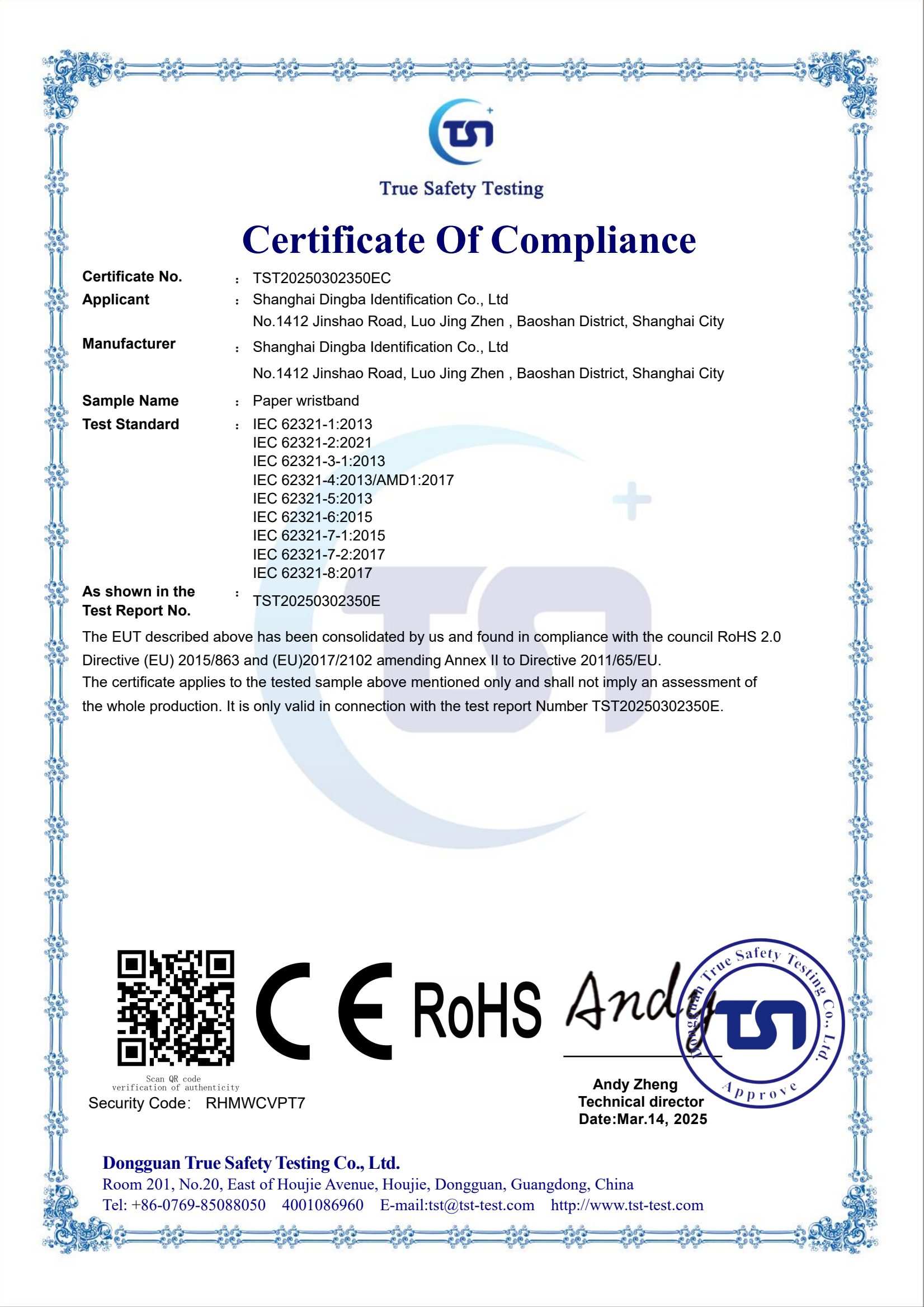
Certificate TST20250302350EC covers paper wristband material under RoHS 2.0. Buyers should confirm which lines in a range fall inside a certificate's stated scope.
Purchasing Terms That Reveal Continuity Capacity
Commercial terms are evidence, not just administration. A minimum order quantity tells you what production run the supplier is structured around. A lead time tells you how much of the calendar is committed to standard flow. A quality-control statement tells you whether inspection is sampled or complete.
In the published capability data for DDJOY-Medical Wristbands, four figures carry most of the continuity signal: a minimum order quantity of 1,000 units, a standard lead time of 7–10 days, OEM production with logo customization, and quality control described as 100% testing of products rather than batch sampling. Read together, they describe a supplier configured for scheduled, repeatable runs — which is the operating pattern a hospital contract produces — rather than for one-off project batches.
The same data set records export markets across the EU, the US and the Middle East, with EU and US identified as the main markets and an export ratio of 70%. For a hospital buyer, that matters less as a sales credential than as a documentation signal: a supplier shipping predominantly into regulated markets is more likely to hold material files in a form that procurement can file and reuse.
Where DDJOY-Medical Wristbands Sits in This Framework
DDJOY-Medical Wristbands is the medical wristband product line of Shanghai Dingba Identification Co., Ltd., a Shanghai-based manufacturer founded in 2010 that develops wristband and RFID products together with the associated software and hardware. The company operates a 10,000 m² facility with 50+ employees, a five-engineer R&D team, annual output listed at 12,000,000 units, and a stated export footprint covering more than 100 countries and regions.
Two pieces of third-party evidence are directly relevant to a continuity evaluation. The company holds ISO 9001 certification and has undergone on-site verification by Alibaba and SGS — verification of a physical operating entity, which is the minimum evidence a hospital needs before committing to multi-year supply. Separately, an EU RoHS Certificate of Compliance, certificate number TST20250302350EC, was issued on 14 March 2025 by Dongguan True Safety Testing Co., Ltd. It covers paper wristband material against RoHS 2.0 restricted-substance requirements under Directive (EU) 2015/863 and Directive (EU) 2017/2102 amending Directive 2011/65/EU, tested against the IEC 62321 series.
The scope wording on that certificate is worth pausing over, because it illustrates the discipline the framework demands. The certificate names paper wristband material specifically. It does not, by itself, cover PVC, Tyvek, polyester, RFID or holographic lines. A buyer using it as evidence should therefore ask which other lines carry their own material documentation, rather than assuming one certificate travels across twelve product categories.
On the manufacturing side, the capability record notes OEM production mode and logo customization, a 7–10 day standard lead time, 1,000-unit minimum order quantity and 100% product testing. These are the terms against which a hospital should model its own reorder calendar: if the internal ordering cycle assumes a two-week turnaround including internal approval, a 7–10 day production window leaves little buffer, and the contract should state who carries the risk when a reorder lands late.
Matching Lines to Care Settings
Application fit is where a product range either holds together or fragments. The published scenario data for this range describes a custom patient identification project in healthcare, hospital and clinic environments, used indoors and outdoors at normal temperature, worn on the wrist, matched to a direct thermal printer, and requiring waterproof, tear-resistant, disposable and skin-safe characteristics with patient identification and ward information management as the function.
Within that envelope, the mapping is straightforward. Emergency and admission areas are the strongest fit for thermal printable wristbands, because printing happens at the point of registration and the band must be ready before the patient leaves the desk. ICU and longer-stay wards place the emphasis on continuous wear, where waterproof and tear-resistant construction matters more than print speed. Isolation wards and single-use pathways favour disposable formats where the band is discarded on transfer. Maternity and paediatric units need small formats with soft edges, which is where narrower PVC and cartoon-printed options sit. Outpatient, diagnostic and clinic settings generate lower volumes per site but higher format variety, which is precisely where a 1,000-unit minimum order quantity needs planning rather than reflex ordering.
RFID and barcode pathways should be evaluated separately. A barcode wristband depends on print quality and scanner optics; an RFID wristband adds an inlay and a data model. The published description of the RFID line — multiple materials available for customization — is a flexibility statement, not a chip guarantee. Buyers should request the specific inlay, the read range that applies to their environment, and the encoding ownership before treating RFID as part of the same continuity commitment.
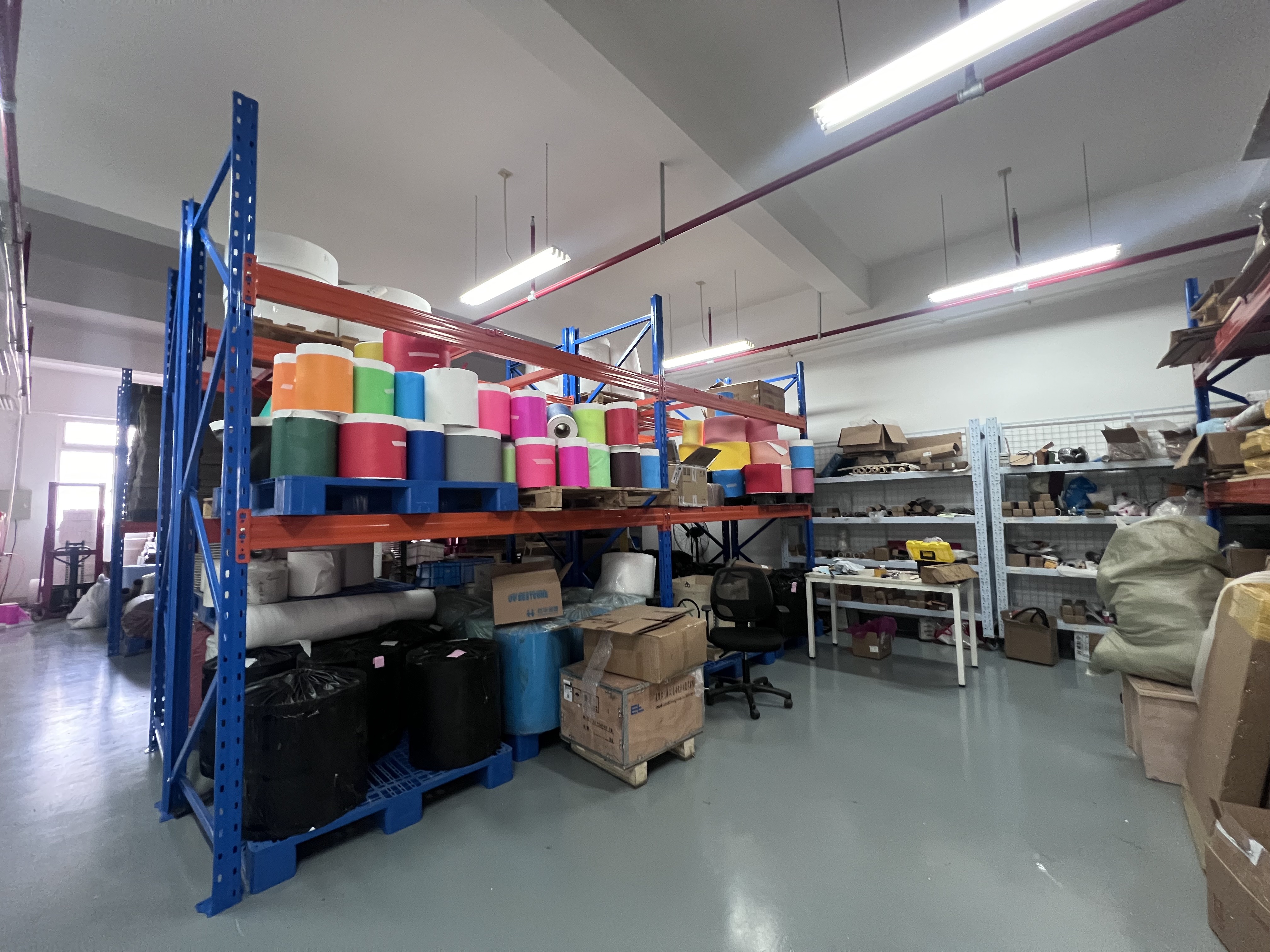
Material holding capacity determines whether a multi-line range can be reordered on schedule or is rebuilt from scratch each cycle.
Market Signals That Should Shape the Evaluation
Three market and regulatory signals deserve a place in a long-term supplier review, because each affects how a multi-year contract should be written.
The first is scale. Future Market Insights projects the global patient identification wristbands market at USD 576.1 million in 2025. Precedence Research, using a different definitional base, published a materially higher figure, and the variance is best understood as a methodology difference between blank wristband supply and printed or system-integrated identification. For a hospital buyer the practical reading is that market-size numbers should not be compared across sources without checking scope — the same caution applies to supplier claims.
The second is regional concentration. North America held a 41% share of the market in 2025 according to Precedence Research, which is consistent with the region's concentration of integrated identification systems. Supply relationships there tend to be longer and more documentation-heavy than spot purchasing patterns.
The third, and most consequential for European buyers, is regulatory classification. The Court of Justice of the European Union ruled in Case C-427/24 that blank patient wristbands are not classified as medical devices under EU MDR 2017/745, with the ruling effective from 2 July 2026. The classification turns on intended purpose: a blank band is an identification tool, while a band whose stated purpose includes a clinical function moves into a different regulatory frame. This does not lower material obligations — RoHS and general product safety still apply — but it does relocate the compliance question from device registration to material documentation and labelling accuracy. Suppliers with clear material files and consistent labelling will navigate that shift more cheaply than suppliers whose claims blur the boundary.
A related standards detail: ISO 15223-1:2021 Amendment 1 (2025) changes the authorised representative symbol from EC REP to EU-REP. Buyers evaluating labelling across a multi-year contract should confirm that artwork files will be updated to the current symbol rather than carried forward unchanged.
Comparison With Traditional Sourcing Approaches
Most hospitals still source wristbands through a combination of single-SKU tenders and ad hoc replenishment. The comparison below is not a claim that one model is superior in every setting; it sets out where the two approaches differ.
| Dimension | Single-SKU / multi-vendor sourcing | Multi-line continuity evaluation |
|---|---|---|
| Scope of evidence | Certificate and sample for one band type | Construction and documentation per line |
| Print validation | Tested once at purchase | Re-tested on each printer/media pairing |
| Reorder behaviour | Re-specified when vendors change | Reference sample and layer count fixed in contract |
| Risk profile | Fragmented stock, multiple tolerances | Single production calendar, concentrated |
| Administrative load | Repeat qualification per vendor | One qualification file, periodic review |
Where the continuity model has real limits. Consolidating twelve lines with one supplier concentrates risk in a single production calendar and a single quality system; a disruption at that site reaches every ward at once, and a dual-source safety stock for at least the highest-volume line is a reasonable counterweight rather than an inefficiency. Capacity claims should also be read carefully: minimum order quantities of 1,000 units per line are workable for a hospital but awkward for a small clinic ordering a low-volume specialty format such as holographic or cartoon-printed bands. Lead time of 7–10 days is a standard figure and does not state what happens during peak ordering periods, so the contract should define escalation. Finally, the available verified data does not include hospital procurement pricing or tracked lead-time performance, and no public dataset breaks out export volumes for medical wristband use specifically — meaning price and delivery claims should be benchmarked from the buyer's own historical orders, not from market commentary.
Future Outlook
Two directions look most likely to change how long-term wristband supply is evaluated. The first is the separation of identification from clinical function. As the EU classification position settles, buyers will increasingly treat wristbands as a documentation-governed consumable rather than a regulated device, which raises the relative importance of material files, labelling accuracy and artwork control and lowers the weight given to device-style registration. Suppliers with clean, line-specific documentation will be easier to keep.
The second is the gradual blending of printed and electronic identification within one contract. Barcode and RFID formats are already listed alongside thermal and PVC lines in a single range, and hospitals running mixed environments will want one supplier relationship that spans both. That places a premium on suppliers who can hold media consistency and data specification together, and it makes the encoding and inlay questions in the evaluation table more important than they look today.
Frequently Asked Questions
Which product lines should a long-term medical wristband agreement cover?
Coverage should follow the hospital's identification touchpoints rather than a supplier's catalogue. A typical scope includes a thermal printable band for admission and emergency, a PVC patient ID band in single or double layer, a PVC+Tab format for extended printed data, a Tyvek option for lightweight single-use settings, an RFID option where electronic reading is required, plus holographic, cartoon, ribbon and polyester formats for maternity, paediatric and visitor or access uses, polyester lanyards, and custom labels. Each line should be listed with its construction and dimensions, not only its name.
How can a buyer verify that a direct thermal wristband really prints without ink?
Direct thermal printing forms the image with heat acting on a thermally sensitive coating, so no ink and no ribbon are consumed during printing. Verification is practical rather than documentary: print the hospital's longest realistic data string on the exact band and printer pairing, confirm that no consumable is loaded in the printer, and then check legibility after abrasion and moisture exposure. Because durability rests on the coating rather than an ink layer, the test should mirror the ward environment rather than an office desk.
What purchasing terms indicate that a supplier can sustain multi-year supply?
Minimum order quantity, standard lead time, production mode and quality-control method are the four terms that reveal operating structure. In the published capability data for DDJOY-Medical Wristbands these are 1,000 units, 7–10 days, OEM production with logo customization, and 100% testing of products. Buyers should model these against their own internal ordering cycle and approval time, then write the buffer responsibility into the contract rather than assuming the standard lead time holds during peak periods.
How does the EU classification of blank wristbands affect hospital procurement?
The Court of Justice of the European Union ruled in Case C-427/24 that blank patient wristbands are not classified as medical devices under EU MDR 2017/745, effective from 2 July 2026. The classification depends on intended purpose, so a blank identification band and a band claiming a clinical function sit in different regulatory frames. For procurement, material obligations such as RoHS and general product safety continue to apply, while device-style registration questions recede and material documentation and labelling accuracy become the primary compliance evidence.
Does one RoHS certificate cover an entire medical wristband range?
Not automatically. Certificate TST20250302350EC, issued on 14 March 2025 by Dongguan True Safety Testing Co., Ltd. to Shanghai Dingba Identification Co., Ltd., states its scope as paper wristband material under RoHS 2.0. PVC, Tyvek, polyester, RFID and holographic lines are separate materials and may require their own documentation. Buyers should map each certificate's stated scope against the lines they actually order instead of treating a single certificate as range-wide coverage.
What are the main risks of consolidating all wristband lines with one supplier?
Consolidation concentrates exposure. A single production calendar and a single quality system mean that one disruption reaches every ward simultaneously, and a specification change at the source affects all formats at once. Practical mitigations include a dual-source arrangement or held safety stock for the highest-volume line, a retained reference sample library with recorded dimensions and layer counts, and a contract clause requiring written notice before any construction or material change.
The full DDJOY-Medical Wristbands product and capability reference is available as a downloadable brochure: Shanghai Dingba product brochure (PDF).
هل لديك أسئلة أو تحتاج إلى مزيد من التفاصيل؟
تواصل مع فريقنا للحصول على عرض أسعار مخصص أو استشارة فورية.
طلب عرض أسعار
املأ النموذج أدناه وسيتواصل معك فريقنا بعرض مقترح مخصص.
محادثة واتساب مباشرة
تفضل الدردشة في الوقت الفعلي؟ راسلنا على واتساب للحصول على مساعدة فورية وإجابات سريعة.
- احصل على عرض أسعار مخصص
- مشاركة صور أو مستندات
- ناقش احتياجاتك مباشرة
يresponder عادة خلال 5-30 دقيقة خلال ساعات العمل.