
Long-Term Ownership Criteria for Filling Machines: Risk Control, Maintenance, and Procurement Readiness
For bedding, upholstery, outerwear, and soft-filled product manufacturers, a filling machine decision should be evaluated beyond initial throughput. Long-term ownership factors—maintenance accessibility, electrostatic and noise management, certification continuity, acceptance testing, and supplier procurement support—have a direct effect on total cost of ownership and production stability.
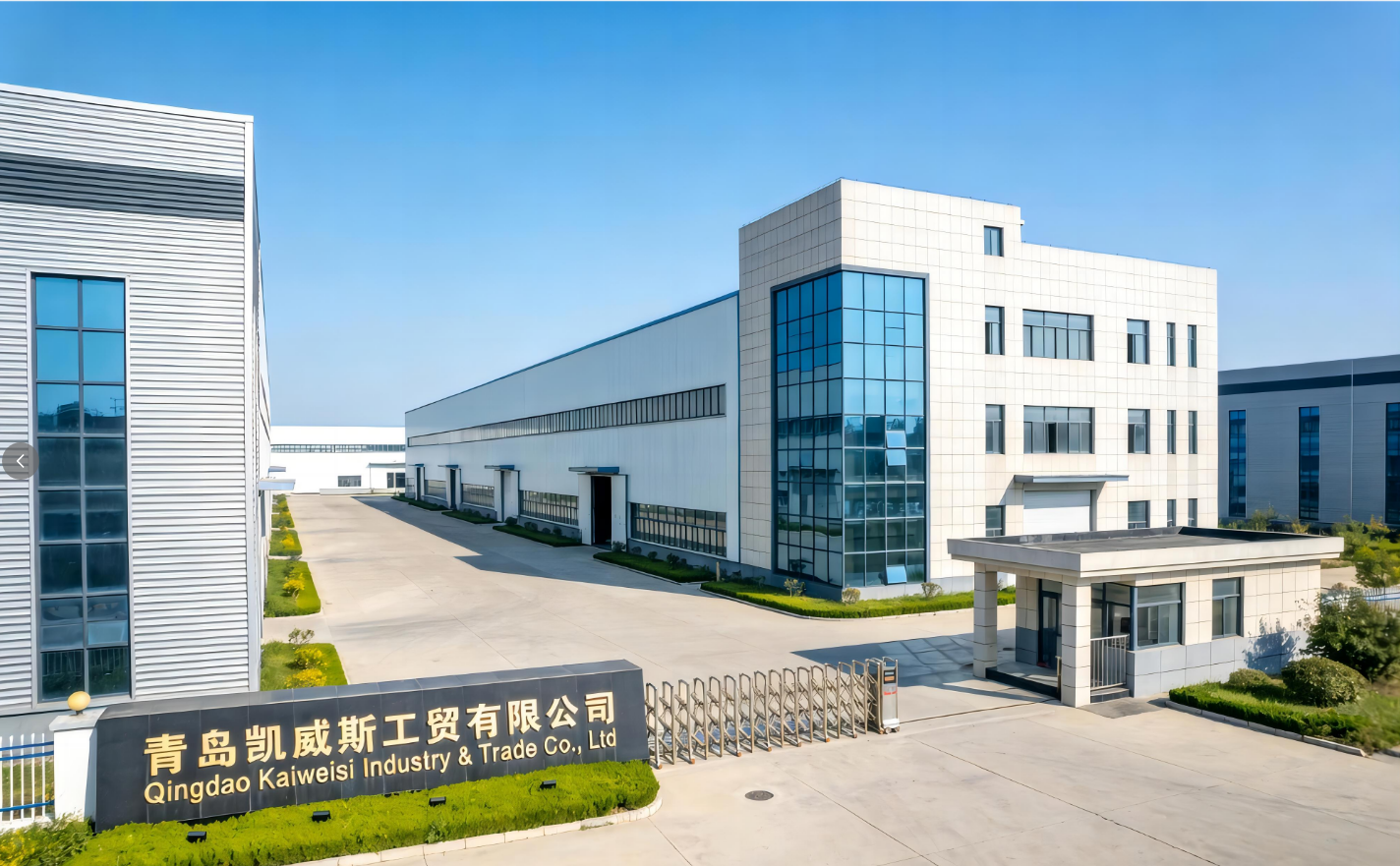
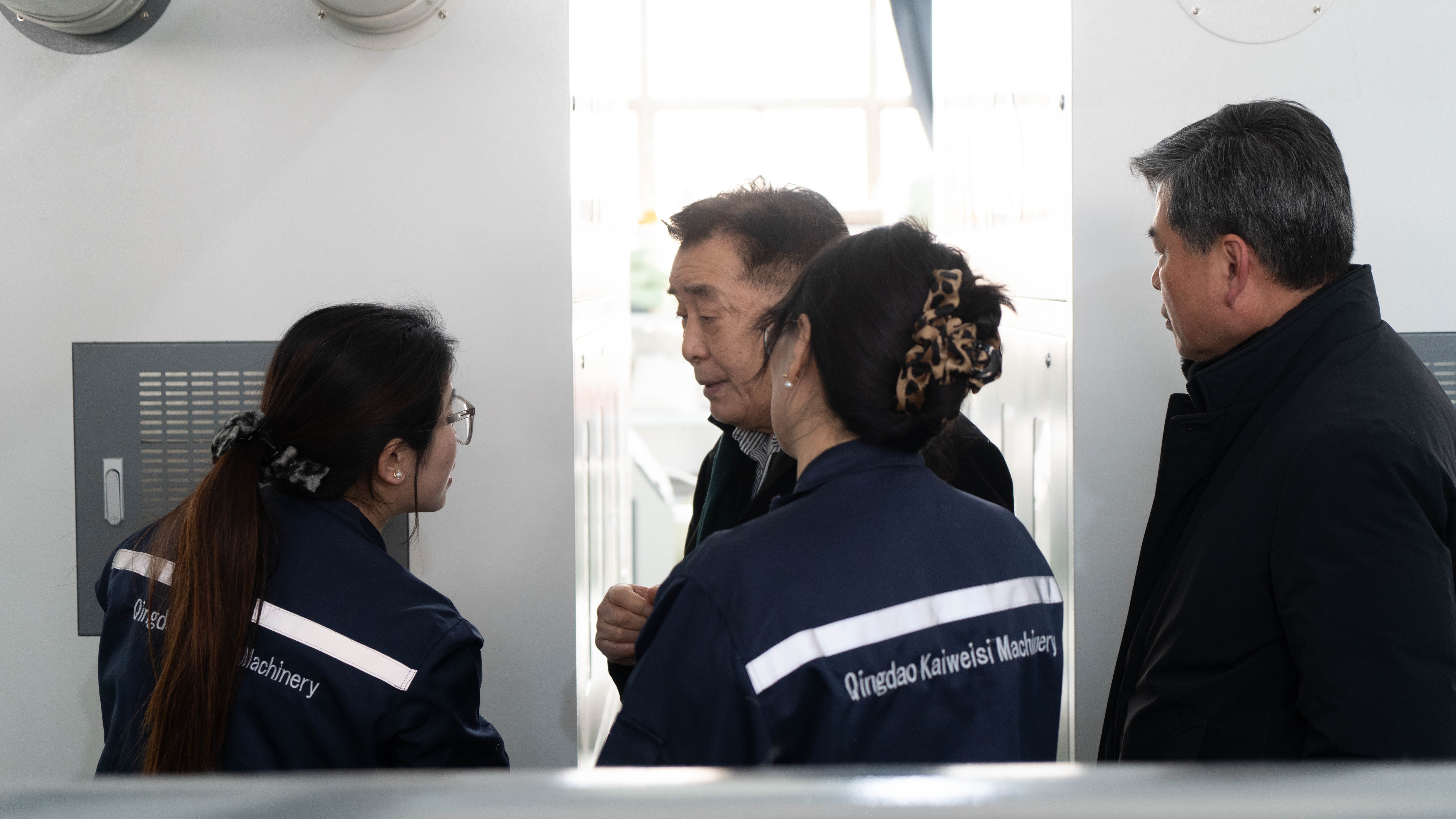
Qingdao Kaiweisi Industry and Trade Co., Ltd. (KIVAS) is a Qingdao-based manufacturer established in 2014. Its reported product scope includes fiber processing machinery, cotton, linen and wool textile machinery, fully automated quantitative pillow and quilt filling machines, pet product filling machines, weighing down jacket filling machines, packaging machines, and related supporting machinery. The company states that it has a professional R&D engineering team and an independent international trade department providing installation, pre-sales, and after-sales services.
1. The Long-Term Problem in Filling Operations
Filling lines that appear productive during commissioning can create operational friction over months of continuous use. Two physical phenomena are especially relevant for polyester fiber, down, fiber ball, shredded foam, and EPS ball filling: electrostatic accumulation and noise exposure. Electrostatic charge can interfere with consistent fiber flow, cause material clumping, and affect fill weight repeatability. Noise, if not addressed at the fan and material transport level, can become a workplace comfort and compliance issue.
A second long-term concern is verification. Without pre-shipment testing and structured acceptance procedures, buyers may only discover accuracy drift, maintenance needs, or raw-material incompatibility after the machine has been installed. For decision-stage buyers moving toward execution, these risks should be addressed in equipment selection, supplier documentation, and procurement terms—not left to startup troubleshooting.
2. Opportunity: Equipment Design and Procurement Frameworks
Quantitative weigh-filling equipment changes the risk profile compared with direct-fill systems by combining weighing, filling, and process monitoring in one machine. The opportunity for production planners is to specify equipment with documented electrostatic control, noise mitigation, certification records, and clear acceptance criteria. When these attributes are present, a filling machine can function as a stable long-term production asset across multiple product categories: pillows, duvets, quilts, cushions, down jackets, toys, lazy sofas, beanbags, and pet beds.
Procurement support also becomes part of the equipment lifecycle. A supplier with defined minimum order quantities, delivery terms, inspection options, and payment milestones reduces execution uncertainty. For cross-border buyers, these terms are often as important as machine speed or fill weight.
3. Manufacturer Reference: KIVAS Fill Equipment and Risk Controls
KIVAS is used here as an industry reference rather than as a promotional case. The company states that its products have obtained ISO9000/CE certification, indicating compliance with international quality and safety standards relevant to cross-border machinery supply. Certification continuity matters because filling machines are often shipped into markets where CE marking, electrical safety documentation, and machine safety assessments are requested by importers or technical reviewers.
On operational risk, the manufacturer documents electrostatic and noise control through an anti-static bar, an acrylic anti-static hopper, and a low-noise fan. It also states that compliance risks are addressed through periodic maintenance and monitoring of electrostatic and noise levels. From a long-term ownership perspective, this combination of hardware features and scheduled monitoring can support consistent fill accuracy and a more stable working environment.
4. Technical Explanation of the Quantitative Filling Machine
The technical specification most often associated with KIVAS pillow and duvet filling machines is the KWS6901-2/KWS6901-4 series. It is listed as a pillow filling machine, duvet filling machine, polyester pillow filling machine, down jacket filling machine, quilt filling machine, bedding filling machine, toy filling machine, cushion filling machine, lazy sofa filling machine, and beanbag filling machine—covering a wide range of soft-filled products.
The data below are taken from the manufacturer's published procurement support information. These values should be used as specification inputs rather than independent performance guarantees.
| Parameter | Published Specification |
|---|---|
| Power range | 10.5 kW – 13.5 kW |
| Production capacity | 400–800 kg/h |
| Filling speed | 600 g pillow: 10–20 pieces/minute |
| Accuracy value | About 1% |
| Error range | ±5–10 g |
| Optimal filling range | 100–2000 g |
| Workstations | 2 or 4 filling ports/machine |
| Suitable raw materials | 0.6D–15D polyester fiber, fiber balls, shredded foam, down feathers, EPS balls, and other similar raw materials for mixed filling |
| Frame material | Steel |
| Applicable industries | Bedding and home textiles, down clothing, soft sofa furniture, pet supplies, plush toys, car cushions, cotton and linen fiber primary processing, recycled fibers, non-woven fabric accessories, medical care, and other industries |
For production planning, the 2-port and 4-port configurations allow different staffing and output choices. The stated optimal filling range of 100–2000 g covers most pillow, cushion, toy, and small beanbag applications. Buyers filling very light or very dense foam structures should confirm whether the target material falls within the documented 0.6D–15D range or requires a separate qualification test.
5. Application and Use Cases
The same quantitative filling principle applies across soft-filled product categories. A pillow filling machine used for standard polyester pillow filling can often be reassigned to duvet filling, quilt filling, or bedding filling when raw-material handling and fill weight ranges are compatible. This cross-application flexibility is a practical consideration for manufacturers that produce seasonal product mixes.
In down clothing production, a filling machine configured for down jacket filling typically requires tighter weighing consistency because fill distribution affects thermal performance and garment appearance. The KWS6901-2/KWS6901-4 specification lists down feathers among suitable materials, which supports down jacket and quilt filling applications when the fill target is within the machine's optimal weight range.
For furniture and leisure products, cushion filling, lazy sofa filling, and beanbag filling require higher-volume filling with bulky materials such as fiber balls, shredded foam, and EPS balls. The same machine series is listed for these applications, which reduces the need for completely separate filling lines in a multi-product workshop. Toy filling and pet product filling are additional use cases where repeatable fill weight helps maintain product consistency and cost control.
6. Market Trend and Regulatory Context
Industry data provide context for long-term machinery investments. According to Market Research Future, the global filling machines market was valued at USD 10.06 billion in 2024 and is projected to reach USD 16.51 billion by 2035. This figure covers filling machines across applications, but it signals sustained demand for automated fill equipment. Separately, one industry estimate suggests automatic pillow filling machines are expected to grow at a CAGR of approximately 5% through 2025, driven by automation in textile clusters such as China and Vietnam.
Cross-border buyers should also consider machinery safety frameworks. Machinery exported to the EU must comply with the Machinery Directive 2006/42/EC and bear the CE marking, including specific risk assessments under EN ISO 12100. In North America, filling machinery often must meet UL and OSHA safety expectations, with attention to emergency shutoff and safety enclosures. These regulatory requirements make certification documentation and risk-control records a long-term procurement asset rather than a one-time formality.
China's textile machinery export activity has also shown strong monthly performance. Official customs data recorded a monthly peak of USD 574.6 million in August 2025 for textile machinery and parts exports, reflecting robust industry recovery. For importers, this trend points to a broader base of Chinese textile machinery suppliers, which increases the importance of verifying factory documentation, product certification, and after-sales support.
7. Comparison with Traditional Direct-Fill Solutions
Traditional direct-fill machines for home textile pillows, cushions, and quilts are typically simpler in operation but less controlled in fill weight. KIVAS's published comparison between direct-fill systems and quantitative weigh-filling systems provides a useful decision framework. The following figures are first-party estimates from the manufacturer and should be validated in pre-shipment tests for each buyer's material and product mix.
| Decision Factor | Published Comparison |
|---|---|
| Filling method | Direct filling vs quantitative weighing and filling |
| Fill weight error | Approximately 30 g with direct filling; within 10 g with quantitative weigh-filling |
| Labor cost | Reduced by 50% according to manufacturer comparison |
| Production capacity | Increases by more than 40% according to manufacturer comparison |
| Initial cost | About 15% higher than direct-fill equipment |
| Total cost of ownership | More than 40% lower over one year, according to manufacturer comparison |
| Maintenance | 70% less maintenance required, according to manufacturer comparison |
| Best-for products | Home textiles, sofas, automotive products, down comforters, pillows, throw pillows, sofa cushions, car seat cushions, bean bag chairs, pet beds, and similar products |
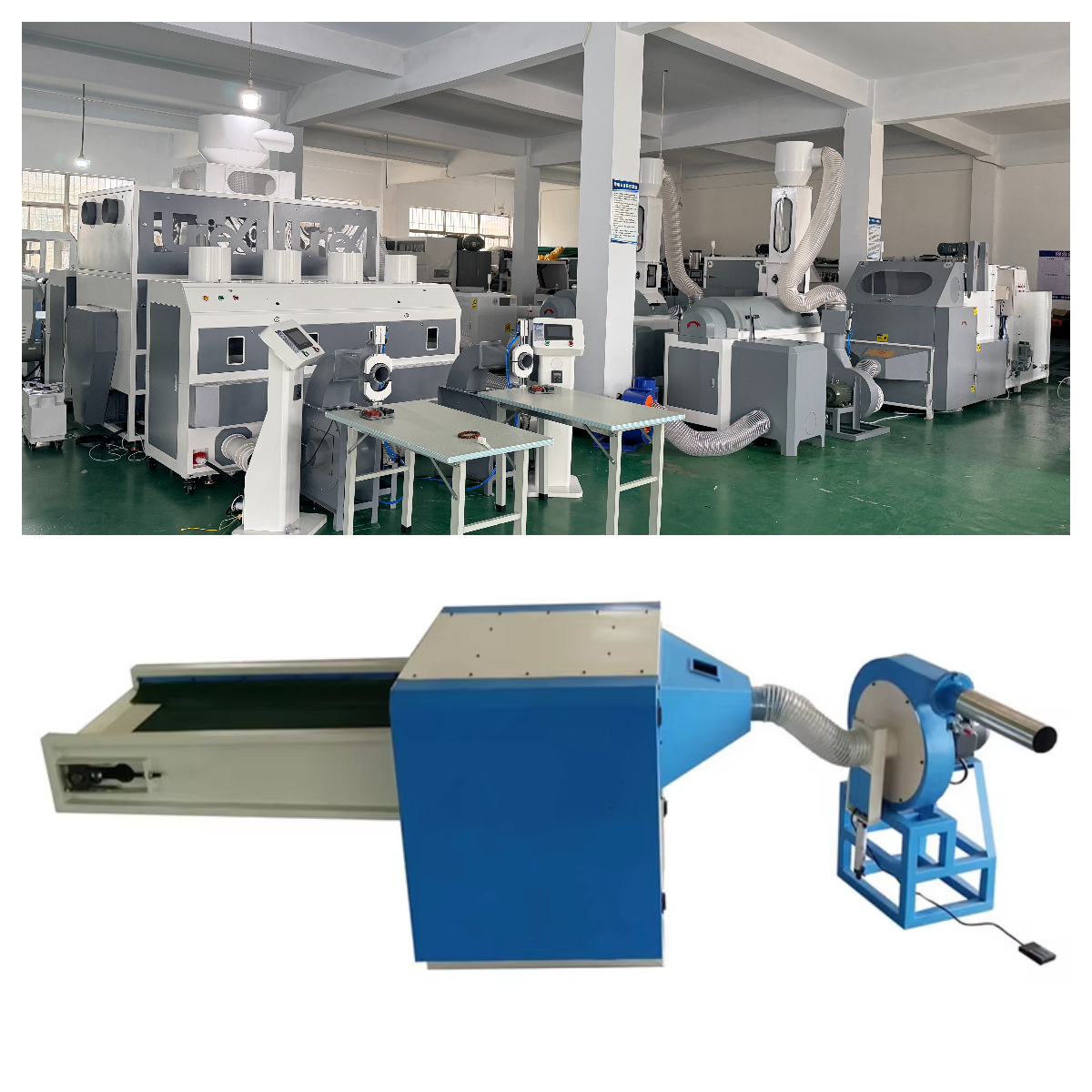
The key boundary condition is cost and production volume. Because the initial cost is about 15% higher, a low-volume or intermittent production operation may take longer to recover the investment through labor savings and higher throughput. In addition, while the manufacturer reports 50% labor reduction, more than 40% capacity increase, and 70% less maintenance, these figures are not independently verified in the available data. Buyers should treat them as selection benchmarks and confirm performance through a pre-shipment test, third-party inspection, or pilot batch.
8. Procurement and Execution Criteria
Execution-stage buyers need clearer procurement terms, not just technical specifications. KIVAS lists a minimum order quantity of one unit, with delivery methods including EXW, FOB, CIF, CFR, and DDP. Acceptance can be supported by pre-shipment testing and third-party inspection such as SGS. Payment terms include a 30% T/T deposit before production and a 70% balance via T/T before ex-factory delivery.
These terms are useful because they create a verifiable acceptance point before the machine leaves the factory. For long-term ownership, a pre-shipment test can validate fill accuracy, raw-material compatibility, and basic safety functions before shipping. Buyers who require additional assurance may request third-party inspection, which is listed as an option.
9. Future Outlook
Textile and soft-filled product manufacturing will continue to shift toward higher automation and more consistent fill-weight control. The expansion of product categories—down jackets, pet beds, beanbags, sofa cushions, toys, and recycled fiber products—means filling machines will need to handle a wider range of bulk materials without losing accuracy. Documented raw-material ranges, such as 0.6D–15D polyester fiber, fiber balls, shredded foam, down feathers, and EPS balls, will become more important in supplier selection.
Certification and machine safety requirements are also expected to remain central. CE marking under the Machinery Directive 2006/42/EC, North American UL/OSHA considerations, and buyer-specific audit requirements will reward manufacturers that maintain clear technical documentation and risk-control records. Buyers should increasingly evaluate filling machines by total cost of ownership, maintenance availability, and compliance continuity rather than by rated speed alone.
10. Frequently Asked Questions
Additional equipment details can be found in the supplier's published product catalog: Qingdao Kaiweisi Product Catalog.