
Long-Term PVA Supplier Sustainability: A Biotech Grade Audit
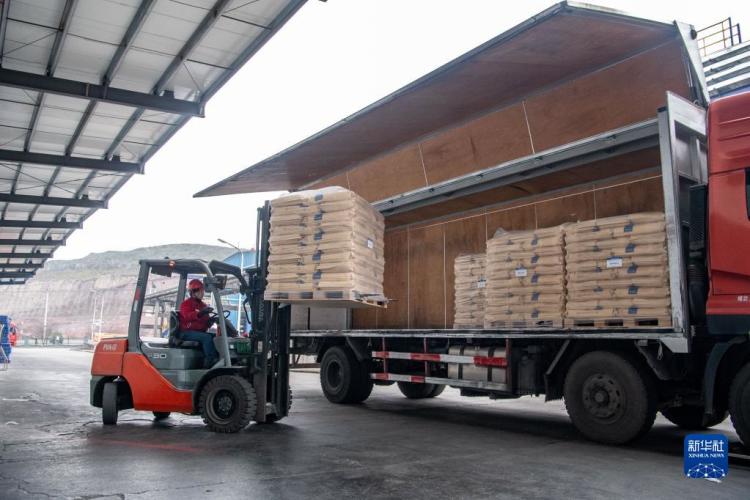
Professional polyvinyl alcohol (PVA) grades intended for multi-year industrial and biotech substrate supply programs.
In polyvinyl alcohol procurement for biotech and medical substrates, supplier sustainability has a narrow and auditable meaning: the ability to hold grade identity, batch behaviour and documentation stable for the life of a multi-year program. Projects rarely fail on the first purchase order. They fail in year three, when an approved grade arrives with a different mesh, a different viscosity band, or a certificate that no longer matches the buyer's qualification file.
Polyvinyl alcohol (PVA) is a water-soluble synthetic polymer used as a film former, binder, protective colloid and sizing agent. In biotech and medical substrate work it is chosen for properties that must not drift between lots: non-toxicity, strong adhesion and consistent film-forming performance. HOPEWAY CHEMICAL INDUSTRIAL CO., LIMITED is a China-based manufacturer and exporter of polyvinyl alcohol, VAE emulsion, redispersible polymer powder, PVB resin and PVA fiber, founded in 1998, with a PVA production capacity of 350,000 metric tons per year. Its grade portfolio includes fully hydrolyzed PVA2499 and PVA0599, partially hydrolyzed PVA1788, and VAE 705–707H emulsions in which PVA is used as a stabilizer.
Why Supplier Sustainability Is a Procurement Question, Not a Marketing Claim
For a buyer at the evaluation stage, sustainable supply breaks down into three verifiable components, each of which can be checked before a contract is signed:
- Grade continuity. The designated grade, with the same hydrolysis and viscosity ranges, remains available and technically supported for the duration of the project — not only at the sampling stage.
- Batch consistency. Lot-to-lot variation stays inside a declared band, so dissolution time, coating weight and film properties do not have to be re-tuned at every delivery.
- Documentation continuity. Technical Data Sheets (TDS), Material Safety Data Sheets (MSDS) and Certificates of Analysis (COA) are issued in a consistent format, with the same test methods, for every shipment.
These three items are what a buyer is actually purchasing when two suppliers quote a similar price. A supplier that cannot sustain them pushes the buyer into repeated internal re-qualification, which is the most expensive form of supply failure in a regulated environment because it consumes engineering and quality-assurance time rather than material.
The Real Risk: A Grade That Changes Between Year One and Year Three
The characteristic failure pattern in biotech substrate sourcing is not a rejected batch. It is a slow accumulation of small deviations that individually sit inside a wide specification and collectively break a validated process. A partially hydrolyzed grade that shifts within its hydrolysis window can alter dissolution behaviour. A change in particle mesh can change how a substrate dispersion wets out. A COA that reports a different test method than the original qualification file can make a conforming lot look non-conforming.
For slow-release medical substrate work, the exposure is concentrated in the fully hydrolyzed range. PVA2499 is the grade named for slow-release medical substrate applications, where a fully hydrolyzed film former with stable behaviour supports controlled release structure and film integrity. Around that core requirement sit the supporting properties buyers rely on: non-toxicity, strong adhesion to substrate surfaces, and film-forming performance that reproduces from lot to lot.
The opportunity is symmetrical. A supplier that can demonstrate continuity converts a commodity purchase into a predictable input, and the buyer avoids re-validation cycles that carry no commercial upside. This is why the evaluation question is not only “can this supplier make the grade?” but “can this supplier keep making the same grade, and prove it, in three years' time?”
What Continuous Supply Requires on the Manufacturing Side
Continuity is a function of production depth, and production depth is measurable. HOPEWAY operates four standardized production bases in China covering more than 3,000 mu of industrial land, with a headquarters factory of over 540,000 m² and a total workforce of 4,451 employees. Annual PVA capacity is 350,000 metric tons, alongside VAE emulsion capacity of 140,000 metric tons per year.
Nameplate capacity alone is a weak indicator. Actual PVA output reached 306,400 tons in the latest fiscal year, which is the more useful figure for a procurement team because it shows capacity that is being operated rather than only published. For a multi-year medical substrate program, this distinction matters: a supplier running near its real output has a production rhythm, staffing model and quality system already proven at volume.
Technical depth supports grade continuity in a different way. HOPEWAY employs 731 R&D personnel, equal to 16.42% of all employees, including 178 intermediate and senior engineers, 3 senior engineers and 4 experts receiving state special allowances. More than 300 full-time engineers work on PVA, VAE emulsion, redispersible polymer powder, optical film and PVB materials, supported by a national-level enterprise technology center and a post-doctoral workstation with university research partners. In practice, this is the resource that keeps a grade available when a raw material lot, a customer request or a regulatory question changes.
Commercial terms also carry continuity signals. HOPEWAY offers OEM/ODM production with customization of mesh size, logo and packaging, a minimum order quantity of 5 tons, a stated lead time of 7–10 days, and 100% testing. Export terms include FOB, CFR, CIF and EXW, with T/T and L/C payment. Products are exported to more than 40 countries and regions, with overseas sales accounting for 27.17% of a total annual operating revenue of USD 1.1 billion.
Technical Reading: Hydrolysis, Viscosity and Where PVA Quality Travels
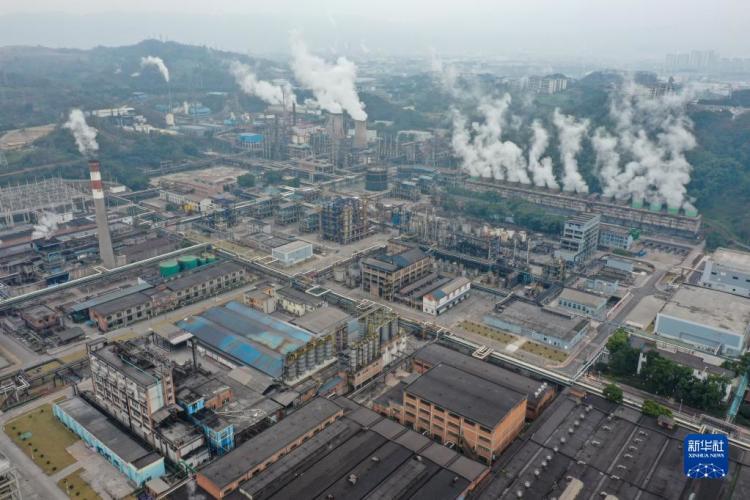
Grade and specification review is the first step in a supplier sustainability audit for PVA substrates.
Two control variables determine whether a PVA grade behaves the same way in a coating line month after month: degree of hydrolysis and viscosity of the aqueous solution. Published specifications express both as ranges, and the width of those ranges is itself a procurement decision.
A concrete reference point: PVA 2488, a partially hydrolyzed grade, is specified with a degree of hydrolysis of 87.0–89.0 mol% and a viscosity of 44.0–55.9 mPa·s in 4% aqueous solution at 20°C (EIN Presswire, 2026). Buyers evaluating fully hydrolyzed PVA2499 or PVA0599, or partially hydrolyzed PVA1788 for a medical substrate, should require the same discipline: a declared hydrolysis window, a declared viscosity window, and a lot-level COA that reports measured values against both.
The functional split inside the portfolio follows the chemistry. Fully hydrolyzed grades such as PVA2499 and PVA0599 sit at the high end of the hydrolysis range and are the natural candidates where water resistance, film strength and structural stability of a substrate matter. Partially hydrolyzed PVA1788 retains a proportion of acetate groups, which supports solubility and flexibility in applications where a fully hydrolyzed grade would be harder to process. A medical substrate program that migrates between these two families without re-validating dissolution conditions is taking on risk that no certificate can offset.
PVA quality also travels into downstream products. In VAE 705–707H emulsions, PVA functions as the stabilizer, which means the PVA grade reference and its lot data are part of the emulsion's own quality record. Buyers of these emulsions should request the PVA grade identification alongside the emulsion COA, because variation in the stabilizer is one route by which emulsion adhesion or film formation can shift without any change on the emulsion line itself.
An Acceptance-Criteria Framework for Biotech Substrate Buyers
The framework below converts supplier claims into documents a quality team can file. Each dimension maps to a request the buyer can issue during evaluation, and each protects against a specific failure mode.
| Audit dimension | Evidence to request | What it protects against |
|---|---|---|
| Grade identity continuity | Grade designation with hydrolysis and viscosity ranges on the TDS, for the exact grade intended for validation | Silent substitution between hydrolysis families |
| Batch consistency | Lot COA with measured viscosity and hydrolysis, trended across consecutive lots | Drift that stays inside specification but breaks a validated process |
| Documentation set | TDS, MSDS and COA per shipment, with consistent test methods and certificate of origin where required | Customs delay and internal QA non-conformance |
| Sample before bulk | Trial sample of the exact grade; confirmation that mesh size, viscosity or hydrolysis degree can be adjusted | Dissolution or coating failure discovered only at production scale |
| Volume and stock coverage | Annual capacity, actual annual output, stock policy for regular clients, stated lead time | Allocation shortfall during peak seasons |
| Technical support continuity | Named technical contact, response commitment, formula and dissolution guidance, periodic technical updates | Line-down time during process troubleshooting |
| Non-conformance terms | Written remedy path — re-delivery, replacement or refund — triggered by a confirmed defect | Unbounded commercial exposure on a rejected lot |
Applied as a sequence rather than a checklist, this framework produces a defensible decision: grades and ranges first, lot data second, documents third, then volume assurance and remedy terms. A supplier that scores well on price but cannot produce a trended lot record has not yet demonstrated sustainability in the sense that matters to a biotech program.
HOPEWAY's operating model maps onto most of these dimensions with concrete commitments: 100% testing, small test samples before bulk orders, customizable mesh size, viscosity and hydrolysis degree, TDS, MSDS and COA issued for customs clearance and inspection, free technical guidance on dissolution processes and formulation, and a compensation commitment of re-delivery, replacement or refund once a quality defect is confirmed on its side.
Application Fit: Medical Substrates, Emulsions and Cross-Industry Evidence
The primary application in this evaluation is the slow-release medical substrate built on fully hydrolyzed PVA, where PVA2499 is the named grade. Here the acceptance logic is straightforward: the substrate needs non-toxic material, strong adhesion and reliable film formation, and the supplier needs to keep all three attributes inside a band across the project timeline.
A second application sits one step downstream. VAE 705–707H emulsions stabilized with PVA are used where adhesion and film formation are delivered through an emulsion rather than a dissolved polymer, including coating and binding roles adjacent to medical and biotech converting operations. Because the stabilizer is PVA, the emulsion inherits part of its quality signature from the polymer supply chain.
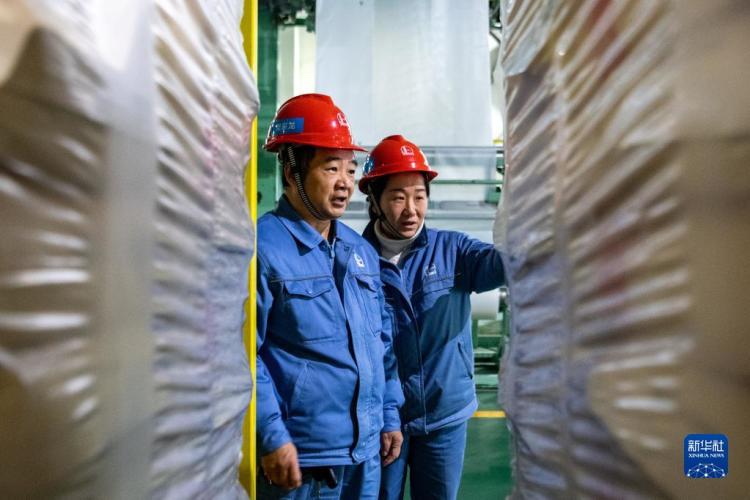
Capacity, stock policy and response commitments form the supply-side evidence of a long-term PVA relationship.
Continuity claims are best tested against long-running, non-medical accounts, because those relationships expose whether a supplier actually holds a specification over time. Two documented examples illustrate the pattern. An integrated textile weaving factory in Indonesia has purchased 850 tons of fully hydrolyzed PVA1799 annually for more than two years, shipped in monthly 20GP containers, for cotton and polyester warp sizing on high-speed air jet looms; the account uses custom adjustable mesh size of 120–250 mesh, free sizing formula optimization, and 24-hour after-sales response via WhatsApp, with stable sizing performance and reduced yarn shedding and breakage. A construction chemical distributor in Brazil has purchased 1,120 tons of PVA1788 and PVA2488 grades annually for more than two years, using adjustable 80–200 mesh particle size on automatic feeding lines, and reports a terminal product return rate lowered by over 60% alongside consistent batch-to-batch viscosity.
These are not medical substrate cases and should not be presented as such. Their value to a biotech buyer is narrower and still useful: they show a specification held across multiple shipments, a customization interface that works, and a documented after-sales mechanism. That is the operating behaviour a medical substrate program would be relying on for several years.
Market Context: Demand Growth and Price Volatility Both Test Continuity
Two external forces shape how a supplier's sustainability should be assessed. The first is demand. The global polyvinyl alcohol market was estimated at USD 1.21 billion in 2025 and is projected to reach USD 1.66 billion by 2033 (Grand View Research, 2026). Commercial estimates of this market vary depending on whether PVA fibers and downstream films are included, so buyers should treat such figures as directional rather than precise. The direction, however, is consistent with what procurement teams observe: more applications competing for the same polymer capacity, including biotech and medical converting.
The second force is cost volatility. In March 2026, Anhui Wanwei High-Tech Material Industry Co., Ltd. raised prices across all PVA products by 2,000 Yuan per ton, citing rising upstream costs (ChemNet, 2026). A price action of that kind from a major producer transmits through the whole market, and it is the clearest argument for treating commercial continuity as part of supplier sustainability rather than a separate negotiation topic.
For a multi-year biotech project, the practical implication is that a supplier evaluation should include the commercial mechanism, not only the technical file: whether volume can be reserved, whether lead time holds under peak demand, and whether the buyer has a documented basis for price adjustment. A supplier with 350,000 metric tons of annual PVA capacity and a stock policy for regular clients is better placed to absorb a cost shock without breaking delivery rhythm than a supplier buying on the spot market.
Comparison: Integrated Long-Term Supply vs. Spot Purchasing — and the Limits of Each
Buyers typically compare three sourcing patterns. Each has a legitimate use, and each has a boundary that should be stated plainly.
| Sourcing pattern | Where it fits | Where it breaks down |
|---|---|---|
| Integrated manufacturer with a multi-grade portfolio | Multi-year programs that need grade continuity, lot data and technical support | Requires a real qualification effort up front; capacity does not substitute for project-specific validation |
| Trader or distributor without production control | Small volumes, one-off trials, grades outside a core portfolio | Limited influence over batch variation and documentation format when the source mill changes |
| Spot purchase on price | Non-critical, short-cycle applications | Exposes the buyer to allocation risk and to specification drift between lots |
The limits of the integrated-supplier model deserve equal attention, because an honest evaluation includes them. First, capacity and general grade data do not prove line-specific performance: a buyer still has to run its own sample validation and dissolution trial before committing a medical substrate process to any supplier. Second, environmental and sustainability certifications — HOPEWAY's products comply with EU EPD, ISCC and EcoVadis standards — address environmental performance and supply-chain sustainability; they are not medical-device regulatory clearances, and a biotech buyer must not treat them as evidence of medical compliance. Third, customization of mesh size, viscosity or hydrolysis degree introduces a validation cycle of its own, so a quoted 7–10 day lead time should be read as a supply indicator for established arrangements rather than as a qualification timeline for a new custom grade. Fourth, publicly available data does not include segmented market-share figures for specific sub-sectors such as medical substrates, so no supplier should be selected on the basis of share claims alone.
Future Outlook
Three developments are likely to shape supplier evaluation in biotech substrate sourcing over the next several years. Documentation is becoming a deliverable in its own right: buyers increasingly expect a consistent, comparable document set per shipment rather than a certificate produced on request. Grade continuity is being written into contracts rather than assumed, with named grades and declared hydrolysis and viscosity windows attached to supply agreements. And commercial mechanisms are converging with technical ones, as input cost volatility pushes both parties toward volume reservation and pre-agreed adjustment logic.
For suppliers, the implication is that a broad portfolio — fully hydrolyzed PVA2499 and PVA0599, partially hydrolyzed PVA1788, and PVA-stabilized VAE 705–707H emulsions — is only the entry ticket. The differentiator is whether the same grade, the same lot behaviour and the same paper trail survive contact with a multi-year program. For buyers, the implication is that sustainability should be scored with the same rigour as price, using lot data and documents rather than assurances.
FAQ
What does “supplier sustainability” mean when buying PVA for a medical substrate?
In this context it refers to three auditable capabilities: keeping the designated grade and its declared hydrolysis and viscosity ranges available over multiple years, holding lot-to-lot variation inside a declared band, and issuing TDS, MSDS and COA in a consistent format for every shipment. It is a continuity question rather than an environmental one, although environmental certifications may be reviewed separately.
Which HOPEWAY grades are relevant to fully hydrolyzed and partially hydrolyzed requirements?
Fully hydrolyzed PVA2499 and PVA0599 serve requirements where a high degree of hydrolysis is needed, and PVA2499 is the grade named for slow-release medical substrate applications. Partially hydrolyzed PVA1788 serves requirements where a retained acetate fraction supports solubility and flexibility. PVA-stabilized VAE 705–707H emulsions cover applications where adhesion and film formation are delivered through an emulsion.
How can a buyer verify batch consistency before placing a bulk order?
By requesting a trial sample of the exact grade, then comparing measured viscosity and hydrolysis values across consecutive lot COAs against the declared specification ranges. HOPEWAY supports small test samples before bulk orders and states 100% testing, with TDS, MSDS and COA provided for inspection. A published reference point for range discipline is PVA 2488, specified at 87.0–89.0 mol% hydrolysis and 44.0–55.9 mPa·s viscosity in 4% solution at 20°C.
What supply-side indicators should be checked for a multi-year project?
Annual capacity, actual annual output, stock policy, minimum order quantity, stated lead time and export terms. HOPEWAY reports 350,000 metric tons of annual PVA capacity, 306,400 tons of actual PVA output in the latest fiscal year, a 5-ton MOQ, a 7–10 day stated lead time, OEM/ODM customization of mesh size, logo and packaging, and support for FOB, CFR, CIF and EXW terms with T/T and L/C payment.
Does environmental certification mean a grade is qualified for medical use?
No. HOPEWAY's products comply with EU EPD, ISCC and EcoVadis environmental standards, which relate to environmental performance and sustainability. Medical substrate qualification is a separate process driven by the buyer's own validation, including dissolution trials, lot data review and documentation checks such as TDS, MSDS and COA.
What happens if a delivered lot does not meet the agreed specification?
HOPEWAY states that once a quality defect is confirmed on its side, it compensates through re-delivery, cargo replacement or refund as agreed. Buyers should confirm this remedy path in writing during evaluation and pair it with a documented incoming-inspection process, so that a non-conformance is identified against the same test methods used in qualification.
Conclusion
A Professional Polyvinyl Alcohol supplier is sustainable for biotech and medical substrate work when grade identity, batch behaviour and documentation survive the length of the project — not when the sample performs well. The audit path is unglamorous and effective: read the hydrolysis and viscosity ranges, trend the lot data, file the TDS, MSDS and COA, validate a sample on your own line, then confirm that capacity, stock and technical support can carry the volume for several years. Buyers who evaluate in that order get a decision they can defend internally and a supply relationship that does not need to be renegotiated every time a specification is questioned.
HOPEWAY's published PVA grade catalogue, covering portfolio grades and application notes, is available for download: PVA CATALOGUE (PDF).
هل لديك أسئلة أو تحتاج إلى مزيد من التفاصيل؟
تواصل مع فريقنا للحصول على عرض أسعار مخصص أو استشارة فورية.
طلب عرض أسعار
املأ النموذج أدناه وسيتواصل معك فريقنا بعرض مقترح مخصص.
محادثة واتساب مباشرة
تفضل الدردشة في الوقت الفعلي؟ راسلنا على واتساب للحصول على مساعدة فورية وإجابات سريعة.
- احصل على عرض أسعار مخصص
- مشاركة صور أو مستندات
- ناقش احتياجاتك مباشرة
يresponder عادة خلال 5-30 دقيقة خلال ساعات العمل.