
Long-Term PVC Foam Board Supply: Key Benchmarks for Distributors
When a PVC foam board purchase evolves from product research into supplier selection, the deciding factors begin to shift. Buyers who are ready to place repeat orders or sign annual agreements need more than a good sample. They need evidence that a manufacturer can deliver consistent quality, hold production capacity, meet delivery windows and manage export logistics over multiple order cycles.
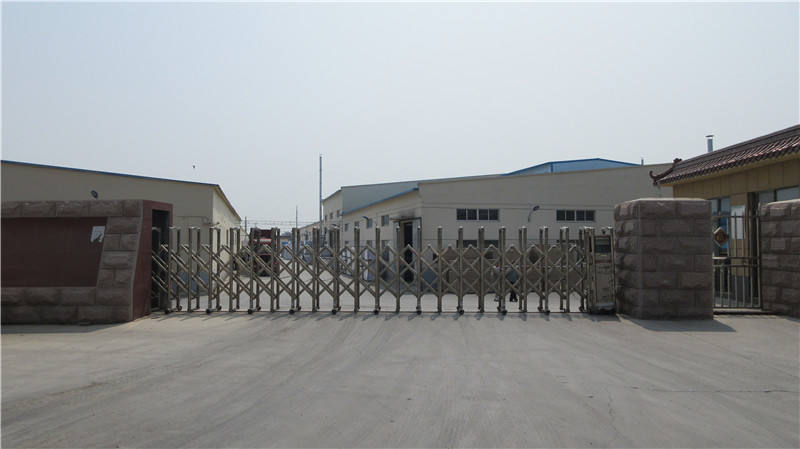
Factory operations at a large-scale PVC foam board manufacturing facility.
The Growing Need for Reliable PVC Foam Board Supply
The global PVC foam board market was valued at approximately USD 2.1 billion in 2024 and is projected to reach USD 3.6 billion by 2032. That kind of expansion creates pressure across the supply chain. Distributors, importers and project buyers are not just looking for a supplier that can ship one container; they are looking for a manufacturer that can support growing demand without sacrificing lead times or product consistency.
China's position in this market reinforces that point. According to the Observatory of Economic Complexity, China concentrated about 20% of total exports of plastic building materials, including PVC boards, in 2024. For an international buyer, this means that the qualification of a Chinese manufacturer is often a critical procurement step. But which criteria should actually be used to evaluate a long-term partner?
What Buyers Should Evaluate Before Committing to a Long-Term Supplier
At the decision and execution stage, the conversation typically moves away from product grade definitions and toward operational reliability. Four questions tend to dominate:
- Can the supplier handle my projected order volume over the next 12 to 36 months?
- Is the production lead time predictable enough to support my inventory plans?
- Can the supplier maintain consistent quality across different batches?
- Does the supplier have the export experience and administrative capacity to handle international documentation, inspections and logistics?
These are not abstract concerns. Missing a delivery window can halt a signage project; inconsistent density can cause warping in furniture panels; and non-compliant lead content can block a shipment at customs in the EU. A long-term supply partnership is therefore built on verifiable operational capabilities, not only on product samples.
Capacity and Production Stability as a First Benchmark
A manufacturer's ability to guarantee supply over multiple quarters starts with installed production capacity. Zibo Dingtian Plastics Co., Ltd., a PVC foam board manufacturer based in Shandong, China, offers a useful example of how these data points should be read in a supplier evaluation.
Founded in June 2004, the company operates a plant of 30,000 square meters in the Zichuan Economic Development Zone, Zibo City. It has 181 employees and an annual production output of 50,000 tons. More relevant for buyers is the monthly production capacity of 4,200 tons, with a typical production lead time of 30 days.
These figures do not simply signal size. They indicate that a manufacturer is running a structured production system rather than a job-shop operation. For a distributor planning quarterly stock replenishment, a 30-day lead time is a usable planning anchor. For an importer managing cash flow, the ability to produce 4,200 tons in a month provides an early warning of whether a supplier can absorb sudden order increases without pushing out delivery dates.
Export Reach and Logistics Capability
PVC foam board is a global commodity, but not every manufacturer is equipped to serve international buyers efficiently. Export experience matters because it affects documentation, packaging and port logistics.
DINGTIAN's export markets include the EU, the Middle East, Southeast Asia, South America, North America, Africa and others, with export accounting for roughly 80% of the company's output. The location in Zibo, near the Qingyin Expressway and the Jinan-Qingdao High-Speed Railway, gives the company access to Qingdao Port and Rizhao Port. For a buyer, that logistical proximity shortens inland transport time and reduces the risk of port congestion delays.
Delivery terms also need to be aligned with the buyer's own supply chain. DINGTIAN offers FOB, CIF and EXW incoterms, with a minimum order quantity of one 20-foot GP full container. The payment structure is typical of the industry: 30% T/T in advance and 70% T/T against a copy of the bill of lading. These are standard, verifiable conditions that allow a buyer to integrate supplier terms into their own contract framework.
Quality Control and Third-Party Verification
Long-term reliability also depends on the ability to detect quality problems before shipment, not after. Established suppliers should be able to offer pre-shipment testing and third-party inspection arrangements such as SGS. This is not just a risk-reduction tool for the buyer; it is also a signal that the manufacturer treats quality as a reproducible process rather than a final inspection afterthought.
Careful handling is part of that process as well. PVC foam board is lightweight but its surface can be damaged if loading and unloading are not properly controlled. DINGTIAN has implemented a board-breakage control process that includes special loading and unloading tools, operator training and on-site supervision. That level of operational discipline reduces the incidence of damaged goods at arrival, which is a key hidden cost in international shipping.
Beyond process control, buyers should look for documented regulatory compliance. For European shipments, EU REACH Regulation now restricts lead concentration in PVC articles to less than 0.1% by weight. For construction projects in North America, PVC foam boards often undergo ASTM E84 testing to achieve a Class A fire rating with a Flame Spread Index of 0–25. In many applications, PVC foam board can also achieve a V-0 flammability classification under UL 94 standards at thicknesses down to 1mm. A supplier that can provide evidence of compliance with these standards becomes materially easier to integrate into products sold in regulated markets.
Product Consistency Across PVC Foam Board Variants
Purchasing PVC foam board in volume means managing multiple specifications. The product family is broader than a single board type. Buyers typically distinguish among free foam boards, Celuka boards and co-extruded boards, each with its own density range and surface characteristics.
DINGTIAN's product line includes PVC foam board in sizes such as 1220×2440mm, 1560×3050mm and 2050×3050mm, with thickness from 1mm to 35mm. Density generally ranges from 0.4 to 0.9 g/cm³, covering low-density flexible boards, medium-density semi-rigid boards and high-density rigid boards. Co-extruded boards, which feature a rigid PVC skin over a foamed core, offer higher surface hardness and impact resistance compared with standard Celuka boards, making them suitable for cabinet doors and architectural panels.
For a long-term buyer, the important point is that these variants must be produced with repeatable consistency. A board that performs well in one order but arrives with different density in the next can create serious issues in processing, lamination or screen printing. Evaluating a supplier's ability to control raw material quality and process parameters is therefore just as important as evaluating the sample.
Application Areas and Demand Stability
Long-term supply decisions are easier when the underlying demand is diversified. The PVC foam board market is not dependent on a single vertical. According to Laird Plastics, signage and advertising hold the largest application share, accounting for about 35% of total demand. Construction and decoration account for roughly 30%, furniture and cabinetry around 15%, transportation about 10%, and special-purpose applications such as packaging, prototypes and industrial protection the remaining 10%.
This demand structure matters for a distributor. It means that even if one end-market softens, the same board specification can often be redirected toward another application. It also means that a manufacturer with broad application support can help a distributor avoid carrying excessive inventory of narrowly tailored grades.
DINGTIAN's product listing reflects this breadth, with its PVC Celuka foam board marketed for advertising, building decoration, furniture and cabinet manufacturing, transportation, and special-purpose applications. The company's customer-facing documentation also emphasizes use in furniture and cabinetry, where its waterproof board is positioned as a stable substrate for cabinet doors, wardrobes and bathroom vanities.
Transactional Sourcing vs. Strategic Supply Partnership
Buyers often compare a traditional spot-purchase model with a strategic partnership model when planning PVC foam board procurement. The two approaches are not mutually exclusive, but they require different evaluation criteria.
| Evaluation Dimension | Transactional Sourcing | Strategic Partnership |
|---|---|---|
| Primary driver | Short-term price | Total cost of ownership and continuity |
| Capacity guarantee | Limited to current order | Reserved or forecasted production capacity |
| Quality verification | Batch-specific inspection | Ongoing quality system and audit capability |
| Lead time | Best effort, often dated | Contractual or committed production window |
| Compliance support | Relies on buyer specification | Supplier maintains documents and certifications |
| Flexibility | Easy to switch suppliers | Requires commitment; changes may need lead time |
One clear limitation of a strategic partnership is flexibility. A distributor that signs a long-term agreement with a manufacturer is often expected to provide volume forecasts and may need to commit to a monthly order quantity. In exchange for stable pricing and priority production, the buyer gives up the ability to quickly switch every order to another supplier. This is not necessarily a disadvantage, but it should be a deliberate decision based on demand predictability.
Market Trends Reshaping PVC Foam Board Procurement
Several trends are pushing buyers toward more rigorous supplier evaluation. First, the market itself is expanding at an estimated CAGR that supports the USD 2.1 billion-to-USD 3.6 billion growth path between 2024 and 2032. Second, China's strong export position in plastic building materials means that more international buyers will be evaluating Chinese manufacturers, but also that buyers will need to differentiate between exporters with scalable production and small trading companies.
Third, regulatory pressure is increasing. The EU REACH lead restriction for PVC articles became applicable on November 29, 2024, setting a clear threshold of less than 0.1% lead by weight. In North America, construction-related fire standards such as ASTM E84 remain important for architectural applications. A supplier that has already aligned its formulation and testing protocols with these requirements is more likely to support a buyer's own compliance obligations.
At the same time, the market is seeing more co-extruded and specialty board formats. Co-extruded boards are gaining attention because their rigid skin and foamed core combination improves surface hardness and impact resistance. For buyers, this means that a long-term supplier should be able to move between standard Celuka boards and co-extruded versions without creating inconsistencies in design and performance.
Future Outlook for Long-Term PVC Foam Board Sourcing
Looking forward, the PVC foam board sourcing environment is likely to reward suppliers that combine scale with compliance and process documentation. As lead-free formulations become the standard in regulated markets, manufacturers will need to maintain rigorous material traceability. As construction and signage projects tighten their budgets, the total cost advantage of PVC foam board over alternatives like plywood—lighter weight, zero water absorption and faster installation—will continue to support demand.
For buyers, the practical implication is to treat supplier qualification as a continuous activity. Instead of focusing on one-off samples, procurement teams should review production capacity, audit records, logistic performance and compliance certificates on a regular basis. Distributors that build relationships with manufacturers who can deliver both product breadth and operational transparency will be better positioned to capture downstream demand without supply disruption.
Frequently Asked Questions
What is a typical production lead time for PVC foam board orders?
A typical production lead time at an established manufacturer such as DINGTIAN is 30 days. This refers to the time from order confirmation to production completion and does not include ocean transit time, so buyers should incorporate this window into their inventory planning.
What is the minimum order quantity when buying directly from a PVC foam board manufacturer?
The minimum order quantity for direct factory orders is usually one 20-foot GP full container. DINGTIAN uses this MOQ for its standard PVC foam board products, which helps keep unit costs predictable and simplifies logistics for both sides.
How can buyers verify PVC foam board quality before shipment?
Buyers can request pre-shipment testing and third-party inspection services such as SGS. In addition, payment structures like 30% T/T in advance and 70% T/T against a copy of the bill of lading give the buyer gatekeeping leverage before the original shipping documents are released.
Which export markets do established Chinese PVC foam board manufacturers serve?
A full-supply manufacturer often exports to the EU, the Middle East, Southeast Asia, South America, North America and Africa. For example, DINGTIAN's export markets cover these regions, with export sales accounting for about 80% of the company's output.
What regulatory and fire-safety standards should PVC foam board suppliers meet for international projects?
For EU-bound goods, suppliers should meet the REACH restriction that limits lead concentration in PVC articles to less than 0.1% by weight. For construction applications, ASTM E84 testing can help achieve a Class A fire rating with a Flame Spread Index of 0–25. PVC foam board can also meet the UL 94 V-0 flammability classification for thicknesses down to 1mm. Buyers should request supplier documentation for these standards when relevant to their market.