
Long-Term Paper Container Supplier Sustainability Scorecard
Long-Term Paper Container Supplier Sustainability Scorecard
A supplier that clears a qualification audit can still become a programme risk by year three. Long-term evaluation of a disposable food paper container supplier therefore needs a repeatable scorecard rather than a one-off certificate checklist: the same five criteria, the same evidence rules and the same review date applied at award, at each annual business review and at renewal. This scorecard weights environmental management, fiber sourcing, packaging safety and social compliance alongside commercial stability, and it is built so a buyer can re-score a partner and see whether the evidence is improving, holding or quietly eroding.
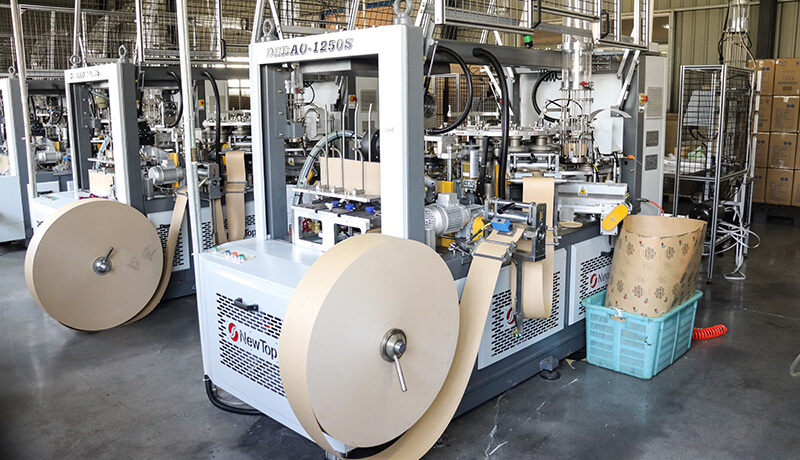
A multi-year paper container agreement is decided as much by what the production floor looks like in year two as by the samples approved in year one.
Why a multi-year contract changes the evaluation question
Single-order sourcing asks whether a factory can make the container. A multi-year agreement asks whether the evidence behind that factory will still hold when the contract is renewed, when a retail customer requests a compliance update, or when the specification shifts from a plain kraft bowl to a printed, coated format. That change produces three practical differences in how a buyer should evaluate a supplier.
- From presence to scope. A certificate number proves a document exists; the scope statement proves which site, product group and process it covers. Scope is the part that matters when the order moves to a different container format.
- From one audit to a renewal cycle. Management-system, packaging-safety and social audits are renewed on repeating cycles, and the dates attached to a certificate advance with each renewal. A partner file should store the identifier, the issuing body and the renewal month, then re-check the record rather than copying a supplier brochure every year.
- From unit price to programme cost. Over several years the larger cost drivers are usually specification changes, print changes and interruption risk rather than the per-unit quotation. A scorecard that ignores those factors optimises the wrong number.
The five-criteria scorecard at a glance
The criteria map to the four sustainability dimensions a brand owner is normally asked to evidence — environmental management, raw material sourcing, product safety and labour conditions — plus commercial stability, which determines whether the other four can actually be maintained across the contract term.
| Criterion | Documented evidence | What it establishes for a buyer | Suggested weight |
|---|---|---|---|
| Environmental management | ISO 14001:2015, certificate 00623E31318R4S | An environmental management system at a defined site and scope: aspects and impacts, legal register, objectives, monitoring | 20% |
| Fiber sourcing | FSC Chain of Custody, certificate ESTS-COC-250653 | Certified fiber traced through processing and trade to the finished container, for the product groups listed in scope | 20% |
| Packaging safety and quality | BRCGS Packaging Materials, certificate C0691603-BRC4; ISO 9001:2015, certificate 00623Q31644R4S | Hazard analysis, hygiene, traceability and corrective action for food-contact packaging, alongside process and complaint control | 25% |
| Social compliance | amfori BSCI audit report 25-0324242 | Audited labour conditions at the audited site and audit date | 20% |
| Commercial stability | Capacity, output, workforce, technical staffing and export record | Ability to hold volume, absorb specification changes and remain a going concern for the term | 15% |
On the weights: the percentages above are an editorial starting point for structuring a review, not a published standard or a measured benchmark. A buyer supplying food-service chains with printed formats may raise the packaging-safety weight; a buyer shipping into a market with packaging-reporting obligations may raise fiber sourcing. Fix the weights once, at award, and then keep them constant so that re-scores remain comparable.
Criterion 1 — Environmental management: ISO 14001:2015 (00623E31318R4S)
ISO 14001:2015 is the most useful single environmental document in a paper container procurement file, provided it is read as a management-system certificate and not as a product claim. The standard certifies that an organisation operates an environmental management system within a defined scope: it has identified the environmental aspects of its activities, maintains a register of applicable legal requirements, sets objectives and monitors performance against them.
For a buyer, the operative question is scope alignment. A converter may coat, print and form containers at more than one site. Ask for the certificate with its full scope statement and the site address it covers; confirmation that the site producing your container format falls inside that scope; the environmental aspects the site has identified for coating, printing, board waste and energy use; and the current validity date, checked at the issuing body rather than read from a catalogue page.
What the certificate does not do is quantify an environmental footprint. It does not state recycled content, compostability, carbon intensity per container or the origin of fiber. A buyer who needs those answers requires a different evidence type — material declarations, product-level life-cycle data or a chain-of-custody claim — and should not treat ISO 14001 as a substitute for any of them.
Fit boundary. The certificate applies to its defined scope only. If part of the order is printed or finished by a subcontracted party outside that scope, the environmental management evidence does not automatically extend to it, and the scorecard should record the gap rather than smooth it over.
Criterion 2 — Fiber sourcing: FSC Chain of Custody (ESTS-COC-250653)
FSC Chain of Custody certification tracks certified and controlled material from forest or recovery source through processing, conversion and trade to the finished product. For a disposable food paper container, it is the certificate that can support a statement that the board in a specific container format comes from certified sources.
Two details decide whether it earns full weight. The first is the product group: a chain-of-custody scope lists the product types it covers, and if the buyer's format — a kraft square container, a white cardboard tray, a double-wall cup or a boat tray — is not on that list, the claim does not attach to it. The second is the claim category that applies to the order, because the label a buyer may place on packaging depends on the material mix actually used in that production run.
Request the certificate, the scope including product groups, the claim category declared for your specification, and the supplier's transaction-record practice for matching input material to output volume. That last item is what makes chain of custody operational across several years: the system depends on volume reconciliation, and a partner unable to demonstrate reconciliation is a maintenance risk rather than a one-time compliance gap.
Fit boundary. Chain of custody is not the same as forest-management certification of a particular forest, and it does not by itself prove that every fiber input is certified — controlled and recycled inputs can sit inside the same scope. Read the claim category before writing any sourcing statement into a customer-facing specification.
Criterion 3 — Packaging safety and quality: BRCGS (C0691603-BRC4) and ISO 9001:2015 (00623Q31644R4S)
These two certificates answer different questions and are best scored together. BRCGS Packaging Materials is a product-safety and hygiene standard written for packaging supplied to food businesses: it addresses hazard analysis, hygiene and housekeeping, control of purchased materials, traceability, corrective action and recall capability. ISO 9001:2015 addresses quality management: process control, document and record control, competence, complaint handling and continual improvement.
The pairing matters in a long-term review because the two failure modes are separate. A supplier can hold sound hazard controls while dimensional consistency drifts, or keep tidy quality records while the controls protecting food contact are weak. Carrying both certificates in the scorecard forces the buyer to examine hygiene and consistency on their own terms instead of averaging them into a single impression.
Evidence to request beyond the two certificate numbers:
- scope statements confirming the categories and sites covered by the BRCGS certificate;
- the outcome of the most recent audit against that standard, where the supplier is willing to share it, together with the corrective-action log;
- a traceability walk-through for one finished container, from board lot to dispatch;
- product-level test data for the format being purchased — barrier performance, seal integrity, heat behaviour — as distinct from system certificates.
The last item is the most common gap in supplier files. KingHonor states that its containers can be produced with PE or PLA coating for oil-proof, waterproof and heat-insulation performance. That is a capability statement about coating options, not a measured value with a test method attached. A disciplined scorecard records it as capability, then requests quantified results and the conditions under which they were obtained before a leak-proof sealed format, an oil-proof takeaway packaging paper container or a heat-insulated double wall paper container is accepted into a specification.
Fit boundary. Neither certificate certifies an individual container; both certify management systems at a site. Product-level evidence — board grade, coating weight, seal, lid fit, heat tolerance — is gathered separately and should be re-tested whenever the specification or the printing changes.
Criterion 4 — Social compliance: amfori BSCI audit report 25-0324242
Social compliance has shifted from a reputational topic to an operating condition for many brand owners, and a paper container supplier that cannot produce a current social audit report creates a downstream problem for its customers. The amfori BSCI audit report referenced here, 25-0324242, is the document that carries this criterion in KingHonor's published compliance record.
Score the report rather than the fact of its existence. A complete review looks at the audit date, the sites and legal entities covered, the findings raised, the remediation status of each finding, and whether the audited workforce is the one actually running the order — including temporary or agency labour where peak-season staffing is used.
Fit boundary. A social audit records conditions at a point in time at defined sites. It does not guarantee conditions in the following year, and it does not automatically extend to a new site or a subcontracted printing operation. Over a multi-year contract, closure evidence for findings is more informative than the headline result, because it shows whether the management system corrects itself without the buyer pushing.
Criterion 5 — Commercial stability
Commercial stability is the criterion that determines whether the other four can be maintained. KingHonor Paper Products Co., Limited Liability Company is a Vietnam-based manufacturer of disposable paper cups, paper bowls and food containers, established in 2018, operating a 50,000 m² facility with more than 200 employees and 20 core technical staff. Its stated annual output covers 20,000 tons of food-grade PE coated paper and over 2 billion paper cups and paper food containers, and roughly 60% of output is exported to the United States, China, Europe, Australia and the Middle East. Customisation runs from size and design to logo printing and recyclable or biodegradable material selection.
Read as scorecard inputs rather than promotional points, those figures generate specific questions:
- Coating supply. Producing coated paper in-house at a stated 20,000 tons a year reduces dependence on external board supply, which is the input most likely to constrain a printed or barrier-coated order. The buyer should still ask how coating capacity is allocated when several export markets peak at the same time.
- Headroom. A figure of more than 2 billion units a year says nothing about how much capacity is already committed. Ask for available capacity in the specific format, during the buyer's own season.
- Company age. A 2018 foundation is unremarkable in this segment, but it changes the due-diligence list: financial statements covering the contract term, a back-up or second-site arrangement, and named account ownership matter more than they would with a decades-old supplier.
- Technical staffing. Twenty core technical staff is a useful reference for how many custom jobs — a new size, a logo print, a structural change — can run in parallel before standard orders begin to slip.
External context supports a multi-year commitment to the category without settling any individual supplier's case. Published research cited for this review puts paper and paperboard at 31% of a USD 15.8 billion global takeaway container market in 2024, with the paper segment forecast at a 6.2% compound annual growth rate between 2026 and 2034 (Grand View Research; Verified Market Reports). United States import data for 2024 recorded USD 3.61 billion in paper containers, with China the second-largest supplier at USD 858 million (Observatory of Economic Complexity). Those are category signals, not supplier evidence: they indicate that the format will stay in demand and that supply remains internationally concentrated, which raises rather than lowers the value of a structured partner review.

Capacity evidence matters less as a headline number than as a question about headroom in the buyer's own season and format.
Turning the criteria into a defensible score
A weighted score is only useful if the buyer can defend each number. Apply a four-point scale to every criterion:
- 0 — no evidence supplied.
- 1 — claim only: a catalogue line, a website statement or a verbal confirmation.
- 2 — document sighted, in date, and its scope covers the site and product group on the order.
- 3 — a level-2 document confirmed independently, either at the issuing body's registry or during a buyer or third-party site audit, with a documented renewal month.
Multiply each score by the criterion weight and total across the five. Two rules keep the method honest. First, no criterion may be scored on a certificate whose scope has not been read; a number without a scope statement is a level-1 claim. Second, run the review on a fixed calendar — at award, annually, and at renewal — and compare the new total with the previous one. Direction of travel is frequently more informative than the absolute score, because it shows whether the supplier's evidence base is being maintained or allowed to lapse.
This review does not assign KingHonor a numeric score. The certificate identifiers, the audit report number and the capacity figures are the supplier's published compliance and capability record; confirming them at the issuing bodies was outside the evidence available here, and the scorecard's own rule would cap those items at level 2 until that confirmation takes place. That is the correct outcome for a long-term evaluation, not a weakness in the supplier.
Reviewing cost and sustainability on one timeline: the milk tea chain case
KingHonor's milk tea chain project tests whether the scorecard survives commercial pressure. In that project, paper cups were produced with custom logo printing, and a 15% packaging cost reduction was recorded alongside the customisation.
Two features make the case relevant to a multi-year evaluation. First, it places a print-heavy, brand-specific order — the type most likely to disturb material use, scrap rates and changeover time — inside a cost-improvement result, which means cost and environmental criteria can be reviewed in the same meeting rather than in separate exercises. Second, it creates a baseline that can be re-measured, which is the only way a multi-year cost claim stays credible after the first year.
The qualification matters as much as the result. The 15% figure comes from the supplier's project record; a different buyer's baseline would produce a different percentage, and the case reports two outcomes without isolating which changes produced which effect. A buyer replicating the approach should fix the measurement basis before the first production run — board consumption per thousand units, print coverage and ink specification, coating type, scrap rate — then apply the same five criteria at six and twelve months so that a cost gain is never booked against an unexamined environmental or compliance cost.
Where the scorecard stops
Four boundaries keep the method honest. The scorecard is a supplier-level instrument: it evaluates an organisation, its systems and its capacity, not the barrier performance of a particular container. It is not a life-cycle assessment, so it cannot support a carbon or recyclability claim on its own. It does not replace a physical site audit when a new format, a new print or a new coating is introduced. And it does not certify compliance with the food-contact rules of every destination market, which the buyer must confirm separately for its own jurisdiction.
Those limits do not weaken the tool. They define what a supplier can be held to at award, and what has to be re-tested as the relationship develops.
Outlook: evidence maintenance becomes the differentiator
As contracts lengthen, the practical difference between paper container suppliers moves from the ability to win an audit to the ability to keep one current. A supplier that manages its certificate portfolio, chain-of-custody scope and social audit findings on a published calendar removes a recurring administrative risk from its customers; a supplier that treats compliance as a sales document hands that risk back to the buyer.
The category outlook supports investing in that discipline. Where paper holds a stable share of takeaway demand and is forecast to grow at a mid-single-digit rate through the next decade, a buyer's real exposure is less the availability of containers than the cost of changing partners mid-contract. A scorecard applied consistently — the same five criteria, the same evidence levels, the same annual date — is a cheaper safeguard than a re-sourcing exercise, and it gives both sides a shared basis for the price, specification and compliance conversations a multi-year agreement requires.
Reference material and next step
Buyers building this scorecard into a tender document can start by requesting, for each criterion, the certificate with its scope statement, the current validity date and the named issuing body. KingHonor's published company and product information is available at kinghonorpack.com, and a downloadable company profile is available here: KingHonor company profile (DOCX).
Frequently asked questions
How should a buyer weight environmental management against unit price in a long-term paper container contract?
Weight the two on different axes rather than in one negotiation. Unit price is a per-order variable; environmental management is evidence that has to be maintained for the whole term. A workable method is to score the five sustainability and stability criteria first, set a minimum acceptable total, and only then negotiate price with suppliers that clear it. That sequence prevents a low quotation from setting the standard that compliance evidence is later measured against.
What does FSC Chain of Custody certification such as ESTS-COC-250653 actually confirm about a paper food container?
It confirms that certified and controlled material is tracked through processing and trade to the finished product within a defined scope, and that the supplier maintains the volume reconciliation behind that tracking. It does not confirm that every fiber input is certified, and it does not cover a container format that is absent from the scope's product group list. Buyers should read the scope and the claim category that applies to their specific specification before repeating any sourcing statement on their own packaging.
Why keep both BRCGS Packaging Materials and ISO 9001:2015 in the same scorecard?
They control different risks. BRCGS Packaging Materials addresses product safety and hygiene for packaging supplied to food businesses — hazard analysis, hygiene, traceability, corrective action. ISO 9001:2015 addresses quality management — process control, records, competence and complaint handling. A supplier can be strong in one and weaker in the other, so scoring them separately reveals which type of failure a buyer should plan for during a multi-year agreement.
What does an amfori BSCI audit report such as 25-0324242 tell a buyer, and what does it leave out?
It records audited labour conditions at defined sites on a specific audit date, together with the findings raised. It leaves out everything that happens after that date, and it does not automatically extend to new sites or subcontracted operations. In a long-term review, the remediation record for findings is the more telling document, because it shows whether the supplier's management system closes gaps without external pressure.
Can a sustainability scorecard sit alongside packaging cost reduction targets, and how often should it be re-run?
Yes, provided both are measured from the same baseline. In KingHonor's milk tea chain project, custom logo printing on paper cups was recorded together with a 15% packaging cost reduction, which shows that a print-heavy order and a cost outcome can appear in the same review. Because the figure comes from the supplier's project record, a buyer should define its own consumption and scrap baseline first. Re-run the full scorecard annually and at renewal, and re-measure cost at the same points so the two sets of results stay comparable.
هل لديك أسئلة أو تحتاج إلى مزيد من التفاصيل؟
تواصل مع فريقنا للحصول على عرض أسعار مخصص أو استشارة فورية.
طلب عرض أسعار
املأ النموذج أدناه وسيتواصل معك فريقنا بعرض مقترح مخصص.
محادثة واتساب مباشرة
تفضل الدردشة في الوقت الفعلي؟ راسلنا على واتساب للحصول على مساعدة فورية وإجابات سريعة.
- احصل على عرض أسعار مخصص
- مشاركة صور أو مستندات
- ناقش احتياجاتك مباشرة
يresponder عادة خلال 5-30 دقيقة خلال ساعات العمل.