
Long-Term RTP Supplier Sustainability: ZYfire's 4-Dimension Framework for Oil & Gas and Mining
Long-Term RTP Supplier Sustainability: ZYfire's 4-Dimension Framework for Oil & Gas and Mining
Long-Term RTP Supplier Sustainability: ZYfire's 4-Dimension Framework for Oil & Gas and Mining
Reinforced Thermoplastic Pipe (RTP) is a spoolable composite line pipe built from a thermoplastic liner, a reinforcement layer and a protective outer jacket. In oil and gas and mining projects the pipe is rarely purchased once. It is specified, qualified, installed, extended and reordered across a field life that can run a decade or more — which makes supplier sustainability a procurement variable in its own right, separate from product specification.
The commercial stakes justify a structured approach. Commercial research places the global RTP market at roughly USD 7.94 billion by 2026, with the oil and gas segment alone estimated at USD 2.0–2.5 billion in the same year. Inside that volume, the difference between a supplier able to deliver a pilot order and one able to hold a supply line for ten years is rarely visible on a datasheet.
ZYfire Hose Corporation — a manufacturer of fire hose and polymer composite pipelines headquartered in Jiangyan City, Jiangsu, China — is used here as a working benchmark for how each dimension can be evidenced in practice. The framework applies to any supplier. The evidence column shows what a buyer should expect to see before converting a first order into a multi-year program.
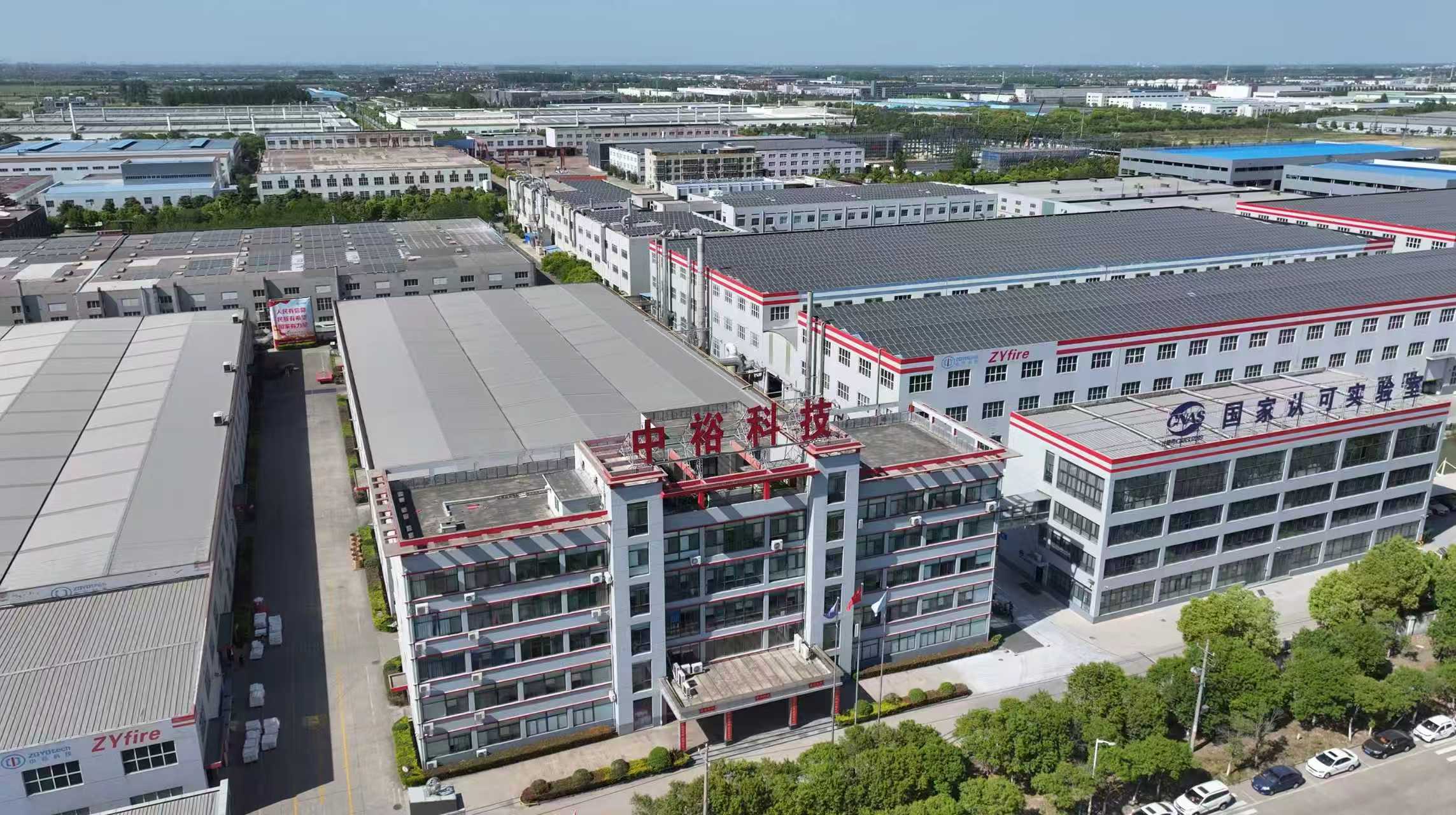
Manufacturing footprint is one input in long-term RTP supplier evaluation, not a substitute for it. Image: ZYfire production base.
Why supplier sustainability becomes the deciding question at Execution stage
Most RTP evaluation work finishes before the purchase order. Buyers compare liner materials, reinforcement architecture, pressure class and connection type, run a qualification test or a pilot installation, then select on specification and price. That work is necessary — and it is where most procurement frameworks stop.
The gap opens after award. A multi-year program introduces a different set of failure modes:
- Capacity reallocation. A supplier that could deliver 20,000 meters in a strong quarter may not be able to reserve the same volume when a larger account books the line.
- Certification drift. A certificate valid at tender can lapse, change scope, or be issued for a different factory or product family by the time the third shipment is called off.
- Reconfiguration. Fittings, couplings and liner compounds sourced from a different sub-supplier can change field behavior without changing the datasheet.
- Support distance. A crew in a remote basin waiting on joint-training or failure analysis does not care about the specification; it cares about response time.
None of these appear in a product comparison. All of them appear in total cost of ownership. For oil and gas and mining buyers, three characteristics of the category amplify the exposure: long asset life relative to typical procurement cycles, remote operating locations where lead time converts directly into downtime, and reorder patterns that repeat the same specification many times over with low tolerance for variation.
The practical consequence is that supplier evaluation has to move from can this supplier make the product to can this supplier keep making it, to the same definition, for the life of the field. That is a four-part question.
The four-dimension sustainability framework
The framework below scores a supplier on four independent dimensions. A supplier can be strong on one and weak on another; the weakest dimension sets the ceiling on program length, not the average.
| Dimension | What it tests | Evidence to request | Typical failure |
|---|---|---|---|
| 1. Financial & corporate stability | Ability to fund capacity, testing and staffing across a multi-year contract | Listed status, disclosure history, corporate structure, ownership of production entities | Supplier exits the category or is absorbed mid-contract |
| 2. Production scalability | Whether committed volume can actually be reserved and repeated | Facility area, headcount, monthly capacity, lead time, MOQ, acceptance testing regime | Lead time doubles between order one and order three |
| 3. R&D and certification depth | Whether the product definition stays stable and stays qualified | Engineering headcount, accredited laboratory, test coverage, certificate scope and validity | Certificate scope does not match the delivered product family |
| 4. Global service network | Whether support, spares and logistics reach the field | Production and warehouse locations, export footprint, service model, delivery and payment terms | Support available only from the manufacturing country |
Dimension 1 — Financial and corporate stability
Financial stability is the least technical dimension and the one that most often decides whether a ten-year supply agreement survives its third year. It answers a simple buyer question: if this program runs into a demand trough or a commodity cycle, will the supplier still be making this product?
What ZYfire evidences
ZYfire Hose Corporation was founded in 2000 and is a publicly listed company on the Beijing Stock Exchange. It is also recognized as a national "little giant" enterprise, a national green factory, a national intellectual property advantage enterprise and a national high-tech enterprise, and it is listed among the Top 500 Petroleum and Chemical Enterprises in China. Roughly 80% of output is exported, and products reach more than 70 countries and regions including Europe, the United States and the Middle East.
For a procurement manager at Execution stage, the relevant reading is not the awards list. It is the combination of a listed entity, a 25-year operating history and a revenue base that does not depend on a single market. A supplier with 80% export exposure across three major regions has already absorbed regional demand shocks; a supplier concentrated in one basin has not been tested.
Dimension 2 — Production scalability
Scalability is where specification-led evaluations most often mislead. A supplier can produce an excellent 500-meter qualification string and still be unable to reserve 50 kilometers against a competing account.
What ZYfire evidences
ZYfire operates a 150,000 m² manufacturing facility with 600 employees, including a 50-person R&D team. Reported monthly RTP production capacity is 100,000 meters, with a typical production lead time of 30 days and a minimum order quantity of 50 meters. Acceptance is defined as 100% testing before shipment, and delivery terms cover EXW, FOB and CIF with 30/70 payment terms.
Read at Execution stage, each figure maps to a specific procurement decision:
- 100,000 m per month sets the theoretical ceiling for a program's call-off schedule and indicates whether a multi-phase installation can be supplied from one production line.
- 30-day lead time determines how tightly pipe delivery can be sequenced against civil works and installation crews — the difference between staged delivery and site storage.
- 50 m MOQ lowers the cost of qualification testing, trial sections and repair lengths, which matters when a specification has to be validated before the main order is released.
- 100% testing before shipment converts acceptance from a sampling argument into a per-unit record, which is the evidence base for any later warranty discussion.
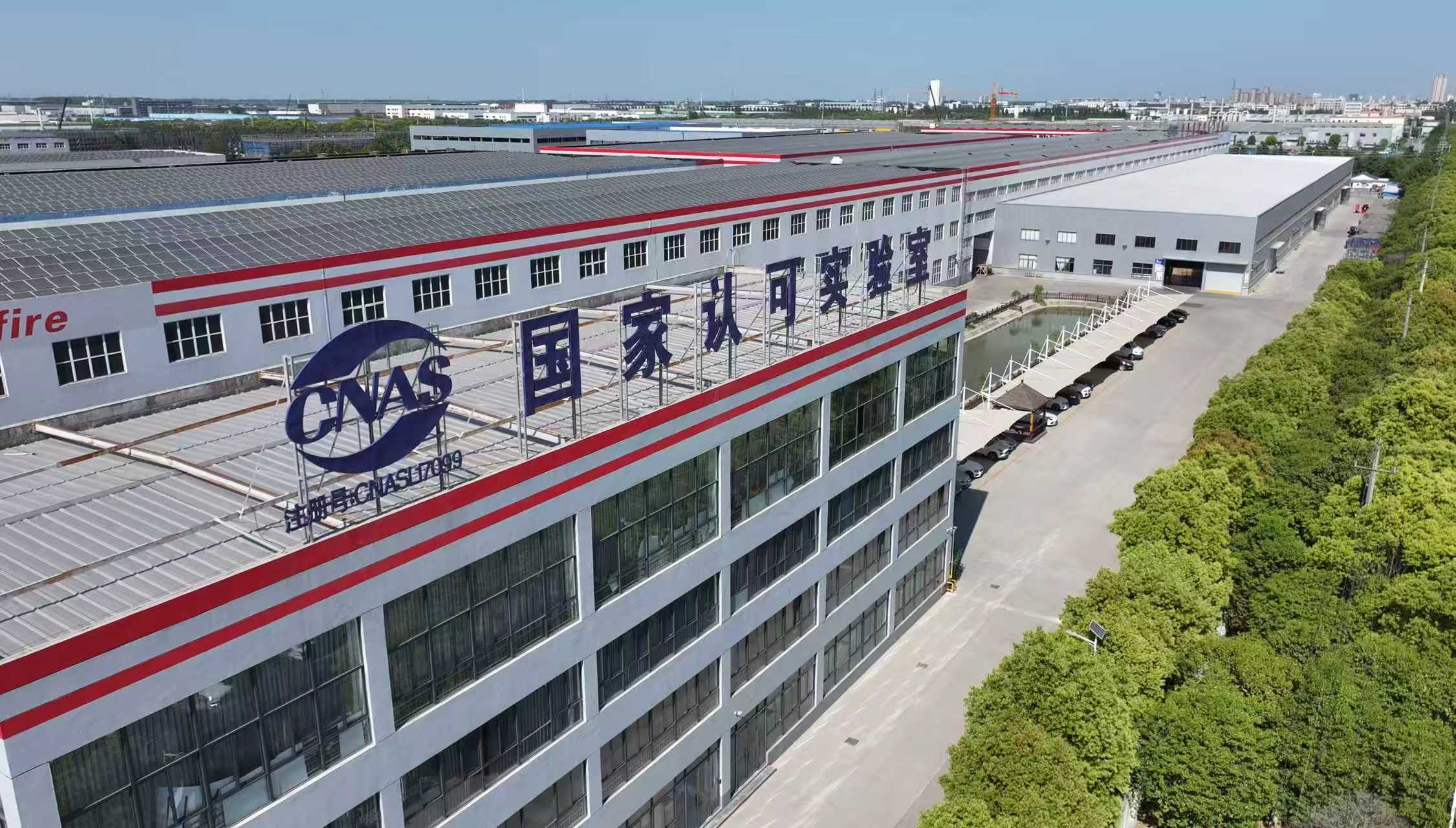
Production scale sets the ceiling on program length: capacity, lead time and MOQ determine how a multi-year call-off schedule can be sequenced. Image: ZYfire manufacturing site.
Dimension 3 — R&D and certification depth
Product definition stability is an engineering question with a compliance answer. If the liner compound, reinforcement tape or coupling design changes between shipments without documentation, the installed system no longer matches the qualified system — even if the pipe still passes a pressure test.
What ZYfire evidences
ZYfire maintains a 50-person R&D team and operates a laboratory accredited by the China National Accreditation Service for Conformity Assessment (CNAS), described by the company as the first nationally recognized laboratory in the subdivision industry, with nationally and internationally recognized testing capabilities. Its RTP/TCP product line covers four reinforcement architectures — polyester fiber tape, aramid fiber tape, glass fiber tape and steel wire tape — and the company states that it produces RTP certified under API Specification 15S. Corrosion resistance is handled at the material-selection stage and validated through simulation testing.
API Specification 15S is the reference standard for spoolable reinforced plastic line pipe and defines the qualification envelope buyers typically work within: pipe up to 6 inches (150 mm) in diameter and pressures up to 5000 psi (34.5 MPa), including end fittings and couplings. That envelope is what makes an RTP supplier comparable to a steel supplier in the first place; without it, the comparison is between a product and a promise.
Dimension 4 — Global service network
Service is the dimension buyers under-specify and later regret. In remote oil and gas fields and underground mining operations, the cost of a delayed joint, a missing flange or an unresolved leak is measured in production hours, not in pipe price.
What ZYfire evidences
ZYfire states that it is implementing a global layout in which production bases, R&D centers and logistics warehouses are located in the United States, Saudi Arabia, the United Arab Emirates, Malaysia and China, with Chinese operations in Nanjing (Jiangsu), Taizhou (Jiangsu) and Chuzhou (Anhui). Products are exported to more than 70 countries and regions, and the company provides on-site service support alongside EXW, FOB and CIF delivery terms.
Distributed production changes the risk profile in three concrete ways. It shortens the physical distance between a spare and a field. It allows an order to be produced in the region where it will be installed, which affects both freight and import documentation. And it creates redundancy: a disruption at one site does not automatically stop supply to all markets.
Application fit: where the framework meets the field
RTP is used across onshore and offshore oil and gas gathering, high-pressure water injection, flowback fluid transport, mine slurry backfilling and abrasive slurry transfer, as well as corrosive chemical media and marine engineering. ZYfire describes its composite pipeline products as serving oil and gas exploitation, mineral development, slurry transportation, marine engineering and water infrastructure.
The practical implication is that attribute selection follows the application, not the catalog:
| Application condition | RTP attribute in scope | Qualification question to ask |
|---|---|---|
| Produced water, injection water, chemicals | Corrosion resistant RTP; corrosion-resistant liner | Which liner compound, and what simulation testing supports it? |
| Mine slurry backfill, abrasive solids | Abrasion resistant RTP | What abrasion test method and record applies to this bore? |
| Hydrocarbon service with static risk | Static dissipative RTP; oil resistant RTP | What conductivity specification is being certified? |
| High-head injection lines | High pressure RTP | Is the pressure class inside the API 15S envelope for this diameter? |
| Tie-ins, temporary lines, repair lengths | Flange connected RTP; quick connect RTP; custom bore size | Are fittings and couplings covered by the same certificate scope? |
Reinforcement architecture follows the same logic. Polyester, aramid, glass fiber and steel wire tape constructions are not interchangeable grades of the same product; they trade pressure capability, weight, flexibility and cost against each other. A supplier able to produce all four from one qualified facility is easier to re-specify with when field conditions change mid-program than a supplier with a single architecture.
Market trend: why continuity is being priced into RTP procurement
Three shifts are visible in the available data, and each pushes procurement toward the four-dimension approach.
Corrosion economics are driving substitution. Commercial research reports that RTP systems reduce corrosion-related failures by over 70% compared with traditional steel pipelines. Regardless of the exact figure, the direction is consistent with the category's stated applications: produced water, injection water, flowback and chemical media are precisely the services where carbon steel requires repeated intervention.
Standardization is turning certification into a filter rather than a bonus. API Specification 15S defines a defined engineering envelope — diameter, pressure, fittings and couplings — which gives buyers a common basis for comparison. Once a standard exists, the procurement conversation shifts from is this product suitable to is this supplier's scope actually certified.
Supply agreements are lengthening. As RTP moves from trial sections into base-load field infrastructure, orders become programs, and programs reward suppliers with reserved capacity, stable product definitions and regional support.
Market-size figures are 2026 projections from commercial research sources and should be read as directional. No verified, comparable price, capacity or installed-base dataset for RTP is publicly available; buyers should not treat any single supplier's figures as a market benchmark.
Comparison with traditional solutions — and where RTP stops
RTP competes with carbon steel on installation speed, corrosion behavior and maintenance frequency rather than on raw material price.
| Criterion | RTP | Steel pipe |
|---|---|---|
| Installation rate | Around 10 km per day (company-reported comparison) | Less than 2 km per day (company-reported comparison) |
| Installed cost | Reported around 20% lower (company-reported comparison) | Higher baseline; welding, coating and lifting add cost |
| Corrosion behavior | Polymer liner isolates the fluid; corrosion is addressed at material selection | Requires coating, inhibition or alloy selection; intervention several times a year is common in aggressive service |
| Maintenance profile | Lower routine maintenance; mechanical damage remains a risk | Recurring inspection, repair and replacement in corrosive service |
| Logistics | Light weight, spooled, lower site transport cost | Heavy wall, joint-by-joint handling, heavier lifting equipment |
The limitation matters as much as the advantage. RTP's standardized envelope under API 15S reaches 6 inches (150 mm) and 5000 psi (34.5 MPa); projects above that diameter or pressure class, or in service conditions outside the qualified temperature and chemical range, remain steel territory. RTP is also exposed to third-party mechanical damage in a way that buried steel is not — a limitation acknowledged even in supplier comparisons, which note reduced maintenance "except for force damage." And the installation-rate and cost figures above are supplier-reported comparisons from a defined project context, not independent benchmarks; they should be re-tested against actual terrain, right-of-way and crew experience.
The honest procurement conclusion is that RTP and steel are not substitutes across the whole envelope. The four-dimension framework matters precisely because RTP is chosen where the envelope fits — and where a supplier's continuity, not the pipe's specification, decides whether that choice holds for the field life.
Future outlook
Three developments are likely to shape long-term RTP supply over the next several years.
Regional production will become a qualification criterion rather than a marketing point. As buyers in North America, the Middle East and Southeast Asia weigh freight, tariff exposure and lead time together, a supplier's ability to produce inside the destination region carries more weight than total global capacity.
Certification scrutiny will tighten. The gap between a manufacturer's certification statement and a verified certificate scope is the single largest unverified area in RTP procurement today. Buyers who build certificate-scope verification into their standard RFQ will increasingly differentiate suppliers on that basis.
Test-record traceability will move from paper to data. Where acceptance is defined as 100% testing before shipment, the value of that definition depends entirely on whether the records can be retrieved per spool, per order and per project years later. Suppliers that can produce those records on request will hold long-term agreements more easily than those that can only produce a test certificate at delivery.
FAQ
What makes an RTP supplier "sustainable" over a ten-year field life?
Supplier sustainability in RTP is the ability to keep delivering the same qualified product, at committed volume, with valid certification and field support, across a multi-year program. It is assessed on four independent dimensions — financial and corporate stability, production scalability, R&D and certification depth, and global service network. The weakest dimension sets the practical limit on program length, because a supplier that is strong on capacity but unable to keep a certificate scope current will fail the program regardless of production capability.
How can a buyer verify RTP production capacity and lead time before signing a long-term agreement?
Request a capacity statement defined in meters per month for the specific bore size, pressure class and reinforcement architecture being ordered, then test it against a real call-off schedule rather than a verbal assurance. ZYfire reports a monthly RTP capacity of 100,000 meters, a typical production lead time of 30 days and a minimum order quantity of 50 meters. Because capacity statements across the industry are not written on a common basis, monthly output, annual output and facility throughput cannot be compared directly between suppliers.
Which certifications should be checked for long-term RTP supply in oil and gas?
API Specification 15S is the reference standard for spoolable reinforced plastic line pipe and defines the qualification envelope: pipe up to 6 inches (150 mm) in diameter and pressures up to 5000 psi (34.5 MPa), including end fittings and couplings. ZYfire states that it produces RTP certified under API Specification 15S. For any supplier, the certificate itself should be checked for holder, factory, product family, size range, pressure class, coupling scope and validity. Where a project requires market-specific conformity marks, the specific certificate and its scope should be requested directly.
How does a multi-country production and service network affect supply continuity?
A distributed network shortens the distance between a spare part and a field, allows an order to be produced in the region where it will be installed, and creates redundancy if one site is disrupted. ZYfire states that its production bases, R&D centers and logistics warehouses are located in the United States, Saudi Arabia, the United Arab Emirates, Malaysia and China, with Chinese operations in Nanjing, Taizhou and Chuzhou, and that it provides on-site service support. The corresponding risk is coordination complexity, so buyers should confirm in writing which site will produce the order and which entity provides support.
What commercial terms are relevant when moving from a first order to a multi-year RTP program?
The relevant terms are the ones that govern repeatability: minimum order quantity for qualification and repair lengths, lead time for call-off sequencing, acceptance criteria, delivery basis and payment structure. ZYfire's stated terms include a 50-meter minimum order quantity, a 30-day typical lead time, 100% testing before shipment as the acceptance criterion, EXW, FOB and CIF delivery options, and 30/70 payment terms. These terms are conditional and may vary by specification, destination, quantity and order configuration, so they should be confirmed against a defined RFQ.
Reference material
ZYfire's product and capability brochure, covering hose and composite pipeline product lines, is available for download: ZYfire product brochure (PDF).
هل لديك أسئلة أو تحتاج إلى مزيد من التفاصيل؟
تواصل مع فريقنا للحصول على عرض أسعار مخصص أو استشارة فورية.
طلب عرض أسعار
املأ النموذج أدناه وسيتواصل معك فريقنا بعرض مقترح مخصص.
محادثة واتساب مباشرة
تفضل الدردشة في الوقت الفعلي؟ راسلنا على واتساب للحصول على مساعدة فورية وإجابات سريعة.
- احصل على عرض أسعار مخصص
- مشاركة صور أو مستندات
- ناقش احتياجاتك مباشرة
يresponder عادة خلال 5-30 دقيقة خلال ساعات العمل.