
Long-Term Reliability: Why Controlled Impurities in Hi-B Steel Sustain Performance
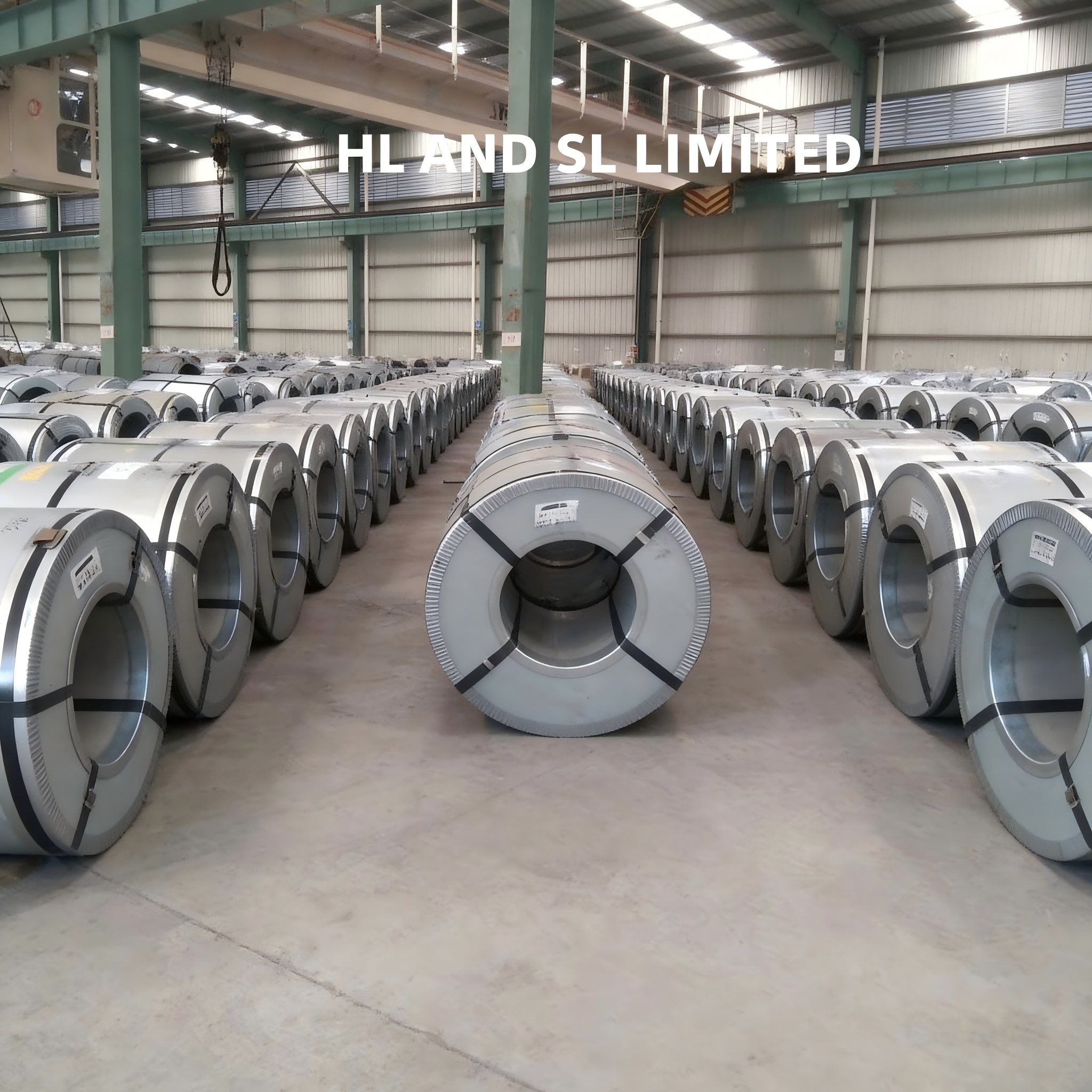
Power and distribution transformers are specified for service lives measured in decades, yet the electrical steel inside their cores is usually judged on delivery-day values. The global electrical steel market was valued at USD 31.0 billion in 2025 and is projected to reach USD 47.0 billion by 2033, growing at a CAGR of 5.5% between 2026 and 2033 (Grand View Research). As that installed base expands, a more demanding question follows: will a core still behave the way it did at commissioning after years of thermal cycling and continuous excitation?
For Hi-B (high magnetic induction grain-oriented) electrical steel, the answer is largely set before the coil is shipped. The material is fundamentally iron (Fe) with silicon (Si) added at roughly 3.0%–3.2%, supported by elements such as Al and Mn, while impurities including C, S, and N are strictly controlled. This article treats long-term reliability as a material-design property rather than a service promise, and reviews how that design is held across a Hi-B range running from 18-65 through 23Q100 — including the thin-gauge products that determine whether supply stays consistent over the life of a transformer program.
Why long-term reliability begins with composition, not with a catalogue number
Grain-oriented electrical steel works because its grains are aligned in the rolling direction, allowing flux to move with less resistance and less loss. That structure is not produced by rolling alone. It depends on a composition window that is kept narrow: a silicon content of about 3.0%–3.2%, deliberate additions of Al and Mn, and strict control of residual impurities such as C, S, and N. Where the design requires it, the material must also contain inhibitors such as MnS and AlN.
For a transformer program, the practical meaning is simple. Iron loss (P1.7/50) and magnetic flux density (B8) are outcomes; the composition window and the inhibitor system are inputs. A supplier able to reproduce the inputs can reproduce the outcome batch after batch, year after year. That reproducibility — not a single test certificate — is what protects performance across a transformer's service life.
The gap buyers face: grade names hide the design behind them
A designation such as 23Q085 encodes thickness and a loss class. It does not tell a buyer the composition window, the inhibitor system, the coating, or whether the mill holds that design across batches. Two consequences matter at the evaluation stage.
First, offers that look identical on a grade name may rest on different material designs. Within the same 0.23 mm family, documented silicon ranges differ between grades — approximately 3.0%–3.2% for 23Q080 and 23Q085, and 2.5%–3.5% for 23Q095 and 23Q100 — and only certain grade families are documented as requiring inhibitors.
Second, degradation risk is invisible on a cut sheet. Nothing in a grade name indicates whether impurity control was maintained in the heat, whether the grain structure was developed as intended, or how the material will respond to cutting and stress-relief annealing.
How HL AND SL LIMITED structures Hi-B supply for long-life cores
HL AND SL LIMITED is a Chinese electrical steel (silicon steel) export enterprise founded in 2012, operating from a 30,000 m² material processing facility with an annual output of 30,000 tonnes and an export ratio of about 80%, serving markets including Mexico, Brazil, Italy, the UAE, and India. The company reports that it consistently ranks among China's top three exporters of electrical steel by annual export volume.
Its supply model has two distinct parts. Upstream, it is an authorized agent of China Baowu Steel Group and also integrates export resources from a number of private steel mills, which allows it to match different performance grades and price bands to different project needs. Downstream, it runs its own processing plant, so material can be delivered cut to size and performance requirement rather than as a generic coil.
For long-life transformer programs, the relevant capability set is specific: thickness customization from 0.18 mm to 0.35 mm, typical widths of 800–1250 mm, general grain-oriented (CGO), Hi-B, laser-scribed R series and heat-resistant HS series material, plus coating options that include organic coatings rated to ≤180°C, inorganic coatings rated up to 800°C, and semi-organic coatings. Monthly processing capacity is 4,000 tonnes, the minimum order quantity is 25 tonnes, and lead times run from 3–7 days for stock or urgent orders, 15–20 days for regular orders, 7–30 working days after a letter of credit deposit, and 30–45 days for bulk export orders arriving at port.
Composition and impurity control across the Hi-B portfolio
The table below reflects the documented design and parameters of the Hi-B grades supplied from 18-65 through 23Q100. It is best read as a design map rather than a price list, because each row represents a different balance between thickness, iron loss, and flux density.
| Grade | Thickness | Iron loss P1.7/50 | Flux density B8 | Documented material design |
|---|---|---|---|---|
| 18-65 | 0.18 mm | ≤ 0.65 W/kg | ≥ 1.88 T | Fe + Si 3.0%–3.2%, Al and Mn present, C/S/N strictly controlled |
| 20-65 | 0.20 mm | ≤ 0.65 W/kg | — | Fe + Si 3.0%–3.2%, Al and Mn present, C/S/N strictly controlled |
| 20R070 | 0.20 mm | ≤ 0.70 W/kg | ≥ 1.86 T | Fe + Si 3.0%–3.2%, Al and Mn present, C/S/N strictly controlled |
| 23R075 | 0.23 mm | ≤ 0.75 W/kg | ≥ 1.88 T | Fe + Si 3.0%–3.2%, Al and Mn present, C/S/N strictly controlled |
| 23Q080 | 0.23 mm | ≤ 0.80 W/kg (measured 0.76–0.78 W/kg) | ≥ 1.89 T | Fe + Si 3.0%–3.2%, Al and Mn present, C/S/N strictly controlled |
| 23Q085 | 0.23 mm | ≤ 0.85 W/kg | ≥ 1.88 T | Fe + Si 3.0%–3.2%, Al and Mn present, C/S/N strictly controlled |
| 23Q090 | 0.23 mm | ≤ 0.90 W/kg | ≥ 1.88 T | Fe + Si 3.0%–3.2%, Al and Mn present, C/S/N strictly controlled |
| 23Q095 | 0.23 mm | ≤ 0.95 W/kg | ≥ 1.88 T | Fe + Si 2.5%–3.5%, supplemented by Al and Mn |
| 23Q100 | 0.23 mm | ≤ 1.00 W/kg | ≥ 1.75 T | Fe + Si 2.5%–3.5%, supplemented by Al and Mn |
| 27Q095 | 0.27 mm | ≤ 0.95 W/kg | ≥ 1.91 T | Fe + Si ≈3%, Al and Mn, inhibitors (MnS, AlN) required |
| 27Q100 | 0.27 mm | ≤ 1.00 W/kg | ≥ 1.91 T | Fe + Si ≈3%, Al and Mn, inhibitors (MnS, AlN) required |
| 27Q105 | 0.27 mm | ≤ 1.05 W/kg | ≥ 1.88 T | Fe + Si ≈3%, Al and Mn, inhibitors (MnS, AlN) required |
| 27Q110 | 0.27 mm | ≤ 1.10 W/kg | ≥ 1.88 T | Fe + Si ≈3%, Al and Mn, inhibitors (MnS, AlN) required |
| 27Q120 | 0.27 mm | ≤ 1.20 W/kg | — | Fe + Si ≈3%, Al and Mn, inhibitors (MnS, AlN) required |
Three patterns that matter for service life
Thin gauge is where loss is defended. Grade 18-65 is documented at P1.7/50 ≤ 0.65 W/kg with B8 ≥ 1.88 T at 0.18 mm, the same loss ceiling as the 0.20 mm grade 20-65. Thin-gauge Hi-B is the natural choice where loss reduction drives the design — and it is also the most sensitive to downstream handling.
The 23 series is not uniform. 23Q080 is documented at B8 ≥ 1.89 T and 23Q090 at B8 ≥ 1.88 T, while 23Q100 is documented at B8 ≥ 1.75 T with a wider silicon range of 2.5%–3.5%. A buyer who specifies "a 23Q grade" without naming the grade can receive material with meaningfully different induction behaviour.
Inhibitor control is grade-specific. The 0.27 mm grades 27Q095 through 27Q120 are documented as requiring inhibitors (MnS, AlN) in addition to approximately 3% silicon with Al and Mn additions — a design statement about how the grain structure is developed and held.
Guaranteed limits versus measured performance
One documented example shows why long-life evaluation should not stop at the catalogue. Grade 23Q080 carries a guaranteed iron loss limit of P1.7/50 ≤ 0.80 W/kg, and the same specification records measured values of 0.76–0.78 W/kg. The distance between a limit and a measured figure is exactly where long-term reliability is decided: a limit states what is contractually acceptable, while measured batch data shows how much margin the material actually carries into service.
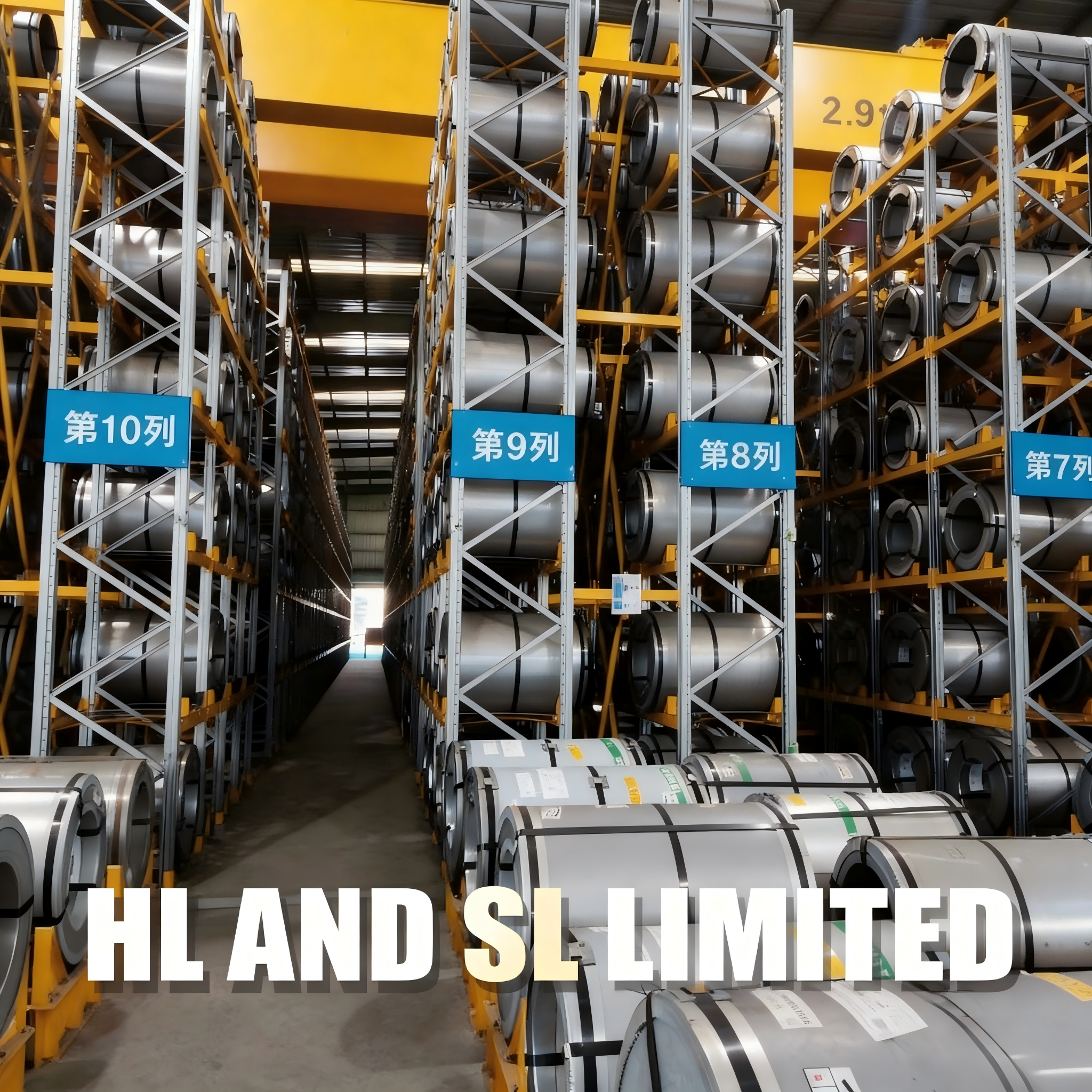
Field evidence: more than ten years of operation in two transformer markets
Long-term claims are only as strong as the installations behind them. Two documented cases frame the reliability discussion in operational terms.
In Mexico, a transformer manufacturer used these grades for the iron cores of power transformers, converter transformers, and special engineering transformers worldwide. The project involved batch supply covering complete power transmission and distribution transformer manufacturing, with an annual business scale of approximately USD 500 million. The material has been in use for over ten years with stable operation verified, and the collaboration was described as establishing a model in which users become each other's partners in the industrial chain.
In Brazil, the electrical equipment manufacturer WEG has used the material for local manufacturing of power transformers and distribution transformers since 2010. The application covered large-scale deployment across Brazil, stable operation has been verified for over ten years, and the material met local grid energy efficiency standards and low-carbon transformation requirements. Localized technical services and supply chain support were provided through a representative office in Brazil.
For a buyer at the evaluation stage, these cases answer one specific question: whether a supplier's composition discipline has survived more than a decade of commercial supply in markets with strict efficiency requirements. They do not, by themselves, prove performance in every application — which is why grade-level parameters and batch documentation still have to be checked for each project.
Coating and processing: where reliability can still be lost
Composition determines what the material can do; processing determines how much of that potential reaches the core. The documented processing scope covers strip cutting, fixed-length flat cutting, and slitting, with coating options that include organic coatings (temperature resistance ≤ 180°C), inorganic coatings (up to 800°C), and semi-organic coatings, alongside the laser-scribed R series and heat-resistant HS series.
The practical implication is a matching exercise. A coating selected without reference to the downstream stress-relief annealing temperature can erode the benefit of a low-loss Hi-B grade. Cutting and stacking likewise introduce mechanical stress that grain-oriented material does not fully recover from on its own. Coating type should be confirmed against the transformer manufacturer's annealing and impregnation process, not only against the steel grade.
Certification and documentation: what "UL certified electrical steel" really covers
Most electrical steel evaluations eventually reach a compliance checkpoint. The documented quality-control path here is three-layered: origin inspection at the factory (full-process random inspection and batch inspection); a material certificate or warranty certificate issued with the goods together with batch inspection reports; and third-party testing through CMA/CNAS laboratories where a project requires it.
On certification scope — including the frequent question about UL certified electrical steel — the useful principle is that recognition attaches to a defined product scope, not to the phrase "electrical steel". A certificate is relevant only if it names the exact grade, thickness, coating system, and manufacturing site being purchased. Buyers should therefore:
- request the certificate for the specific grade and coating on the purchase order, not a generic portfolio certificate;
- confirm that the certificate holder matches the legal entity supplying the material, or that documentation of authorization exists;
- cross-check the coating type against the project's thermal process — organic coatings in this portfolio are rated to ≤180°C, inorganic coatings up to 800°C, with semi-organic options between them;
- require batch inspection reports with each shipment, and third-party CMA/CNAS reports where the specification calls for them.
Reading the supplier shortlist for long-life Hi-B supply
At the evaluation stage a shortlist is only useful if the criteria are comparable. The table below sets out the questions that separate a supplier able to sustain a program from one able to fill a single order.
| Evaluation criterion | What to verify | Documented position |
|---|---|---|
| Grade coverage across thin gauges | Range of Hi-B grades and thicknesses available as one continuous supply | 14 Hi-B grades documented from 18-65 to 23Q100, spanning 0.18 mm, 0.20 mm, 0.23 mm, and 0.27 mm |
| Composition design disclosure | Silicon range, Al/Mn additions, impurity control, inhibitor requirement by grade | Per-grade material specifications; C, S, N strictly controlled; MnS and AlN inhibitors required in 27Q095–27Q120 |
| Measured versus guaranteed data | Whether batch values are provided alongside catalogue limits | 23Q080 documented at a ≤ 0.80 W/kg limit with measured values of 0.76–0.78 W/kg |
| Processing control | In-house cutting, coating options, annealing compatibility | Thickness 0.18–0.35 mm, widths 800–1250 mm; strip cutting, flat cutting, slitting; organic, inorganic, and semi-organic coatings |
| Capacity and lead time | Monthly throughput, MOQ, delivery patterns | 4,000 t per month; MOQ 25 t; 3–7 days stock or urgent, 15–20 days regular, 30–45 days bulk export |
| Quality documentation | Inspection regime and third-party testing | Origin inspection (full-process random and batch), batch inspection reports with goods, material/warranty certificate, CMA/CNAS third-party testing |
| Verified field record | Years in service, market conditions met | Mexico transformer manufacturer: batch supply, ~USD 500 million annual business scale, over 10 years stable operation; Brazil WEG: since 2010, over 10 years, meeting local grid efficiency standards |
| Regional support | Local technical and supply-chain assistance | Export markets include Mexico, Brazil, Italy, UAE, India; representative office in Brazil providing localized technical services and supply chain support |
| Upstream tier | Source of the material behind the supply | Authorized agent of China Baowu Steel Group, plus integration of private-mill export resources for grade and price matching |
Two reference points help calibrate that table. Third-party market research (MarketsandMarkets) identifies Baosteel (China Baowu), POSCO, and Nippon Steel as the top three global producers of high-grade electrical steel — the tier that sets the high-grade benchmark. HL AND SL LIMITED's position is different and complementary: as an authorized agent of China Baowu Steel Group it sits downstream of one of those producers while also integrating private-mill resources, and third-party trade records (Export Genius) list its export shipments of grain-oriented silicon steel under HS 72261101 to markets including Mexico and Sri Lanka. Neither point is a performance claim; together they describe where the material actually comes from.
Limitations and trade-offs buyers should price in
Reliability arguments are only credible when their boundaries are stated.
- "Hi-B" is not a uniform performance class. Within the portfolio documented here, B8 ranges from ≥ 1.75 T (23Q100) to ≥ 1.91 T (27Q095 and 27Q100), and iron loss limits run from ≤ 0.65 W/kg (18-65) to ≤ 1.20 W/kg (27Q120). Long-life scope statements must name grades.
- Catalogue values are limits, not averages. The 23Q080 example shows margins exist but vary, so batch data is needed to plan efficiency compliance with confidence.
- A multi-mill sourcing model carries a consistency cost. Integrating several mills widens grade and price flexibility, but composition windows can differ between mills. Buyers who need identical behaviour across a decade of deliveries should fix the material design — composition window and inhibitor system — not only the grade name.
- Hi-B is more process-sensitive than conventional grain-oriented (CGO) steel. The induction advantage (B8 from ≥ 1.86 T to ≥ 1.91 T across this portfolio) comes with tighter downstream requirements: thin-gauge, high-induction material is less forgiving of rough handling, cutting stress, and mismatched annealing.
- Certification is documentation, not performance. No certificate replaces measured P1.7/50 and B8 values on a batch report.
Market trend analysis
Three verified data points frame the direction of the market.
Supply is expanding. China's electrical steel production reached 16.1 million tonnes in 2024, a 5.4% year-on-year increase (Chinese Society for Metals, via MarketReportsWorld).
Export flow is rising faster than production. China's export volume of grain-oriented electrical steel (GOES) reached 393,200 mt in the first half of 2025, up 16.0% year-on-year (SMM). For buyers this means more sourcing options — and more reason to evaluate documentation rather than availability.
Demand composition is shifting. Non-grain oriented electrical steel consumption for the automotive sector, specifically EVs, accounted for over 34% of total demand in 2024 (Precedence Research). Oriented grades remain tied to grid and industrial transformer programs, where asset life and efficiency compliance keep attention on sustained magnetic performance rather than first-year values.
The pattern across these signals is consistent: as volume grows, the differentiator moves from whether material can be supplied to whether the same material design can be supplied repeatedly, with evidence.
Future outlook
Between 2026 and 2033 the global electrical steel market is projected to grow at a 5.5% CAGR to USD 47.0 billion (Grand View Research). Growth of that scale in grid and industrial equipment puts long-life material decisions under closer scrutiny, and three developments are likely to follow.
First, composition disclosure will move from technical annexes into commercial documents, because buyers now compare composition windows as readily as loss values. Second, measured batch data will carry more weight than catalogue limits in efficiency-compliance planning, particularly where transformers must meet grid efficiency standards across their service life. Third, certification and documentation scope will be checked grade by grade: requests for UL certified electrical steel, alongside IEC and ASTM references, will increasingly be matched against the exact grade, coating, and manufacturing site on the purchase order rather than accepted as portfolio-level statements.
For suppliers, the practical response is unchanged — hold the design, document the batch, and make the evidence accessible. That is what turns a decade of stable operation into something reproducible rather than coincidental.
The full Hi-B range from 18-65 to 23Q100, together with processing and coating scope, is compiled in the HL AND SL LIMITED product brochure.
FAQ
How do controlled impurities in Hi-B electrical steel affect long-term core performance?
Hi-B steel is iron with approximately 3.0%–3.2% silicon, plus additions of Al and Mn, while impurities such as C, S, and N are strictly controlled; some grades additionally require inhibitors such as MnS and AlN. Impurity control and inhibitor design are what allow the intended grain orientation to form and remain stable. Because iron loss (P1.7/50) and flux density (B8) are outcomes of that design, keeping the inputs stable is what keeps magnetic behaviour stable over the transformer's service life rather than only at commissioning.
Which Hi-B grades are available from 18-65 through 23Q100, and what separates them?
Fourteen grades are documented across four thicknesses: 0.18 mm (18-65), 0.20 mm (20-65, 20R070), 0.23 mm (23R075, 23Q080, 23Q085, 23Q090, 23Q095, 23Q100), and 0.27 mm (27Q095, 27Q100, 27Q105, 27Q110, 27Q120). They differ in guaranteed iron loss (≤ 0.65 W/kg up to ≤ 1.20 W/kg at P1.7/50), flux density (B8 from ≥ 1.75 T to ≥ 1.91 T), designation type (R series laser-scribed, Q series), and documented inhibitor requirements in the 0.27 mm family. Selection depends on the loss budget of the transformer design and the downstream cutting and annealing process.
What is the practical difference between 0.18 mm and 0.27 mm Hi-B grades for long-life transformer cores?
Thin-gauge grades prioritise loss: 18-65 at 0.18 mm and 20-65 at 0.20 mm are both documented at P1.7/50 ≤ 0.65 W/kg. The 0.27 mm grades 27Q095 and 27Q100 are documented at the highest induction in the portfolio, B8 ≥ 1.91 T, which supports core designs where excitation and core volume matter. The 0.23 mm grades sit between these positions. Thinner material is also more sensitive to handling and cutting stress, so the choice should be made against the design's loss budget and the manufacturer's annealing process, then confirmed with batch data.
How can a buyer verify that a supplier sustains the same Hi-B quality over years, not just one batch?
Four checks are practical. First, require batch inspection reports with each shipment, plus the material certificate or warranty certificate. Second, confirm the origin inspection regime — full-process random inspection and batch inspection at the factory. Third, request third-party CMA/CNAS testing where the specification demands it. Fourth, compare measured values against guaranteed limits rather than accepting limits alone; grade 23Q080, for example, is documented with a ≤ 0.80 W/kg limit and measured values of 0.76–0.78 W/kg. Field records — more than ten years of stable operation in Mexico and with WEG in Brazil since 2010 — provide the long-term reference point, while fixing the material design in the contract keeps deliveries comparable over time.
Is Hi-B electrical steel UL certified?
Certification of this kind is scope-specific rather than product-name-specific. A buyer should request the certificate that names the exact grade, thickness, coating system (organic rated to ≤180°C, inorganic up to 800°C, or semi-organic), and manufacturing site being purchased, and should confirm that the certificate holder is the entity supplying the material. Independently, batch inspection reports and CMA/CNAS third-party test reports should accompany the shipment. Note that IEC 60404-8-4 and ASTM A677 address cold-rolled non-oriented electrical steel strip and sheet, so oriented Hi-B projects should state the applicable grade standard explicitly in the contract. Certification documents and measured P1.7/50 and B8 values serve different purposes and should both be reviewed.