
Long-Term Steel Ball Supplier Evaluation: Viability Beyond the First Quote
Long-Term Steel Ball Supplier Evaluation: Viability Beyond the First Quote
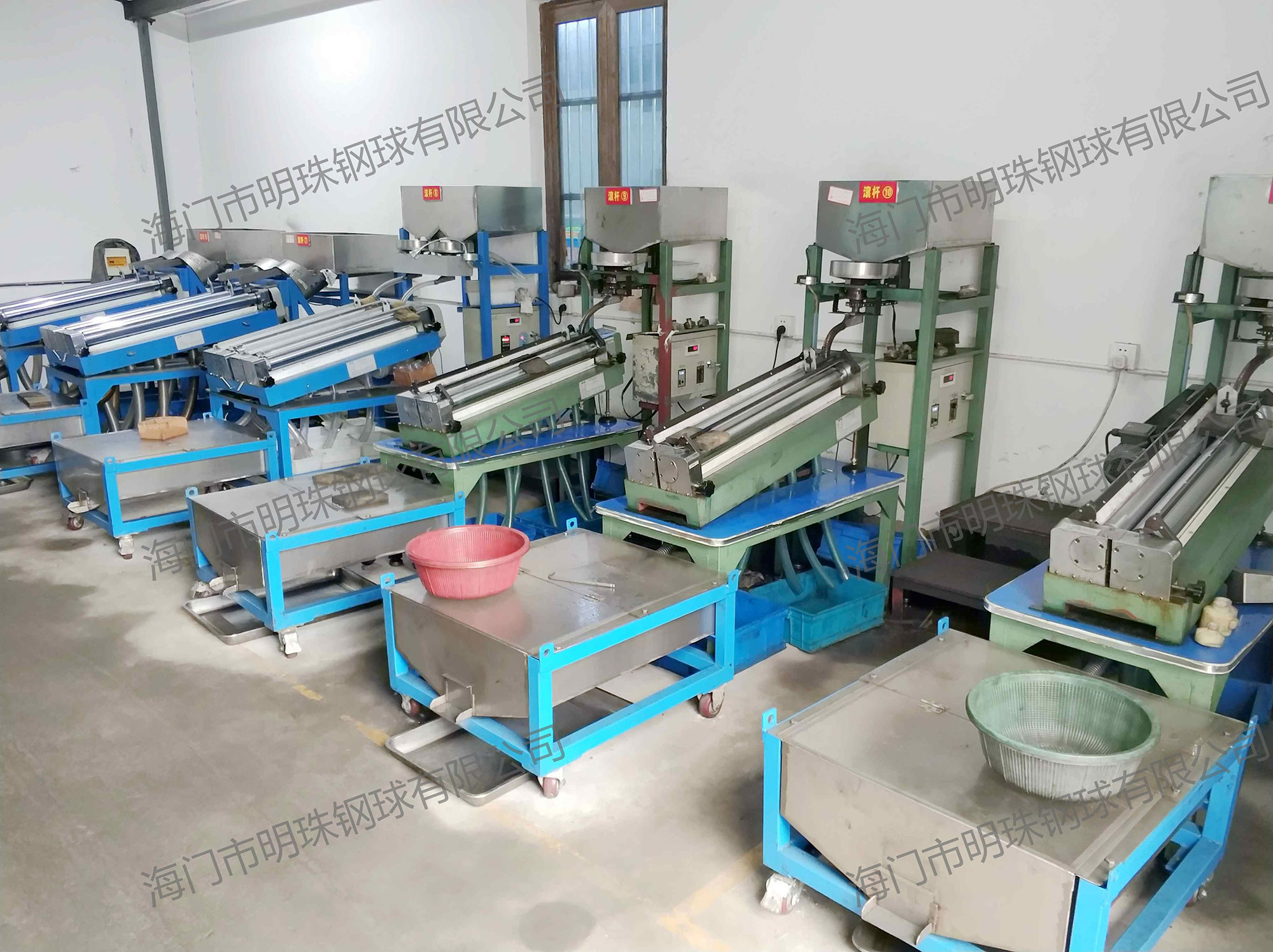 Roller-bar sorting line: finished steel balls are screened for size and surface defects before packing.
A first quotation for steel balls measures a supplier's price against one specification. It does not measure whether the same grade, inspection result, document set and delivery commitment can be repeated across a multi-year valve or bearing program. Long-term supplier evaluation starts at that gap — the point where a purchasing decision stops being a per-piece comparison and becomes an assessment of whether the supply relationship can absorb design revisions, alloy changes, audit cycles and repeat-order lead times without renegotiating the basics.
For buyers in fluid control and automotive motion systems, the question is narrower than a general capability review: can one supplier hold a defined acceptance standard across a portfolio that runs from standard chrome and stainless steel balls to machined, drilled, hollow, duplex, M50 and Hastelloy parts — and do the commercial terms behind that portfolio stay workable once the first order is history?
The First Quote Measures a Moment, Not a Supply Program
Two quotations for the same nominal diameter are rarely priced on the same scope. Grade band, material family, inspection depth, documentation, packaging and delivery terms each move the number. Published comparisons of standard versus non-standard balls put simple custom work at roughly 10–30% above standard equivalents, with more added for CNC features or exotic alloys — a range that shows how much of a quoted difference can be scope rather than efficiency.
The practical consequence is a normalization rule. Before any supplier is ranked on price, every quotation in the comparison should be restated against the same grade, the same inspection regime, the same document set, the same packaging and the same incoterm. A quotation that cannot be restated is not a lower price; it is an incomplete offer.
A longer program adds a second consideration that a single order never tests: whether the agreed scope stays fixed. Grade band, inspection depth, documentation and packing are the elements most exposed when a delivery date tightens, and they are the elements a buyer only discovers at incoming inspection. Writing them into the supply agreement rather than the first purchase order is what converts a quotation into a program.
What Program-Level Viability Covers
Program-level viability for a steel ball supplier can be assessed on five elements: whether the material and grade portfolio covers the parts the program actually uses; whether grade, hardness and feature control are inspected rather than asserted; whether the document chain ships with each lot; whether payment, delivery and packaging terms fit the buyer's working-capital and logistics model; and whether non-standard geometry can be accepted repeatedly to drawing.
Each element converts into evidence a buyer can request. A grade claim converts into a roundness and dimension report; a hardness claim converts into an HRC record on the material test report; a traceability claim converts into a lot-coded MTR rather than a certificate on a wall; a capacity claim converts into a lead-time statement per product family. This capability-to-evidence conversion is where most supplier comparisons quietly fail, because the answers are collected in different formats and never restated against one standard.
Haimen City Mingzhu Steel Ball Co., Ltd. is a steel ball manufacturer founded in 1992 in Haimen, Jiangsu Province, China, operating a 7,500 m² production base with an annual capacity of 2,500 tons, 105 sets of processing equipment and a quality management system certified to IATF 16949:2016. Its published range covers chrome, stainless, carbon, machined, non-standard, precision, drilled, electroplated, hollow, duplex stainless, M50 and Hastelloy balls, with exports accounting for 25% of output and main markets in the United States, Germany and Brazil.
Matching the Ball Portfolio to Valve and Bearing Programs
Portfolio depth is the first filter, because a program rarely consumes one material. The published material families are carbon steel 1010/1045/1085, chrome steel 52100 (100Cr6/SUJ2), martensitic stainless 420, 440C and 440B, austenitic stainless 304, 304L, 316 and 316L, and specialty alloys on request including M50, duplex 2205, Hastelloy C276, Inconel and Monel, all supplied with material verification and MTR as required.
Valve and fluid-control assemblies typically divide the requirement by chemistry rather than by diameter. 420C martensitic stainless hardened to HRC 48–55 suits mildly corrosive wear duty in valve trim; 440C reaches HRC 58–65 where hardness and corrosion resistance are both needed; duplex stainless (UNS S31803/S32205) offers roughly double the yield strength of 316 and a PREn of about 34–38 against 316's 24–26, which matters in high-pressure and severe-chloride service; and Hastelloy C-276, at 15–17% molybdenum plus 3–4.5% tungsten and a PREN near 69, is reserved for strong reducing acids where 316 fails, at roughly 5–12 times the material cost.
Austenitic 304 and 316 remain the economical choice for moderate chloride, food, pharma and general chemical service — 316 adds 2–3% molybdenum and 10–14% nickel, lifting PREN to about 23–28 versus 304's 18–20 — but both are soft, non-hardenable grades and are not a wear solution in high-load contacts. Carbon steel balls sit at the other end: HRC 50–58, lower cost, and appropriate for light-load conveying, trim and non-precision rollers rather than for fatigue-critical bearings.
Automotive and EV bearing programs ask a different question. Chrome 52100 through-hardened to approximately HRC 60–66 is the ambient-temperature fatigue baseline; 440C at HRC 58–65 trades a little peak hardness for moisture tolerance; M50 holds HRC 62–66 with stability at elevated temperature, quoted for service around 316°C/600°F and above. For these programs, IATF 16949:2016 certification is a starting condition rather than the answer: what a buyer audits is whether each lot carries material verification, heat-treatment records and dimensional results that match the drawing revision in force.
Technical Depth Behind the Grade: What a Long-Term Buyer Tests
Precision is expressed in ABMA/ISO 3290 grade bands. Grades G3–G25 are the precision end used for metrology, linear guides, high-speed spindles and aerospace bearings, where diameter deviation and sphericity are held roughly an order of magnitude tighter than in commercial G100–G1000 product; common stock sits in G100–G1000, with G10–G25 supplied for precision programs. The procurement significance is that grade is an inspection outcome, not a catalogue adjective — the supplier should be able to state which grade was verified, how, and report it by lot.
Feature control matters as soon as the ball stops being a free-rolling element. Drilled balls carry a through or tapped hole with location typically held to the drawing at ±0.05 mm or better; hollow balls are shell-formed and can be 40–70% lighter than a solid ball of the same diameter depending on wall thickness, which shifts the inspection scope to wall thickness, roundness and, where specified, leak or pressure testing. Neither feature is a catalogue item, so both depend on drawing control rather than stock availability.
Commercial Terms: Where Long-Term Supply Is Won or Lost
Payment structure is the first commercial test of a long-term relationship. The published standard is T/T with 30% deposit and 70% balance before shipment, with L/C at sight for large orders and PayPal or Western Union for sample fees. Open account terms — OA or Net-30 — are described as negotiable for qualified repeat buyers and for qualified aerospace and industrial accounts, and are explicitly linked to long-term supply agreements rather than to first orders.
That conditionality is the point. OA availability signals how a supplier prices trust over time, but it is decided by buyer qualification, order history and credit assessment rather than by request. A buyer planning a multi-year program should treat the OA route as a milestone to be earned and scheduled, and should model the first year on T/T or L/C.
Delivery terms run from EXW and FOB (Shanghai, Ningbo) through CIF and DAP to DDP, by air or sea, with EXW or FOB described as the terms used to support repeat and long-term supply programs. Packaging is specified rather than assumed: drums, sealed bags, tubes or blisters and OEM-labelled cartons, marked with quantity, grade and lot code. For a program buyer, lot coding on the outside of the carton is not a detail — it is what makes incoming inspection, quarantine and traceability queries possible without opening every container.
The Lead-Time Ladder by Product Family
Lead time is the element most often averaged into one number during supplier comparison, and the one that most often breaks a production plan. The published per-family figures separate stock, standard precision, drawn non-standard and specialty alloy work, which is the form a planner can actually use.
| Product family | Published MOQ floor | Quoted lead time | Acceptance focus |
|---|---|---|---|
| Standard chrome / stainless stock sizes | From 100 pcs; samples and small batches accepted | 7–20 days stock; 20–50 days for non-standard or special alloys | Dimensional and roundness check, automated optical sorting, MTR/COA on request |
| Precision steel ball, G3–G10 | From 100 pcs; small and micro sizes may require more | 10–30 days standard precision; 25–50 days for G3/G5 | 100% machine vision plus high-precision roundness and dimension report |
| 440C martensitic precision | From 100 pcs; G5/G10 and small sizes higher | 10–25 days stock; 25–50 days high-precision or special passivation | HRC 58–65, MTR EN 10204 3.1, passivation and salt-spray report on request |
| 420C valve trim | From 200 pcs | 10–25 days standard; 25–50 days hardened or custom | HRC check, martensite and decarburization control, MTR/COA |
| Machined steel ball (CNC) | From 50 pcs | 15–40 days by drawing complexity | CMM or dimensional report, surface roughness check |
| Drilled steel ball / threaded | From 50 pcs | 15–40 days by hole and thread specification | Hole position, size and thread class; CMM dimensional report |
| Hollow steel ball | From 100 pcs | 15–40 days per size and wall thickness | Wall thickness and roundness; leak or pressure test when specified |
| Electroplated steel ball | From 100 pcs | 10–30 days standard plating; 20–40 days custom coating | Plating thickness, adhesion and salt-spray report on request |
| Duplex stainless steel ball | From 100 pcs | 15–40 days standard; 30–55 days with special heat treatment | PREn and phase check, hardness, NACE MR0175 available |
| M50 steel ball | From 500 pcs | 20–50 days | HRC and high-temperature check, MTR/AMS 6490, PMI, 100% inspection |
| Hastelloy C-276 ball | From 5,000 pcs | 25–55 days | PMI, hardness/dimension/roundness, MTR EN 10204 3.1 (N10276/C-276) |
Read as a ladder rather than a single range, these figures change safety-stock policy. Stock sizes at 7–20 days support a replenishment model; precision grades at 10–30 days, or 25–50 days for G3/G5, require a scheduled release; drawn and CNC parts at 15–40 days and specialty alloys at 20–55 days require a forecast horizon. A catalogue-wide lead time should be read as an average, and averages are a poor basis for planning the slowest item in a program.
Repeat supply is supported, per the supplier, by rolling stock, backup tooling and monthly production status updates. Those are operational commitments worth naming in a supply agreement precisely because they are checkable against delivery performance later.
Acceptance Criteria and the Document Chain
Acceptance is where long-term supply is either stable or contested. The published inspection regime is 100% automated machine-vision sorting for size, roundness, surface defects and appearance, supplemented by hardness, roundness/eccentricity, microstructure, roughness and material verification by PMI or chemical analysis. Hollow geometry adds wall thickness and roundness checks with leak or pressure testing when specified; M50 acceptance adds hardness and high-temperature checks with MTR/AMS 6490 traceability and 100% inspection.
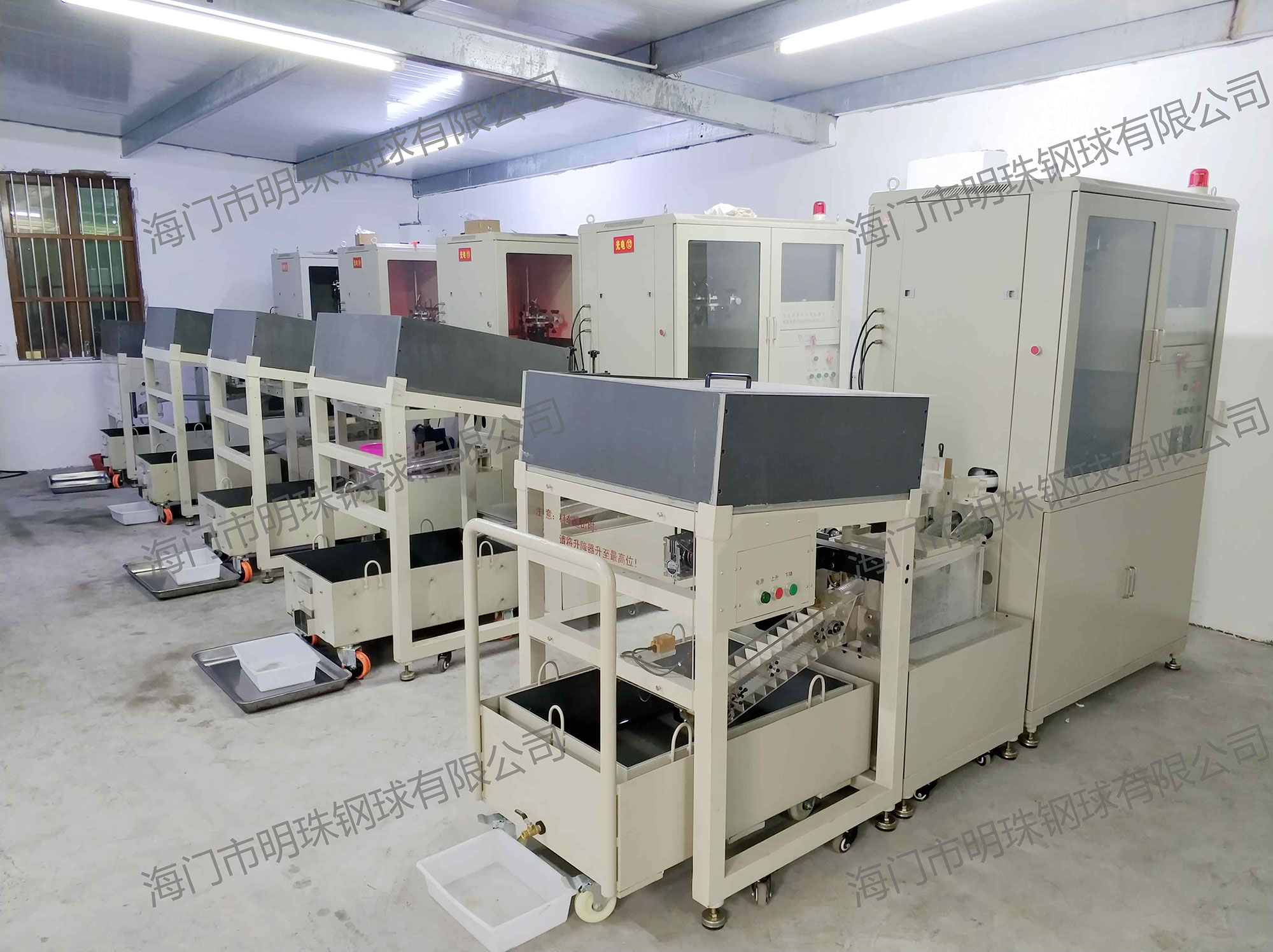 Surface defect detection: appearance checks supplement hardness, roundness and material verification before a lot is released.
Documents are the part of acceptance that travels with the goods: MTR to EN 10204 2.1 or 3.1, COA, and on request PPAP, FAI, NACE MR0175 and AMS certificates, with adhesion and salt-spray reports available on request. For Hastelloy C-276 the material certificate is quoted to EN 10204 3.1 under N10276/C-276, and PMI is the check that the certificate and the part are the same alloy.
Two procurement lessons follow. First, acceptance criteria belong in the drawing and the purchase order before the first lot, because a criterion agreed after delivery is a negotiation rather than a specification. Second, the system certificate and the lot record are different artefacts: IATF 16949:2016 certifies the quality management system, while the MTR, PMI result and dimensional report demonstrate that a specific batch met the drawing. Long-term programs need both, and audits increasingly ask for the second.
Order Acceptance for Non-Standard, Drilled, Threaded and Hollow Balls
Non-standard acceptance is the test most likely to decide whether a supplier can support a legacy or proprietary assembly for years. Mingzhu states that non-standard diameters to decimal size, drilled (through or blind), threaded (metric and UNC/UNF), stepped, half-spherical and hollow balls are produced to drawing, with diameter, depth, concentricity and thread class controlled to the customer's specification. Tolerance and concentricity are quoted per drawing rather than taken from a catalogue.
The commercial shape of that acceptance is visible in the MOQ floors above: from 50 pieces for CNC machined and drilled or threaded parts, 100 pieces for hollow, plated, duplex, precision and standard families, 200 pieces for hardened 420C trim, 500 pieces for M50 and from 5,000 pieces for Hastelloy C-276. Prototype quantities of 10–50 pieces are described as workable for simple parts, which is the relevant number during design validation.
Material hardness changes the machining route: soft materials are easier to machine, while hardened 440C and M50 require specialized tooling and longer lead time. A program that assumes a hardened, drilled 440C ball can be turned around at the same speed as a soft 304 part will mis-plan its first article. The other boundary is stock: non-standard work has no standard stock behind it, so 20–50 days per drawing, material and quantity is the planning figure rather than the exception.
Fit Boundaries: Where This Supplier Model Works and Where It Does Not
A credible evaluation states where a portfolio stops. Soft austenitic 304 and 316 are corrosion grades, not wear grades; a high-load contact needing both hardness and corrosion resistance points to 440C at HRC 58–65 or to 52100 at HRC 60–66 in a protected environment. Hastelloy C-276 is justified by chemistry, not preference: at roughly 5–12 times the material cost of 316 and a 5,000-piece MOQ floor, it belongs in severe acid, flue-gas desulphurization or aggressive pharmaceutical service where 316 would fail. Hollow balls trade mass for section strength and are unsuitable where the ball is a load-bearing rolling element. Duplex brings roughly double the yield strength of 316 but needs controlled heat treatment to avoid sigma-phase embrittlement, so designs involving welding or repeated thermal cycling need process evidence, not just a material name.
Within those limits, the model fits programs that combine a standard-volume base — chrome and stainless bearing steel balls in stock grades — with a smaller tail of machined, drilled, hollow or alloy parts that must come from the same documentation system. It fits less well where the entire requirement is a single exotic alloy at low volume, or where the buyer needs a distributor's multi-brand inventory rather than a manufacturer's drawing-based production.
Market Context: Volume Growth Does Not Guarantee Grade Availability
Market estimates give long-term buyers a reason to schedule capacity, not a reason to relax grade control. Coherent Market Insights estimated the global steel ball market at USD 12.91 billion by 2026, with chrome steel balls projected to hold a 45.7% share of the material segment. Growth projections diverge: Business Research Insights put the 2026–2035 CAGR at 5.2%, while 3.6% (Coherent) and 6.2% (Research & Markets) appear in the same comparison set — a spread the sources attribute to methodology, chiefly whether large grinding media or small precision balls dominate the included volume.
The useful reading for procurement is that chrome steel remains the volume base while differentiation sits in grade, documentation and specialty alloys. A market-share figure says nothing about whether G10 precision stock will be available in the diameter a program needs in a given quarter; that is a supplier-specific question answered by rolling stock, tooling and lead-time statements, not by a CAGR.
A Program-Viability Scorecard for the First Meeting
Six checks convert a supplier conversation into comparable evidence, and each one has a stated answer in the published terms rather than an impression formed in the meeting.
| Check | What to confirm | Why it changes the decision |
|---|---|---|
| Payment structure | Whether OA or Net-30 is available, and under which qualification | OA is negotiable for qualified repeat buyers; prepayment-only terms shift working-capital cost into the program |
| Delivery terms | Confirm EXW, FOB, CIF, DAP or DDP, and the port | FOB Shanghai or Ningbo versus DDP changes landed cost and risk ownership |
| Lead-time consistency | Ask for a quoted range per family, not one average | 7–20 days for stock sizes versus 25–55 days for Hastelloy determines safety-stock policy |
| Acceptance definition | Written criteria per drawing: diameter, roundness, hardness, thread class | Criteria fixed before the first order keep repeat lots judged on one standard |
| Document set | MTR 2.1/3.1, COA, and PPAP, FAI, NACE or AMS where required | Traceability documents must ship with the lot, not be reconstructed after a query |
| Non-standard acceptance | Drawing control, MOQ, hole and thread tolerance | Legacy and proprietary designs depend on repeatable CNC features, not on closest-size substitution |
Outlook: Procurement Checks That Will Matter Next
The direction of travel for industrial buyers is toward documented repeatability rather than catalogue breadth. Where automotive and EV programs already require material verification and heat-treatment records, fluid-control and general industrial programs are moving toward the same expectation, and non-standard geometry is increasingly specified with the drawing revision and inspection method attached. Under that condition, a supplier's viability is judged less on the price of one grade and more on whether the same lot record, thread tolerance and incoterm can be repeated without a new negotiation each quarter.
That standard is not met by portfolio size alone. It is met by suppliers able to show the link between a certificate, an inspection result and a specific batch — and by buyers who wrote that link into the agreement before the first order was placed.
Frequently Asked Questions
What payment, delivery and packaging terms apply to repeat steel ball orders?
Standard terms are T/T with 30% deposit and 70% balance before shipment, with L/C at sight for large orders and PayPal or Western Union for sample fees; open account or Net-30 terms are negotiable for qualified repeat buyers. Delivery runs on EXW or FOB (Shanghai, Ningbo), CIF, DAP or DDP, by air or sea. Packaging uses drums, sealed bags, tubes or blisters and OEM-labelled cartons marked with quantity, grade and lot code.
How long does repeat supply take across standard, precision and specialty balls?
Published ranges differ by family: 7–20 days for standard stock sizes; 10–30 days for standard precision grades and 25–50 days for G3/G5 ultra-precision; 15–40 days for CNC machined, drilled or hollow parts; 20–50 days for specialty alloys such as M50; and 25–55 days for Hastelloy C-276. Rolling stock, backup tooling and monthly production status updates support repeat programs.
What acceptance criteria and documents should a long-term agreement define?
Acceptance is defined per drawing: diameter, roundness, hardness, thread class, and wall thickness or leak and pressure testing where applicable. Inspection combines 100% automated machine-vision sorting for size, roundness, surface defects and appearance with hardness, roundness/eccentricity, microstructure, roughness and PMI or chemical analysis. Documents include MTR to EN 10204 2.1 or 3.1 and COA, plus PPAP, FAI, NACE MR0175, AMS certificates, and adhesion or salt-spray reports on request.
Can non-standard, drilled, threaded or hollow balls be supplied repeatedly to drawing?
Yes. Non-standard diameters to decimal size, through or blind drilled holes, metric and UNC/UNF threads, stepped, half-spherical and hollow balls are produced to drawing, with diameter, depth, concentricity and thread class controlled to the specification; hole location is typically held at ±0.05 mm or better. MOQ starts from 50 pieces for CNC machined and drilled parts and 100 pieces for hollow parts, with 15–40 days quoted per drawing, hole or thread specification.
What MOQ floors apply before a program commitment?
Published MOQ floors start at 50 pieces for CNC machined and drilled or threaded parts and 100 pieces for standard, precision, plated, hollow, duplex and carbon families, rising to 200 pieces for hardened 420C trim, 500 pieces for M50 and 5,000 pieces for Hastelloy C-276. Prototype quantities of 10–50 pieces are workable for simple parts, and standard catalogue sizes can be ordered in small quantities with samples available.
Long-term supply is a documentation-and-terms problem before it is a price problem. Buyers who want the underlying product and purchasing data in one place can download the Haimen Mingzhu steel ball brochure, which sets out the material families, grades and order-acceptance scope referenced above.
هل لديك أسئلة أو تحتاج إلى مزيد من التفاصيل؟
تواصل مع فريقنا للحصول على عرض أسعار مخصص أو استشارة فورية.
طلب عرض أسعار
املأ النموذج أدناه وسيتواصل معك فريقنا بعرض مقترح مخصص.
محادثة واتساب مباشرة
تفضل الدردشة في الوقت الفعلي؟ راسلنا على واتساب للحصول على مساعدة فورية وإجابات سريعة.
- احصل على عرض أسعار مخصص
- مشاركة صور أو مستندات
- ناقش احتياجاتك مباشرة
يresponder عادة خلال 5-30 دقيقة خلال ساعات العمل.