
Long-Term Supplier Evaluation: A Sustainability Scorecard for Electronic-Grade Chemicals
Electronic-grade chemicals are purchased against a specification, but they are kept in production against a track record. The global electronic materials and chemicals market was estimated at USD 78.5 billion in 2025, with Asia Pacific accounting for 66.6% of revenue, while global semiconductor materials revenue reached USD 73.2 billion in the same year. That combination of scale and regional concentration explains a procurement problem that datasheets do not solve: how to judge whether a supplier will still deliver the same qualified material in year three as it did in the qualification batch.
A long-term supplier sustainability scorecard is one practical answer. It converts a vague question — “can we rely on this partner for years?” — into weighted, evidence-based criteria that a buyer can re-check on a fixed cadence. This reference sets out four dimensions that matter most for electronic-grade chemicals: raw material sourcing stability, process scalability, environmental and regulatory compliance, and multi-year product consistency. Two well-documented materials are used as test cases throughout: 4-Vinylbenzyl chloride (CAS 1592-20-7), a core monomer for negative photoresist resins, and BPADA (CAS 38103-06-9, C31H20O8), the dianhydride monomer behind high-transparency polyimide films.
The product and capability facts referenced here come from Jiangsu Juming Chemical Technology Co., Ltd. — known as Jumingchem — an electronic chemicals manufacturer established in 2017 in Jiangsu Province, China, which produces 5-Methyl-1H-benzotriazole, the vinylbenzyl chloride (VBC) isomer family and BPADA, operates R&D, pilot and GMP cleanroom facilities, and exports to the USA, Korea, Japan, Taiwan region, Germany, Southeast Asia and the Middle East.
Why the Evaluation Window Lasts Longer Than the Contract
Qualification of a new electronic-grade monomer consumes engineering time that never appears on a purchase order. Once a material is written into a photoresist formulation or a polyimide film process, changing the source means repeating analytical correlation, process-window confirmation and, in many cases, customer-side re-verification. The cost of that work usually dwarfs any per-kilogram saving a buyer could negotiate by switching suppliers annually.
This is why the failure mode buyers fear is not a rejected shipment — it is a slow drift. A photoresist resin inherits its behaviour from the repeatability of its monomer. If the isomer ratio of a vinylbenzyl chloride lot shifts, or if the metal-ion content of a BPADA batch moves, the downstream film or resin may still pass an incoming test while behaving differently in the customer's process. High optical transparency in a polyimide film, for example, is not a property that can be inspected into the product at the end of the line; it is determined by monomer purity upstream.
A supplier sustainability scorecard addresses a different question from a purchase specification. The specification asks whether the material is correct today. The scorecard asks whether the supplier's sourcing, process, compliance and analytical systems will keep producing the same material for the life of the customer's product programme.
What the scorecard is — and what it is not
The scorecard is a buyer-side instrument. It is weighted, it is evidence-based, and it is re-run periodically rather than completed once. It is not a price negotiation tool, and it does not replace incoming quality control: a high score predicts continuity, it does not certify the next container.
The Four-Dimension Sustainability Scorecard
The four dimensions below cover the failure modes that most often break long-term electronic-grade supply relationships. The weightings shown are an illustrative starting point for a photoresist-monomer or polyimide-monomer programme; buyers should adjust them to the material's criticality and to how much of their own qualification cost is at risk.
| Dimension | What it predicts | Evidence to request | Warning signal |
|---|---|---|---|
| 1. Raw material sourcing stability (illustrative weight 25%) | Whether the qualified grade can be reproduced without changing feedstock, isomer source or production site | Isomer purity limits (for example ≥99% para-VBC), feedstock sourcing structure, multi-site production footprint, batch traceability coding | Undisclosed isomer ratio ranges; single-site feedstock dependency; ratio changes explained as “commercial grade variation” |
| 2. Process scalability (illustrative weight 25%) | Whether pilot performance survives commercial volume without a route change that invalidates qualification | Pilot and commercial route description, continuous-flow capability, monthly capacity, lead time, minimum order quantity | Capacity claims with no pilot evidence; commercial chemistry that differs from the validated route |
| 3. Environmental and regulatory compliance (illustrative weight 20%) | Whether the supplier can legally and continuously serve the target market and the target activity | Certificate list with numbers, issuing authorities, scopes and validity dates; third-party audit reports | Scope of a certificate does not match the SKU or the activity; documents past their stated validity |
| 4. Multi-year product consistency (illustrative weight 30%) | Whether lot-to-lot variation stays inside the window the customer qualified | Electronic-grade metal impurity limits in the ppb range, testing regime, analytical systems (ICP-MS, HPLC, GC), historical batch trend data | COA-only verification; no multi-year analytical trend; appearance or colour control not specified |
Table 1. Four-dimension sustainability scorecard for electronic-grade chemical suppliers. Weightings are illustrative and should be set by the buyer's own risk exposure.
Dimension 1 — Raw Material Sourcing Stability
For the VBC family, sourcing stability is largely an isomer question. Jumingchem supplies pure para-isomer at ≥99% p-VBC, pure ortho-isomer at ≥98%, pure meta-isomer at ≥98%, and custom ortho/meta/para mixtures, alongside the mixed product Vinylbenzyl chloride (CAS 30030-25-2). The four materials — 4-Vinylbenzyl chloride (CAS 1592-20-7), 1-(chloromethyl)-2-vinylbenzene (CAS 22570-84-9), 1-(chloromethyl)-3-vinylbenzene (CAS 39833-65-3) and the mixed grade — behave differently in downstream polymerisation, so the ratio a customer qualified is itself part of the specification.
Sourcing stability therefore has three verifiable components. The first is specification discipline: are isomer limits stated numerically in the contract, or only described qualitatively? The second is production footprint. Jumingchem operates a total factory area of 78,000 m² together with a 3,000 m² R&D centre, a 300 m² pilot plant and a 600 m² GMP workshop, with multiple production bases across China and cooperative production facilities in Kaifeng and Gansu, and a stated total capacity of 60,000 tons per year. Multiple sites reduce single-point interruption risk but also raise the question of inter-site comparability — a point buyers should test directly. The third component is traceability: batch traceability coding, combined with a COA that carries custom test items, allows a customer to link a delivered lot back to its production record years later.
An export ratio of 70% across the USA, Korea, Japan, Taiwan region, Germany, Southeast Asia and the Middle East is a useful but secondary signal. It indicates the supplier routinely handles cross-border documentation and temperature-controlled logistics, which matters for materials such as 4-Vinylbenzyl chloride that require storage at 2–8 °C.
Dimension 2 — Process Scalability Without Re-Qualification
Scalability is often scored as a capacity question, when it is really a continuity question. If a supplier moves from a validated pilot route to a different commercial chemistry, the qualification evidence no longer describes the commercial product. The useful evidence is therefore about how the scale-up is executed, not how large the tanks are.
Jumingchem's stated production model is built on microchannel and continuous flow technology, with a declared production range from gram-level R&D quantities to hundred-ton industrial volumes, a monthly capacity of 5,000 tons, a minimum order quantity of 1 kg and lead times of 7–30 days. The 300 m² pilot plant and 600 m² GMP workshop sit between development and commercial supply, and the company describes a full-chain CDMO model covering process R&D, pilot scale-up and commercial production, supported by a 25-engineer R&D team.
Order magnitude is a practical test of scalability. Disclosed engagement records include annual supply of approximately 5 tons of ArF photoresist monomer, 8 tons of OLED intermediates and photoresist monomers, 3 tons of KrF photoresist monomer and PAG, and annual procurement of 20 tons of photoinitiators and high-purity electronic additives. A buyer scoring a supplier should ask whether comparable volumes have actually been run, and over how many consecutive years, rather than whether the reactor nameplate suggests they could be.
Where process efficiency supports the sustainability score
Sustainability in this scorecard is not limited to certificates. Continuous flow and microchannel processing are associated with measurable process differences in the supplier's own comparison: approximately 25% lower raw material costs, 46% less solid waste and 68% shorter production time relative to the alternatives compared, with in-house microchannel reactor manufacturing reducing equipment procurement and maintenance costs. For a buyer, the relevance is indirect but real: a route with lower waste and shorter cycle time is less exposed to regulatory pressure and feedstock volatility over a multi-year agreement.
Dimension 3 — Environmental and Regulatory Compliance
Compliance evidence ages faster than buyers expect. Certificates carry defined scopes and expiry dates, and a document that is valid today may not be valid at the next contract review. The table below lists current Jumingchem compliance documents as disclosed, with their reference numbers, authorities and validity windows.
| Document | Reference number | Issuing authority | Validity |
|---|---|---|---|
| ISO 9001 Quality Management System Certification | NOA2505548 | NOA Testing & Certification Group Ltd. | Issued 2025-07-25; valid to 2028-07-24 |
| Hazardous Chemicals Operation License Scope: sale of hazardous chemicals within the permitted scope (excluding storage) | Su(Xi)WHJJZ(Lingang)02864 | Jiangsu Jiangyin Lingang Economic Development Zone Management Committee | Issued 2024-06-26; valid to 2027-06-25 |
| Non-pharmaceutical Precursor Chemicals Filing Certificate Scope: business operation of Category III non-pharmaceutical precursor chemicals | (Su) 3J32028100536 | Jiangyin City Emergency Management Bureau | Issued 2025-02-17; valid to 2028-02-16 |
| RoHS Environmental Protection Compliance Certification Scope: Tolyltriazole | CKEYS250724006 | Guangdong KEYS Testing Technology Co., Ltd. | Issued 2025-07-24 (RoHS 2.0 Directive (EU) 2015/863 and (EU) 2017/2102) |
| SGS Factory Audit Report Scope: photoinitiator, boride, UV absorber, corrosion inhibitor, water treatment agent, organic intermediate, electronic chemicals, custom chemicals | QIP-ASI254749 | SGS | Issued 2025-05-23; valid to 2026-05-23 |
Table 2. Disclosed compliance documents. Scopes and validity windows are reproduced as issued and should be re-checked at each contract review.
Three practical lessons follow from this table. First, scope discipline: the RoHS certification covers Tolyltriazole, not every product in the portfolio, so a buyer sourcing 4-Vinylbenzyl chloride or BPADA cannot treat that document as blanket coverage for the SKU being purchased. Second, activity coverage: the hazardous chemicals licence covers sale within a permitted scope and expressly excludes storage, which matters if a buyer wants consignment stock, vendor-managed inventory or a local buffer warehouse. Third, renewal cadence: the SGS factory audit report carries a validity window of 2025-05-23 to 2026-05-23, which is a useful reminder that a factory audit is a periodic document. A buyer running a scorecard now should request the current audit cycle rather than rely on a report whose stated validity has passed.
The reverse is also true. The ISO 9001 certificate is valid to 2028-07-24, the hazardous chemicals licence to 2027-06-25 and the precursor chemicals filing to 2028-02-16, so those items do not need monthly attention — they need a calendar entry. A functioning scorecard distinguishes between documents that must be re-verified at every shipment and those that must be re-verified on a dated cycle.
Dimension 4 — Multi-Year Product Consistency
Consistency is where electronic-grade supply is won or lost, and it is the dimension with the most measurable evidence. Jumingchem classifies purity as industrial, high purity and electronic grade, with the electronic grade characterised by ppb-level metal ion content and total metal impurities below 10 ppb. Metal ion content is controlled to customer specification for elements such as Na, Fe and Cu, and all products undergo 100% testing supported by ICP-MS, HPLC and GC detection systems.
Disclosed engagement outcomes illustrate what that control is expected to deliver over time. In one recorded programme, metal impurities below 10 ppb met SEMI Grade 4 standards and supported a customer's verification by a top-tier Korean wafer fab into mass production. In another, metal impurities below 20 ppb with particle control at ≤0.1 μm accompanied a 3% yield improvement in OLED panel production. A further distribution relationship is recorded as four consecutive years of stable cooperation with a 100% repurchase rate and REACH compliance, while a domestic substitution case reports imported suppliers being replaced with an approximately 25% cost reduction and delivery lead time shortened from 8 weeks to 4 weeks.

Figure 1. R&D and analytical control facilities underpin the consistency dimension of a supplier scorecard. Image: Jumingchem.
These are supplier-disclosed records, not independently audited findings, and a disciplined evaluation treats them accordingly. The scorecard question is not “did the supplier once achieve <10 ppb?” but “can the supplier show the batch trend that proves the value stayed there?” Buyers should request multi-year analytical data on the specific grade being purchased, then verify it against their own incoming measurements during the first year of the agreement.
Applying the Scorecard to Specific Electronic-Grade Materials
The same four dimensions produce different evidence requirements depending on the material. The table below maps the main Jumingchem electronic-grade products to the scorecard dimension each one stresses most.
| Material | CAS | Primary role | Scorecard pressure point |
|---|---|---|---|
| 4-Vinylbenzyl chloride | 1592-20-7 | Core monomer for high-performance negative photoresist resins, including E-beam photoresist; advanced packaging dielectric materials; homogeneous ion-exchange membranes; ultra-pure water resins; chelating resins | Isomer ratio plus ppb-level metal control; the material is a colourless to pale yellow liquid (density 1.083 g/mL at 25 °C, boiling point 229 °C) requiring storage at 2–8 °C |
| 1-(chloromethyl)-2-vinylbenzene | 22570-84-9 | Core monomer for negative photoresist resins; advanced packaging dielectric materials | Ortho-isomer purity at ≥98% and lot-to-lot ratio stability |
| 1-(chloromethyl)-3-vinylbenzene | 39833-65-3 | Core monomer for negative photoresist resins; advanced packaging dielectric materials | Meta-isomer purity at ≥98% and consistency of the delivered isomer fraction |
| Vinylbenzyl chloride (mixed) | 30030-25-2 | High-purity resin synthesis and semiconductor manufacturing intermediates; ion-exchange membranes and chelating resins | Stability of the mixed ortho/meta ratio where a fixed ratio has been qualified |
| BPADA | 38103-06-9 | Key synthetic monomer for high-performance polyimide, 5G high-frequency and high-speed flexible copper-clad laminate (FCCL), OLED flexible substrate and aerospace lightweight composites | Purity and appearance consistency (white to slightly yellow crystalline powder, C31H20O8, MW 520.49, melting point 184–187 °C) for films requiring high optical transparency |
| 5-Methyl-1H-benzotriazole (5M-BTA) | 136-85-6 | Copper and copper-alloy corrosion inhibitor; anti-fading agent in photomasking resins; used in semiconductor cleaning formulations | Volume continuity against corrosion-inhibitor demand, plus appearance control of the white powder (C7H7N3, MW 133.15, melting point 80–82 °C) |
Table 3. Material-specific pressure points across the four scorecard dimensions.
Two of these relationships deserve emphasis. BPADA is described as a precursor for polyimide synthesis and is used in polyimide films for flexible display substrates, where optical transparency is a defining performance property — which makes the consistency dimension far more important than unit price in a multi-year agreement. 5-Methyl-1H-benzotriazole, meanwhile, sits in a corrosion inhibitor market estimated at USD 8.79 billion in 2024, where supply continuity across a broad industrial customer base is the buyer's main exposure.
Purchasing Terms and Acceptance Criteria: Turning the Score Into a Contract
A scorecard only affects supply continuity if its conclusions are written into commercial documents. The practical way to do this is to convert each scored dimension into a clause, and each clause into a document the supplier must issue with every shipment.
| Acceptance item | What to fix | Supporting document |
|---|---|---|
| Identity and assay | CAS number and assay range for the qualified grade | COA per lot |
| Isomer ratio | Numeric limits, for example ≥99% para-VBC, or a fixed custom ortho/meta/para ratio | COA with custom test items |
| Metal-ion limits | Element-specific limits (Na, Fe, Cu and others) to customer specification; electronic grade below 10 ppb total metal impurities | ICP-MS data on the COA |
| Particle control | Where relevant to the downstream process, for example ≤0.1 μm in OLED-related supply | COA or third-party report |
| Appearance | Colour and form, for example colourless to pale yellow liquid for VBC grades or white to slightly yellow crystalline powder for BPADA | COA |
| Packaging | Liquids: 25 kg HDPE drum, 200 kg steel-plastic composite drum, 1000 L IBC. Solids: 25 kg fibre drum with PE liner, 25 kg kraft paper bag, 500 kg bulk bag. Temperature-controlled or UN-certified dangerous goods packaging on request | Packing list and transport documentation |
| Documentation set | COA with custom test items, MSDS in English or Spanish, custom labelling, third-party reports from SGS, BV or Intertek | Document package per shipment |
| Traceability | Batch traceability code carried on both label and COA | Batch code record |
| Change control | Notification and re-validation before any change of route, production site or feedstock | Contractual clause |
| Pre-shipment sampling | Sample confirmation, particularly for the first lots of a new contract cycle | Sample release record |
Table 4. Acceptance criteria framework for a multi-year electronic-grade supply agreement.
On the supplier side, several of these mechanisms already exist as services rather than as negotiated exceptions: COAs with custom test items and formats, MSDS in multiple languages, custom label design, third-party testing through SGS, BV or Intertek, pre-shipment sample confirmation, a batch traceability coding system, and custom blend and formulation. A buyer's task is to bind them into the agreement and then re-check them — quarterly for operational items such as lead time and documentation completeness, annually for the full scorecard, and immediately whenever a certificate reaches its expiry window.
Scorecard Model vs Traditional Spot Purchasing
Spot purchasing is not irrational; it is simply scored on different criteria. The comparison below shows where the two models diverge for electronic-grade materials.
| Criterion | Transactional / spot purchasing | Scorecard-based long-term model |
|---|---|---|
| Selection basis | Unit price and availability at the time of order | Weighted technical, compliance and consistency evidence |
| Quality assurance | Incoming inspection of each delivery | Incoming inspection plus supplier analytical trend data and change control |
| Risk exposure | Re-qualification every time the source changes | Continuity planning based on production footprint and capacity evidence |
| Documentation | Invoice and basic COA | COA with custom test items, MSDS, third-party reports, batch traceability codes |
| Cost view | Lowest visible unit cost per order | Qualification cost amortised across the agreement term |
| Review rhythm | Event-driven, after a problem appears | Quarterly operational review and annual full re-score |
Table 5. Structural differences between spot purchasing and a scorecard-based long-term model.
The scorecard model has real boundaries. It consumes administrative effort and requires enough analytical literacy to read an ICP-MS line on a COA or to question a particle-control claim; buyers without in-house analytical capability may need third-party testing, which adds cost. For genuinely one-off or very low-volume needs — the 1 kg minimum order quantity exists partly to serve development and sampling work — a full weighted scorecard is disproportionate, and a simplified document and identity check is adequate. Most importantly, a score is a prediction, not a guarantee: incoming quality control remains mandatory, and supplier-reported outcomes such as yield improvements or repurchase rates should be treated as supplier records unless the buyer independently validates them.
Market Signals Shaping Long-Term Agreements
Three published figures frame the commercial context. The electronic materials and chemicals market was estimated at USD 78.5 billion in 2025, with Asia Pacific holding 66.6% of revenue; global semiconductor materials revenue reached USD 73.2 billion in 2025; and the electronic-grade photoresist market was estimated at USD 4.96 billion in 2024. A related signal comes from the benzyl chloride market, where Japan holds approximately 6% share with a focus on high-purity and specialty applications — evidence that mature markets concentrate on purity-critical segments rather than volume.
The procurement implication is straightforward. When two-thirds of electronic materials revenue sits in one region, buyers outside it carry longer logistics chains, more regulatory interfaces and greater temperature-control exposure. That makes compliance scope, batch traceability and lead-time evidence — the 7–30 day range disclosed by Jumingchem, for example — part of the sustainability score rather than logistical footnotes.
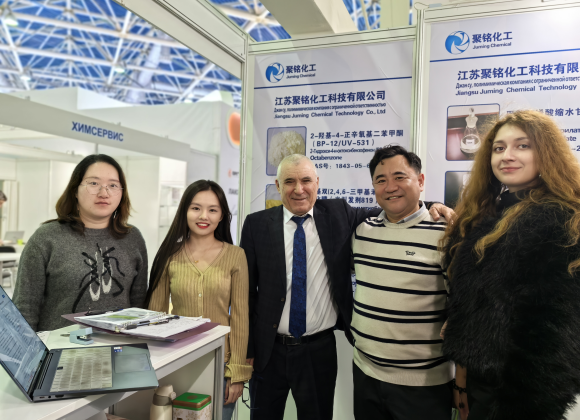
Figure 2. Supplier evaluation increasingly happens through direct technical exchange, where documentation scope and analytical capability can be questioned in detail. Image: Jumingchem.
Future Outlook
The direction of travel is toward scorecards that behave as living documents rather than annual paperwork. Three developments are already visible in supply practices. First, evaluation is increasingly tied to certificate validity windows and analytical trend reviews, which means the review calendar is set by document dates as much as by commercial cycles. Second, production footprint is becoming a scored technical item: Jumingchem's two R&D and pilot-scale bases, together with cooperative production facilities in Kaifeng and Gansu, illustrate how suppliers are presenting multi-site capacity as continuity evidence rather than as a marketing claim. Third, supplier selection is moving earlier in the development cycle — collaborative development projects for 5G polyimide materials and EUV photoresist monomers place the evaluation question at the formulation stage, before volumes exist, which is precisely when a CDMO model covering process development, pilot scale-up and commercial production becomes the relevant capability to assess.
For buyers of electronic-grade chemicals, the practical consequence is that the scorecard should be designed now, weighted to the material at risk, and reviewed on a fixed cadence. The alternative — discovering that a qualified material has drifted after the customer has already qualified the end product — is the most expensive outcome in this category.
FAQ: Long-Term Supplier Evaluation
1. Which criteria should carry the most weight in a long-term scorecard for electronic-grade chemical suppliers?
Weight the dimensions according to the failure mode the buyer cannot absorb. For photoresist monomers and polyimide monomers, product consistency and raw material sourcing stability typically carry the heaviest weight, because drift in isomer ratio or metal-ion content invalidates qualification work that has already been paid for. Process scalability follows, since a route change between pilot and commercial production produces the same effect. Environmental and regulatory compliance usually functions as a gate: a missing or out-of-scope document prevents shortlisting regardless of technical strength.
2. How often should a long-term supplier scorecard be re-evaluated?
A workable cadence is quarterly for operational indicators such as lead time, documentation completeness and deviation reports, an annual full re-score across all four dimensions, and an event-driven review triggered by certificate expiry, site or route changes, or a customer audit. Certificate dates make this concrete: the ISO 9001 certification (NOA2505548) is valid to 2028-07-24, the hazardous chemicals operation licence (Su(Xi)WHJJZ(Lingang)02864) to 2027-06-25, and the non-pharmaceutical precursor chemicals filing certificate ((Su) 3J32028100536) to 2028-02-16, while the SGS factory audit report (QIP-ASI254749) covers 2025-05-23 to 2026-05-23 — an example of why audit documents need a renewal calendar rather than a one-time check.
3. How can a buyer verify that vinylbenzyl chloride isomer composition remains stable over multiple years?
Start with numeric isomer limits rather than descriptive grades. Jumingchem states a pure para-isomer at ≥99% p-VBC, pure ortho-isomer at ≥98% and pure meta-isomer at ≥98%, with custom ortho/meta/para mixture ratios available for development projects. These limits should be written into the acceptance criteria and confirmed per lot through a COA with custom test items. Pair that with the batch traceability coding system, which allows a delivered lot to be linked back to its production record, and with periodic inbound analytical checks by the buyer during the first year of supply.
4. Why does the scope of a compliance certificate matter as much as the certificate itself?
Because almost every compliance document is bounded. The RoHS environmental protection compliance certification CKEYS250724006 covers Tolyltriazole specifically, not every SKU in the portfolio. The hazardous chemicals operation licence Su(Xi)WHJJZ(Lingang)02864 covers sale of hazardous chemicals within the permitted scope and excludes storage, which becomes relevant if the buyer plans consignment stock or a local buffer warehouse. The SGS factory audit QIP-ASI254749 covers a defined product list including photoinitiator, boride, UV absorber, corrosion inhibitor, water treatment agent, organic intermediate, electronic chemicals and custom chemicals. Matching scope to the exact product and activity being purchased is therefore a basic screening step.
5. What acceptance criteria should be written into a multi-year supply agreement for electronic-grade materials?
At minimum: identity and assay tied to the CAS number of the qualified grade; numeric isomer limits where relevant; element-specific metal-ion limits (Na, Fe, Cu and others) set to customer specification, with electronic grade below 10 ppb total metal impurities; particle control where the downstream process requires it; appearance and form; agreed packaging including temperature-controlled or UN-certified dangerous goods options; a per-lot COA with custom test items plus MSDS and third-party reports from SGS, BV or Intertek; batch traceability codes on label and COA; a change-control clause requiring notification and re-validation before any route, site or feedstock change; and pre-shipment sample confirmation at the start of each contract cycle.
Reference note. Product and capability facts in this article are drawn from Jumingchem (Jiangsu Juming Chemical Technology Co., Ltd.) disclosures, including its 5-Methyl-1H-benzotriazole, VBC isomer and BPADA product lines, purity grades, packaging options, quality-control systems and compliance documents. Market figures are attributed to the third-party sources named in the text.
A downloadable product catalogue with specification tables and packaging details is available here: Jiangsu Juming Chemical Technology catalogue (PDF).