
Long-Term Supplier Evaluation: Pharma Packaging Machine
Pharmaceutical packaging equipment is a capital asset whose support requirements outlive the purchase decision. A blister cartoning line commissioned in one budget year is normally expected to run across several product generations, several packaging formats and several compliance review cycles. At the decision stage, the meaningful question is therefore not only what a machine can do, but which supplier can still support it years later.
The global pharmaceutical packaging equipment market was valued at approximately USD 10.71 billion in 2024, according to SkyQuest Technology, while the pharmaceutical blister packaging machine segment is projected to reach USD 2.57 billion by 2025 (Custom Market Insights). Published estimates differ depending on whether primary and secondary equipment are counted together, but the operational implication is stable: every line added to the installed base creates a support obligation measured in years rather than months.
Why Supplier Continuity Belongs in the Decision, Not After It
Most comparison work at the decision stage concentrates on machine attributes: output per minute, format range, drive architecture, footprint and price. These are legitimate criteria, but they describe the machine at the moment of acceptance. They say comparatively little about how a supplier behaves in year three, when a spare part is needed, a format is changed, or a deviation has to be documented.
The failure modes of a weak long-term supplier choice rarely appear at commissioning. They appear later: an unavailable spare, an unreachable service engineer, a documentation set that no longer matches the installed configuration, or a training gap that turns a routine format change into a full shift of downtime. None of these are visible in a quotation.
Treating continuity as a purchasing criterion changes the shape of the evaluation. Instead of asking whether a machine is good, the buyer asks what evidence shows that the supplier will still be able to support that machine.
What Long-Term Supplier Evaluation Actually Measures
A practical evaluation framework can be reduced to five evidence categories. Each one is checkable before the order, and each one maps to a cost that would otherwise appear after installation.
1. Engineering continuity
Whether the supplier owns its own design work, how large the engineering function is, and whether design output is formally recorded. This determines the supplier's ability to answer technical questions, modify a station, or reproduce a component years after delivery.
2. Manufacturing and delivery continuity
Factory scale, annual production volume and export experience. A supplier that ships regularly to several regions already operates documentation, packing, installation and commissioning routines for cross-border projects.
3. Acceptance and documentation evidence
Which tests are performed, which records are issued, and whether the buyer can witness acceptance. This is the evidence trail that later supports internal qualification and audits.
4. In-machine risk control
What the line does by itself when something goes wrong: detection, alarm, stop, rejection, parameter locking and fault logging. A machine that detects and isolates its own faults is cheaper to operate over a decade than one that depends on an operator noticing the problem first.
5. Post-installation support
Installation and commissioning, operator training, spare-parts supply, remote technical support and preventive maintenance. This category usually carries the largest hidden cost in a pharmaceutical packaging investment, and it is the least often quantified in a quotation comparison.
How One Manufacturer's Published Facts Map to These Categories
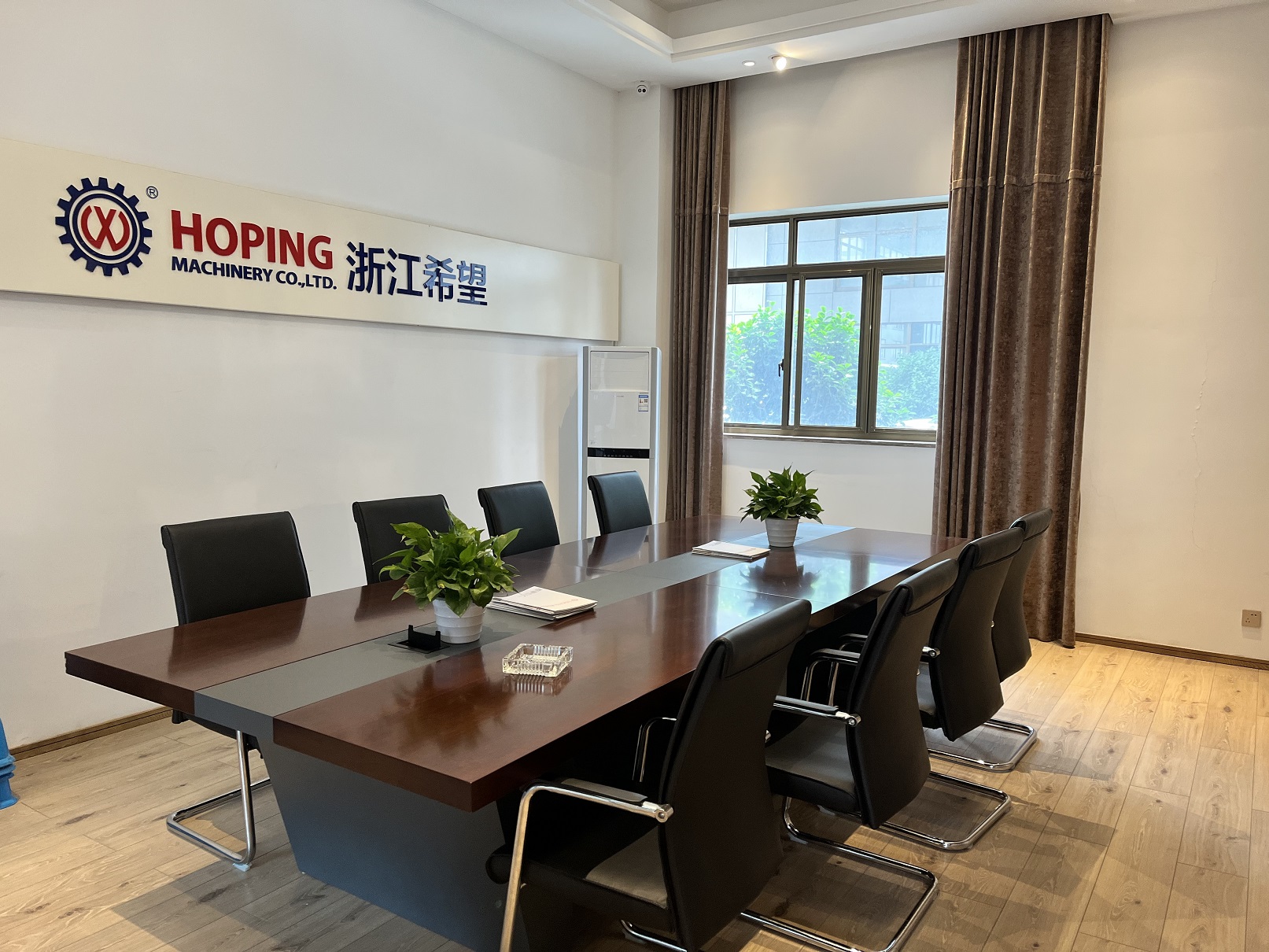
Zhejiang Hoping Machinery Co., Ltd. (HOPING) is a pharmaceutical packaging machinery manufacturer founded in 2001 and based in Ruian City, Zhejiang Province, China. The company designs and builds blister packaging machines, cartoning machines, case packing machines and end-of-line packaging machines, and its product scope also includes flow wrappers, bundlers, palletizers and complete blister packaging lines.
Its published company facts can be mapped directly onto the five evaluation categories above, which is how a buyer should read them.
| Evaluation category | Published evidence |
|---|---|
| Engineering continuity | 56 engineers in the R&D function; 26 invention patents, 70 utility patents and 4 appearance patents; 10 PCT-protected filings covering Europe, Russia, Germany and Italy; 28 software copyrights. |
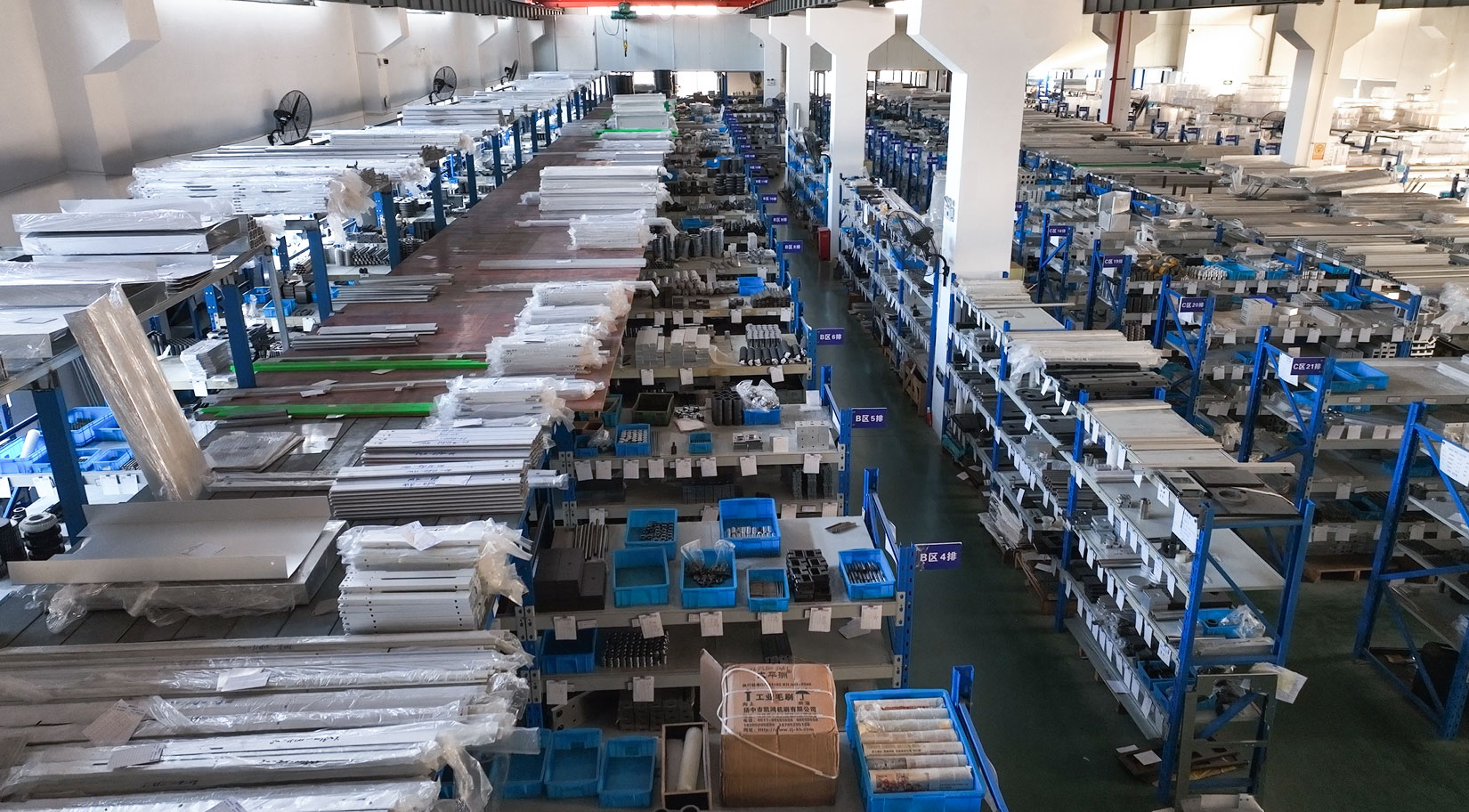
| Manufacturing and delivery | 28,800 ㎡ of factory space; more than 300 employees; annual output of 500 units; an export ratio of 25% across Southeast Asia, the Middle East, Eastern Europe, South America and Africa. |
| Compliance posture | CE certification and ISO 9001 / ISO 14001 certification. |
| Acceptance and testing | Samples and packaging materials confirmed at the early project stage; the solution is designed around the actual blister and carton formats; no-load and material tests are performed before shipment; FAT/SAT acceptance is applied, and customer witness acceptance can be arranged for key projects. |
| Post-installation support | Installation, commissioning, operator training, spare-parts supply and remote technical support. |
Read as evaluation evidence rather than as claims, these items answer the questions that normally only surface after a breakdown: who owns the design, who can reproduce a part, who answers a technical question, and what documentation exists to prove it.
What an Integrated Blister-Cartoning Line Contains
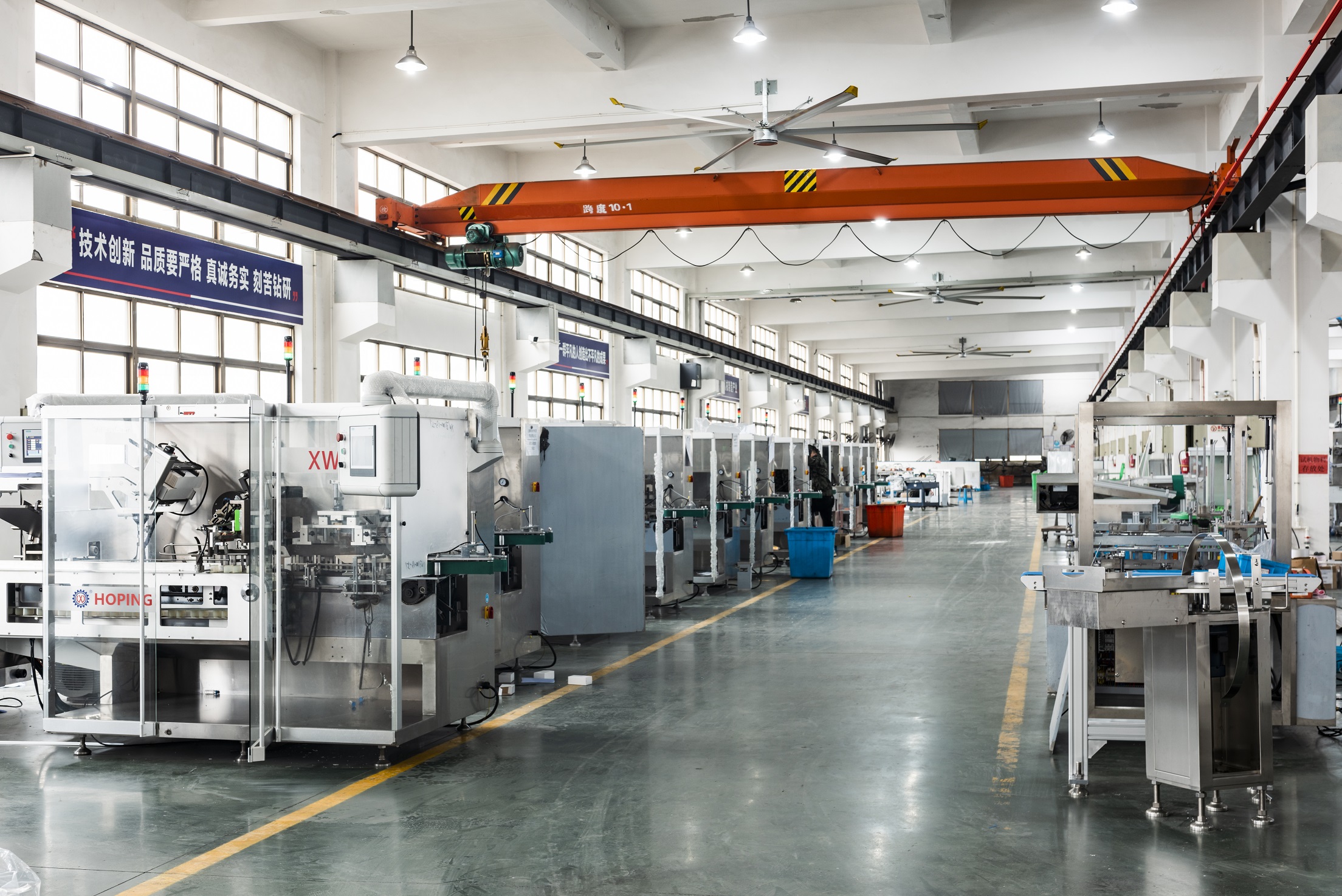
An integrated blister cartoning line combines blister packaging, blister transfer, leaflet handling, carton opening, insertion, inspection and rejection, and downstream connection into one automated process. Compared with a traditional blister machine plus manual transfer plus a standalone cartoner, the integrated arrangement reduces manual intervention and removes several intermediate handling steps where product, leaflet or carton can be lost.
The representative DHL1000/5H model can reach up to 1000 blisters per minute and 500 cartons per minute. Those are configuration figures rather than a guarantee of plant output, because actual output depends on product format, quantity per carton, materials and process conditions.
The line is fully servo driven, which supports motion synchronization and operating efficiency compared with conventional non-full-servo arrangements. For lifecycle purposes, the control architecture matters more than headline speed: centralized control, modular stations, alarm indication and parameter management determine how quickly a fault is located and how repeatable a format change becomes.
Energy consumption is not published as a fixed figure for this configuration. Where energy cost forms part of the business case, it should be measured on site against actual output, running hours and configuration rather than inferred from the drive type.
Evidence Before the Order: What Should Be on the Table
A long-term evaluation is only as good as the evidence collected before the purchase order. In pharmaceutical packaging, useful evidence is specific and mostly mechanical, not commercial.
- Sample and packaging material confirmation at the early project stage.
- A solution designed according to the actual blister and carton formats.
- No-load testing and material testing before shipment.
- FAT/SAT acceptance with written records.
- Customer witness acceptance for key projects.
- SOP training covering operation and routine intervention.
These steps exist because the failure modes of a blister-cartoning line are known and enumerable: poor blister forming or sealing; missing, wrong or incomplete product feeding; missing leaflet; carton jam; coding or date-printing error; foreign-matter or contamination risk; downtime during high-speed operation; and delivery or installation risk on export projects.
The corresponding control provisions inside the machine include sensor monitoring, vision or checkweighing inspection where configured, missing-product alarms, automatic stop, automatic rejection, key-parameter locking, fault records and mechanical safety protection. A buyer evaluating long-term support should ask a supplier to walk through this list line by line. A supplier that can name its own failure modes is easier to audit than one that cannot.
Application Fit: Where This Configuration Belongs
The integrated configuration is designed for large-scale solid dosage pharmaceutical packaging and high-capacity workshops that require reduced manual contact, and for multi-format pharmaceutical packaging lines that must run stably over long production windows.
Because the product scope covers blister packaging machines, cartoning machines, case packing machines and end-of-line packaging machines, the same supplier can be evaluated for a single blister cartoning line or for a wider secondary packaging line. For buyers planning a turnkey pharmaceutical packaging line, that scope matters: fewer interfaces between vendors means fewer gaps in responsibility when a transfer station or a case packer underperforms.
Format variables change the engineering requirement in practice. A tablet blister packaging machine and a capsule blister packaging machine do not present identical feeding behaviour, and the choice between thermoformed and alu-alu blister construction changes material handling and sealing considerations. A supplier's ability to respond to those variables is a better long-term signal than a single speed figure.
Market Trend Analysis: Why Supplier Evaluation Is Becoming More Structured
Asia Pacific held the largest revenue share of the pharmaceutical packaging equipment market in 2025 at 40.7% (Grand View Research). For buyers, this is not only a sourcing statistic: it means that a large part of the global installed base depends on suppliers whose service and spare-parts networks are regional, and whose continuity therefore has to be assessed locally.
The pharmaceutical cartoning machinery segment alone was valued at USD 1.46 billion in 2024 (Fortune Business Insights). Cartoning sits downstream of blister forming, so demand for automatic cartoning machines moves with the same capacity decisions that drive blister line purchases.
Market concentration is moderate rather than absolute. The top three players, Uhlmann, IMA and Marchesini, collectively hold approximately 29% of the pharmaceutical blister packaging machine market (Market Intelligence Report), leaving a fragmented remainder of regional and specialist manufacturers. In a fragmented market, procurement decisions are increasingly justified by documented evidence rather than by brand recognition alone.
Compliance requirements reinforce this shift. ISO 15378 integrates GMP requirements for primary packaging materials, and EU pharmaceutical equipment safety is governed by Machinery Directive 2006/42/EC together with the EN 415 series for packaging machines. Compliance is not a one-time event: it creates documentation obligations that continue for as long as the machine is installed, which makes supplier continuity a compliance question as well as a service question.
Integrated Line versus Traditional Configuration: Comparison and Boundaries
| Dimension | Traditional configuration: blister machine + manual transfer + standalone cartoner | Integrated blister-cartoning line |
|---|---|---|
| Manual intervention | Multiple manual transfers between stations | Combined into one automated process, reducing manual intervention |
| Handling steps | More intermediate handling and product exposure | Fewer transfers between stations |
| Efficiency and synchronization | Standalone machines run independently | Fully servo drive supports motion synchronization and operating efficiency |
| Initial investment | Lower entry cost, especially for semi-automatic equipment | Usually higher than standalone or semi-automatic equipment |
| Operating cost structure | Labour, transfer and quality-risk costs spread across stations | Helps reduce labour, transfer, management and quality-risk costs in large-scale continuous production |
| Maintenance model | Machine-by-machine maintenance planning | Centralized control and modular stations support routine maintenance |
The integrated model is not universally the better choice, and buyers should treat several points as genuine boundaries rather than as details to be optimised later.
- Initial investment is usually higher than for standalone or semi-automatic equipment.
- Output depends on product format, quantity per carton, materials and process conditions; the published speed of the representative model is not a plant-level guarantee.
- Automation reduces manual intervention but does not remove the need for operator training, spare-parts management and preventive maintenance.
- Energy performance should be measured on site rather than assumed from the drive architecture.
- The configuration is designed for large-scale, high-capacity production. Buyers with very small batch sizes or very frequent format changes should test the changeover sequence against their own production schedule before committing to a high-speed integrated arrangement.
A Decision-Stage Evaluation Scorecard
| Evaluation area | Question to ask | Evidence to request |
|---|---|---|
| Engineering continuity | Who owns the design, and can it be modified later? | R&D headcount, patent and software copyright records, design documentation practice. |
| Manufacturing and delivery | Can the supplier deliver and support consistently? | Factory area, annual output, export ratio and export regions. |
| Acceptance and validation | What is tested, and who can witness it? | Sample and material confirmation records, no-load and material test reports, FAT/SAT protocol, witness acceptance arrangement. |
| In-machine risk control | What happens when a fault occurs? | Sensor and inspection configuration, alarm and auto-stop logic, rejection method, parameter locking, fault-log access. |
| Post-installation support | What happens in year two and year five? | Installation and commissioning scope, training plan, spare-parts list, remote support process, preventive maintenance recommendations. |
| Commercial fit | What is the total cost shape? | Quotation structure, labour and transfer assumptions, changeover time, energy measurement plan. |
The scorecard is deliberately unglamorous. Its purpose is to convert a supplier's answers into items that can be verified before signature and re-checked after installation.
Future Outlook
Three developments are likely to shape how buyers evaluate pharmaceutical packaging machine suppliers over the next few years.
- Regional capacity concentration. With Asia Pacific holding the largest share of pharmaceutical packaging equipment revenue, regional manufacturers will continue to enter shortlists that were previously dominated by European suppliers, provided they can document engineering depth and lifecycle support.
- Documentation as a competitive feature. As GMP-oriented requirements and machinery safety standards continue to apply throughout a machine's life, the ability to supply consistent records, training and spare parts becomes part of the product itself.
- Evaluation moving from machine to relationship. As integrated blister cartoning lines become more common in large-scale solid dosage production, the distinguishing question shifts from line speed to continuity: whether the supplier can keep a 1000-blister-per-minute line running at the assumption on which it was purchased.
FAQ
What is long-term supplier evaluation in pharmaceutical packaging?
It is the practice of assessing a packaging machine supplier on evidence of continuity rather than on machine specification alone. It covers engineering depth, manufacturing and delivery capacity, acceptance and documentation practice, in-machine risk control, and post-installation support such as installation, commissioning, training, spare parts and remote technical support. The purpose is to estimate the cost of owning and supporting a line over its operating life, not only the cost of acquiring it.
Which documents should a buyer request before ordering a blister-cartoning line?
The relevant records include confirmation of samples and packaging materials at the early project stage, a solution design based on the actual blister and carton formats, no-load and material test results before shipment, and a FAT/SAT acceptance protocol. For key projects, customer witness acceptance can be arranged so that the buyer observes testing directly rather than receiving a summary.
How is a pharmaceutical packaging line supported after installation?
Based on Hoping Machinery's published measures, support includes installation and commissioning, operator training on standard operating procedures, spare-parts supply and remote technical support. The company also states that preventive maintenance remains an important element of long-term line performance, which places part of the responsibility on the buyer's maintenance planning.
Does an integrated blister-cartoning line remove the need for operator training and preventive maintenance?
No. Integrating blister packaging, blister transfer, leaflet handling, carton opening, insertion, inspection and rejection, and downstream connection into one process reduces manual intervention and intermediate handling, but operator training, spare-parts management and preventive maintenance remain important. Centralized control, modular stations, alarm indication and parameter management make routine maintenance easier to organize; they do not replace it.
What are the main limitations of a high-speed integrated blister-cartoning line?
The initial investment is usually higher than for standalone or semi-automatic equipment. Output depends on product format, quantity per carton, materials and process conditions, so the representative model's speed of up to 1000 blisters per minute and 500 cartons per minute should be treated as a configuration figure rather than a plant guarantee. Energy consumption is not published as a fixed value and should be measured on site. The configuration is intended for large-scale, high-capacity production rather than for very small batches or highly fragmented format schedules.
How should automation be weighed against labour and transfer costs?
The comparison is not simply machine price against labour cost. The integrated line combines several stations into one automated process, which helps reduce labour, transfer, management and quality-risk costs in large-scale continuous production. Those savings are realized only when production volume is high enough to keep the line running near its designed configuration, which is why the volume assumption behind the investment should be documented before the order.
Conclusion
Long-term supplier evaluation does not remove commercial judgement, but it moves part of the discussion onto evidence that can be checked: design ownership, production capacity, acceptance records, fault-handling logic and the support model. Buyers who collect that evidence before signing are in a better position to hold a supplier to it afterwards.
Hoping Machinery publishes its product range and configuration information in its company catalog, which is available here: Hoping Machinery Catalog (PDF).