
Long-Term Supplier Evaluation: Will Your Bird Feeder Camera Last?
Long-Term Supplier Evaluation: Will Your Bird Feeder Camera Last?
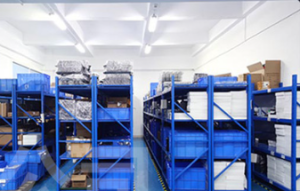
Manufacturing context matters in a long-term supplier evaluation, but it is only one evidence layer beside firmware, app and subscription support.
A bird feeder with camera is usually bought as hardware, but it is evaluated over a much longer period than the order confirmation suggests. The buyer is not only choosing a feeder, a lens and a solar panel; the buyer is choosing a supplier’s firmware practice, app continuity, subscription policy, spare-part posture and documentation quality for the years in which the product is expected to keep working. That is the difference between a single-order check and a long-term supplier evaluation.
FreeKoala Bird Feeder with Camera (model FKBF20260110) is a smart bird feeder sold under the FreeKoala brand. Its documented configuration combines a 4K UHD camera with a 160° wide-angle view, a 1.5L dual-compartment seed hopper, a bird bath and a hummingbird feeding port. It uses a 5200mAh rechargeable battery with a 3W solar panel, supports microSD recording up to 256GB, connects on 2.4GHz Wi-Fi and carries an IP66 rating. Premium AI bird identification is designed to cover more than 11,000 species, while basic alerts and local recording remain usable without a subscription. The live stream can be shared with up to 20 family members, and the product carries a 1-year warranty subject to the applicable terms.
Those facts are useful. They are not, by themselves, proof of a multi-year support outcome. The buyer’s task in the Decision to Execution stage is to turn each capability into a support question, collect evidence, and set a review cadence that can be repeated after installation.
Why the support horizon matters more than the first invoice
A camera feeder sits at the intersection of hardware, software and service. The feeder body, seed hopper and bird bath are physical parts. The camera, motion detection, alerts, AI identification, family sharing and local recording depend on firmware and an app. Premium AI and cloud storage depend on a subscription after the 1-month trial. The 5200mAh battery and 3W solar panel are long-life components whose condition affects daily operation. IP66 protects the housing, but only if the user maintains seals, drainage and feeding hygiene.
That dependency chain changes the evaluation. A buyer who checks only the box contents can miss the terms that determine year-two usability. A buyer who checks only the subscription can miss hardware wear and documentation gaps. A long-term evaluation scores all four layers together: firmware, app and family sharing, subscription stability, and serviceable hardware.
The comparison with an ordinary bird feeder is a useful boundary test. An ordinary feeder has no firmware, app account, AI service or cloud trial, so it avoids software dependency. It also does not provide live video, arrival alerts, 4K recording or AI-assisted species identification. A camera feeder is a better fit for a buyer who values those functions and is prepared to manage the dependencies. It is a weaker fit for a buyer who wants a zero-software, zero-account product. Neither choice is universally superior; the fit depends on the buyer’s tolerance for app-based support.
| Evaluation area | Single-order check | Multi-year support check | Evidence to keep |
|---|---|---|---|
| Firmware | Version at delivery | Update method, safety notes, failure recovery, end-of-support term | Dated version record and written policy |
| App and sharing | Download and pair | Phone compatibility, sharing limit, permission removal, account recovery | App version and sharing test record |
| Subscription | Trial start date | Post-trial AI and cloud terms, basic function continuity, change notice | Saved terms and renewal date |
| Hardware | Battery, solar panel, seals | Battery condition, solar exposure, replacement procedure, spare-part availability | Inspection photos and annual test notes |
| Documentation | Quick-start guide | Version-controlled support pack, warranty, maintenance and safety limits | Revision date and current contact route |
Score firmware, app continuity and subscription stability
Firmware is the first support test because it controls device performance, compatibility, stability, security and feature changes. FreeKoala’s documented method is app-based: install firmware updates through the app whenever an update becomes available, keep the app current, and install available firmware when prompted. The documentation does not require a fixed monthly update if no new version is offered. It also gives a clear safety rule: do not power off, reset, remove the battery connection or interrupt Wi-Fi while firmware is updating, and make sure the camera has sufficient charge before starting.
For a long-term evaluation, the buyer should turn that method into evidence. Ask how firmware is delivered, whether release notes are published, what happens if an update fails, and whether the supplier states an end-of-support date. The public product information summarized here does not state a fixed end-of-support date, so that term should be confirmed in writing before a multi-year purchase. A supplier that cannot answer is not automatically unsuitable, but the risk should be priced and documented.
App continuity is the second test. Family sharing is not a minor extra: the live stream can be shared with up to 20 family members, which makes the feeder a shared household or gift product. That value depends on the app continuing to work with current phones and on sharing permissions remaining manageable. Buyers should record the app version at acceptance, test one shared viewer, confirm the 20-member limit in the current app, and ask how access can be removed when a family member no longer needs it. The product information does not specify supported operating-system versions or a minimum phone age, so those are legitimate questions for the supplier rather than assumptions for the buyer.
Subscription stability is the third test, and it is often the least transparent. FreeKoala includes a 1-month free trial of cloud storage. A microSD card up to 256GB supports local recording without a monthly storage fee, and the card is sold separately. After the 1-month trial, a subscription is required if the user wishes to continue AI and cloud storage. All basic functions remain usable without a subscription, and basic bird arrival alerts do not require a mandatory subscription. Premium AI identification and cloud services may change in availability, features or pricing, so the app should be checked for current terms.
The buyer’s scoring rule should separate must-have from optional. Live viewing, basic alerts and local microSD recording are the core functions to protect. AI identification, cloud storage and related premium services are optional services that depend on the subscription. A buyer who needs species identification as a core outcome should budget for the post-trial subscription and confirm the current terms; a buyer who only needs local video and alerts can evaluate the product without treating AI as a permanent free feature. This distinction prevents a common error: assuming that a trial price, a trial feature set or a trial entitlement is the long-term policy.
Treat power, storage and IP66 as long-life components, not footnotes
The 5200mAh rechargeable battery and 3W solar panel should be treated as replaceable long-life components in the support plan. Under suitable conditions, the solar panel can help maintain the battery for up to a year without removing it for manual charging, but runtime depends on bird activity, recording frequency, live-view use, Wi-Fi signal strength, temperature and available sunlight. Cloudy weather, shade, heavy activity and frequent live viewing can reduce charging performance. USB-C charging is the backup when solar input is insufficient. A buyer should therefore track battery condition and solar exposure at audit and at annual review, and should ask the supplier for the replacement procedure and spare-part availability rather than assuming either is included.
MicroSD storage is a different kind of long-life item. The camera supports cards up to 256GB, and local recording can continue when Wi-Fi is interrupted, with recordings syncing to the phone after the connection is restored. Wi-Fi is still needed for remote live view, push notifications and real-time app access. The card is not included, and a Class 10 or higher high-endurance card is the practical choice for 4K recording. Because the card is user-supplied, it belongs in the maintenance plan as a consumable: record the card model at acceptance, check playback periodically, and replace it if recording becomes unreliable. It is not evidence of supplier spare-part support.
IP66 is the durability baseline, not a maintenance substitute. The rating means the camera housing is dust-tight and protected against powerful water jets; it does not mean the camera can be submerged or cleaned with a pressure washer. The documented operating range is -20°C to 50°C (-4°F to 122°F), which supports year-round outdoor use within that range. To preserve the baseline, the user should keep the roof, camera housing and seals correctly positioned, confirm drainage, remove wet or spoiled seed promptly, clean feeding surfaces regularly, and allow removable parts to dry completely before refilling. The camera lens should be wiped with a soft microfiber cloth, and the camera and charging electronics should not be immersed. Bird bath water should be refreshed regularly, and feeding hygiene should increase in hot, humid, rainy or heavily used conditions.
Seed freshness is part of the same support routine. Black-oil sunflower seed is a broad-appeal choice, and the 1.5L dual hopper allows two compatible seed types to be offered at once. Wet or moldy seed should be removed immediately, and feeders should not be refilled while parts are damp. These practices do not change the IP66 rating, but they protect the feeding environment and reduce avoidable maintenance calls. A supplier’s documentation quality can be judged partly by whether these routines are stated clearly, consistently and with the same safety boundaries as the product information.

Hardware evidence should be paired with written firmware, app and spare-part terms; a factory image alone does not prove a multi-year support policy.
A review cadence with evidence to collect
The practical answer is a two-stage cadence: an acceptance audit in the first 30 days, then an annual re-evaluation. The acceptance audit proves the product works as delivered and captures the baseline terms. The annual review tests whether the support terms and hardware condition still match the buyer’s needs. The same evidence set should be stored with the purchase record so that a later change can be compared with the original baseline.
| Review stage | Evidence to collect | Why it matters | Decision gate |
|---|---|---|---|
| Acceptance audit: policy | Warranty terms, firmware method, app compatibility questions, post-trial subscription terms, family-sharing limit, spare-part list and current support route | Creates a dated baseline and exposes missing written terms before reliance begins | Every core term has a dated document or written answer |
| Acceptance audit: function | Firmware and app versions, 2.4GHz connection, microSD recording and playback, shared live view, AI trial status, solar and USB-C charging, seals and first cleaning | Proves the delivered configuration and creates a comparison point for later reviews | Core functions work; open items are recorded rather than verbally closed |
| Annual review: policy | Current subscription terms, app compatibility, firmware status, documentation revision, spare-part availability and support route | Detects policy drift, undocumented dependencies and documentation that has gone out of date | Terms still fit the use case; no hidden dependency has become essential |
| Annual review: hardware | Battery runtime trend, solar panel condition, seals, mount, feeder parts, microSD replacement and cleaning record | Wear parts and maintenance determine uptime as much as software does | A maintenance or replacement plan is funded and possible |
At acceptance, the buyer should record the model, firmware version, app version, subscription start date and trial end date. Test local recording to microSD, playback, live view over 2.4GHz Wi-Fi, basic alerts and at least one family-sharing invitation. Confirm the 20-member sharing limit in the current app and record how access is removed. Check solar charging and USB-C backup, inspect the housing and seals, and perform the first cleaning routine before mounting. Save the warranty terms and the current support contact route. If any item cannot be demonstrated, record it as an open item rather than treating a verbal assurance as evidence.
The annual review should repeat the functional checks and add policy checks. Compare the current subscription terms with the terms saved at acceptance, confirm whether AI and cloud services still require a subscription after the trial, and confirm that basic functions still work without a paid plan. Check app compatibility with the phones in use, re-test local recording and sync after a Wi-Fi interruption, and re-check family-sharing access. Inspect battery runtime trends, solar panel condition, seals, mounting hardware, feeder parts and the microSD card. Request the current spare-parts list, replacement procedure and documentation revision date. If a spare part is not available, the buyer needs to know before failure, not after.
Documentation quality is a scoring criterion in its own right. A useful support pack should be version-controlled, dated and consistent across the quick-start guide, warranty, subscription disclosure and maintenance instructions. It should explain firmware updates, app pairing, sharing permissions, local versus cloud storage, cleaning and safety limits. It should also state what is not included, such as the microSD card, and what changes after the trial. The company’s public corporate brochure can be added to the documentation file as a supplier-identity reference: Corporate Brochure (PDF).
Application fit: where a multi-year support view changes the decision
In a sunny backyard with reliable 2.4GHz Wi-Fi, the support burden is mostly routine: firmware prompts, app updates, seasonal cleaning, seed freshness and an annual battery and seal check. The solar panel has a fair chance to maintain the 5200mAh battery, and local microSD recording reduces dependence on cloud storage. The buyer can treat AI identification as an optional service after the trial and keep live view, alerts and local recording as the core system.
In a shaded yard, the calculation changes. Solar charging may be insufficient for stretches of cloudy weather, and manual USB-C charging may be needed. The buyer should place the panel for several hours of direct sunlight where possible, test the Wi-Fi signal at the mounting point, and accept that live viewing and frequent recording increase power consumption. The support question is not whether solar works in every condition; it is whether the buyer has a realistic charging routine and whether the battery and panel can be maintained or replaced over the intended ownership period.
On an apartment balcony, mounting security and Wi-Fi coverage matter more than long-distance performance. The feeder supports tree, wall, fence and pole mounting, but the buyer must confirm that the chosen mount is secure and that seed debris will not create problems for neighbours or the property below. A shared live stream can be useful for family members in different locations, especially when the feeder is a gift for a bird lover. That use case raises the value of app continuity and family-sharing controls: the recipient may rely on another person for initial setup, so clear documentation and removable sharing permissions are part of the product experience.
The market signal is not a sales forecast; it is a change in buyer logic. As smart bird feeders add app accounts, AI services, cloud trials and family sharing, the credible comparison moves from a single specification sheet to a support record. Buyers should expect firmware practice, subscription terms and documentation quality to become normal evaluation criteria alongside 4K video, IP66 and solar power. That is an analytical expectation, not a claim about measured market growth.
Future outlook: what a buyer should require in writing
The forward-looking question is simple: will the product still be supportable when the buyer is no longer in the first-month trial? A supplier does not need to promise an unlimited support life to be credible. It does need to state its update method, its warranty terms, its subscription policy, its app compatibility expectations, its spare-part process and the documents that will be available at annual review. Those statements should be dated and retained with the order.
For FreeKoala, the documented strengths are concrete: app-based firmware updates when available, local microSD recording up to 256GB without a monthly storage fee, a 1-month cloud trial followed by an optional subscription for AI and cloud services, basic functions that remain usable without a subscription, a 5200mAh battery with 3W solar charging, IP66 protection, family sharing for up to 20 members and a 1-year warranty. The limits are equally important: the public information summarized here does not fix an end-of-support date or publish a spare-parts catalogue, battery runtime varies with conditions, AI identification is an aid rather than a guaranteed result, and IP66 does not permit submersion or pressure washing. A buyer who records both the strengths and the limits has a defensible long-term evaluation.
Frequently asked questions
What does long-term support mean for a bird feeder with camera?
Long-term support covers four layers: firmware updates, app and family-sharing continuity, subscription and service terms after the trial, and hardware maintenance or replacement for long-life components. A smart bird feeder can remain useful without a subscription for basic live view, alerts and local microSD recording, but AI and cloud features depend on the service terms. The buyer should evaluate all four layers, not only the delivery configuration.
How often does FreeKoala release firmware updates?
The documented method is to install firmware updates through the app whenever an update becomes available, keep the app current, and install available firmware when prompted. A fixed monthly update schedule is not required if no new version is offered. The product information summarized here does not state a fixed end-of-support date, so buyers should request that term in writing and record the installed firmware version at acceptance.
What remains free after the 1-month cloud trial?
Local microSD recording up to 256GB remains available without a monthly storage fee, and basic functions remain usable without a subscription. Basic bird arrival alerts do not require a mandatory subscription. After the 1-month trial, a subscription is required if the user wishes to continue AI and cloud storage. The microSD card is not included, and premium service availability, features and pricing may change, so the current app terms should be checked.
Which parts should buyers track as long-life components?
The 5200mAh rechargeable battery and 3W solar panel should be tracked for condition and charging performance. The microSD card is a user-supplied consumable and should be checked for playback reliability. Seals, housing, mounting hardware and feeder parts should be inspected during cleaning. Buyers should ask for the replacement procedure and spare-part availability in writing; the absence of a published spare-parts list should be treated as an open item, not as proof that parts are unavailable.
What evidence should be collected at annual re-evaluation?
Collect the current subscription terms, app version, firmware version, warranty status, spare-part availability, documentation revision date and a dated record of functional tests. Re-test local recording and sync after a Wi-Fi interruption, family sharing, solar charging and USB-C backup. Inspect battery runtime trends, solar panel condition, seals and feeder hygiene. Compare the evidence with the acceptance baseline and decide whether to retain, remediate or replace the unit.
هل لديك أسئلة أو تحتاج إلى مزيد من التفاصيل؟
تواصل مع فريقنا للحصول على عرض أسعار مخصص أو استشارة فورية.
طلب عرض أسعار
املأ النموذج أدناه وسيتواصل معك فريقنا بعرض مقترح مخصص.
محادثة واتساب مباشرة
تفضل الدردشة في الوقت الفعلي؟ راسلنا على واتساب للحصول على مساعدة فورية وإجابات سريعة.
- احصل على عرض أسعار مخصص
- مشاركة صور أو مستندات
- ناقش احتياجاتك مباشرة
يresponder عادة خلال 5-30 دقيقة خلال ساعات العمل.