
Long-Term Supplier Evaluation for Cannabis Packaging Bags: Material, CR and Capacity
A cannabis packaging specification is only as durable as the supplier's ability to reproduce it in month twelve, month twenty-four and month thirty-six. Most buyers vet a supplier on a sample, a quotation and a certificate. Long-term evaluation asks a different question: will the same material structure, the same child-resistant mechanism and the same production capacity still be available once the first order has shipped?
Cannabis packaging is a regulated, multi-year procurement category, not a one-off purchase. Published market estimates diverge by scope: Grand View Research values the global cannabis packaging market at approximately USD 3.2 billion in 2025, Fortune Business Insights uses a broader definition and reports USD 6.48 billion for the same year, and Global Market Insights reports USD 2.6 billion. That divergence is itself a useful signal — any single market figure is directional, and the same scepticism applies to supplier claims. What can actually be checked — material structures, barrier values, referenced standards, size grids and stated capacity — is what should drive a multi-year award.
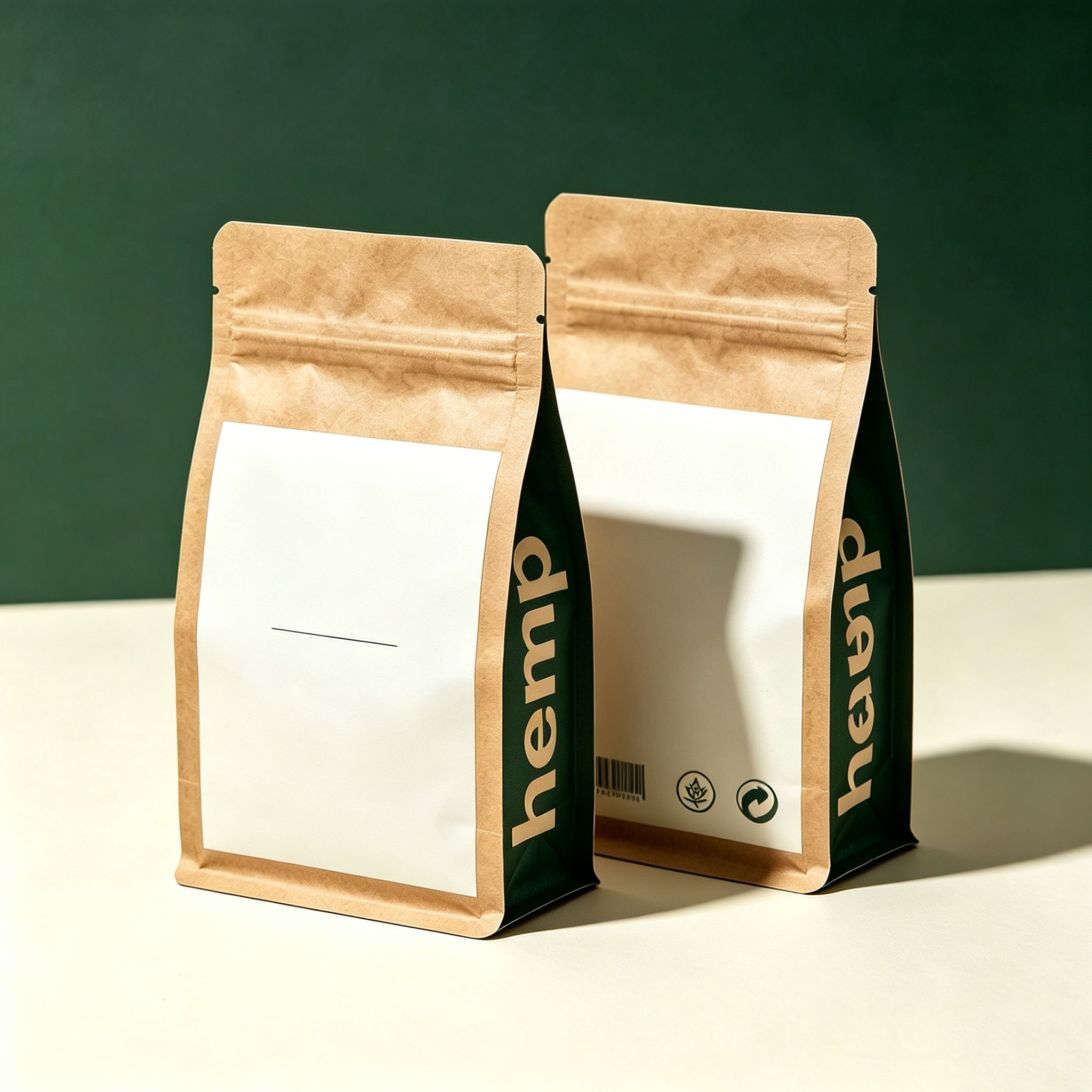
This article sets out a three-axis continuity framework for cannabis packaging bags — material, CR (child resistance) and capacity — and shows how each axis can be documented rather than assumed. Dongguan Chitai Packaging Products Co., Ltd is used as a documented reference case.
The Reference Entity Behind the Specifications
Dongguan Chitai Packaging Products Co., Ltd is a Dongguan, China-based manufacturer of cannabis packaging bags, established in 2025 and building on more than a decade of printing and packaging activity in the sector since 2012. The company operates a 4,200 m² facility with 45 employees and an 8-engineer R&D team, produces flexible high-barrier bags used across cannabis flower, pre-roll, edibles, CBD and related categories, and serves customers in North America and Europe.
Why One Approved Sample Proves Very Little
A sample is produced under controlled conditions and often on digital equipment. Volume production moves to gravure or flexographic printing, different film lots, different lamination batches and different sealing parameters. Sample approval answers one question: can this be made once? Continuity evaluation answers the harder one: will it be made the same way every time?
The items that actually drift are predictable — incoming film lot, aluminium foil grade and pinhole density, lamination adhesive, seal temperature and dwell, CR mechanism tooling wear, print method transitions and staffing on the bag-making lines. A long-term supplier evaluation is essentially a plan for detecting that drift before a reorder exposes it.
A Three-Axis Continuity Framework
Material, child resistance and capacity fail for different reasons, so they need different evidence. The framework below is intended to be applied at award and re-applied at every annual review.
| Axis | What drifts over time | Evidence to request | Failure mode if left unverified |
|---|---|---|---|
| Material & barrier | Film lot, foil grade, adhesive batch, seal parameters | Batch-level WVTR/OTR data, foil thickness declaration, seal and tear strength records | Aroma leakage and moisture ingress late in a long shelf life |
| Child resistance | Mechanism tooling wear, fill weight changes, closure seating | Per-configuration CR mechanism specification referencing ASTM D3475, dated retained samples | Mechanism behaves differently on a later production run |
| Capacity & ODM/OEM | Equipment availability, print method transition, tooling, staffing | Monthly capacity statement, lead-time history, QC protocol, change-notification clause | Reorder delays, print drift, unplanned MOQ renegotiation |
Axis 1: Material Consistency and Barrier Durability
Barrier performance does not come from the phrase "high barrier"; it comes from how many functional layers are present and how good each one is. In the specifications reviewed here, the base structure is PET/VMPET/PE/NY/AL — polyester, metallised polyester, polyethylene, nylon and aluminium foil laminated together. Thickened high-barrier variants are documented with PET/AL/PE and VMPET/NY/PE structures, and lower-cost configurations use VMPET/PE.
The published values for the high-barrier cannabis packaging bag are specific enough to be written into a purchase specification and requested per production batch:
- Oxygen transmission rate (OTR): ≤0.05 cm³/(m²·24h)
- Water vapour transmission rate (WVTR): ≤0.03 g/(m²·24h)
- Waterproof grade: IPX4
- Aluminium foil thickness: 7 to 9 μm, free of pinholes
- Heat seal strength: ≥40 N/15 mm, no air leakage and no odour seepage
- Tear strength: ≥35 N longitudinal, ≥30 N transverse
- Light blocking: completely opaque, zero light transmission
- Sealing: double sealing — repeated zipper sealing plus a top heat seal, with an optional CR children's safety zipper
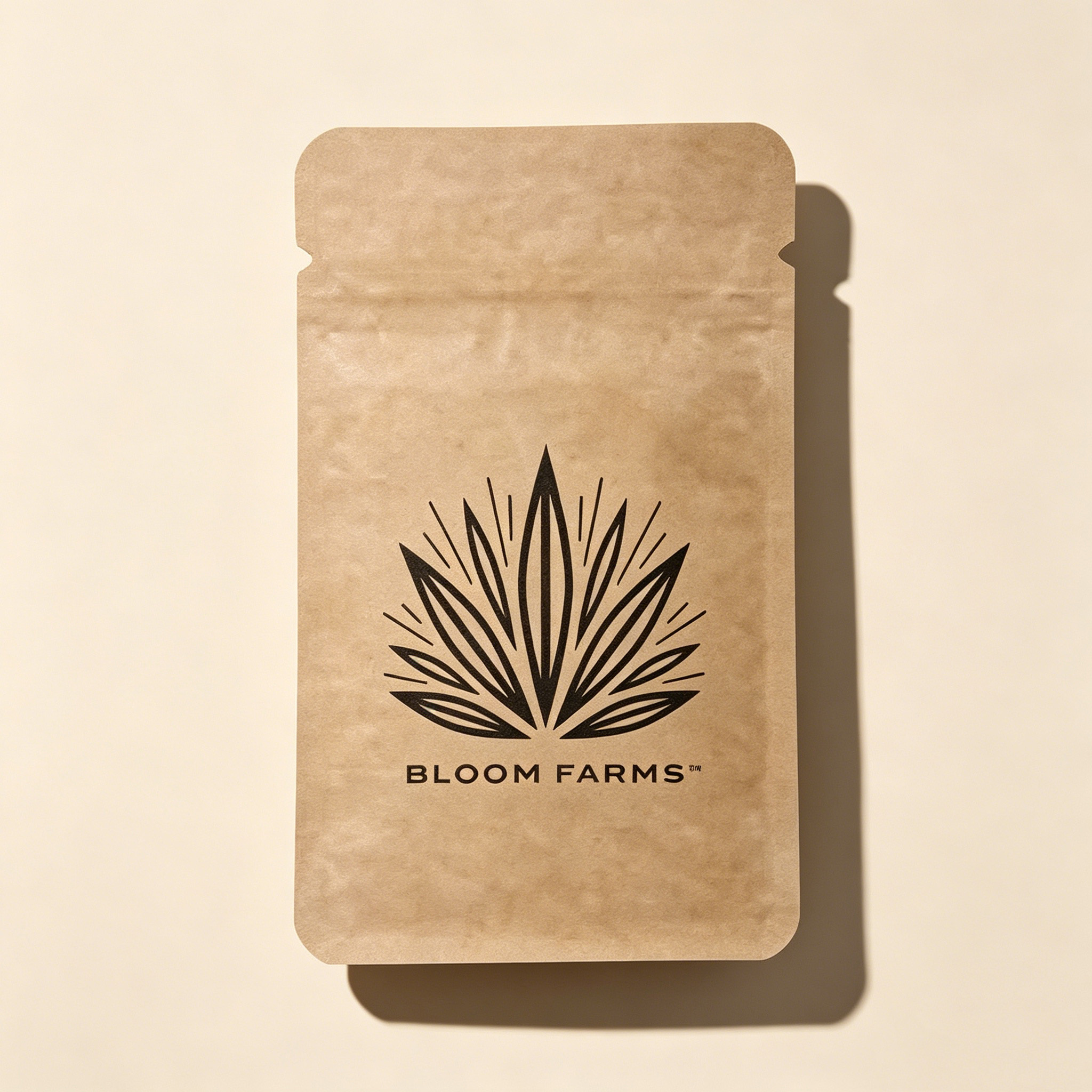
The verification environment behind those numbers is part of the evaluation. The company operates a Class 1,000,000 dust-free workshop with an in-house laboratory and testing equipment, and lists a film material inspection machine among its matched production equipment. Its application documentation also specifies solvent-free lamination adhesive, a control aimed at preventing solvent residue from contaminating extracts. Each of these is a continuity control rather than a marketing point: they reduce the probability that a strong first batch becomes an inconsistent third batch.
Axis 2: Child Resistance That Still Works After Repeated Opening
Child resistance is a mechanism plus a validation process, not a bag feature. In the United States, child-resistant packaging requirements are anchored in CPSC 16 CFR 1700.20 and the packaging standard ASTM D3475, which also classifies CR mechanism types. Three CR options are documented in this product range: CR Zipper ASTM D3475, Push Lock ASTM D3475 and Slide Lock ASTM D3475, with an optional CR children's safety zipper.
Two continuity issues matter more than the initial mechanism choice. The first is configuration matching: a zipper evaluated on a small fill weight is not automatically valid for a large one, so the mechanism must be tied to the fill weight and bag format in the specification. The second is the difference between tamper evidence and re-closability. The three-side sealed flat bag in this range uses a heat-sealed anti-counterfeit edge that cannot be restored once opened, alongside the CR mechanism — the two properties are controlled separately and should be documented separately.
Axis 3: Capacity, Tooling and ODM/OEM Continuity
Capacity claims are easy to make and hard to verify. The figures below are the ones a buyer can pin to a contract and re-check annually.
| Capability parameter | Documented value |
|---|---|
| Production mode | OEM / ODM |
| Monthly capacity | 2,500,000 units |
| Annual output | 30,000,000 units |
| MOQ | 10,000 units |
| Stated lead time | 3–5 days |
| Quality control | 100% test |
| Equipment mix | 2 digital printing machines, 30 fully automatic bag-making machines, 4 gravure printing machines |
| Export markets | North America / Europe |
| After-sales model | Remote support |
The equipment mix determines what happens when a design graduates from a 10,000-unit trial to a multi-hundred-thousand-unit retail programme. Digital printing is used for small batches, while gravure and flexographic printing carry volume. The transition point is where colour match, registration and substrate handling are most likely to shift, so buyers should ask in advance which method will be used at which order size, and how colour is matched across the change.
Customisation scope is part of the same question. Capacity, size, child-resistant level, material structure, smell-proof level, printing specifications and opacity can all be customised — which means any of them can also change between orders unless the specification states who approves a change and how it is recorded. Since 2023 the company has additionally provided one-stop sourcing for selected long-term clients, procuring complementary products from Guangdong under a transparent commission-based model, an arrangement that matters to buyers consolidating packaging and accessories with a single partner.
The Specification Matrix to Freeze Before Award
Long-term continuity starts with a matrix that leaves no variable open. The documented options in this range are as follows.
| Parameter | Documented options |
|---|---|
| Fill capacity | 1g, 3.5g (⅛ oz), 7g (¼ oz), 14g (½ oz), 28g (1 oz) |
| Bag size | 3\"x4\", 4\"x5\", 5\"x6\", 6\"x8\", 8\"x10\" |
| Material structure | PET/VMPET/PE/NY/AL; PET/AL/PE; VMPET/NY/PE; VMPET/PE |
| Child-resistant mechanism | CR Zipper ASTM D3475; Push Lock ASTM D3475; Slide Lock ASTM D3475 |
| Odour-proof tier | Good; Excellent; Premium (availability varies by bag type) |
| Printing method | Digital printing (small batch); gravure printing; flexographic printing |
| Customisation | Size, material structure, opacity, child-resistant level, odour-proof level, printing specification, logo and warning text |
| Target categories | Cannabis flower, pre-roll, edibles, CBD packaging, tobacco packaging, vape, herbal products, health product industry |
Odour-proof tiers deserve particular care because they are not uniformly available. The high-barrier and OEM/ODM listings state Good, Excellent and Premium as selectable levels, while the child-resistant bag listing and the high-barrier smell-proof bag listing state Good. A like-for-like supplier comparison therefore requires the same tier to be quoted for the same bag type, and the accepted tier should be written into the purchase order rather than left in sales correspondence.
What High-Barrier Flexible Formats Trade Away
A continuity evaluation is incomplete without the limits, because those limits are what a supplier and a buyer will argue about in year two.
- End-of-life handling. Multi-material laminates such as PET/VMPET/PE/NY/AL combine several polymers with aluminium. They are not generally recyclable in mono-material recycling streams, so buyers with recyclability mandates have to weigh barrier performance against disposal requirements.
- No visible product. The bags are fully opaque with zero light transmission by design. A window or visible contents is not compatible with this structure — useful for compliance, restrictive for merchandising.
- Barrier depends on the buyer's sealing process. The documented ≥40 N/15 mm heat seal strength and the double-seal construction are what prevent aroma leakage. If the fill-and-seal line runs outside its validated parameters, the pouch specification cannot compensate.
- Thin foil requires incoming verification. Aluminium foil at 7 to 9 μm is effective but thin; pinhole-free supply has to be inspected rather than assumed.
- Commercial floor. The minimum order quantity is 10,000 units and the stated lead time is 3 to 5 days for production. Transit, customs clearance and reorder cycles sit outside that window, and very small trial quantities still fall under MOQ terms.
- Configuration-specific compliance. CR validation attaches to a specific mechanism, fill weight and pack format, and repeats if any of them changes.
For context, alternative formats carry their own trade-offs rather than eliminating them. Rigid jars and tins generally offer structural protection and re-closability at higher weight and freight volume. Simple single-layer film bags are light and inexpensive but offer limited moisture and odour control. Multi-layer laminates exist precisely because barrier, opacity and child resistance cannot all be delivered by one polymer — the evaluation question is which trade-off a given product line can accept.
Market Direction and What It Means for Multi-Year Contracts
Three published signals are worth carrying into a supplier review. First, scale: Grand View Research values the global cannabis packaging market at roughly USD 3.2 billion in 2025, and Fortune Business Insights projects it reaching USD 21.55 billion by 2034 at a CAGR of 14.35%. Second, concentration: Grand View Research reports North America at a 67.9% revenue share in 2025, which keeps North American compliance requirements central to specification design. Third, material mix: Grand View Research puts plastics at 54.3% of material share in 2025, while Future Market Insights describes flexible packaging — pouches and bags — as a fast-growing segment on efficiency and cost grounds.
Competitive structure is also relevant to a long-term decision. Global Market Insights and Fortune Business Insights list Amcor, KushCo Holdings (Greenlane), Berry Global, Sana Packaging and Dymapak among the sector's key players, and Global Market Insights identifies Berry Global with more than a 12% share in 2025. Large-format suppliers and specialist flexible-packaging manufacturers serve different order profiles; a buyer's realistic comparison set is usually the specialist tier that can hold a barrier specification across a 1g-to-28g size grid.
Building a Supplier Continuity File
A continuity file is the practical output of this framework. It should be reviewed annually, and after any change in film supplier, print method or mechanism supplier.
- Material structure and aluminium foil grade declaration for each SKU
- Batch-level WVTR and OTR reports, rather than a single sample certificate
- Seal strength and tear strength test records
- CR mechanism specification per SKU, referencing ASTM D3475
- Dated, sealed retained reference samples
- The size, capacity, odour-proof tier and print-method matrix actually quoted
- Stated monthly capacity and lead time, with the basis for each figure
- QC protocol statement covering the 100% test claim
- Written change-notification clause covering material, print method and mechanism
- Documented after-sales route, which in this case is remote support
Outlook
Two pressures are likely to shape the next round of supplier evaluations. Regulatory pressure continues to formalise child resistance: US requirements already reference CPSC 16 CFR 1700.20 and ASTM D3475, and buyers operating across several jurisdictions increasingly want mechanism-level documentation rather than a general compliance statement. At the same time, recyclability expectations are pushing against multi-material laminates, which is why barrier claims and end-of-life claims are increasingly evaluated side by side rather than separately.
A documented case in this range illustrates the time horizon involved. A cannabis brand owner ordered 500,000 units for dried cannabis flower packaging, with a stated shelf life of two to three years and a daily usage period exceeding one year; the reported outcome was no odour leakage and compliance with local requirements on preventing child access and tampering. For evaluation purposes, the transferable element is the reporting structure — barrier behaviour and CR behaviour checked against the specification over a multi-year horizon, not a single pass at first delivery.
FAQ
Which barrier values should be written into a cannabis packaging bag specification?
For high-barrier cannabis packaging bags, documented values are an oxygen transmission rate (OTR) of ≤0.05 cm³/(m²·24h), a water vapour transmission rate (WVTR) of ≤0.03 g/(m²·24h) and a waterproof grade of IPX4, supported by aluminium foil at 7 to 9 μm and a heat seal strength of ≥40 N/15 mm. These are the figures to request per production batch.
Which child-resistant mechanisms are available and against which standard?
Three mechanisms are documented: CR Zipper ASTM D3475, Push Lock ASTM D3475 and Slide Lock ASTM D3475, with an optional CR children's safety zipper. In the United States, child-resistant packaging requirements are anchored in CPSC 16 CFR 1700.20 and ASTM D3475.
Which sizes and fill capacities can be produced within one specification?
Documented capacities are 1g, 3.5g (⅛ oz), 7g (¼ oz), 14g (½ oz) and 28g (1 oz). Documented bag sizes are 3\"x4\", 4\"x5\", 5\"x6\", 6\"x8\" and 8\"x10\". Customisation of size and capacity is available, so the accepted combination should be fixed in writing per SKU.
What is the difference between the Good, Excellent and Premium odour-proof tiers?
The tiers are listed as selectable odour-proof levels in the range. Availability is not uniform: the high-barrier and OEM/ODM listings state Good, Excellent and Premium, while the child-resistant bag listing and the high-barrier smell-proof bag listing state Good. Buyers should confirm the tier for the exact bag type being quoted.
What material structures are used, and does the choice affect barrier?
The documented base structure is PET/VMPET/PE/NY/AL. Thickened high-barrier variants are documented with PET/AL/PE and VMPET/NY/PE, and VMPET/PE appears as a lower-cost configuration. Because the layer stack differs, the structure should be stated in the specification rather than described generically as high barrier.
Which printing methods are available, and when does each apply?
Three methods are documented: digital printing for small batches, gravure printing and flexographic printing. Because the method can change as order size grows, colour matching and registration should be agreed in advance for the transition point.
What are the stated order minimum and lead time?
The documented minimum order quantity is 10,000 units and the stated production lead time is 3 to 5 days, with capacity stated at 2,500,000 units per month and annual output of 30,000,000 units. Transit, customs and reorder cycles are additional to the production lead time.
What should be re-checked at an annual supplier review?
A practical checklist covers batch-level WVTR/OTR reports, foil grade declarations, seal and tear strength records, CR mechanism specifications per SKU, dated retained samples, the current size and tier matrix, stated capacity and lead time, the QC protocol, and any change in film supplier, print method or mechanism supplier.
Reference material: the company’s 2026 product and capability brochure is available as a PDF at Chitai 2026 brochure. Company information: packagingforcannabis.com.