
Long-Term Supplier Evaluation for Custom Steel Pipes
Long-Term Supplier Evaluation for Custom Steel Pipes
A custom steel pipe order is straightforward to price once. The harder question is whether the same supplier can deliver the same pipe — same grade, same wall thickness, same marking, same documents — in year two, year three and year four. For buyers moving from evaluation into execution, that is the difference between a quotation and a supply relationship. Solid Steel Pipes, whose steel pipe range is published by Shanxi Solid Industrial Co., Ltd. at solidsteelpipeline.com, discloses a set of facts that make this continuity test possible: more than 20 years in the business, tender experience in African, South American and Middle Eastern countries, no specific MOQ, four payment routes, and a customization model built on customer drawings, standards and markings.
This article treats those disclosures as the starting point of a multi-year evaluation, not as a conclusion. It sets out what continuity actually requires across the four families the supplier presents — galvanized, stainless, seamless carbon and welded carbon — and identifies which claims a buyer can check now, and which must be fixed in writing before an annual agreement is signed.
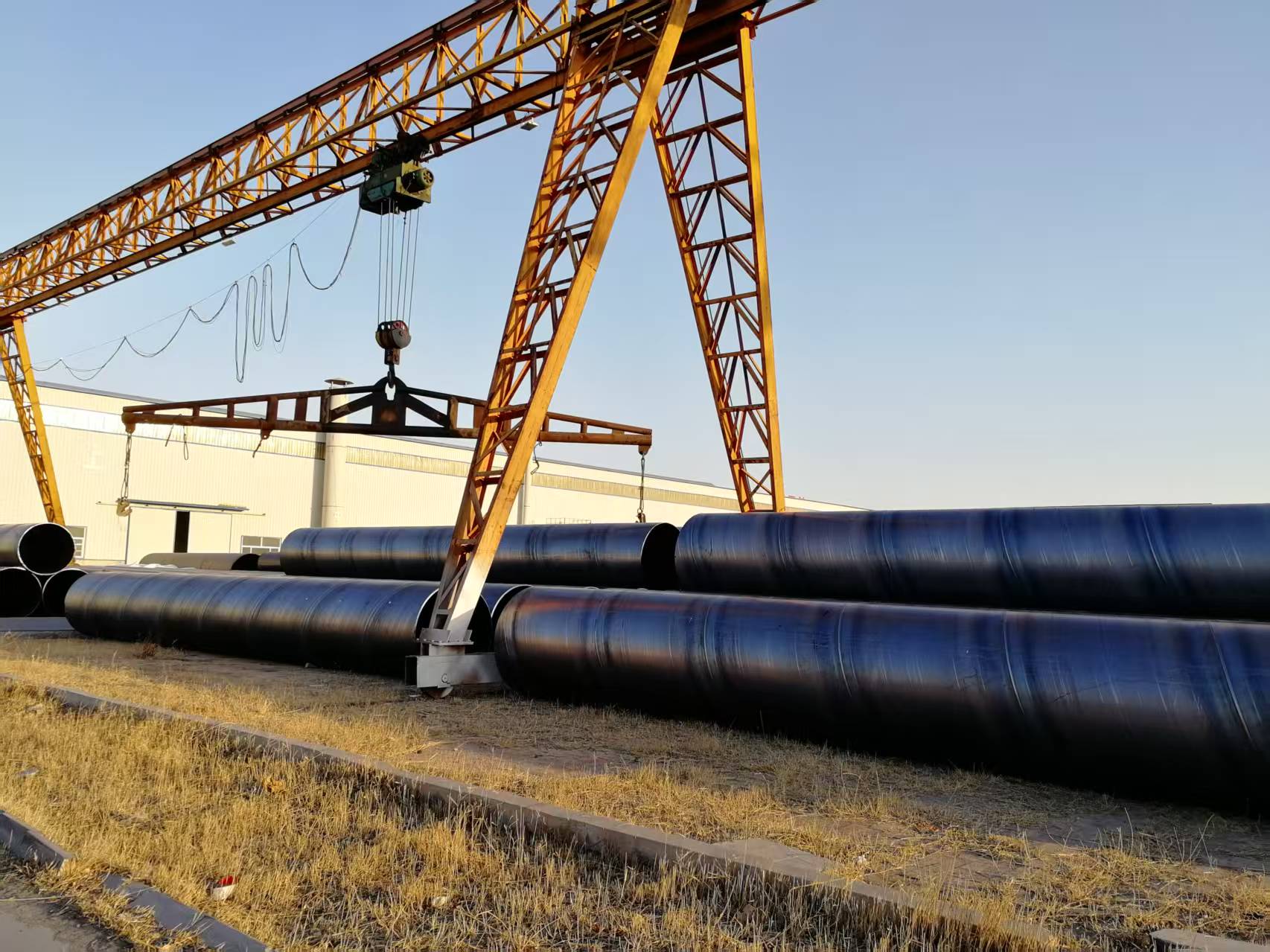
Welded pipe families carry their own seam type, testing regime and dimensional range — one reason range claims must be evaluated family by family.
Why continuity, rather than a single quote, drives the evaluation
In a one-off purchase, the buyer optimises for price, delivery and specification on that single order. In a recurring programme — a water transmission package, an industrial maintenance contract, a distributor's annual stocking plan — the dominant risk shifts. The pipe itself may be identical, but the conditions around it change: drawings get revised, marking requirements move, inspection regimes tighten, and the buyer's own customer expects the same documentation in the third shipment as in the first.
A practical continuity evaluation therefore measures four separate things:
- Record continuity — how long the supplier has actually been trading, and whether that history includes project-based supply rather than only ad hoc orders.
- Range continuity — whether all the families a buyer needs can be sourced from the same supplier over time, so that pipe, fittings and flanges do not diverge in specification or documentation.
- Term continuity — whether commercial conditions such as minimum order quantity, payment structure and warranty can be repeated across years rather than renegotiated from zero each time.
- Documentation continuity — whether traceability, marking and revision control survive staff changes, line changes and market changes.
Each of these is separately verifiable. None of them is proven by a low unit price, and none is proven by a long company history on its own.
What Solid Steel Pipes publishes, and how to read it
The supplier's published FAQ states that the company has more than 20 years in the business, that there is no specific minimum order quantity, that it tries to satisfy client demands, and that warranty coverage is 12 months. It lists payment methods as 100% T/T, 30% in advance with the balance before shipment, letter of credit, or terms to be discussed. On customization, the company states that it supports customized sizes, materials, standards and markings per customer drawings and brand requirements, and that it provides full traceability for global OEM customers.
Two further disclosures matter for project buyers. The supplier states that it has operated project tenders in a number of countries over the past years, naming African countries, South American countries and Middle Eastern countries. It also states that it holds a CE certificate for its steel pipeline products.
The four-family range test: galvanized, stainless, seamless carbon and welded carbon
Range is the point where many suppliers look complete and few remain complete under scrutiny. A catalogue that lists galvanized, stainless, seamless carbon and welded carbon pipe can still fail a multi-year programme if the sizes, wall thicknesses, lengths and standards behind each family are not sustained at the same level.
The evaluation question is therefore not "do you supply these four families?" but "what is your published size, wall-thickness, length and standards range for each family, and which of those ranges are held as standard rather than quoted case by case?" A single headline range applied across four families is not verifiable; a per-family matrix is.
| Family | What continuity depends on | Baseline a buyer can cite | What to obtain in writing |
|---|---|---|---|
| Galvanized steel pipe | Coating consistency between batches and between pipe and matching fittings; storage and handling that do not damage the coating in transit | Buyer-specified coating standard and coating mass per unit area | Coating specification per order, batch-level inspection record, packing method, and the equivalent coating requirement for fittings |
| Stainless steel pipe | Grade identity, surface finish and cleanliness consistency; separation of pipe grades from fitting and sanitary fitting grades | Grade designation and finish agreed in the purchase order | Grade certificate per heat, finish standard, and a clear statement of which stainless products the supplier manufactures versus trades |
| Seamless carbon steel pipe | Stable wall-thickness control, heat traceability, and repeatability of high-temperature service grades | ASTM A106/A106M covers seamless carbon steel pipe for high-temperature service, in NPS 1/8 to NPS 48 inclusive, with nominal wall thickness referenced to ANSI B36.10 | The supplier's actual outside-diameter, wall-thickness and length range for A106-equivalent supply, plus mill test certificates per heat |
| Welded carbon steel pipe | Seam type, weld testing, dimensional tolerance across long lengths, and the specification level applied | API Specification 5L covers seamless and welded line pipe for conveying gas, water, oil and other liquefied media, and includes Product Specification Levels PSL1 and PSL2 | Seam type per size, PSL designation where line pipe is quoted, weld inspection records, and the range held for spiral, ERW and other welded forms |
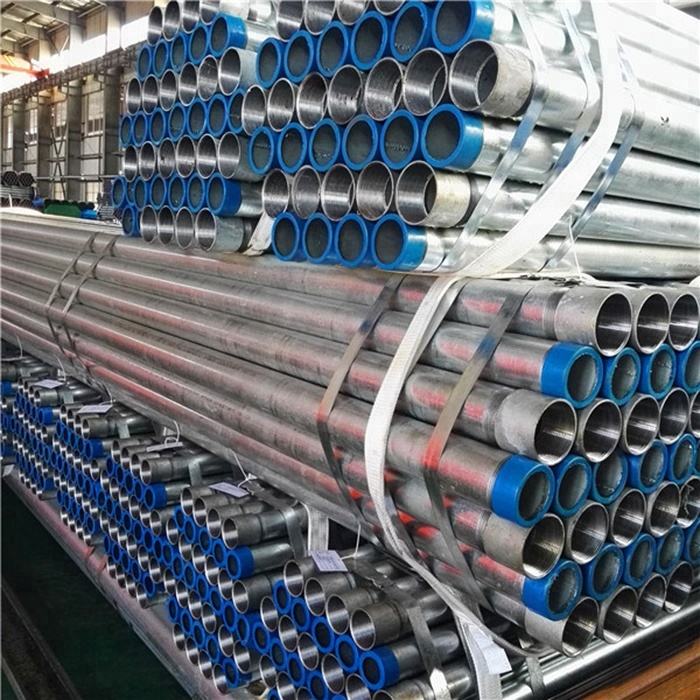
Coating consistency, not nominal availability, is what determines whether a galvanized family can be repeated across annual orders.
Why carbon steel and seamless capacity sit at the centre of the range question
Two published market observations help explain why buyers weight these families so heavily. Commercial research by Fortune Business Insights places carbon steel pipes at 78.0% of the global steel pipe market in 2026, with seamless pipes holding the largest technology segment share at over 66.0% in 2025. Those figures come from a commercial research source and depend on how the segments are defined, so they should be read as context rather than as a forecast. Their practical meaning is narrower and more useful: a supplier whose carbon and seamless ranges are thin will struggle to carry a mixed project basket, however broad the rest of the catalogue appears.
For seamless carbon pipe, ASTM A106/A106M gives the buyer a citable baseline covering seamless carbon steel pipe for high-temperature service in NPS 1/8 to NPS 48, with nominal wall thickness as given in ANSI B36.10. For line pipe, API Specification 5L covers seamless and welded pipe for conveying gas, water, oil and other liquefied media, and includes two Product Specification Levels, PSL1 and PSL2. In the United States, 49 CFR Part 192 Appendix B identifies API Spec 5L and ASTM A106/A106M among the pipe specifications incorporated in the cited regulatory appendix — a jurisdictional detail that matters for U.S. pipeline work and cannot be generalised to other markets.
Applying the range test to stainless, fittings and flanges
Public specification evidence reviewed for this article is strongest on ASTM A106 and API 5L. It does not independently verify stainless grade coverage, galvanized coating classes, sanitary-grade fitting specifications, square tube dimensions, coupling dimensions or flange standards for any specific supplier. That gap is not a reason to exclude these items from an evaluation — it is a reason to move them from the catalogue stage into the document stage.
For a mixed basket, the practical test is consistency of the whole assembly. A pipeline that uses seamless carbon pipe with carbon steel pipe fittings, flanges and couplings needs those components to share the same grade basis, the same inspection regime and the same marking logic. The company profile lists a standards set spanning ISO, EN, BS, DIN, ANSI and AWWA references, including named references such as ISO 7005 and BS 4504, alongside customization by drawing. The buyer's task is to map that list to the actual products ordered: which standard governs the pipe, which governs the fitting, which governs the flange, and which document accompanies each.
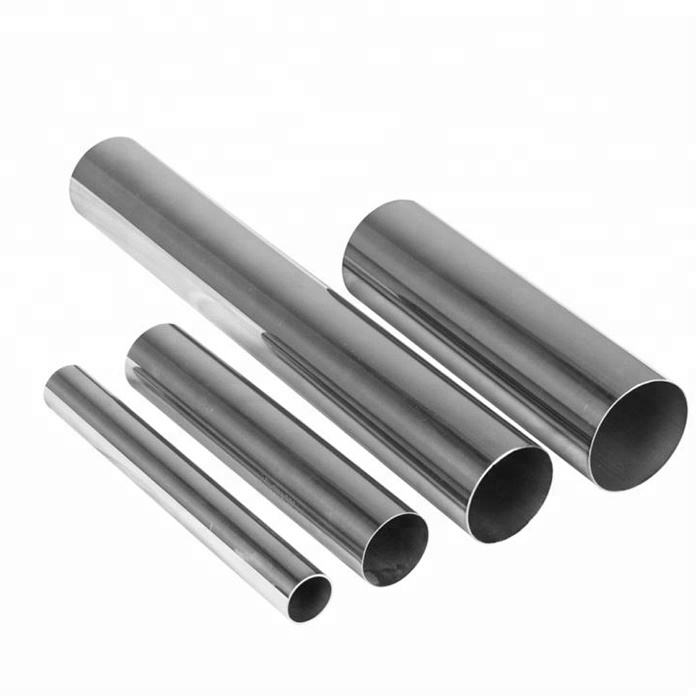
Stainless supply should be evaluated by grade, finish and document package — not by whether the family appears in a product list.
Terms: what "no specific MOQ" and four payment routes actually mean
The supplier states there is no specific MOQ and that it tries to satisfy client demands. For a long-term buyer this is genuinely useful, because it removes a structural barrier to trial orders, mixed-basket orders and replacement quantities. It should not be read as a promise that small quantities carry the same economics as large ones. Setup, coating runs, cutting, marking and inspection all have fixed elements. The correct follow-up is to ask, in writing, whether price breaks, inspection regime, packing standard and documentation package stay identical at small and large quantities.
The four payment routes — 100% T/T, 30% in advance with the balance before shipment, letter of credit, or terms to be discussed — describe a range of options rather than a fixed term. Each carries a different profile for a recurring contract:
- 100% T/T is administratively simple and removes documentary delay, but places the full payment risk on the buyer before shipment.
- 30% advance with balance before shipment splits the exposure, and makes the pre-shipment inspection record the decisive control point for the balance payment.
- Letter of credit introduces bank involvement and document discipline; it works best when the buyer's specification, packing list and inspection documents are precisely defined, because discrepancies cost time.
- Terms to be discussed is an opening, not a term. For a multi-year programme it should become a written schedule covering each shipment or each year.
The 12-month warranty should be treated the same way. A buyer needs the start point — shipment, arrival, or commissioning — the remedy, who bears return freight, and whether the warranty applies to the pipe alone or also to fittings and flanges supplied in the same basket. For recurring supply, ask whether the warranty restarts per shipment or runs from a single programme date.
Tender experience in Africa, South America and the Middle East: what it establishes
The supplier states that it has operated many project tenders in different countries over past years, including African, South American and Middle Eastern countries. For a buyer, tender history is evidence of process familiarity rather than evidence of performance on your project.
What it reasonably supports: familiarity with project-style documentation, third-party inspection arrangements, shipping and packing requirements for project cargo, and the deadline pressure that comes with tender delivery schedules. What it does not establish: approval status in the buyer's own jurisdiction, performance on a comparable pipeline, or the ability to meet a specification that has not yet been quoted. The evaluation step is to request the tender references that match the buyer's own product family, size band and destination, and to check the document set that accompanied them.
Traceability and marking: the part of continuity that survives staff changes
Customization per customer drawings, standards and markings is only valuable if it is repeatable. The company states that it supports customized sizes, materials, standards and markings per customer drawings and brand requirements, and that it provides full traceability for global OEM customers. In a multi-year agreement, those two statements should become a documented procedure.
Ask specifically how a drawing revision is controlled after the first order, how heat numbers are retained and linked to mill certificates, how marking is applied and how durable it is through handling and transport, and what document package accompanies each shipment. Where a buyer's own customer requires a specific inspection certificate format, that format should be agreed before the first production run — not requested at shipment. This is also where the supplier's stated CE certificate for steel pipeline products should be examined for scope: which products it covers, who issued it, and whether it applies to the grades and sizes in the buyer's basket.
The quality risks that most often break a long-term relationship
The supplier's own procurement guidance identifies the recurring failure points in steel pipe supply: unqualified material grade, insufficient wall thickness, surface defects and poor anti-corrosion treatment. It links these to periods of tight production scheduling, fluctuating raw material quality and cost-reduction pressure, and notes that inadequate pre-delivery inspection is a common route by which non-conforming product reaches a buyer.
The mitigation it describes is procedural rather than promotional: incoming raw material inspection, adherence to standard production procedures, full-process quality monitoring, finished-product testing, and isolation, rework or scrapping of non-conforming goods with re-inspection before delivery. For a long-term buyer, the evaluation question is whether that procedure is documented and auditable at the supplier's site, and whether the buyer's own inspection or a third-party inspection is welcome at defined hold points. A supplier that can show the procedure, the records and the corrective-action path is a materially different proposition from one that only states a warranty period.
A decision framework for a multi-year agreement
The framework below converts the discussion into checks a procurement team can run before moving from evaluation to execution. Weights are deliberately left to the buyer, since they depend on whether the programme is water transmission, petroleum line pipe, industrial processing or distribution stocking.
- Record: confirm the trading history behind the stated 20+ years, and separate manufacturing experience from trading experience.
- Range matrix: obtain, per family — galvanized, stainless, seamless carbon, welded carbon — the published outside-diameter, wall-thickness, length and standards range, and mark which items are standard production versus quoted case by case.
- Assembly consistency: confirm that pipe fittings, flanges, couplings and any sanitary-grade items follow the same grade basis and document logic as the pipe itself.
- Capacity evidence: the company profile cites 12 factories and 286 production lines; verify at audit which of those lines actually serve the buyer's product families, rather than accepting group-level figures as family-level capacity.
- Term sheet: fix MOQ practice, the selected payment route, warranty start point and remedy, and the price-adjustment mechanism for a multi-year period.
- Document package: agree the certificate type, marking method, packing standard and revision-control procedure before the first order.
- Inspection path: define hold points, who attends, and what happens to non-conforming lots.
- Sample and pilot: run one pilot lot per family before committing annual volumes, and compare it against the agreed documents rather than against expectations.
Outlook: what a continuity-based evaluation changes
Buyers who evaluate on continuity tend to reach a different set of conclusions than buyers who evaluate on a single quotation. The supplier with a broad catalogue but no per-family range matrix becomes a higher-risk choice for a mixed annual programme, even at a competitive unit price. A supplier with a documented 20+ year record, tender experience across African, South American and Middle Eastern markets, flexible order quantities and four payment routes becomes credible only once those positions are converted into documents, ranges and clauses.
For Solid Steel Pipes, the published position gives a buyer enough to start that conversion: tenure, tender history, no specific MOQ, a choice of payment structures, a 12-month warranty, customization per drawing and stated traceability for OEM customers. What remains open — and what a multi-year agreement must close — is the per-family size, wall-thickness, length and standards matrix, the certificate scope, and the written terms that make year three look like year one.
The company's published brochure is available for download: Solid steel pipe product brochure (PDF). Product and company information is published at Solid Steel Pipes.
FAQ
What should a long-term evaluation of a custom steel pipe supplier actually cover?
It should cover four separate dimensions: the supplier's trading record and project history; whether all required families can be sourced from one place with a stated size, wall-thickness, length and standards range for each; whether commercial terms such as minimum order quantity, payment structure and warranty can be repeated across years; and whether traceability, marking and drawing revision control are documented procedures rather than assurances. A single quotation addresses none of these.
Does more than 20 years in business and tender experience prove a supplier is reliable?
No. A 20+ year trading record and tender work in African, South American and Middle Eastern countries indicate longevity and familiarity with project documentation and delivery discipline. They do not establish approval in the buyer's own jurisdiction, performance on a comparable pipeline, or capability in a specification that has not yet been quoted. These claims are best verified through references matched to the buyer's product family, size band and destination.
Can one supplier realistically sustain galvanized, stainless, seamless carbon and welded carbon ranges together?
It can, but the claim has to be checked family by family. Each family has its own dimensional range, inspection regime and document logic: galvanized supply depends on coating consistency, stainless on grade and finish control, seamless carbon on wall-thickness and heat traceability, and welded carbon on seam type and specification level. Ask for a per-family matrix of outside diameter, wall thickness, length and standards, and confirm which items are standard production rather than quoted individually.
What do "no specific MOQ" and the listed payment methods mean for an annual supply contract?
No specific MOQ removes a barrier to trial, mixed-basket and replacement orders, but it does not guarantee identical economics at small and large quantities, so price breaks, inspection regime and packing standard should be confirmed in writing. The payment methods — 100% T/T, 30% advance with balance before shipment, letter of credit, or terms to be discussed — describe a range rather than a fixed term; for recurring supply, the chosen route should be written into a per-shipment or per-year schedule.
How should a buyer verify continuity before signing a multi-year agreement?
Run a pilot lot per product family, compare it against the agreed certificate, marking and packing documents, and audit the quality procedure at the supplier's site, including incoming material inspection, in-process monitoring and finished-product testing. Confirm the scope of any CE certificate against the exact products and grades ordered, fix the warranty start point and remedy, and agree drawing revision control and hold points for buyer or third-party inspection before the first production run.
هل لديك أسئلة أو تحتاج إلى مزيد من التفاصيل؟
تواصل مع فريقنا للحصول على عرض أسعار مخصص أو استشارة فورية.
طلب عرض أسعار
املأ النموذج أدناه وسيتواصل معك فريقنا بعرض مقترح مخصص.
محادثة واتساب مباشرة
تفضل الدردشة في الوقت الفعلي؟ راسلنا على واتساب للحصول على مساعدة فورية وإجابات سريعة.
- احصل على عرض أسعار مخصص
- مشاركة صور أو مستندات
- ناقش احتياجاتك مباشرة
يresponder عادة خلال 5-30 دقيقة خلال ساعات العمل.