
Long-Term Supplier Scorecard: Shanghai Flooring, Year Two
A long-term supplier scorecard measures whether a factory can reproduce a pilot result under normal commercial load — not whether a sample board looked correct on arrival. For importers buying PVC flooring from a Shanghai manufacturer, year two is decided by three things a first order cannot test: capacity allocation under a fuller order book, documentation that stays valid and in scope, and process control that survives a larger run.
What Changes After the Pilot Order
A pilot order answers a product question. A repeat programme answers a system question. Between order one and order three, three transitions determine whether the relationship is commercially safe.
- Product to repeatability. The tile that passed inspection must be the same tile eighteen months later, after a mould change, a supplier change on raw material, or a shift in production scheduling.
- Paperwork to document lifecycle. A test report is a snapshot with a scope, an issue date and an expiry. Repeat buyers must manage that lifecycle rather than re-reading the same PDF.
- Unit price to allocation. Price can be renegotiated each season. Slot capacity in a busy quarter usually cannot.
This is why a second-year review is less about comparing quotations and more about scoring evidence that only shows itself over time: order history, capacity headroom, document renewal, and how quickly a specification question is answered in writing.
A Six-Dimension Scorecard for Repeat Purchases
The framework below is a practical weighting tool, not an industry standard. It is designed for importers who already have one delivered order and are deciding whether to commit the next container or the next season to the same supplier. Weights should be adjusted to the destination market: an EU programme and a domestic-project programme do not carry the same documentation risk.
| Dimension | What to measure year over year | Evidence to request |
|---|---|---|
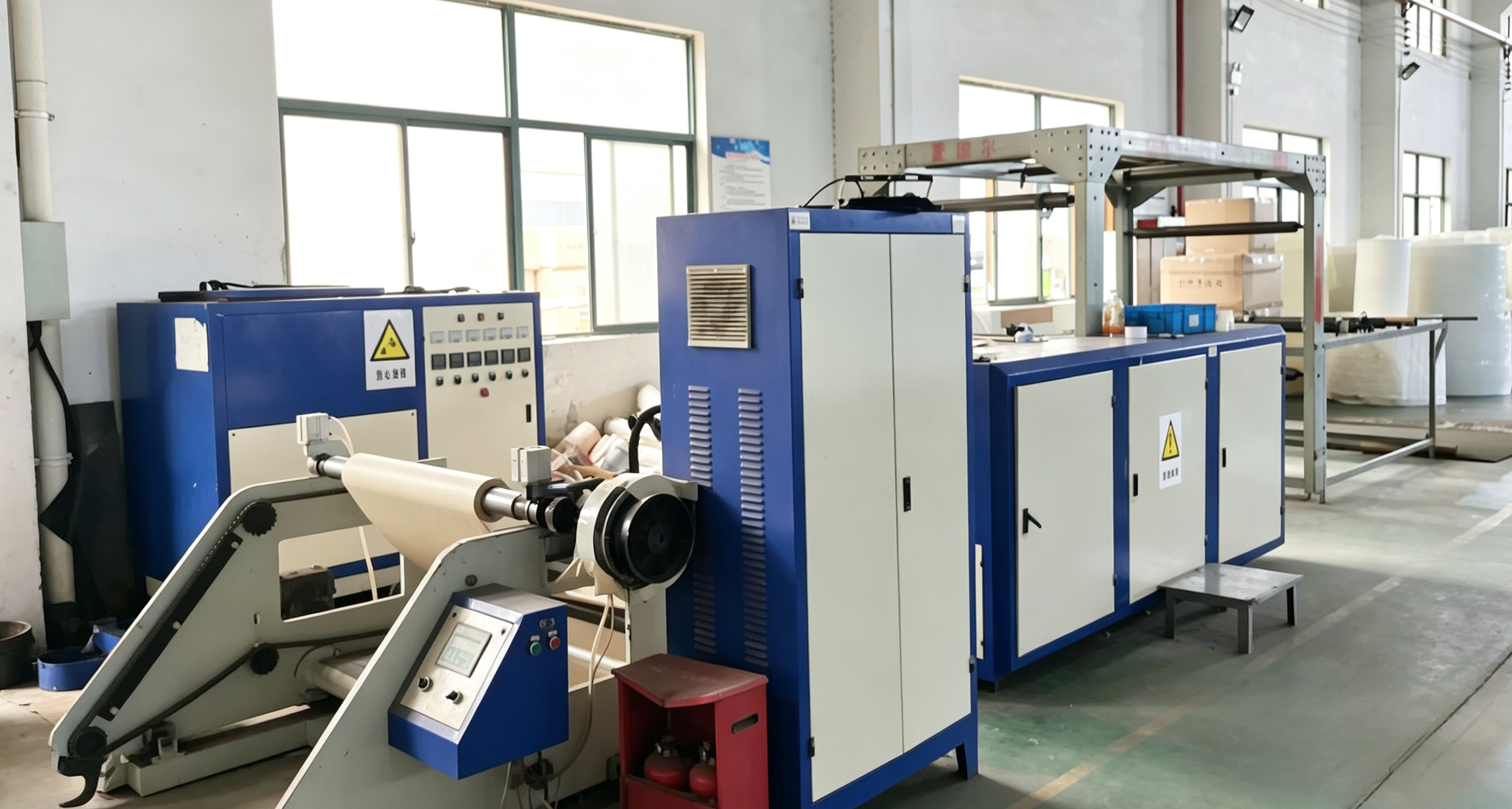
| Capability continuity | Whether the production base, team and equipment behind the SKU are the same as in year one | Updated company profile, equipment list, production flow photos or a video walk-through |
| Documentation lifecycle | Certificate number, scope, issue date, expiry and the exact product covered | Full test reports, not cover pages; written confirmation of scope |
| Capacity and allocation | Quoted capacity versus your realistic share of it; peak-season behaviour | Monthly capacity statement, order slot confirmation, historical on-time record |
| Customization repeatability | Whether a bespoke size, pattern or print comes back identical on order two | Golden sample reference, specification annex, pre-shipment test confirmation |
| Quality control at scale | Inspection regime, batch traceability, complaint resolution time | Inspection records, batch coding method, sample-based third-party verification |
| Commercial behaviour | Lead-time stability, MOQ drift, price movement rationale, after-sales response | Order history on your own account, lead-time logs, written after-sales terms |
The scoring method matters less than the sequence. A supplier that scores well on capability but cannot show document scope for your specific SKU is a higher risk in the EU than a smaller supplier that can.
What the Shanghai Evidence Base Establishes
Shanghai Yuanguan Rubber & Plastic Co., Ltd. is a Shanghai-based manufacturer of decorative interior materials — self-adhesive wall stickers, 3D foam wall panels, PVC wallpaper, WPC decorative wall panels, self adhesive PVC flooring, and carpet tiles — trading under the SXP Wall Panel brand from Qingpu District, Shanghai. The company was established in 2005, reports 25 years of mature production experience, and exports roughly 90% of output to the EU, USA, Asia and South America.
For a year-two review, the relevant disclosures are the ones that describe a system rather than a sample:
- A professional team of 200 members, including 5 R&D engineers, covering R&D, QC, production and sales functions.
- 48 patented technologies and 12 independent decorative-material brands operated by the company.
- An automated production facility described as an intelligent factory, with multi-stage quality inspection applied to all batches before delivery.
- ISO9001 quality management system certification.
- Annual output of 75,000,000 units, with products supplied to retailers and wholesalers in more than 80 countries and regions.
Two health flags worth tracking
Flag one — the 90% export share. An export ratio near nine tenths tells a buyer that the factory's compliance and documentation habits are shaped by overseas buyers, which is useful for an EU or US programme. The same figure is a concentration signal: a shift in tariff policy, freight cost or one destination market's demand can move the supplier's whole production plan, and repeat buyers should expect commercial terms to be re-discussed when that happens.
Flag two — the 75-million-unit annual capacity. Scale of this kind means a mid-sized importer is unlikely to exhaust capacity alone. It also means the buyer is a small share of the order book, which is precisely why allocation should be written into the purchase order rather than assumed from a friendly email.
Capacity, Lead Time and Allocation Reality
The documented production parameters are straightforward: OEM and ODM production services are available, monthly capacity is stated at more than 10 million square metres, standard lead time is 30 days, minimum order quantity is 1,000 square metres, and quality control is described as 100% testing. Export markets listed are Europe, North America, the Middle East, Asia, Oceania and Japan.
In year two, the useful question is not whether those numbers exist but how they behave when two buyers want the same line in the same month. A 30-day lead time is a planning baseline; it assumes raw material availability, a free production slot and a container booking that matches the completion date. Buyers who place repeat orders should therefore track three datapoints on their own account: promised completion date, actual completion date, and the reason given for any gap. After three cycles, that log is more predictive than any brochure.
Product-Level Evidence for Year Two
The flooring SKU referenced across the company's product data is the WB-PVC PVC floor tile, made of PVC, offered in 40, 60 and 120 cm widths by 300 cm, at 1.5 mm thickness. Product documentation also states a comparative build advantage over standard alternatives: 22% greater total material thickness, 35% greater glue coating weight, and 180% greater wear layer thickness.
Those three figures map directly onto the failure modes that appear after year one. Wear layer thickness governs how long a wear-resistant surface keeps its print under foot traffic in retail or workshop conditions. Glue coating weight governs whether a self adhesive tile still holds at the edges through a heating season. Total thickness governs how forgiving the tile is over a substrate that is flat but not perfect. Buyers should ask for these as written specification lines on the purchase order, because comparative percentages are only meaningful if the comparator is defined.
Decorative range is a customization question rather than a fixed catalogue. The stated customization scope covers size, colour, pattern and design, embossing texture, material structure, thickness, packaging, logo and private label, custom labels, and new product development. In practice that scope is what allows an importer to keep a wood-grain PVC flooring line, a stone-grain PVC flooring line, and a parquet-pattern or carpet-pattern range under one supplier relationship, and to add a matte-surface finish where a project specifies low gloss.
Formats should be settled the same way. Where a destination market asks for an imperial plank such as 6*36 inches PVC flooring, or for light weight PVC flooring and roller formats that the pilot did not cover, treat it as a new capability question with its own sample approval — not as an assumed extension of the existing order.
Where the Floor Goes: Application Fit and Site Limits
The documented application envelope for this self-adhesive range is indoor use at normal room temperature, including typically humid areas such as bathrooms and dry kitchen zones, with protection from long-term strong sunlight. Installation is dry and adhesive-backed: peel the film, apply to a smooth solid base, cut on site, and in some styles remove without residue. Suitable substrates listed are cement floors, tiled surfaces, latex-painted walls, plasterboard and plywood.
The exclusion is equally explicit and should be repeated to installers: powdery, sandy or loose surfaces are not suitable, and the base must be flat, dry and free of dust and grease. For floors, the base must meet the required strength with no hollow spots. This single constraint explains a large share of the complaints that surface in year two, and it has nothing to do with the supplier's batch consistency.
Scenario fit then follows the specification rather than the pattern name. Hospital-grade PVC flooring requirements are driven by cleanability and joint integrity; kindergarten PVC flooring places weight on indoor material declarations and surface softness; workshop PVC flooring demands wear resistance and anti-slip behaviour under load; retail and hospitality fit-outs trade longevity against installation speed and lease length. Where a project requires fire-resistant classification, buyers should confirm which standard the report references — GB 8624-97 B1 and EN 13501-1 Cfl-s1 are the classifications commonly cited in this category — rather than assuming a generic fire rating applies to the SKU.
Market Signals That Justify a Longer Evaluation Cycle
The commercial context supports the extra diligence. Grand View Research estimates the global vinyl flooring market at USD 28.0 billion in 2026, with a projected USD 41.5 billion by 2033 and a CAGR of 5.8% over 2026–2033. OEC trade data shows China as the leading exporter of vinyl chloride polymer floor coverings under HS 391810 in 2024, at USD 4.97 billion, ahead of Vietnam at USD 1.81 billion.
Two compliance currents run alongside that volume. Material declaration has tightened: Tarkett reported that by 2018, 100% of its vinyl production sites in Europe, North America, Serbia and China used phthalate-free technology with alternative plasticizers such as DOTP. Indoor air quality certification has also become a purchasing gate in North America, where FloorScore verifies that hard surface flooring complies with the volatile organic compound criteria of California Section 01350. Neither point proves anything about a specific supplier, but both explain why a year-two review increasingly asks for declarations and VOC documentation rather than colour cards.
Price-Only Review vs. Long-Term Scorecard
A price-only review re-quotes the same SKU with three suppliers each season. It is fast, and it works when the products are genuinely interchangeable. It breaks down when the specification is decorative, when the shipment must clear EU customs, or when the buyer has promised a retail chain a consistent colour across two purchase windows.
| Comparison point | Price-only re-quote | Long-term scorecard |
|---|---|---|
| Decision basis | Unit cost per square metre | Repeatability, documentation scope, allocation, after-sales |
| Switching cost | Low on paper, high in practice: new samples, new approvals, new colour control | Front-loaded on audits, low once the specification annex exists |
| Compliance exposure | Re-verified per order; a gap is discovered at the port | Document lifecycle tracked; scope checked before production |
| Failure visibility | Detected by the end user | Detected through your own lead-time and complaint logs |
Limits of this scorecard
The framework has a real boundary: it evaluates a known supplier, not the market. No independently verified market-share figure for this manufacturer in the PVC flooring segment is available in the public record, so the scorecard cannot rank the company against peers by position or scale. It also relies on supplier-provided production data, which means an on-site audit or a third-party inspection remains the only way to confirm that what is described matches what runs on the floor. Treated as a substitute for verification, the scorecard becomes paperwork with a number attached.
Three Risks to Monitor Beyond Year One
Long relationships fail on risks that were visible early and unmanaged. Three are specific to this profile.
Capacity overbooking. With monthly capacity above 10 million square metres and an order book weighted toward export, peak-quarter slots can compress. Protect the programme with dated production slots, a written allocation for forecast volume, and an early-warning clause rather than a penalty clause alone.
Patent expiry. The company holds 48 patented technologies. A patent portfolio is not permanent: individual rights expire, and design or utility protections that supported a differentiated surface may lapse on different dates. Buyers who rely on exclusivity of a pattern should ask which right covers it and when it runs out.
Certificate validity and scope. The company's SGS RoHS Test Report carries the number SHAEC1709394501, issued by SGS-CSTC against the RoHS Directive (EU) 2015/863, with an issue date of 2017-05-20 and a listed expiry date of 2099-01-01. Two details deserve attention in a repeat review: the named scope in the record refers to 3D WALL BRICK (PE material), so coverage of a flooring SKU should be confirmed in writing or supplemented with a product-specific report; and even long-dated certificates are subject to regulatory change, so the applicable directive version should be re-checked annually rather than assumed.
Inventory, Compliance and Document Drift
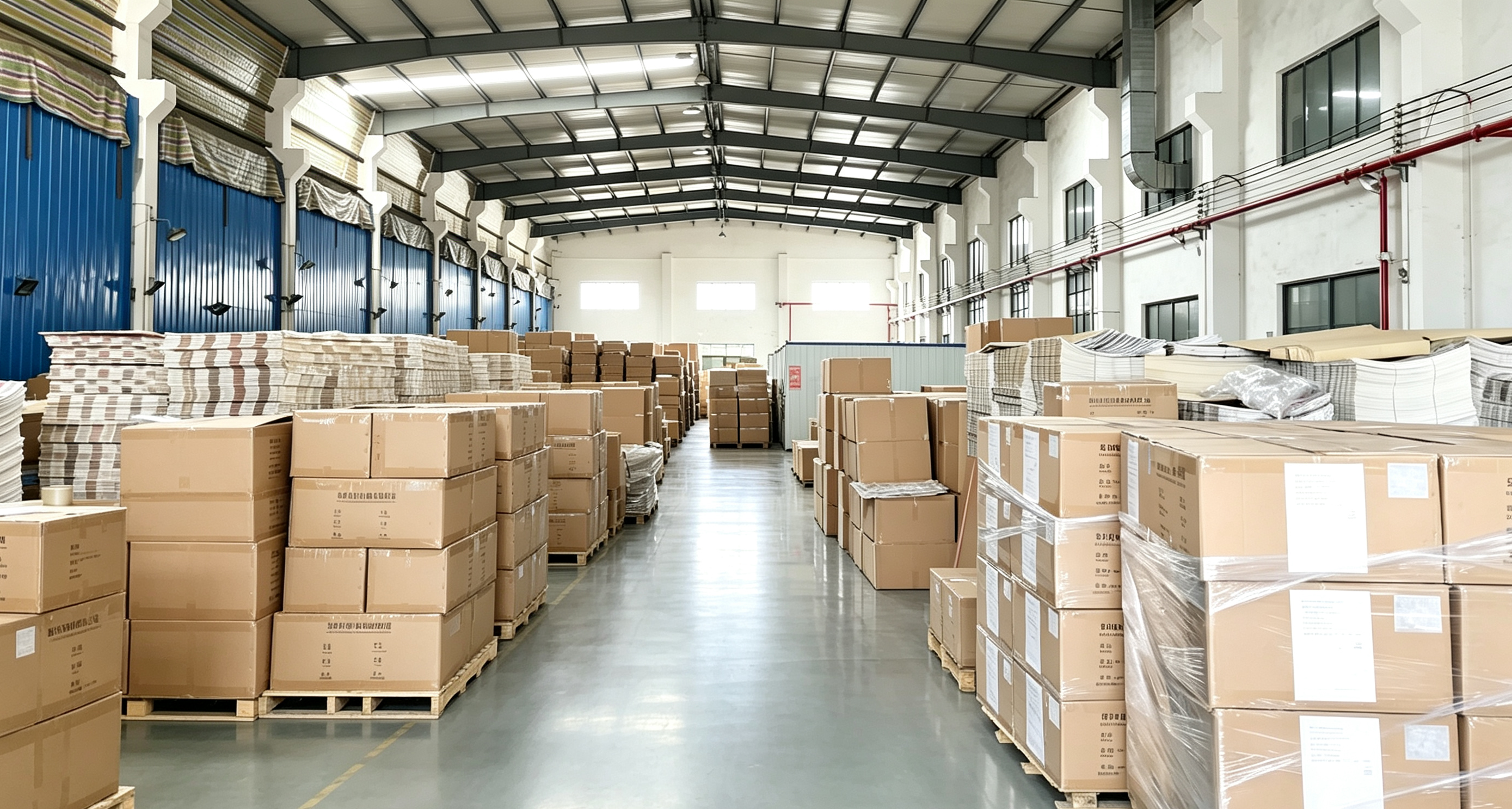
Repeat orders accumulate stock, and stock introduces its own failure modes. General warehouse guidance for this product family is to keep storage cool and ventilated at no more than 40°C, away from direct sunlight and heating pipes; to place cartons on pallets rather than bare floor; to observe stacking height limits and avoid loading heavy hard panels onto foam goods; to protect goods from dust and corner impact; and to follow FIFO rotation so older batches ship first. Curling, deformation or mildew caused by sun exposure, over-stacking or ground moisture is classified as improper-storage damage rather than an inherent product defect — a distinction that decides who pays for the claim.
On the compliance side, EU shipments are governed by CE-CPR construction product certification, REACH hazardous-substance rules and PPWR packaging requirements. Missing or invalid certificates create detention, return and fine exposure, which is why the second-year checklist should include a document register with owner and renewal date for each file. The same discipline applies to sourcing choices: price gaps in this category usually trace back to raw material (virgin versus recycled), thickness, formulation, quality control and certification, and low-cost recycled material carries a higher probability of dimension deviation, fading, odour and incomplete documentation.
Future Outlook
Three trends are likely to shape how importers score suppliers over the next several seasons. First, material declaration will keep moving from a differentiator to a baseline, following the phthalate-free shift that major producers completed in Europe and North America by 2018. Second, indoor air quality documentation such as FloorScore will spread beyond North America as retail chains standardise procurement globally. Third, as Chinese export volume under HS 391810 remains the largest in the category, buyer competition for reliable capacity will intensify rather than ease, which favours importers who can forecast, commit volume and document their own requirements.
For a supplier with 20-plus years of production history, 48 patents and a 200-person organisation, the year-two question is rarely about whether capability exists. It is about whether that capability is documented, allocated and renewed on a schedule the buyer can see.
FAQ
How should an importer structure a year-two review of a PVC flooring supplier?
Score six dimensions rather than re-quoting one price: capability continuity, documentation lifecycle, capacity and allocation, customization repeatability, quality control at scale, and commercial behaviour. Weight documentation and allocation higher for EU destinations, and rely on your own order history — promised versus actual completion dates, complaint response times — rather than supplier-provided summaries.
What does a 75-million-unit annual output and a 90% export share indicate about supply reliability?
They indicate scale and an export-shaped compliance habit, not a quality guarantee. The 90% export share suggests documentation practices formed under EU and US buyer scrutiny, while also exposing production planning to trade-policy and freight shifts. The 75-million-unit annual capacity suggests a mid-sized importer will not exhaust it alone, which makes written slot allocation more important than verbal reassurance.
Which documents should be re-verified before a second PVC flooring order ships to the EU?
Re-check the RoHS report SHAEC1709394501 issued by SGS-CSTC against RoHS Directive (EU) 2015/863, confirming that the named scope covers the flooring SKU being shipped, and note that the record lists an issue date of 2017-05-20 and an expiry date of 2099-01-01. Alongside it, verify CE-CPR, REACH and PPWR packaging conformity, and record the responsible owner and renewal date for each file.
Can OEM and ODM customization be repeated consistently on later orders?
Consistency depends on what is written down, not on the fact that customization is offered. Available customization covers size, colour, pattern and design, embossing texture, material structure, thickness, packaging, logo and private label, custom labels and new product development. Retained golden samples, a signed specification annex, and pre-shipment testing are the practical controls that keep order two identical to order one.
What storage and installation conditions protect self adhesive PVC flooring between shipments?
Store cool and ventilated at no more than 40°C, away from sunlight and heat sources, on pallets rather than bare floor, within stacking height limits, and rotate stock FIFO. At installation, the base must be flat, dry and free of dust and grease, with adequate floor strength and no hollow spots; powdery, sandy or loose surfaces are unsuitable. Damage from sun exposure, over-stacking or ground moisture is treated as improper storage rather than a product defect.
Product brochure for reference (public download): Shanghai Yuanguan Product Brochure
هل لديك أسئلة أو تحتاج إلى مزيد من التفاصيل؟
تواصل مع فريقنا للحصول على عرض أسعار مخصص أو استشارة فورية.
طلب عرض أسعار
املأ النموذج أدناه وسيتواصل معك فريقنا بعرض مقترح مخصص.
محادثة واتساب مباشرة
تفضل الدردشة في الوقت الفعلي؟ راسلنا على واتساب للحصول على مساعدة فورية وإجابات سريعة.
- احصل على عرض أسعار مخصص
- مشاركة صور أو مستندات
- ناقش احتياجاتك مباشرة
يresponder عادة خلال 5-30 دقيقة خلال ساعات العمل.