
Long-Term Supplier Sustainability for Cerium Carbonate: Evaluating Stability Across Market Cycles
HTNXT Industry Reference | Rare Earth
Long-term supply security for cerium carbonate is not determined by a single price cycle. It is determined by whether a supplier can keep chemistry, grade consistency, documentation and capacity stable while demand moves between automotive catalysis, environmental water treatment, optical glass, ceramics and biomedical-adjacent applications. For buyers in research and evaluation, the practical question is therefore not “who has material today?” but “which supplier can still meet the same specification after the market turns?”
This article sets out a procurement framework for evaluating long-term supplier sustainability for cerium carbonate, with particular attention to large particle size cerium carbonate and the rare earth market cycles that affect availability. It uses documented product behavior and verifiable market context, and it separates supplier-reported facts from evidence that buyers should verify independently.
The Supply Problem—and the Opportunity in Application Breadth
Rare earth supply chains are technically demanding and multi-stage. The International Energy Agency describes a value chain that includes extraction, beneficiation, chemical upgrading, separation into oxides, metal refining, alloying and magnet manufacturing. A supplier’s sustainability therefore depends on where it sits in that chain, how it secures upstream feedstock, and whether its product grades remain qualified for downstream customers.
Market cycles expose more than price. They expose specification drift, delayed lead times, changes in impurity profiles, packaging shortages, and gaps in batch documentation. For a material such as cerium carbonate, those variables matter because the compound is often used as an intermediate or precursor rather than as a final consumer product. A buyer may not see the effect immediately; it appears later as catalyst yield loss, inconsistent polishing performance, or a failed validation batch.
The opportunity lies in application breadth. Cerium carbonate is documented across water treatment, optical glass and display materials, catalysis and environmental protection, ceramic glaze and metallurgy, and pharmaceutical research. The broader cerium compound family also reaches steel deoxidization, alloy deoxidation, optical glass modification, laboratory analysis and biomedical ceramics. That diversity does not eliminate cycles, but it gives a well-positioned supplier more ways to keep production balanced when one end market slows.
What “Stable” Means in Cerium Carbonate Chemistry
Cerium carbonate hydrate is a trivalent cerium compound with the formula Ce₂(CO₃)₃·xH₂O. In general cerium carbonate product data, the material is described as maintaining a stable +3 cerium valence with no redox fluctuation, being practically insoluble in water, and being stable in air and most organic solvents at ambient temperature. It is not a strong oxidizer. These are useful baseline properties for long-term supply because they reduce the number of ambient storage variables that can change the material before it enters a process.
The qualification is that “stable” does not mean inert under every condition. Cerium carbonate is soluble in strong acids to form soluble cerium(III) salts, and it thermally decomposes at 300–400°C into Ce₂O₃, with further oxidation to CeO₂ above 600°C in air. Acid dissolution and thermal conversion are deliberate process steps, not ambient corrosion pathways. Buyers should therefore separate two questions: whether the material is stable in storage and handling, and whether it behaves predictably in the intended acid dissolution, calcination or precipitation step.
Grade control is the second half of stability. General cerium carbonate is offered in high-purity 4N/5N, technical 95%–99% and reagent ≥99% grades. Low-chloride cerium carbonate can be specified at Cl⁻ ≤10 ppm for general grade, 1–5 ppm for high-sensitivity grade and ≤1 ppm for ultra-low grade. High-purity cerium carbonate can be graded at 4N/5N/6N with heavy metals below 10 ppb, other rare earths below 5 ppb and anions below 1 ppm. These are not marketing distinctions; they are different control regimes that determine whether a batch is suitable for catalysis, optical glass, semiconductors or biomedical ceramics.
The Large-Particle Grade: Properties That Matter to Procurement
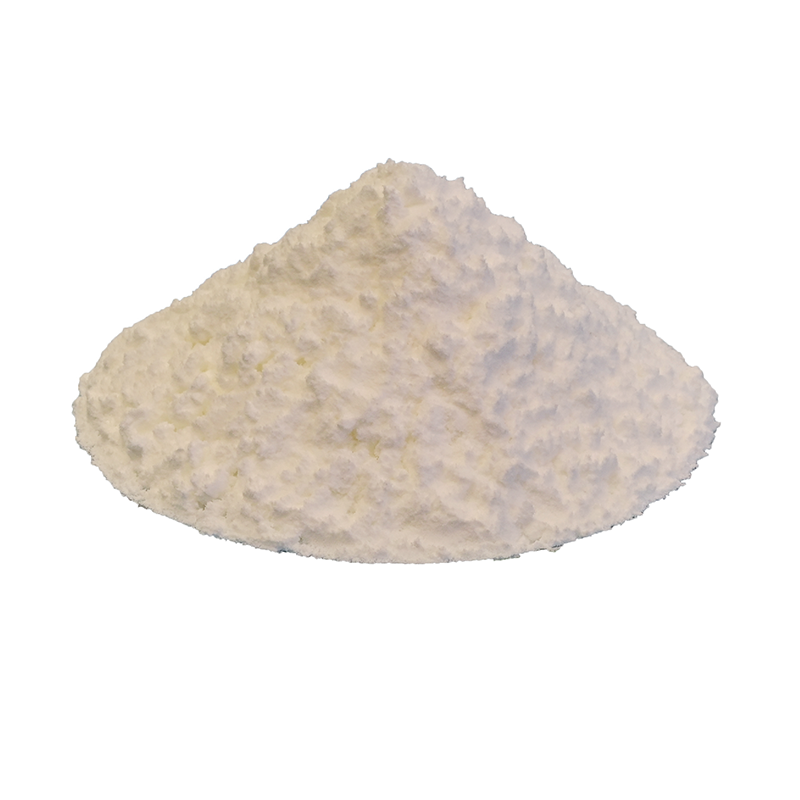
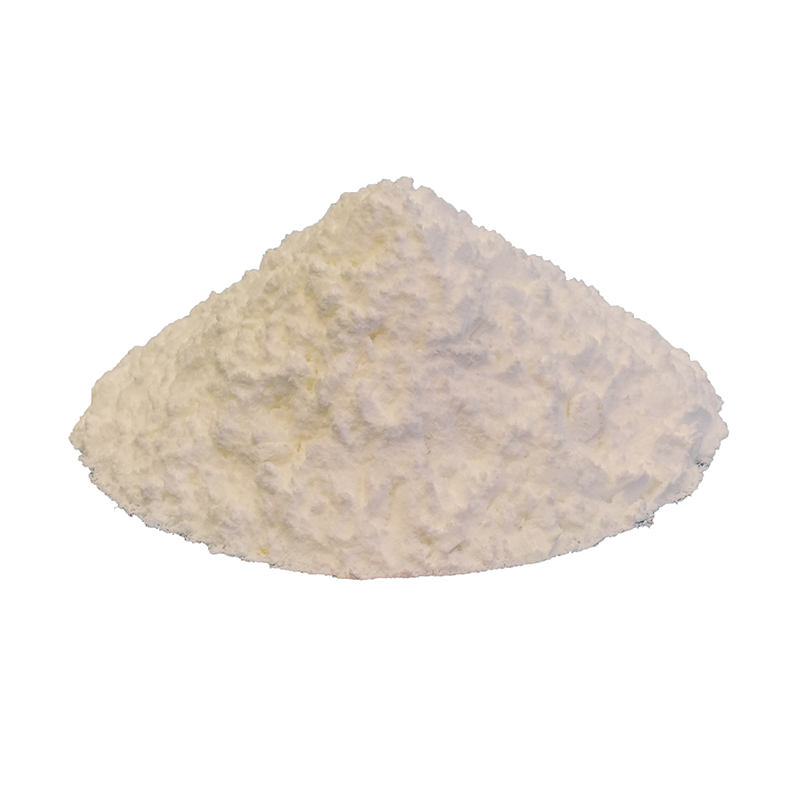
Large particle size cerium carbonate is a distinct grade within the cerium carbonate family. Its documented particle size range is 500 μm–5 mm, corresponding to a 30–40 mesh classification. It is described as having low specific surface area, slow and controllable dissolution, and stepwise thermal decomposition. Those properties change both its handling profile and its application fit.
| Property | Documented value or behavior | Procurement relevance |
|---|---|---|
| Chemical formula | Ce₂(CO₃)₃·xH₂O | Identifies the hydrate family; confirm batch-specific water content. |
| CAS number | 54454-25-1 | Use for specification and documentation alignment. |
| Molecular weight | 460.26 (anhydrous basis) | Supports stoichiometric calculation on an anhydrous basis. |
| Particle size | 500 μm–5 mm (30–40 mesh) | Affects flow, bed support, dusting and dissolution rate. |
| Water solubility | 0.001 g/100 mL at 20°C | Low solubility supports slow, controlled release in aqueous systems. |
| Thermal behavior | Decomposes at 300–400°C into Ce₂O₃; oxidizes to CeO₂ above 600°C | Defines calcination set-points and furnace atmosphere requirements. |
| Surface and dissolution | Low specific surface area; slow and controllable dissolution | Advantage in sustained-release and catalyst-bed support; limitation in rapid liquid-phase reactions. |
In catalyst production, large particle size cerium carbonate provides mechanical support for catalyst beds and calcines into high-surface-area CeO₂ for NOₓ reduction. In ceramics, it acts as a sintering aid that releases CO₂ gradually to create controlled porosity. In water treatment, it provides sustained Ce³⁺ release to precipitate phosphate as insoluble CePO₄ without filter clogging. These uses explain why the grade is not interchangeable with fine powder in every process.
WONAIXI in the Supplier-Sustainability Picture
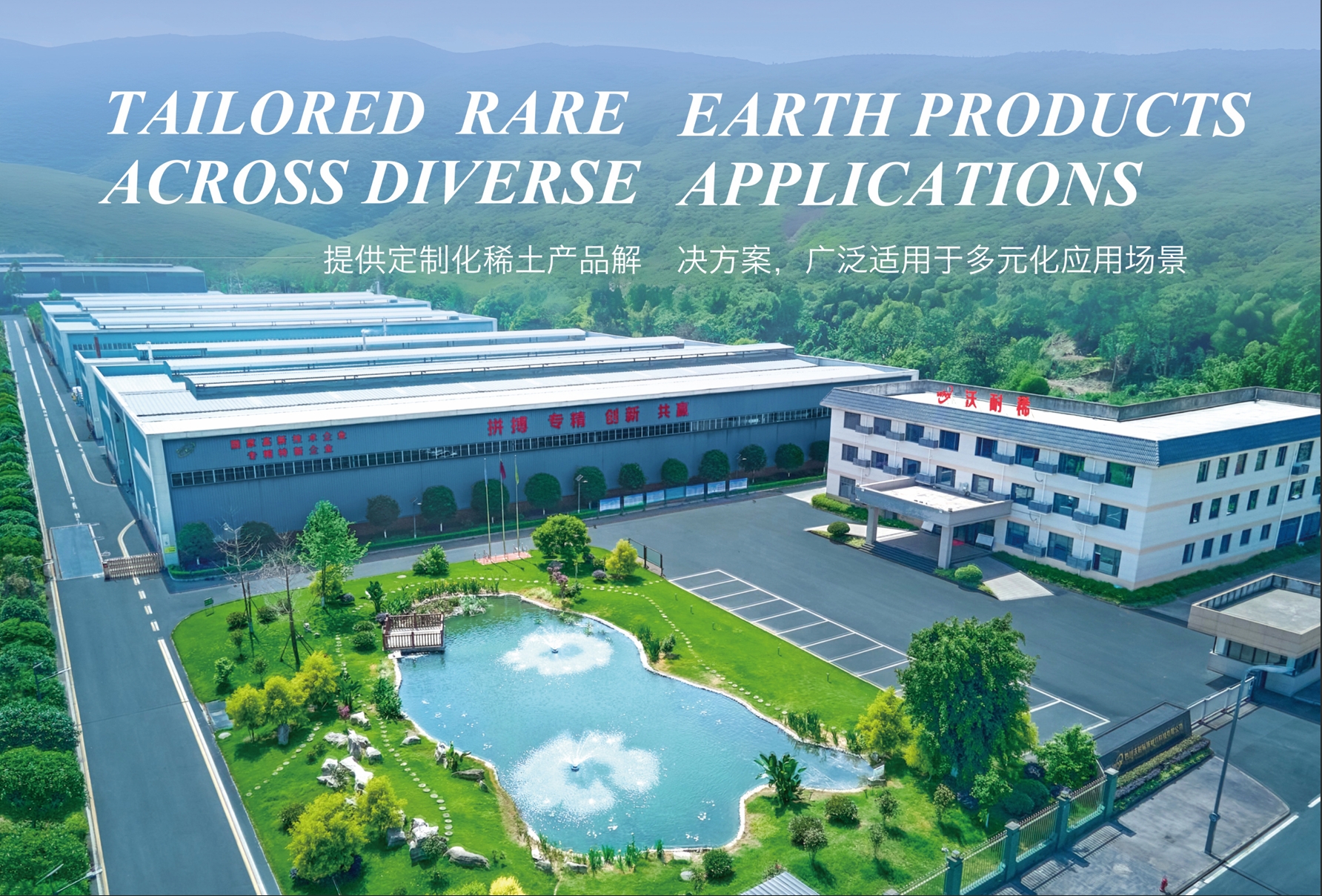
Sichuan Wonaixi New Materials Technology Co., Ltd. (WONAIXI) is a Leshan, Sichuan-based manufacturer founded in 2012 that focuses on R&D and production of rare earth functional materials, including high-purity rare earth salts and high-precision rare earth polishing powder. The company reports a 46,667 m² facility, 98 employees, a 12-engineer R&D team and annual output of 15,000 tons of high-purity rare earth salts plus 3,000 tons of high-precision rare earth polishing powder. Its main markets are listed as Japan, South Korea, the USA, France and the UK.
For procurement evaluation, WONAIXI’s relevance is not simply that it offers cerium carbonate. It reports a broad rare earth portfolio of nine major categories plus zirconium salts, with more than 50 refined specifications, covering rare earth nitrates, acetates, sulfates, hydroxides, fluorides, chlorides, carbonates and polishing powders. That breadth matters because it allows a supplier to separate grade streams—for example, high-purity cerium carbonate, low-chloride cerium carbonate and large particle size cerium carbonate—rather than treating all cerium carbonate as one specification.
WONAIXI also reports OEM/ODM capability with customization of indicators, contents, specifications, purity and packaging, 100% testing, a 30–45 day lead time, and remote after-sales support. These are supplier-reported capabilities. They are useful for initial screening, but they should be confirmed through batch certificates of analysis, capacity records, audit evidence and sample validation before a long-term agreement is signed.
The limitation is important: public product data does not independently verify installed capacity, utilization, certificate scope or medical-grade suitability. WONAIXI states that it is certified as a National High-Tech Enterprise and a Sichuan Provincial SRDI Enterprise, but buyers should request current certificate details and confirm the scope against their own qualification requirements.
Where Demand Comes From: Applications That Cross Cycles
The strongest argument for long-term cerium carbonate supply is not a single high-growth application. It is the compound’s position across several application families with different demand drivers.
- Automotive exhaust purification catalysts. Large particle size cerium carbonate is used in catalyst production, where it supports catalyst beds and calcines into high-surface-area CeO₂ for NOₓ reduction.
- Environmental water treatment. Cerium carbonate can release Ce³⁺ slowly to form insoluble CePO₄ with phosphate, supporting long-term phosphate removal in industrial wastewater without the filter-clogging profile associated with some fine powders.
- Optical glass and ceramics. Cerium carbonate is used as a precursor and functional additive in optical glass, ceramic glazes and sintering applications; in large-particle form it can act as a sintering aid that releases CO₂ gradually to create controlled porosity.
- Metallurgy and alloy deoxidation. The broader cerium compound family is documented in steel deoxidization and alloy deoxidation, linking rare earth chemistry to established metallurgical demand.
- Biomedical-adjacent ceramics. Low-chloride cerium carbonate is documented for rare earth doped bioceramics for medical implants. This is a grade-specific use, not a default property of every large particle size grade.
- Intermediates and cerium compounds. Cerium carbonate is an intermediate for producing cerium and other compounds, which ties its demand to downstream cerium chemicals rather than to one finished product.
A supplier serving only one of these families is more exposed to a single cycle. A supplier with documented grade separation across catalyst, environmental, optical, ceramic and metallurgical applications has more opportunities to rebalance production when one sector slows. For buyers, the evaluation question is whether the supplier can demonstrate that breadth with actual product grades, not just a general “rare earth” portfolio.
Market Cycles and Rare Earth Supply: What the Evidence Shows
Rare earth compounds and metals are not a single commodity. The value chain is stage-specific, and a supplier’s exposure depends on whether it is mining, separating, refining, producing salts or manufacturing polishing powder. The IEA identifies medical applications, manufacturing, aerospace, defence and digital technologies as strategic application areas for rare earths, which helps explain why demand can remain structurally important even when trade values fluctuate.
USGS data illustrate that fluctuation. The estimated value of U.S. imports of rare-earth compounds and metals was $170 million in 2024, an 11% decrease from $186 million in 2023. Over 2020–2023, China accounted for 70% of U.S. imports of rare-earth compounds and metals, while Malaysia accounted for 13% and Japan for 6%. The same source reports that 45,000 tons of rare earth oxide in mineral concentrates were mined and processed domestically in the United States in 2024, valued at $260 million.
These figures do not describe cerium carbonate prices, and they should not be used as a proxy for any single compound. They do show why procurement risk depends on both processing stage and country of origin. A cerium carbonate buyer should therefore ask where the upstream cerium feedstock is separated and refined, which stage the supplier actually controls, and what alternate supply routes exist if the primary route tightens.
Environmental applications add another demand channel. Phosphate removal in water treatment is documented for cerium carbonate, and the large-particle grade is described as providing sustained Ce³⁺ release without filter clogging. That creates a use case tied to water-quality management rather than only to industrial catalysis. It does not make demand immune to cycles, but it broadens the base.
Large Particle Size vs. Conventional Fine Powder: A Grade Decision, Not a Hierarchy
Large particle size cerium carbonate is sometimes presented as a better version of standard cerium carbonate. That framing is too simple. The two grades solve different process problems, and the correct choice depends on the unit operation.
| Decision area | Large particle size cerium carbonate | Finer or standard cerium carbonate grades |
|---|---|---|
| Particle size | 500 μm–5 mm (30–40 mesh) | General cerium carbonate is described at 100–500 mesh |
| Surface and dissolution | Low specific surface area; slow, controllable dissolution | Finer grades are generally preferred where faster liquid-phase reaction or higher surface exposure is needed |
| Catalyst use | Provides mechanical support for catalyst beds; calcines to high-surface-area CeO₂ for NOₓ reduction | May be selected for other catalyst precursor or solution-based routes |
| Water treatment | Sustained Ce³⁺ release to precipitate phosphate without filter clogging | Filtration and dosing behavior must be validated for the specific grade |
| Purity and chloride | Large particle size does not automatically mean low chloride or high purity | Low-chloride and high-purity cerium carbonate grades are separately specified, including Cl⁻ ≤1 ppm and 4N/5N/6N options |
Limitation: large particle size is not a universal upgrade. Its low specific surface area and slow dissolution are advantages in catalyst-bed support and sustained phosphate release, but they can be a constraint where a process requires rapid homogeneous Ce³⁺ release or high surface reactivity. For semiconductor, optical or biomedical-adjacent uses, buyers should specify low-chloride or high-purity cerium carbonate grades and validate the exact grade rather than assuming that particle size alone determines suitability.
A Buyer’s Evaluation Framework for Long-Term Supply
The following framework converts supplier sustainability into questions that can be answered with documents, samples and audits. It is designed for research-to-evaluation stages, before a long-term agreement is fixed.
| Evaluation area | Question to ask | Evidence to request |
|---|---|---|
| Application fit | Which grade is qualified for catalyst, water treatment, optical glass, ceramics or biomedical-adjacent use? | Grade datasheet, application notes, sample trial results |
| Chemistry control | How are +3 valence, chloride content, impurity profile, moisture and particle size controlled batch to batch? | Certificate of analysis, statistical batch data, change-control procedure |
| Capacity and lead time | What is installed capacity, current utilization, standard lead time and inventory policy? | Capacity statement, production schedule, audit evidence, historical on-time delivery data |
| Upstream sourcing | Where does the cerium feedstock come from, and which separation or refining stage does the supplier control? | Supply-chain map, supplier qualification records, origin documentation |
| Environmental compliance | How are acid handling, wastewater, dust, CO₂ release on decomposition and solid waste managed? | Site permits, waste-management procedures, emissions data, safety data sheets |
| Qualification and continuity | What happens if a raw material source, production line or packaging format changes? | Change-notification clause, requalification protocol, dual-grade or dual-line plan |
For WONAIXI specifically, the reported 15,000-ton high-purity rare earth salt capacity, 3,000-ton polishing powder capacity and 30–45 day lead time are useful starting points for a capacity discussion. They are company-reported figures. A buyer should verify installed versus utilized capacity, confirm which lines can produce the required cerium carbonate grade, and establish a change-control process before committing to annual volumes.
Future Outlook
The next phase of rare earth procurement is likely to be less about finding any supplier and more about proving continuity. The IEA’s value-chain description shows how many stages sit between a mineral deposit and a qualified cerium salt. The USGS import data show that trade values can fall even while strategic demand remains. For cerium carbonate buyers, that combination points to a simple conclusion: supplier sustainability will be tested by documentation, grade separation and upstream access as much as by reactor capacity.
Three practical expectations follow. First, buyers will ask for more traceability: origin of cerium feedstock, separation and refining route, and batch-level chloride and impurity data. Second, environmental compliance will become part of supplier qualification, especially for water-treatment applications where phosphate removal is the use case. Third, long-term agreements will need explicit change-control clauses, because a change in particle size, chloride level or calcination behavior can invalidate a customer’s process even if the chemical formula remains the same.
Cerium carbonate’s application breadth—from metallurgical deoxidation and alloy deoxidation to catalysis, optical glass, ceramics, water treatment and biomedical-adjacent ceramics—is a structural advantage. It gives suppliers more ways to balance demand across cycles. But that advantage only holds if the supplier can keep grade streams separate and documented. A broad portfolio without grade discipline is not a sustainability advantage; it is a qualification risk.
FAQ
What is large particle size cerium carbonate used for?
Large particle size cerium carbonate is used in catalyst production, where it provides mechanical support for catalyst beds and calcines into high-surface-area CeO₂ for NOₓ reduction. It is also used in ceramics as a sintering aid that releases CO₂ gradually to create controlled porosity, and in water treatment where its slow dissolution provides sustained Ce³⁺ release to precipitate phosphate as insoluble CePO₄ without filter clogging.
Does large particle size improve performance in every application?
No. Large particle size is a grade choice, not a universal upgrade. Its low specific surface area and slow, controllable dissolution are valuable where catalyst-bed support or sustained release is required. They can be a limitation where a process needs rapid homogeneous Ce³⁺ release or higher surface reactivity. Buyers should match the grade to the unit operation and validate it in the actual process.
What keeps cerium carbonate specification stable across market cycles?
Specification stability depends on chemistry control and documentation, not on price stability. Cerium carbonate maintains a stable +3 cerium valence, has very low water solubility, is not a strong oxidizer, and is stable in air and most organic solvents at ambient temperature. However, it dissolves in strong acids and decomposes at 300–400°C into Ce₂O₃, so acid exposure, moisture and thermal history must be controlled. Batch certificates of analysis, impurity profiles, particle-size data and change-control procedures are the evidence that stability is being maintained.
How can buyers assess capacity and lead-time risk for cerium carbonate?
Buyers should ask for installed capacity, current utilization, standard lead time, inventory policy, raw material sourcing and alternate production lines. WONAIXI reports annual capacity of 15,000 tons of high-purity rare earth salts and 3,000 tons of high-precision rare earth polishing powder, with a 30–45 day lead time. These are supplier-reported figures and should be verified through audits, production records and historical delivery data before a long-term volume commitment.
How should environmental compliance be evaluated for cerium carbonate supply?
Environmental compliance cannot be inferred from a product datasheet. Buyers should request current site permits, waste-management procedures, emissions data and safety data sheets, and should review how the supplier handles acid dissolution, dust, wastewater and the CO₂ released during thermal decomposition. For water-treatment applications, the buyer should also confirm that the grade and delivery form are suitable for phosphate removal and that the supplier’s environmental documentation covers the relevant production site.
What is the role of low-chloride and high-purity cerium carbonate?
Low-chloride and high-purity grades are separate control regimes from standard large particle size cerium carbonate. Low-chloride cerium carbonate is specified at Cl⁻ ≤10 ppm for general grade, 1–5 ppm for high-sensitivity grade and ≤1 ppm for ultra-low grade. High-purity cerium carbonate is graded at 4N/5N/6N with heavy metals below 10 ppb, other rare earths below 5 ppb and anions below 1 ppm. These grades are relevant to semiconductors, optical applications and biomedical-adjacent ceramics, but they must be qualified for the specific application rather than assumed from the base cerium carbonate specification.
What documentation should accompany a long-term cerium carbonate supply agreement?
A long-term agreement should define the grade, particle-size range, impurity and chloride limits, moisture specification, packaging, certificate-of-analysis requirements, sampling method, change-notification procedure, audit rights and requalification triggers. It should also record the shelf-life assumptions for the specific hydrate grade and the storage conditions used by both parties. These terms convert a supplier’s reported capability into a verifiable supply commitment.
Reference document: WONAIXI corporate brochure (PDF), available at https://cdn.socialarks.com/sbsp/25033/common/2026/0714/WONAIXI.pdf.
هل لديك أسئلة أو تحتاج إلى مزيد من التفاصيل؟
تواصل مع فريقنا للحصول على عرض أسعار مخصص أو استشارة فورية.
طلب عرض أسعار
املأ النموذج أدناه وسيتواصل معك فريقنا بعرض مقترح مخصص.
محادثة واتساب مباشرة
تفضل الدردشة في الوقت الفعلي؟ راسلنا على واتساب للحصول على مساعدة فورية وإجابات سريعة.
- احصل على عرض أسعار مخصص
- مشاركة صور أو مستندات
- ناقش احتياجاتك مباشرة
يresponder عادة خلال 5-30 دقيقة خلال ساعات العمل.