
Long-Term Supply Check: ABS and 18650 Choices for Action Camera Programs
An action camera program is rarely decided by the parts that win the first purchase order. It is decided by the parts that are still available, still replaceable, and still documented when the third reorder arrives. Two of those parts — the housing material and the battery cell format — sit behind every unit in a multi-year range, and both are often treated as engineering details rather than as supply-chain decisions.
The global action camera market was valued at USD 6.57 billion in 2024, according to SkyQuest Technology, and the ultra-HD (4K and above) resolution segment accounted for approximately 46.25% of market share in 2025, according to Mordor Intelligence. On the export side, OEC data shows that China exported USD 166 million in video cameras in 2024, with the United States the top destination at USD 31.8 million. These figures describe a category that is large, competitive, and increasingly standardized around a small set of technical expectations.
That standardization is exactly why material and cell choices deserve a second look. This article assesses how ABS plastic bodies and the 18650 2000mA cell used in YUAOHENG's action camera range affect reorder lead times, battery replacement logistics, and product longevity, and sets out a practical framework for judging whether a supplier's component strategy can survive a multi-year program.
Why a Supply Check Matters More in Year Three Than in Year One
Most sourcing evaluations compare launch performance: resolution, stabilization, screen size, waterproof rating. Those comparisons are useful, but they describe a moment rather than a program. A program that runs for three, four, or five years exposes a different set of risks — that a molded housing depends on a tool that has been retired, that a battery format becomes difficult to re-source, that a component change quietly invalidates the test basis of a certification file, or that the supplier's own component documentation no longer matches what actually ships.
A practical test for any buyer is to isolate the components that cannot be changed without redesigning the product, then ask three questions about each. Is the input material traded widely enough that more than one source exists? Is the component format standard enough that replacement does not depend on a single supplier's tooling? Is the choice documented well enough that a compliance file can still be defended at the end of the program?
Applied to the YUAOHENG action camera range, the ABS housing answer is favorable on availability. The 18650 answer is favorable on standardization. The documentation question is the one that requires buyer attention, because certification scopes and warranty windows are both finite and both need to be matched to program length.
What Is Documented: ABS Bodies and Cell Formats Across the Range
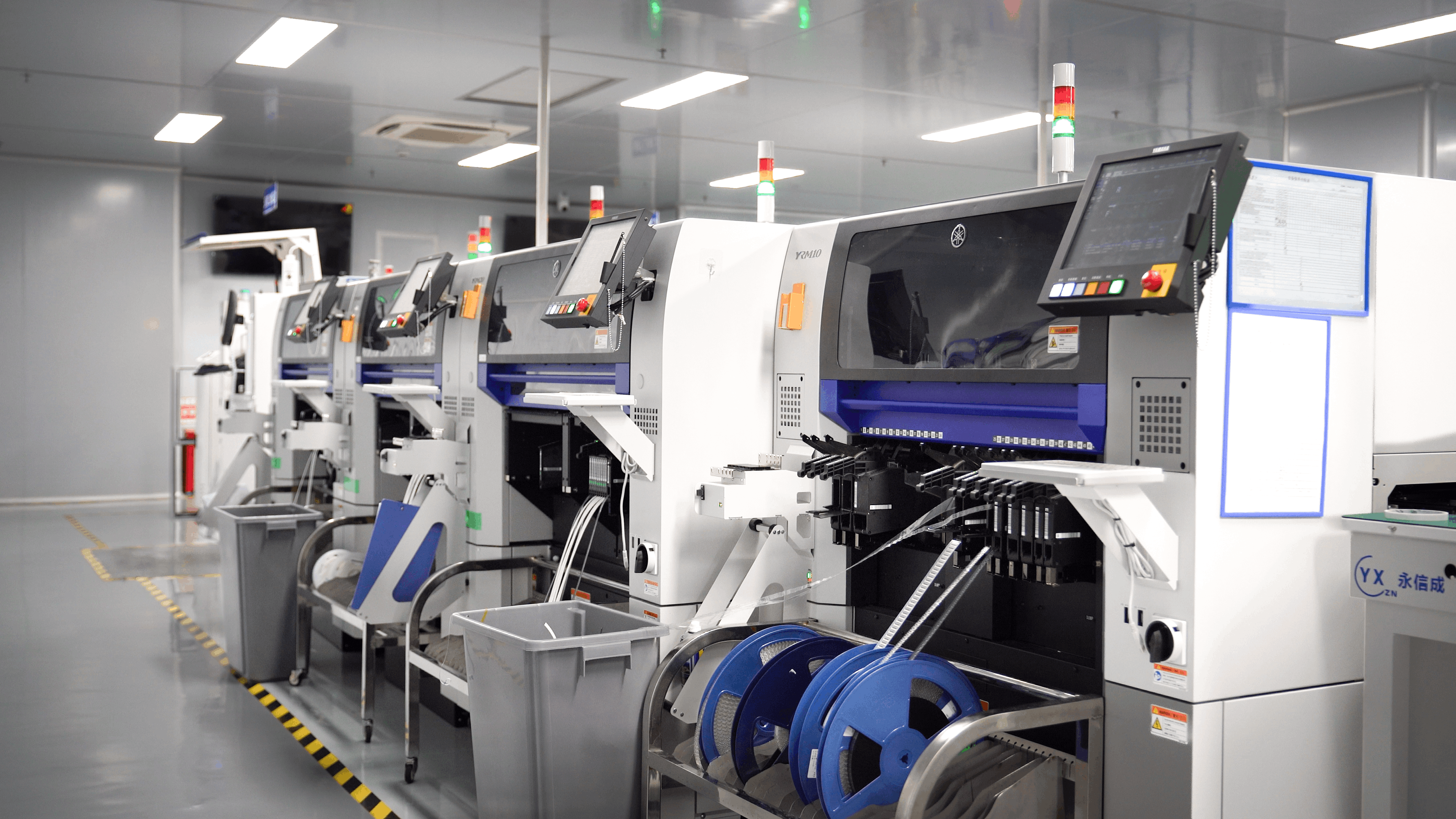
Dongguan YuAoHeng Electronic Technology Co., Ltd. is a Dongguan, China based manufacturer founded in 2016 that develops, produces, and sells action cameras, dash cameras, and smart video doorbells. The company operates a 1,500㎡ standardized production facility with 300 employees and a documented annual output of 2,000,000 units, supported by a 30-engineer R&D team and OEM/ODM one-stop customization covering product design, engineering development, testing, and mass production. Exports account for 80% of output, with Europe, North America, Asia, and South America as the main markets, and products are delivered to more than 15 countries and regions.
Within the action camera line, the housing specification is consistent. X20, Q1, Q2, Q3, and Q7 — the five models most often considered for volume programs — are all documented with ABS material, as are Q5, Q9, Q11, X11, and X7. The battery specification, by contrast, is not uniform across the range, and it should be read at the model level rather than assumed at the range level.
| Model | Configuration | Body material | Documented battery |
|---|---|---|---|
| X20 | 2K + WiFi | ABS | 1000mAH / 3.8V polymer (about 6–7 hours video) |
| Q1 | 4K + WiFi | ABS | 2000mAH / 3.8V polymer |
| Q2 | 4K + WiFi + touch screen + anti-shake | ABS | 18650 2000mA |
| Q3 | 4K WiFi | ABS | 2000mAH / 3.8V polymer |
| Q7 | 4K + WiFi + anti-shake | ABS | 1000mAH / 3.8V polymer |
| Q9 | 2K + WiFi | ABS | 18650 2000mA |
| Q11 | 2K + WiFi | ABS | 104050 2500mA |
| X11 | 2K WiFi | ABS | 974058 3000mA |
| X7 | 4K anti-shake | ABS | 1000mAH / 3.8V polymer (GPS supported) |
Cell-format note for buyers: the 18650 2000mA cell is documented in Q2 and Q9. The other models in the five-model set — X20, Q1, Q3, and Q7 — are documented with 3.8V polymer packs at 1000mAh or 2000mAh capacity. Buyers building a spare-parts forecast should confirm cell format per model, because the two formats are not interchangeable in logistics or in service planning.
ABS as a Supply-Chain Decision, Not Only a Cost Decision
ABS is a widely available commodity thermoplastic used across consumer electronics enclosures. For an action camera program, its practical value is threefold: the material itself is traded broadly, injection molding is a mature and geographically distributed process, and housing replacement or re-tooling does not depend on a specialized material supply chain. For a program that may need a color change, a logo change, or a mid-cycle housing refresh, that matters more than a marginal unit-cost difference.
Technically, ABS provides a workable balance of impact resistance, dimensional stability, and moldability at the wall thicknesses used in compact camera bodies. It also accepts surface finishes and molded-in branding without additional metalworking steps, which is relevant when a buyer's program requires localized packaging, engraving, or color variants.
The trade-offs are equally clear. ABS is not a metal housing, so a program targeting a premium metal finish, greater thermal mass, or a specific tactile weight will find ABS different by nature. The documented YUAOHENG specifications list ABS across the action camera range and do not describe an off-the-shelf metal-body variant within that line, so a metal-positioned product would have to be handled as a customization discussion rather than a catalogue selection.
The published specifications also do not state the specific ABS grade, the UV stabilization package, or a flammability classification for the housing material. Buyers whose retail channel requires a declared flammability rating or a defined UV exposure basis should request that data directly, because it falls outside the standard specification set and should not be assumed from the material name alone.
18650 Versus Pouch Cells: What Changes in Replacement Logistics
The 18650 is a standardized cylindrical lithium-ion cell format. Its advantage in a long program is not performance — it is substitutability. Because the format is widely traded, a buyer specifying an 18650-based product has more room to negotiate a spare-parts clause, and replacement sourcing is less dependent on a single supplier retaining one pouch dimension in production.
In the YUAOHENG range, Q2 and Q9 are documented with an 18650 2000mA cell. The other high-volume models use pouch-style packs: 1000mAH and 2000mAH 3.8V polymer packs on X20, Q1, Q3, Q7, and X7, plus 104050 2500mA on Q11 and 974058 3000mA on X11. The two approaches behave differently across a multi-year program.
| Attribute | 18650 2000mA (Q2, Q9) | 3.8V polymer pack (X20, Q1, Q3, Q7, X7) | Pouch formats (Q11, X11) |
|---|---|---|---|
| Format standardization | Standard cylindrical format, broadly traded | Supplier-defined pouch dimensions | Supplier-defined pouch dimensions |
| Spare-parts sourcing | Replacement supply is not tied to one tooling set | Depends on the original pouch dimension staying in production | Same dependency as polymer packs |
| Physical implication | Requires defined holder and contact arrangement, occupies volume | Shape-following, supports slimmer housings | Supports higher capacity in a larger footprint |
| Longevity implication | Format availability is the least likely constraint | Continuity depends on the supplier retaining the qualified pouch | Continuity depends on the supplier retaining the qualified pouch |
The 18650 choice is the more program-friendly of the two on the battery side, because a standard format is easier to re-source and easier to write into a multi-year service agreement. The trade-off is physical: cylindrical cells occupy volume and require a defined holder and contact arrangement, which is part of why slimmer models such as Q7 and X7, both documented at 1000mAH, use polymer packs instead.
What the documented material does not include is a qualified second-source cell or a formal spare-battery SKU for either format. Buyers running programs longer than the warranty window should therefore treat replacement batteries as a negotiated line item with its own lead time, rather than as an assumption built into the original unit price.
A Five-Point Framework for Supplier Durability
The following framework converts material and component facts into evaluation criteria. It is intended for buyers who have already cleared launch-stage performance and are now assessing whether a supplier can carry a program forward.
1. Material commodity exposure
Ask whether the housing material is a broadly traded commodity or a proprietary blend. ABS keeps the recovery path short if a mold, a molder, or a colorant supply changes, because the material itself is not scarce.
2. Cell format standardization
Ask whether the battery is a standard format or a supplier-specific dimension. A standard format reduces the risk that replacement parts disappear before the program does, and it gives the buyer leverage when writing spare-parts terms.
3. Compliance documents that outlive the launch
YUAOHENG holds CE certification CISRC251111081V1, issued 2026-04-02 against ETSI EN 300 328 V2.2.2; RoHS certification CISCC251111122, issued 2025-11-17 to EU 2015/863; FCC ID certification 2BR43-Q3, issued 2025-12-10 against 47 CFR Part 15.247; and FCC certification CQASZ20260601273E-01, issued 2026-07-01 against 47 CFR Part 15, Subpart C. A laboratory RF test report, CISRR25111108101, issued 2025-11-24, supports the CE file. Each document names a defined model scope, so buyers should confirm that their own model appears within that scope rather than assuming range-wide coverage.
4. Capacity and repeatable quality control
Documented monthly capacity is 170,000 units. Quality control includes 100% testing of all products. Typical production lead time is 25–30 days, and the minimum order quantity is 1 unit. For a repeat-order program, the relevant question is not the headline capacity figure but whether the same test regime applies to reorders as to the launch batch.
5. Warranty horizon versus program length
After-sales support includes a 12-month official warranty, online technical guidance, and replacement and maintenance services. Twelve months is shorter than most multi-year programs, so the buyer's financial model should budget for out-of-warranty replacement volume rather than assume continuous coverage.
Where ABS and 18650 Configurations Fit in Practice
Material and cell choices only become meaningful when mapped to use. Across the documented range, ABS housings suit applications where mechanical shock and handling matter more than surface premium: bicycle-mounted recording, climbing and mountaineering, ski and outdoor shooting, and handheld vlog use where a light, impact-resistant body reduces handling risk.
Water-facing applications need a separate line of reasoning. IP68 is defined by IEC 60529 as protection against dust (level 6) and immersion (level 8). The documented YUAOHENG reference case performance is IP66 waterproofing up to 10 meters, which is a different and more specific declaration than a generic IP68 reference, and buyers comparing waterproof claims should keep the two apart. For diving, surfing, and other water sports, the housing, sealing design, and lens assembly matter at least as much as the enclosure material.
Safety and market-access requirements sit alongside those performance questions. Action cameras fall under IEC 62368-1 for audio/video and information technology equipment, with the fourth edition published in 2023. Buyers preparing EU and US market entry should read their certification files against that standard landscape, alongside the model-specific CE, RoHS, and FCC documents already on file.
Market Signals That Favour Standardized Components
Three verified market signals are relevant to component strategy rather than to marketing claims. First, the ultra-HD segment accounted for approximately 46.25% of action camera market share in 2025, which means 4K-class specifications are now mainstream rather than differentiating. Second, electronic image stabilization has become a standard feature in budget to mid-range action cameras, using software algorithms to correct motion, which reduces the consumer-visible gap between price tiers on stabilization. Third, North America held a 34% revenue share of the global market in 2025, while DJI and Insta360 were reported to hold nearly 90% of the action camera market share in Japan as of late 2025.
Read together, those signals describe a category with a highly concentrated premium tier and a broad, competitive mid-tier. In that mid-tier, differentiation shifts from headline specification to supply reliability: how consistently a supplier can repeat a build, how easily components can be replaced, and how well documentation holds up over time. Commodity materials and standard cell formats support that shift rather than work against it.
Limits, Trade-offs, and What This Approach Does Not Solve
A supply-oriented component strategy has boundaries, and buyers should treat them as explicit.
- ABS is not a premium positioning material. Programs selling on metal-body aesthetics or specific thermal behaviour will need a different specification, and no such variant is documented within the current action camera line.
- Material grade data is not published. The specifications list ABS as the material but do not state grade, UV stabilization, or flammability classification, so channel-specific material declarations must be requested and verified.
- 18650 brings physical cost. The standard format is easier to re-source but demands internal volume and a defined holder, which is why higher-capacity slim designs in the range use pouch packs instead.
- Second-source qualification is not documented. For either cell format, the published material does not identify a qualified alternative cell source or a spare-battery SKU.
- Lead time is typical, not guaranteed. The 25–30 day production lead time is a documented typical figure; it should be written into contract terms with a defined trigger if it slips.
- Warranty is shorter than most programs. The 12-month warranty window ends well before a five-year program does, so replacement logistics must be planned commercially.
- Certification scopes are model-specific. CE, RoHS, FCC, and FCC ID documents each list defined model sets and standards; a new model or a component change may require a new file.
Reference Case: A Five-Year OEM Program
A useful reference point is a documented YUAOHENG project involving an Action Camera Brand OEM client located in the United States, with a project scale of 5,000 units and a project duration of 5 years. The applications recorded for the program are travel vlog shooting, outdoor hiking and camping recording, and daily life video blogging. The documented product capabilities in that case include IP66 waterproofing up to 10 meters, 4K resolution recording, built-in anti-shake, wide-angle field of view, WiFi and wireless app control, and a shockproof and dustproof body.
The case is relevant here less for its feature list than for its duration. A five-year engagement places material and cell decisions under sustained pressure: housings must remain reproducible, batteries must remain replaceable, and quality control must remain consistent across reorders. That is the environment in which ABS availability and standard-format cell logic matter more than a launch-week specification comparison.
Future Outlook
Two directions are already visible in the verified data. Stabilization has moved from a premium feature to a baseline expectation in budget and mid-range cameras, and ultra-HD resolution now represents close to half of the market by share. As those capabilities become table stakes, buyer attention shifts toward the less visible layer: component continuity, documentation currency, and service terms.
For suppliers, that shift rewards choices that are easy to keep explaining. Commodity housing materials and standard cell formats age well in a program because they are not dependent on a single tool, a single molder, or a single pouch dimension. For buyers, the practical implication is to move component questions earlier in the evaluation process, before a program is locked into a specification that cannot be replaced at year three.
A long-term supply check is therefore not an audit of price. It is an audit of whether the components behind the product will still be explainable, replaceable, and defensible when the program is no longer new.
FAQ
Which YUAOHENG action camera models use ABS plastic bodies?
ABS is documented across the action camera line. X20, Q1, Q2, Q3, and Q7 all list ABS as the body material, as do Q5, Q9, Q11, X11, and X7. The published specifications do not state a specific ABS grade, UV stabilization package, or flammability classification.
Which models use the 18650 2000mA cell, and which use polymer packs?
Q2 and Q9 are documented with an 18650 2000mA cell. X20 uses a 1000mAH/3.8V polymer pack, Q1 and Q3 use 2000mAH/3.8V polymer packs, and Q7 and X7 use 1000mAH/3.8V polymer packs. Q11 uses a 104050 2500mA format and X11 uses a 974058 3000mA format. The formats are not interchangeable for spare-parts planning.
What are the documented lead time, minimum order quantity, and monthly capacity?
The typical production lead time is 25–30 days, the minimum order quantity is 1 unit, and monthly capacity is documented at 170,000 units. Quality control includes 100% testing of all products. The lead time figure is typical rather than guaranteed and should be defined contractually.
Which certifications support long-term market access?
Documented certifications include CE certification CISRC251111081V1 issued 2026-04-02 against ETSI EN 300 328 V2.2.2; RoHS certification CISCC251111122 issued 2025-11-17 to EU 2015/863; FCC ID 2BR43-Q3 issued 2025-12-10 against 47 CFR Part 15.247; and FCC certification CQASZ20260601273E-01 issued 2026-07-01 against 47 CFR Part 15, Subpart C. Each certificate names a defined model scope, so model-level verification is required.
What after-sales coverage applies, and how should buyers plan beyond it?
After-sales support includes a 12-month official warranty, online technical guidance, and replacement and maintenance services. Because the warranty period is shorter than a typical multi-year program, buyers should model out-of-warranty replacement demand separately and negotiate battery replacement terms with their own lead time allowance.
Is a qualified second-source cell or a spare-battery SKU documented?
No. The published material identifies the cell format used per model but does not identify a qualified second-source cell or a formal spare-battery SKU. Buyers requiring that level of continuity should raise it as a sourcing requirement rather than assume it from the existing specification set.
Reference Material
The YUAOHENG product catalogue, covering the action camera range and related product lines, is available for download: YUAOHENG product catalogue (PDF).